-
-
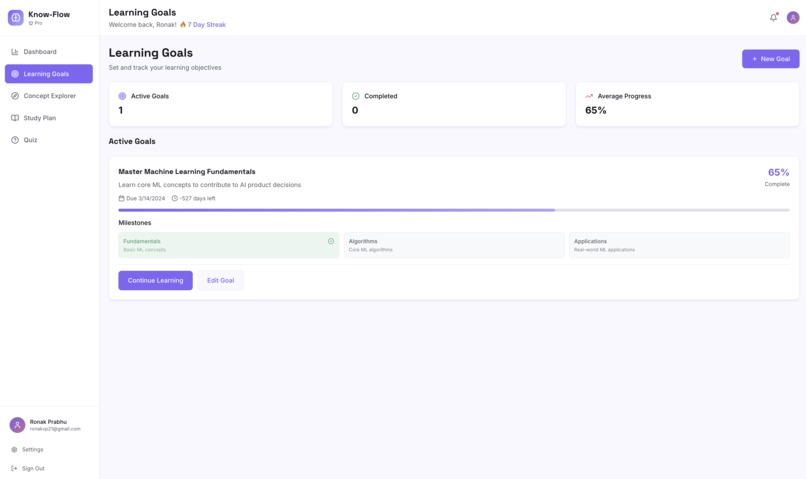
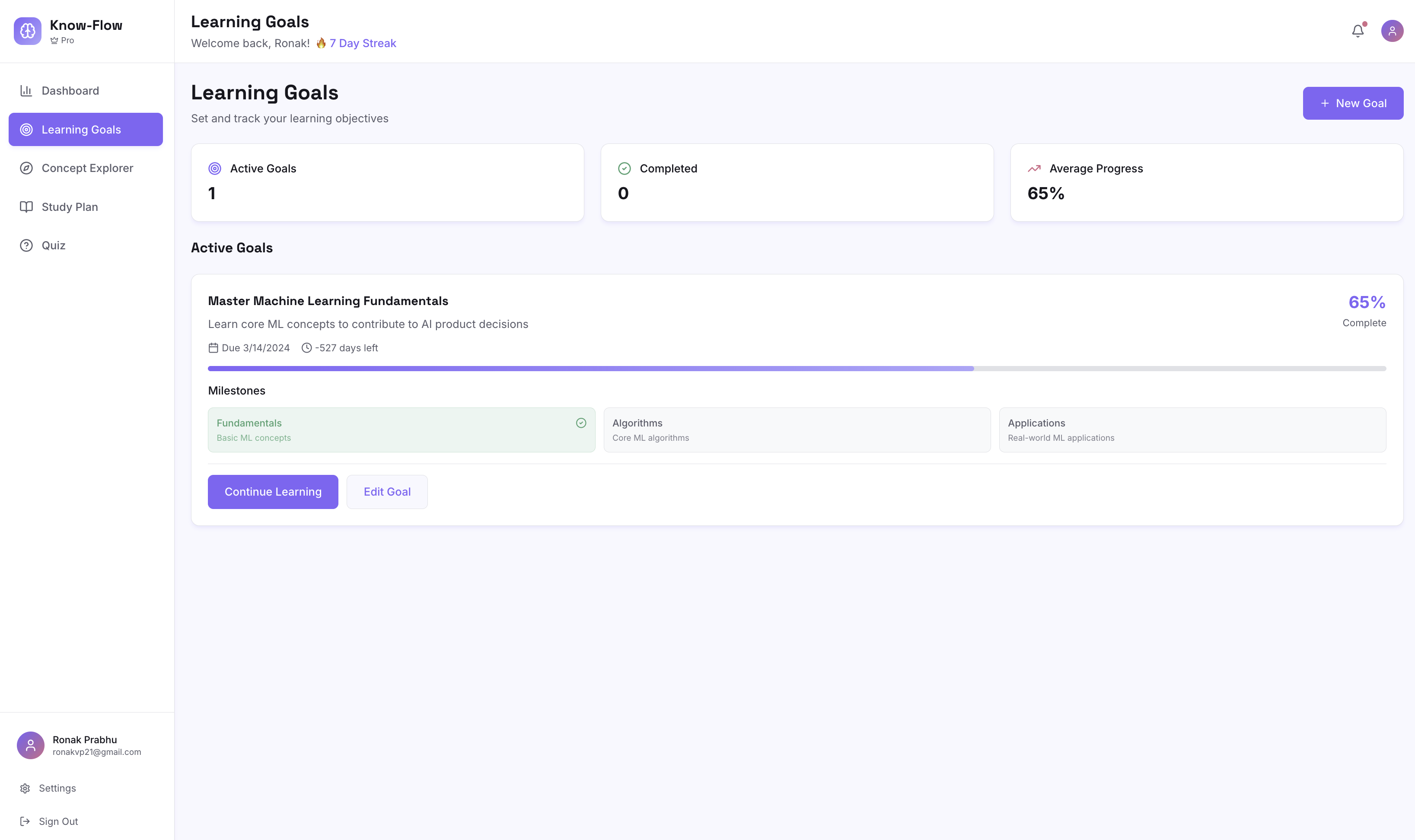
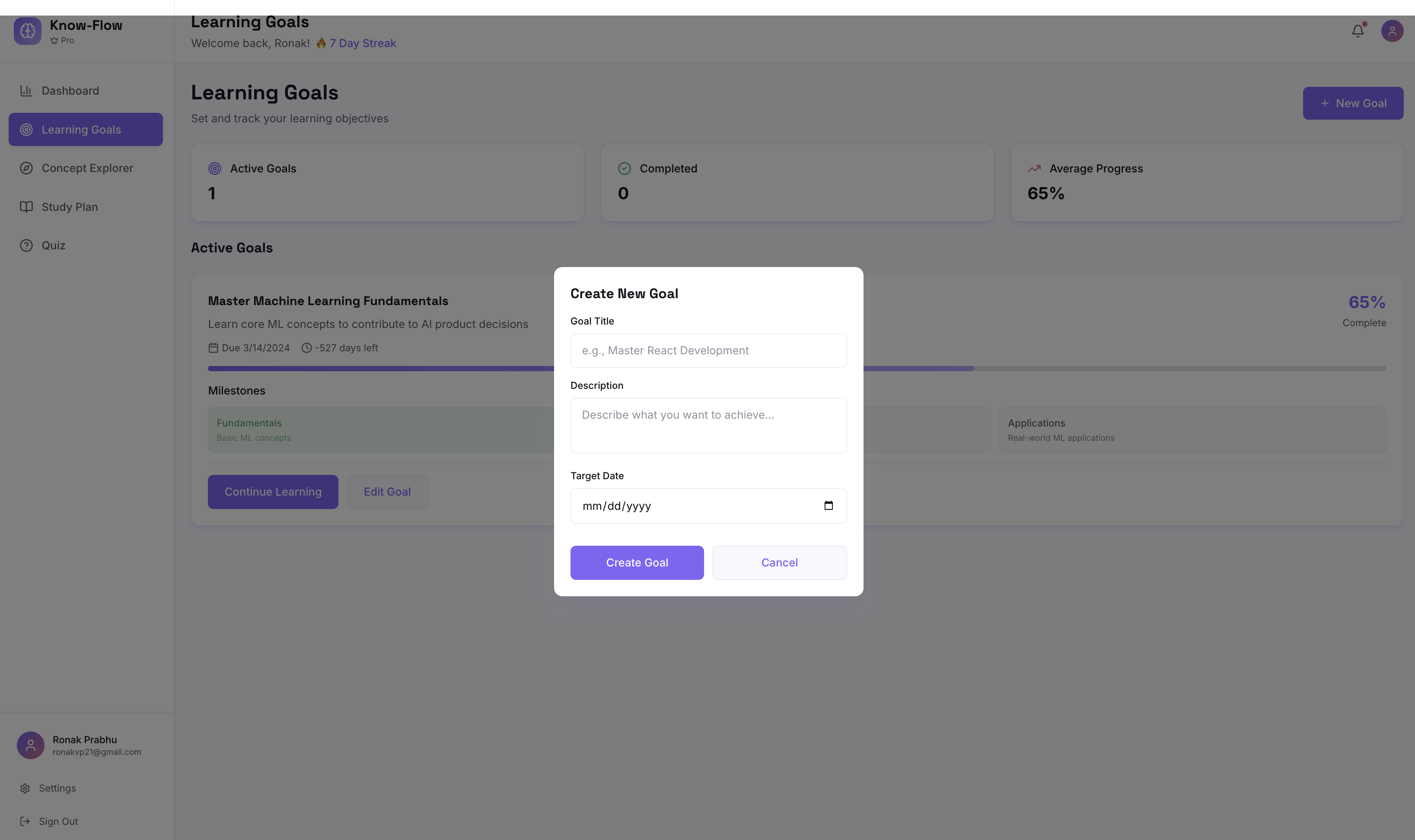
Learning Goals
-
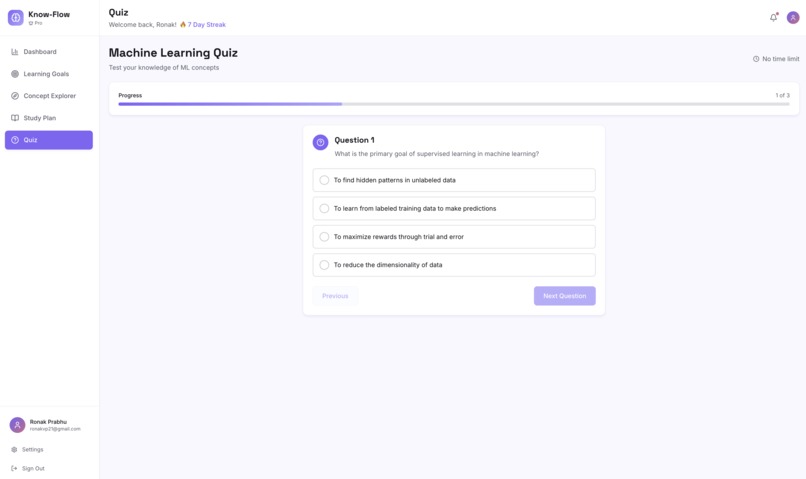
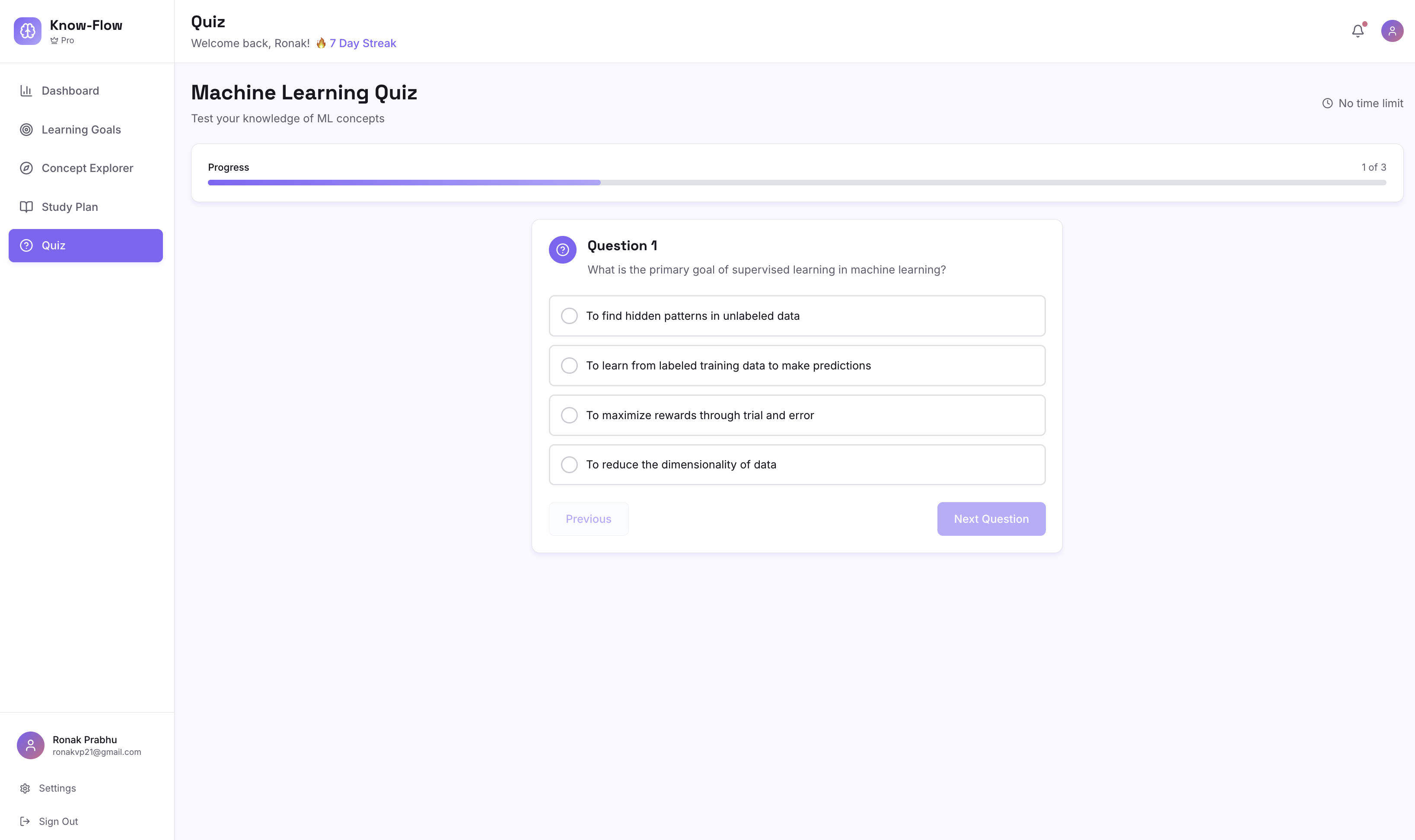
Quiz
-
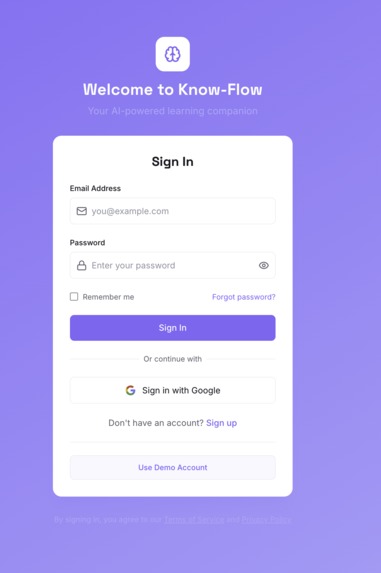
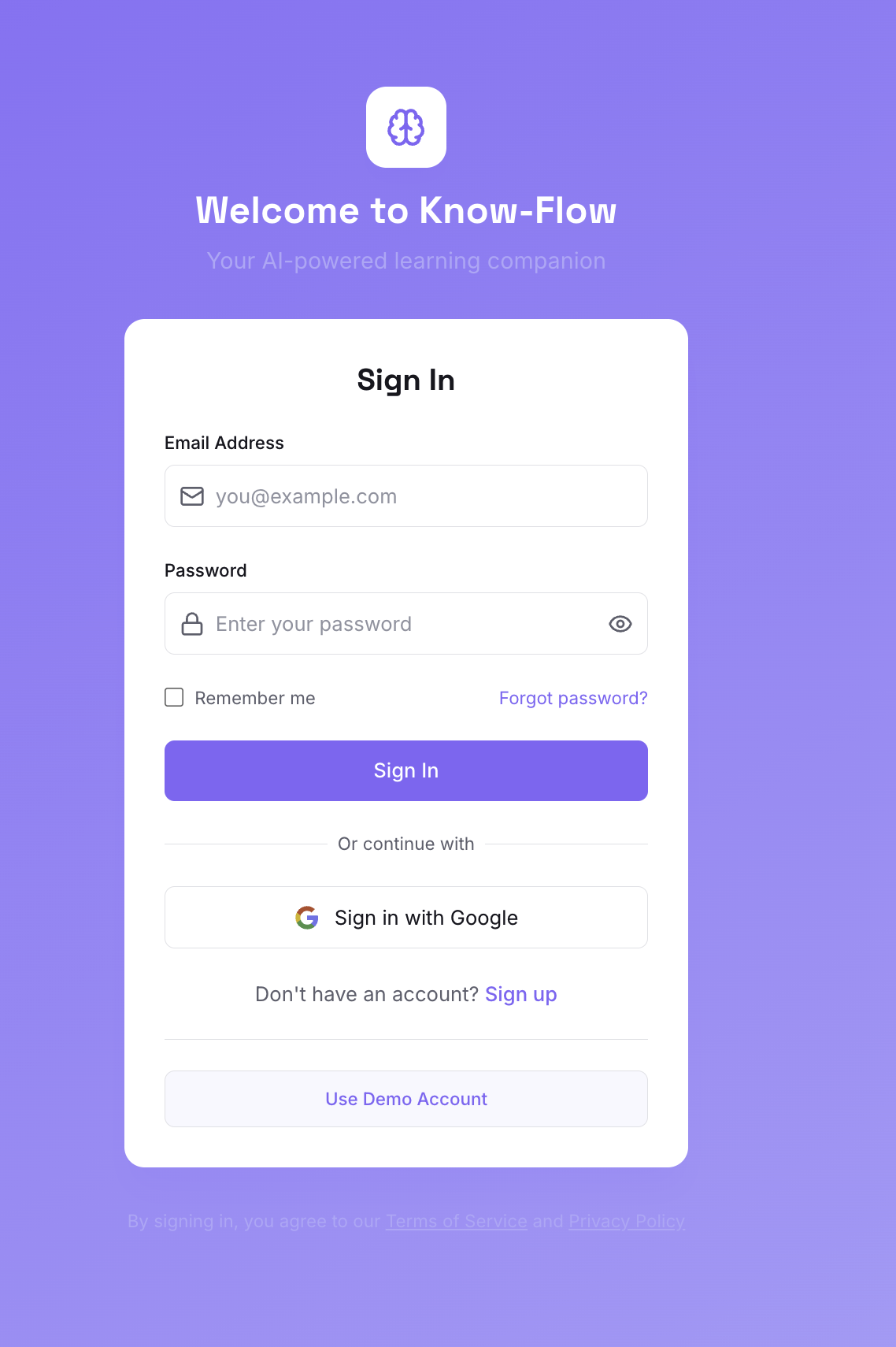
Authentication Page
-
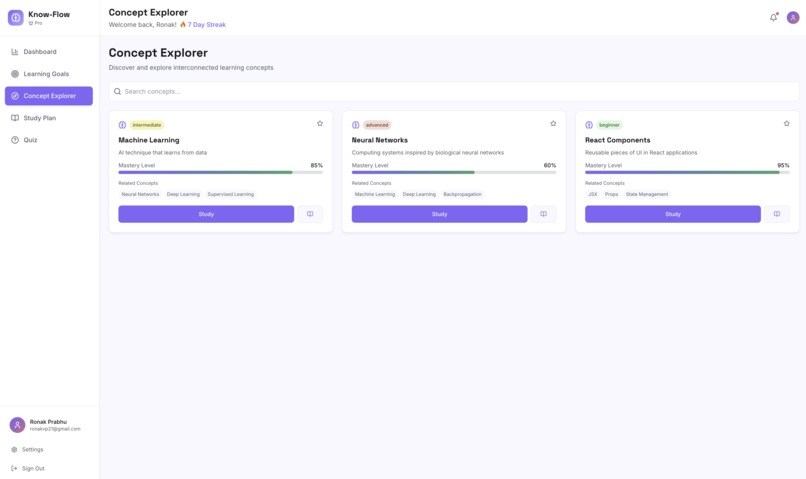
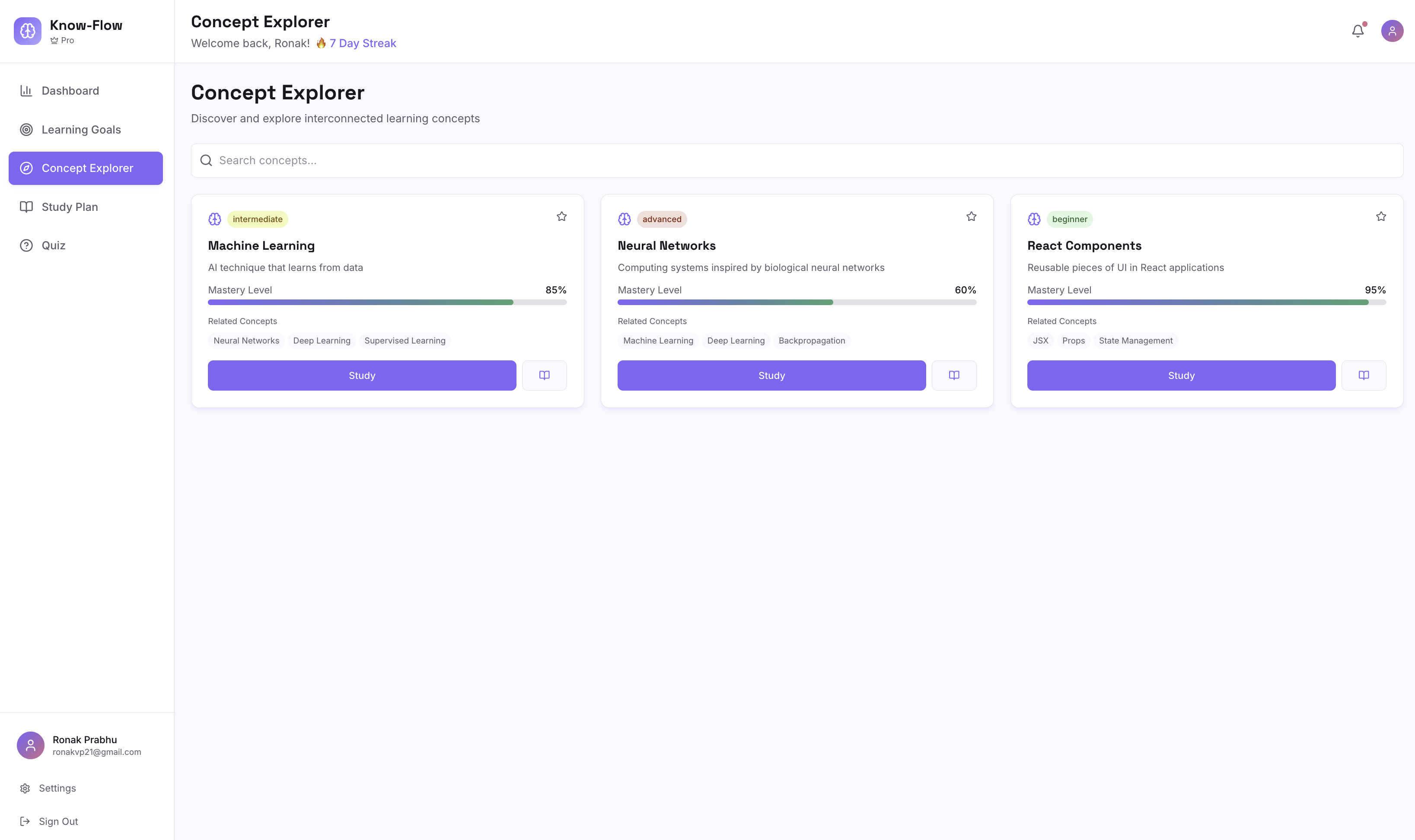
Concept Explorer
-
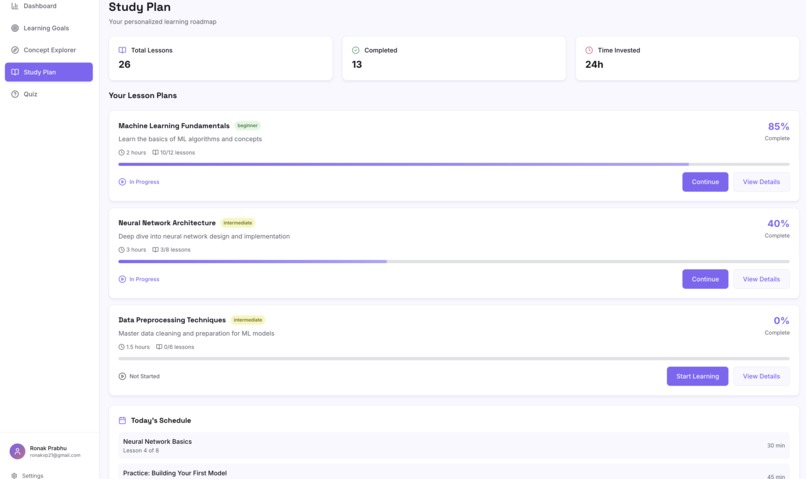
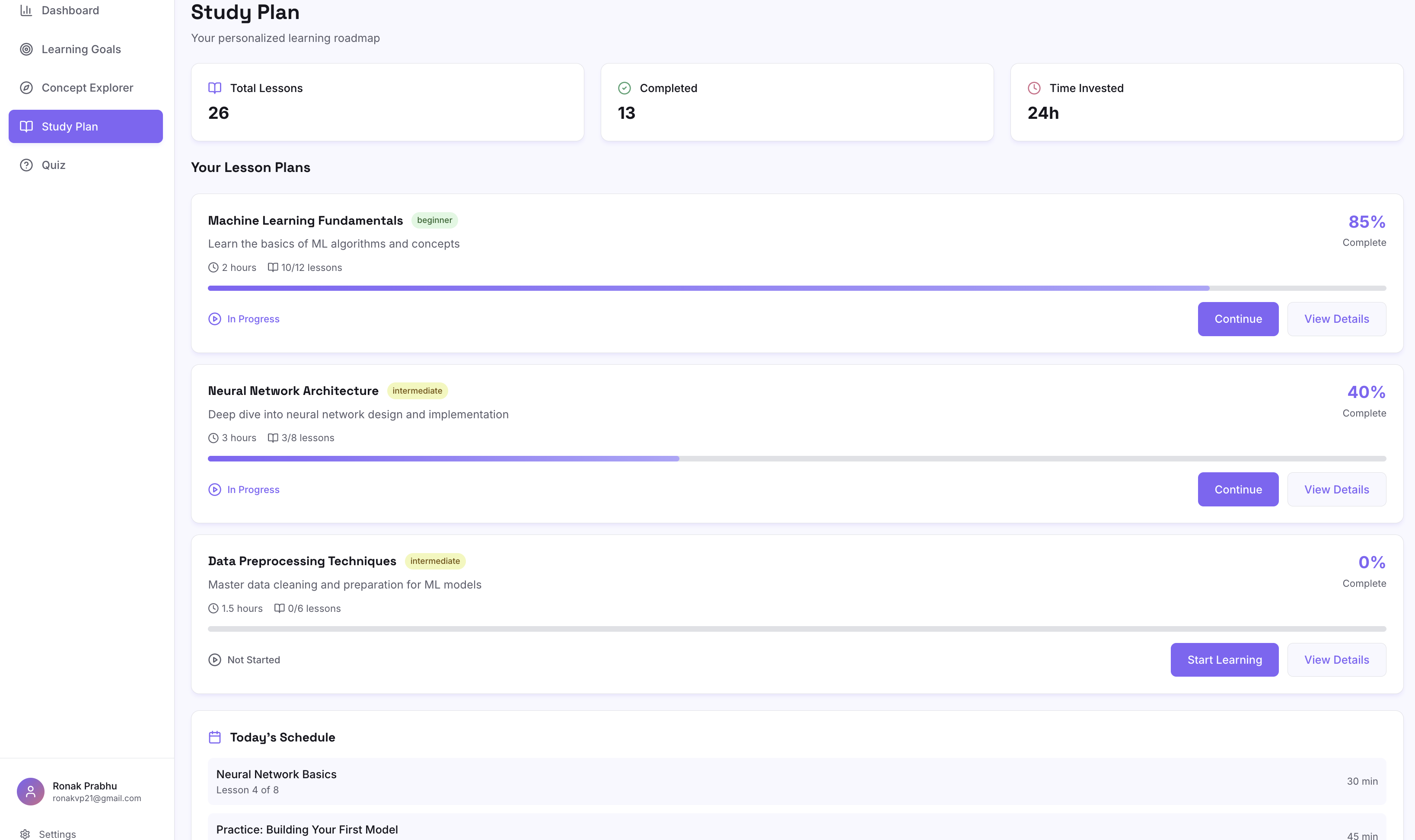
Study Plan + Schedule
-
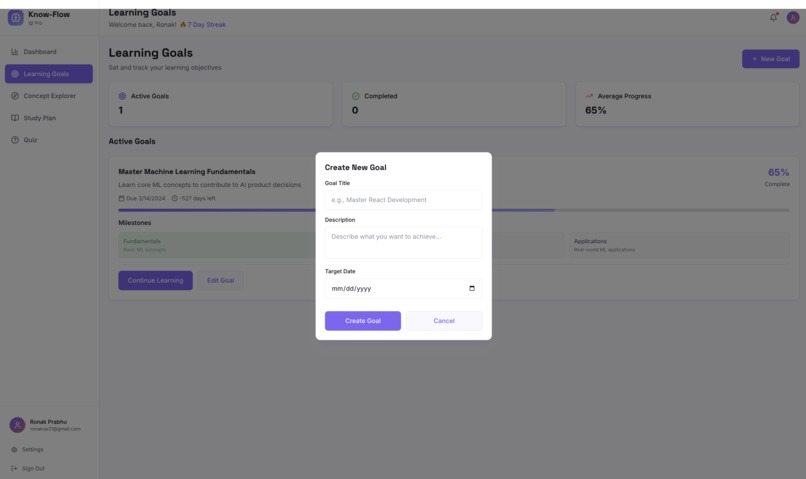
New Goal Creation
-
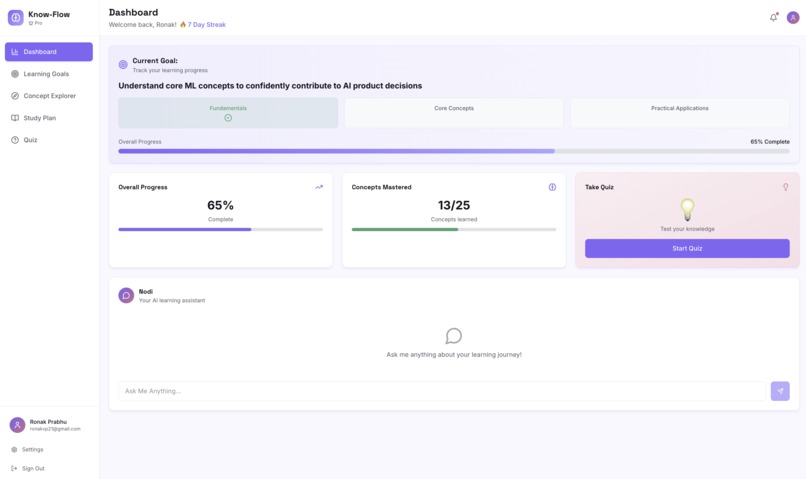
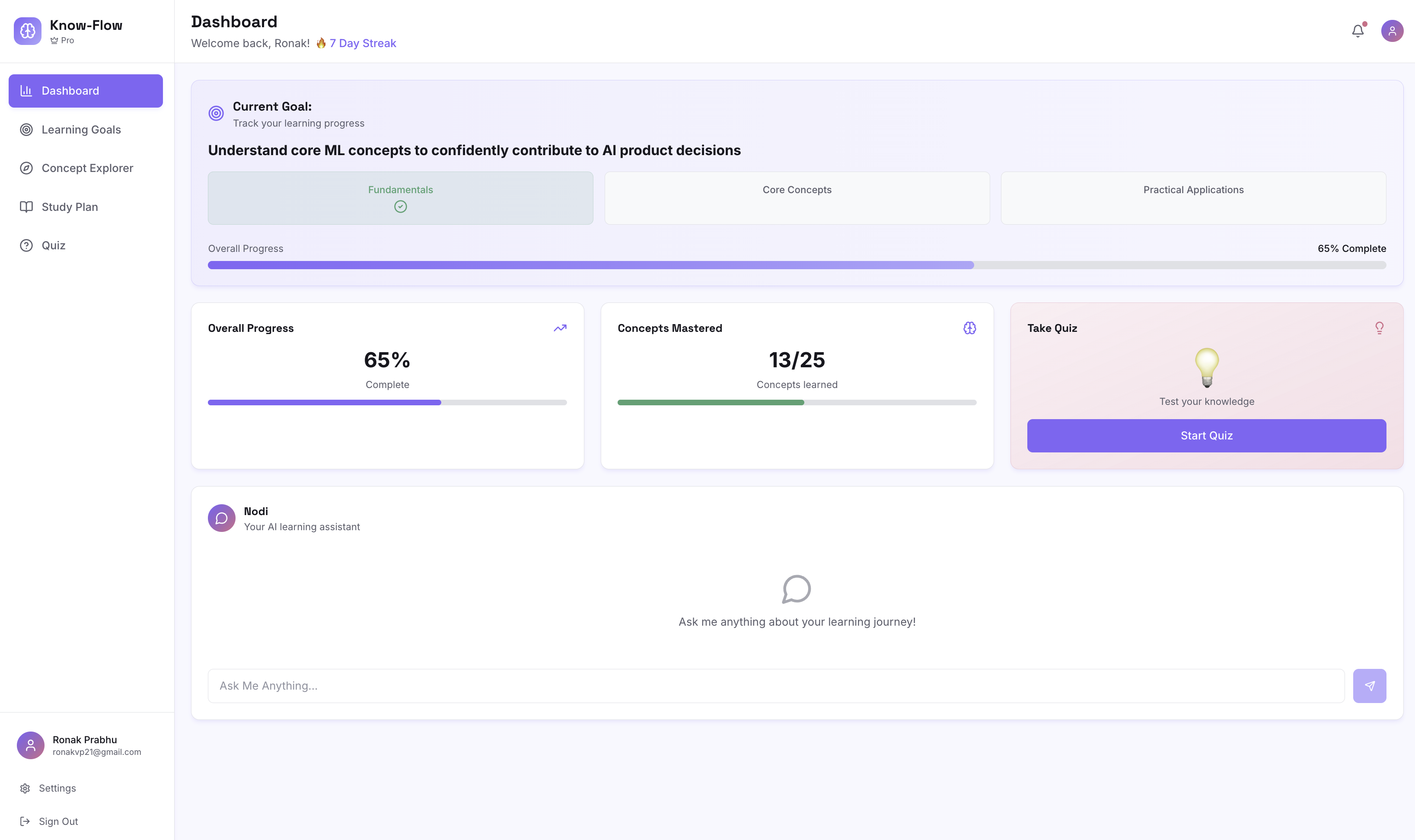
Dashboard
Inspiration
We built Know-Flow because the internet gives you endless information but no clear map. Our team shares an insatiable curiosity, we constantly want to learn new things, yet we repeatedly hit the same friction: where do we start, how do we measure progress, and how do we stay consistent? Know-Flow was born to turn vague curiosity into measurable learning momentum: a personal, adaptive guide that orchestrates content, checkpoints, and reminders so learners actually make progress.
What it does
Tell Know-Flow a topic, anything from “basics of econometrics” to “intro to 3D modeling”, and it returns a goal-oriented, modular lesson plan. Each plan is made of milestones, micro-lessons, quick checks, and scheduled nudges. Behind the UI, Know-Flow builds a personalized knowledge graph that models what the user knows and where they need review, and the agentic workflow adapts future plans to the learner’s study patterns.
How we built it
Agent orchestration: We used Agno to coordinate a set of AI agents that collaborate to (a) interpret the user’s intent, (b) generate lesson modules, and (c) synthesize those modules into a knowledge graph.
Backend: FastAPI provides the API layer and agent orchestration endpoints. Firestore stores the user knowledge graph, lesson plans, and activity logs.
Frontend: Built with React, Next.js, and Tailwind for a fast, mobile-friendly experience.
Prototype scope: During the hackathon we shipped a working demo where a user prompt is routed through the agent workflow, resulting in a generated lesson plan and an initial knowledge-graph representation.
Challenges we faced
Agent coordination & consistency: Getting multiple agents to reliably decide when to read/write to the database was hard. Agents would sometimes overwrite each other’s outputs or disagree about canonical representations of concepts.
Prompting for reliable behavior: Designing agent-specific instructions so each agent produces consistent, auditable outputs required repeated iteration and careful failure handling.
Knowledge graph design: Representing learning states (mastered, needs review, in-progress) in a way that’s both expressive and easy for agents to update was a tradeoff between complexity and robustness.
Accomplishments we’re proud of
Built the core architecture for an agentic learning pipeline that turns vague prompts into structured lesson plans.
Implemented an initial knowledge-graph schema and a functioning read/write flow between agents and Firestore.
Demonstrated that multi-agent collaboration can generate modular lesson structures and personalize them to a user’s study journey.
What we learned
Multi-agent systems amplify reasoning, but they also amplify failure modes: small mismatches in instruction or state representation can cascade. Careful orchestration, clear agent contracts, and deterministic read/write patterns are essential.
Personalization is not just recommendation, it’s the continual updating of a user model (the knowledge graph) based on signals from study activity, choice of resources, and micro-assessments.
UX matters: minimizing interruptions (e.g., via multimodal input) helps maintain study flow and yields cleaner activity signals for personalization.
What’s next
Improve reliability of agent collaboration by formalizing agent contracts, explicit transaction patterns for DB updates, and conflict resolution logic.
Deepen personalization: richer signals to update the knowledge graph (quiz results, time-on-task, preferred media), and adaptive pacing tuned to each learner.
Add multimodal inputs (voice notes, screenshots, short recordings) so learners can interact without breaking study flow.
Integrate search/history so plans evolve as the learner explores, and run pilot studies with real learners/educators to measure retention and mastery.
Built With
- agno
- docker
- firebase
- firstore
- pinecone
- python
- stt/ocr
- typescript
- uvicorn
- vector
- vercel


Log in or sign up for Devpost to join the conversation.