Inspiration
As a suburban homeowner, I spent hours researching lawn care—guessing when to water, struggling to diagnose brown patches, and wasting money on wrong treatments. I saw neighbors facing the same frustration: we all wanted healthy lawns but lacked professional expertise. That’s when I decided to build LawnCare Scheduler—something to make lawn care simple, personalized, and rooted in local climate and grass type.
What it does
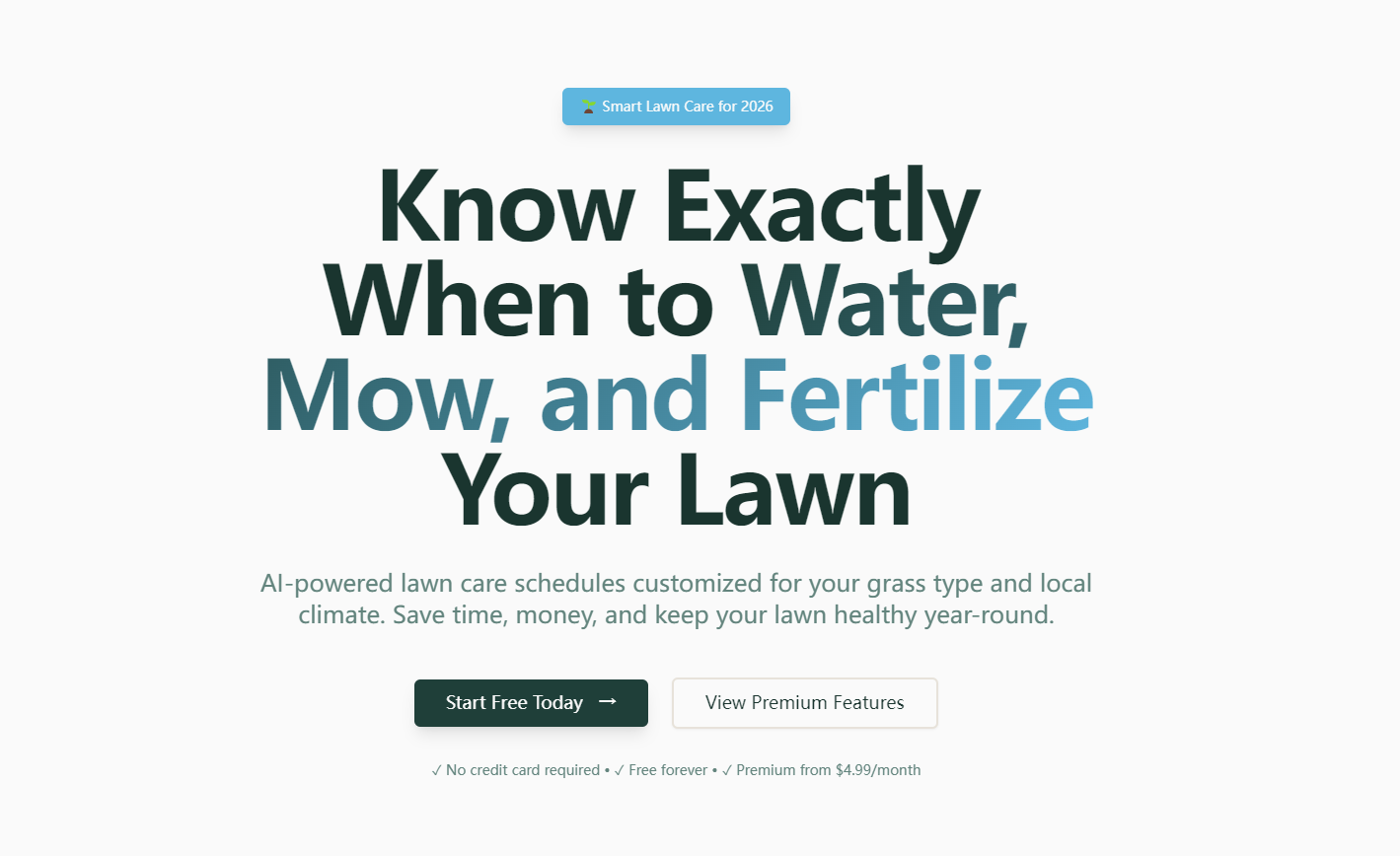
LawnCare Scheduler creates custom lawn maintenance schedules tailored to your grass type, location, and climate. It adjusts tasks in real-time based on weather (pausing watering if rain’s coming!), lets you diagnose lawn issues via symptom selection, and connects you to trusted local lawn pros. A free tier covers basics, with premium perks for deeper insights.
How we built it
We started by mapping core user flows (onboarding, calendar, diagnostics) and designing a mobile-first UI. We integrated weather APIs for real-time data sync, built AI logic to generate location/grass-specific schedules, and curated local provider data for the directory. The stack focused on React for frontend, Node.js for backend, and Firebase for lightweight data storage.
Challenges we ran into
The biggest hurdle was making the AI schedule adaptive—balancing grass type needs (e.g., Zoysia vs. Fescue) with regional climate variations across the US/EU. Weather API inconsistencies also forced us to build fallback logic for when real-time data was unavailable. We also had to simplify the diagnostics flow to avoid overwhelming users, while keeping it accurate.
Accomplishments that we're proud of
We created a tool that cuts through lawn care confusion—users complete onboarding in under 2 minutes, and the weather-adjusted schedule eliminates guesswork. The diagnostics tool accurately points to common issues (like fungal diseases or overwatering) and links to actionable solutions, and the provider directory makes finding local help seamless.
What we learned
I learned how to translate niche domain knowledge (lawn care) into intuitive software—prioritizing user simplicity over technical depth. We also mastered API integration best practices (fallbacks, error handling) and learned to balance free/premium features to keep the tool accessible while adding value for paying users.
What's next for this project
We plan to expand grass type coverage to include EU-specific species (e.g., ryegrass blends), add smart home integration (for irrigation systems), and partner with local lawn care brands for DIY product recommendations. We’ll also refine the AI to include cost-saving insights (e.g., optimizing fertilization to cut annual spending) and add user reviews for service providers to boost trust.

Log in or sign up for Devpost to join the conversation.