Inspiration
I'm currently working full-time while pursuing a part-time Master's in AI. Balancing both made me realize how inefficient my study sessions were — I needed a tool that could adapt to my pace and help me truly understand complex material, not just skim through it.
At the same time, the rapid evolution of LLMs and Agentic AI fascinated me. I wanted to go beyond reading papers and tutorials — I wanted to learn by building. Kno became the intersection of a personal need and a technical curiosity: a project that solves my own problem while pushing me to explore cutting-edge AI technologies.
What It Does
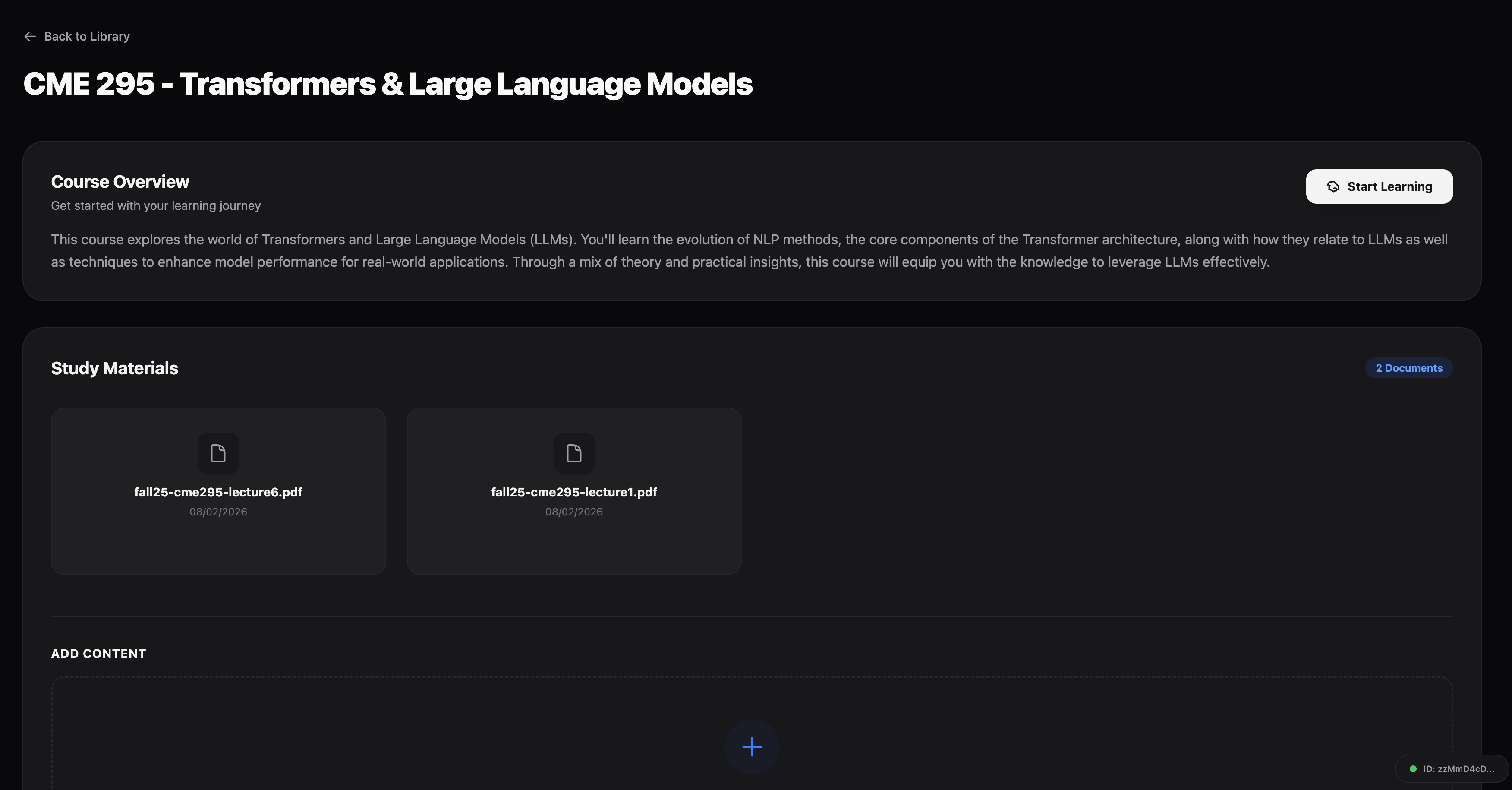
Kno transforms any study material into a personalized AI-powered learning experience. Upload a PDF, and Kno handles the rest:
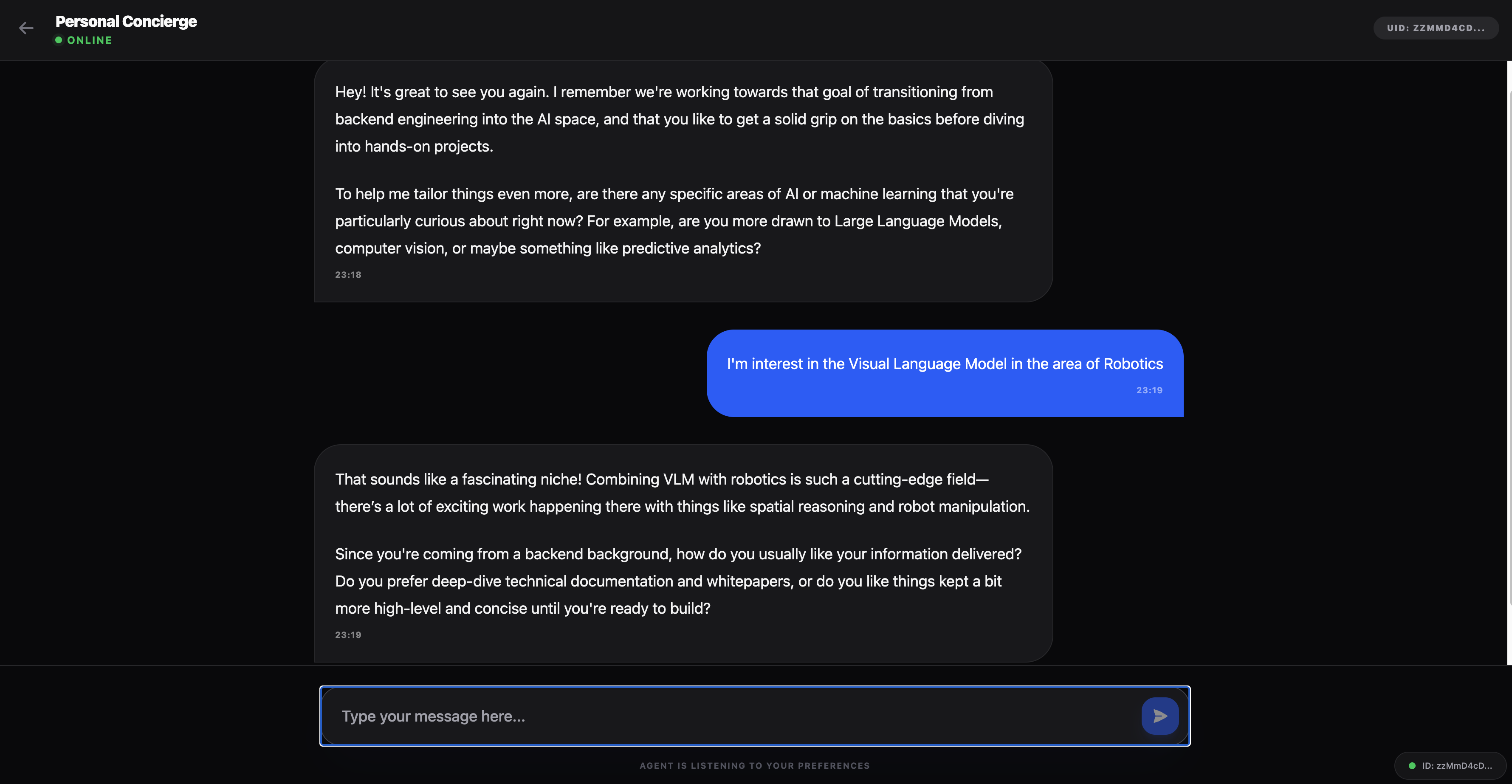
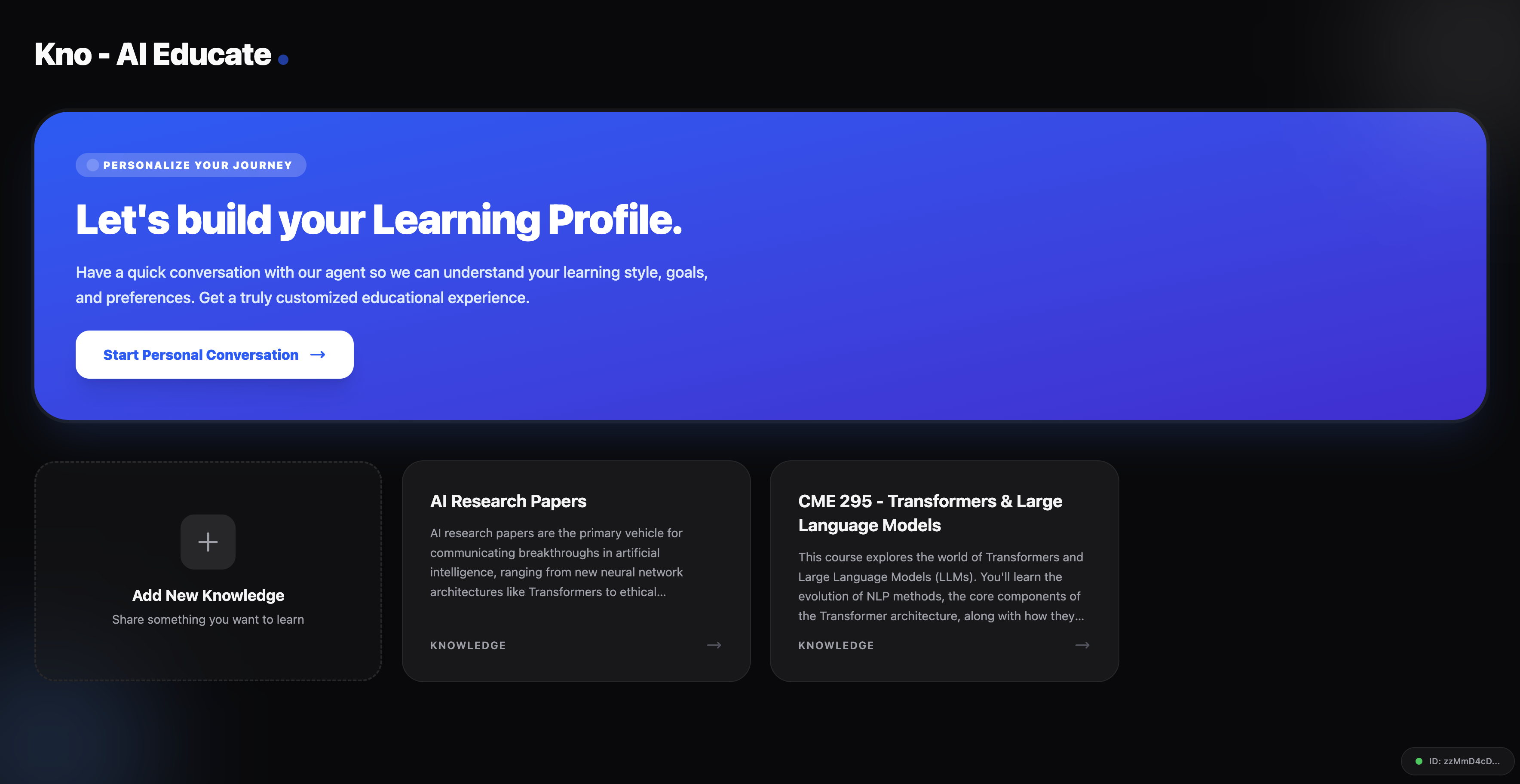
- Onboarding — A conversational AI agent learns your learning style, goals, and preferences to personalize your experience.
- Pre-Assessment — AI reads your material and generates a tailored quiz to gauge your current understanding, identifying knowledge gaps before you start.
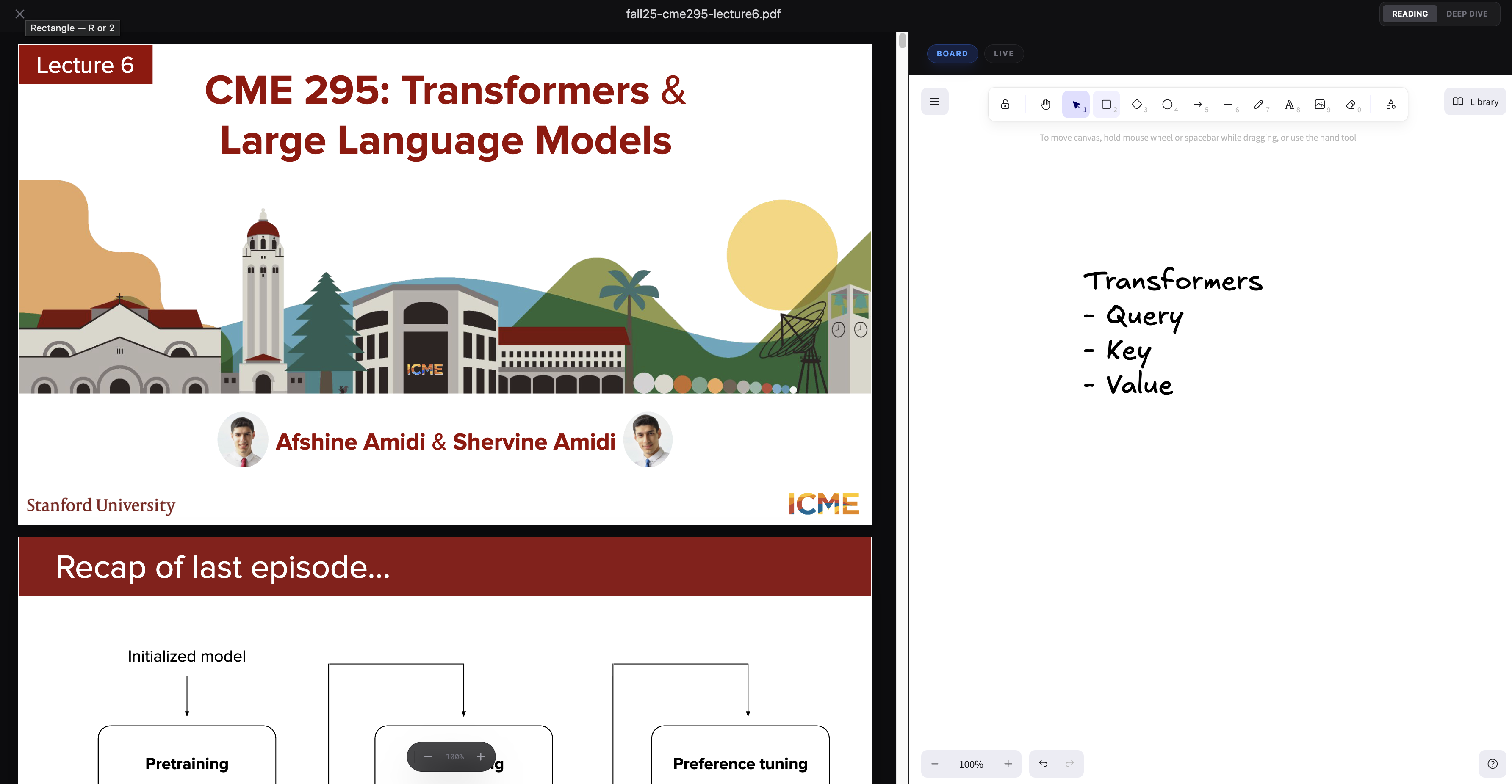
- Active Learning — An adaptive workspace where you study with:
- A split-pane PDF reader with AI-powered highlights, notes, and annotations
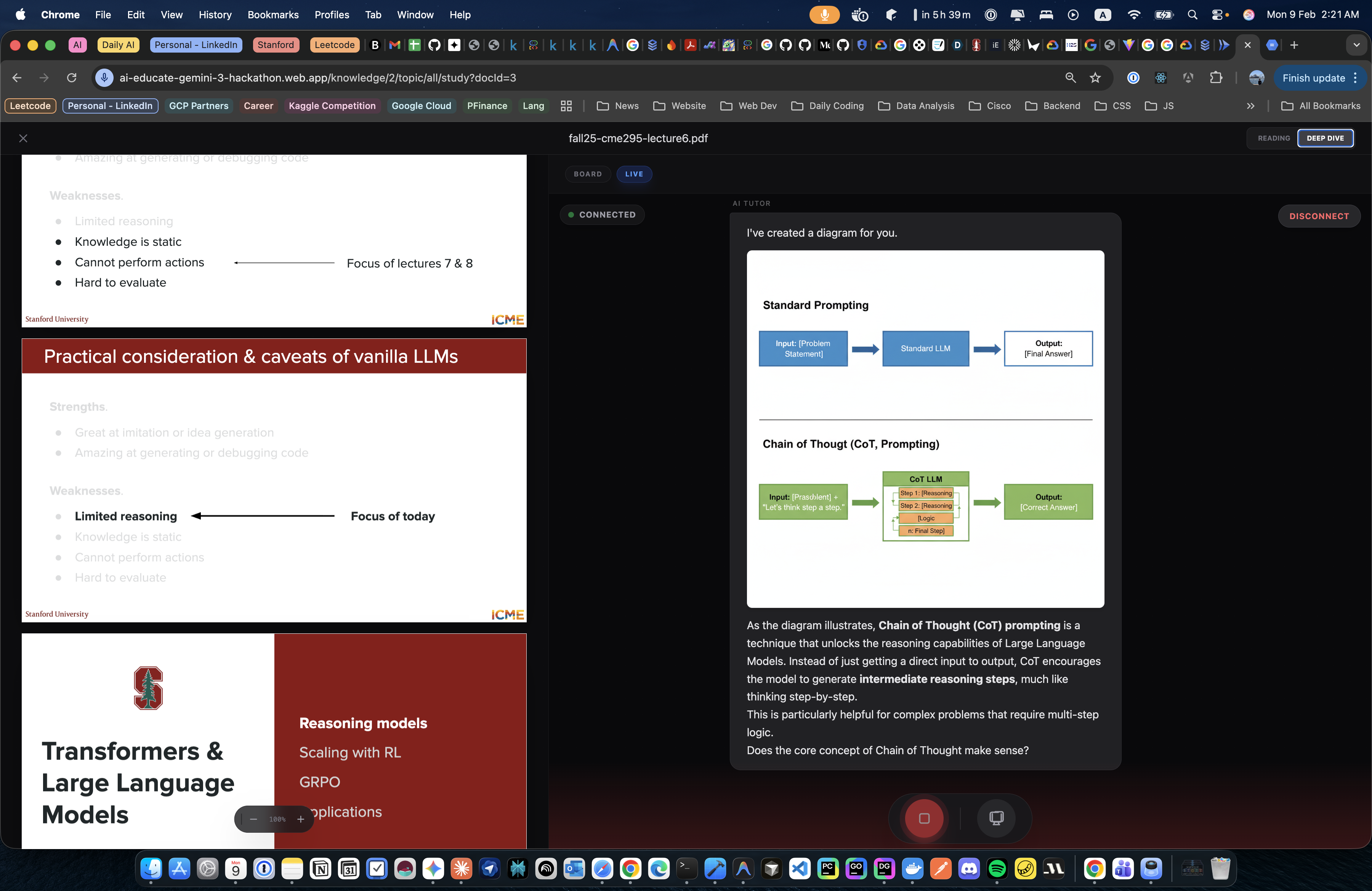
- A live AI tutor you can talk to in real-time with voice and screen sharing — it sees what you see and teaches accordingly
- An Excalidraw whiteboard for visual thinking and problem-solving
- Post-Assessment — A targeted quiz focused on your weak concepts, with comparative feedback showing how much you've improved.
Every step is powered by specialized AI agents that collaborate behind the scenes to deliver a learning experience tailored to you.
How We Built It
I started by diving deep into the Gemini API documentation, the ADK framework, and various blog posts on agentic architectures. Research came first — understanding what was possible before writing a single line of code.
One of the key tools in my workflow was Antigravity. It allowed me to prototype and explore different ideas rapidly, test architectural approaches, and pivot quickly when something didn't work. This speed was critical in a hackathon setting where time is limited and experimentation is everything.
From there, I built the platform as six microservices, each handling a distinct part of the learning pipeline:
| Service | Role |
|---|---|
| Backend API | Knowledge and document management, Firebase auth, Cloud Storage |
| Onboarding Agent | Conversational preference learning via Gemini |
| Pre-Assessment Agent | PDF-based MCQ generation and assessment marking |
| Pre-Active-Learn Service | Material caching, concept extraction, session management |
| Live Tutoring Agent | Real-time voice and video tutoring via WebSocket |
Tech stack: React 19, TypeScript, Tailwind CSS v4, FastAPI, PostgreSQL, Google Gemini (Flash, Pro, 2.5 native audio), Google ADK, Firebase, Google Cloud Run, and Google Cloud Storage.
Challenges We Ran Into
The hardest part was figuring out how to architect an Agentic AI application. Unlike traditional software, there's no established playbook for structuring multi-agent systems — how agents communicate, how to manage state across sessions, and how to orchestrate tool calls effectively.
I also attempted to integrate the Agent-to-Agent (A2A) protocol, but ran into persistent dependency conflicts that ultimately forced me to take a different approach. Learning when to pivot instead of pushing through a blocker was a valuable lesson in itself.
Accomplishments That We're Proud Of
- End-to-end adaptive learning pipeline — Built a complete study flow from onboarding to post-assessment, where AI personalizes every step based on the student's actual understanding.
- Live AI tutoring with voice and screen sharing — Integrated Gemini 2.5 Flash native audio for real-time, two-way voice conversations where the AI can see what you're reading.
- Multi-agent orchestration — Designed and deployed six microservices with specialized AI agents that collaborate — from generating quiz questions to creating interactive animations to marking assessments with personalized feedback.
- Built solo, while studying and working full-time — This entire platform was built by one person during a hackathon, proving that the current AI tooling genuinely empowers individual developers to build ambitious products.
- Production-deployed — Not just a demo. The full stack is deployed on Google Cloud Run with Firebase Hosting, Cloud SQL, and Cloud Storage — ready for real users.
What We Learned
- Agentic AI is a mindset shift. Designing systems where AI agents use tools and make decisions is fundamentally different from traditional API calls. You're no longer writing logic — you're writing instructions and trusting the model to execute.
- Prompt engineering for agents is an art. Getting agents to reliably call the right tools, in the right order, with the right parameters required careful iteration. Small changes in system instructions led to dramatically different behaviors.
- The Gemini ecosystem is powerful but fast-moving. Working with ADK, context caching, native audio, and image generation meant navigating new APIs with limited community resources. Reading source code became more useful than searching for tutorials.
- Caching matters at scale. Implementing Gemini's context caching for PDF materials significantly reduced token usage and response latency — a practical lesson in building cost-efficient AI applications.
What's Next for Kno - AI Educate
- An AI orchestrator agent that guides you through concepts with hints, explanations, and interactive animations
- Collaborative learning — Enable study groups where multiple students can join the same AI-tutored session, discuss concepts together, and track group progress.
- Spaced repetition system — Use assessment results and concept mastery data to automatically schedule review sessions at optimal intervals for long-term retention.
- Multi-modal material support — Expand beyond PDFs to support lecture videos, slides, and audio recordings as learning materials.
- Progress analytics dashboard — Visualize learning progress over time with concept mastery heatmaps, assessment score trends, and personalized study recommendations.
- Mobile experience — Build a responsive mobile-first interface so students can learn on the go, with offline support for downloaded materials.
- A2A protocol integration — Revisit the Agent-to-Agent protocol to enable seamless inter-agent communication, allowing agents to dynamically discover and collaborate with each other without hardcoded orchestration.
Built With
- adk
- antigravity
- gemini
- google-cloud
- postgresql
- python

Log in or sign up for Devpost to join the conversation.