-
-
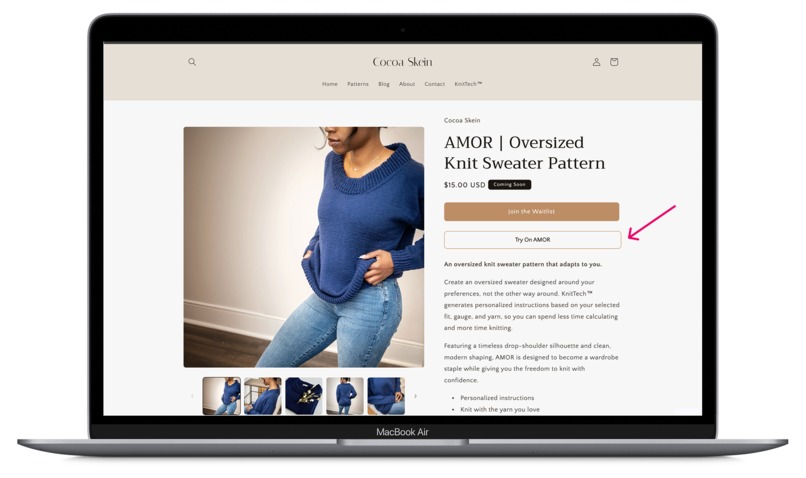
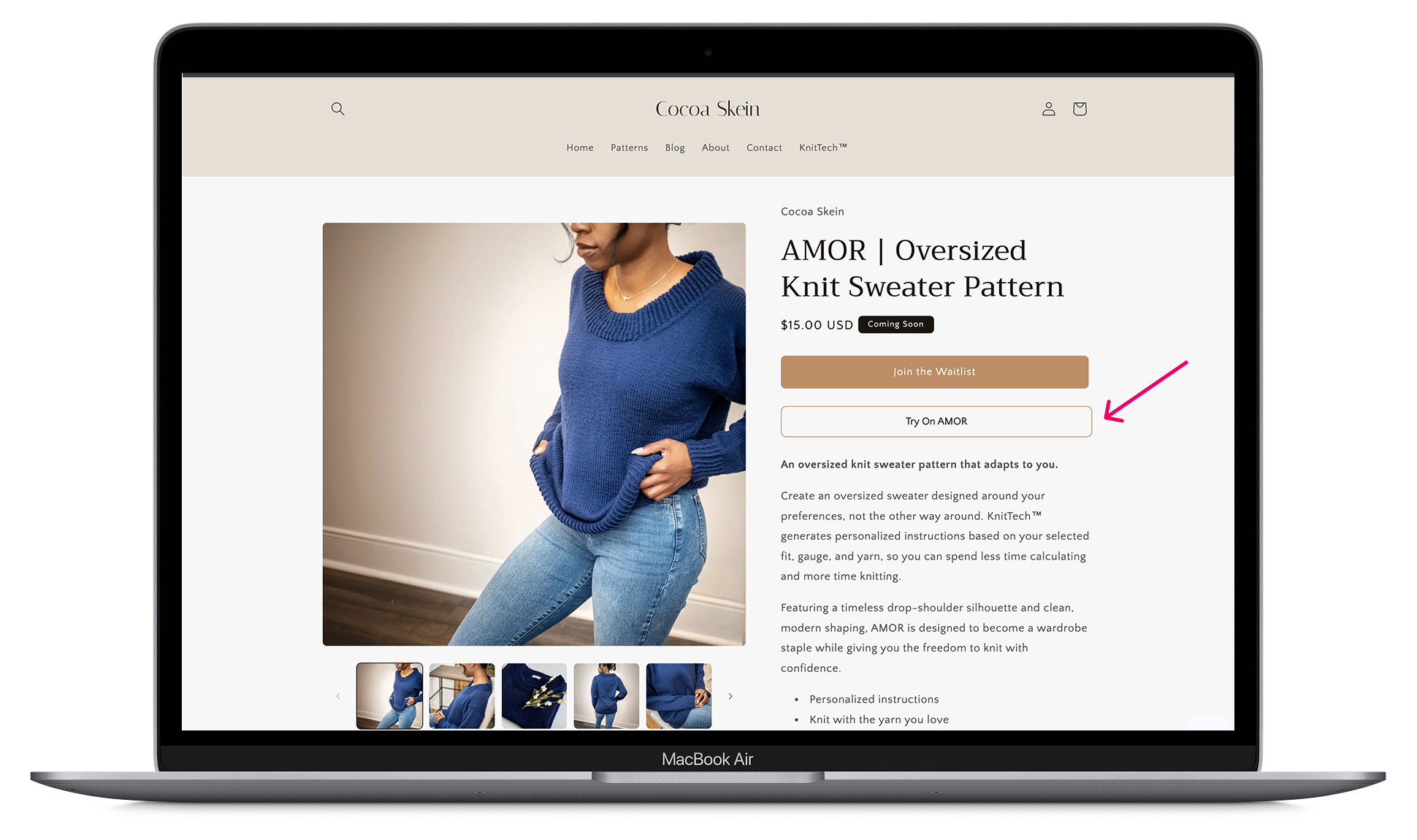
Launch the Virtual Try-On directly from the Shopify product page
-
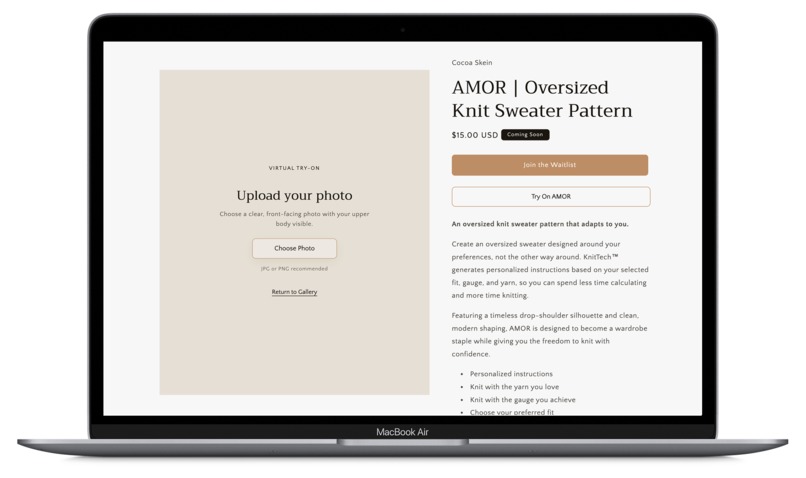
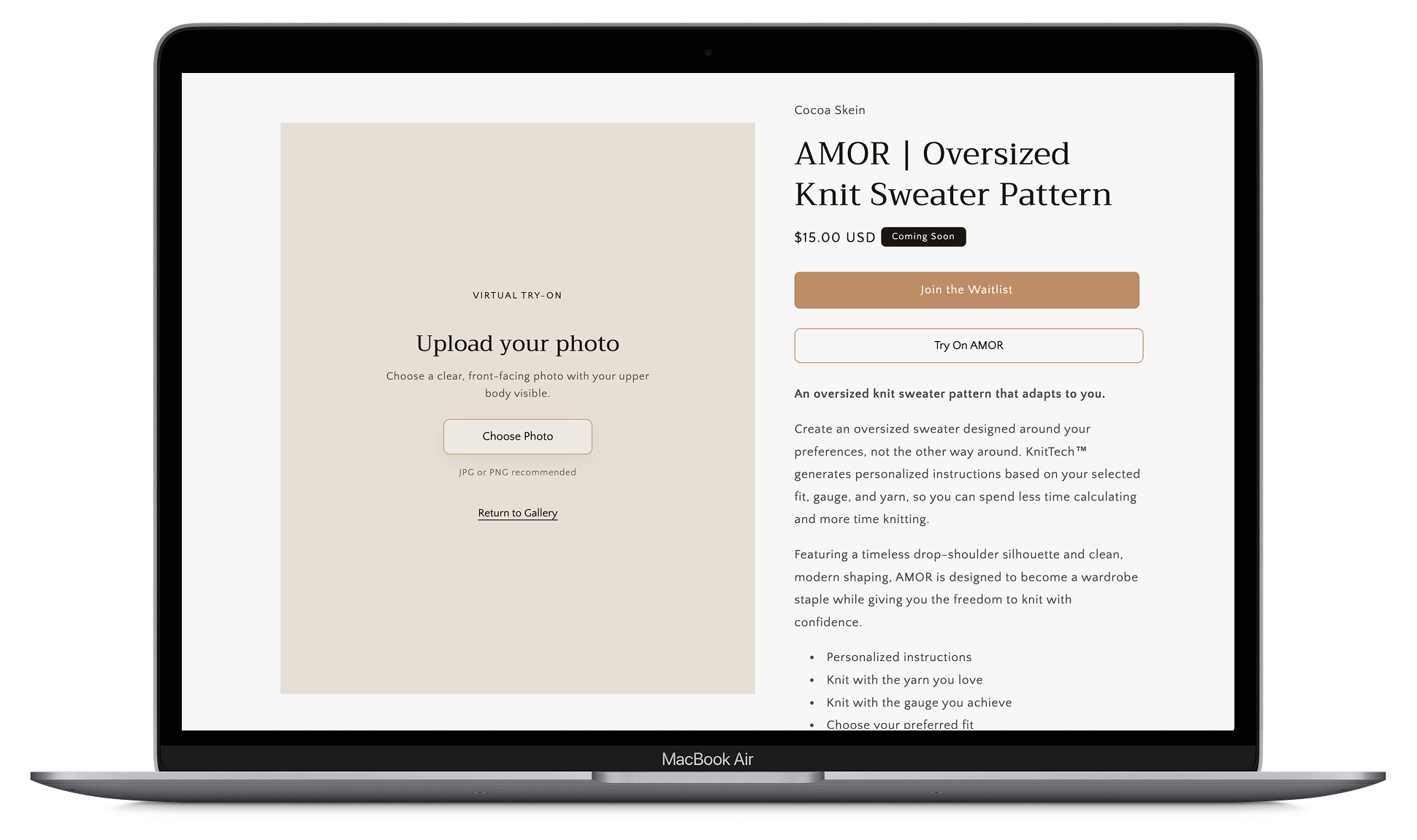
Upload a photo without leaving the shopping experience
-
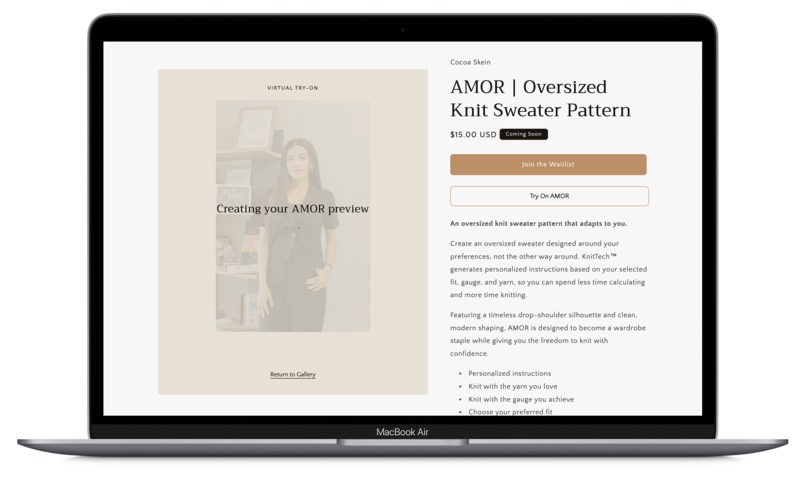
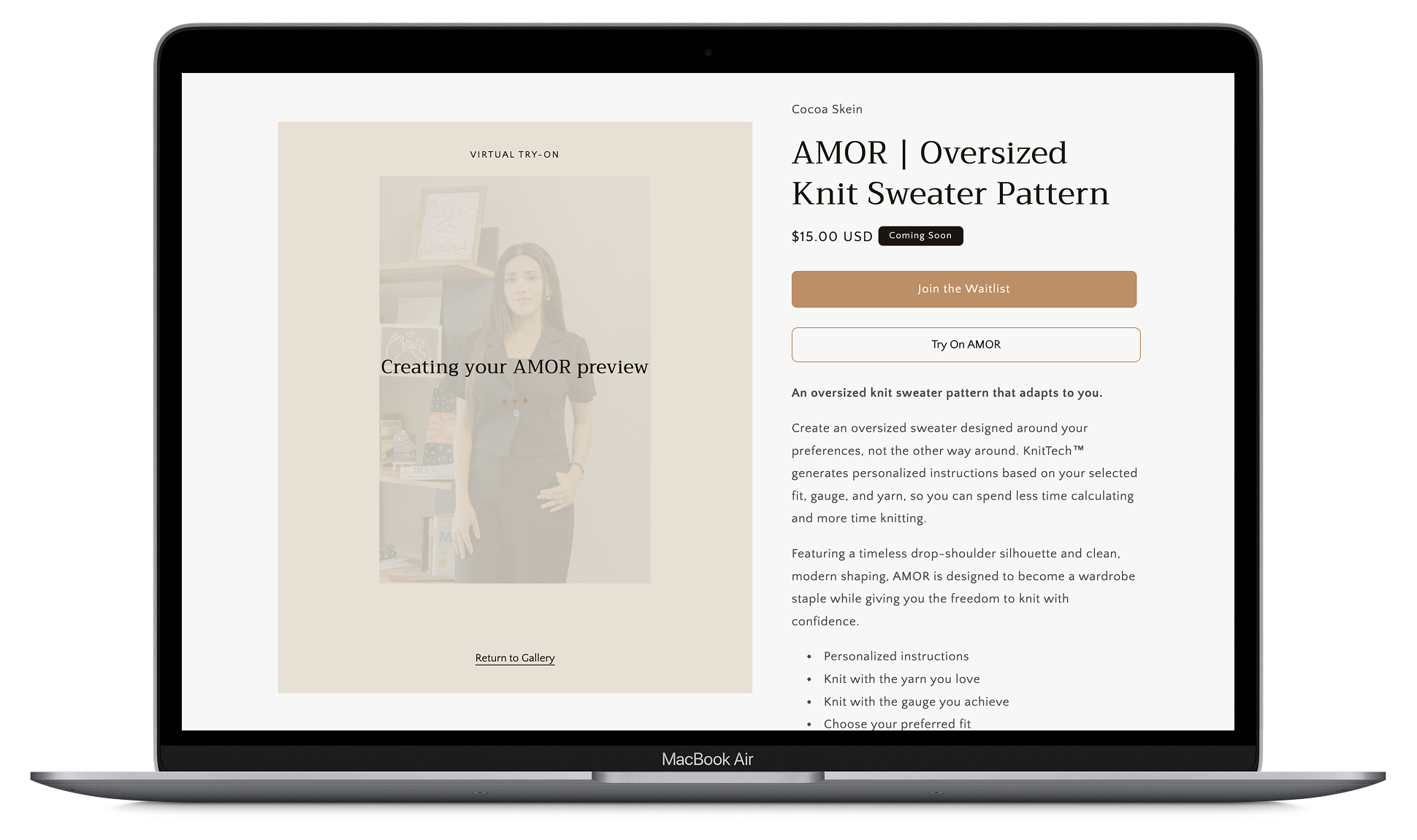
The YouCam API generates your virtual try-on
-
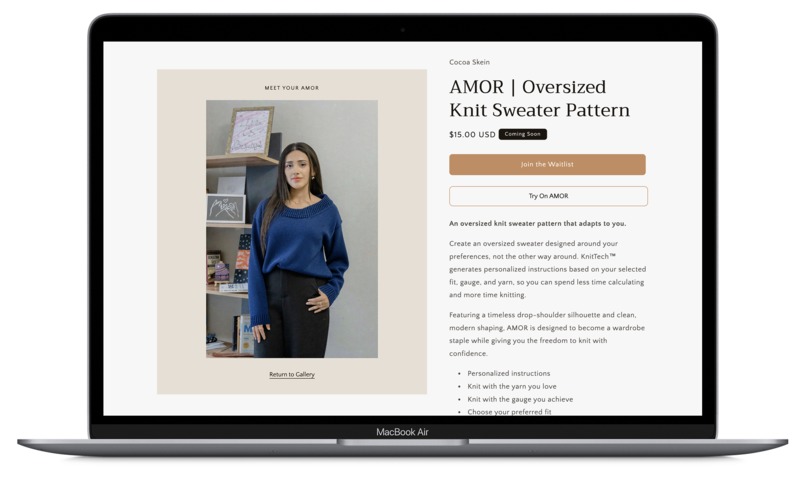
See yourself wearing the finished design before you knit
-
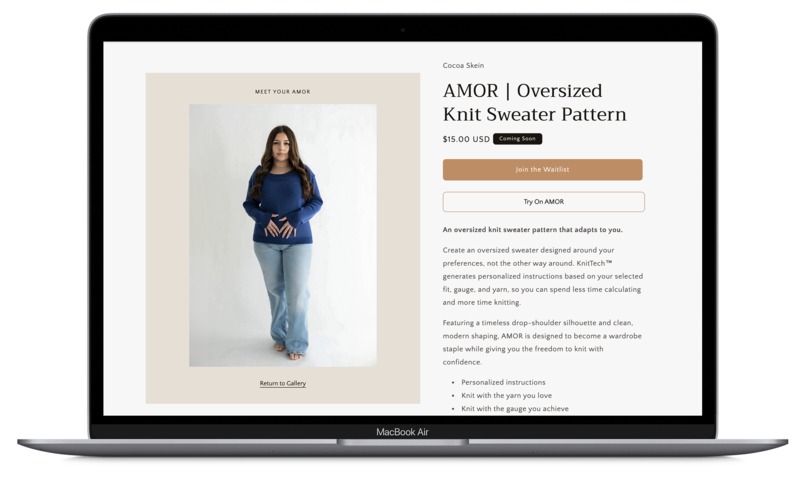
Helping designers showcase inclusive sizing without producing every physical sample
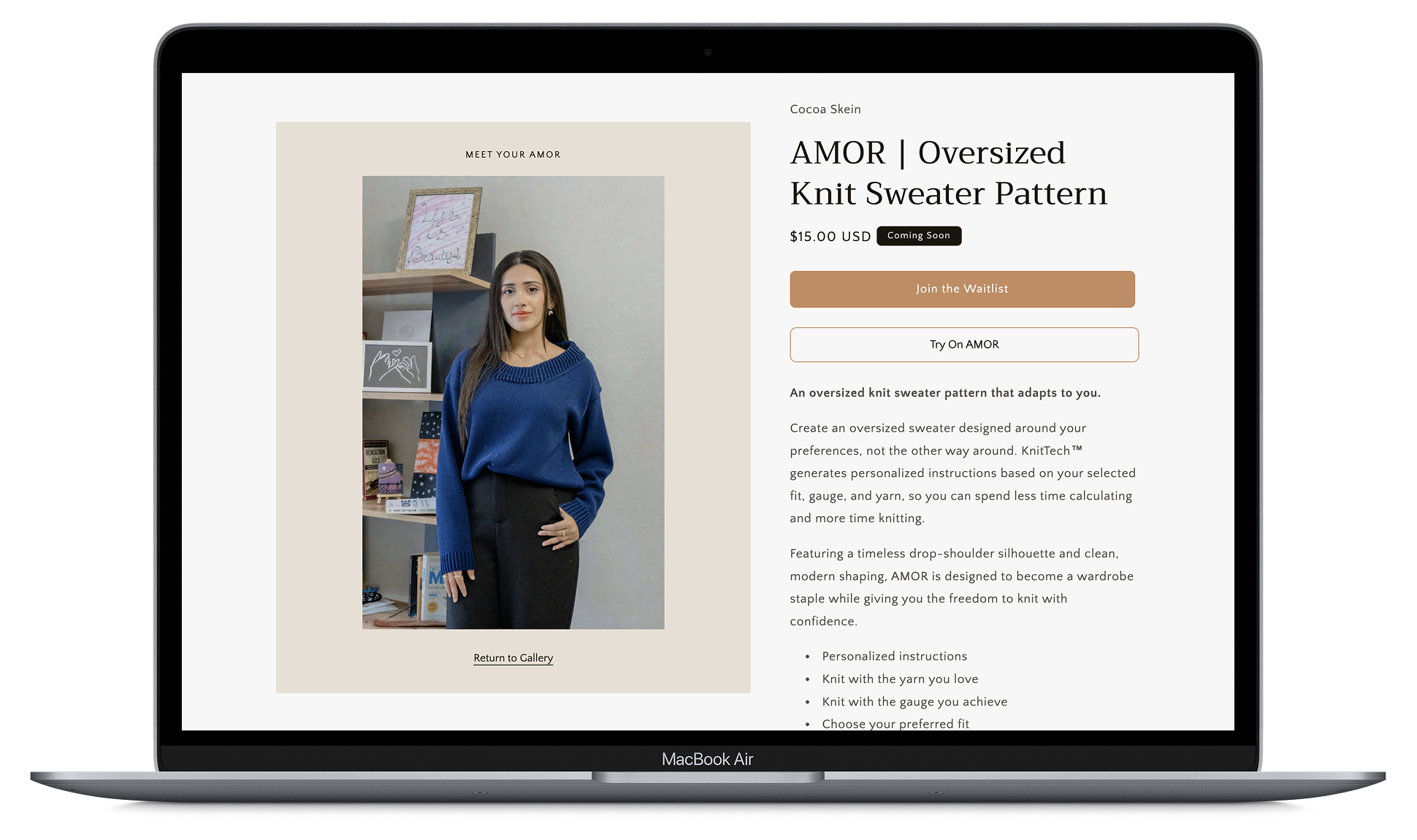
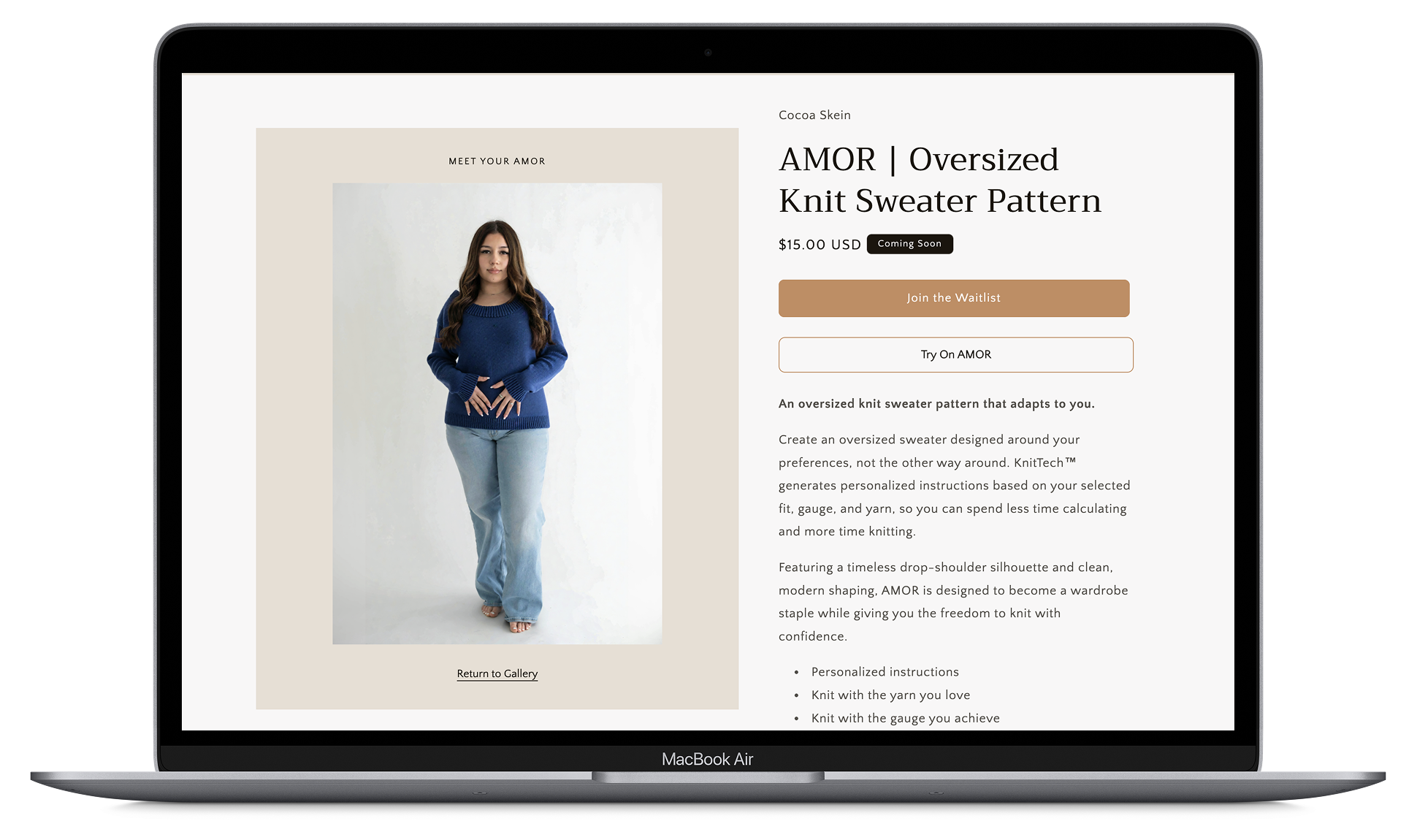
Inspiration
Imagine finding a sweater pattern online that you absolutely love. You buy the pattern, purchase the yarn, and spend months knitting your garment... only to finish it and realize you don't like how it looks on you.
Unfortunately, this is an experience many knitters know all too well. Unlike ready-to-wear fashion, handmade garments are non-refundable. The digital pattern cannot be returned. Used yarn cannot be returned. Most importantly, the time spent creating the garment cannot be returned.
That's where KnitTech began.
As both a knitwear designer and UX designer, I'm on a mission to use technology to help knitters create with confidence.
What it does
KnitTech integrates AI-powered Apparel Virtual Try-On directly into a Shopify knitting pattern store, allowing knitters to see themselves wearing a finished garment before purchasing a pattern or investing in yarn.
Instead of sending users to a separate website or application, the Virtual Try-On seamlessly takes over the existing product gallery, keeping shoppers inside the familiar e-commerce experience.
Users simply upload a photo, generate their try-on, and immediately see themselves wearing the finished sweater.
For knitters, this helps answer one important question before they commit weeks or months of work:
"Will I actually like how this looks on me?"
How we built it
This project combines Shopify, a custom storefront experience, and the YouCam Apparel Virtual Try-On API.
Rather than replacing Shopify's native product gallery, KnitTech temporarily overlays the gallery experience while keeping Shopify's existing functionality intact. This approach allowed the Virtual Try-On to feel like a natural part of the shopping experience instead of a separate application.
The interface was intentionally designed to remain minimal, allowing users to focus on trying on the garment instead of learning new controls.
Every design decision centered around reducing friction and helping knitters make confident purchasing decisions before investing time and materials.
Challenges we ran into
One of the biggest design challenges was deciding how the Virtual Try-On should fit into the Shopify shopping experience.
My original implementation opened a separate virtual fitting room outside of the product page. While functional, it interrupted the customer's shopping journey and felt disconnected from the rest of the experience.
Instead, I redesigned the feature as a gallery takeover. The original Shopify gallery remains active behind the scenes while the Virtual Try-On temporarily becomes the primary gallery experience. This preserves Shopify's native behavior while creating a seamless experience for the customer.
Another challenge was ensuring the experience felt polished rather than experimental. Small interaction details, including automatically returning users to the gallery after generating their try-on, were refined directly through tester feedback.
Accomplishments We're Proud Of
- Created a Virtual Try-On experience that integrates directly into a live Shopify product page, allowing knitters to preview a handmade garment without leaving the shopping experience.
- Designed for simplicity. The interface intentionally minimizes distractions so knitters can focus on one question: "What will this sweater look like on me?"
- Refined through real user testing. Feedback directly influenced interaction details, including automatically returning users to the product gallery after generating a try-on.
- Applied AI to an overlooked problem. Unlike ready-to-wear fashion, handmade garments require significant investments of time, materials, and craftsmanship. KnitTech helps knitters make more confident decisions before those investments are made.
What we learned
One of the biggest lessons from this project was that introducing AI into an experience does not necessarily mean introducing more complexity.
After studying how leading fashion brands implement virtual try-on experiences, I realized the technology works best when it feels almost invisible. Users should remain focused on making a buying decision, not learning a new interface.
That insight shaped every design decision. Instead of creating a separate application, the experience stays within the existing Shopify product page. Instead of adding numerous customization options, the interface focuses on one question: "Can I confidently picture myself wearing this?"
I also learned that AI has meaningful potential beyond traditional retail. Handmade fashion introduces a completely different challenge because purchases involve not only money, but also weeks or months of craftsmanship. That makes confidence before creating just as important as confidence before buying.
What's Next
- Continue refining the Virtual Try-On experience based on feedback from knitters and testers.
- Expand the implementation into a Shopify Theme App so independent knitting designers can integrate the experience into their own stores.
- Explore additional handmade fashion categories including crochet and sewing, where confidence before creating is just as valuable as confidence before purchasing.
- Continue developing KnitTech's adaptive pattern technology, allowing knitters to personalize fit and gauge alongside the Virtual Try-On experience.
Built for a Real Business
Unlike a proof-of-concept created solely for the hackathon, this feature was developed for Cocoa Skein, my existing knitwear business.
The Virtual Try-On has already been tested with users and is intended to become a permanent feature of the shopping experience as KnitTech continues to evolve.
Built With
- next.js
- shopify
- vercel

Log in or sign up for Devpost to join the conversation.