-
-
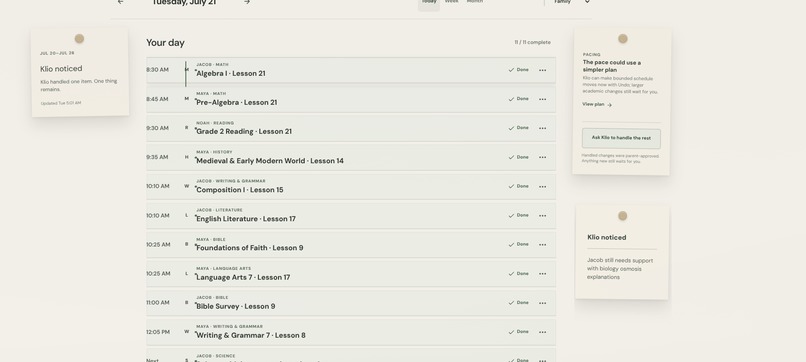
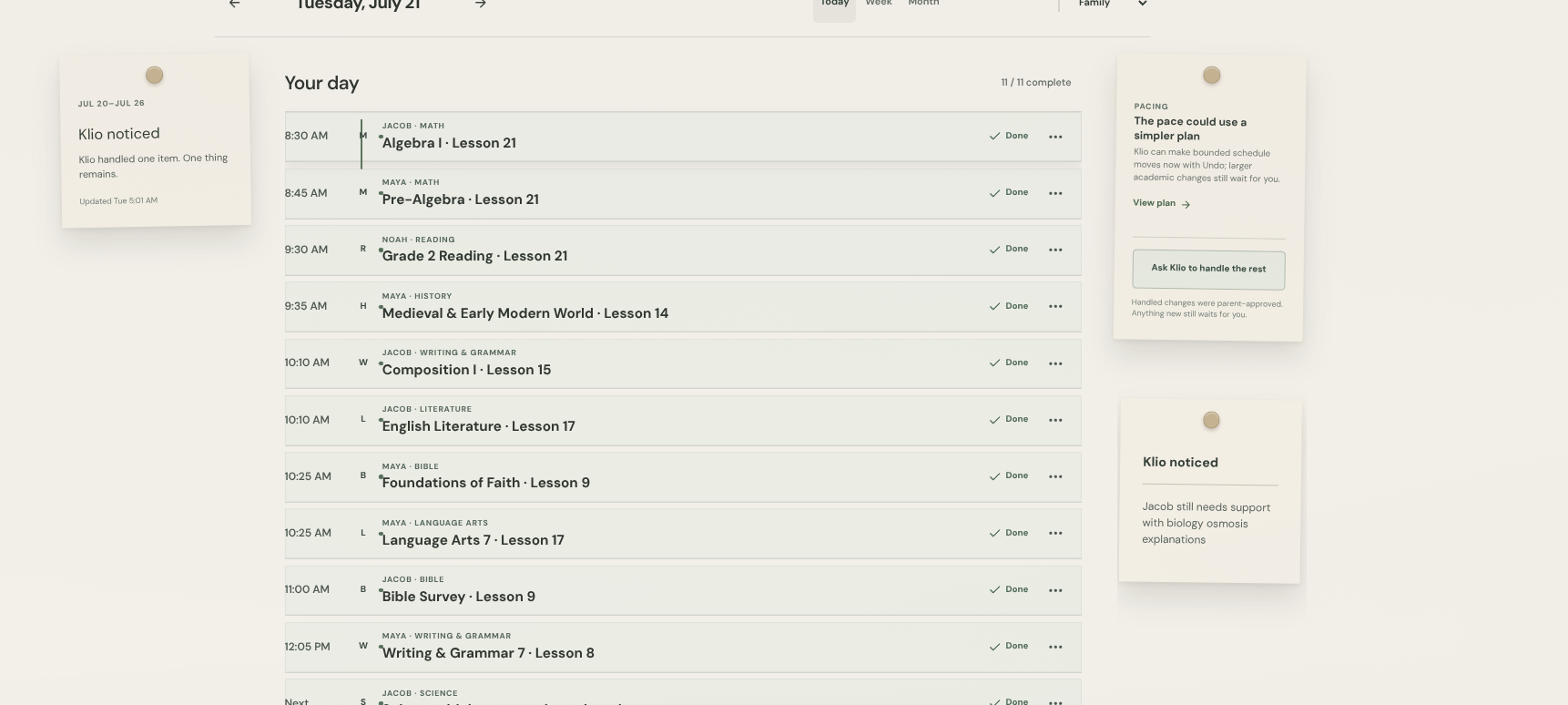
Daily View
-
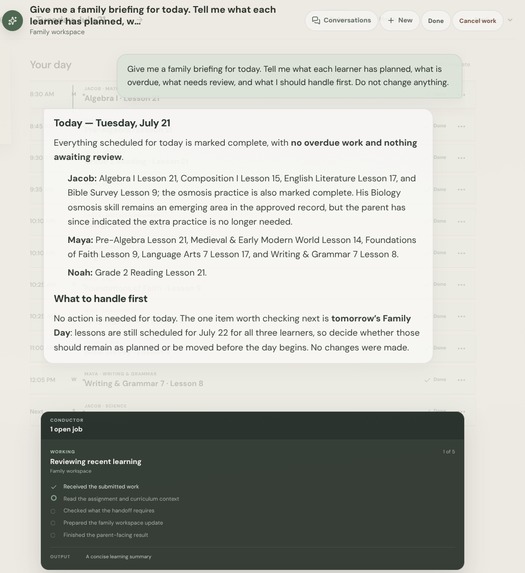
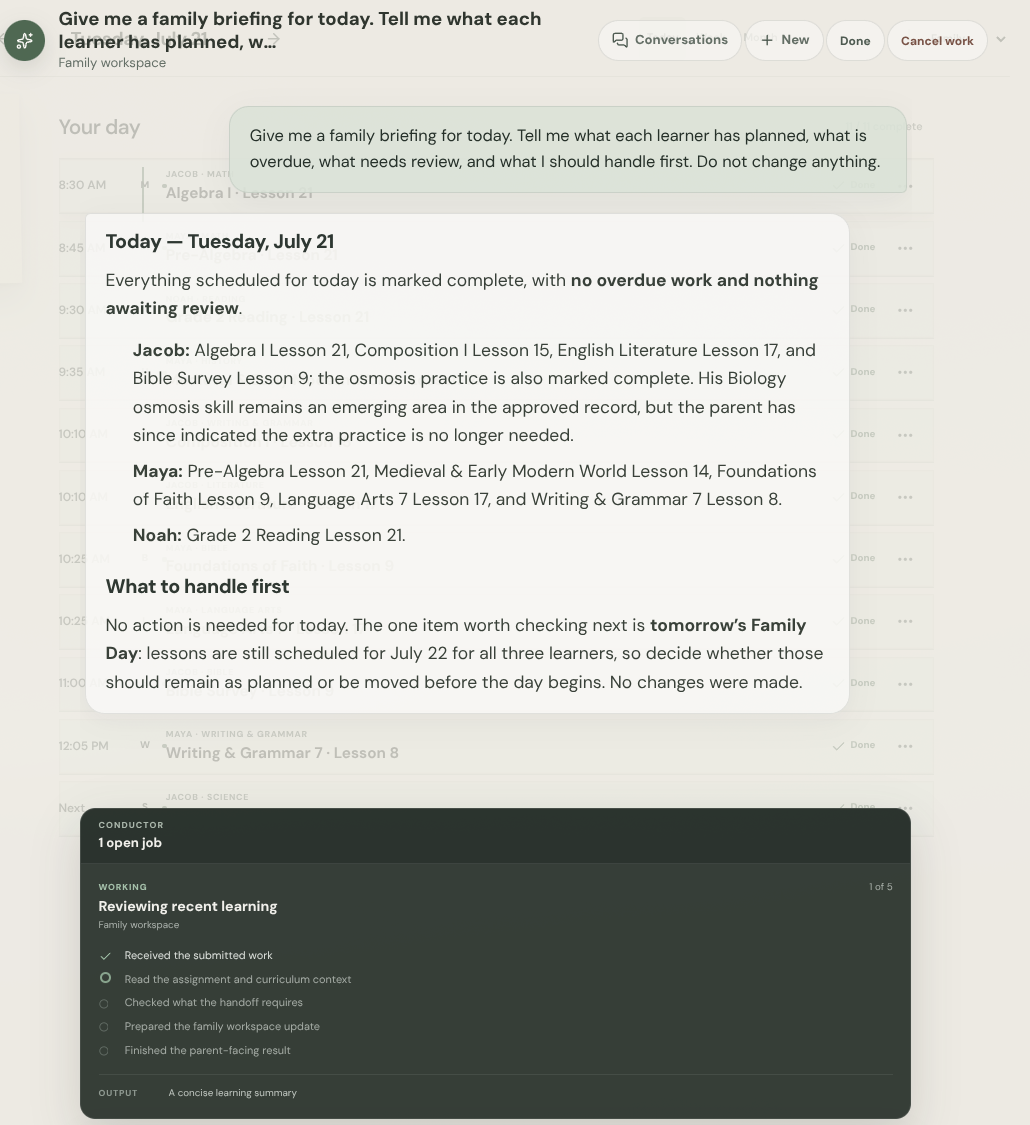
Klo Interaction
-
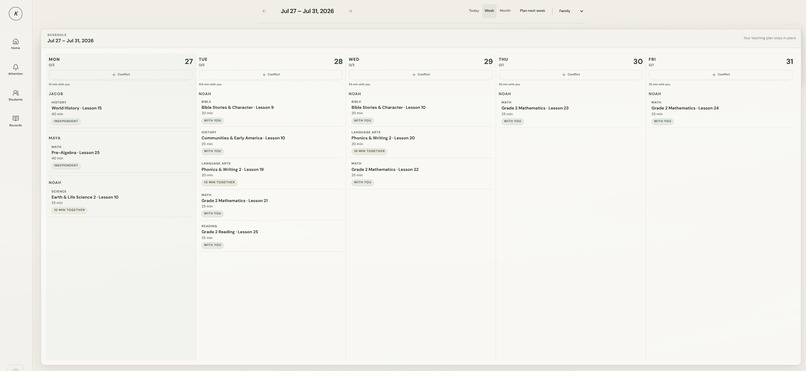
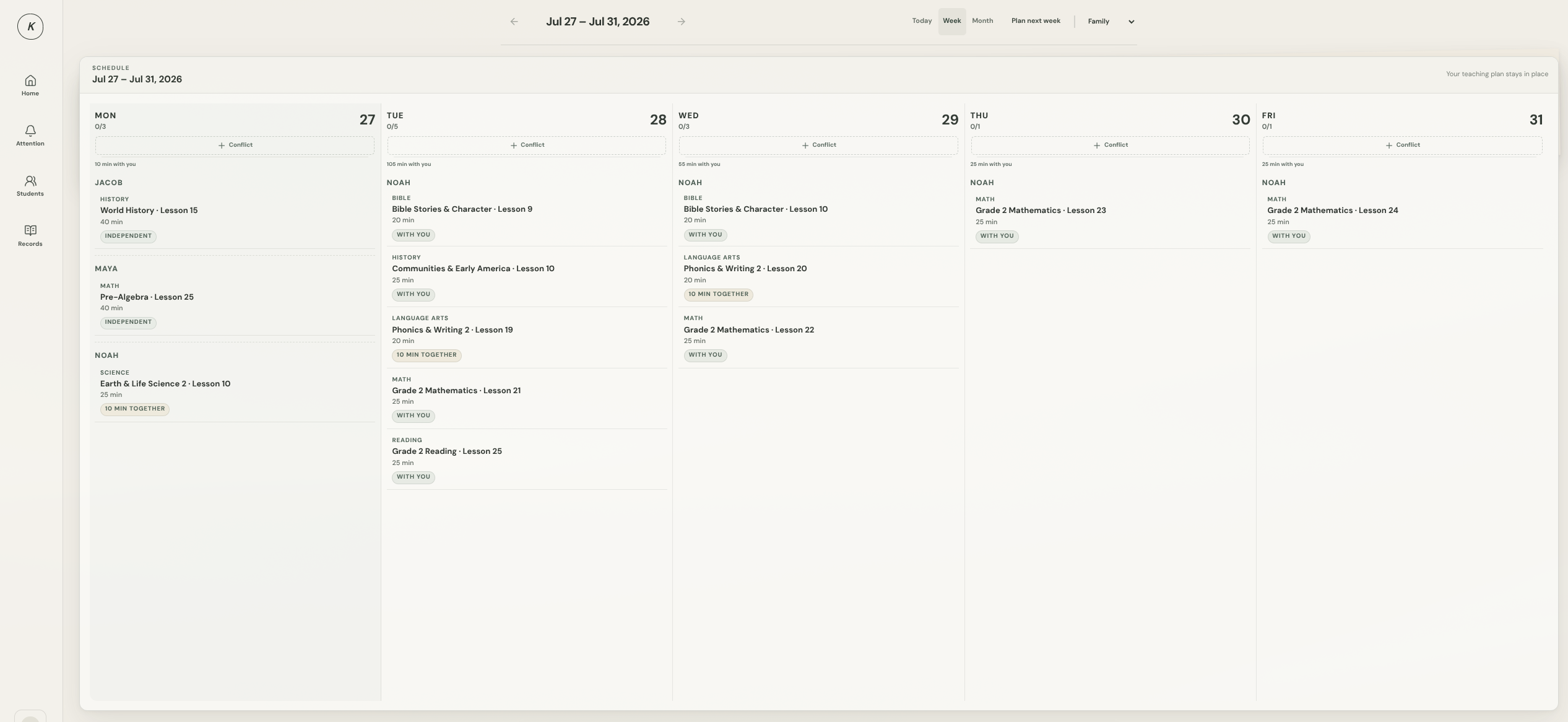
Week View
-
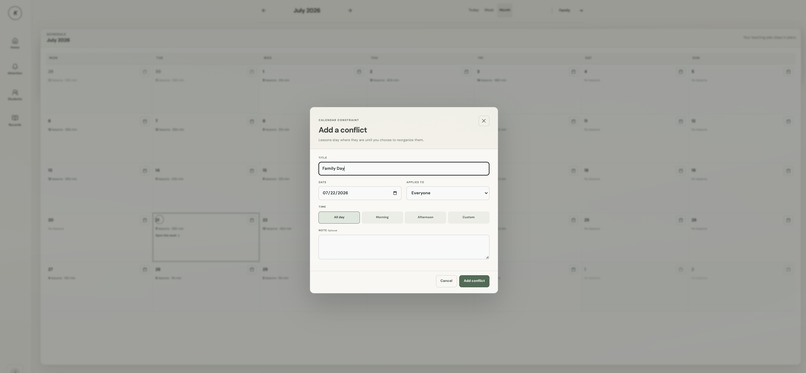
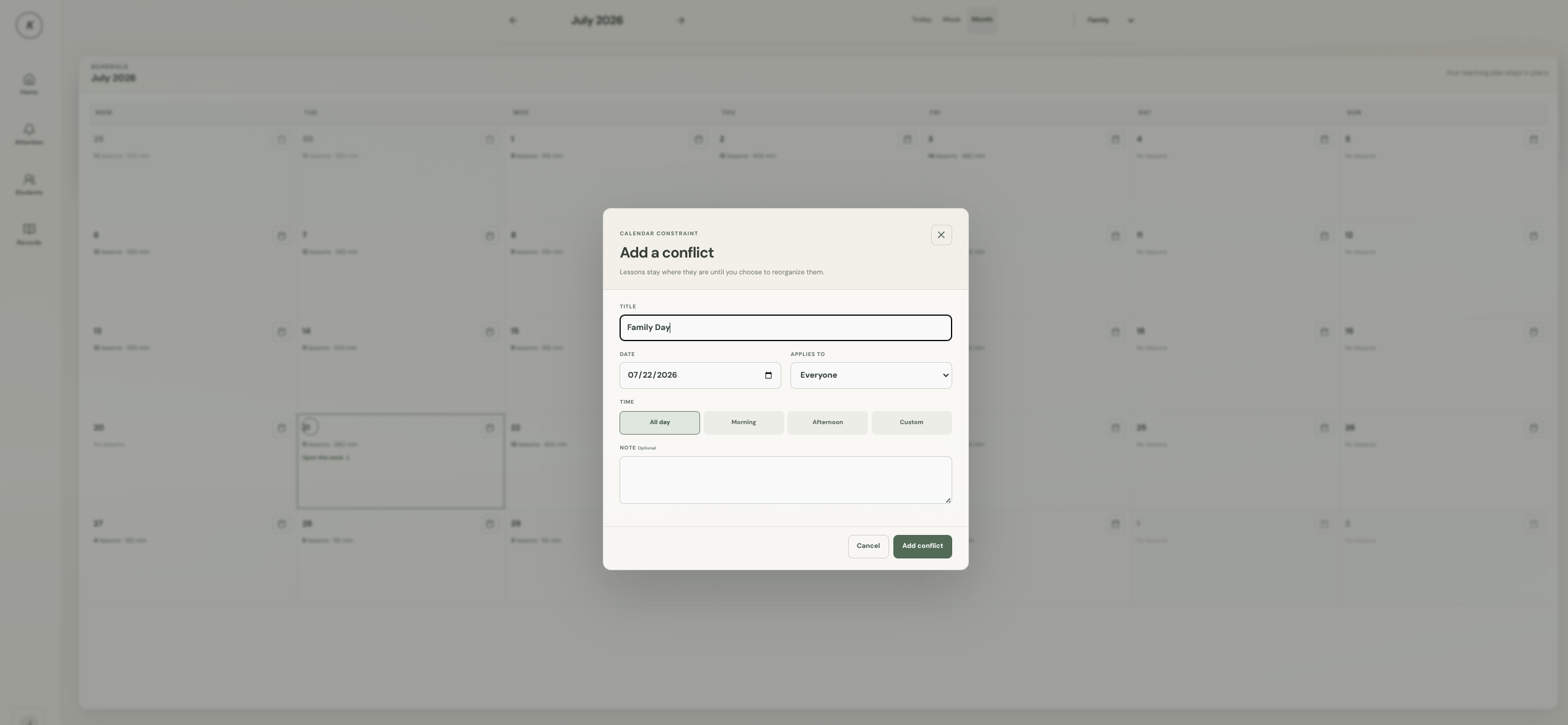
Scheduling Days off
-
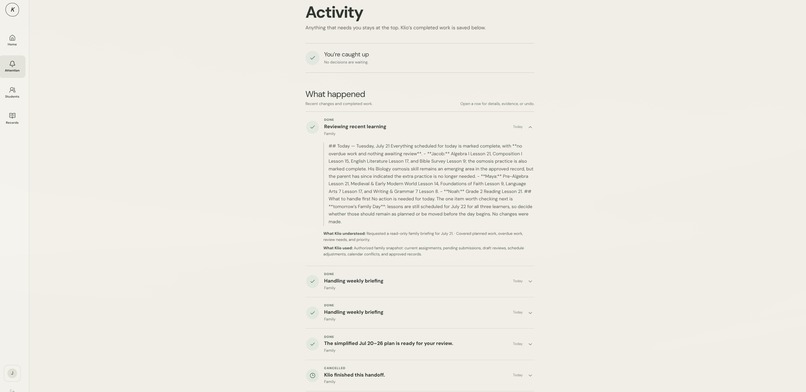
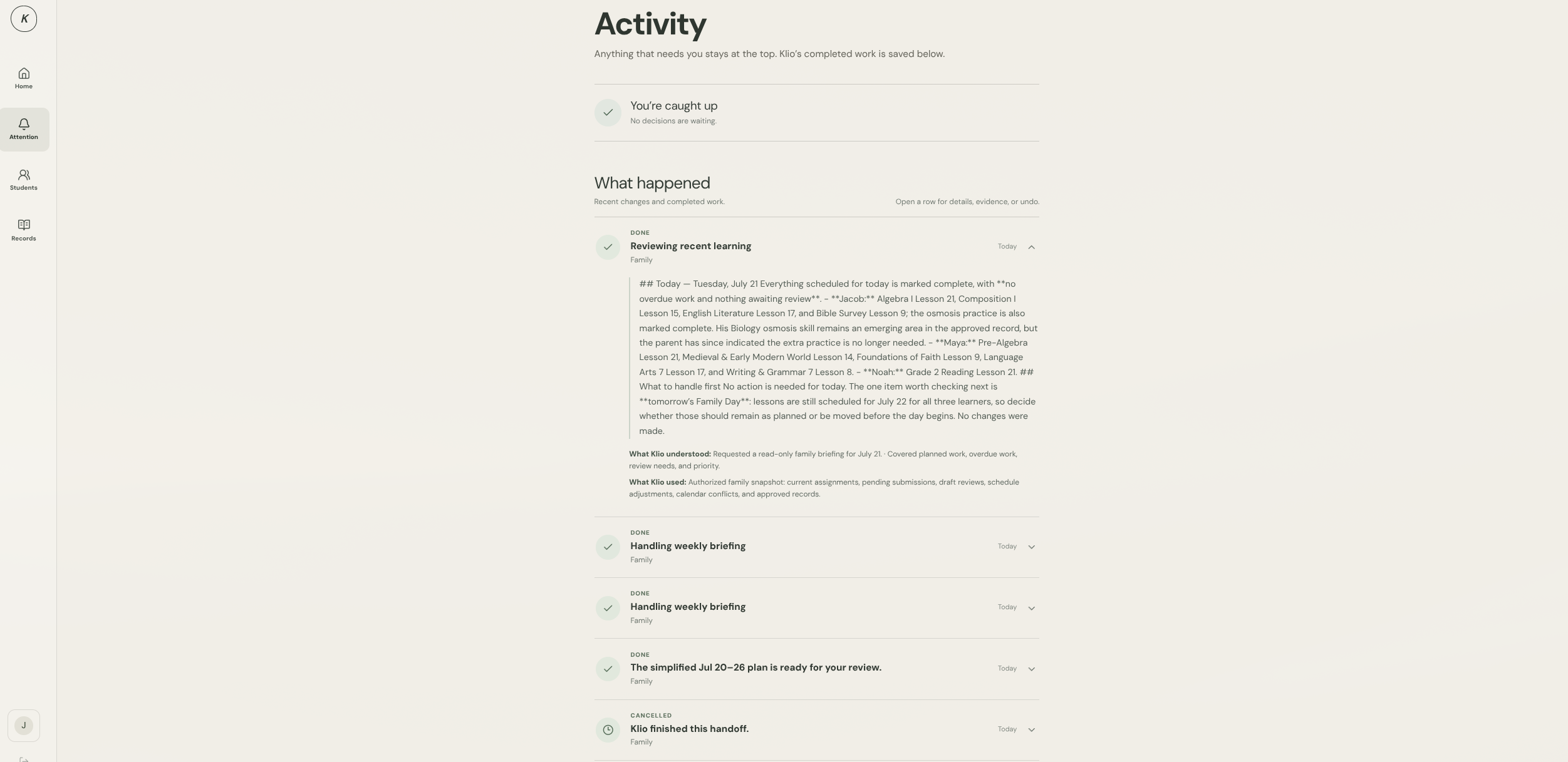
Klio's recent work
-
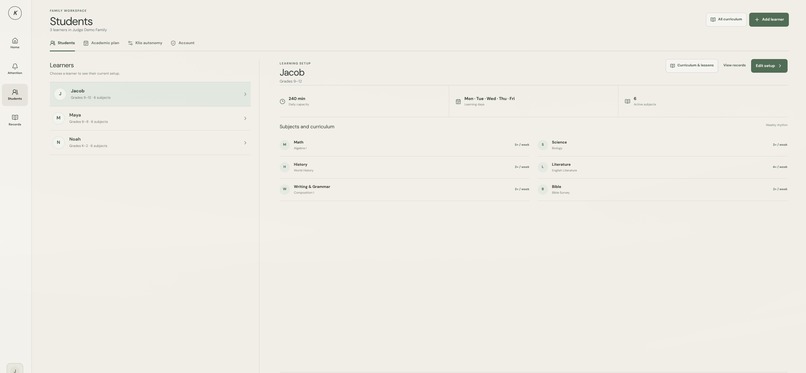
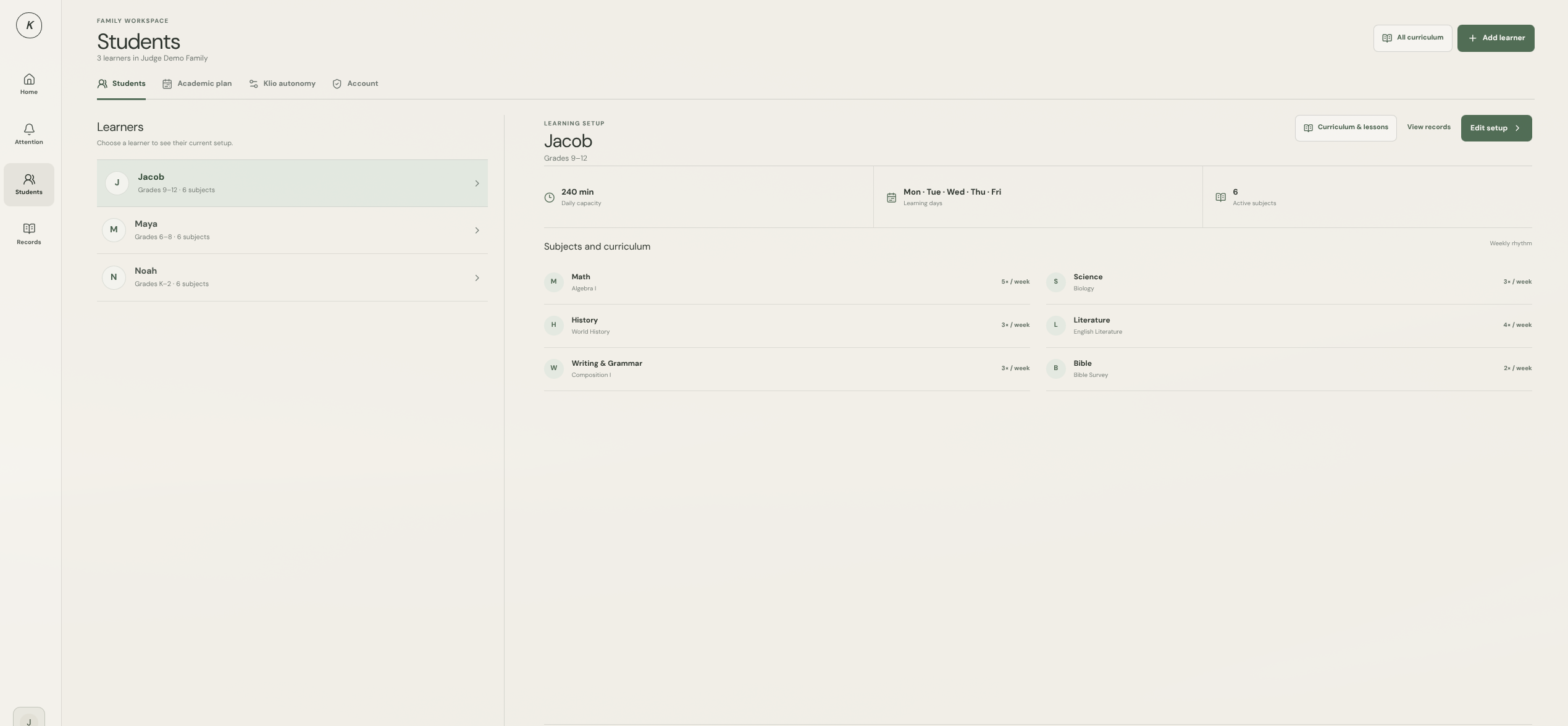
Family Workspace
Inspiration
I homeschool, and I have other family members who homeschool as well.
A homeschooling parent is not only teaching. They are planning lessons, organizing curriculum, reviewing work, adjusting schedules, tracking progress, saving records, and deciding when a child needs more support.
Most homeschool tools help store information, but they still leave the parent responsible for noticing every problem and manually coordinating every change. General-purpose AI chat can offer suggestions, but a parent must still transfer those suggestions into the family’s actual schedule and records.
I've been thinking of a tool like Klio for my personal use case and 5.6-Sol was able to get very far with this prototype. I wanted to explore what it would look like if AI could understand the family’s curriculum, schedule, completed work, and learning evidence, and then safely help manage the work rather than simply talk about it.
What it does
Klio brings a family’s homeschool operation into one connected workspace.
Parents can use Klio to:
- Plan daily, weekly, and monthly schedules
- Organize courses, curriculum units, and sequenced lessons
- Coordinate assignments across multiple children
- Capture student work and supporting evidence
- Review submissions before they become trusted learning records
- Identify unfinished work, scheduling conflicts, pacing concerns, and learning gaps
- Generate focused practice from approved evidence
- Ask Klio to handle routine planning work in the background
- Review, approve, reject, or undo changes when appropriate
Klio proactively notices issues instead of waiting for the parent to formulate the perfect prompt. For example, it may notice that lessons are out of sequence, several assignments remain unfinished, a day is overloaded, or a student needs more practice with a concept.
The parent can choose “Ask Klio to handle this.” Klio then starts a background task directly from that notice. Routine, reversible schedule changes can be completed automatically with an Undo option. More consequential academic or curriculum decisions remain proposals until the parent approves them.
The goal is not to replace the parent’s judgment. It is to reduce the coordination burden so the parent can spend more time teaching and supporting their children.
How I built it
I built Klio as a production-style application rather than a scripted demonstration.
The interface uses Next.js and React and includes Today, Week, and Month views. The schedule is connected to curriculum, assignments, evidence, parent reviews, practice activities, and AI-generated notices.
Supabase provides authentication, a hosted PostgreSQL database, access controls, and durable storage for families, learners, curriculum, assignments, evidence, reviews, proposals, audit events, and agent activity.
The OpenAI-powered agent uses structured turns and bounded tools. When a parent hands Klio a task, the system:
- Records the request and the authority granted by the parent.
- Places the work in a durable background queue.
- Collects the relevant family, curriculum, schedule, and evidence context.
- Uses the model to determine the smallest useful next action.
- Calls only the tools permitted for that task.
- Records progress and tool results.
- Verifies the resulting application state.
- Returns a completed action, a reviewable proposal, or one necessary clarification.
Because the work is durable, the parent can leave the page and return later without losing the task. Klio restores the task’s progress or completion receipt in the same place where it began.
I also designed an autonomy system around the risk and reversibility of each action. Ordinary schedule adjustments can happen immediately and remain undoable. Grades, major curriculum decisions, and other significant academic changes continue to require explicit parental approval.
Challenges I faced
One of the hardest challenges was turning an AI conversation into dependable action. It is easy for a model to describe a good plan. It is much harder to safely apply that plan to real schedules and records without duplicating lessons, using stale information, or changing something the parent intended to preserve.
Another challenge was background execution. Some AI tasks take longer than a normal web request, but the application still needs to feel responsive. I separated the user-facing application from the worker that processes agent tasks. Klio immediately confirms the handoff, displays durable progress, and continues the work independently.
I also had to find the right balance between autonomy and parental control. Requiring approval for every minor schedule adjustment makes the agent feel like another inbox. Allowing every change automatically would be inappropriate for an educational system. Klio therefore distinguishes between safe, reversible operational changes and decisions that require human judgment.
Keeping the data connected was another major challenge. A schedule change may affect curriculum order, workload, parent availability, evidence, and future recommendations. Stable identifiers, structured relationships, audit records, and post-action verification became essential parts of the system.
What I learned
AI needs real tools, not just good prompts. The agent became useful when it could safely inspect records, update schedules, create practice, and verify its work.
Long-running tasks need durable state. Background work must survive navigation, refreshes, and temporary failures without losing progress.
The interface must feel responsive even when the model is still working.*Immediate feedback, visible progress, and persistent results made the agent feel dependable.
Built With
- javascript
- next.js
- node.js
- openai
- react
- typescript
- vercel

Log in or sign up for Devpost to join the conversation.