-
-
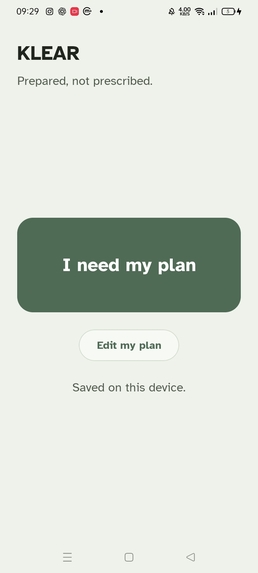
This is Klear
-
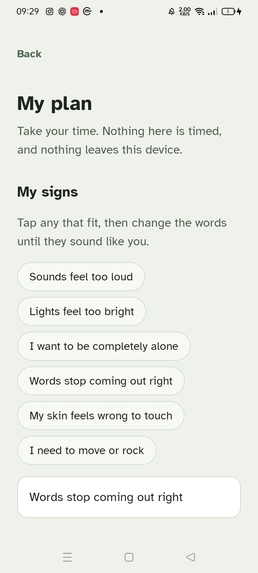
I plan
-
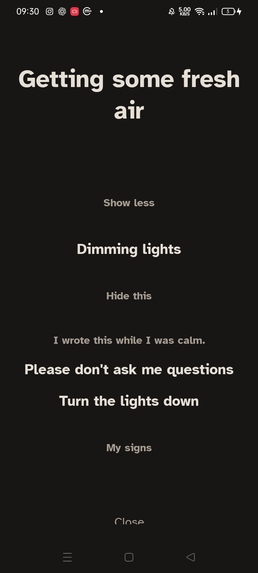
when i can't think straight this reminds me
Inspiration
A lot of autistic people already know what helps them during overload — leaving the room, dim light, a specific person, total silence. The knowledge exists. What doesn't exist is a way to reach it in the moment overload actually hits, when thinking clearly enough to remember and use a strategy is exactly what's hard. We wanted to design for that gap directly, rather than assume a calm-state solution (a settings page, a form) would still work under stress.
What it does
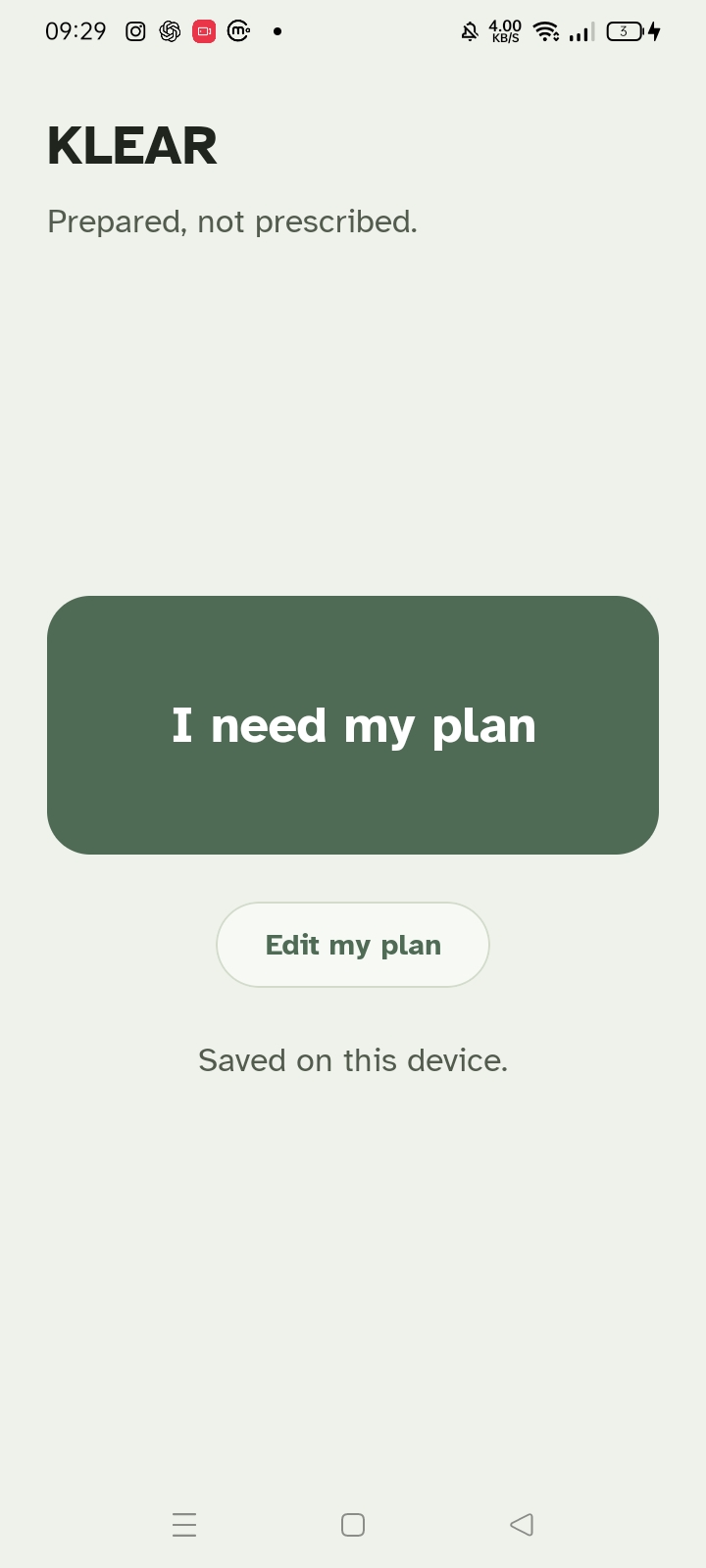
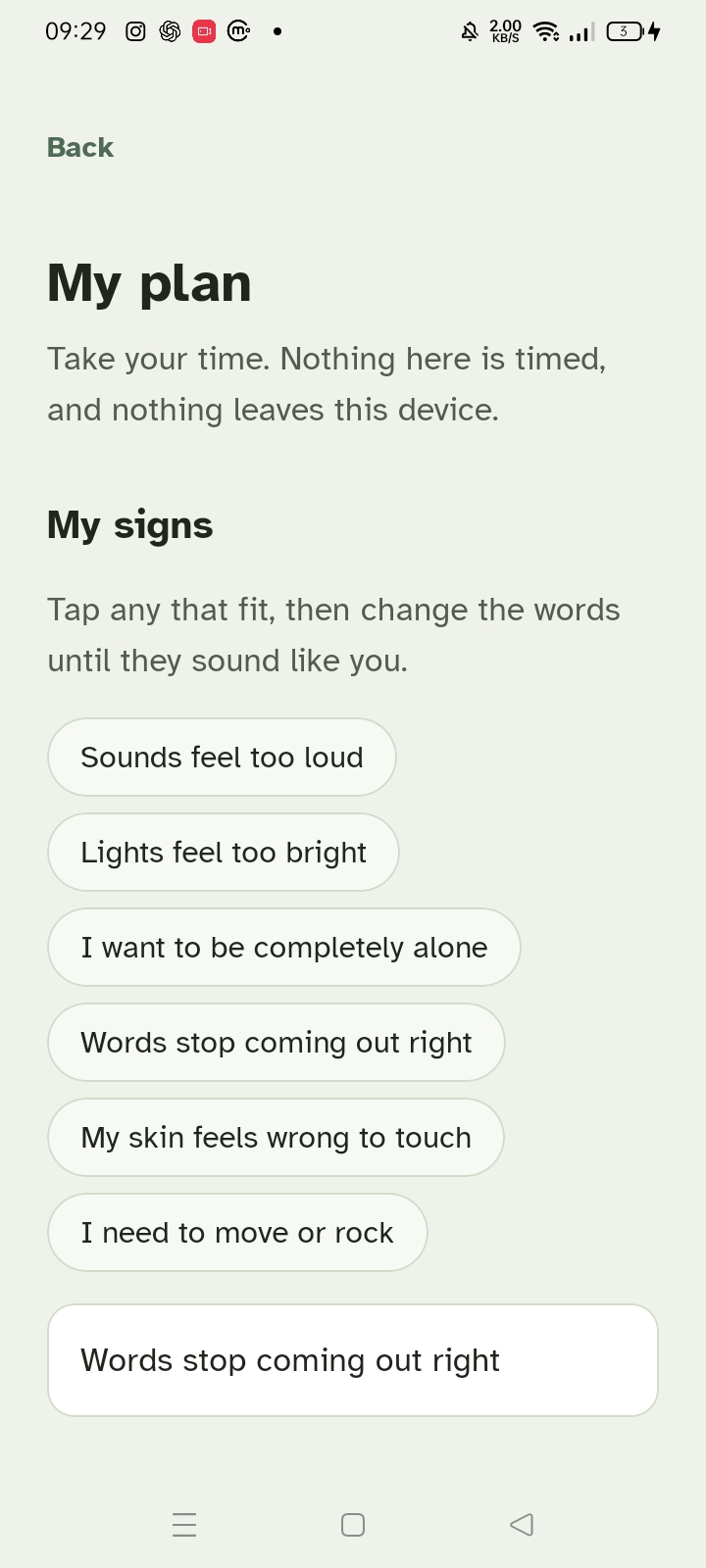
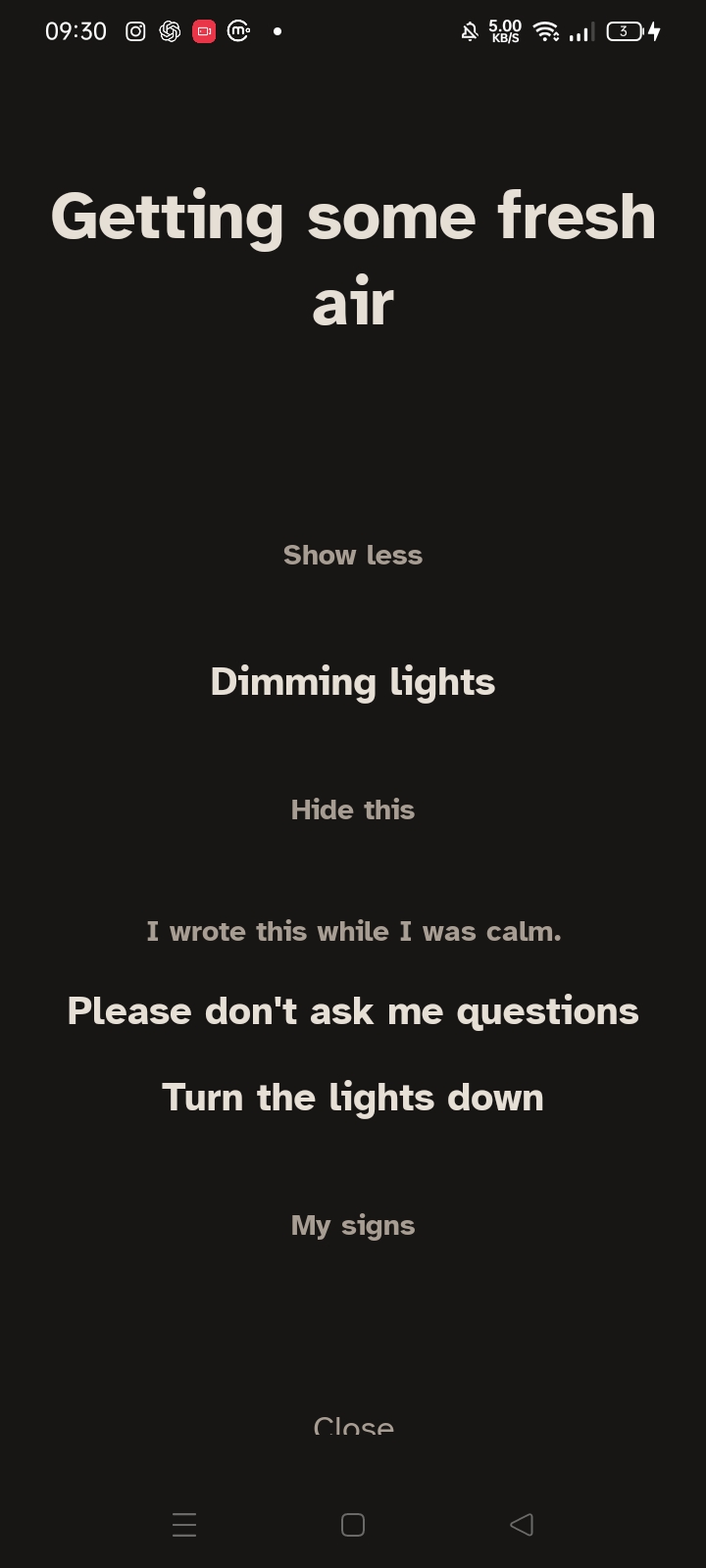
Klear is a two-mode app built around one plan. Calm mode is where you build it — gentle example prompts help you name your signs of overload, and open questions (no generic advice) help you name what actually helps, all in your own words. Overload mode is where you retrieve it — one big tap, no typing, and the single strategy that helps most appears large and alone, with everything else tucked one tap further away. The interface itself dims in overload mode, since bright screens can be part of the problem too.
How we built it
A single self-contained HTML file — no framework, no backend. State lives in memory and persists through simple key-value storage so the plan survives closing the app. The whole thing is small enough to build and test in one sitting.
Challenges
Designing the "add a sign" step without a blank text box — alexithymia makes naming internal states genuinely hard, so the prompts had to invite a response without dictating one.
What's next
Releasing it into the world to help those in need
Built With
- css
- express.js
- node.js
- openai
- postgresql
- react
- tailwind
- typescript
- vite

Log in or sign up for Devpost to join the conversation.