-
-
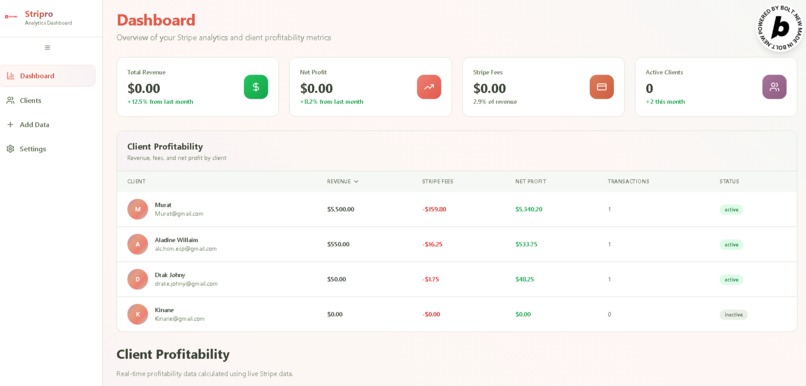
Dashboard
-
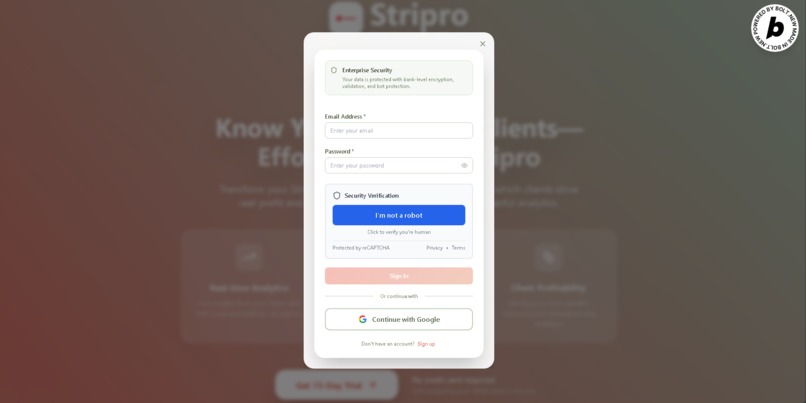
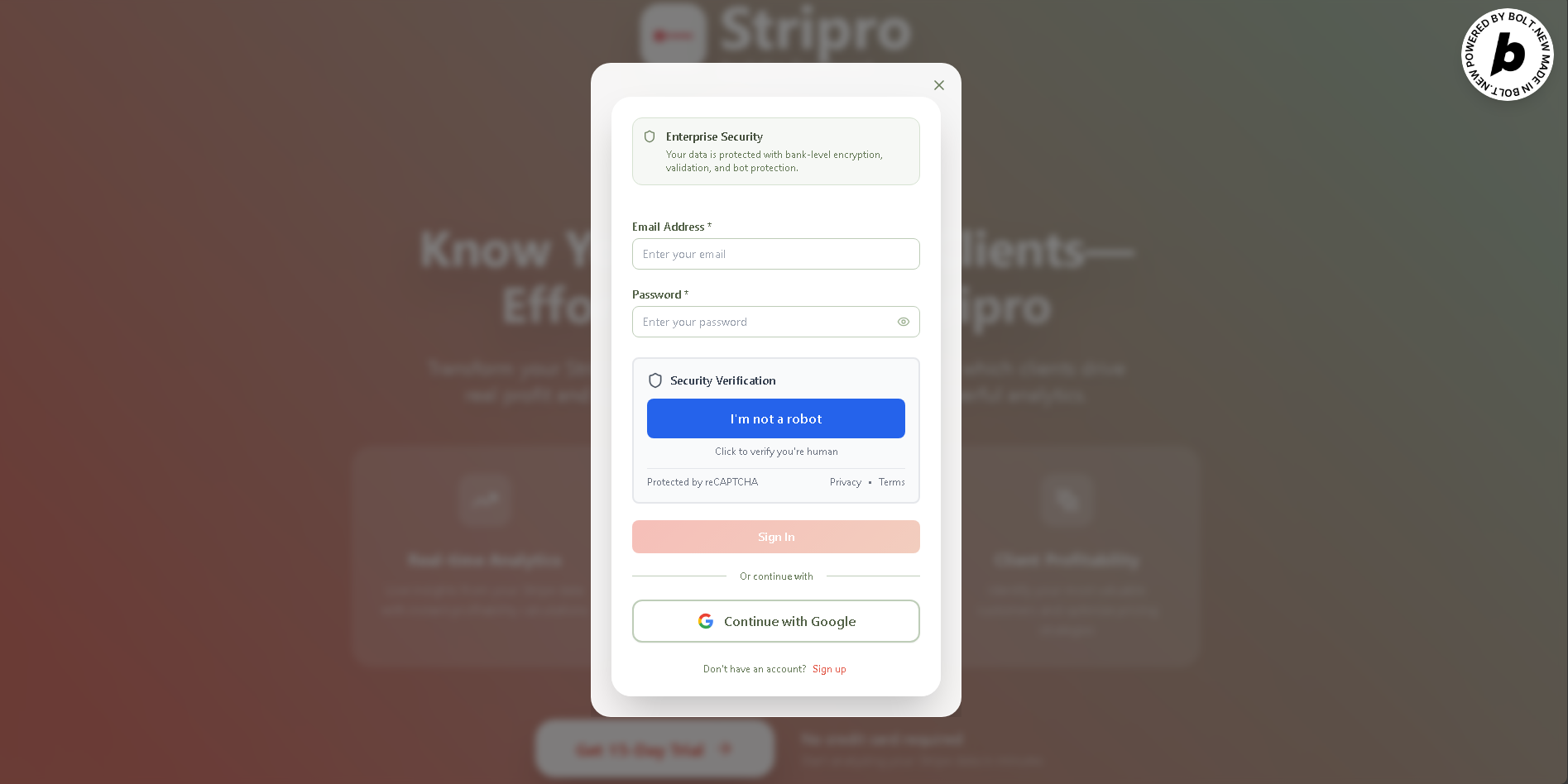
Login Panel
-
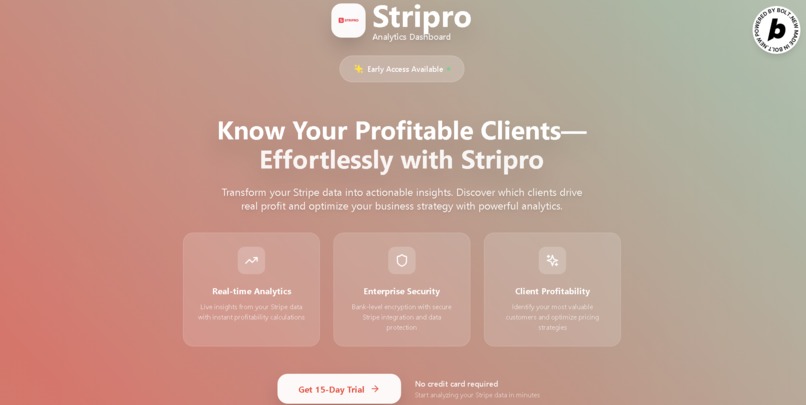
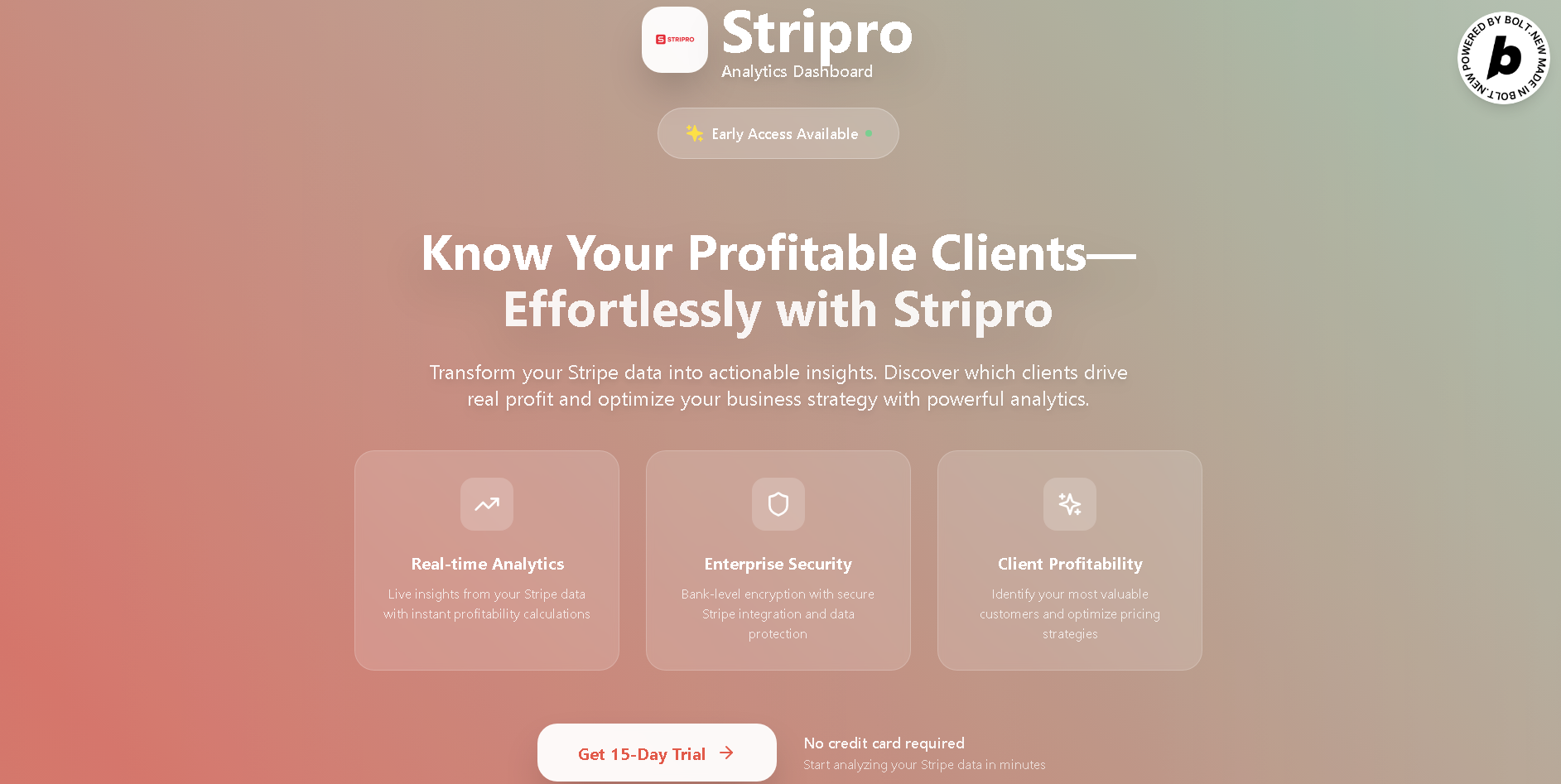
Landingpage
Inspiration
My journey began with deep research into MVPs on platforms like Reddit, X (Twitter), Indie Hackers, and Idea Browsers. I watched countless YouTube videos—especially success stories from channels like Greg Isenberg and others—about how to find, validate, and launch MVPs, and how to leverage AI in the process. After brainstorming many ideas and iterating through prompts with ChatGPT, Perplexity, and Manus, I realized there was a gap: Stripe users needed a way to instantly see which clients were truly profitable, in real time, with minimal effort. That’s how the idea for Stripro was born—an app that delivers client profitability analytics from Stripe in just three clicks: login, connect Stripe account, and view your dashboard.
What it does
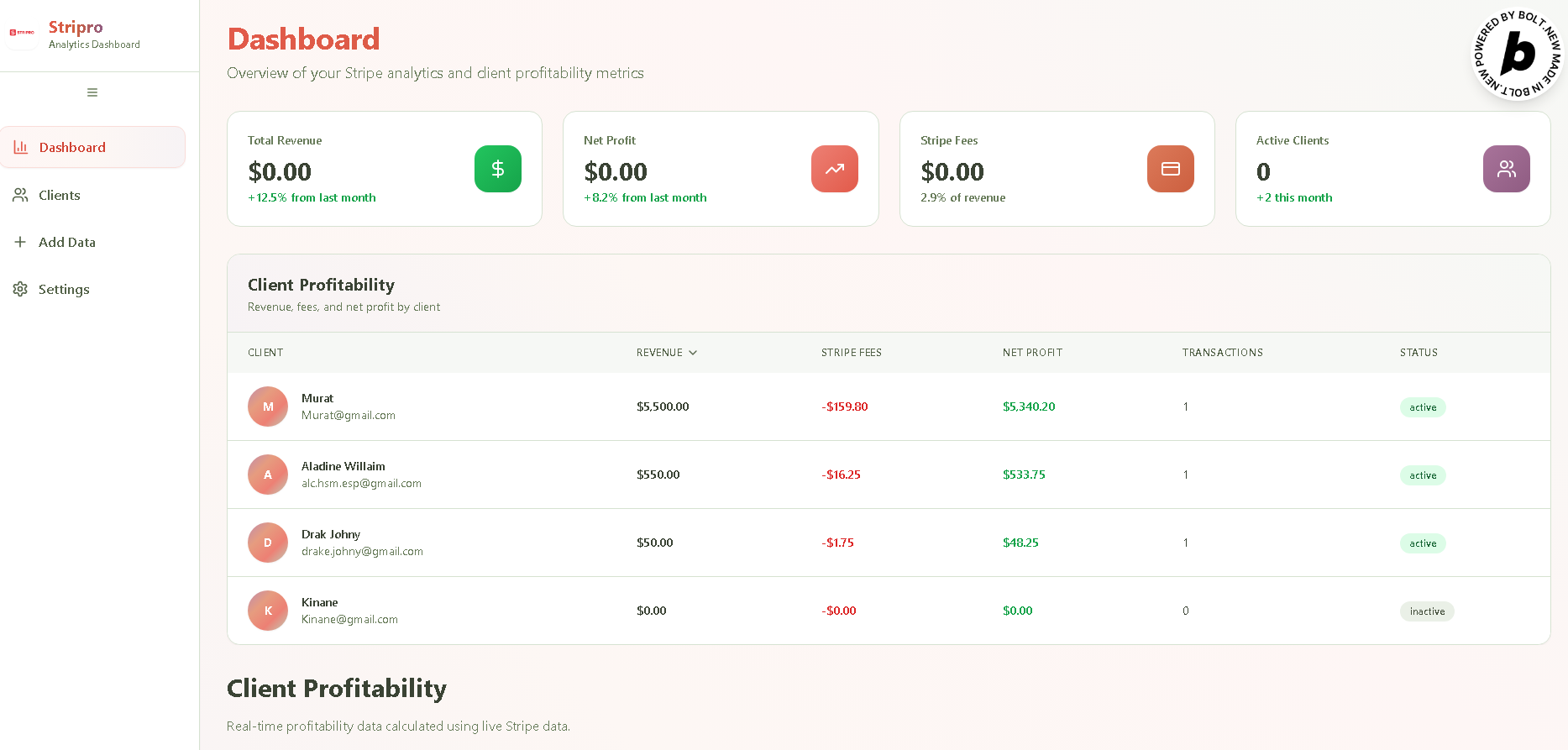
Stripro is a simple, user-friendly web application that connects to your Stripe account and instantly analyzes your clients’ profitability. It fetches real-time data from the Stripe API and presents clear, actionable insights—making it effortless for SaaS founders, agencies, and e-commerce businesses to know which clients are making them money.
How we built it
I built Stripro using Bolt.new for rapid prototyping and Perplexity for technical guidance. The backend is powered by Supabase, providing authentication, database management, and serverless functions. The frontend is built with modern tools—React 18, TypeScript, and Tailwind CSS—ensuring a responsive and accessible user experience. Throughout the process, I relied on community support, AI tools, and lots of documentation to bridge knowledge gaps and move the project forward.
Challenges we ran into
The biggest challenge was backend configuration. Coming from a non-backend background, I had to quickly learn the basics of serverless functions, API integration, and secure data handling. Debugging Stripe webhooks, understanding Supabase Edge Functions, and ensuring secure authentication required patience and persistence. There were moments when I wanted to quit, but I took a breath, sought help from Perplexity and the Bolt.new discussion mode, and kept pushing through.
Accomplishments that I am proud of
I’m most proud of my resilience—overcoming tough moments when things didn’t work and I felt like giving up. Each time, I managed to regroup, problem-solve, and move forward. I’m also proud of building a working MVP that delivers real value to Stripe users, and of learning how to organize code, use GitHub for version control, and configure a backend from scratch.
What we learned
This project taught me how to structure and organize code, manage a project on GitHub, and set up a backend for a SaaS MVP. I learned the fundamentals of API integration, secure authentication, and real-time data processing. Most importantly, I learned how to break down big problems into small, manageable tasks and to ask for help when needed.
What's next for Stripro
If the MVP is validated and receives positive feedback, I plan to customize Stripro for different business types and team sizes. For example, financial analytics for e-commerce businesses differ from SaaS or small businesses, so future versions will offer tailored dashboards and insights. In the third phase, I aim to support additional payment methods beyond Stripe, expanding Stripro’s reach and helping even more businesses understand their profitability.
Built With
- autoprefixer/build/dev-tools:vite
- database
- deno-/apis-&-integrations:stripe-api
- edge-functions)
- eslint
- javascript
- languages:typescript
- lucide-react
- netlify
- oauth
- postcss
- react-router-dom
- recharts/styling:tailwind-css
- sql-(postgresql)/frontend:react-18
- typescript-eslint/backend-&-cloud:supabase-(auth

Log in or sign up for Devpost to join the conversation.