-
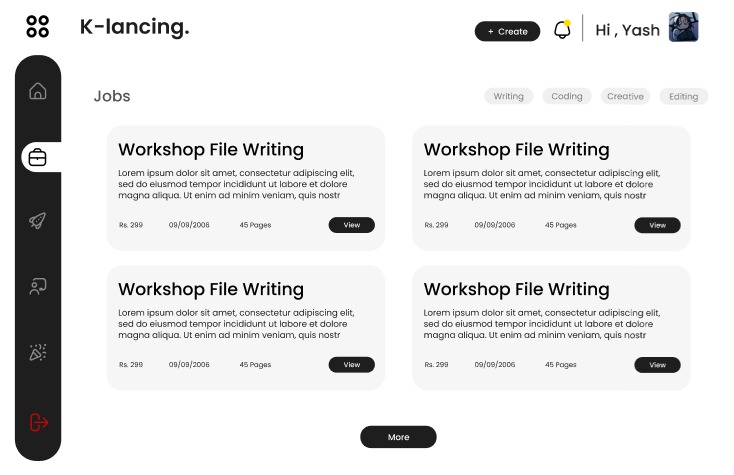
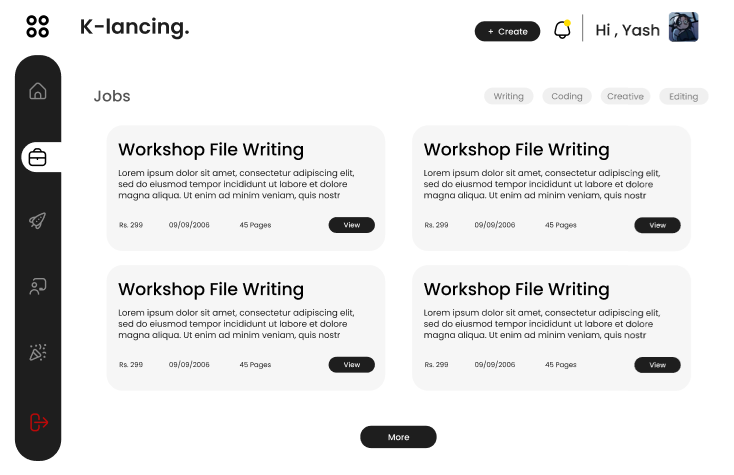
Hiring section
-
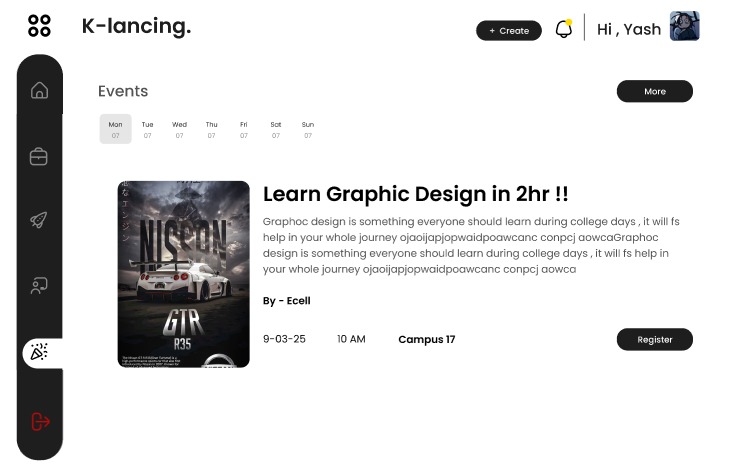
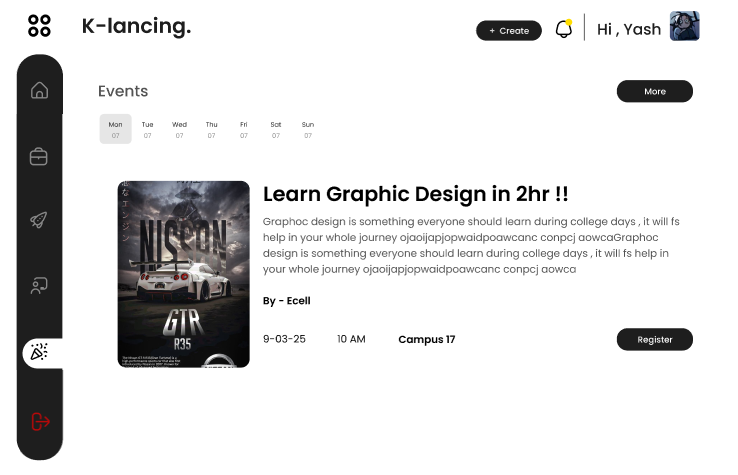
Events Section
-
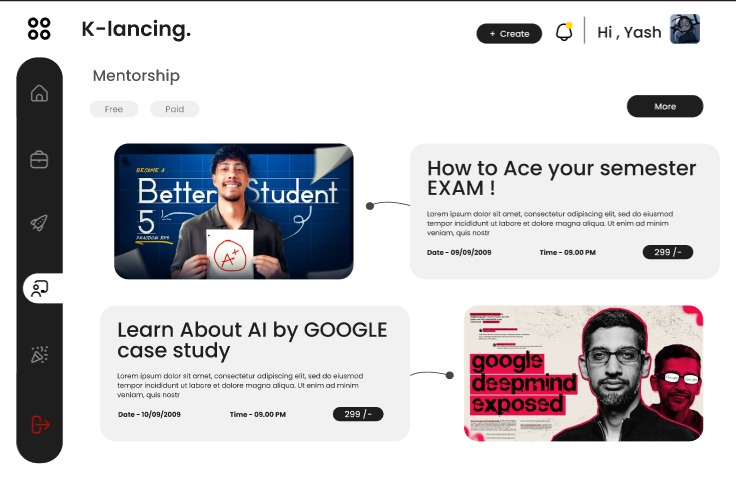
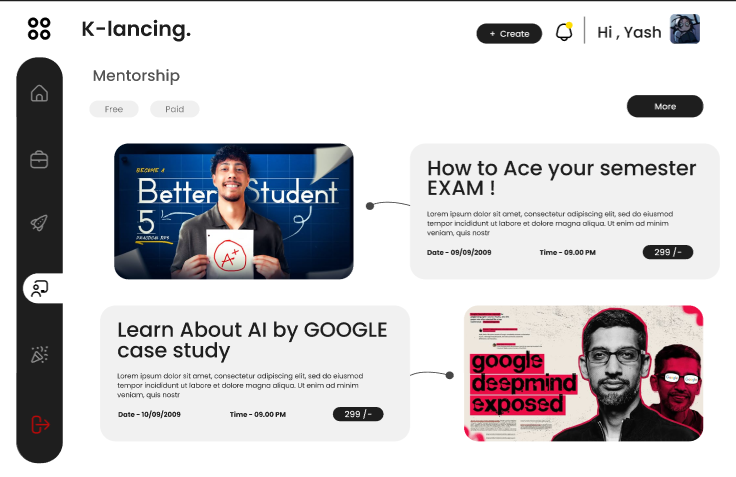
Mentorship Section
-
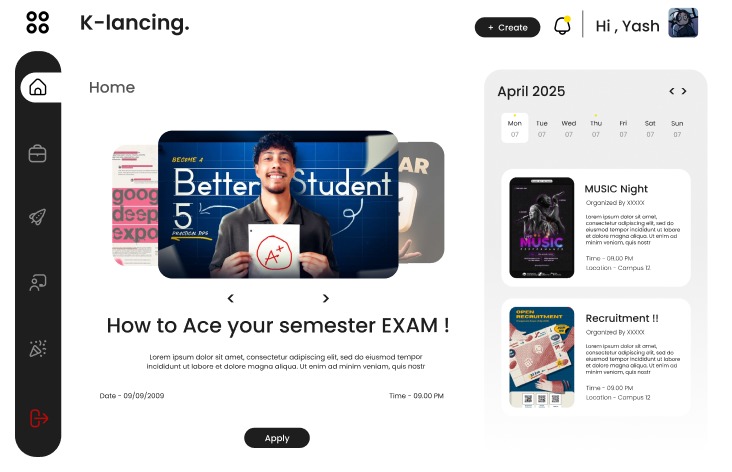
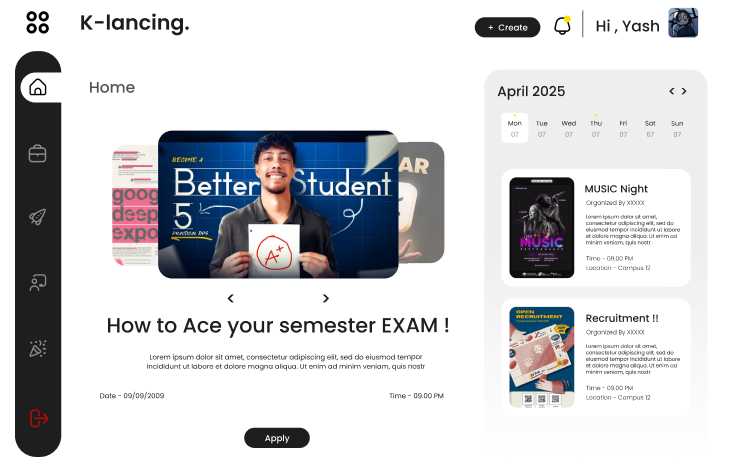
Home page
Inspiration
Klancing was inspired by a simple frustration: students need teammates, skills, or paid help every day — yet everything still happens through random WhatsApp groups and unreliable referrals. I wanted to create one trusted place where students can work with students, earn through their skills, and prove their real abilities.
What it does
I learned how important verification, trust, and clear workflows are when building any marketplace. I also understood how ranking, reviews, and actual delivered work can reveal real skills and prevent students from faking expertise.
How we built it
I designed the UI from scratch, mapped the user flow, and defined the core feature set: verified profiles, skill listings, safe task flow, and review-based rankings till now.
Challenges we ran into
The biggest challenge was keeping the system simple while solving real trust issues. Another challenge was designing a ranking model that highlights genuine work, not fake claims. Balancing features with a clean UX also took multiple iterations.
Accomplishments that we're proud of
Building a fully verified, campus-only freelancing model that actually solves a real student problem. Designing a complete UI that makes the process simple, safe, and transparent. Creating a ranking and review system that helps identify genuine skills instead of fake claims. Turning a common frustration (WhatsApp chaos) into a structured, working product concept.
What we learned
Trust is the core of any marketplace — verification and real work history matter more than features. Students want opportunities, but they also want clarity: clear pricing, clear expectations, and safe workflows. A simple MVP is more valuable than an overloaded idea; solving one friction point well beats solving ten halfway. UI design plays a huge role in how students interact, decide, and rely on each other inside a platform.
What's next for Klancing
Building the functional MVP with login, profiles, job posting, and basic reviews. Running a closed pilot inside one campus block to validate real usage. Adding secure payments, ranking algorithms, and a dispute-free task workflow. Partnering with clubs and societies to onboard early creators and high-skill students. Eventually creating a campus-wide micro-economy where students earn, learn, and collaborate through real work.
Built With
- figma

Log in or sign up for Devpost to join the conversation.