-
-
kizuna-alert-app
Inspiration
Japan faces frequent natural disasters — earthquakes, typhoons, tsunamis — that test not only physical safety but also emotional resilience. During these crises, isolation can become as dangerous as the disaster itself. Inspired by the Japanese word “絆 (Kizuna)”, meaning bond or connection, we wanted to create a tool that strengthens community ties and ensures no one faces an emergency alone.
What it does
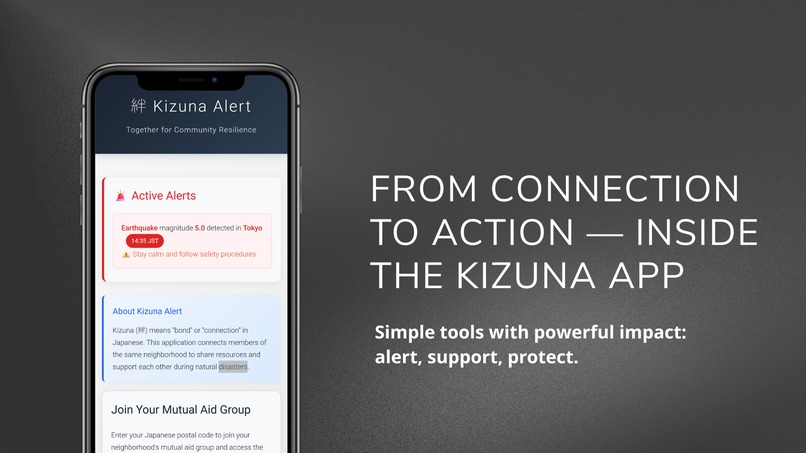
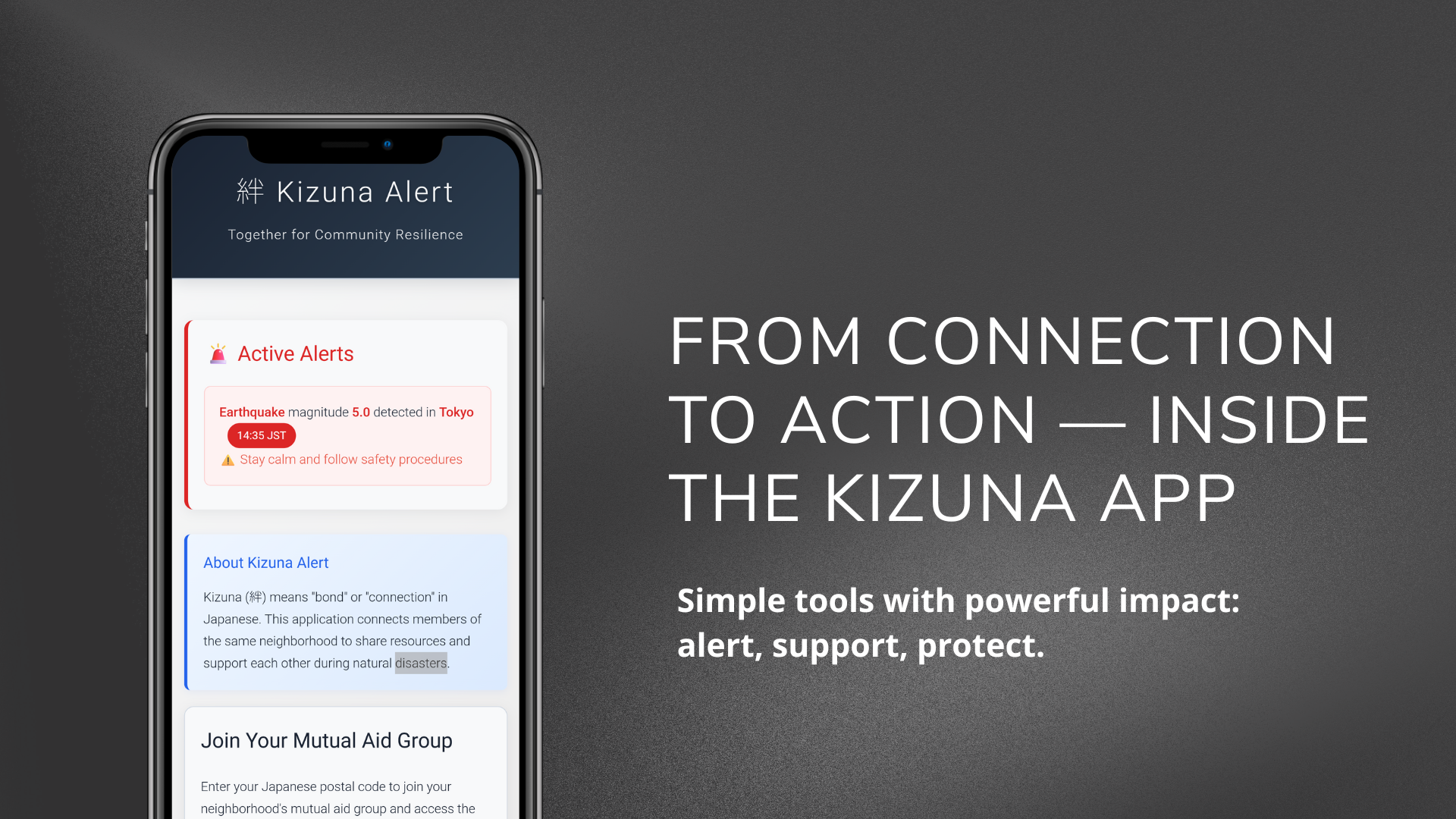
Kizuna Alert is a mobile app that connects communities before, during, and after disasters.
It provides:
- Neighborhood chat for real-time mutual aid
- Offline evacuation maps with safe zones
Our mission is simple: turn technology into empathy.
How we built it
We used Python (Flask) for managing frontend interface and backend fake data just for a sample POC.
Challenges we ran into
- Integrating multiple APIs (JMA, Maps, Firebase) smoothly under limited time.
- Designing a UI that remains simple and intuitive for elderly users.
Accomplishments that we're proud of
- Creating an inclusive interface accessible to both locals and foreign residents.
- Crafting a design that blends tech innovation with human warmth — embodying the spirit of “Kizuna.”
- Seeing the potential for real social impact beyond Japan.
What we learned
- The importance of user empathy in tech design, especially for vulnerable groups.
- How small design decisions (color, tone, message timing) can reduce anxiety during crises.
- How collaboration and quick prototyping can turn an idea into something tangible in just a few days.
- That resilience is not just about systems — it’s about people.
What's next for 絆 Kizuna Alert
We (could) plan to:
- Use Flutter for cross-platform mobile development
- Use Firebase for authentication, messaging, and notifications.
- Make everything cloud-based and beginner-friendly to ensure scalability and accessibility.
- Personalized alerts from the Japan Meteorological Agency (JMA)
- Voice check-ins for seniors or users with limited tech access
- Gamified community badges to encourage helping behavior
- Partner with local governments and NGOs to validate real-world use.
- Expand language support (Korean, Chinese, Tagalog) for inclusivity.
- Add mental health check-ins and community “resilience drills.”
- Launch an open-source version so developers worldwide can adapt Kizuna Alert for their own regions.
Because when disaster strikes, connection saves lives.

Log in or sign up for Devpost to join the conversation.