Inspiration
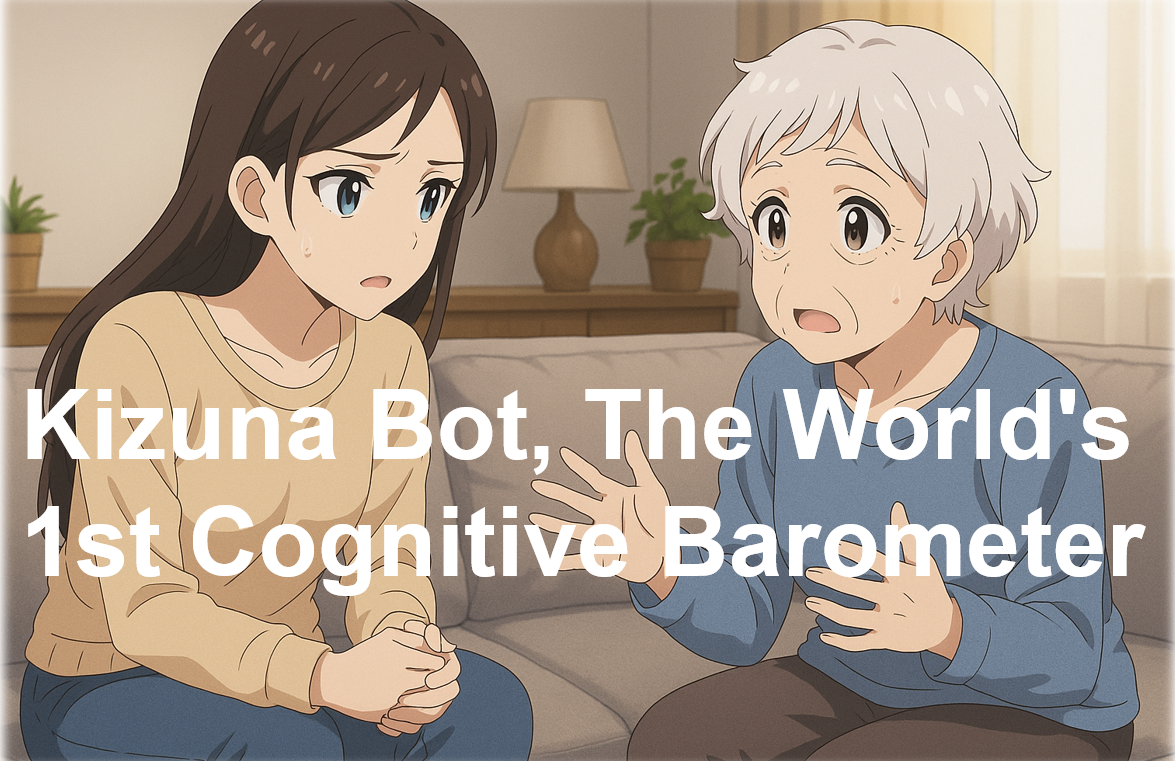
Many people leave their parents and work in a far city/country. How can I know my loved elderly family members' cognitive wellbeing? Did they lose their memorise? Do they still talk in a logical way? How can I test it? Going to a dementia clinic costs $3000-6000, which is too expensive...Oh, I can write NLP codes to assess the cognitive decline level from natural conversation.
What it does
An AI-powered tool that passively listens to natural conversations, like phone calls or daily chats, and uses advanced natural language processing (NLP) to detect early signs of cognitive change. It analyzes speech for patterns related to memory, lexical diversity, repetition, and conversational flow, providing non-intrusive, continuous cognitive insights.
How we built it
We combined cutting-edge NLP models with privacy-first engineering. Kinabot was built on a robust speech-to-text pipeline, enriched with custom-trained models to extract linguistic and cognitive markers. A dashboard visualizes these markers in user-friendly ways for individuals, caregivers, and professionals. Our architecture supports real-time monitoring while ensuring data is encrypted and user-controlled.
Challenges we ran into
Balancing privacy and functionality: Ensuring real-time analysis while keeping all user data secure and local was complex. Voice variability: Building models that work across different accents, tones, and environments took significant tuning. User trust: Convincing users that AI can support mental wellness without replacing human care requires careful messaging and transparency.
Accomplishments that we're proud of
We’re most proud of achieving over 95% accuracy in detecting key cognitive signals—validated across 10,000+ conversations. Even more importantly, users say Kinabot "feels like a friend," not a clinical tool. That emotional trust is our biggest win.
What we learned
Subtle linguistic cues can reveal powerful cognitive patterns. Real-world adoption depends more on emotional design and privacy than just technical performance. AI for health must be built with empathy, not just code.
What's next for Kizuna
Expanding multilingual support and accent generalization. Add Japanese and Chinese language models. Enhancing real-time feedback for caregivers and healthcare providers


Log in or sign up for Devpost to join the conversation.