Inspiration
After a procedure, patients may be tired, stressed, or unsure what to do next. KiwiKare aims to make care instructions easier to scan, understand, and revisit after leaving the clinic.
What it does
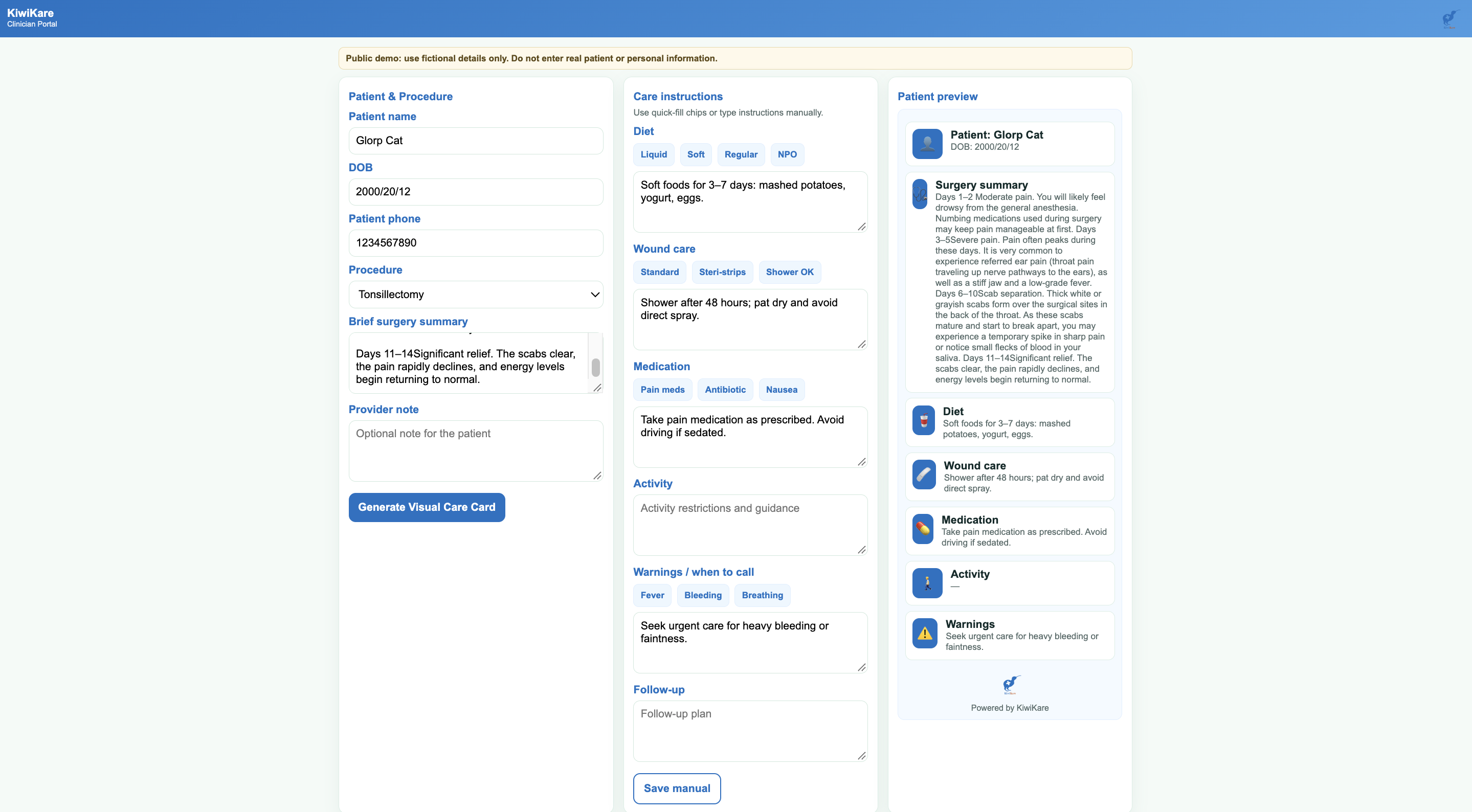
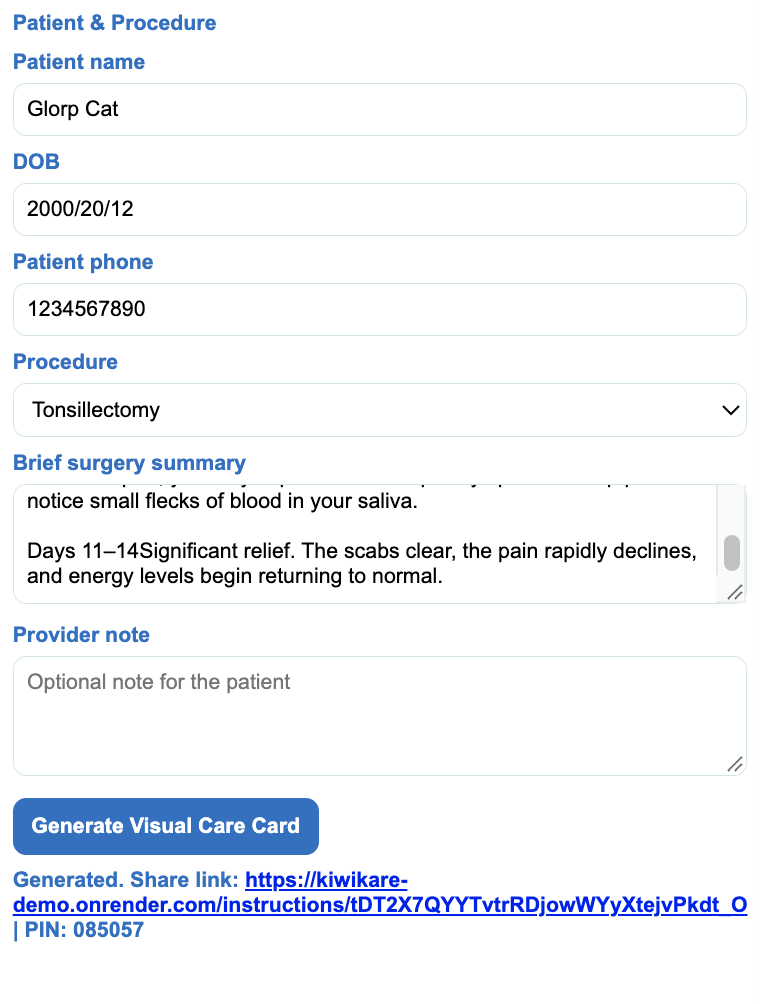
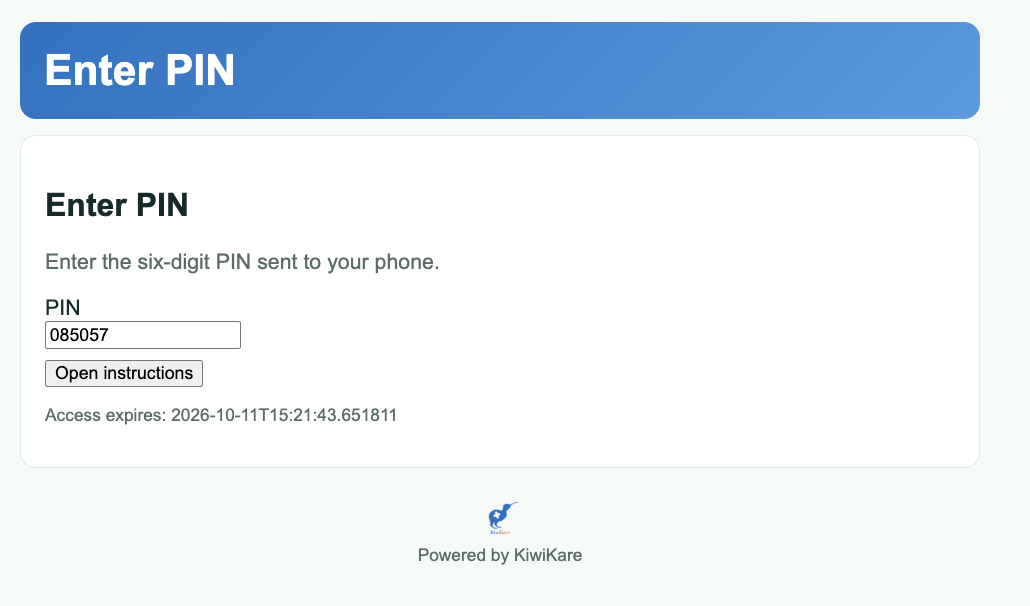
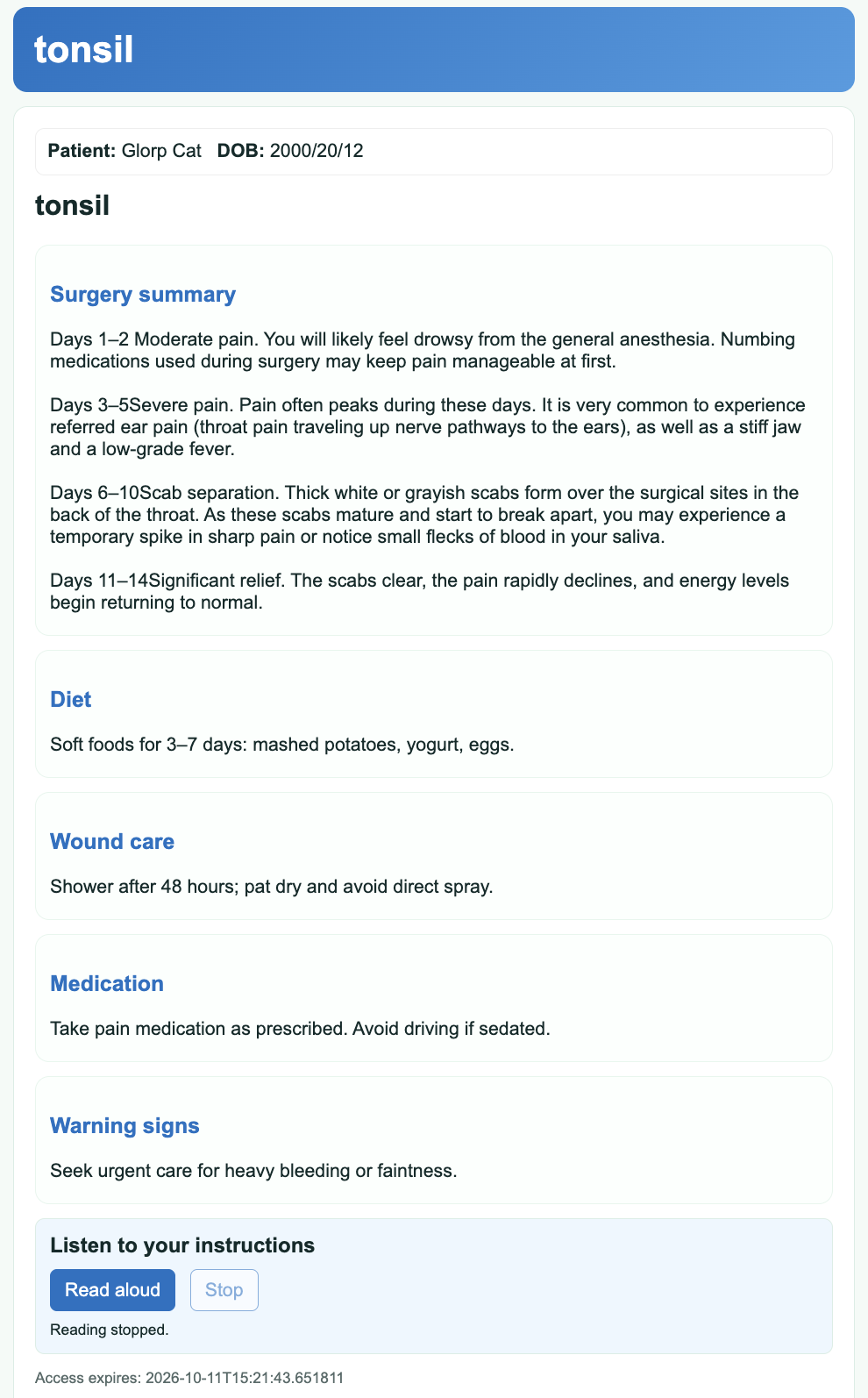
Clinicians can create procedure-specific care plans, preview them, and share them with patients through an expiring link protected by a PIN. Patients can review the instructions and use their device’s built-in voice to read the report aloud.
How we built it
I built the portal with assistance of GitHub Copilot with Python and FastAPI, using HTML, CSS, and JavaScript for the interface. Care plans are saved as JSON, while shared instructions and PINs are stored in SQLite. The patient read-aloud feature uses browser speech synthesis, so it doesn’t require a separate audio service or API key.
Challenges we ran into
I had to make sure static assets and generated patient links worked in both local development and the hosted Render deployment. We also needed to keep patient audio on the PIN-protected report and make playback work without depending on a specific voice service.
Accomplishments that we're proud of
The portal brings care-plan creation, quick-fill guidance, patient preview, sharing, and read-aloud together in one workflow. I'm especially proud that patients can access the report from a simple link and hear it using a voice already available on their device.
What we learned
Small deployment details, like using the active host and serving assets from the correct path, can have a big impact on whether a demo works for real users. I also learned that browser-provided voices vary by device, so the read-aloud experience may differ between patients.
What's next for KiwiKare Visual Card
I plan to strengthen security with clinician sign-in and safer data storage, add more procedure templates and care-plan options, and make the patient cards more visual with clear, clinically reviewed graphics. We’ll also improve the read-aloud feature inside the patient link with playback controls and supported voice and language choices. The current reader uses the patient’s device voice; future work could explore higher-quality voice options while protecting patient privacy.

Log in or sign up for Devpost to join the conversation.