Inspiration
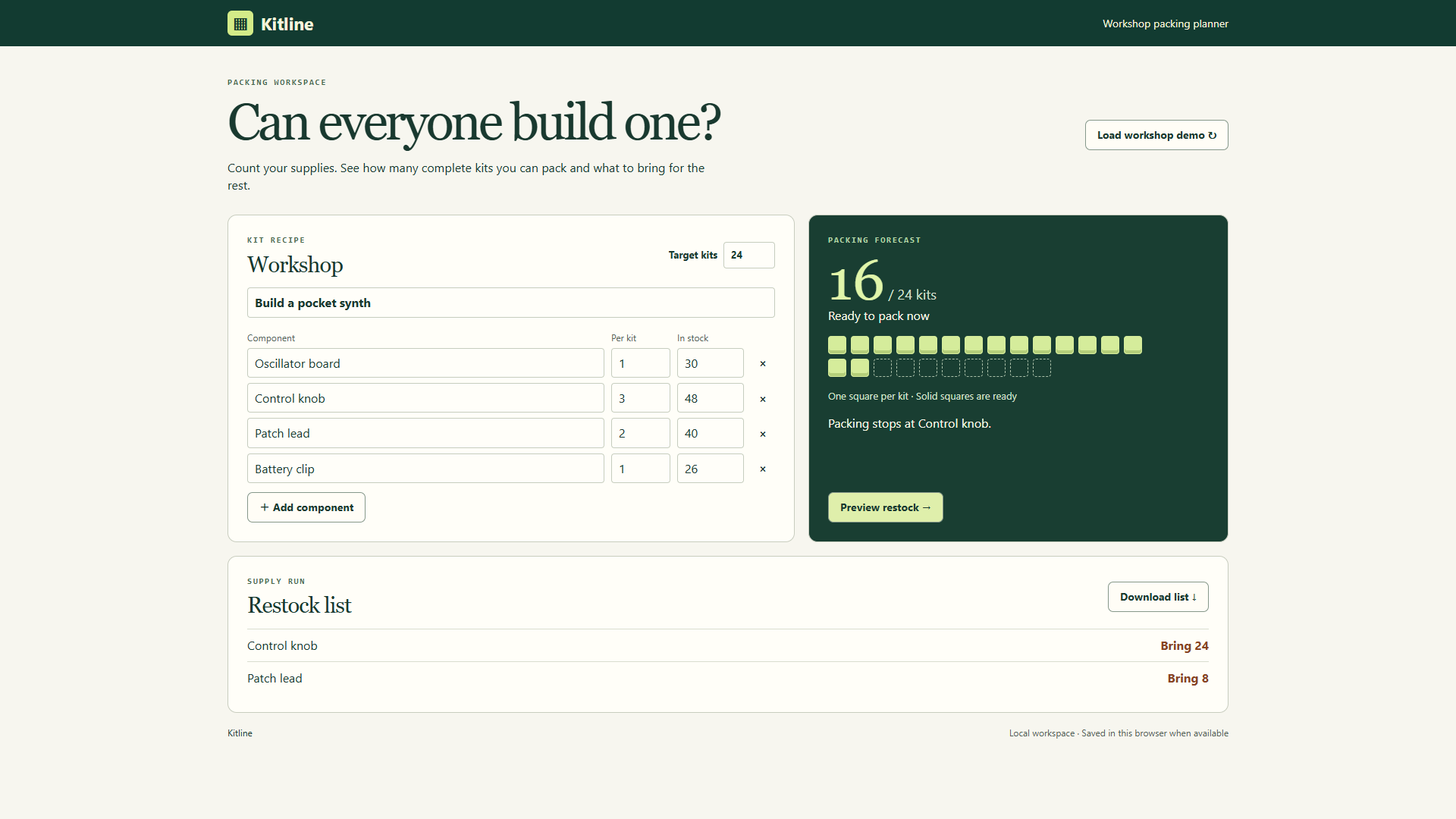
Picture a student club preparing a pocket-synth workshop for 24 people. The parts box has 30 boards, so the session looks covered. Then someone starts packing. Each synth needs three knobs, and the box holds only 48. Eight people would be left without a complete kit. Kitline gives the organizer that discovery while there is still time to act. The example is fictional.
What it does
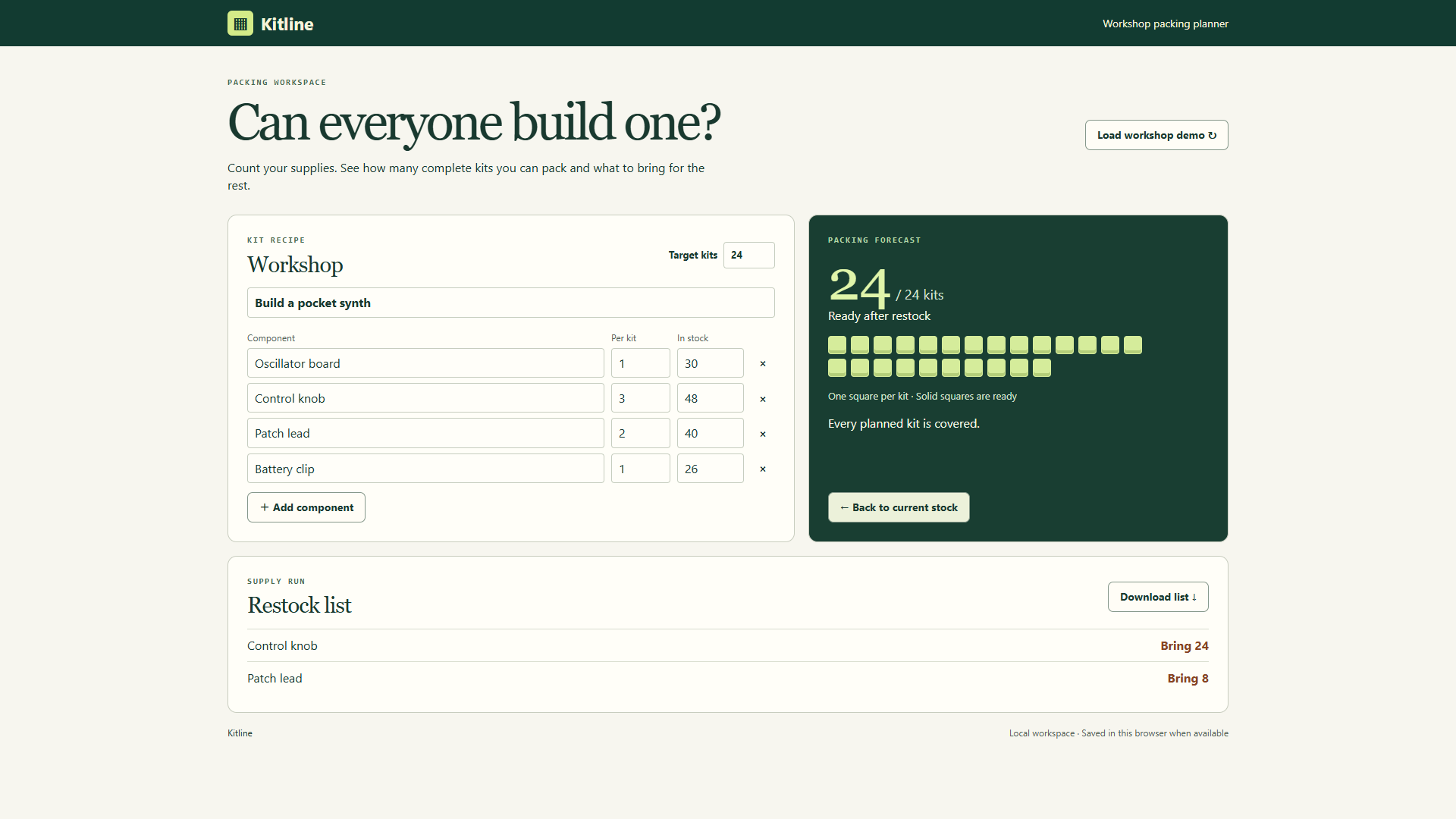
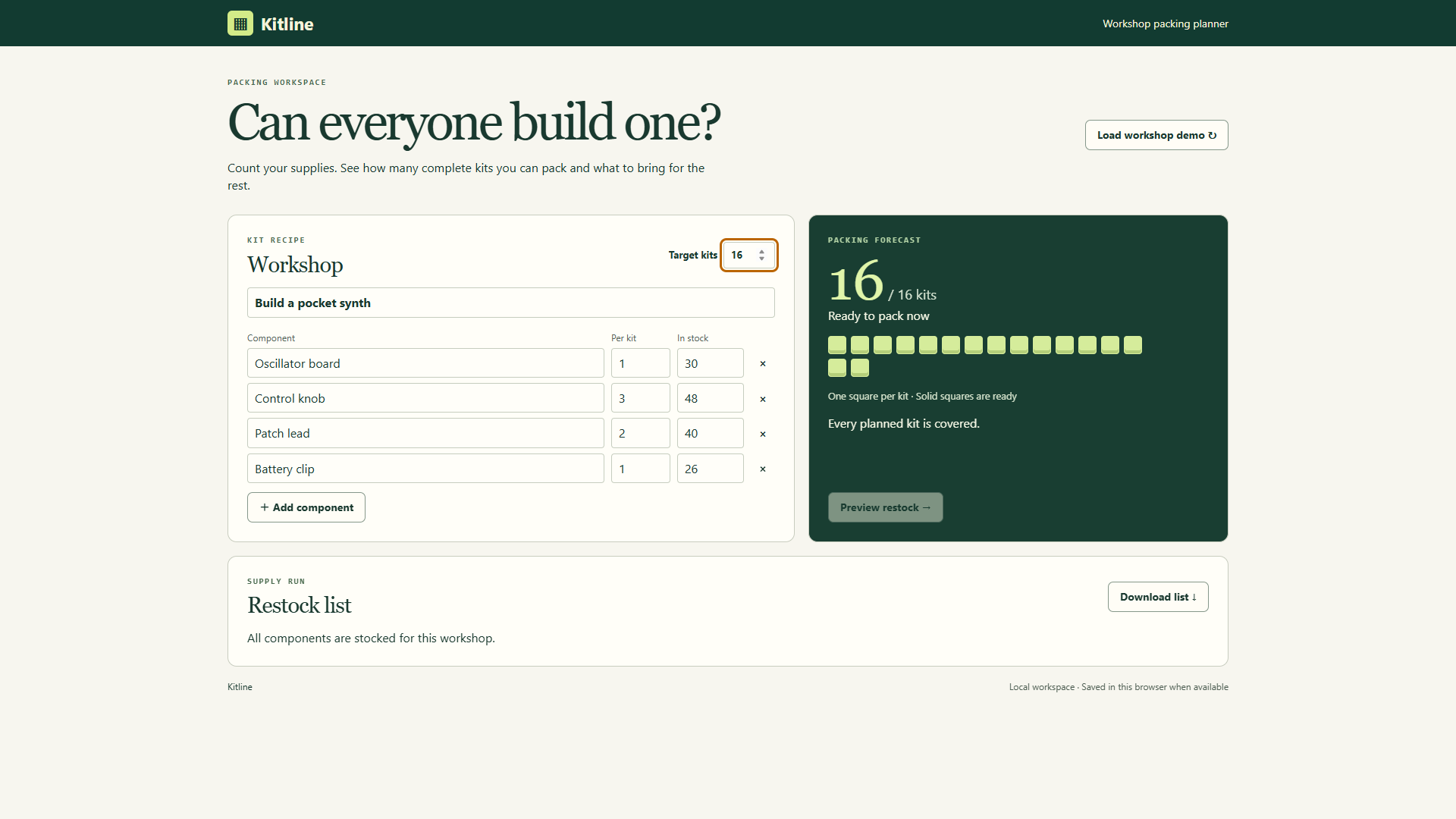
Enter a kit recipe, stock counts and the number of seats. Kitline shows the complete kits ready now, identifies limiting parts, and writes a supply list. Try the built-in workshop. Select Preview restock to see what bringing 24 knobs and eight leads would do. Return to current stock and lower the target to 16 to see an alternative that needs no supply run.
How we built it
The prototype, copy and sample inventory were created during the event on November 23. Browser JavaScript computes the whole-kit yield for each part and the shortfall against the target. Semantic HTML, responsive CSS and local browser storage keep the workflow portable. A small Node build produces a static site. Playwright drives the built site and captures its gallery.
Challenges
Buying enough knobs removes the first bottleneck but still leaves four seats short because of the leads. We had to separate the calculation that explains today's limit from the one that supplies every remaining seat. The preview also had to preserve the actual stock counts so an organizer could safely compare options.
Accomplishments
A judge can open the example, identify the 16-kit limit, and obtain both missing quantities without entering data. An organizer can replace the recipe and download the resulting list for someone else to take shopping.
What we learned
A bottleneck explains why packing stops. A useful shopping list has to look past that first failure and check every component against the final attendance target.
What's next
Try the planner with student workshop organizers during a real packing session. Observe how they count spares and handle substitute parts before adding support for either.
Limitations
One workshop recipe per browser. Each component row represents independent stock in whole units. The example is synthetic. Field use and participant outcomes have yet to be measured.
AI disclosure and third-party credits
OpenAI Codex, an AI coding agent, wrote the code, tests and project copy under human direction. The workshop example and CSS artwork were created for this entry. Microsoft Playwright (Apache-2.0) was used for browser testing and screenshots. No third-party inventory or participant data was used.
Built With
- css
- html5
- javascript
- node.js
- playwright
