-
-

Homepage
-
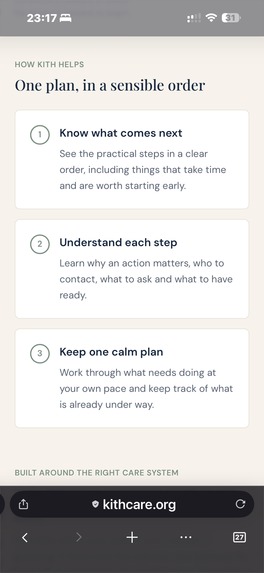
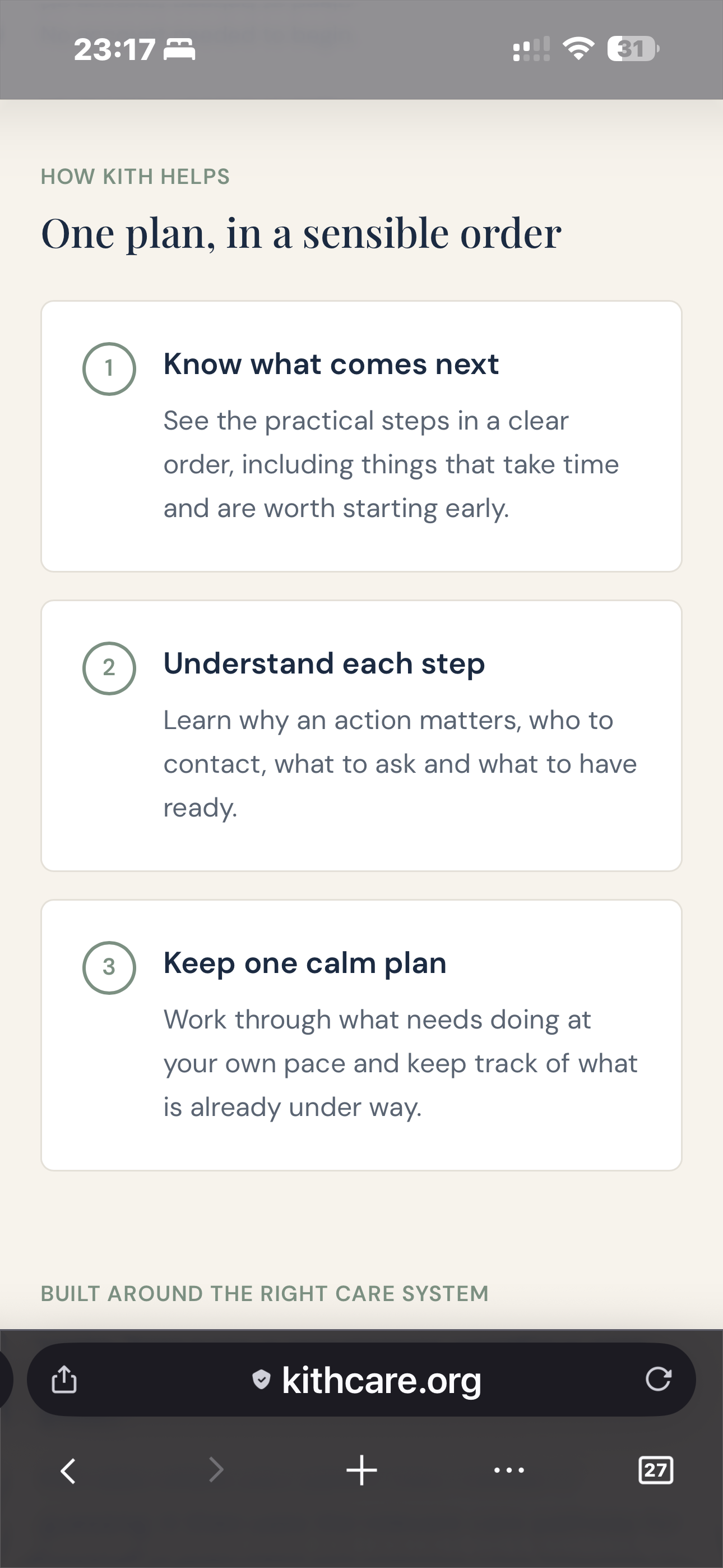
Explaining how it works
-
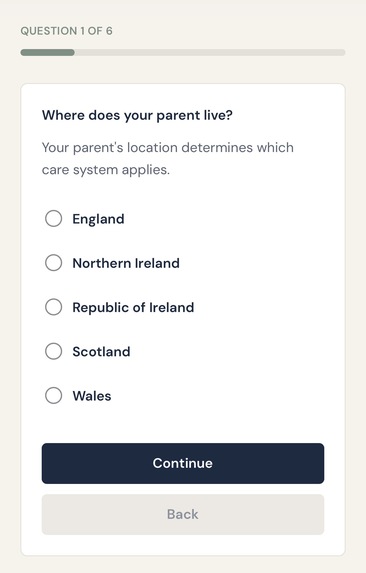
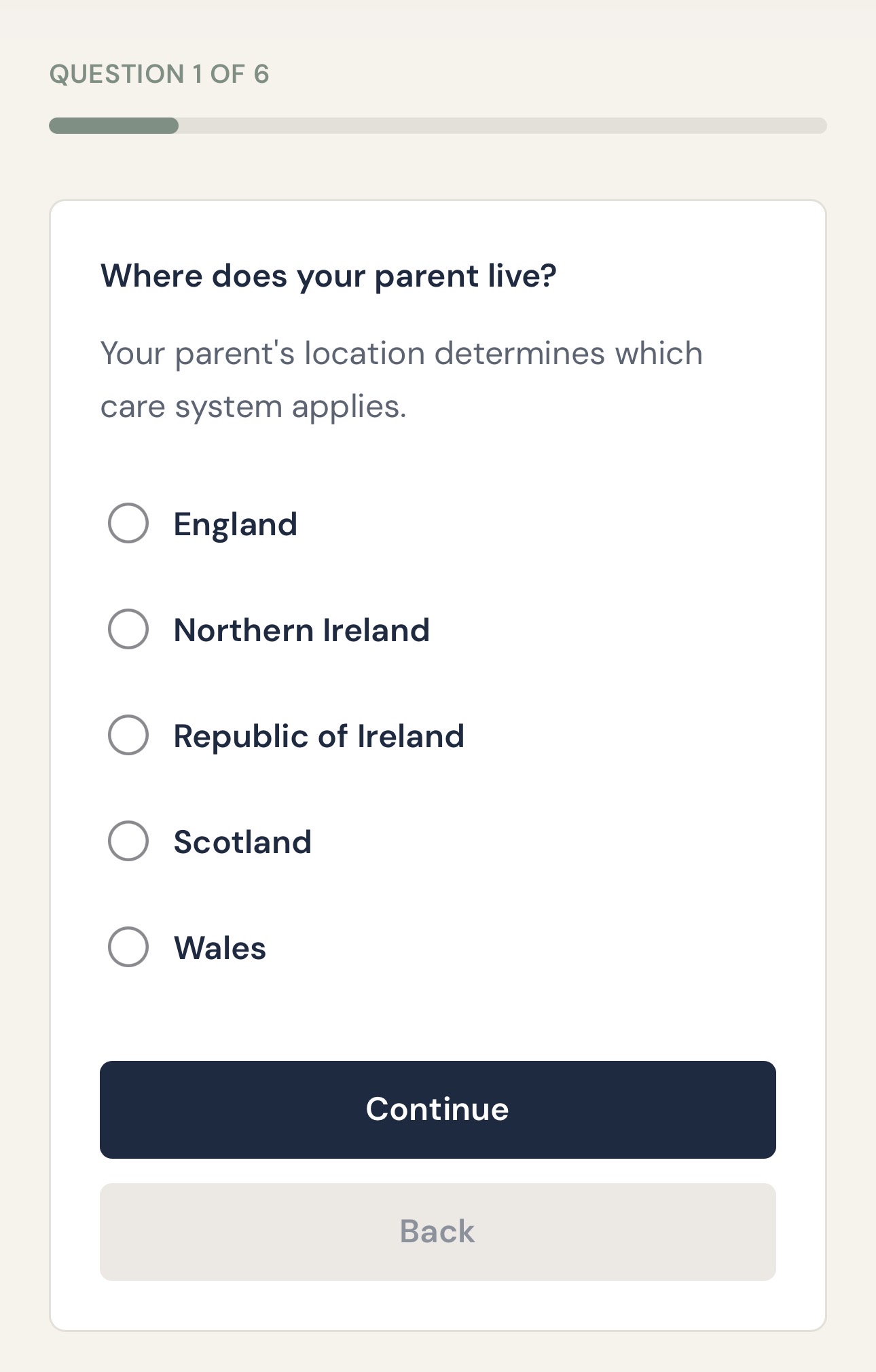
Onboarding for personalisation
-
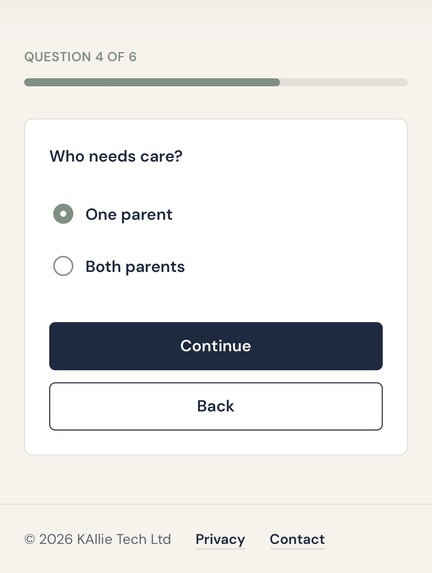
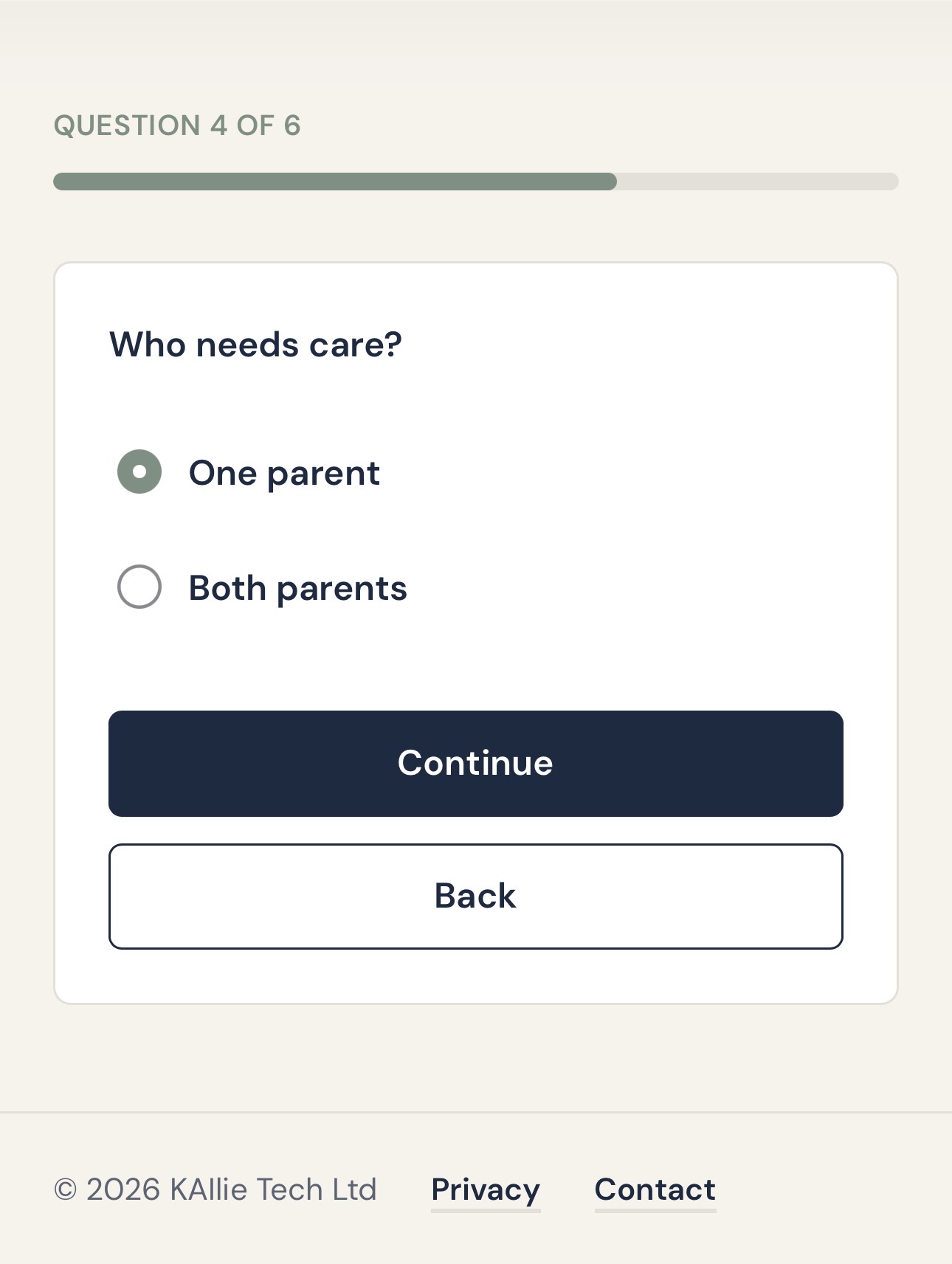
UNderstanding who its for
-
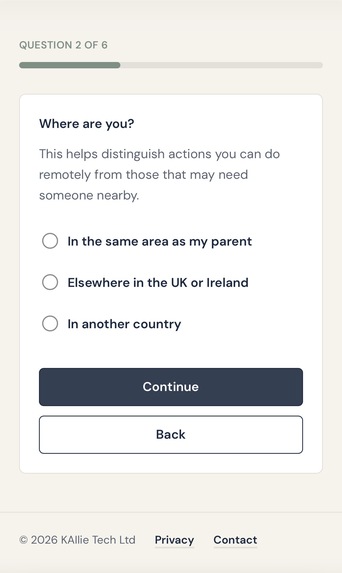
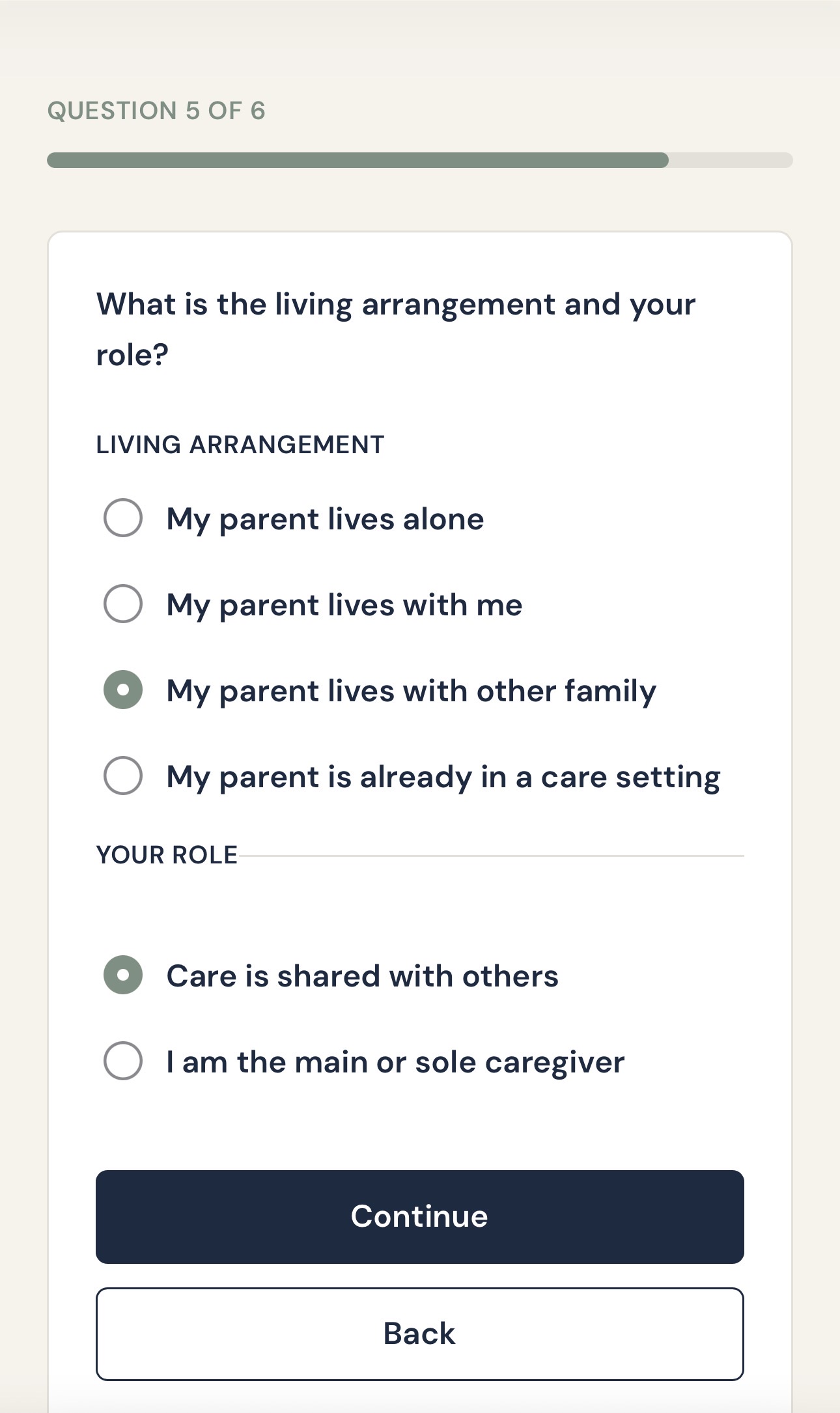
Understanding who its for
-
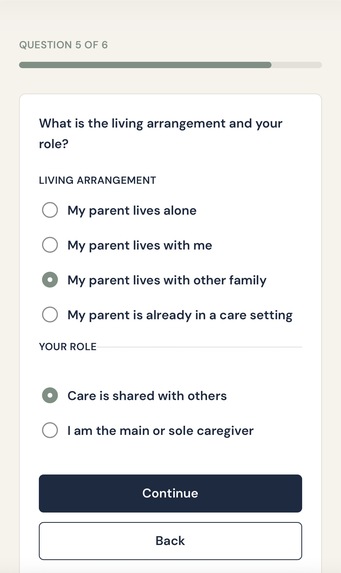
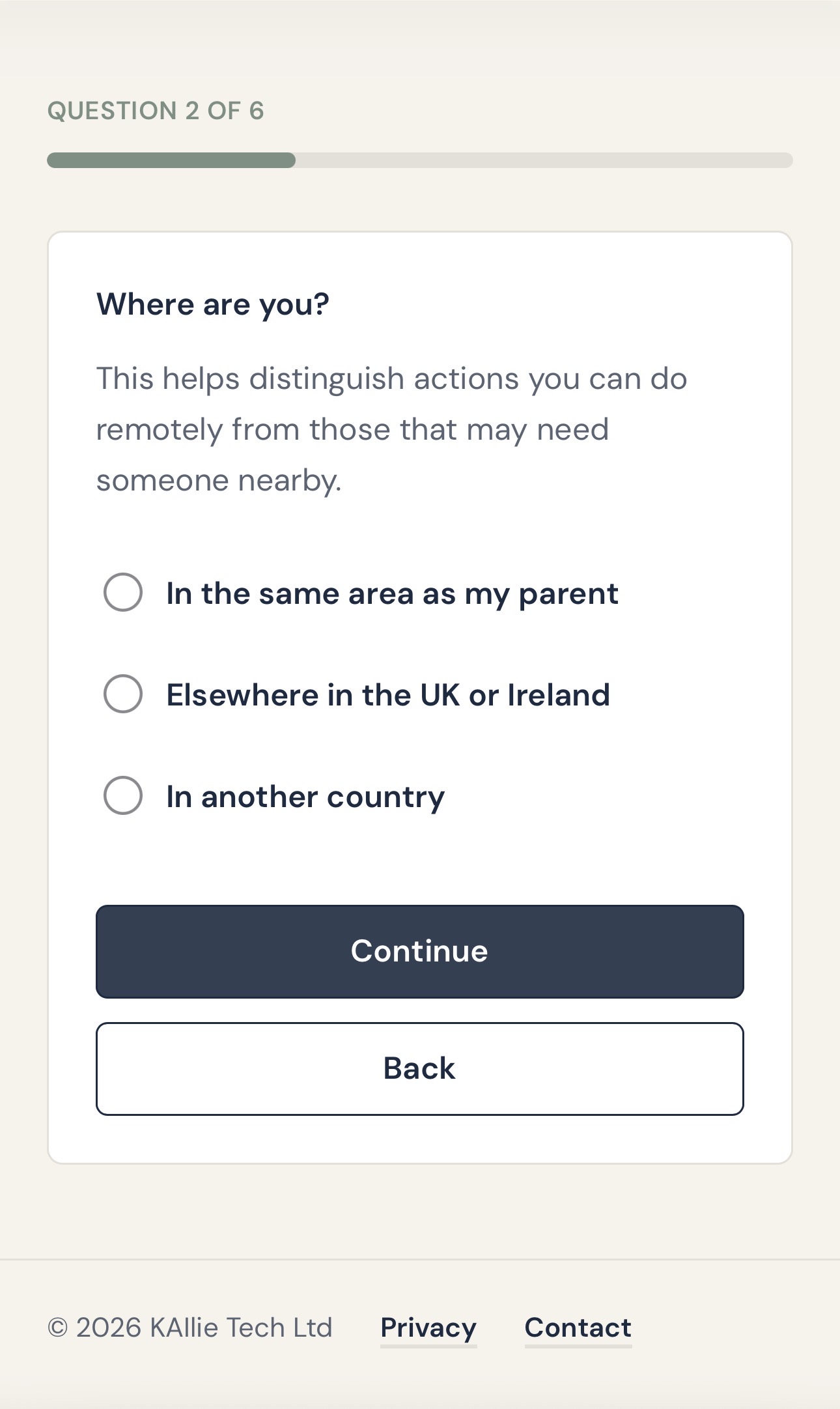
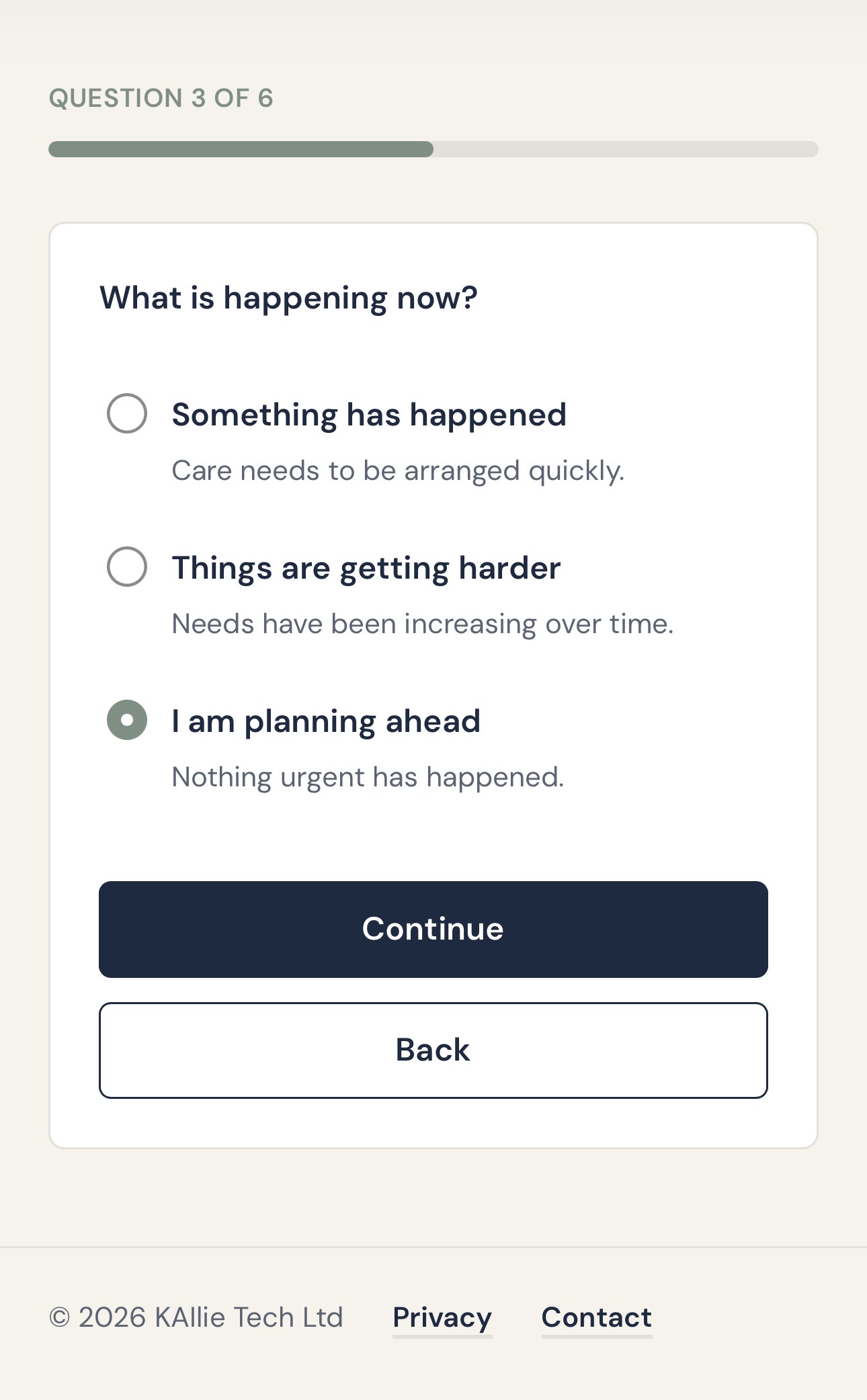
Exploring the care situation
-
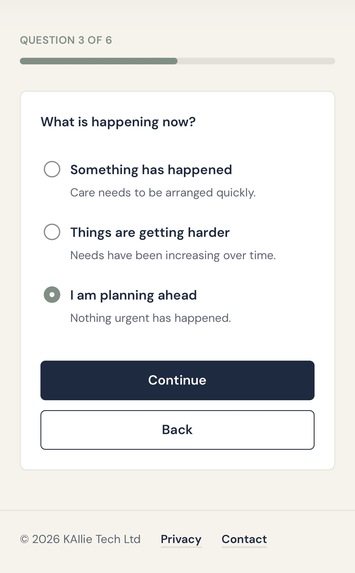
-
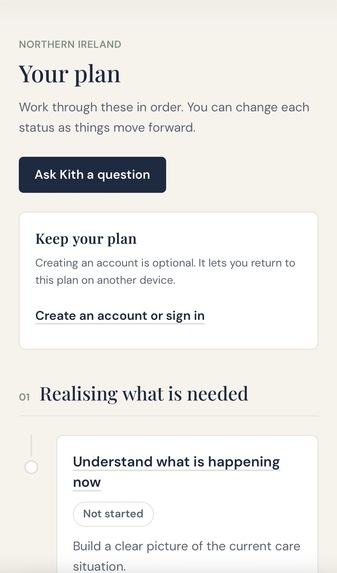
DEveloping your plan
-
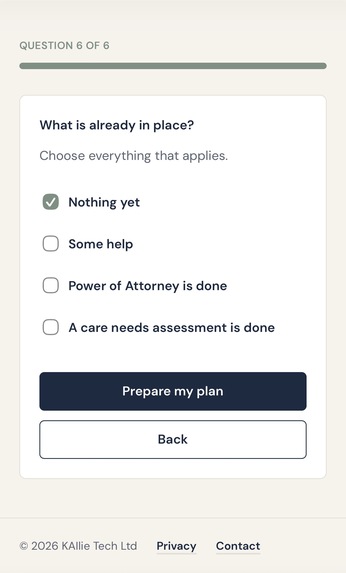
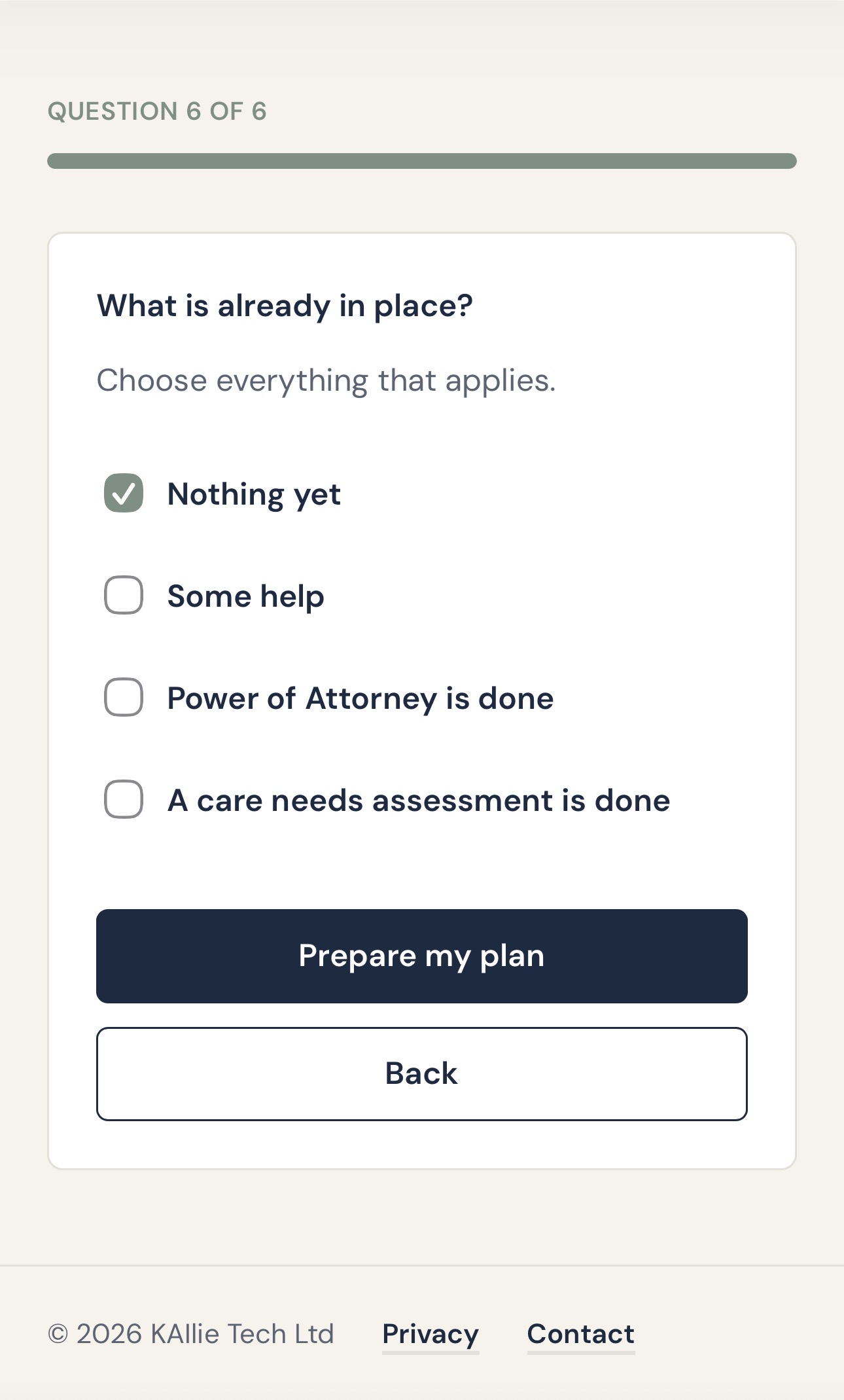
Whats in place so we tailor the plan
-
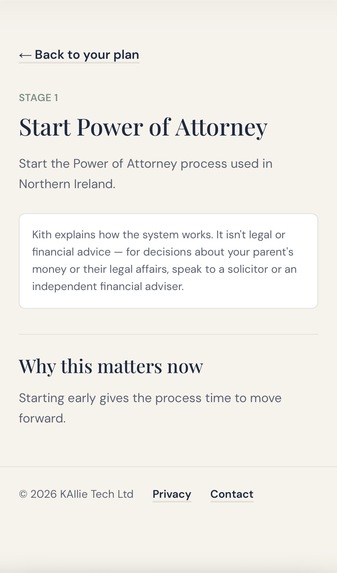
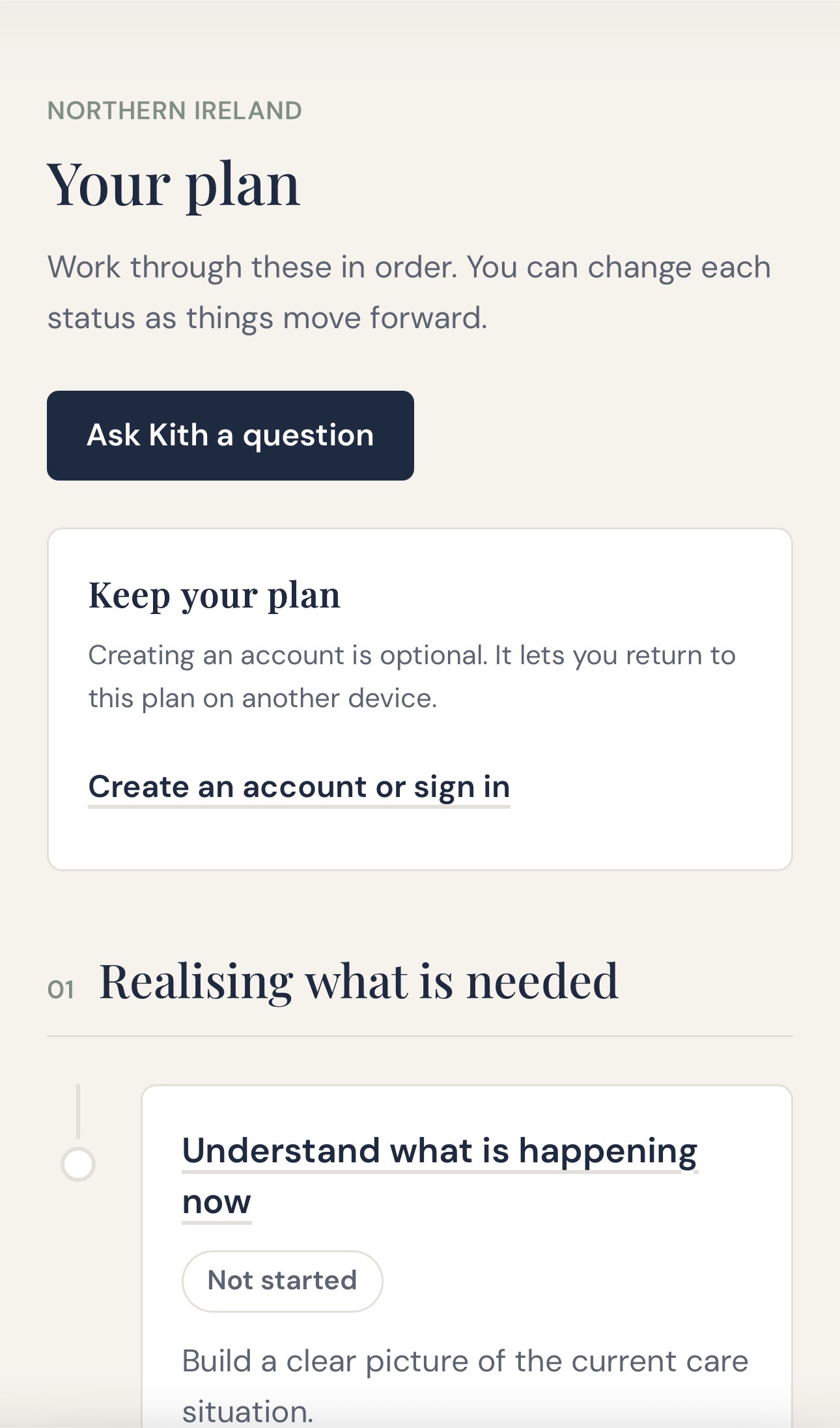
REgional variation
-
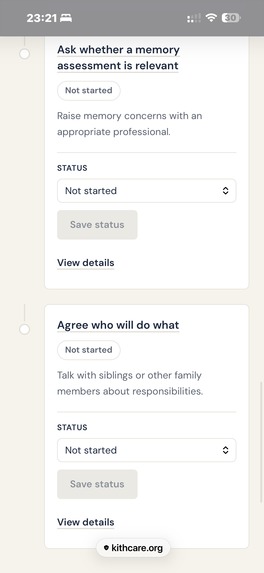
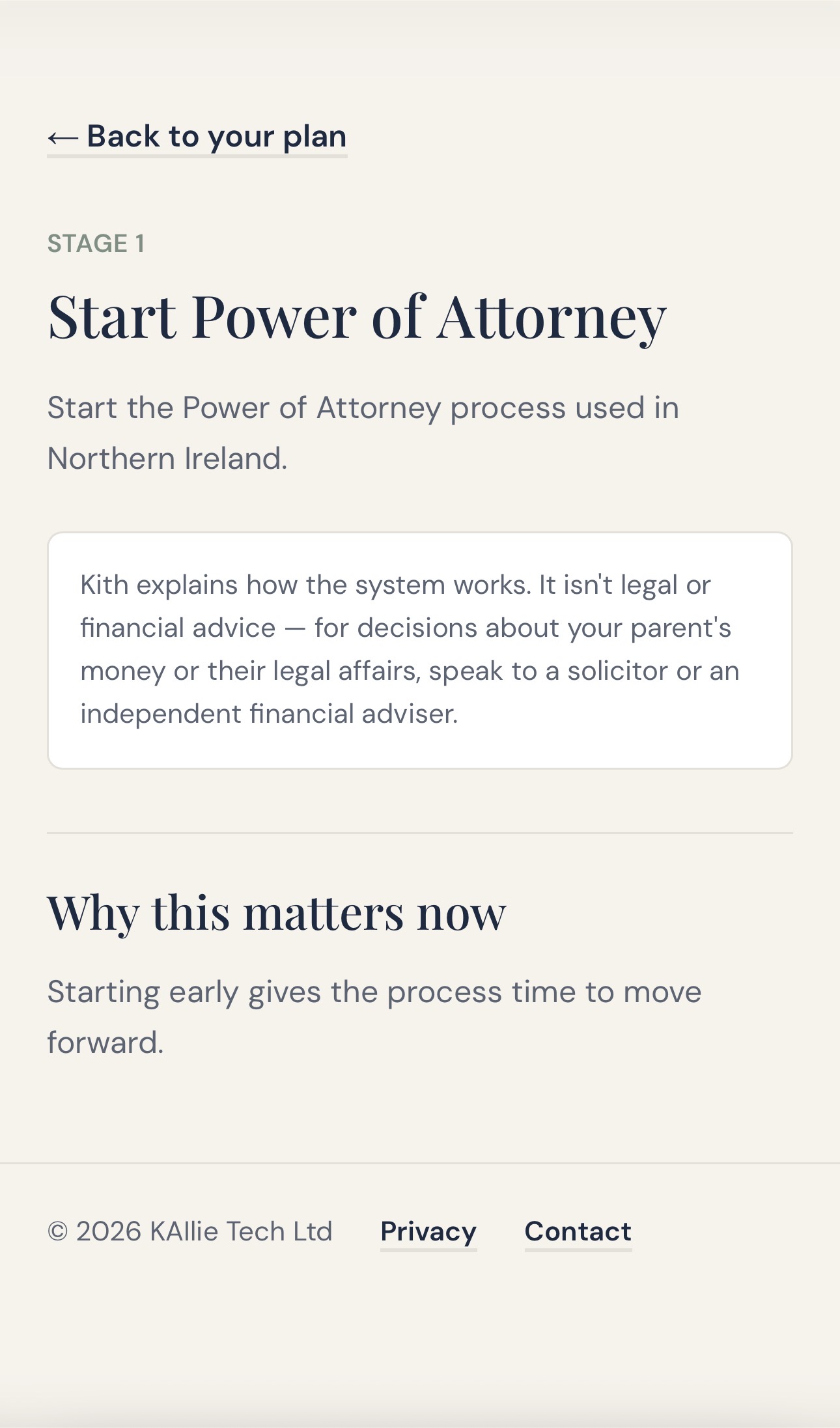
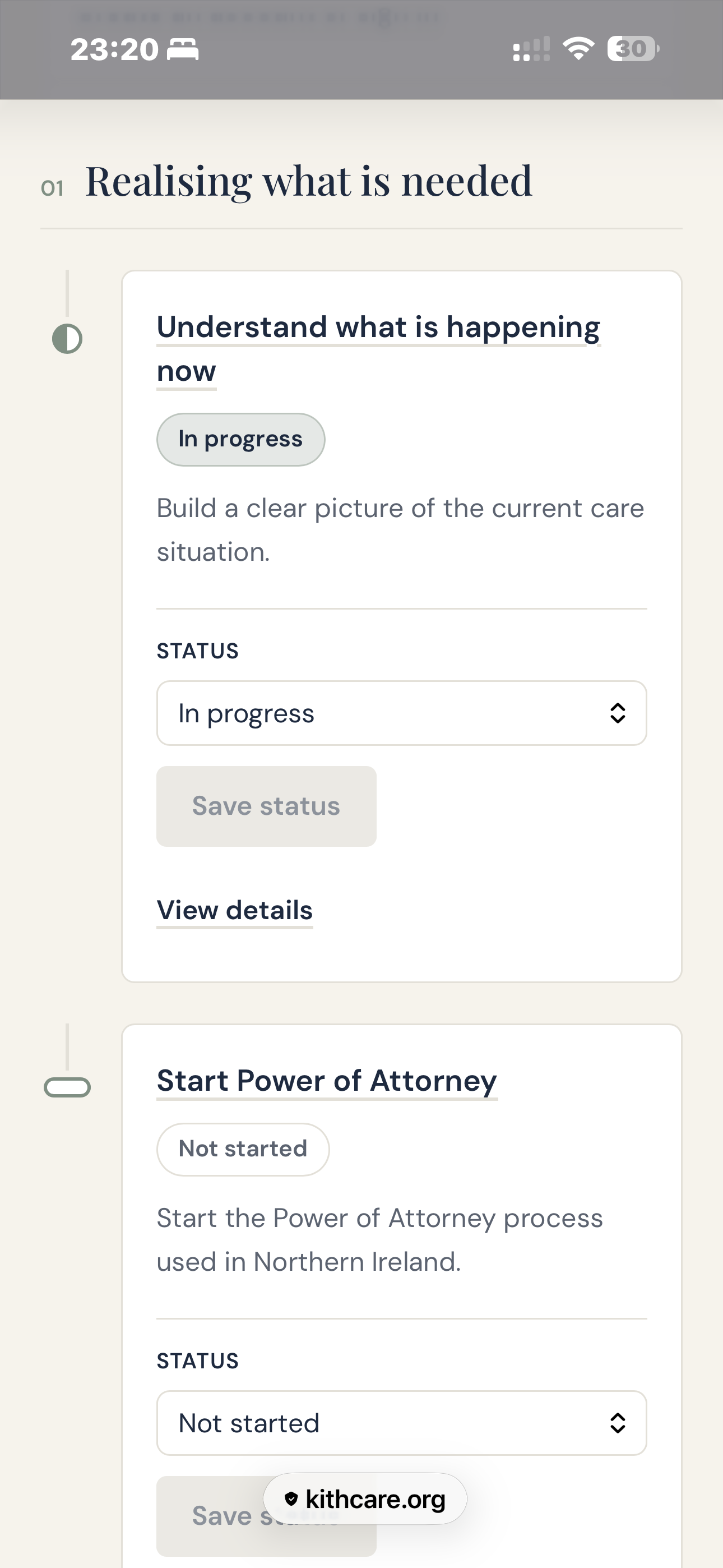
Step by step plan bespoke to user
-
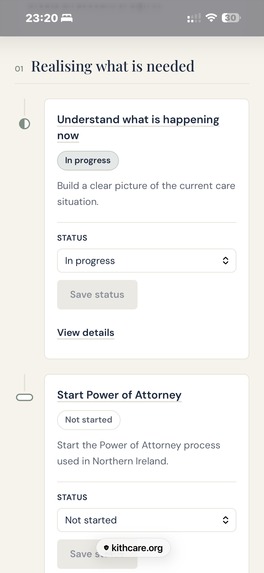
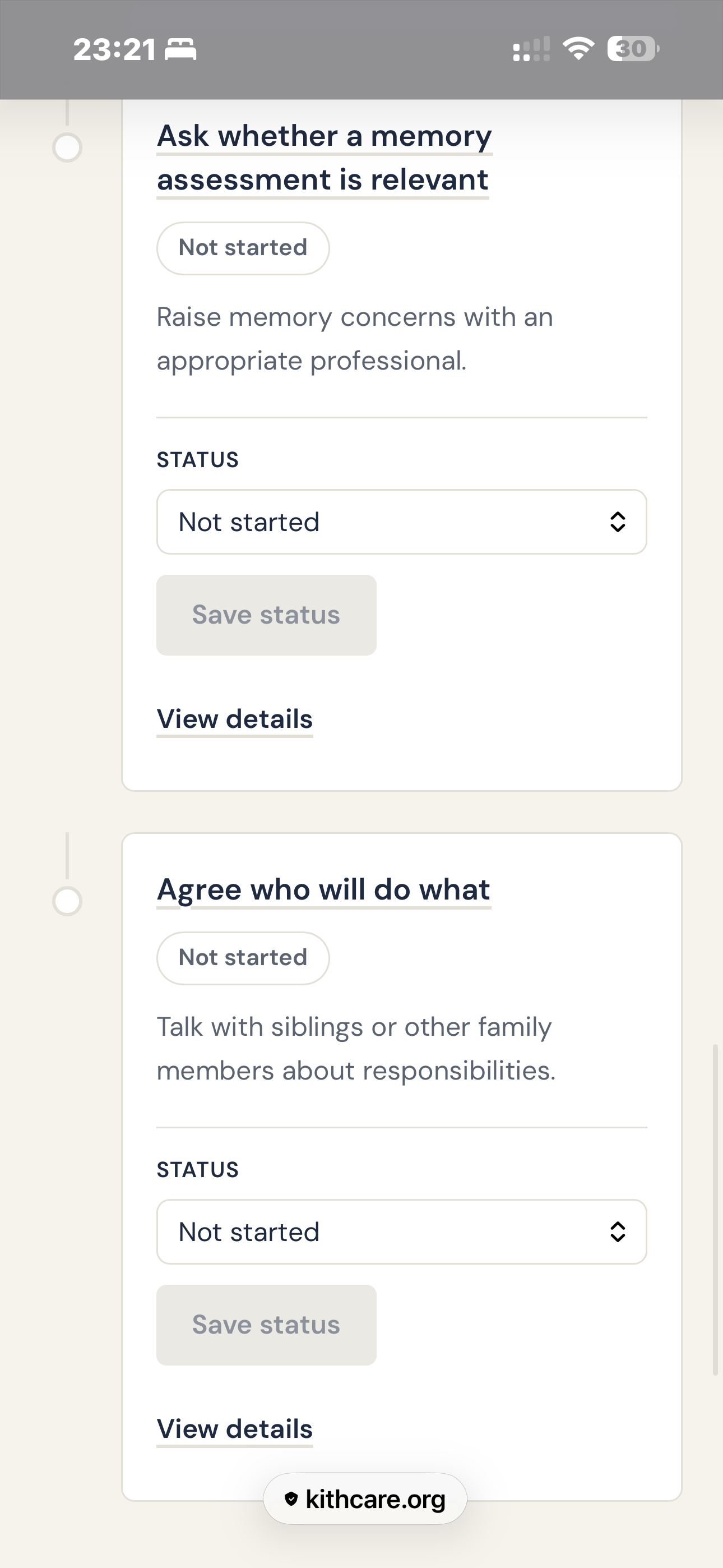
Status at a glance
-
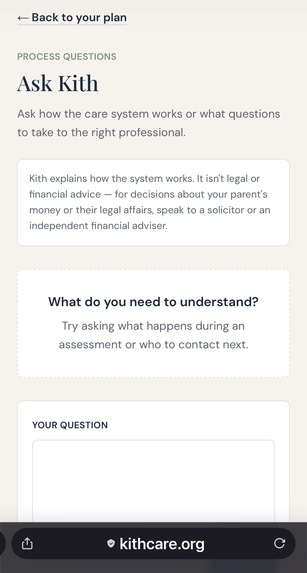
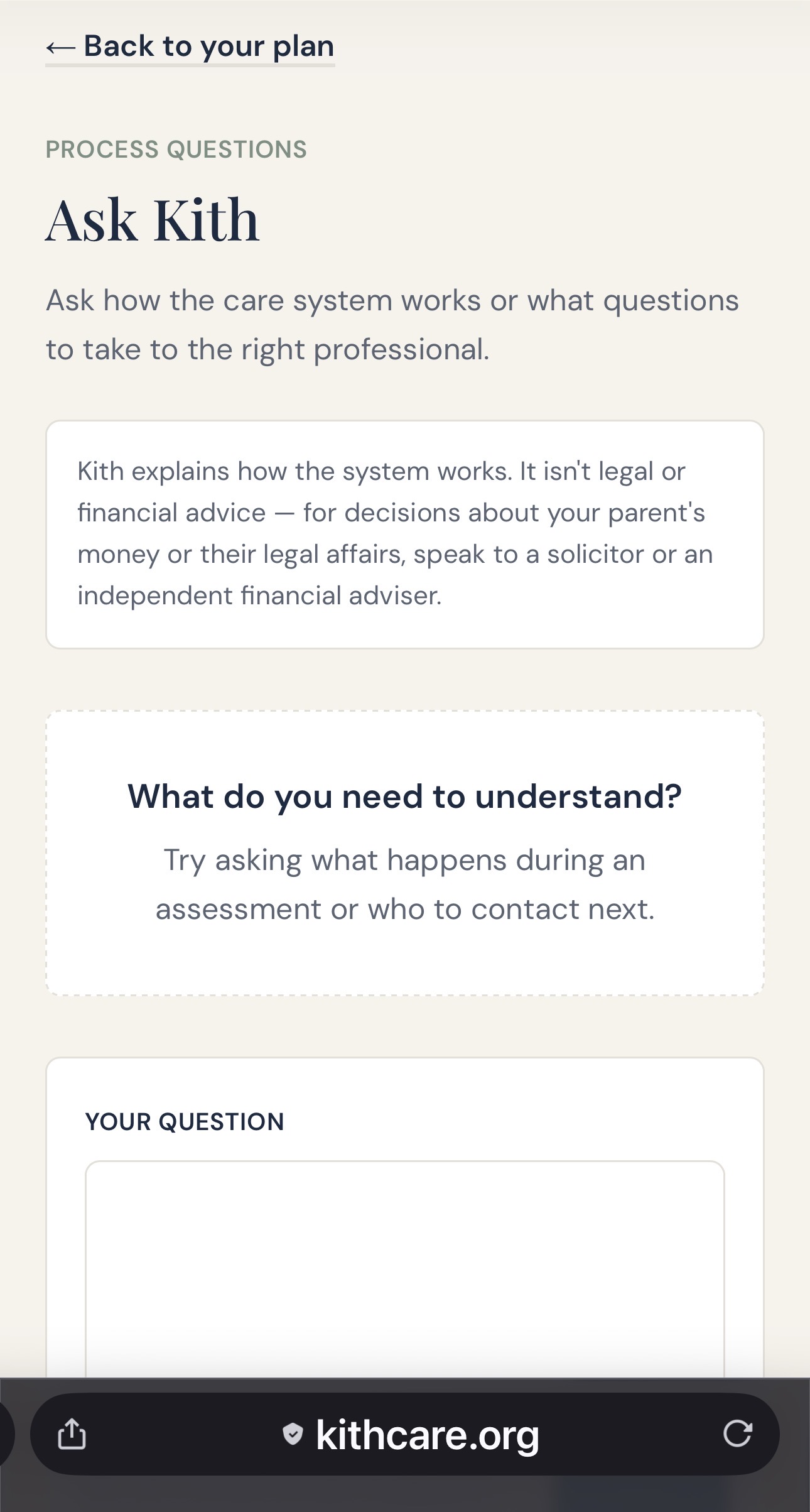
KIth quided answer using Chat GPT Open Ai API

Inspiration
A parent falls down the stairs and breaks an arm. Within 48 hours, the family realises that the fall was not the whole problem—it revealed everything the other parent could no longer manage and everything they had both been quietly hiding.
That came from a real caregiver interview, not a hypothetical scenario. We recorded a family member explaining what happened when both parents suddenly needed care. What emerged was a story of navigation failure:
- “We were both just blindly working, trying to work out what we needed to do.”
- The hospital could not discharge her father until a care package had been arranged.
- A Power of Attorney application took months, and a small error resulted in part of it being rejected.
- Financial thresholds and possible benefits were discovered by chance rather than explained at the right moment.
- Every organisation seemed to operate during the same hours the family needed to be at work.
- Different organisations handled individual pieces of the problem, but nobody showed the family the complete path.
The information existed, but it was scattered across local authorities, health services, care providers, banks and government bodies. Families were handed a maze during one of the hardest periods of their lives and expected to navigate it alone.
That is why we built Kith.
What it does
Kith is a care navigator for adults arranging support for an elderly parent. It turns a complicated care system into a personalised, ordered plan.
It helps answer the questions families actually ask:
- What do I do next? Kith provides a guided path through the stages of arranging care instead of presenting another directory of links.
- What order should I do things in? Long-lead actions are surfaced early so they are not discovered when it is already too late.
- How long might this take? Verified timelines help families understand which processes require advance planning.
- What could it cost, and who might pay? Kith explains how the relevant system works and directs users to official sources without giving financial advice.
- What should I ask? Each action includes practical questions to take to care providers, public bodies and qualified professionals.
- What have we already completed? Families can track progress through one structured care plan.
Kith currently supports three distinct care pathways across two national systems:
- England
- Northern Ireland
- Republic of Ireland
The application never guesses the user’s jurisdiction. England, Northern Ireland and the Republic of Ireland have different institutions, terminology and legal processes, so the correct pathway is selected before a plan is created.
How we built it
Kith was built by a product lead working with OpenAI Codex and GPT‑5.6 as an implementation and review partner.
I brought the original concept, caregiver research, care-domain knowledge, product requirements, jurisdictional distinctions and final product decisions. Codex and GPT‑5.6 helped turn that work into a functioning product.
The technical stack includes:
- Next.js 15 and TypeScript for the application
- Tailwind CSS for the mobile-first interface
- Supabase for the database and authentication
- Row Level Security on every Supabase table
- Vercel for deployment
- Vitest for automated testing
- Anthropic Claude API for the optional Ask Kith question-and-answer feature
Codex and GPT‑5.6 were used throughout the development process to:
- translate the product specification into small, reviewable implementation stages;
- scaffold and implement the frontend, API routes and database integration;
- create Supabase migrations, authentication flows and security policies;
- implement the deterministic care-plan generation logic;
- build and refine accessible, mobile-first components;
- generate and maintain automated tests;
- review changes and diagnose build and deployment problems;
- improve documentation and explain technical decisions in plain English;
- run production builds, linting, type checking and tests before deployment.
The care plan itself is not generated by a language model. Kith uses deterministic TypeScript logic to select and order actions based on the user’s answers and jurisdiction. This makes the result predictable, testable and safer.
Claude powers only the optional Ask Kith conversational feature. It receives relevant, source-controlled care content and is instructed not to invent figures, cross jurisdictional boundaries, or provide legal, financial or medical advice.
The repository also contains an AGENTS.md file that gave Codex persistent project rules. These included never inventing a number, never guessing a jurisdiction, keeping API keys server-side, requiring Row Level Security and testing every screen at mobile width.
Challenges we ran into
Finding the right scope. Care navigation touches legal, financial, medical and emotional decisions simultaneously. Deciding what Kith should not do was as important as deciding what it should do.
Accuracy without overreach. Families need practical explanations, but Kith must never become a substitute for a solicitor, financial adviser or medical professional. We designed explicit safety boundaries into the content model, prompts and interface.
Three pathways, one experience. England, Northern Ireland and the Republic of Ireland use different organisations, terminology and legal mechanisms. We needed to preserve those differences without making the interface feel like three separate products.
Preventing invented information. Every factual figure must have a source and verification date. If Kith does not have a verified figure, it says so instead of filling the gap from general knowledge.
Keeping AI in the right role. Generative AI is useful for conversational explanation, but it should not silently decide which care actions a family receives. Separating deterministic plan logic from the conversational layer was an important design decision.
Emotional register. People may open Kith late at night, during a hospital discharge or after a sudden change in a parent’s condition. The language needed to be calm, direct and respectful—never urgent, patronising or guilt-driven.
Accomplishments that we’re proud of
- Turning primary caregiver research into a structured, six-stage care journey
- Building jurisdiction-aware pathways for England, Northern Ireland and the Republic of Ireland
- Creating a deterministic plan engine rather than relying on an unpredictable AI-generated plan
- Establishing source and verification requirements for factual content
- Adding safety boundaries for legal, financial and medical questions
- Enabling people to create their first plan without being forced to register
- Applying Row Level Security across the Supabase data model
- Building a mobile-first experience for people using Kith during stressful moments
- Creating a product that treats family caregivers as capable adults who need clarity, not pressure
- Using Codex and GPT‑5.6 to turn a product lead’s research and specifications into a tested, deployed application
What we learned
The biggest problem is not that care information is unavailable. The problem is that it is fragmented, difficult to interpret and rarely presented in the order a family needs it.
Families do not need another large collection of articles. They need to know:
- what applies to their parent;
- what needs to happen first;
- what can wait;
- who they need to contact;
- what questions they should ask.
We also learned that AI should not be placed everywhere simply because it is available. For Kith, deterministic logic is better for constructing the care plan, while a carefully constrained language model is useful for helping someone understand that plan in conversational language.
Finally, working with Codex showed how a product lead can remain responsible for the research, safety boundaries and product decisions while using GPT‑5.6 to implement, test and deploy a technically substantial product.
What’s next for Kith
The current version establishes Kith’s core journey, but there is more to do:
- Complete and independently verify the remaining jurisdiction-specific content
- Test the product with more families actively arranging care
- Add clearer collaboration tools for siblings and other family members
- Improve progress tracking and handovers between family members
- Expand coverage carefully to Scotland and Wales
- Add more explainers for funding, assessments, care providers and legal processes
- Conduct structured safety evaluations of Ask Kith
- Measure whether families complete important actions earlier and feel more confident about what to do next
- Work with care organisations and professionals to validate the journey before a wider pilot
The goal is not to replace human care professionals. It is to help families reach the right people sooner, better prepared and with a clearer understanding of what comes next.
- Live pilot with families currently in the care journey
- Deepening the Republic of Ireland pathway (HSE, Fair Deal)
- Provider integrations so a plan becomes a booking
- Sibling coordination, because care is almost never arranged by one person.
Built With
- anthropic
- claude
- codex
- github
- react
- supabase
- tailwind
- typescript
- vercel


Log in or sign up for Devpost to join the conversation.