-
-
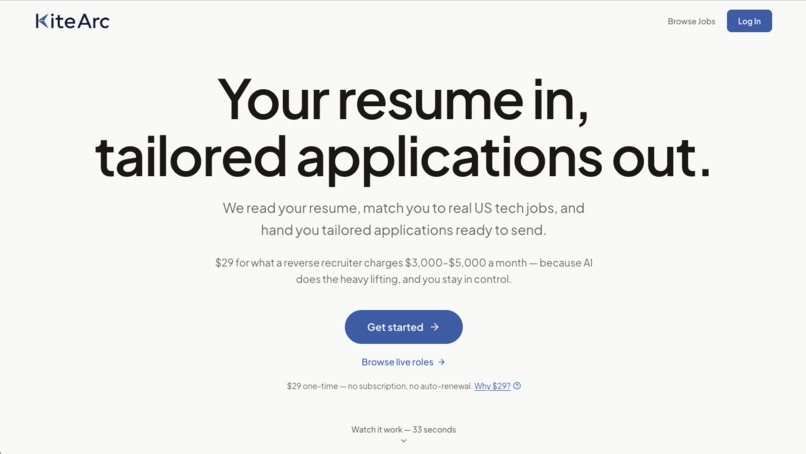
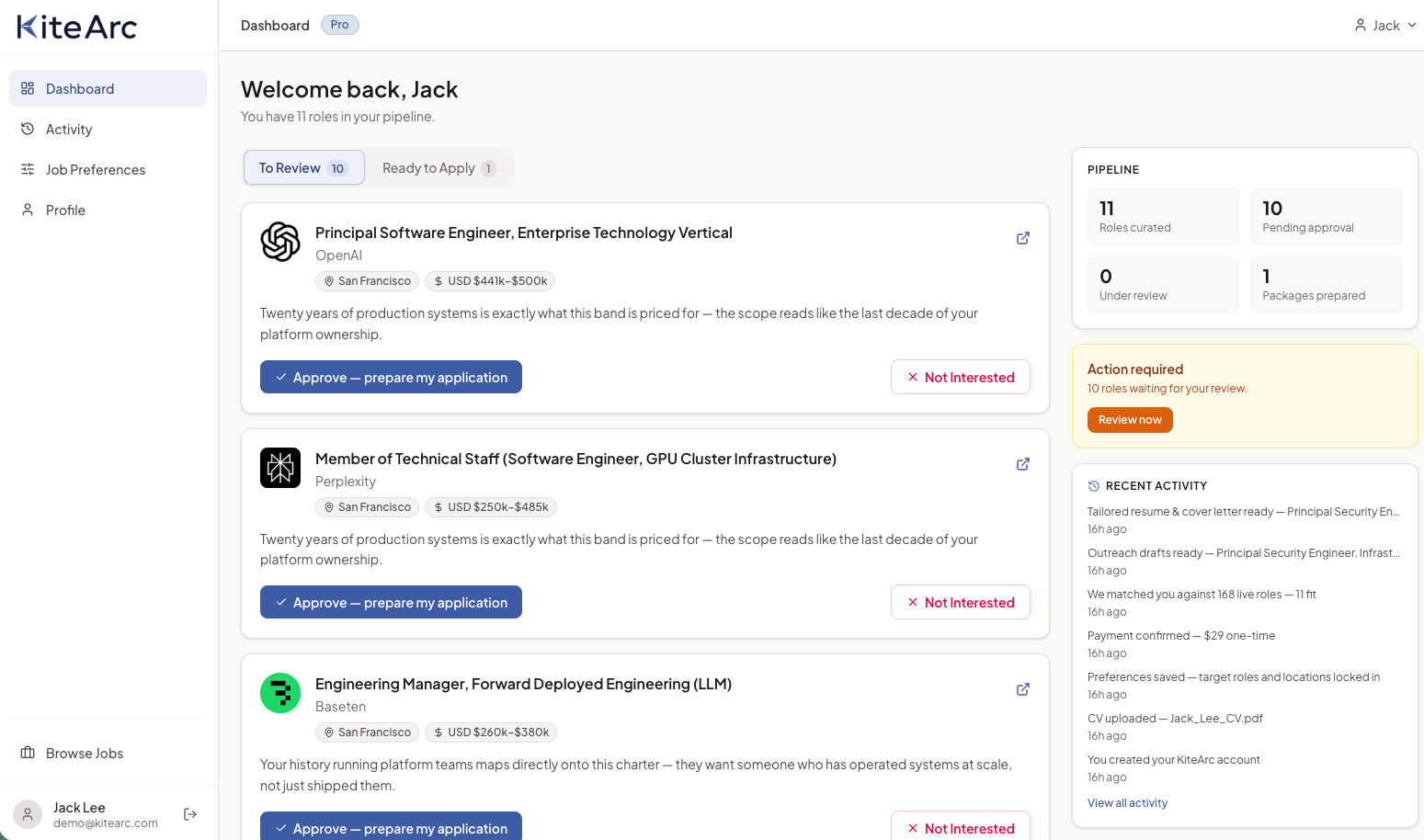
Your agent does the work. You stay the human. An AI reverse recruiter that finds roles that fit and won't fabricate to get you there.
-
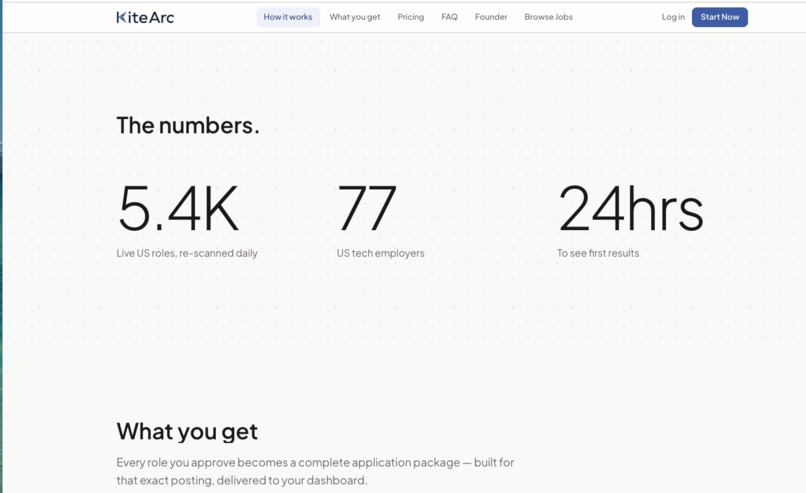
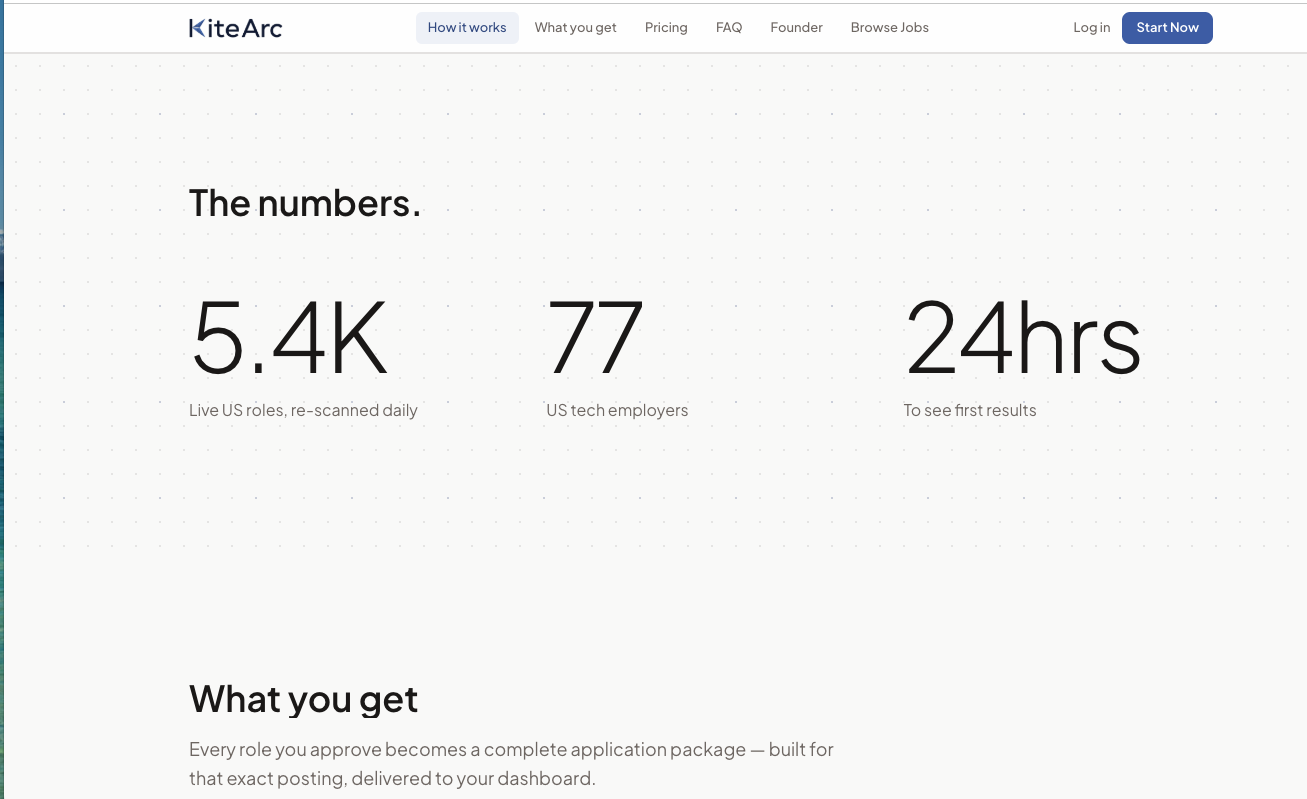
5,471 verified-live roles across 77 employers, rebuilt daily — real scale, not a demo. The sourcing pipeline runs unattended every morning.
-
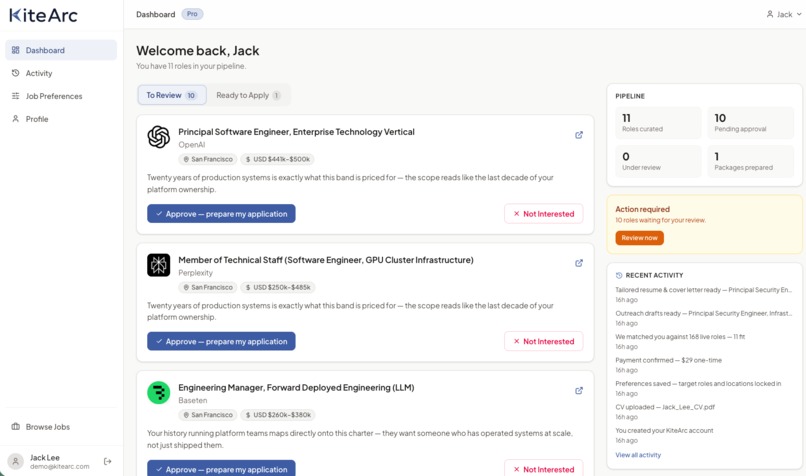
A handful of roles that actually fit — not fifty. Each verified live from the employer's own careers page, with real salary bands.
-
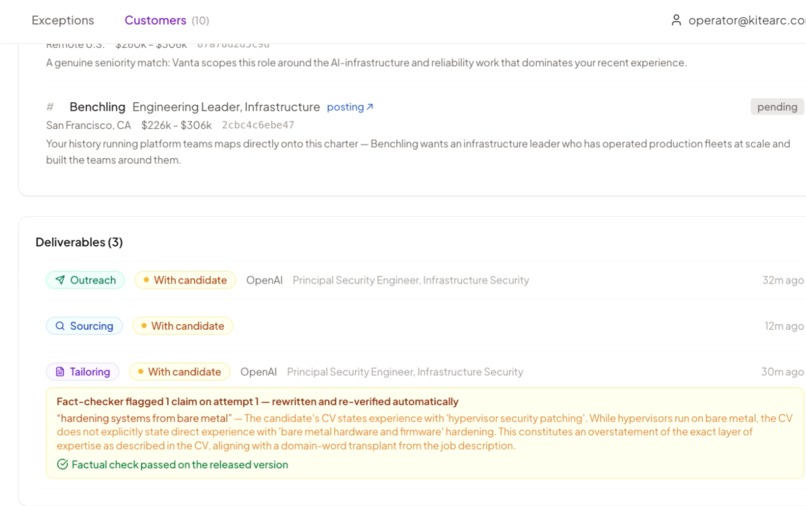
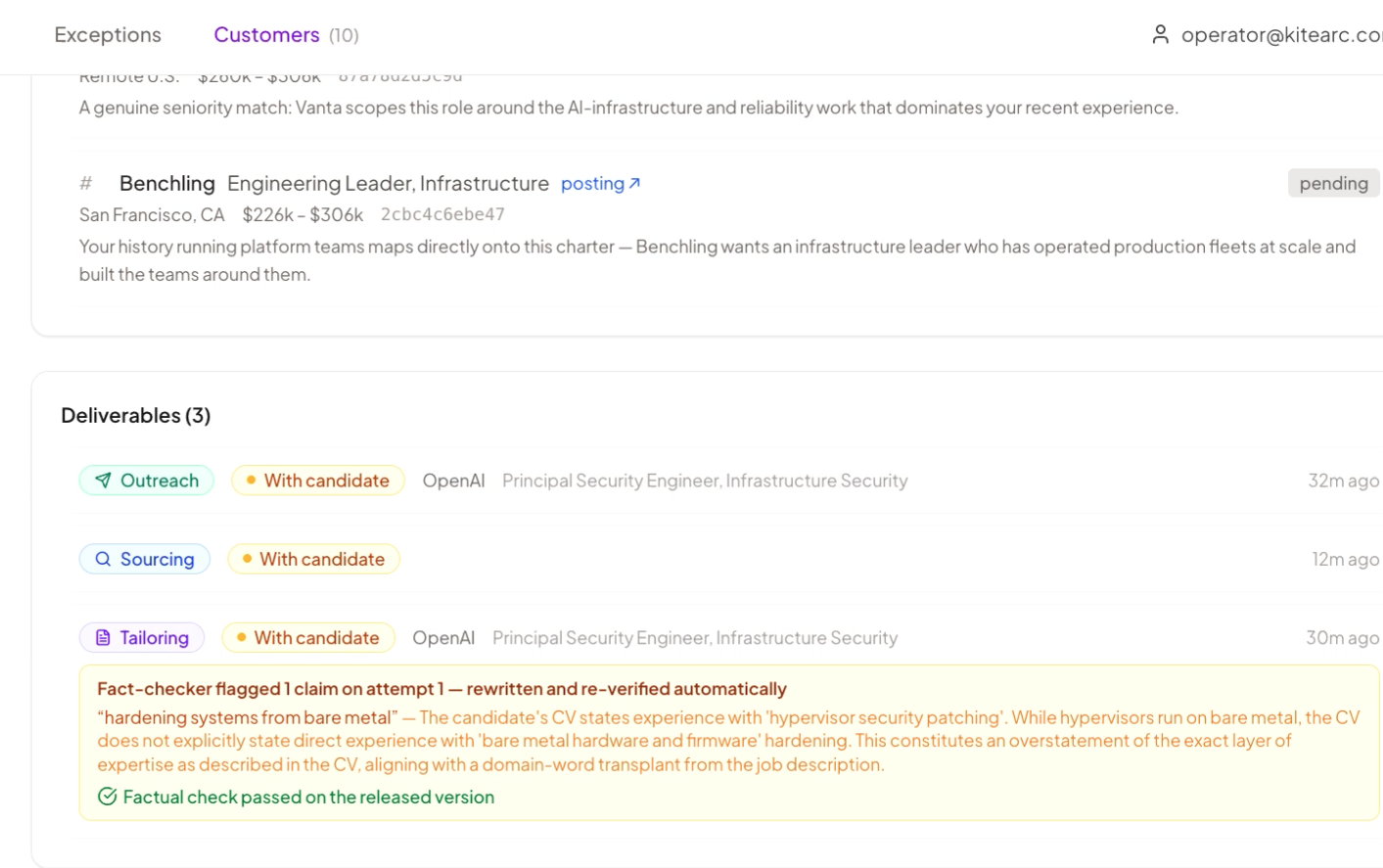
Every claim is checked against your CV. A borrowed skill or inflated title gets caught and rewritten — nothing ships unverified.
-
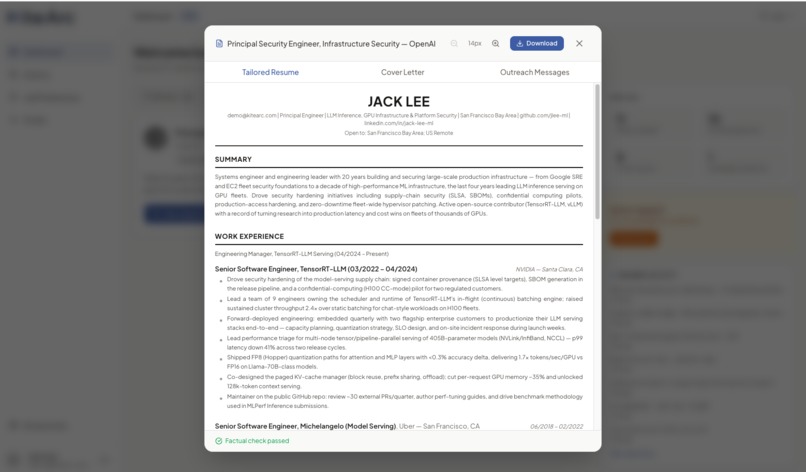
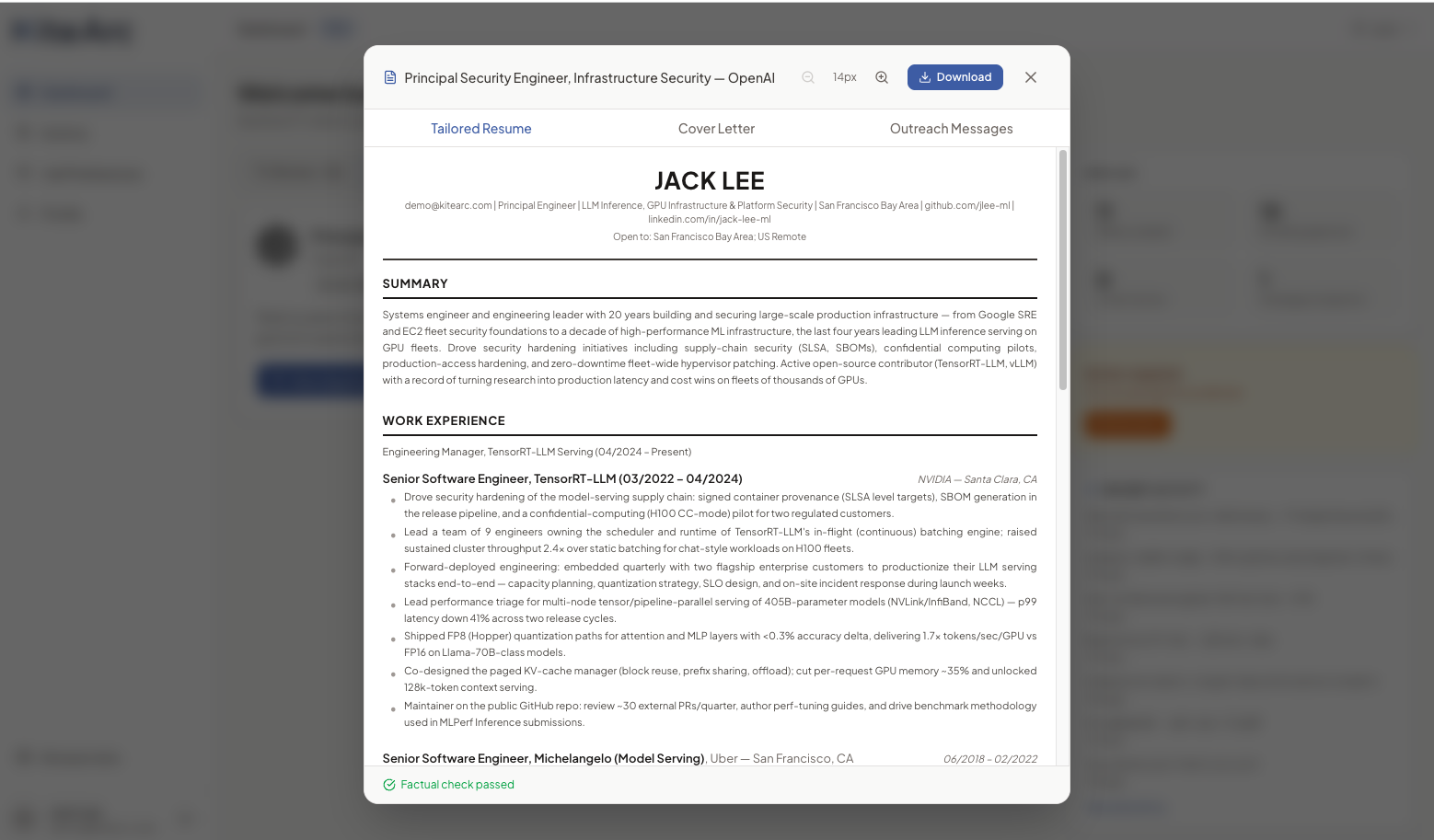
Résumé, cover letter, and outreach — tailored per role, and fact-checked against your real CV before you ever see it.
-
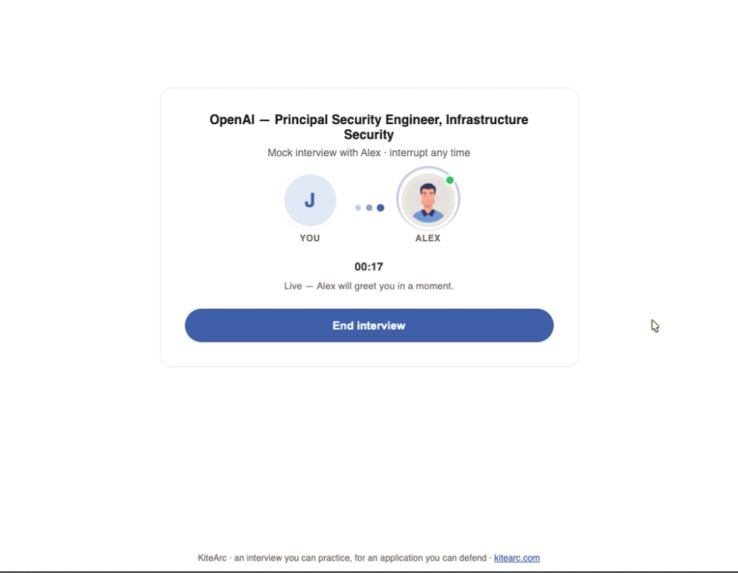
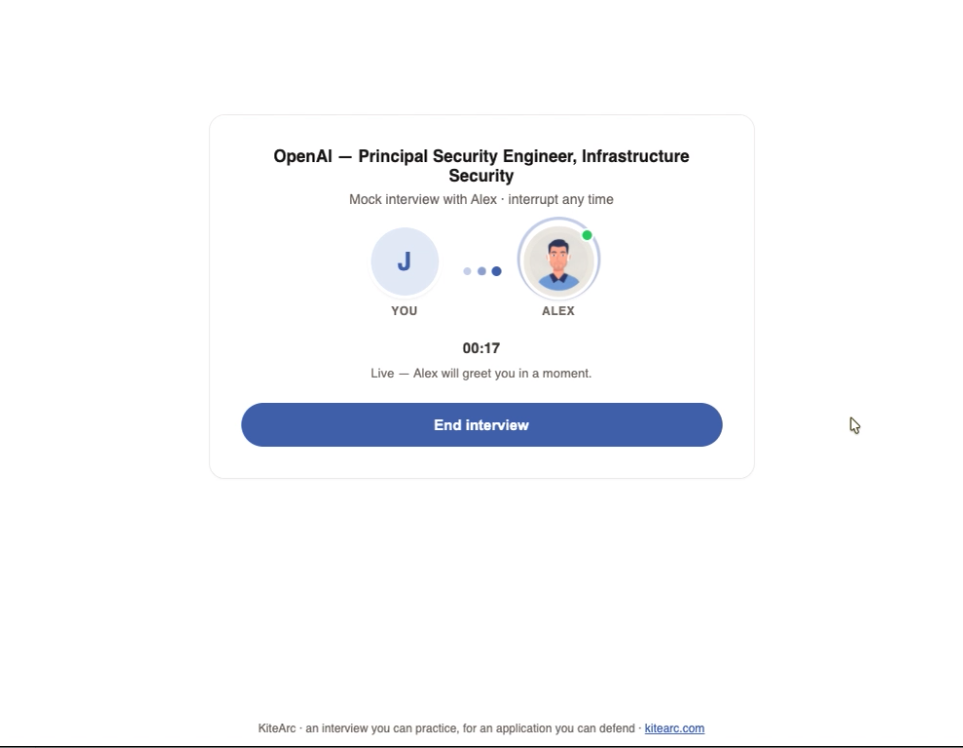
Alex, a real-time voice interviewer on Gemini Live, challenges you on the exact application you're about to send.
-
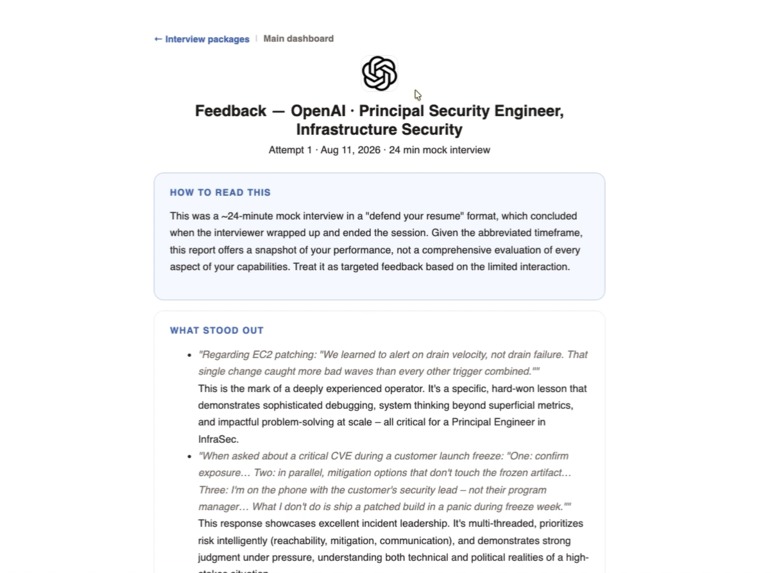
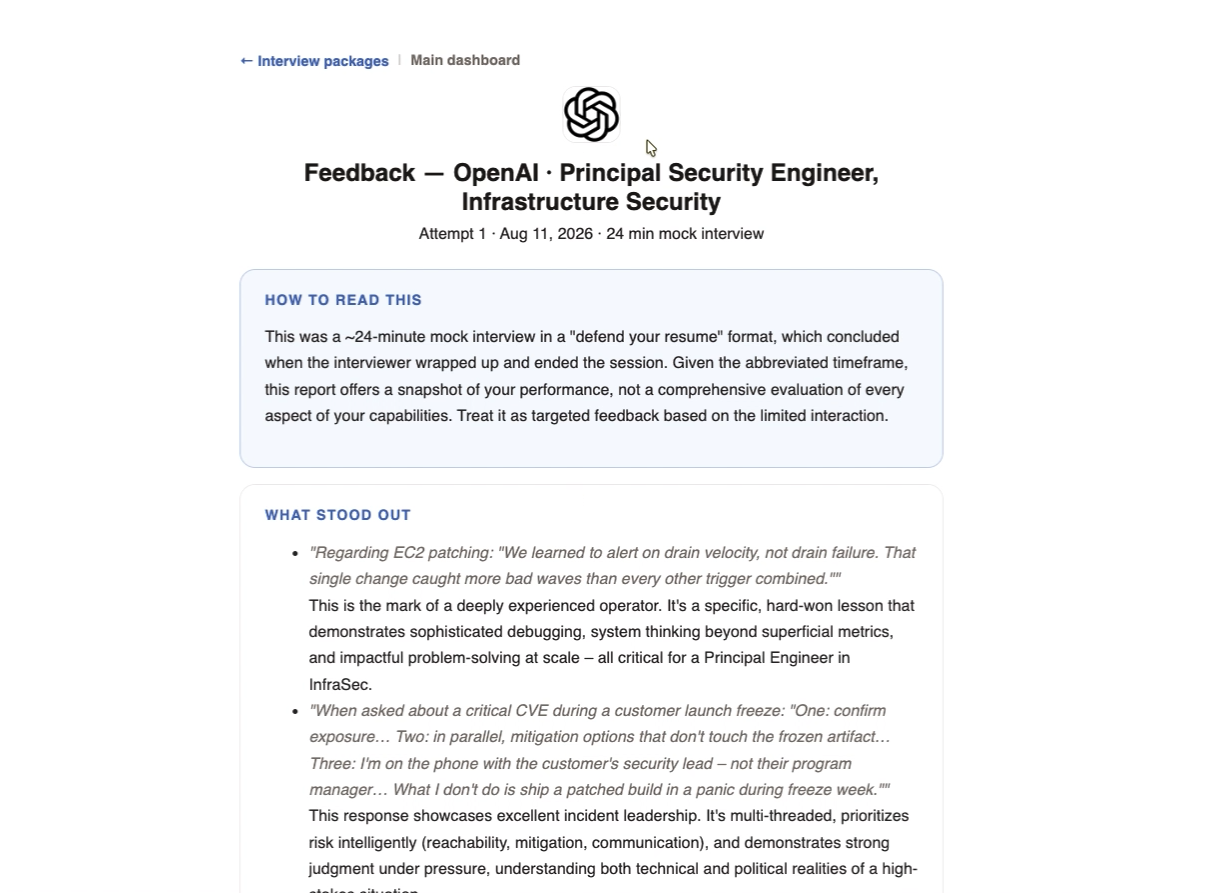
After the interview: where you held your ground and where you didn't — quoted from your own answers, verified against the transcript.
Inspiration
Early this year I was actively searching for my next role, and my LinkedIn feed had become a wall of layoff posts — thousands of experienced engineers dropped into the same market at once. That market is now flooded with AI-generated applications, and the effect is brutal: real experience vanishes into machine-made noise. Every tool I tried made it worse — all of them optimized for volume, helping people fire more applications into the pile they were already drowning in.
I'd spent 18 years building infrastructure for financial institutions, where the whole craft is making one machine do the work of many. I had the two pieces the right solution needed: cloud infrastructure to run continuous, verified sourcing at scale, and AI to do what used to take an entire recruiting team. So I built the reverse recruiter I wished I'd had — one that finds the few roles that fit, refuses to fabricate, and gets you ready to defend every word.
What it does
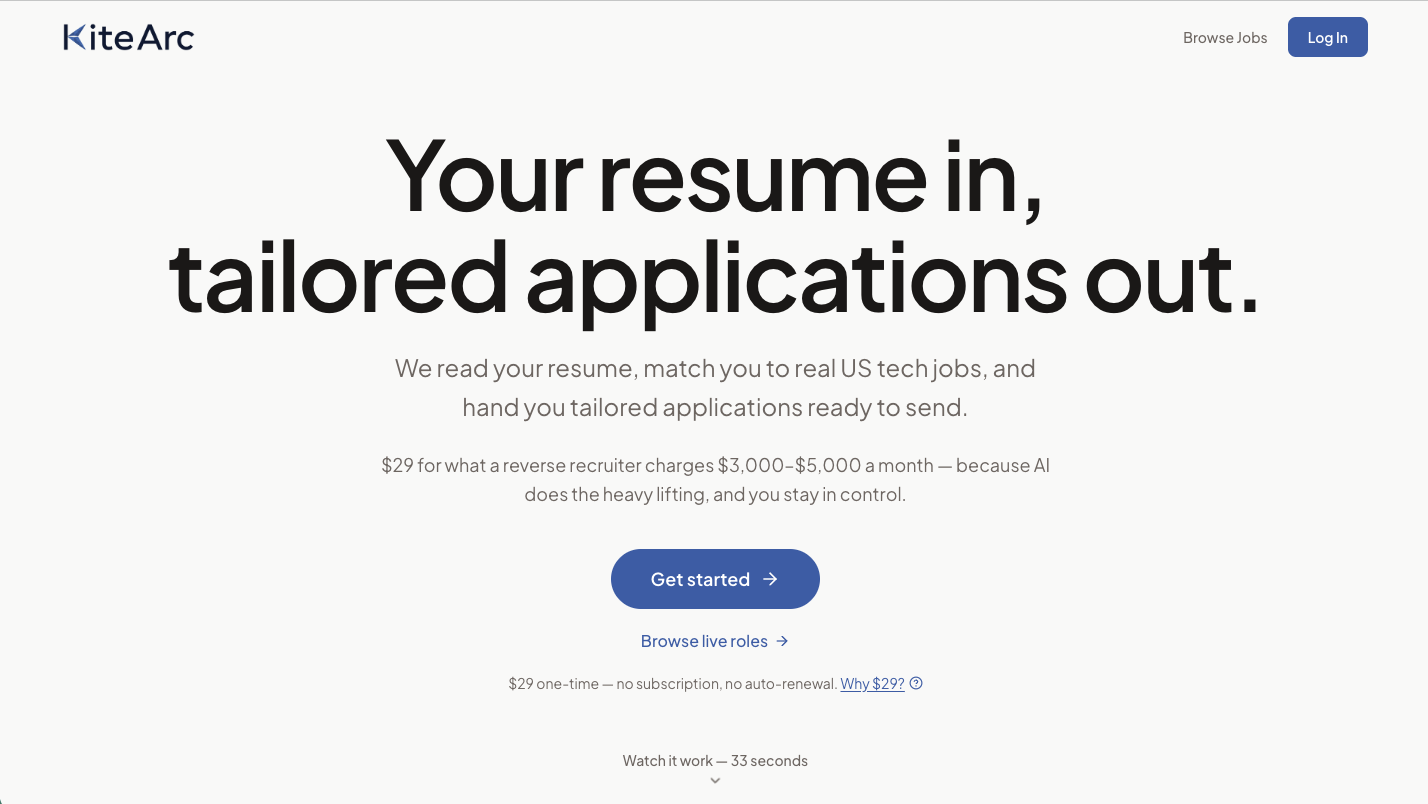
A human reverse recruiter costs $3,000–5,000 a month and is priced for executives. KiteArc does that job for $29, because five AI agents do the work a team used to. This is where the category impact lives — Professional Services Access is about connecting everyday people with the expert guidance they need, and KiteArc puts expert job-search guidance, until now locked behind an executive price, within reach of someone watching a severance clock.
- Sourcing pulls roles daily from employers' own hiring systems (Greenhouse, Lever, Ashby), verifies each posting is still live against the employer's page, and drops duplicates and dead links.
- Matching reads your CV and returns only roles that fit your domain, seniority, and IC-vs-management track — and excludes roles that break a hard constraint like work authorization or location, rather than burying them lower.
- Tailoring writes the résumé, cover letter, and outreach for each role you approve.
- Fact-checking reads every generated claim back against your CV. A borrowed skill, an inflated number, a title you never held — it catches it, rewrites it, and nothing ships until it passes.
- Alex is a real-time voice interviewer that challenges you on the exact application you're about to send, then reports where you held your ground and where you didn't — quoting your own answers back.
The economics are the whole point:
$$\text{Cost to serve one candidate} \;\approx\; \text{a few dollars of compute} \;\ll\; \$3{,}000\text{–}5{,}000/\text{month}$$
The result isn't cheaper spam. It's fewer, real, defensible applications — and a candidate ready for the one moment AI can't sit in for: being questioned.
How we built it
Google Cloud end to end: Cloud Run (FastAPI services), Firestore, Cloud Storage, Firebase Auth and Hosting, Secret Manager, and Cloud Scheduler — which runs the sourcing pipeline unattended every morning and has done so at 100% success since May. Stripe handles payments. Every LLM call is Gemini, with models chosen per job — text models for sourcing, matching, tailoring, and claim verification; Gemini Live native audio for Alex.
What makes KiteArc AI-native rather than AI-flavored is that the key production decisions are the AI's, not a human's. The fact-checker isn't advisory — it's a release gate. While filming our demo, the first application shipped only after the checker flagged "hardening systems from bare metal," noted the CV actually describes hypervisor-level work (not bare-metal firmware), rewrote the line, and re-verified it — attempt 1, no human in the loop. That decision runs on every package, every day.
Challenges we ran into
Real users broke it in ways I hadn't. A senior engineer we'd never met stress- tested KiteArc and told us bluntly what was wrong: stale postings, and matching that ignored his management-track intent. We fixed both at the root — liveness checks against employer pages, explicit IC-vs-management classification — and he came back and found more. Three rounds of that.
The hardest problem was making the generator honest. Our first approach gave the model a list of banned phrases; A/B evaluation showed it backfired — naming the phrases primed the model to reproduce them. We rebuilt it as a positive rule: every claim must cite a span of the actual CV. Flags per package dropped measurably in A/B evaluation — we report the direction, not a rate, at our current volume — and the release gate makes the guarantee absolute: nothing with an unresolved flag ships. Alex went through the same fire: a 17-point live abuse suite where every failure — it once invented a team size, once slipped into tutoring a candidate — became a hard runtime rule.
Accomplishments that we're proud of
The critic became the advocate. After three rounds of fixes, that same senior engineer applied to two roles KiteArc matched him to and endorsed it publicly, by name — his testimonial is live on kitearc.com. For business viability, one arms-length advocate who tried to break the product is worth more than a hundred users we couldn't stand behind.
We're proudest that the system polices itself in production — it caught and corrected its own fabrication on camera, with no human watching — and that Alex survived the abuse suite and now refuses to praise an interview that didn't happen.
What we learned
We learned that giving something away and getting paid for it are very different problems — and we tested two ways of giving. First, direct LinkedIn outreach with free promo codes: a handful redeemed and used the product, but that warm, free channel converted no one to paying. Second, a more personalised experiment — we found active job-seekers, ran their profile against KiteArc's live pool, and sent each a personal preview of their matches (real roles, real salary bands, in their target market) with an invitation to try the product. That value-first approach drew more genuine interest than the code blast, but it, too, drove people to the free teaser rather than a purchase.
That's the honest state of business viability: the product earns usage, real applications, and public advocacy, but willingness-to-pay is still unproven. What both experiments taught us is that free access and personalised outreach surface engagement, not purchase intent — the next phase has to put a real paid ask in front of in-market users who arrive needing the product, rather than people we handed it to for free.
We also learned honesty is measurable. The drop in fabrication flags came from A/B evaluation, not intuition — and what we can state absolutely is that 100% of shipped packages are claim-clean, because one unresolved flag blocks release.
What's next for KiteArc
The employer side of hiring is already going agent-native: Ashby now exposes recruiting data to AI agents acting for recruiters. Hiring is becoming a conversation between agents, and only one side has shown up. KiteArc is the other side — the candidate's agent — which is what keeps this viable beyond the hackathon: a very low, flat cost base (a single always-on instance that scales up only with real demand), no salaries, and a market — everyone navigating a layoff — that isn't shrinking. And the impact compounds economically: every week cut from a laid-off engineer's search is income restored and skilled capacity returned to the market — expert guidance that shortens unemployment is the most direct economic value this category can create.
Employers got their agents first. KiteArc is what the other seven billion people get.


Log in or sign up for Devpost to join the conversation.