-
-
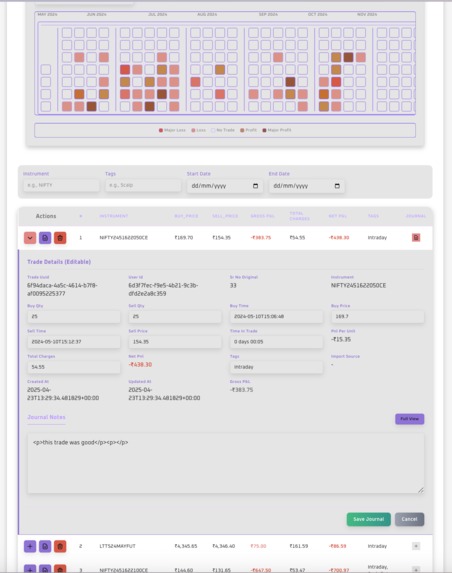
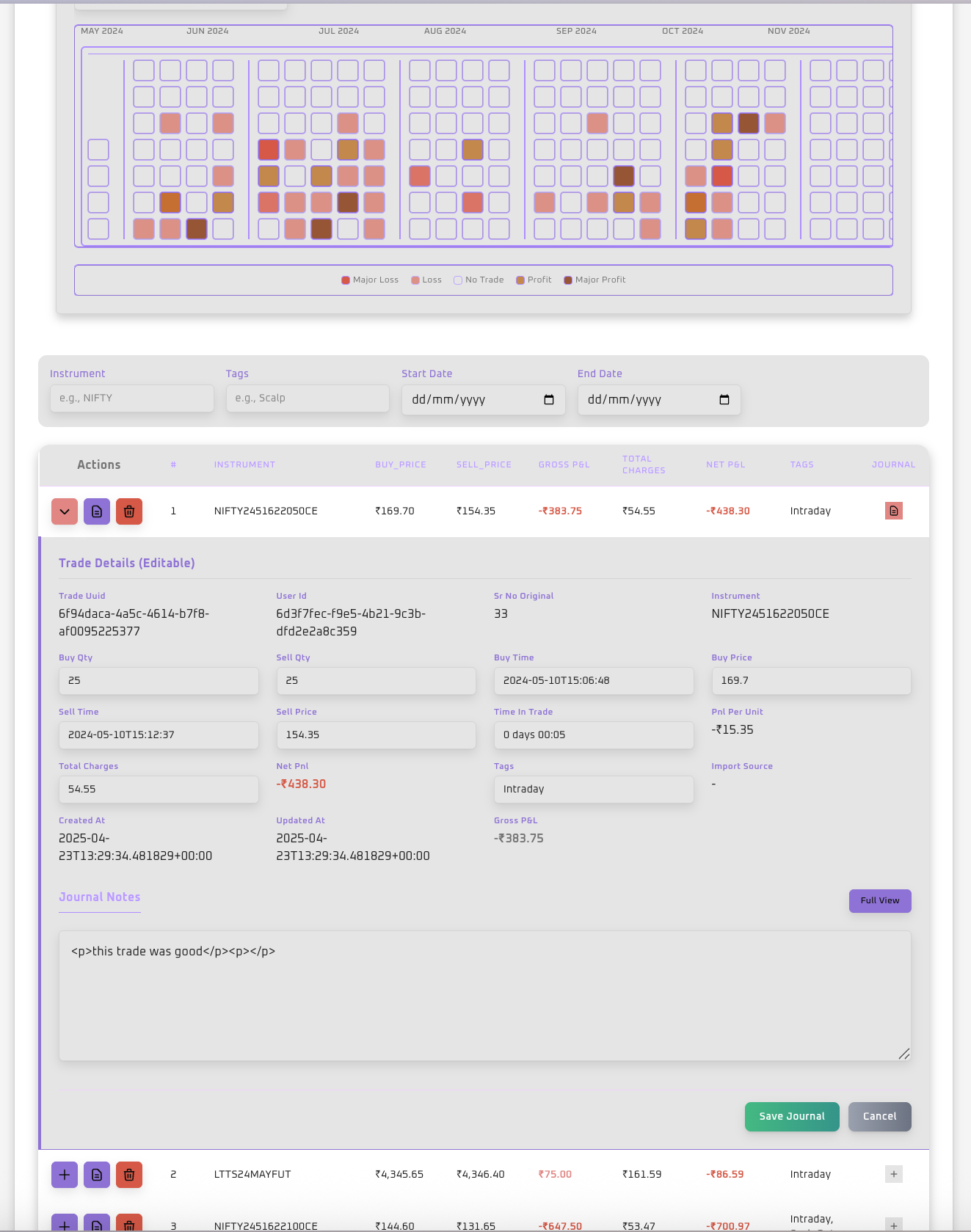
Editable Meta detail View
-
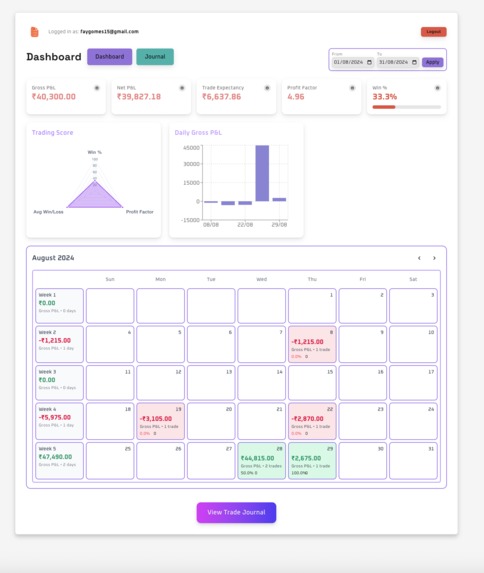
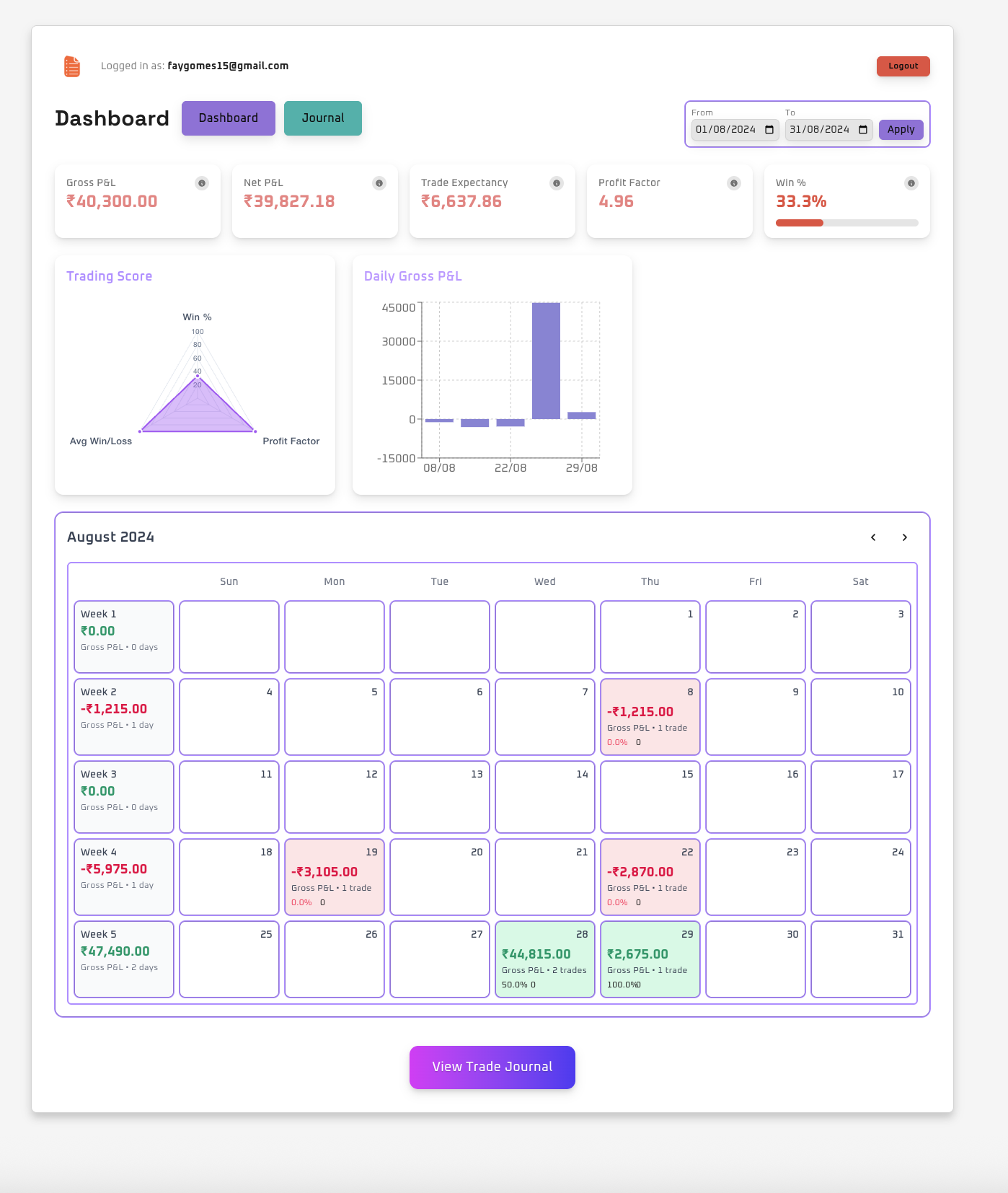
Dashboard Monthly
-
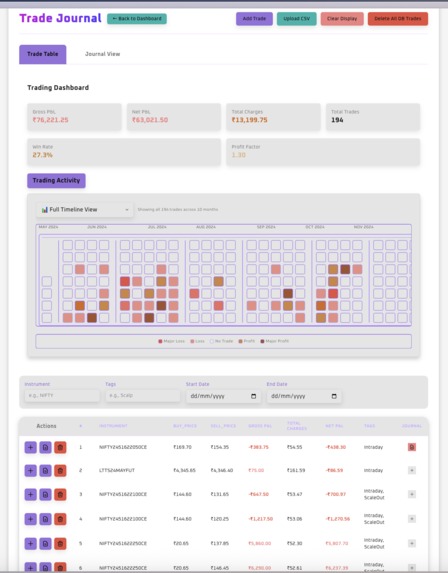
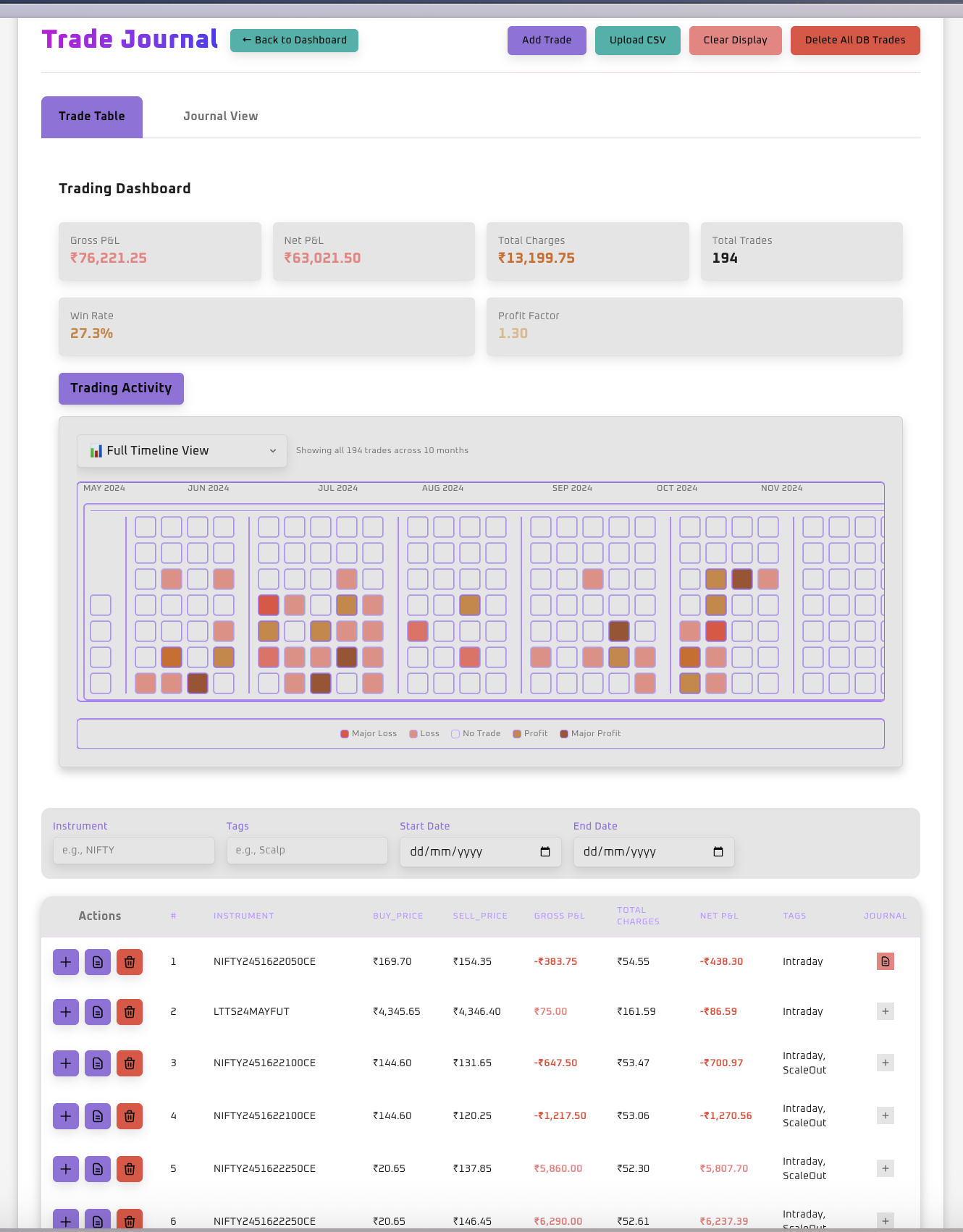
Full Timeline Journal View
-
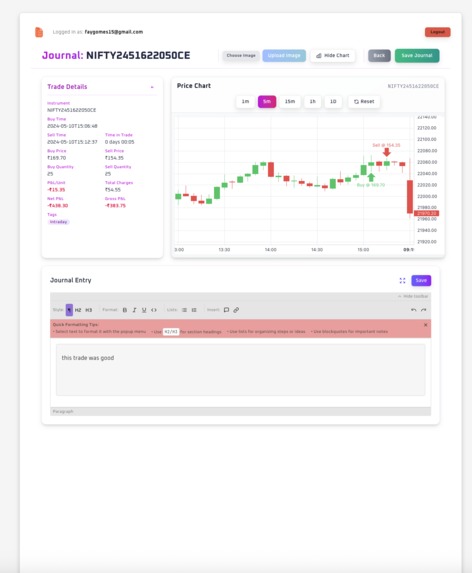
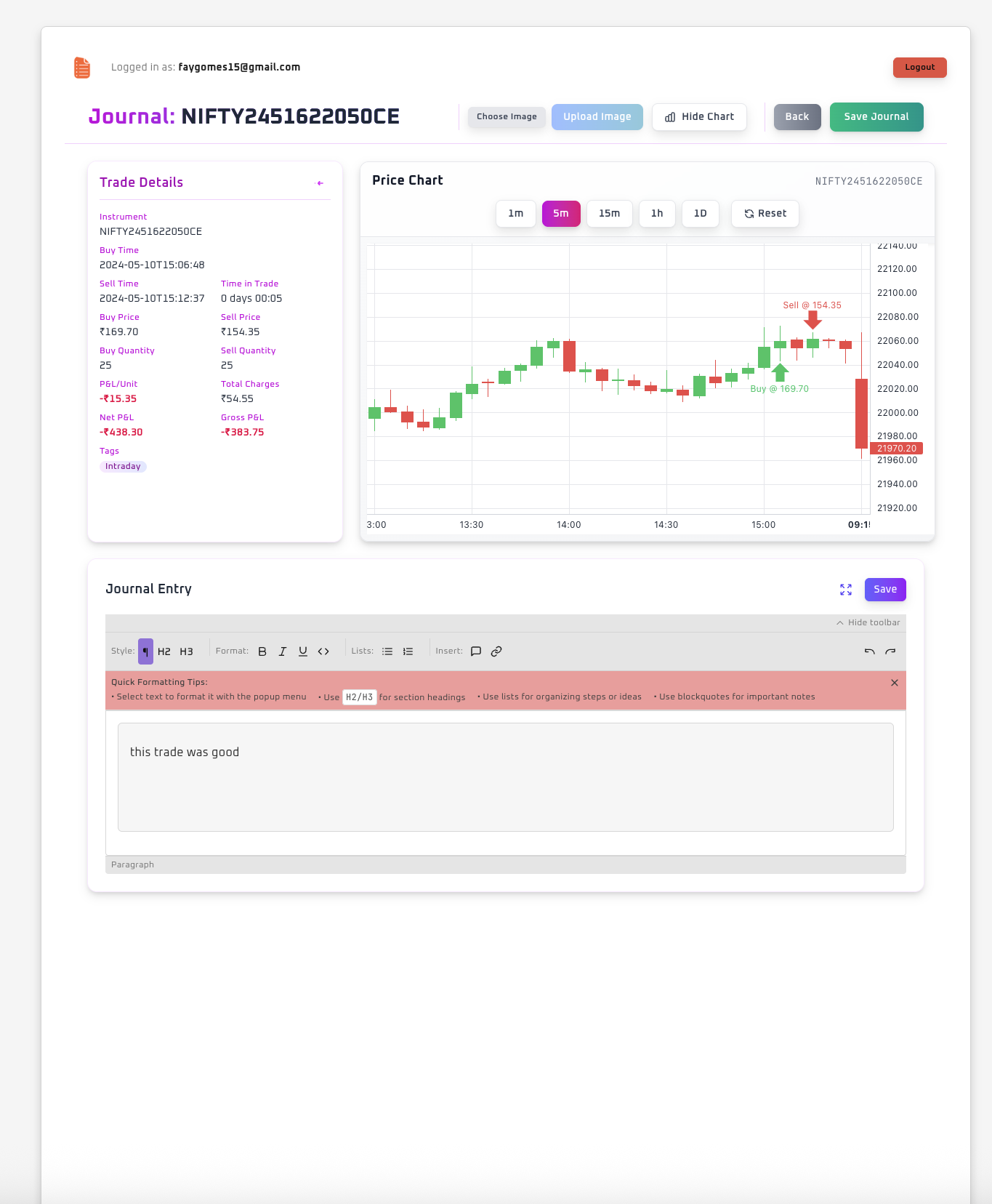
Full Detail View with Chart Tags
-
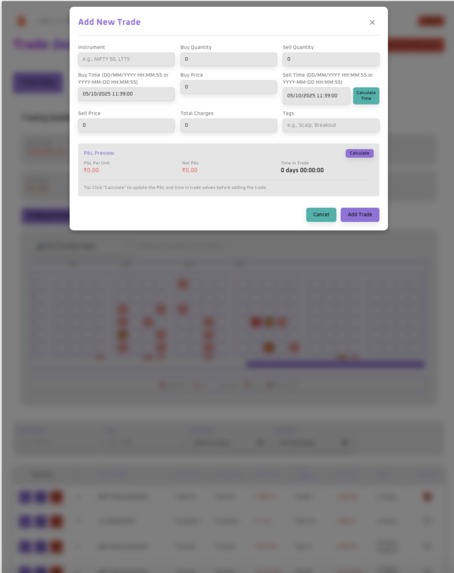
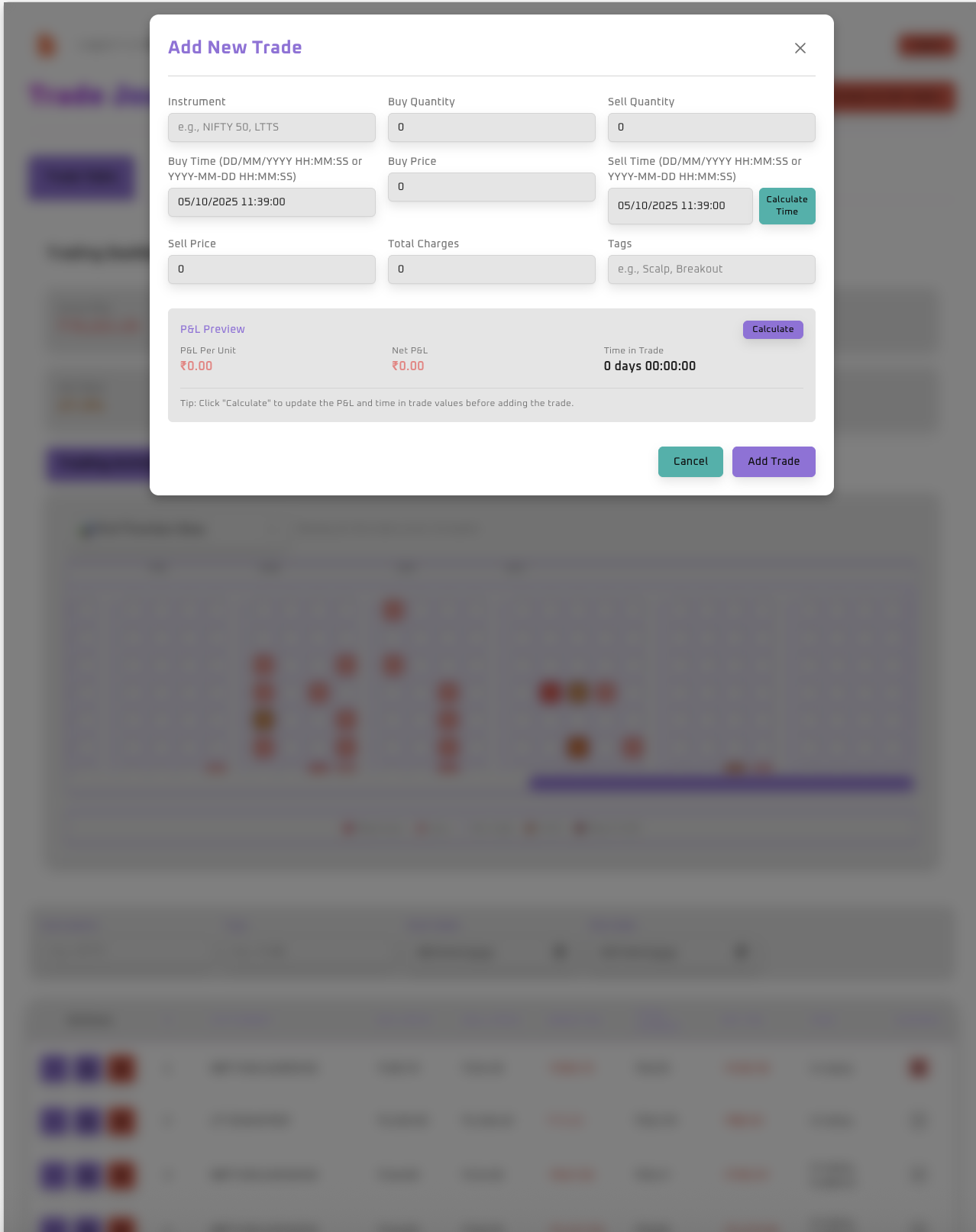
Manual Trade Add on
Inspiration
I’m a trader who used to journal in bulky Excel sheets. Most “journals” are just raw order logs—no concept of a single trade, so reflection becomes data entry. Seeing tools like TradeZella prove that frictionless journaling changes trader behavior, I wanted the same simplicity for Zerodha users—but faster, cheaper, and purpose-built around trade reconstruction from CSVs. With Anthropic × Accel hosting this hackathon, I leaned into two philosophies: build useful agentic tools (Claude Sonnet 4.5 for planning/coding assistance) and keep them reliable and safety-minded (helpful, honest, harmless).
What it does
Kite Notes ingests a broker (Zerodha) trade book CSV, auto-pairs buys and sells into one cohesive trade, and renders a trade snapshot: entry/exit time, symbol, side (long/short), size/avg price, P&L fields, and duration. Each trade opens into a journal view with a rich text editor and a chart overlay that pins your exact buy/sell timestamps so you can see the trade, not just read it. You can tag, filter, and export clean “trades” for analysis or coaching.
How we built it
LLM-assisted development. I used Claude Sonnet 4.5 to draft pairing heuristics, generate tests for edge cases, and scaffold components—focusing my time on data correctness and UX polish.
Pairing engine. Time-window + position-change logic reconstructs trades from order streams, handling partial fills, scaling in/out, and reversals.
Charting. Uses TradingView’s free embeddable widgets to visualize price with precise entry/exit markers mapped by timestamp. Dhan API for chart data linked to tradingview charting api.
Journaling UX. Rich editor with quick tags (setup/reason/emotion/lesson) and editable fields; exports to CSV/JSON.
Challenges we ran into
Long vs. short detection and position flips mid-session without explicit “flat” rows. Partial fills & pyramiding (merging micro-fills into one intentful trade). Ambiguous closes (e.g., closing shorts with multiple buys over time). Chart alignment when broker timestamps and market feed timestamps differ by seconds. Vendor mix. Keeping charting low-cost and flexible while preserving performance and precision. (TradingView widgets helped here along dhan api.)
Accomplishments that we’re proud of
A working MVP that turns messy order logs into clean, labeled trades in minutes. Personally used. Visual truth: automatic chart pins at entry/exit massively reduce review fatigue. Journal in context: notes, tags, and snapshots live with the trade—not in a separate doc. Built solo in ~two weeks while validating on my own trade history.
What we learned
You can ship a production-ready, niche tool quickly by pairing focused domain logic with an LLM that’s good at planning, scaffolding, and test generation (Claude Sonnet 4.5’s agentic strengths really showed here). You can use english to create algorithms with the correct context engineering.
The biggest win isn’t “more data”—it’s better units of meaning (orders → trades). Traders engage more when review friction is near zero; visuals + structured notes drive real post-trade insight. Safety-first AI practices (clear prompts, guardrails, reproducible flows) keep the tool dependable—aligned with Anthropic’s “helpful, honest, harmless” ethos.
What’s next for Kite Notes
Get a team of traders and developers to bulletproof the MVP and test wild while creating content around it. Broker integrations (adapter pattern work with other brokers), plus more CSV dialects. Community workflows: share a trade snapshot link with mentors or groups. Privacy & portability: local export/import, API access for quants. Go-to-market: Accel’s/VC/Angel founder-first, long-term approach resonates with a sustainable, utility-first product; we’ll refine for fit, then scale.
Built With
- claude
- cursor
- dhanapi
- python
- railway
- supabase
- vercel

Log in or sign up for Devpost to join the conversation.