KitchenFlow – Affordable B2B SaaS for Micro F&B Operators
Inspiration
I’ve been watching small restaurant and cloud kitchen owners in Surat (and all over India) for a long time.
These people work 14-hour days, barely sleep, and still end up losing money at the end of the month.
The biggest silent killers?
Missing payments from Swiggy/Zomato, wrong deductions, and zero idea of their real profit.
All the big POS and restaurant softwares completely ignore this micro segment. They’re too expensive and too complicated.
That’s when I decided — someone has to build something ridiculously simple and cheap just for them. That’s how KitchenFlow started.
What it does
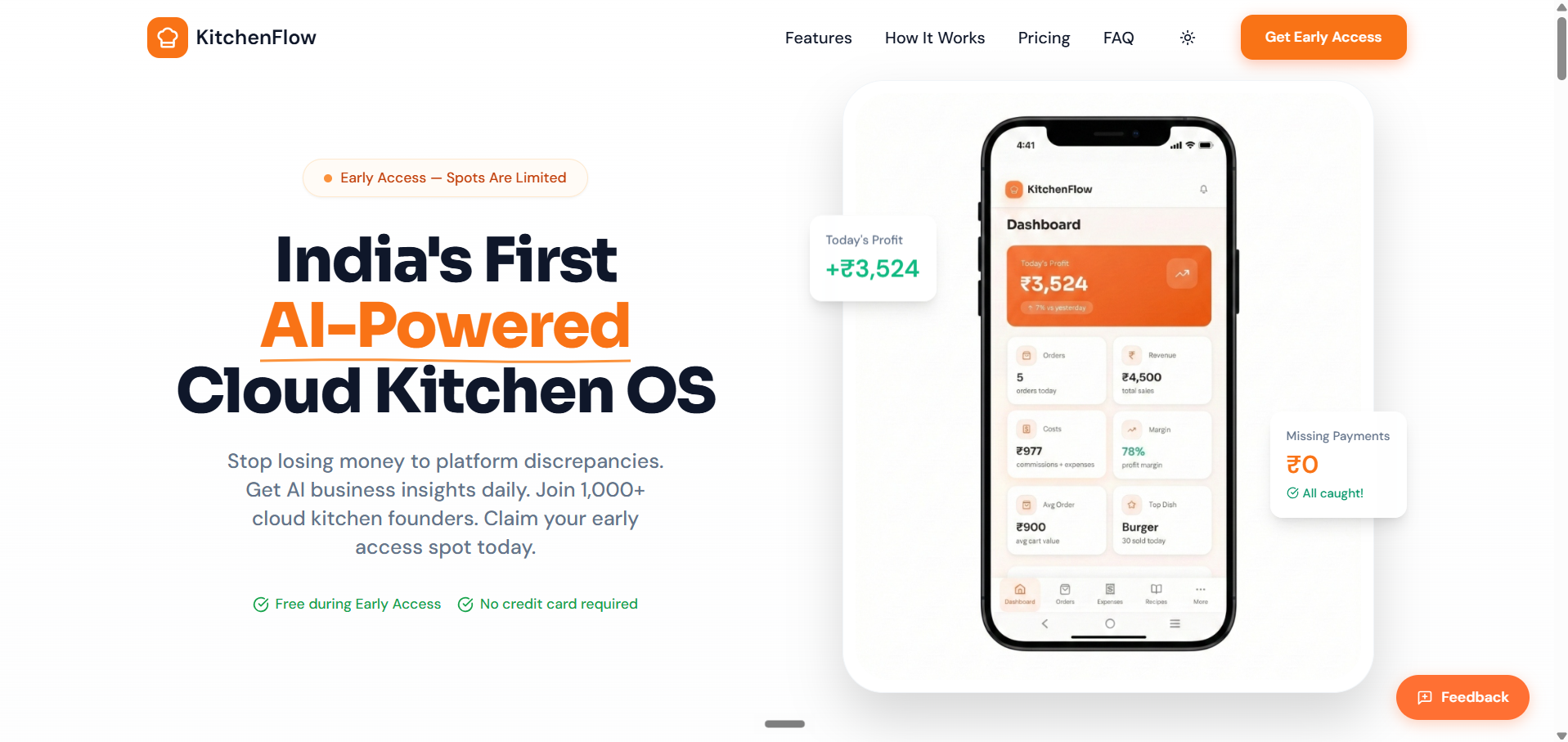
KitchenFlow is a live B2B SaaS that helps these tiny operators:
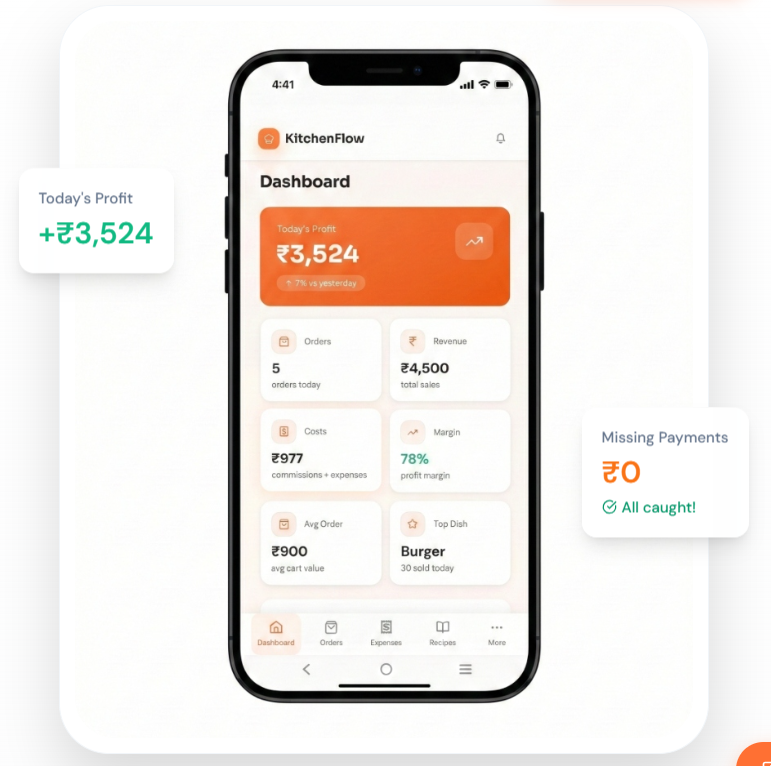
- Automatically catch missing payments and wrong deductions (Automated Financial Reconciliation)
- Track every billing dispute from start to finish
- Actually see their real profit without going crazy
4 pricing tiers I designed:**
- Tier 1 → ₹99/mo (just the basics, super accessible)
- Tier 2 → ₹599/mo (growth tools + analytics)
- Tier 3 → ₹999/mo (full operations system)
- Tier 4 → ₹499/mo (special version for a specific niche)
Live app: kitchen-profit-joy-jwqc.vercel.app
How I built it
I have zero coding background. Literally none.
I spent 6 months (Jan 2026 → July 2026) building everything using only AI tools:
- First I sat and calculated real unit economics (AWS, WhatsApp API, payment gateway cuts, support cost)
- Benchmarked 6 competitors and found the gaps
- Designed the 4-tier pricing and product specs
- Built the entire web app using Claude Code + Lovable
- Deployed it on Vercel
- Made a demo video that actually got some organic interest on LinkedIn
I even modelled the profit margins — they range from 37% on the cheapest plan to 73% on the highest plan. So it can undercut everyone and still make money.
Challenges I faced
- No coding skills at all — every single line was written by talking to AI. Learning how to prompt properly and debug through conversation was a daily struggle.
- Getting the unit economics right was harder than I expected (especially WhatsApp Business API costs).
- Constant temptation to add fancy enterprise features. I had to keep reminding myself: keep it stupid simple for these micro owners.
- Doing everything alone — founder, product designer, and “developer” at the same time.
What I learned
- In 2026 a non-coder can actually ship a real live SaaS product if they use AI properly.
- Unit economics and competitor research matter way more than cool features in the beginning.
- Price-sensitive customers don’t want more buttons. They want radical simplicity and radical affordability.
- Shipping something real (even if it’s still rough) teaches you 10x more than planning forever.
The product is live and ready for the first early users.
Next I’m going to onboard the first 20 micro-restaurants, improve the reconciliation engine with real data, and make the dispute tracking even better.
Built With
- ai
- ai-assisted
- chatgpt
- codex
- css
- next.js
- react
- tailwind
- typescript
- vercel


Log in or sign up for Devpost to join the conversation.