-
-
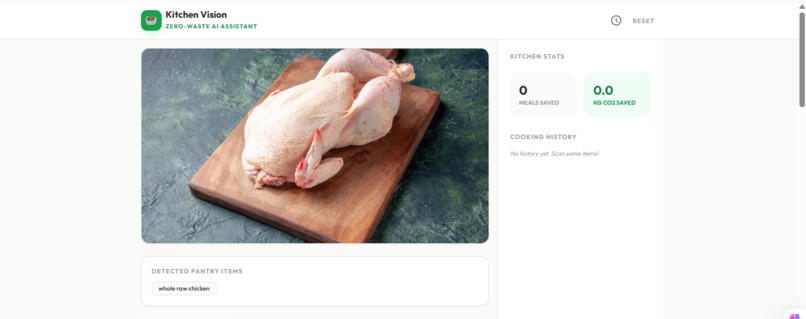
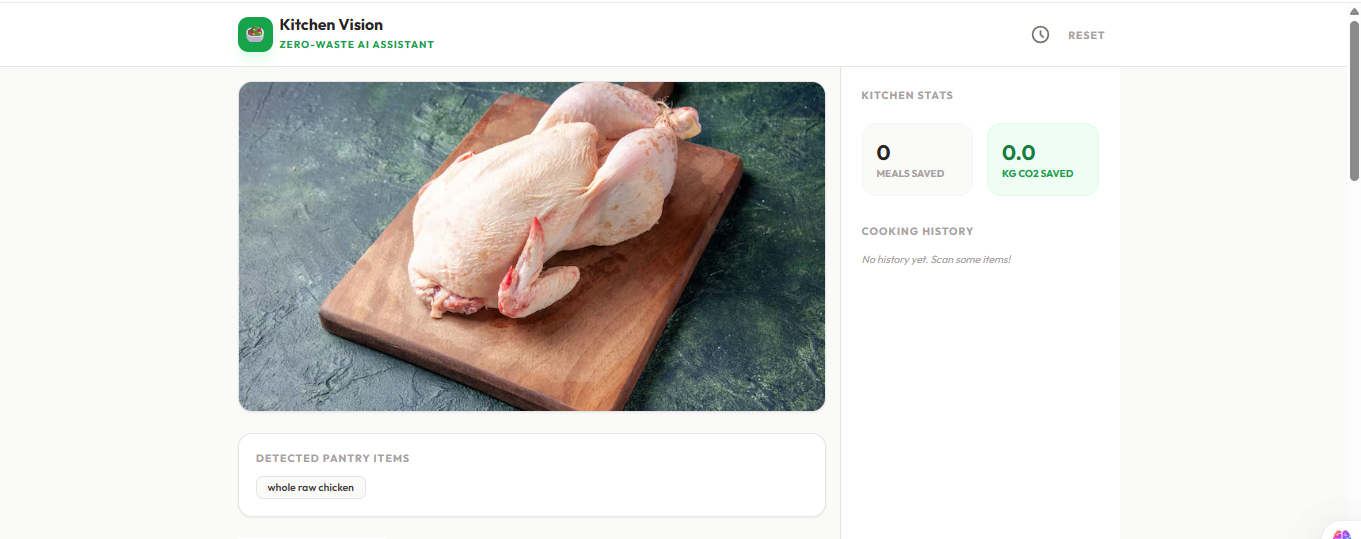
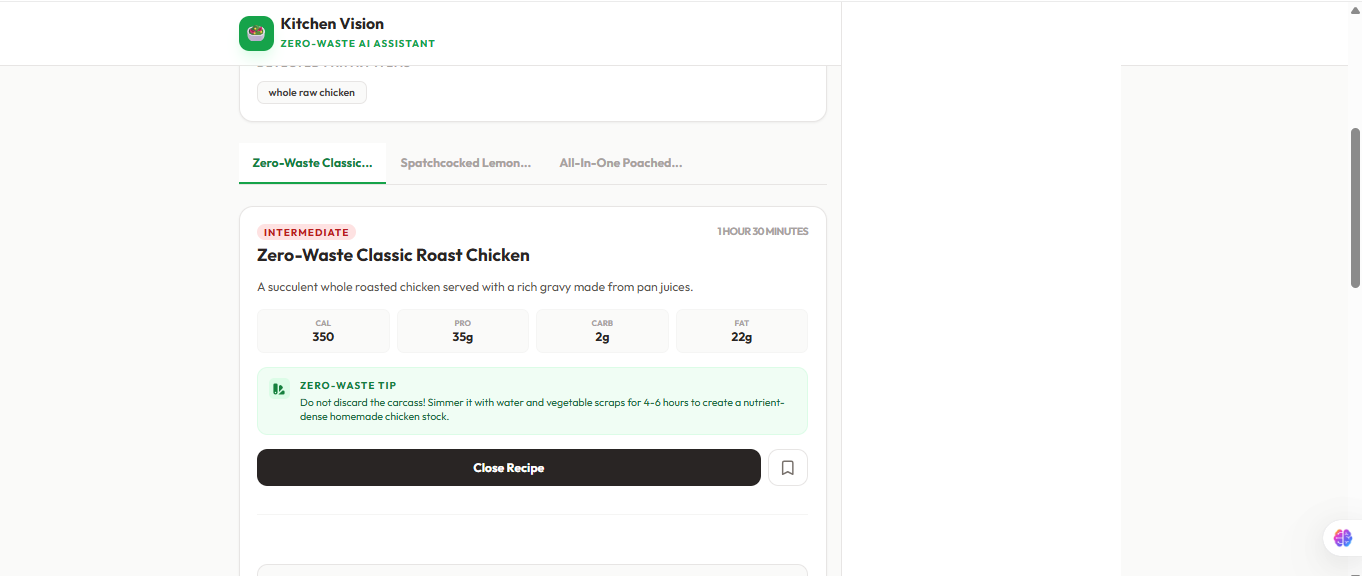
website interface
-
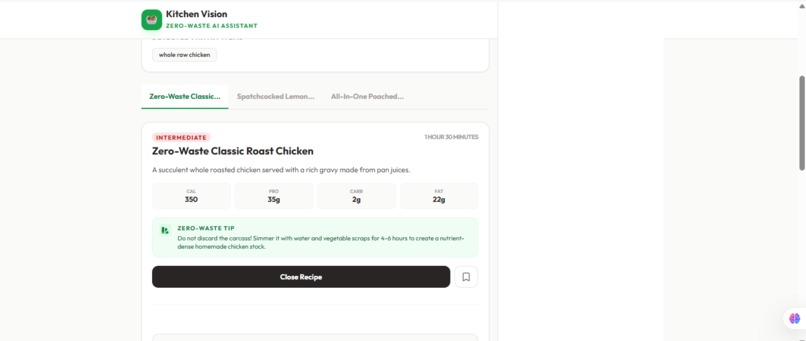
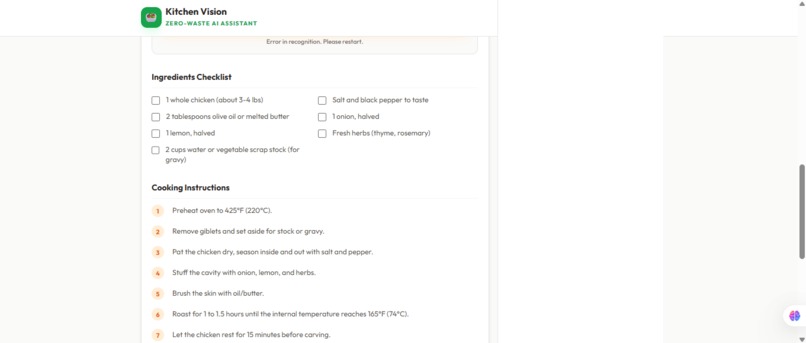
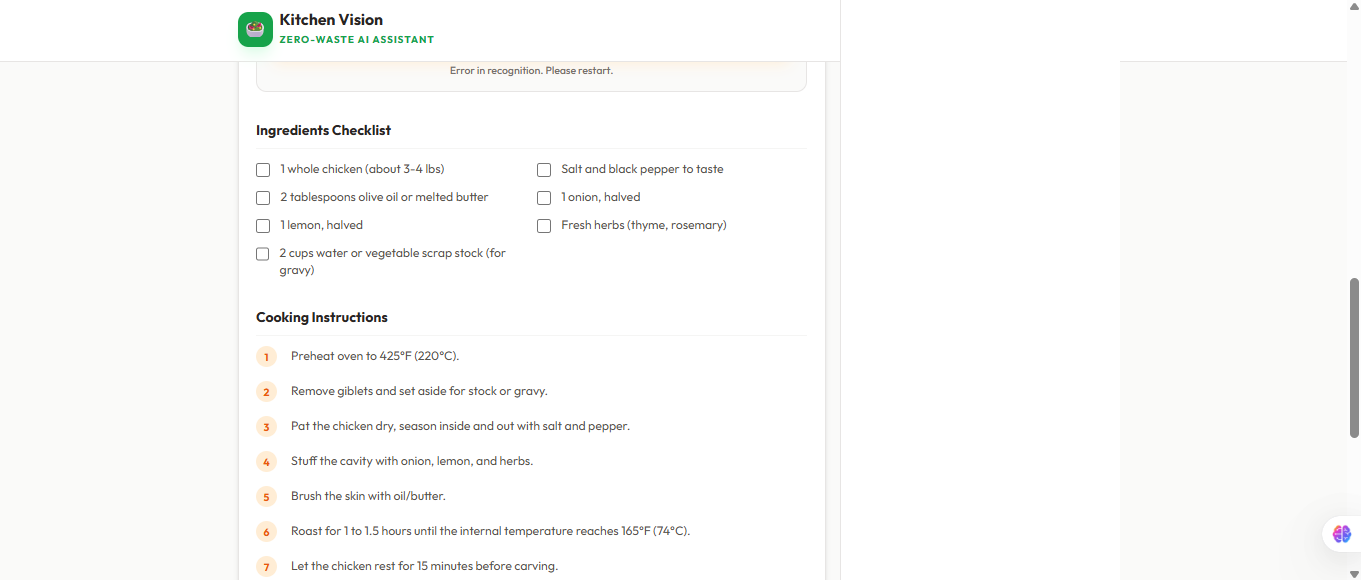
step by step process of the reciep
-
-
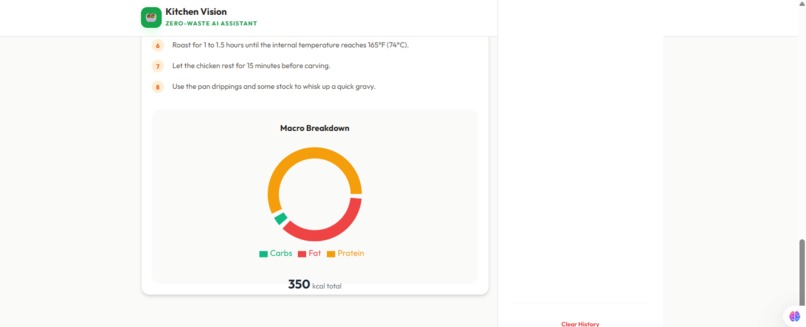
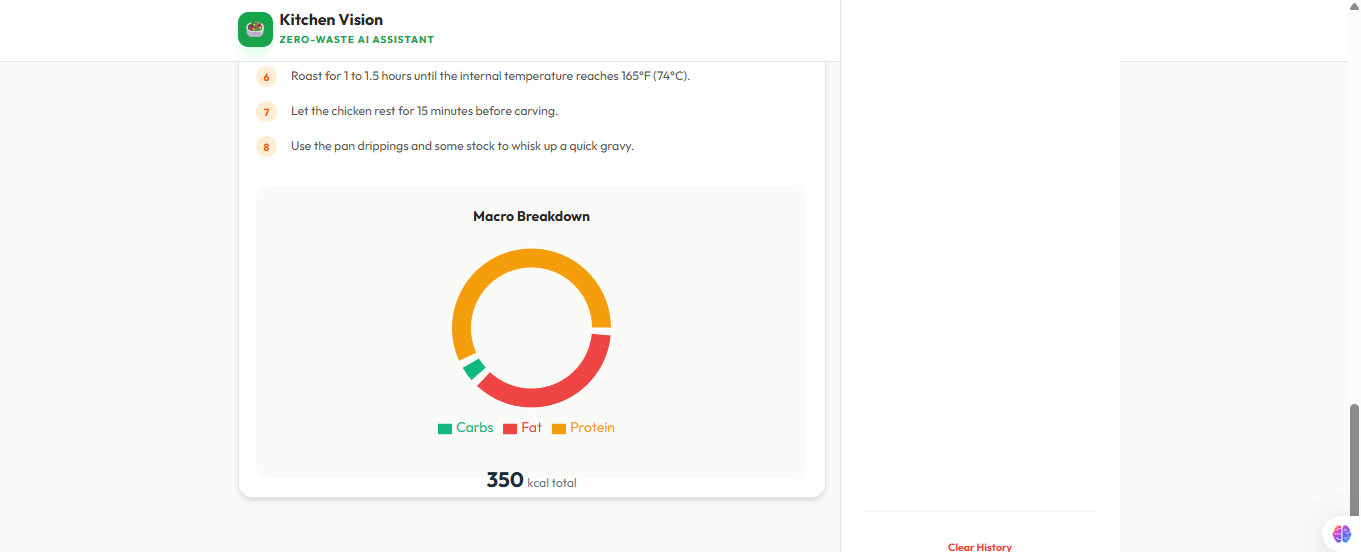
visualizations of nutrients
Inspiration
The idea was driven by the growing global crisis of food waste. Every year, massive amounts of edible food are discarded due to poor inventory awareness, over-purchasing, and unnoticed expiration dates. We envisioned a smart “digital guardian” for the kitchen that actively helps households reduce food waste, save money, and contribute to environmental sustainability—without adding extra effort to daily routines.
What it does
Kitchen Vision is an AI-powered food waste management system that uses computer vision and smart analytics to minimize household food loss. It can:
Identify Ingredients: Automatically detect fruits, vegetables, dairy, and packaged goods using real-time object detection.
Waste Monitoring: Track expiration dates and send smart alerts before food spoils.
Consumption Insights: Analyze usage patterns to identify frequently wasted items.
Smart Recipe Suggestions: Recommend recipes that prioritize ingredients nearing expiration to prevent waste.
Waste Reports: Generate monthly reports showing how much food was saved and estimated money/environmental impact reduced.
How we built it
We built the core system using Python and OpenCV for image processing and real-time camera integration. The intelligence layer uses a deep learning object detection model such as YOLOv8 or TensorFlow-based CNN models trained on a customized food dataset.
Frontend: A clean dashboard built with React or Streamlit to visualize inventory levels, waste alerts, and sustainability metrics.
Backend: Flask or FastAPI to process image inputs, manage alerts, and handle recommendation logic.
Database: Firebase or PostgreSQL to store inventory records, expiration timelines, and waste analytics.
Analytics Layer: A lightweight prediction model to estimate spoilage risk based on item type and storage duration.
Challenges we ran into
One of the biggest challenges was detecting partially hidden or stacked food items inside refrigerators. Lighting variations and reflective packaging materials made object recognition difficult.
Another hurdle was building an accurate spoilage prediction system since different foods degrade at different rates depending on storage conditions.
Optimizing performance for low-power devices (such as Raspberry Pi) while maintaining detection accuracy required model compression and performance tuning.
Accomplishments that we’re proud of
- Successfully creating a system that proactively reduces food waste rather than just tracking inventory.
- Achieving strong detection accuracy under varied kitchen lighting conditions.
- Designing a smart alert system that balances helpful reminders without overwhelming users.
- Building a sustainability dashboard that translates food savings into environmental impact metrics (e.g., reduced carbon footprint).
What we learned
We gained deep experience in training and fine-tuning custom object detection models for real-world environments.
We learned that reducing food waste is not just a technical problem—it requires thoughtful UX design to encourage behavioral change.
We also understood the importance of data preprocessing, dataset diversity, and model optimization for real-time deployment.
What’s next for Kitchen Vision
Smart Appliance Integration: Connect with smart refrigerators and IoT sensors to monitor temperature and freshness in real time.
Community Sharing Feature: Allow users to donate surplus food locally before it expires.
Advanced Waste Analytics: Use predictive AI to suggest smarter grocery shopping lists based on past consumption patterns.
Mobile App Development: Launch a Flutter or React Native app so users can track inventory and waste metrics while shopping.
Built With
- fastapi
- postgresql
- react

Log in or sign up for Devpost to join the conversation.