-
-
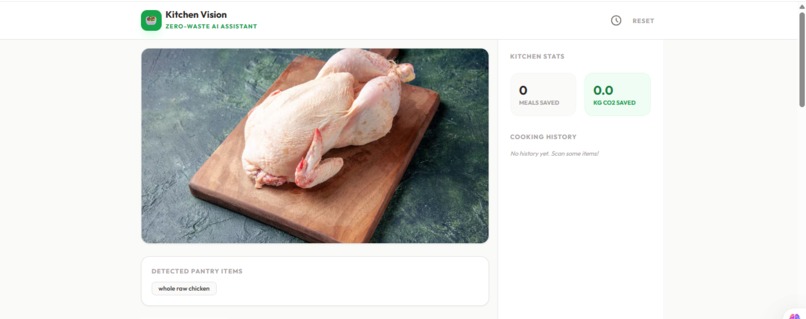
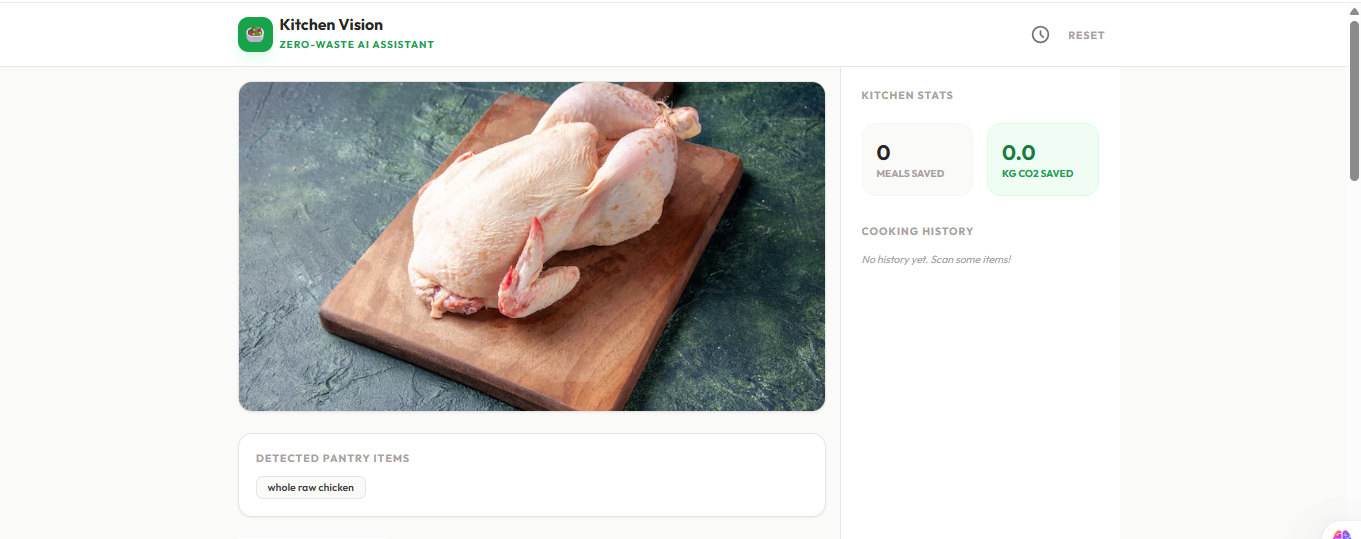
Interface
-
-
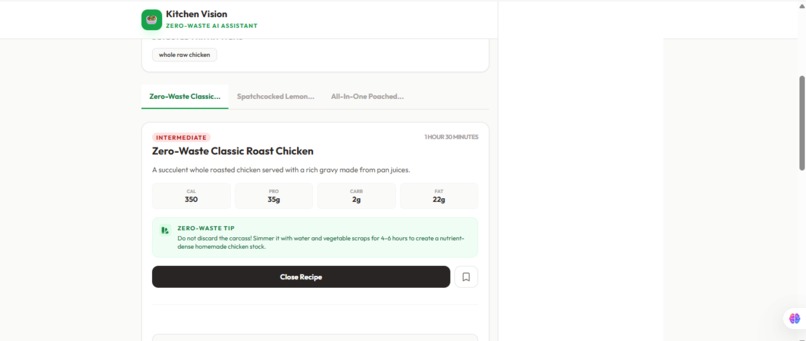
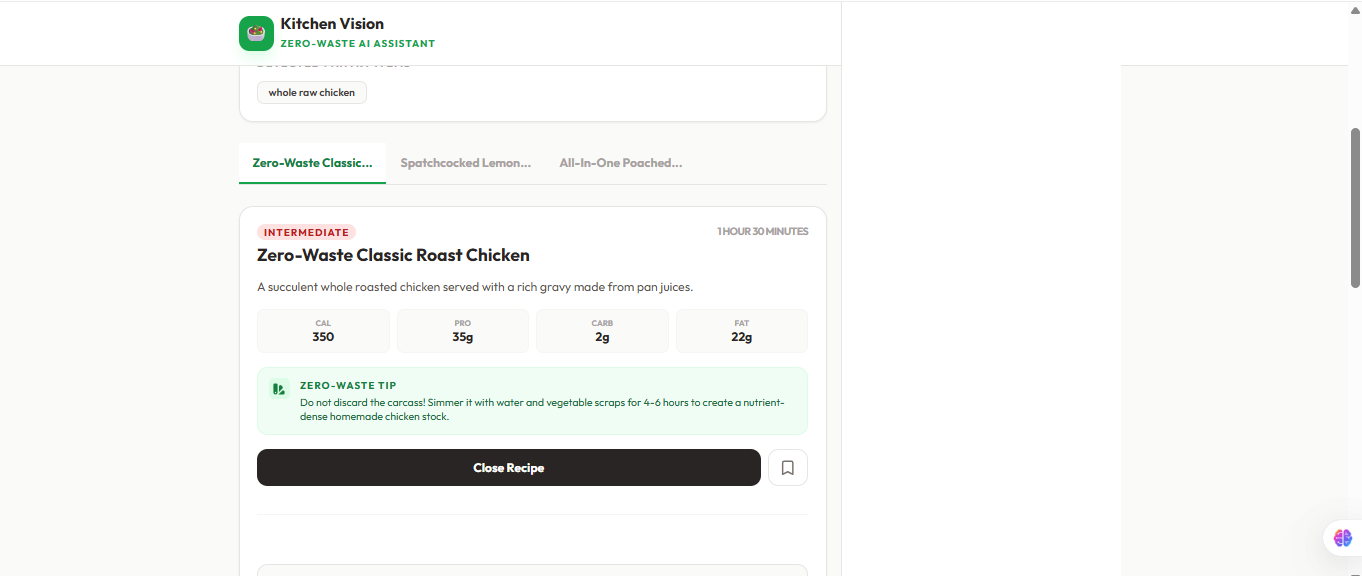
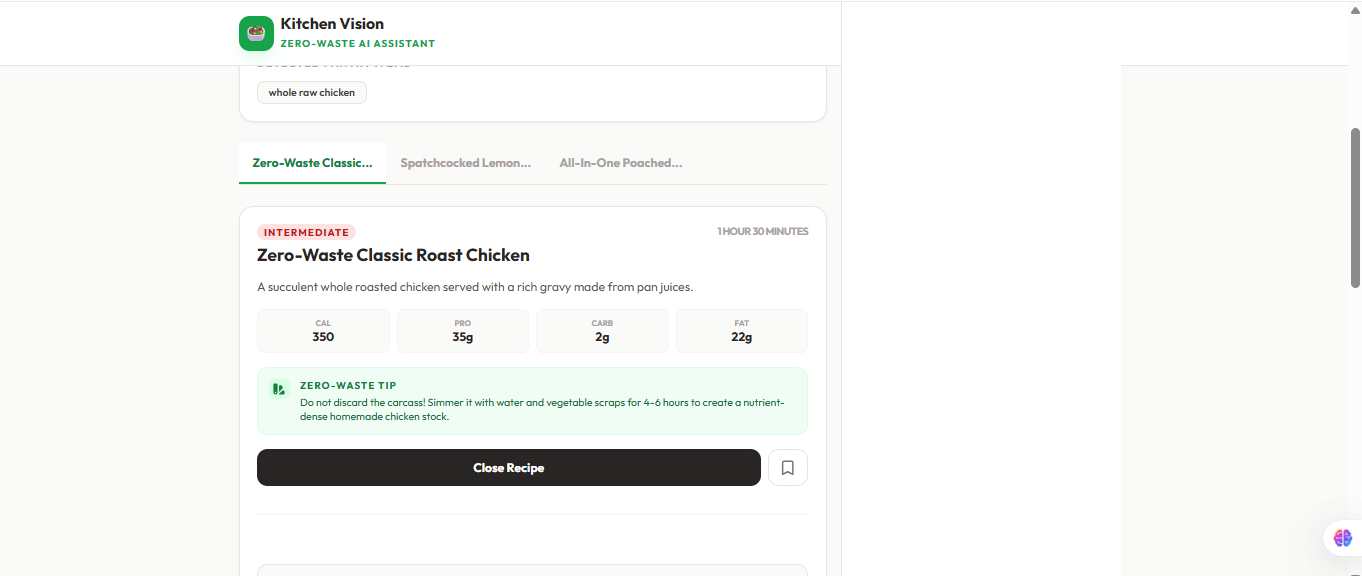
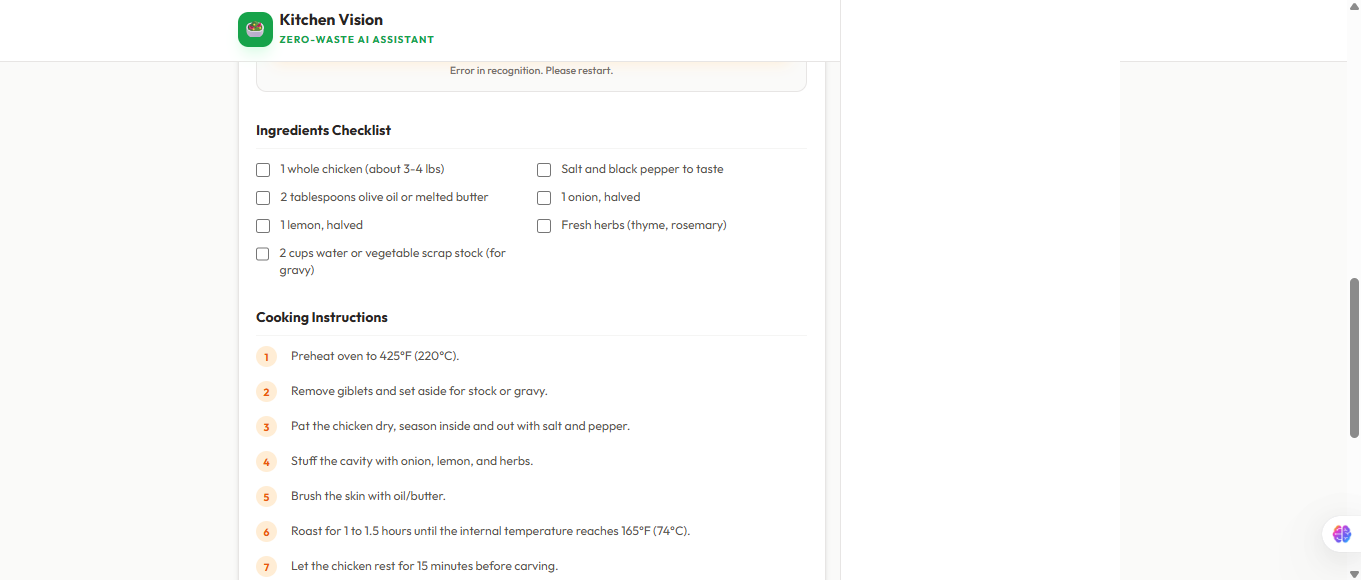
shows the recipe detalis
-
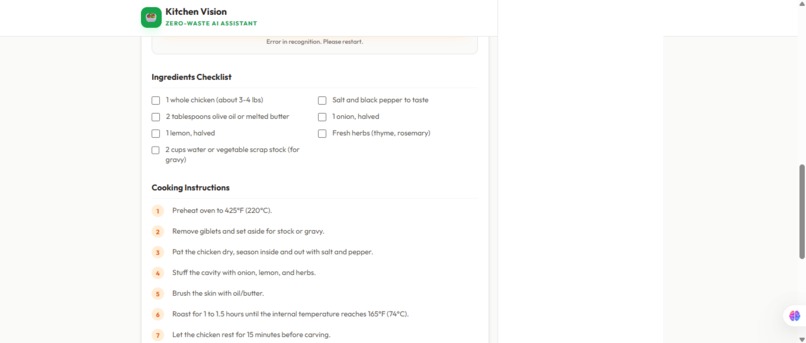
step by step process
-
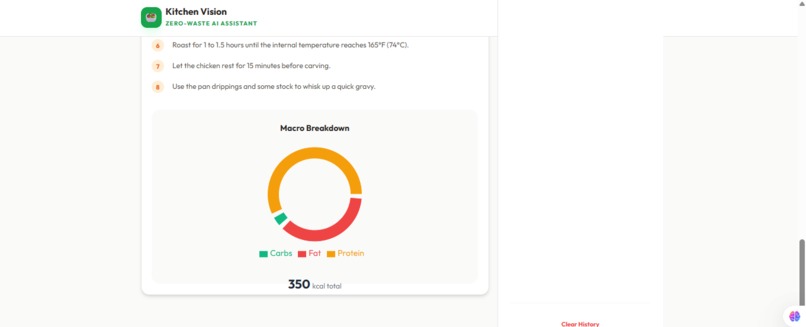
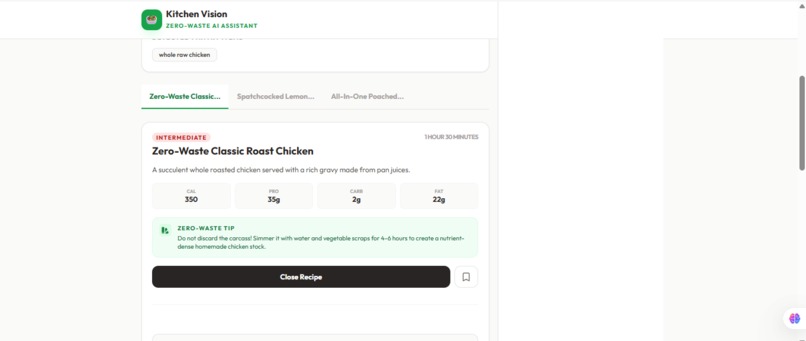
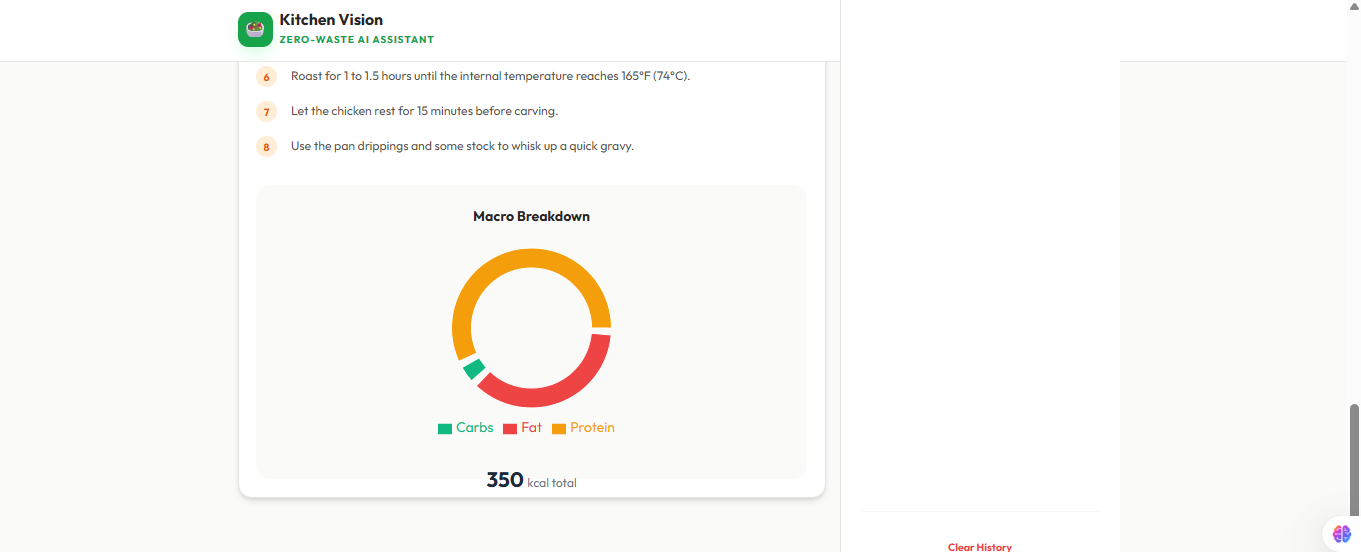
Visualization of Nutrients values
Inspiration
The idea came from the realization that millions of tons of food are wasted annually simply because people forget what is in their fridge or let ingredients expire. We wanted to create a "digital eye" for the kitchen that removes the mental load of inventory management and helps users make healthier, more sustainable choices without lifting a finger.
What it does
Kitchen Vision is an AI-powered monitoring system that uses computer vision to track kitchen activity. It can:
Identify Ingredients: Automatically recognize fruits, vegetables, and packaged goods using real-time object detection.
Inventory Tracking: Maintain a digital log of what enters and leaves the pantry or refrigerator.
Recipe Suggestions: Suggest meals based on the ingredients currently "seen" in the kitchen.
How we built it
We built the core engine using Python and OpenCV for image processing. The "brain" of the project is a Deep Learning model (like YOLOv8 or TensorFlow) trained on a dataset of common food items.
Frontend: A sleek dashboard built with [React/Streamlit] to show real-time stats.
Backend: [Flask/FastAPI] to handle image processing requests.
Database: [Firebase/PostgreSQL] to store the user's current inventory and expiration dates.
Challenges we ran into
The biggest hurdle was occlusion and lighting; kitchens have varying light levels, and food is often stacked behind other items. We also struggled with real-time performance, ensuring the model could run on low-power devices (like a Raspberry Pi) without significant lag. Refining the model to distinguish between similar-looking items (like a red onion vs. a beet) required significant dataset augmentation.
Accomplishments that we're proud of
Achieving a high accuracy rate in diverse lighting conditions.
Successfully integrating a "Seamless Checkout" style logic where the system knows when an item is removed from the shelf.
Building a user-friendly interface that turns complex AI data into simple recipe ideas.
What we learned
We learned the intricacies of training custom object detection models and the importance of data preprocessing. Beyond the technical side, we gained insights into User Experience (UX)—specifically how to provide kitchen alerts that are helpful rather than intrusive.
What's next for Kitchen Vision
Integration with Smart Appliances: Connecting directly to smart fridges or ovens.
Nutritional Analytics: Adding a feature that calculates the total caloric value of the items in your pantry.
Mobile App: Developing a Flutter or React Native app so users can check their kitchen inventory while at the grocery store.


Log in or sign up for Devpost to join the conversation.