-
-
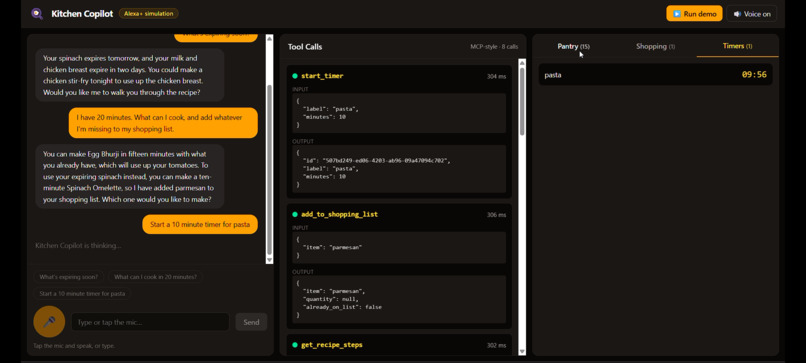
The Timers tab filled in.
-
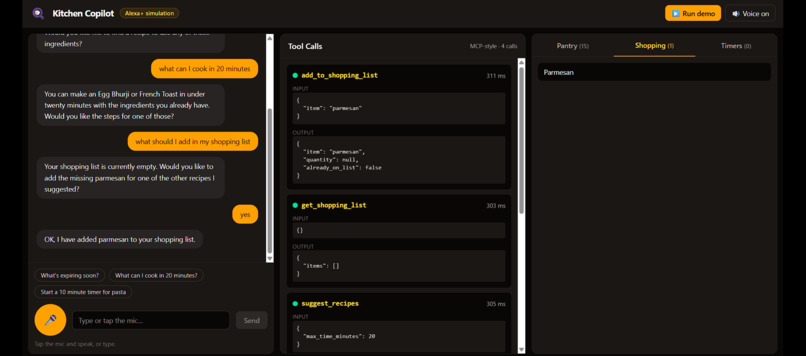
The Shopping tab filled in.
-
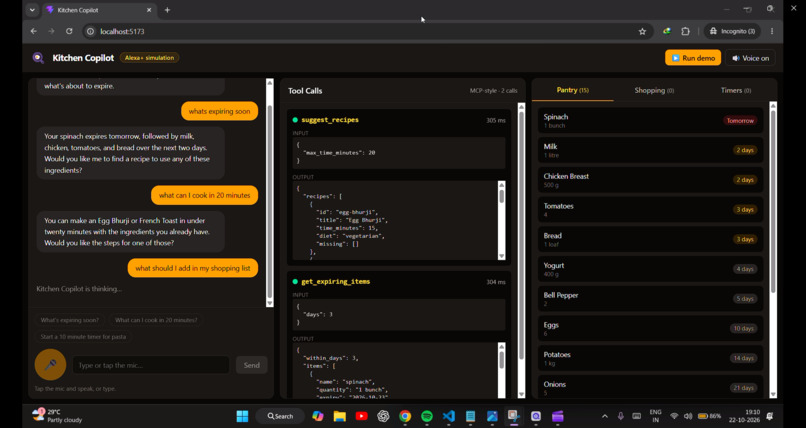
The app with tool calls and an answer on screen.
-
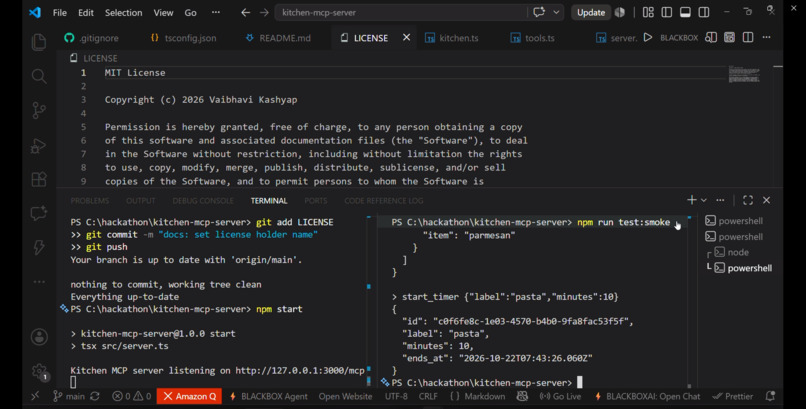
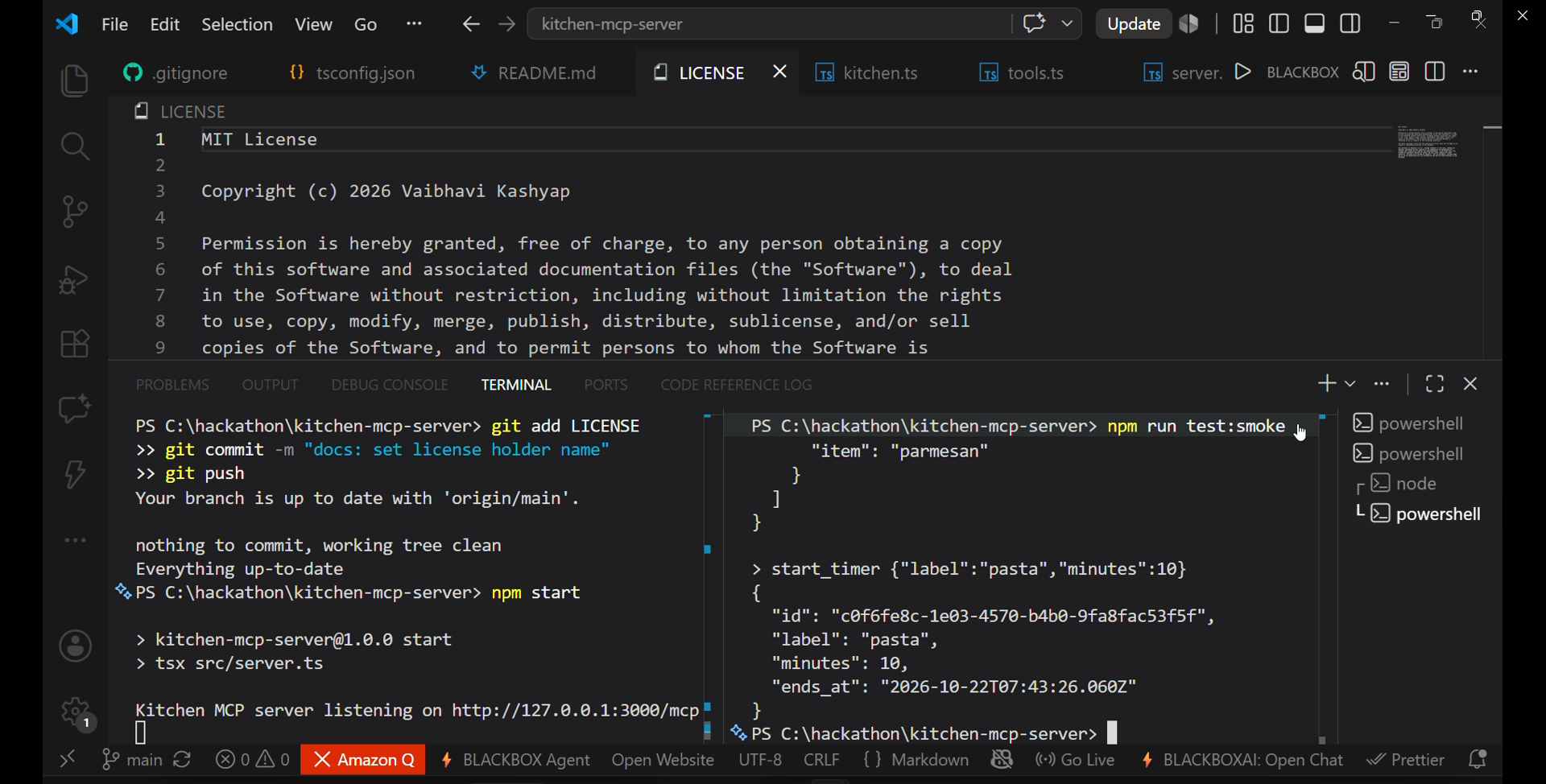
Terminal showing test:smoke listing the 8 tools.
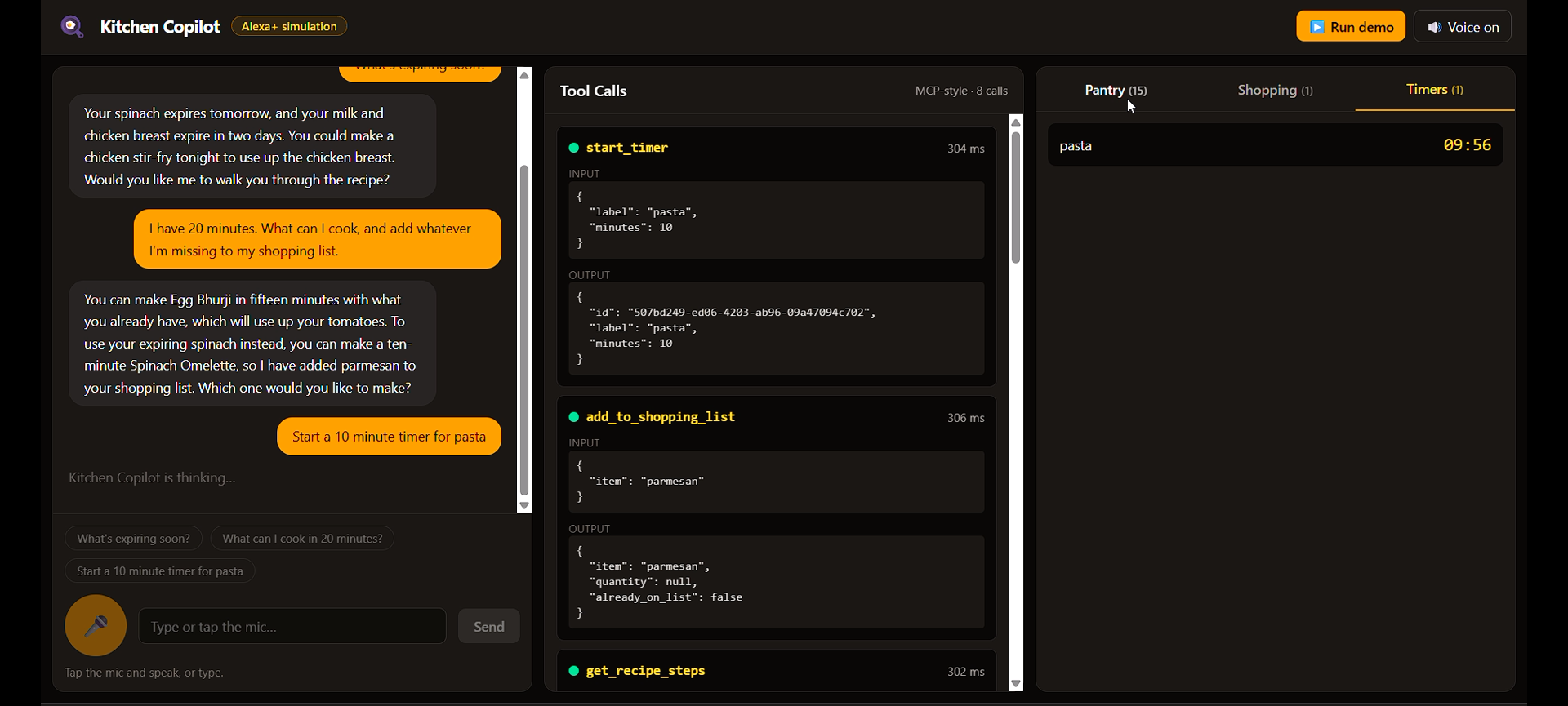
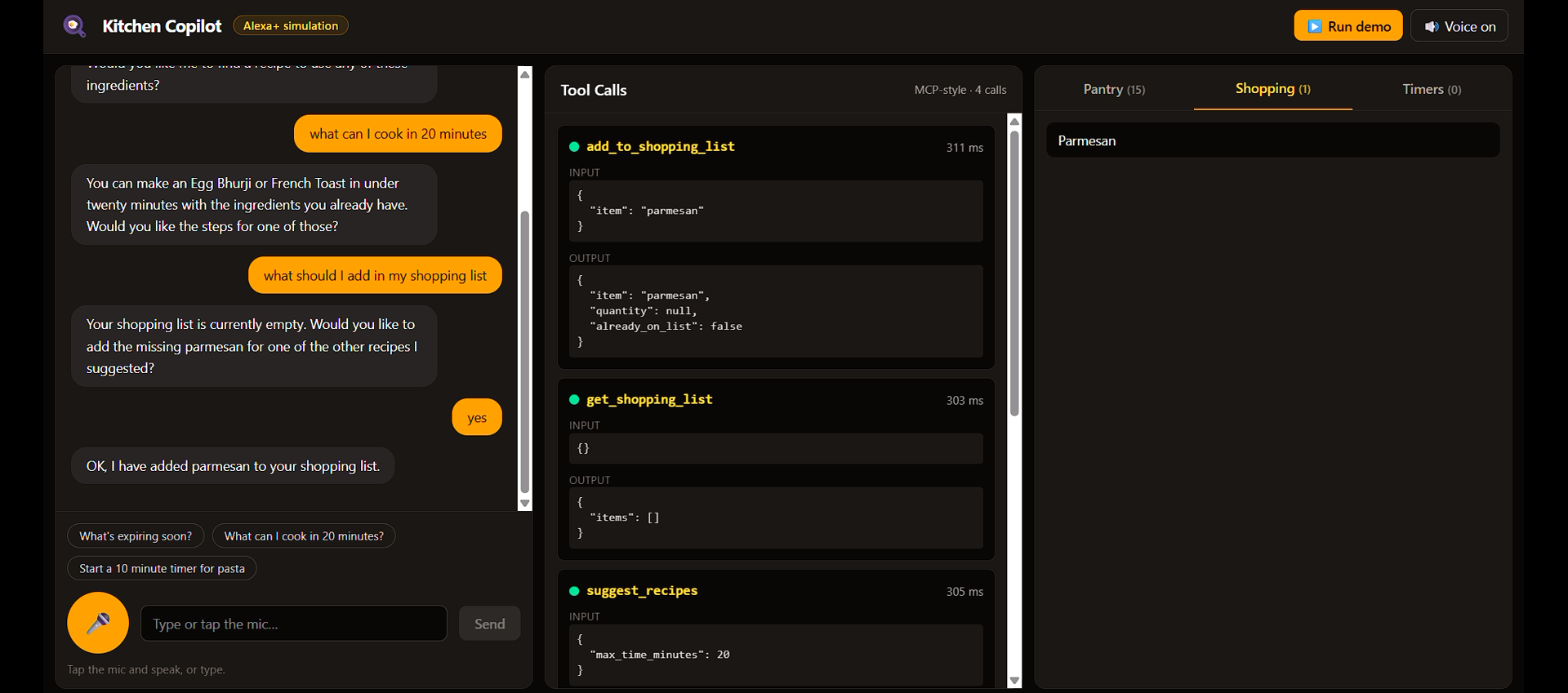
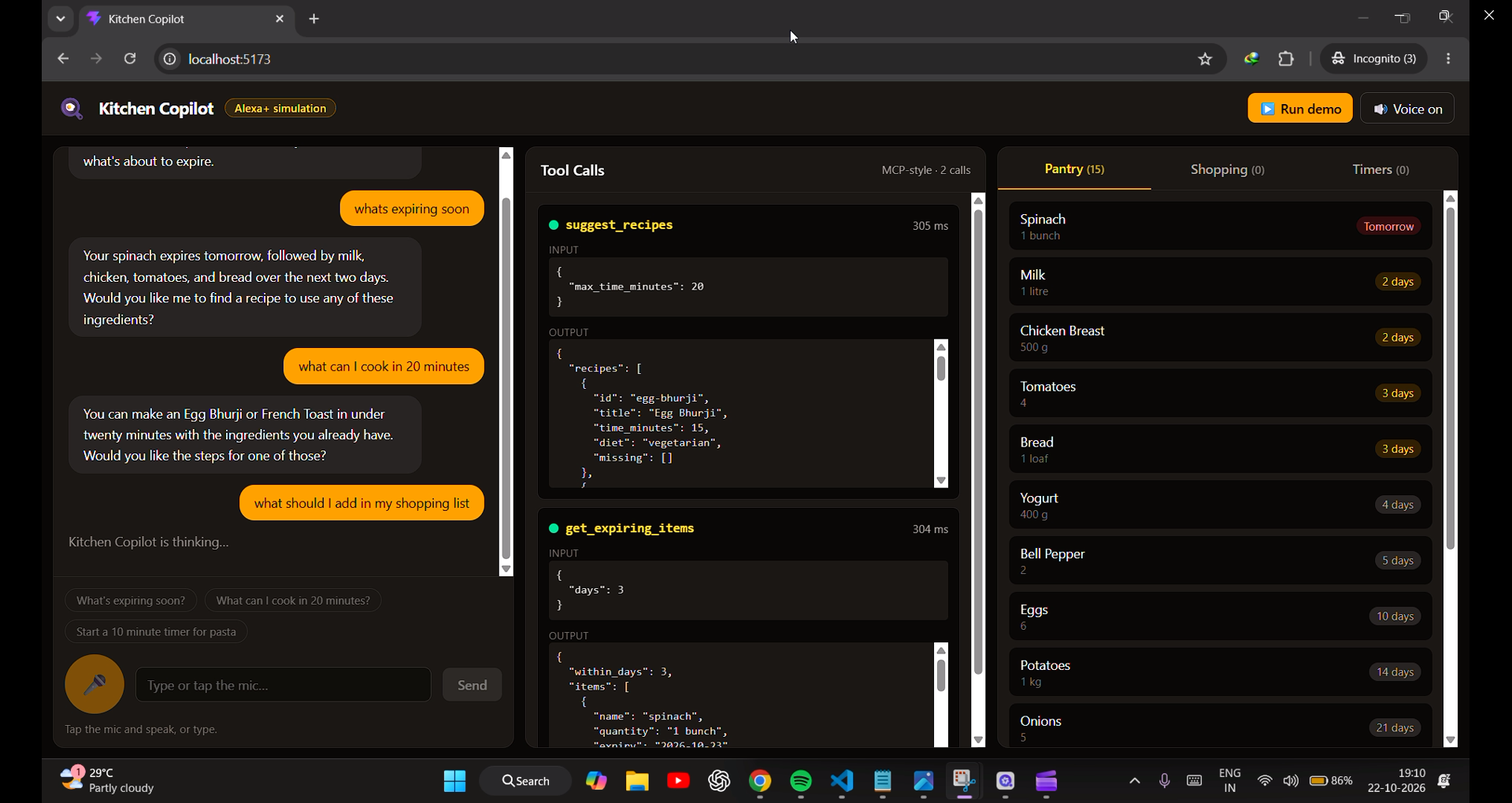
KITCHEN COPILOT is a simulated Alexa+ experience for a kitchen and grocery brand. It is a voice-first assistant that answers "what's about to expire?", suggests what to cook in the time you have, walks you through the recipe, adds missing ingredients to your shopping list, and starts hands-free timers.
Companion project: Kitchen MCP Server, a real MCP server for the same tools.
Tech Implementation
Gemini function calling drives an agent loop that chains tools across several rounds (for example: check expiring items, suggest recipes, fetch steps, add missing items to the list). All eight tools are defined MCP-style (name, description, JSON Schema input, handler), and every call is shown live with its input, output and duration.
Kitchen MCP Server implements the same tools as a self-hosted MCP server over Streamable HTTP using the official TypeScript SDK (v1.32.1), with zod-validated inputs and a client script that connects, lists tools and calls them (shown in the demo).
Stack: React, TypeScript, Vite, Tailwind, @google/genai, Web Speech API, Node, Express.
Design
Voice-first: short spoken-style replies, microphone with a typed fallback, suggestion chips, mute control, keyboard-accessible, responsive layout. The assistant is proactive (it offers a recipe for food about to expire) and asks a short clarifying question when a request is ambiguous. The Tool Calls panel is a developer-facing view; the customer experience is the conversation.
Potential Impact
Cooking is a hands-busy moment, which suits voice, and households often waste food that was still usable. A grocery or kitchen brand could expose its own inventory, recipe and cart tools through an MCP server like this one and reach customers on Alexa+. The server's tool layer is where a brand's real APIs would plug in.
Quality of the Idea
This is not a single-turn Q&A bot: the assistant plans and chains several tools on its own, keeps conversation and kitchen state across turns, and acts proactively.
Honest limits: the Alexa+ side is simulated in a web app (not tested on an Echo device), and kitchen data is in memory rather than saved across sessions.
Next step: connect the app directly to the live MCP server instead of its in-browser tool layer.
Built During the Hackathon
Both projects are new and started during the submission window. Both repos are public under the MIT license.
Built With
- api
- context
- css
- express.js
- gemini
- model
- node.js
- protocol
- react
- tailwind
- typescript
- vite
- zod

Log in or sign up for Devpost to join the conversation.