Kisumori
The Idea
As I was celebrating my 40th birthday recently, I slowly started to wonder: how many days do I have left? How many have I wasted on useless things I won’t even remember? How many just blurred into one dull streak of the same routine and running in circles?
Everyone has to ask those questions at some point in life. The topic of mortality rarely breaks the surface, yet deep inside, we are all forced into a memento mori reflection every now and then.
Yet, can the fear of death and wasted time—the ultimate "FOMO" we mortals have—fuel something constructive? Motivate a mindful life? Facilitate a change of habits? Can it be forged into a product, preferably in a light-hearted way?
So, instead of giving in to doom and gloom over birthday cake, I decided to build this fun little project to experiment with that thought.
Meet Kisumori: the only app that 100% guarantees you will die without it*.
KISUMORI – The Process
1. Mortimer
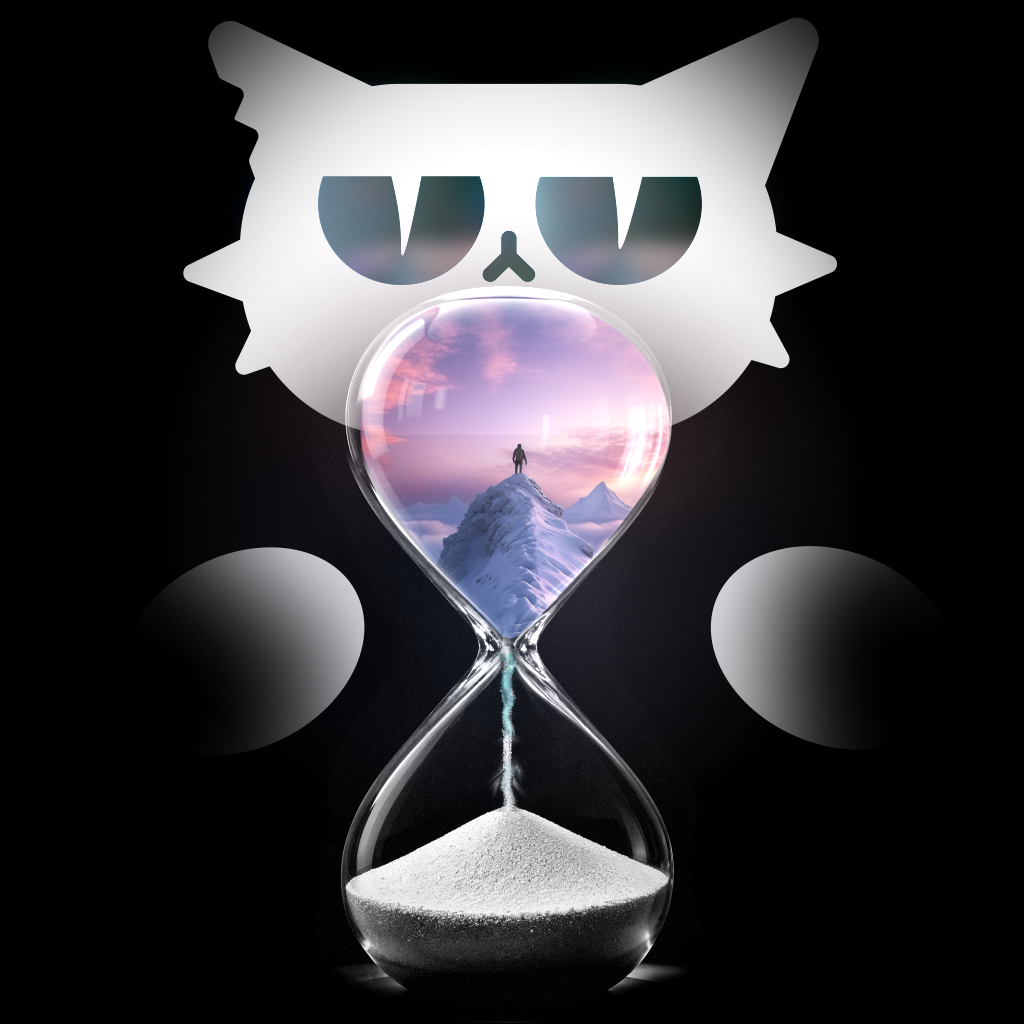
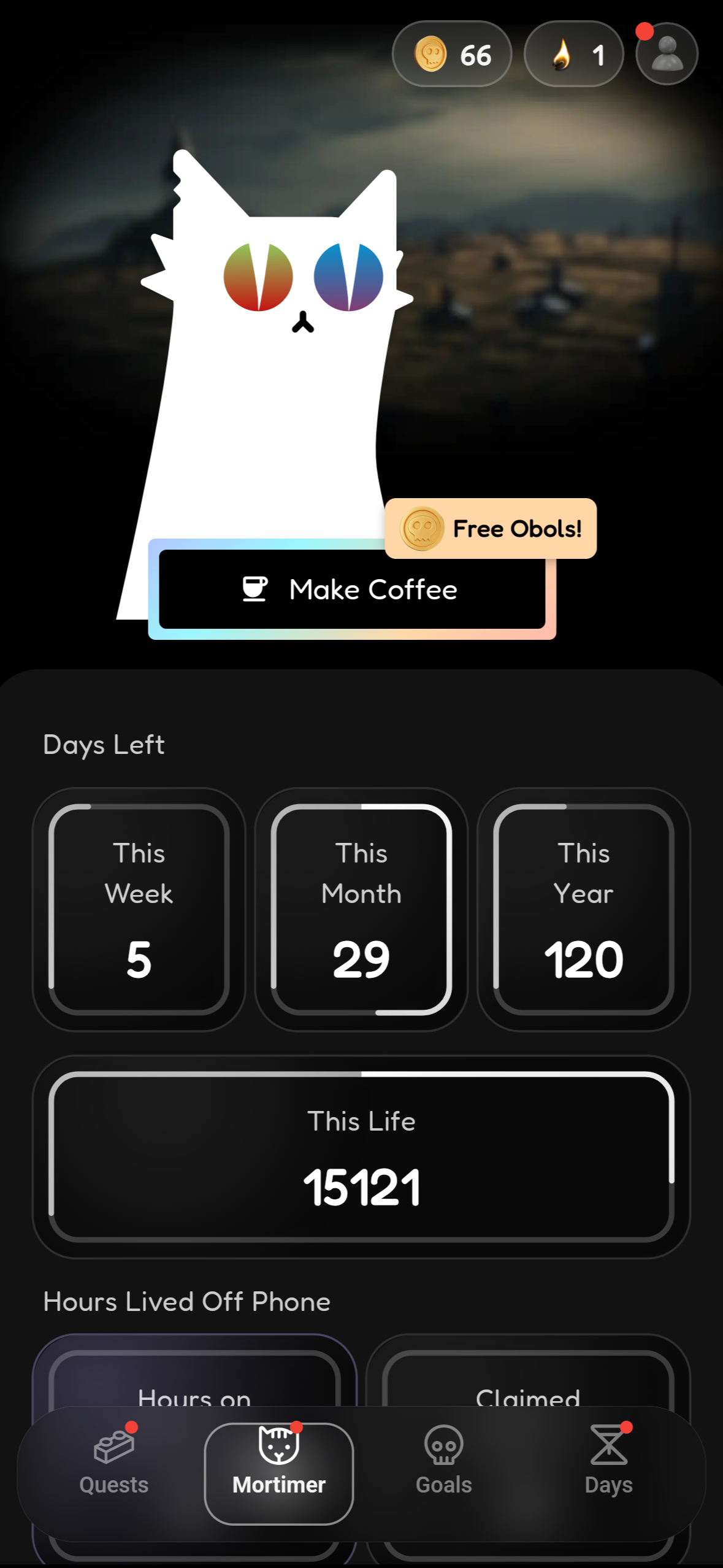
To make all this a bit less grim and less serious, I created Mortimer—a spectral cat app mascot. He guides the user through onboarding, demands a daily cup of coffee to facilitate the good habit of checking in on the app, and rewards diligent users with gifts.
Designing and animating this little guy was perhaps the best part of the overall process. I’m honestly sad that I had so little time to focus on his antics before the Shipaton deadline. I used Lottie for most animations—and what couldn't be rendered with vectors (like the sign-in screen and focus screen hourglass animations) remained small video files.
2. Core Features
If we are talking about a tool that helps users manage their lifetime, how do we do that in practice? Kisumori offers a package of essential features with one interesting twist:
- Focus Timer: Users can lock their device with a focus timer to spend time on a meaningful activity of their own choosing instead of their usual mindless scroll.
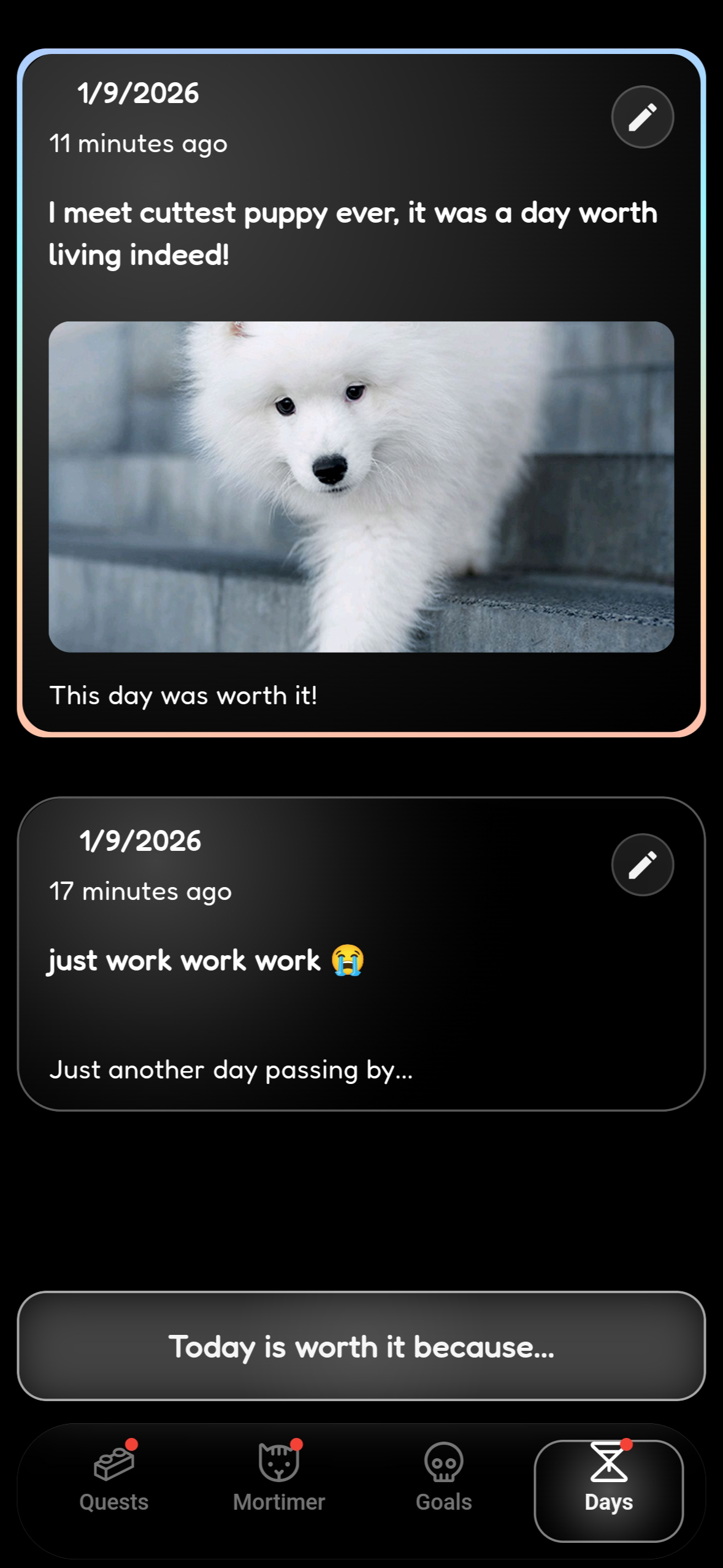
- Daily Journal: Every day can be logged as a "worthy day"—something that stands out and should be remembered in the overall blur of passing time.
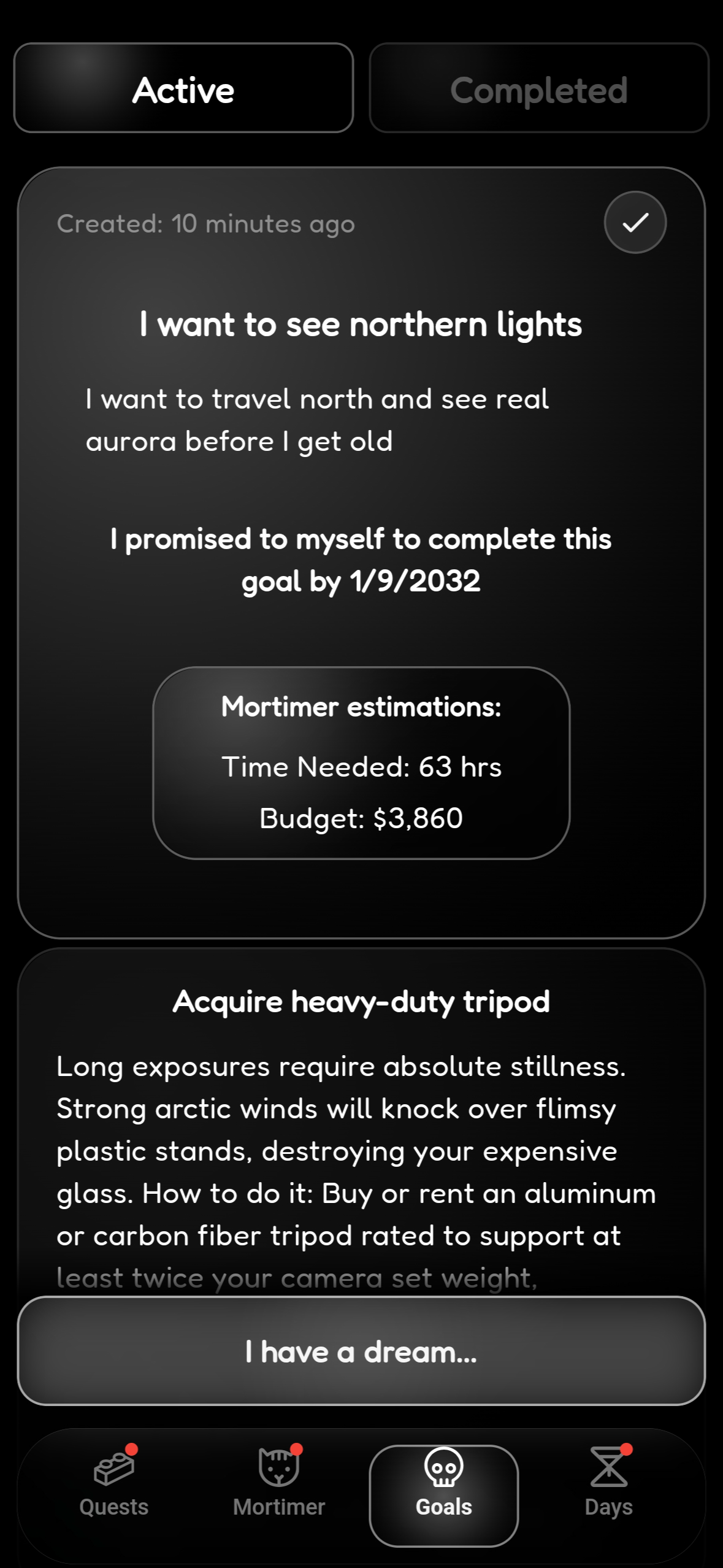
- Bucket List & AI Breakdowns: Users can add their big goals and dreams. Mortimer can then be tasked to break down these big goals into actionable, step-by-step micro-goals.
3. Wild Quests – Gamified Environmental Enrichment for Humans
So far, the groundwork basics. Yet, even if I successfully manage to scare and shame my reluctant users into saving a few hours off their lifetimes, the question remains: what for?
That opens a huge philosophical dilemma: What makes life worth living? What gives value and meaning to moments and memories we hold dear? What makes them special, precious, and unique as opposed to the boring daily routine days that just fly by and disappear? How do we create such memories?
The answer comes from an unusual place: animal husbandry.
Multiple studies have concluded that captive animals receiving additional stimulation in their environment live longer, are healthier, and develop more active and resilient brains.
Hence the idea: what if I encourage users to engage in chaotic, random activities? To step out of what they usually (or even always) do and put a new twist on it? To go somewhere new, try something new, or maybe just be silly for an hour or two in a mischievous, lighthearted, and unproductive way?
Extrapolating studies on rodents, this could not only improve their health, but also create something fresh and memorable in their usual habitat.
How it works in Kisumori:
- Brewing coffee for our grumpy cat Mortimer rewards users with a daily handful of coins (called Obols to keep the vibe).
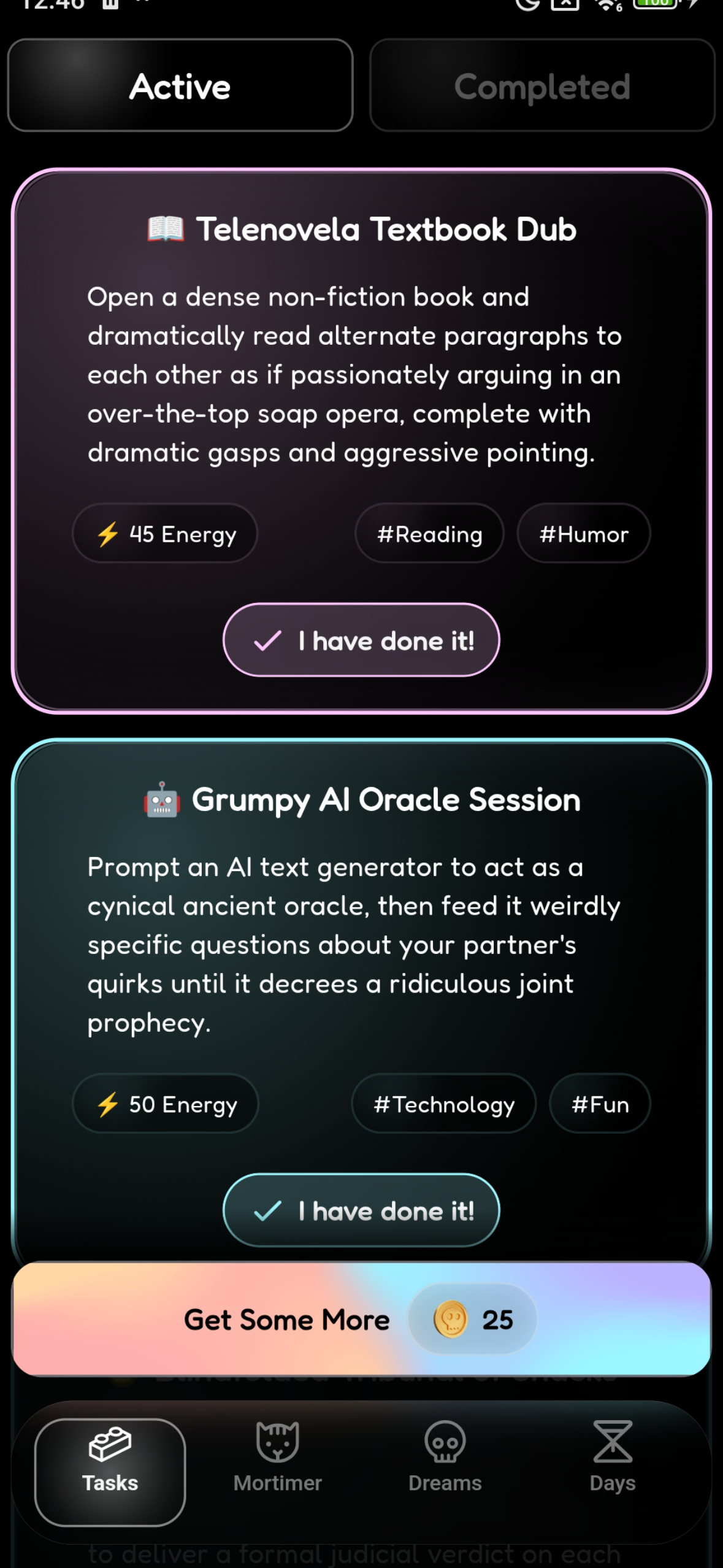
- Obols can then be spent to generate a set of Wild Quests—randomized tasks based on user interests, mood, and preferences. These vary from "Dress in your fanciest clothes to watch the sunrise with a drink of your choice on Sunday" to "Put a sock on your hand and try to puppet-explain a complex idea to a house plant."
- A timer can be started for each quest, granting streak progress and achievements while boosting out-of-app quality of life.
Note on UI Design: The app UI stays mostly black-and-white. Wild Quests are the only section where vibrant rainbow colors are introduced to enhance the "special" feeling of this core feature.
What I Learned
- Laser Focus is Essential: Delivering a full app on a tight timeline requires strict prioritization. For every feature implemented, 10 get crossed out or moved to the backlog. Every day is full of tough choices where ambition meets reality.
- Seamless Monetization: RevenueCat integration was smooth and seamless as always. I don't think I would have finished in time if I had to write all the purchase logic by hand.
- Flutter Performance Balance: Stacking multiple animations and rendering filters takes a big hit on performance in Flutter. The app still needs multiple optimizations—hopefully without sacrificing the visual effects!
- Creation Beats Crisis: It feels way better to build something than to sit depressed with a mid-life crisis.
Challenges
- The To-Do List: While I was able to deliver the app for Shipaton, there is still a lot of work ahead: App Store release, more Mortimer interactions, deeper gamification, and a ton of testing/bug fixing.
- Animation Tooling: Lottie in 2026 still has its quirks. Bugs and glitches that have haunted this workflow since 2020 are still present, which can be frustrating when working against tight submission deadlines.
- Finding the Audience: The big question remains: will users embrace an app like this? Reaching people and clearly conveying this concept will be key, but I believe there is an audience searching for this exact kind of balance.
*And if you have the app, you will die anyway.


Log in or sign up for Devpost to join the conversation.