-
-
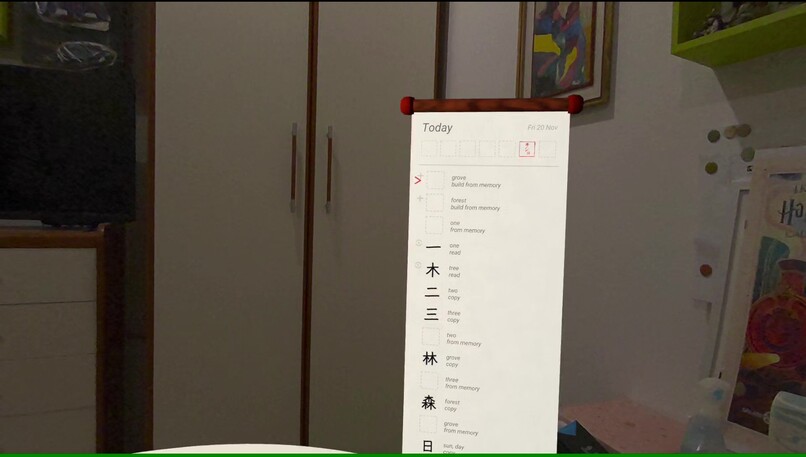
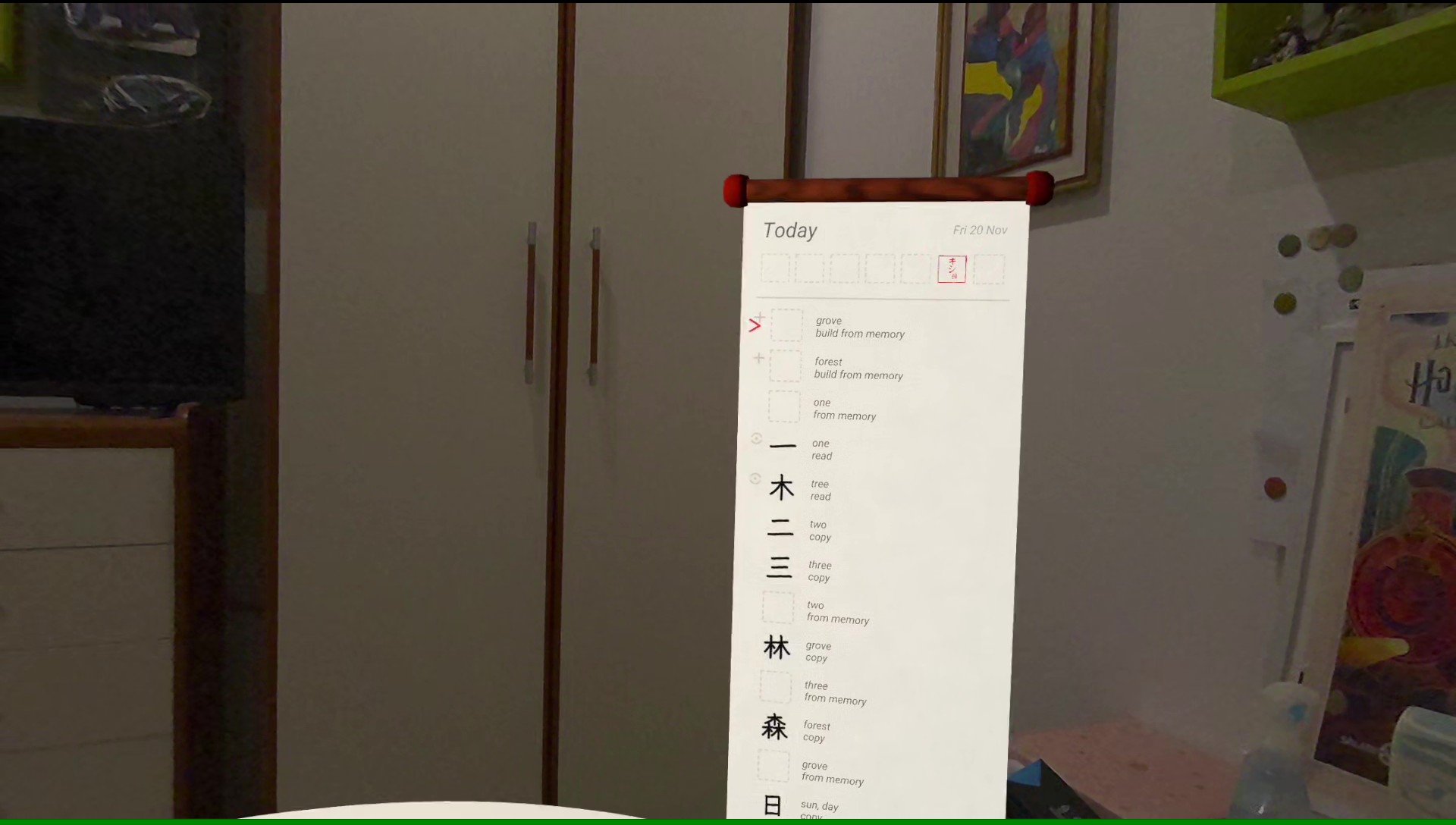
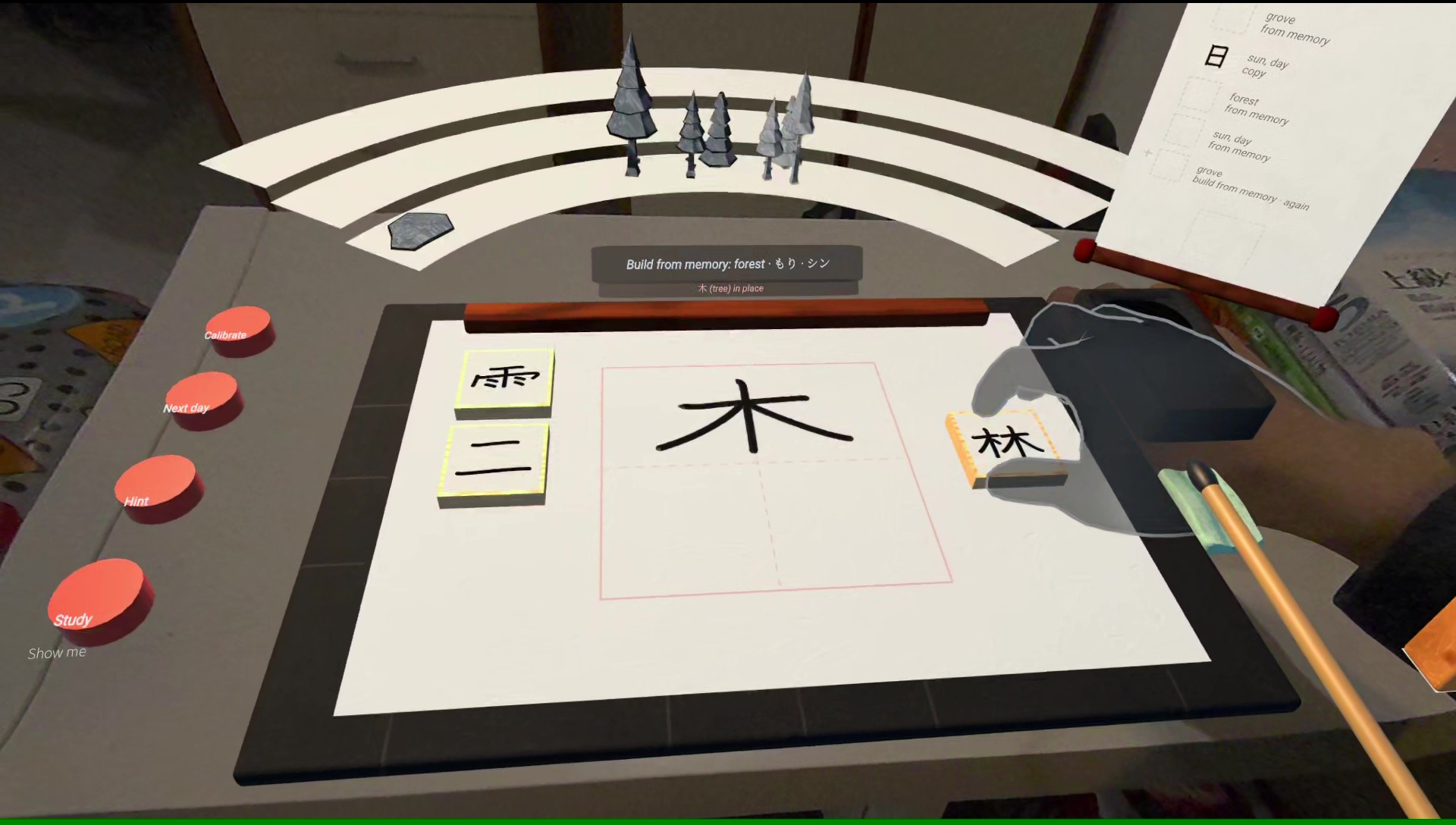
The scroll shows the study plan details
-
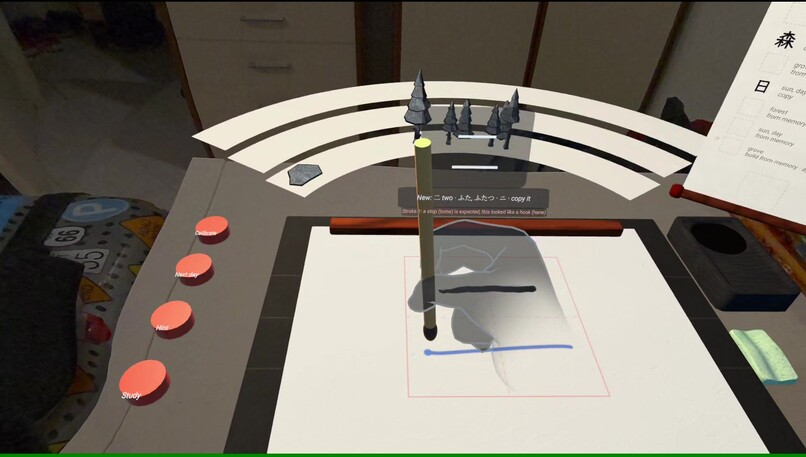
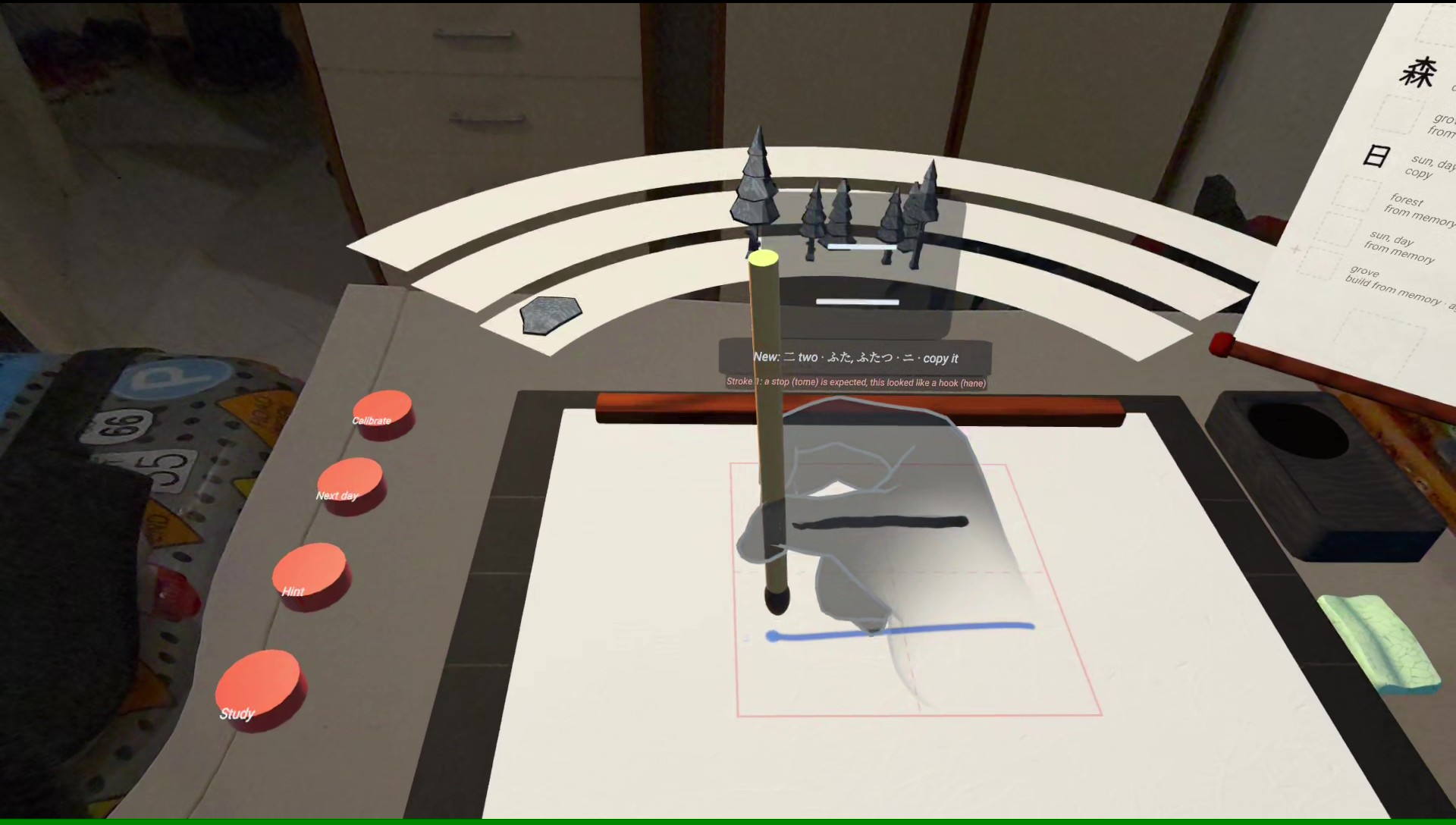
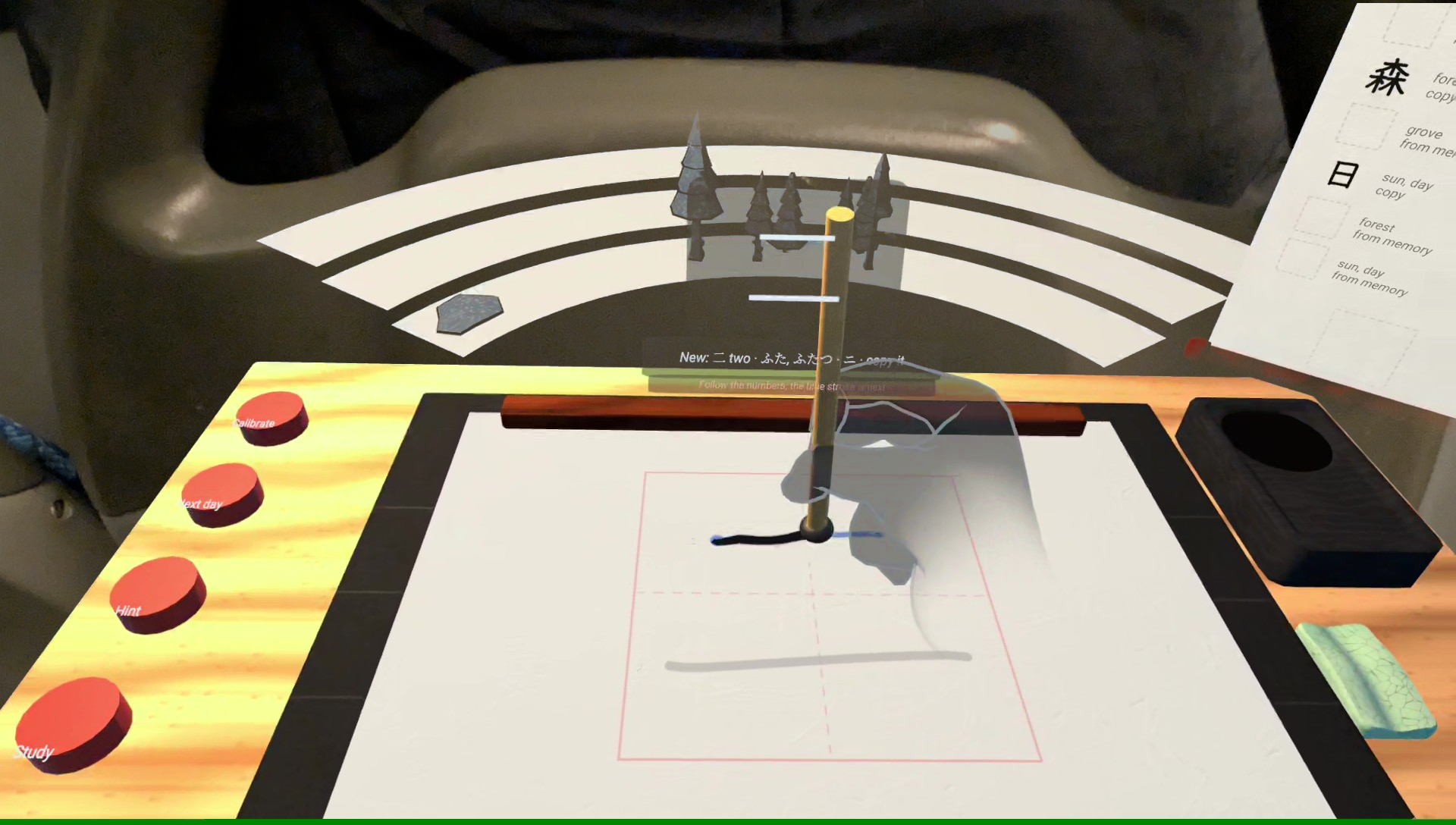
The user learns kanji through writing practice
-
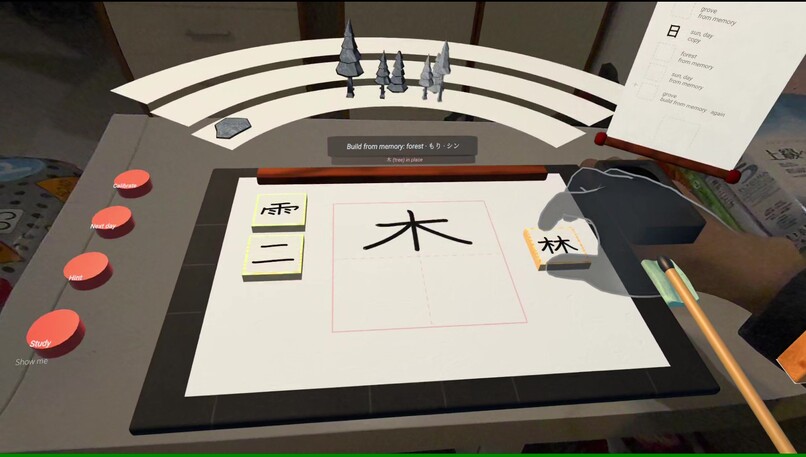
Build Mode allows you to piece together kanji by their radicals
-
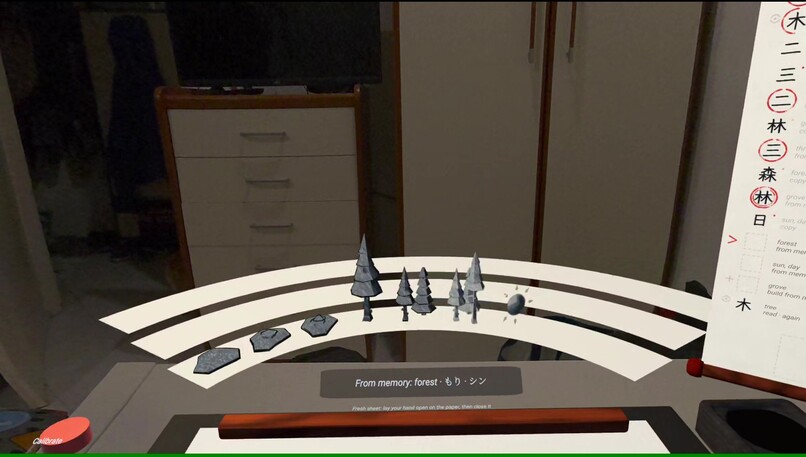
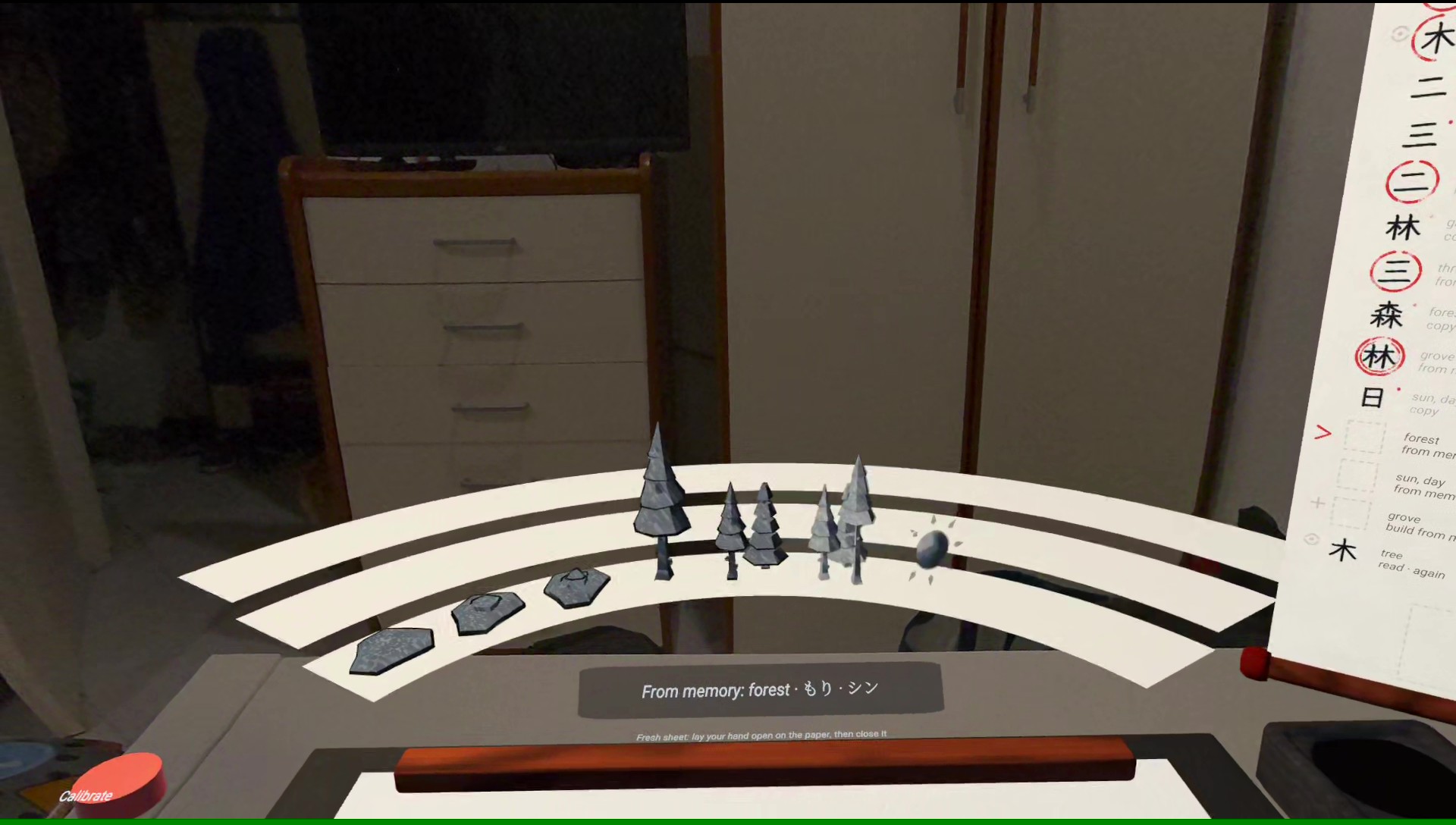
The Ink World keeps track of the kanji meanings you've learned
-
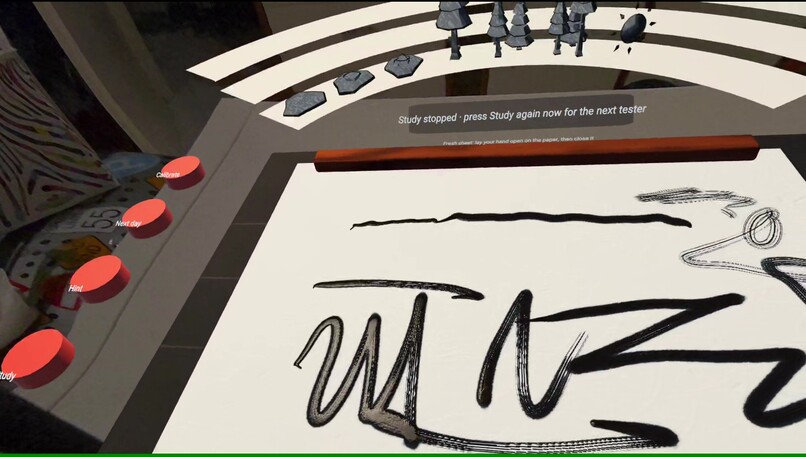
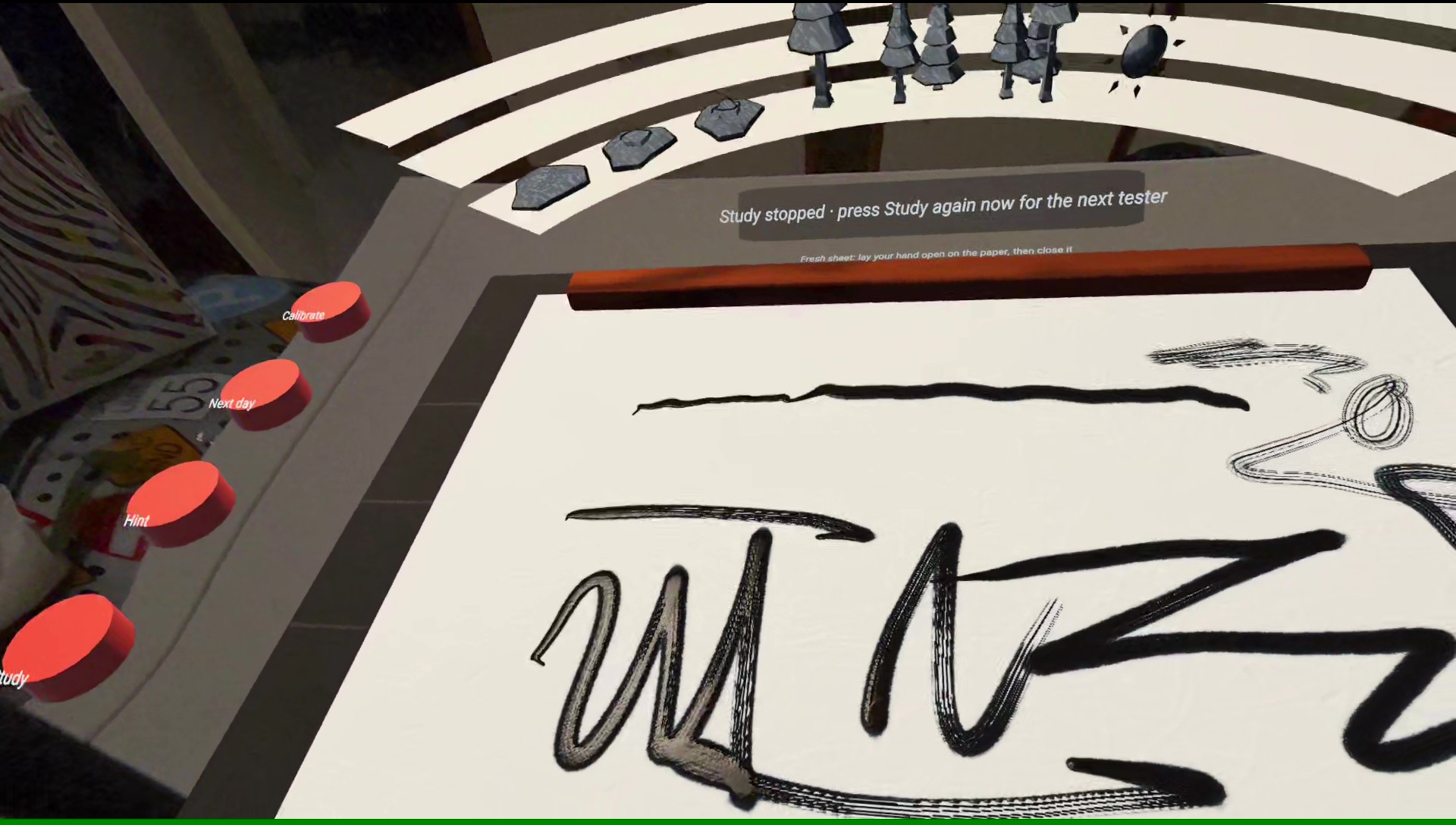
Dynamic strokes based on pressure and speed
-
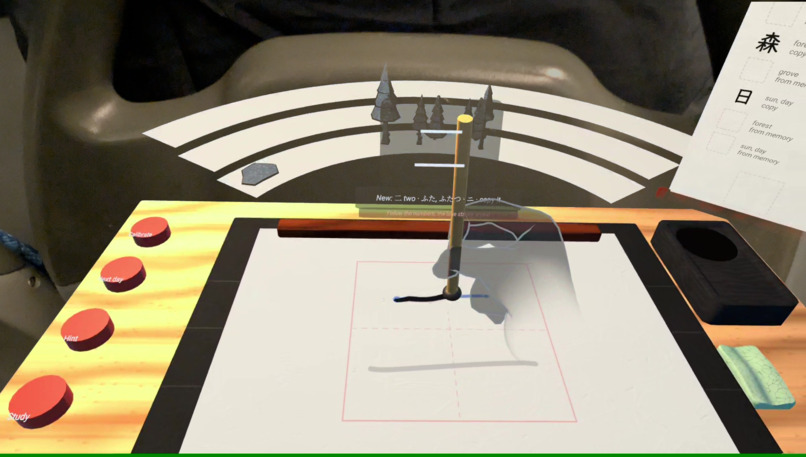
Take the kanji practice anywhere
Inspiration
Learning kanji is notoriously difficult, and traditional flashcard apps, like Anki, only solve half the problem: tapping “Good” or “Again” on a phone trains passive recognition, not writing ability. Shodo, Japanese calligraphy, by contrast, treats every stroke as a commitment, down to the stop or sweep at its end. Kisho brings the ink brush to virtual space, allowing anyone, anywhere, to truly learn kanji without losing the art of writing.
What it does
Kisho spawns a virtual calligraphy desk on any physical surface tagged as a table. Users pinch to pick up the virtual fude, recreating the brush feel where pressure sets line width and turns into dry streaks when the user rushes.
Kisho automatically evaluates stroke order, direction, shape, and your hesitation and hints decide the grade.
Each kanji learned becomes a 3D ink painting on the virtual desk. As your memory of a character decays over time, its ink fades, providing an intuitive, list-free visual of what needs reviewing.
Forcing users to execute each stroke within a spaced-repetition framework physically yields better retention and learning outcomes than passive screen tapping.
How I built it
Kisho is built in Unity using the Meta XR SDK and Interaction SDK. Designed as a fully seated, hands-only experience, the virtual desk anchors dynamically to the user's seat, utilizing spatial understanding for tray surface recognition when available. I applied a filter to give a smoothed brush tip and stamp it into a paper texture. In addition, I used stroke data from KanjiVG for precise character evaluation and scheduling with FSRS. Visually, I developed custom shaders applied to CC0 3D models drawn as ink silhouettes.
Challenges I ran into
Developing a VR app using only hand tracking brought me different challenges in giving the most realistic and intuitive experience possible. To achieve this, I implemented a smoothing filter for fluid virtual brush strokes and designed intuitive hand gestures for seamless interactions. I adapted the FSRS algorithm within Unity and integrated KanjiVG to build a comprehensive system that guides, tracks, and evaluates users' Kanji writing skills.
Accomplishments that I'm proud of
The scheduler for the spaced repetition tailored specifically for writing practice, working in tandem with an automated grader powered by KanjiVG data and the smoothed hand-tracking implementation that simulates the natural mechanics of holding and painting with a physical brush.
What I learned
Integrates the FSRS algorithm with KanjiVG data to optimize learning retention and evaluate strokes. and use hand-tracking and custom gestures to faithfully replicate the real-world physical experience of writing with a brush.
What's next for Kisho: Learn Kanji in VR
Integrating a complete set of kanji for comprehensive JLPT preparation with Japanese vocabulary, and deck-themed sets like a train station theme. Implementing eye tracking to replace the head-tracking feature for Meta VR Glasses. In the end, improving the creative part of Kisho by adding advanced shodo features, like a kakizome gallery and cursive styles for the mastered kanji.


