Inspiration
In India, a farmer's produce often passes through multiple intermediaries that reduce farmers' price realization and increase consumer prices. We kept hearing the same story: farmers selling at throwaway rates while consumers pay a premium for the same crop just a few days later — with almost nothing going to the person who actually grew it.
At the same time, we noticed the two other pieces of the puzzle were broken too: farmers and FPOs have limited visibility into future demand, and on the other side, buyers struggle to find reliable, aggregated supply. Nobody was solving this as one connected loop — forecasting, matching, and logistics were all separate problems being solved by separate (or no) tools. That gap between a farmer with real produce and a buyer with a real need — with only guesswork and middlemen in between — is what inspired Kissansetu AI.
What it does
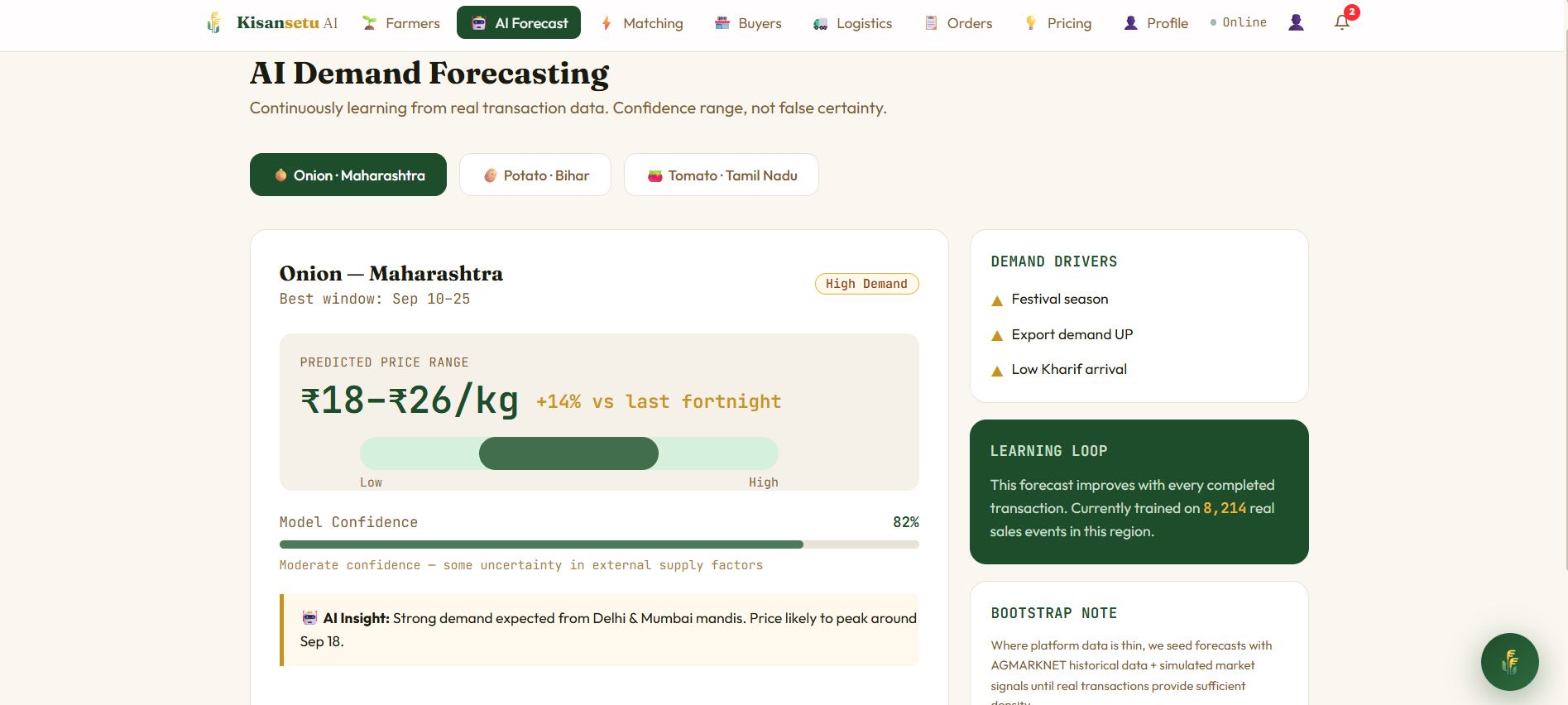
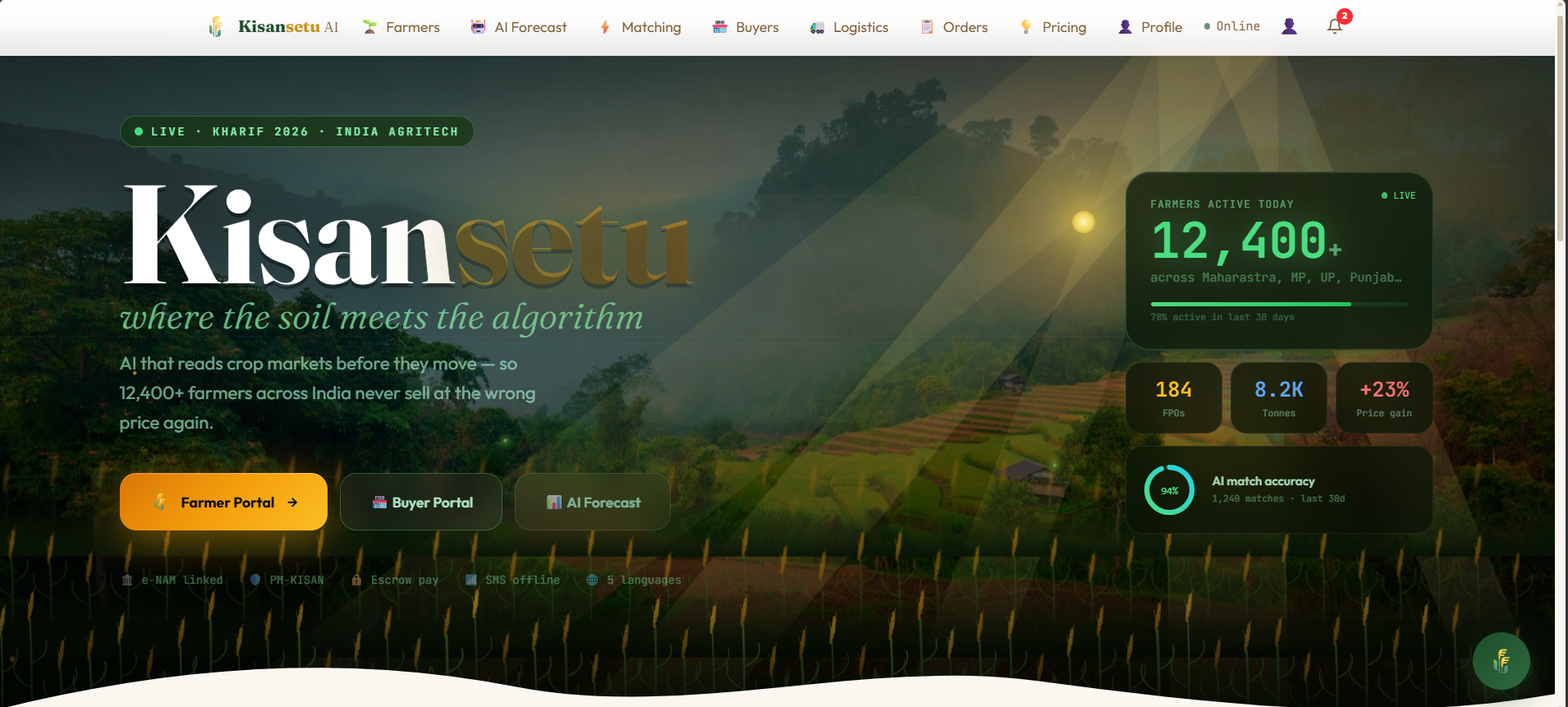
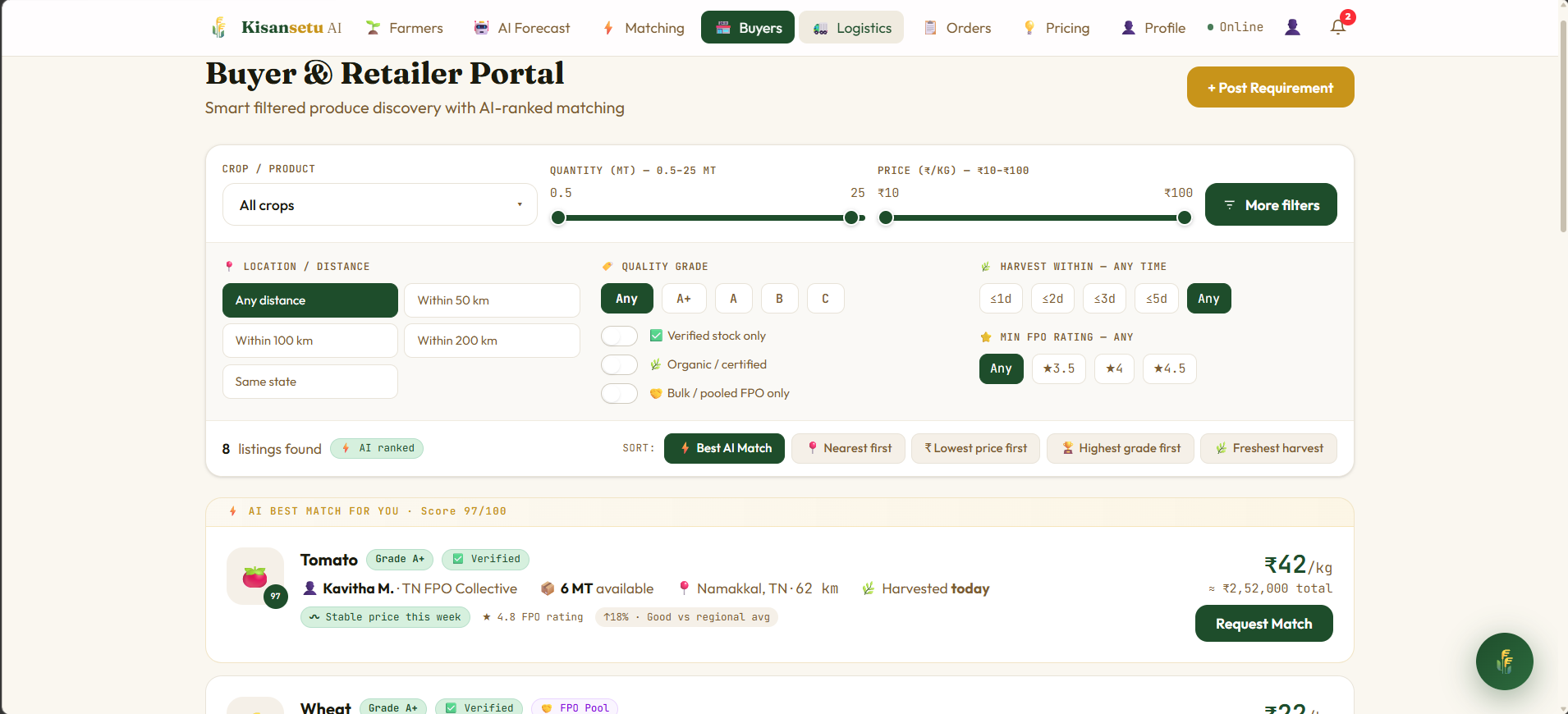
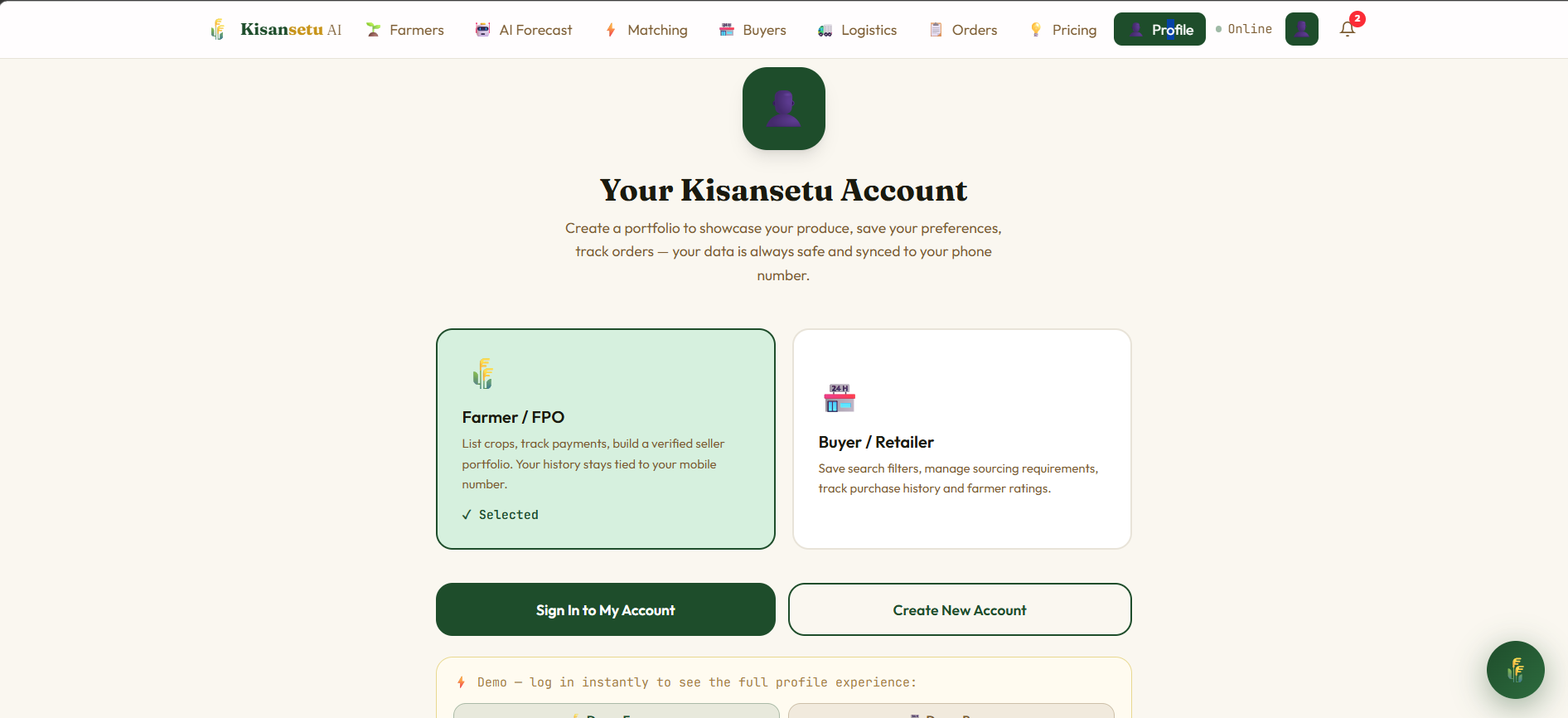
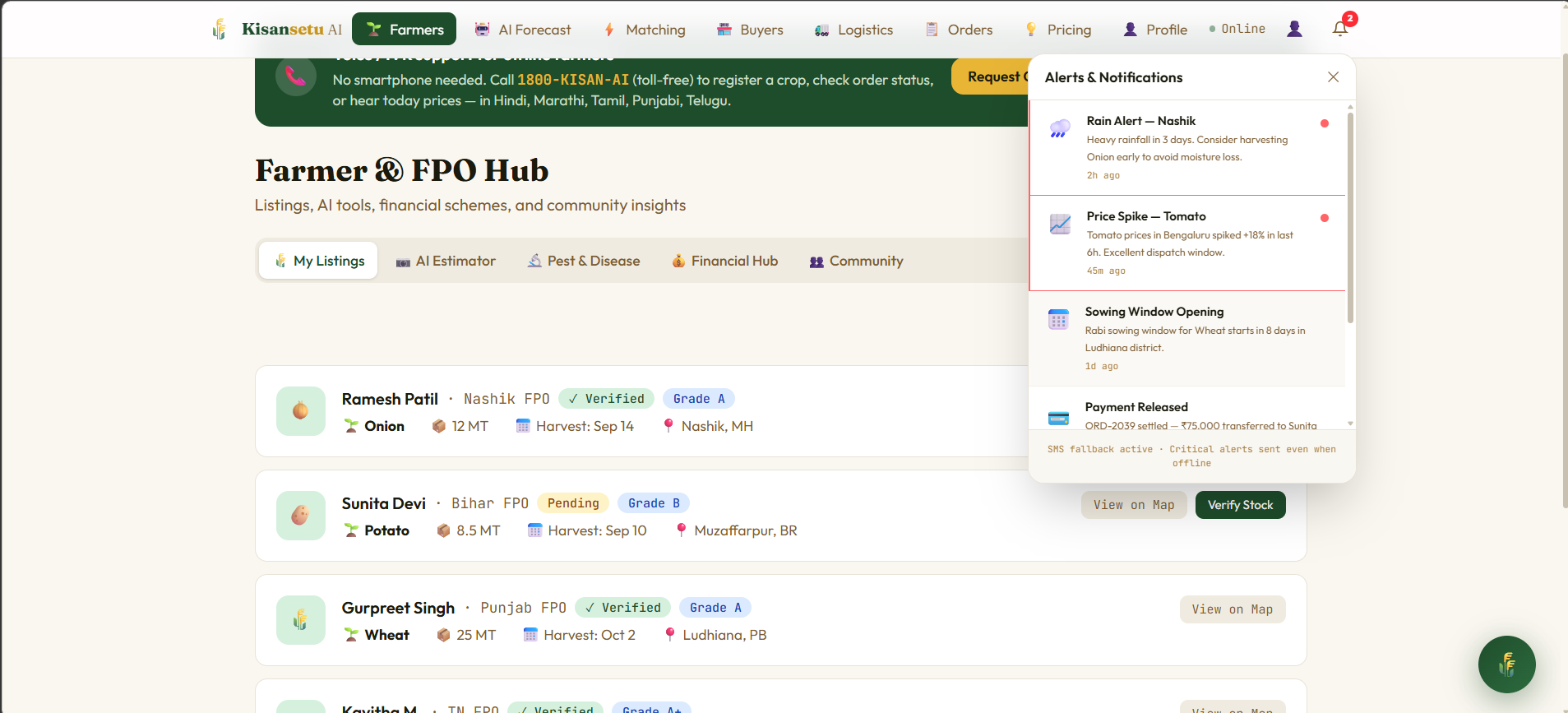
Kissansetu AI is a direct market access platform — "Direct Market Access. Smarter with AI" — that connects farmers/FPOs straight to bulk buyers using AI-driven demand forecasting and smart matching.
At its core, it runs a 7-step loop:
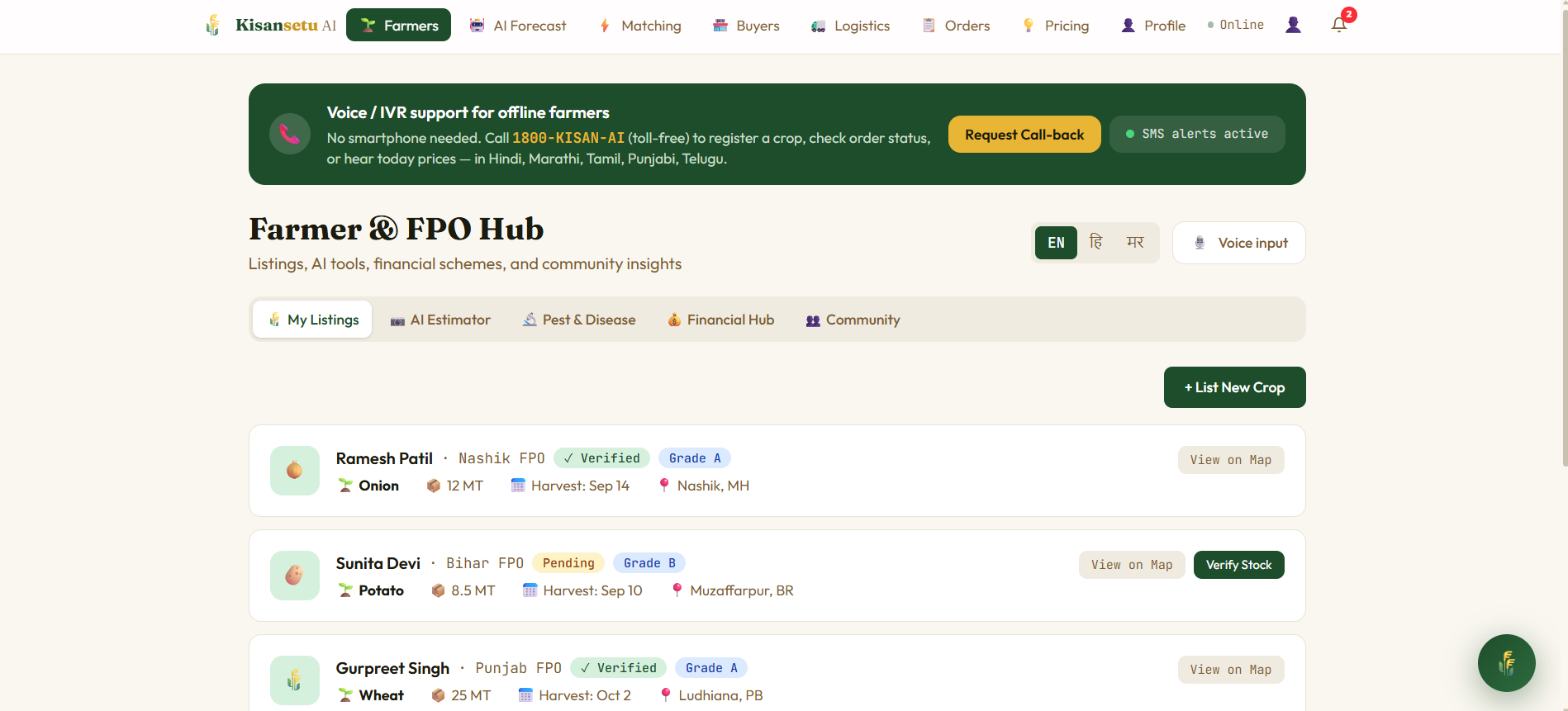
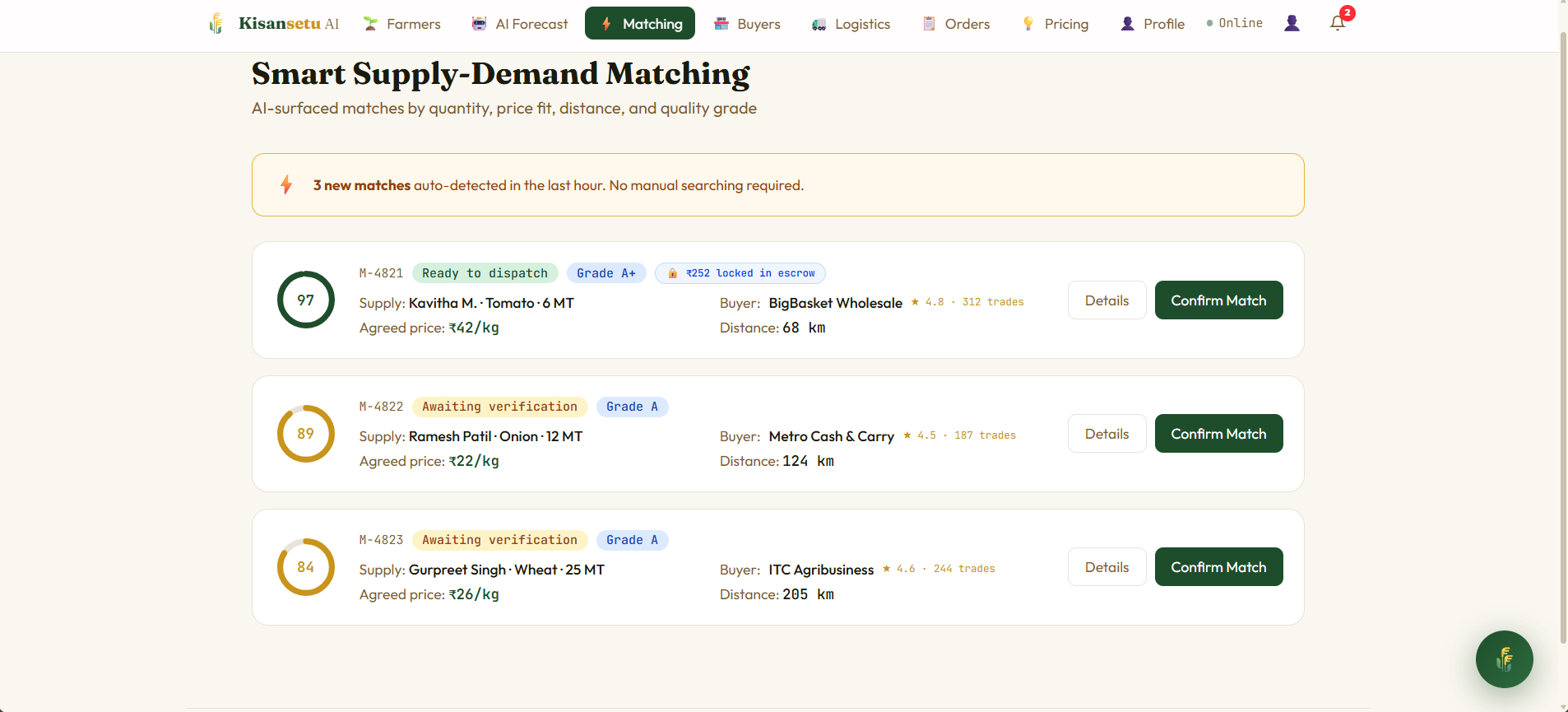
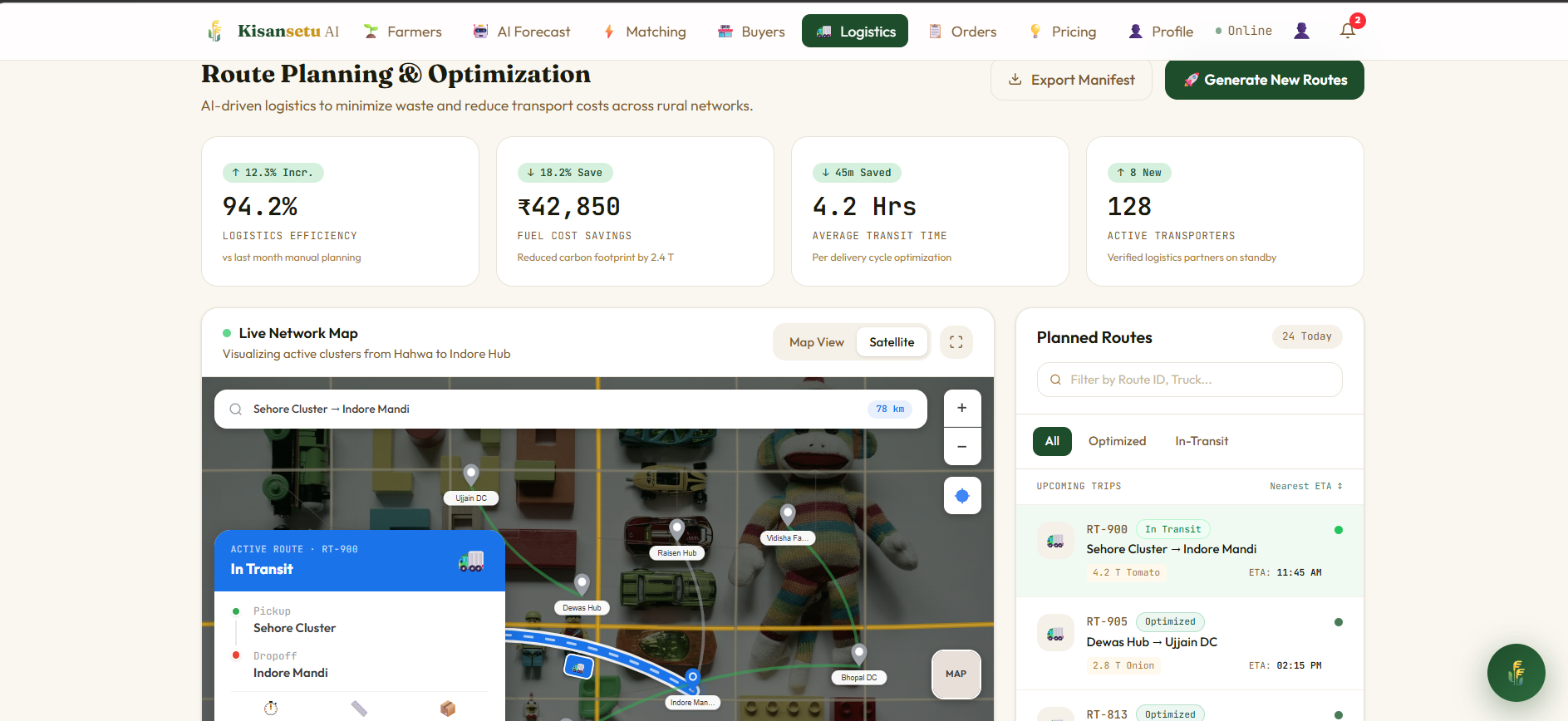
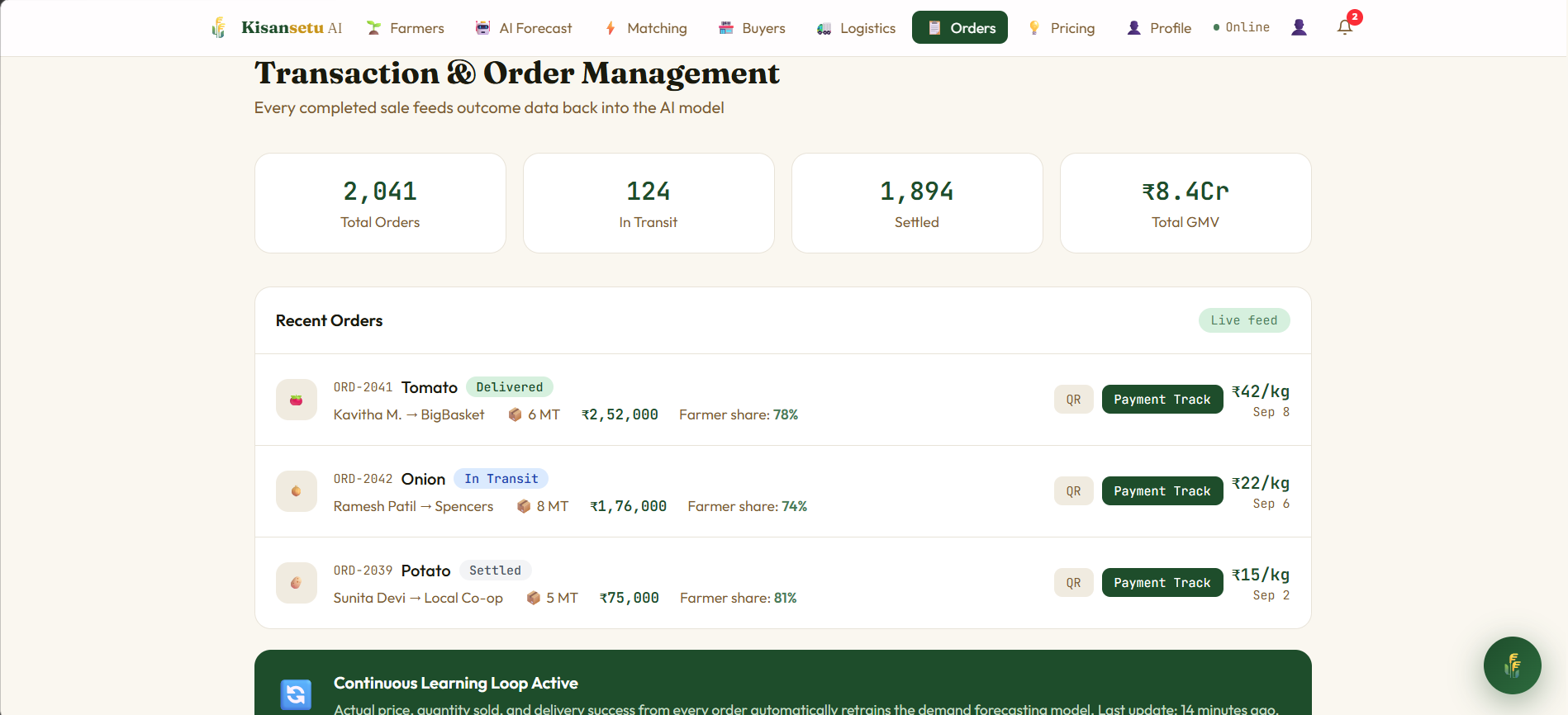
List – farmers log crop, quantity, and harvest date (with assisted, multilingual onboarding) Predict – AI forecasts demand and price availability for that crop/region Match – rule-based + AI-assisted buyer-seller matching Verify – FPO staff confirm actual available stock (human-in-the-loop, so AI never overpromises) Optimize – collection and delivery route optimization Deliver – order placement, payment, and outcome tracking Learn & Improve – every completed sale feeds back into the model for better future predictions
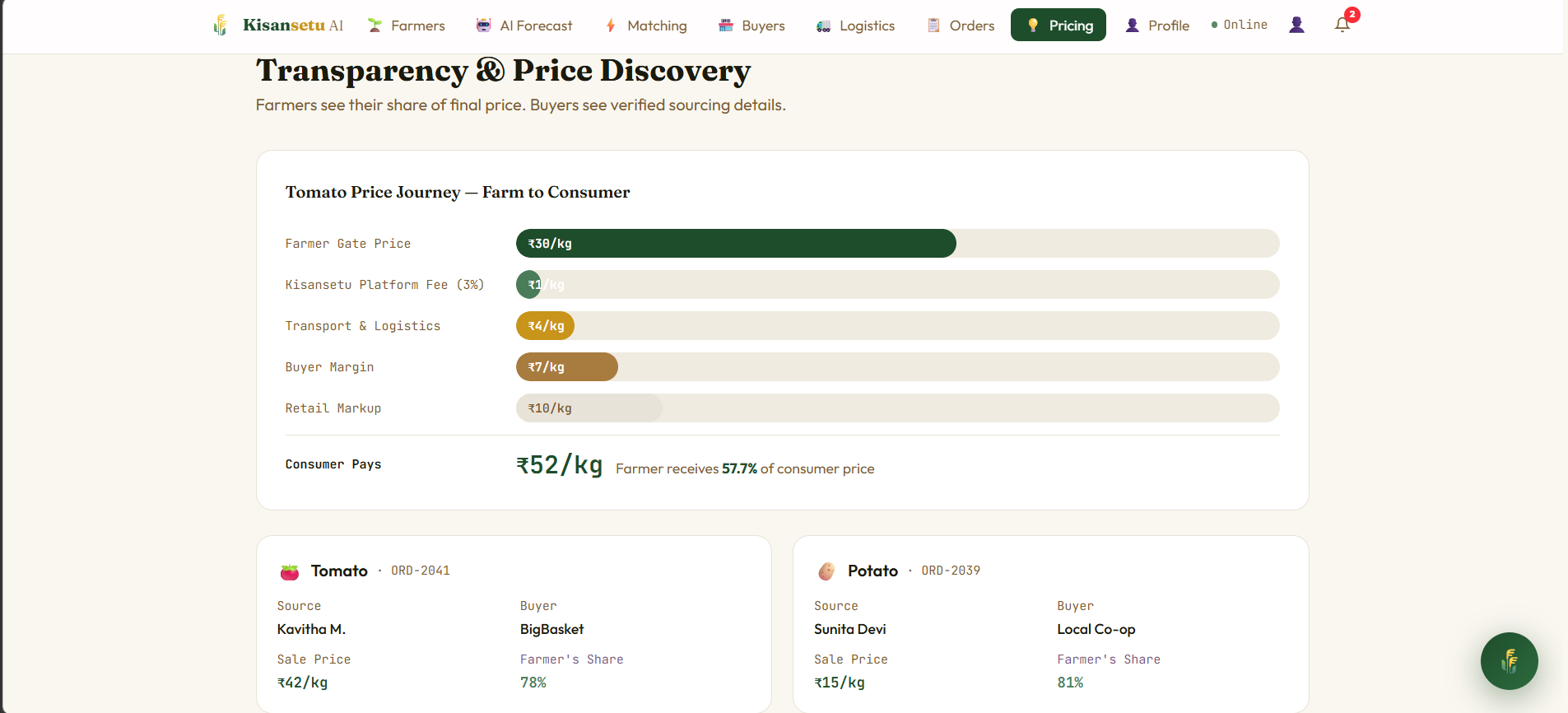
It also includes transparency & price discovery, an AI chatbot for support, and multilingual assisted onboarding for first-time, low-literacy farmers.
How we built it
We designed Kissansetu AI as a software-first, modular system so it needs no special hardware and leverages existing farmer smartphones and community infrastructure.
Tech stack:
Frontend: Next.js, TypeScript, Tailwind CSS Mobile: Flutter/Dart (for MVP) Backend: Python, FastAPI Database: PostgreSQL, Redis AI/ML: Pandas, Scikit-learn, XGBoost Optimization: Google OR-Tools (for route/logistics planning) Maps: OpenStreetMap, OSRM Auth/Alerts: Firebase Deployment: Docker, AWS/GCP
We built it in four independent modules — marketplace, AI forecasting, buyer matching, and route optimization — so each piece could be developed and tested separately, then connected through the closed-loop pipeline. The AI model was trained using historical sales, seasonality, market price, regional demand, crop availability, and past orders — bootstrapped using historical/simulated data where platform data is thin initially, since a brand-new platform has no transaction history to learn from on day one.
Challenges we ran into
Cold-start data problem: an AI forecasting model needs transaction history, but a new platform has none — we had to design a bootstrapped forecasting approach using historical and simulated agri-market data (from sources like Agmarknet and e-NAM) until real platform data accumulates. Balancing AI confidence with real-world uncertainty: we didn't want the system to overpromise supply that doesn't actually exist, which is why we built in a human-in-the-loop verification layer where FPO staff confirm real stock before any match is finalized. Designing for low-literacy, first-time users: a farmer-facing product can't assume smartphone fluency or reading ability, which pushed us toward multilingual and assisted onboarding rather than a standard form-based signup. Logistics complexity for perishables: matching a farmer to a buyer is only half the problem — we also had to factor in route and delivery optimization so produce doesn't spoil before it reaches the buyer.
Accomplishments that we're proud of
Designing a genuine closed-loop system — where every transaction improves the next supply and logistics decision — rather than a one-time matching tool Building the human-in-the-loop verification layer, so the AI's predictions are always grounded in FPO-confirmed real stock, not blind trust in the model Keeping the platform software-first and hardware-independent, meaning it can scale to farmers with only a basic smartphone Mapping a full pilot-to-scale growth path — starting with a few crops and limited FPOs/buyers, validating predictions against real transactions, then scaling region by region Thinking beyond just "matching" to the full farmer journey — pricing transparency, logistics, and even the farmer's share of the final consumer price
What we learned
Solving "farmers get low prices" isn't a single-feature problem — it required us to rethink forecasting, matching, verification, and logistics as one connected system, not separate tools bolted together Trust is the real bottleneck, not technology — a perfect AI match means nothing if the farmer doesn't trust the buyer will pay, or the buyer doesn't trust the stock is real. This is why the verification layer became as important as the AI itself AI forecasts need to communicate uncertainty honestly — showing a confidence range instead of a false single number builds more trust with users who are risking their livelihood on the recommendation A pilot-first, modular approach (start with a few crops/FPOs, validate, then scale) is far more realistic for agri-tech than trying to launch nationwide on day one
What's next for KISANSETU AI
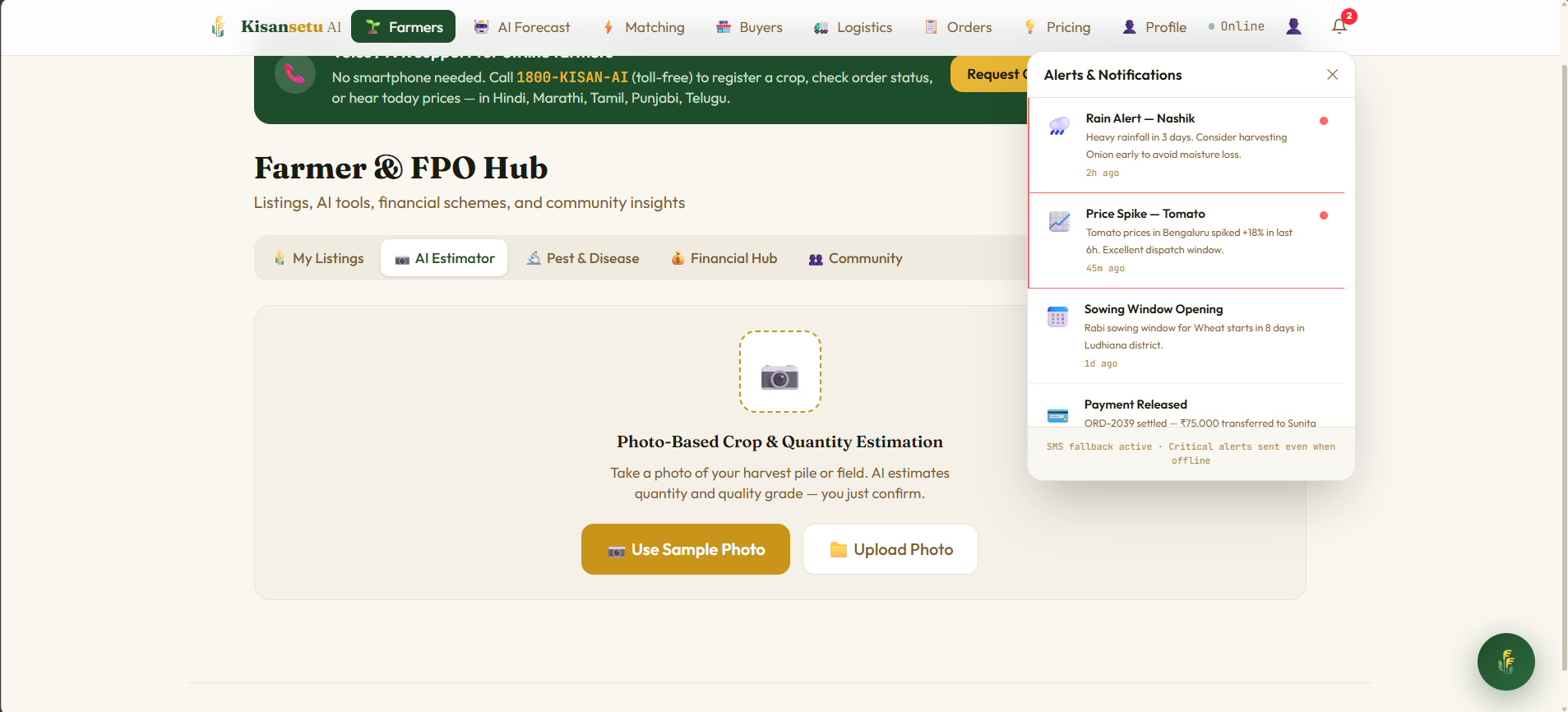
Expand offline/low-connectivity support — offline-first data capture and SMS fallback for critical alerts, since much of our target user base is in low-bandwidth farm belts WhatsApp-based access and voice-first interaction, so farmers can list produce or check matches without needing to navigate a full app Connect to the larger financial ecosystem — surfacing e-NAM, PM-KISAN, and KCC eligibility, plus exploring warehouse-receipt financing using our already-verified stock data Photo-based crop/quantity estimation and disease detection, reducing manual data entry for farmers even further Scale the pilot region by region — from a handful of FPOs and crops to district-wide, then state-wide coverage, following the pilot region → more FPOs → more buyers → more transactions → more districts growth path we've already mapped out
Built With
- ai/ml
- css
- dart
- fastapi
- flutter
- frontend/mobile
- next.js
- pandas
- postgresql
- python
- redis
- scikit-learn
- tailwind
- typescript


Log in or sign up for Devpost to join the conversation.