-
KisanGrid: Decentralized solar-powered micro-cold storage and shared logistics network for rural farming clusters.
-
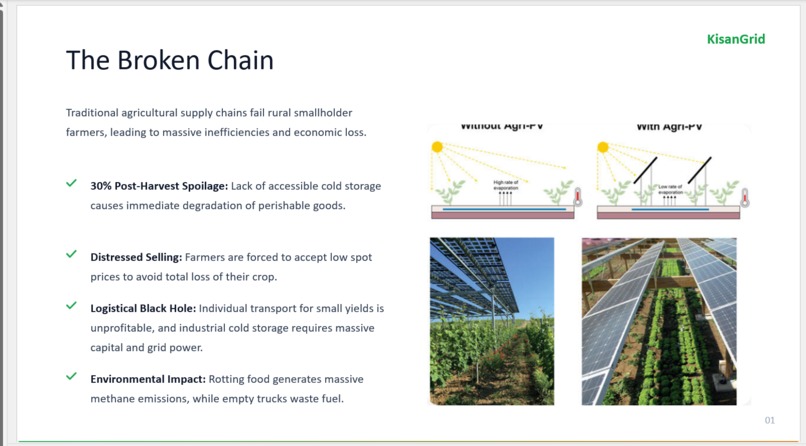
Identifying the core challenge: 30% post-harvest spoilage caused by a lack of accessible rural cold storage.
-
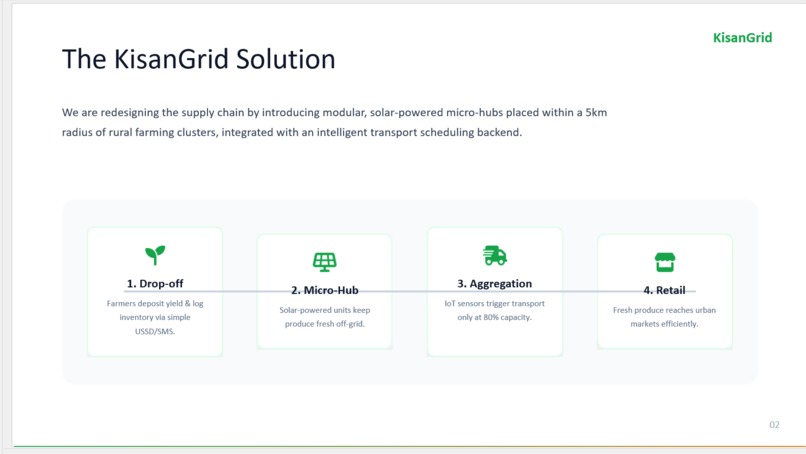
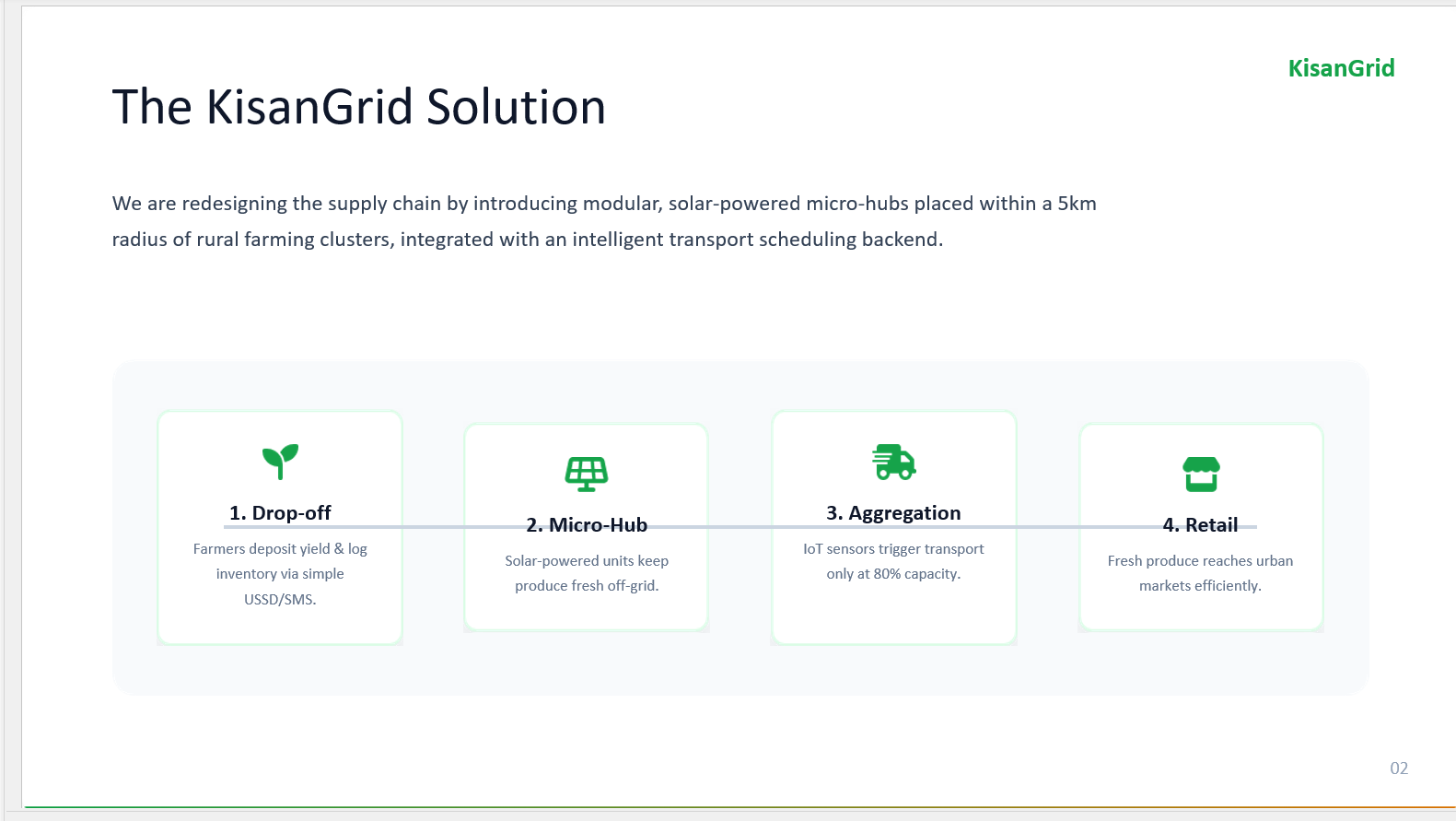
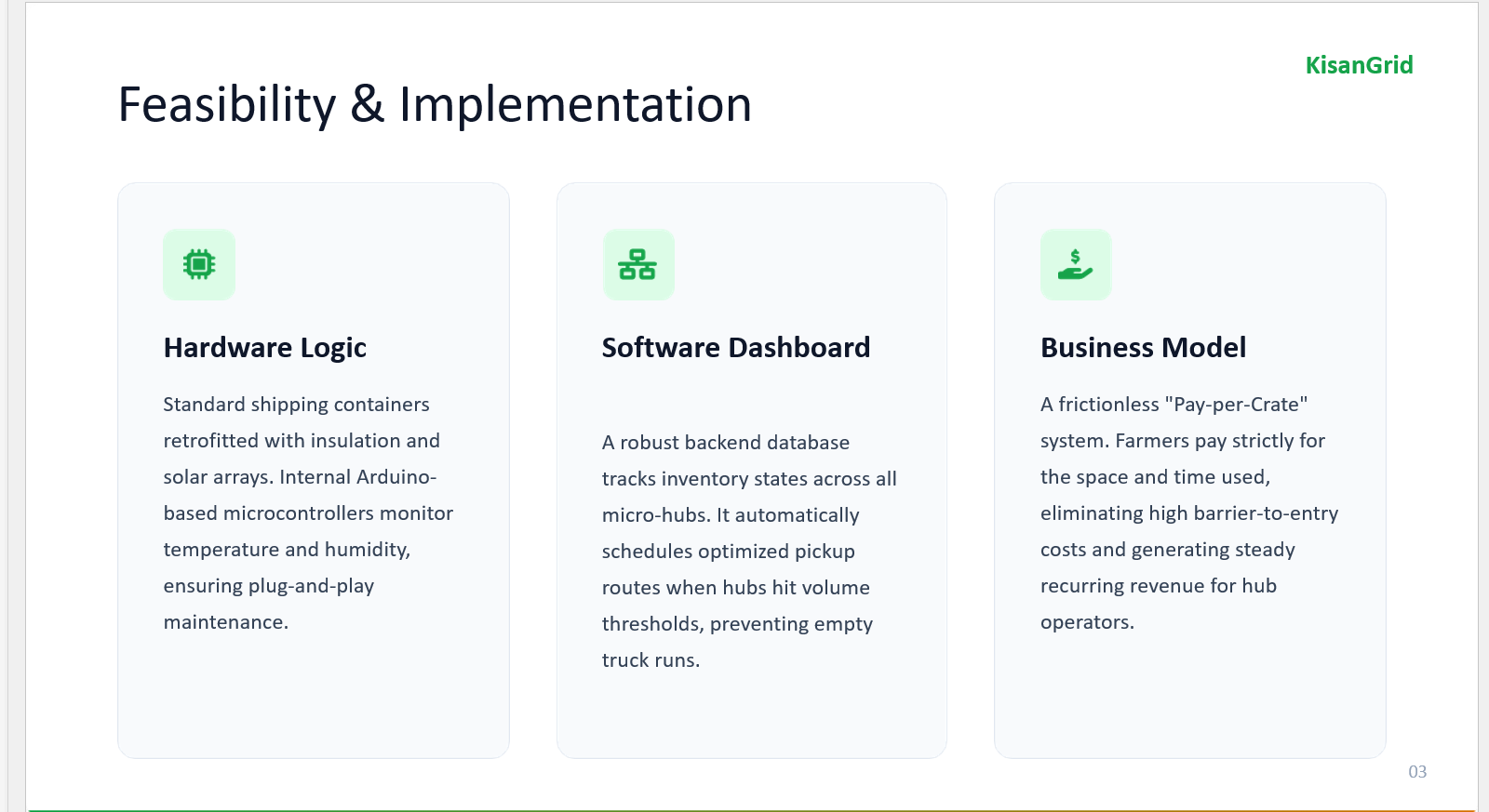
Solution architecture: Modular solar micro-hubs with IoT sensors and aggregated transport routing.
-
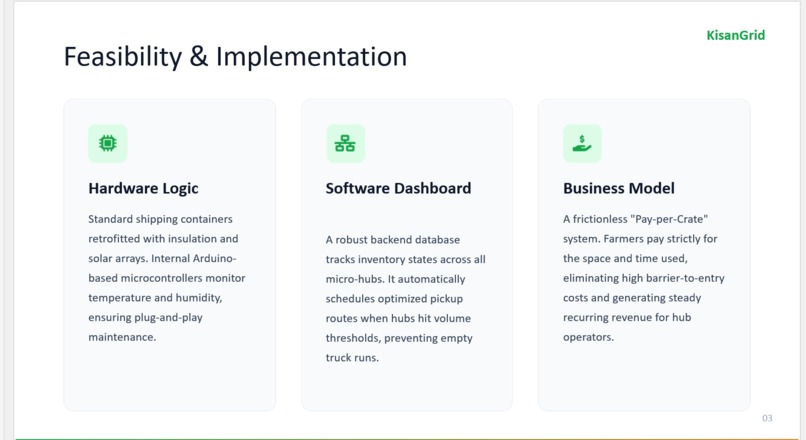
Implementation roadmap: Phased rollout covering micro-hub deployment, IoT integration, and zero-overhead models.
-
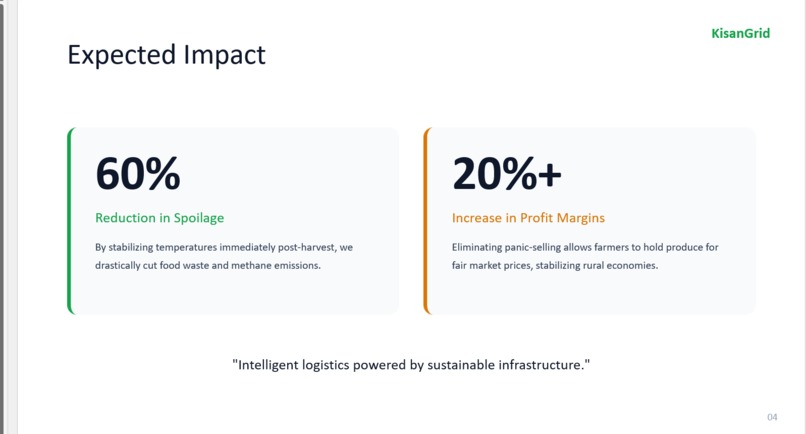
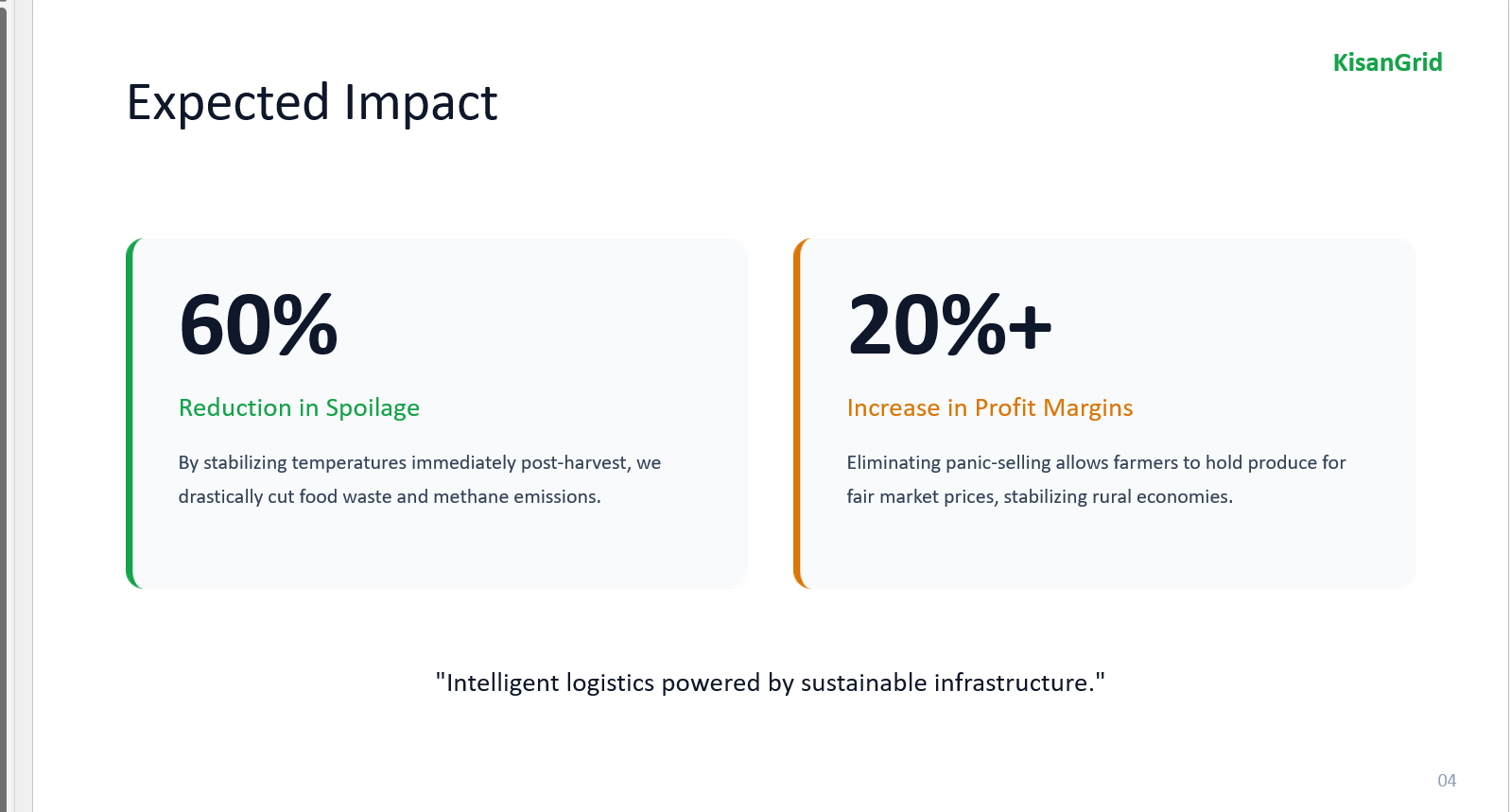
Projected impact: 60% reduction in local produce spoilage and a 20+ % increase in farmer profit margins.
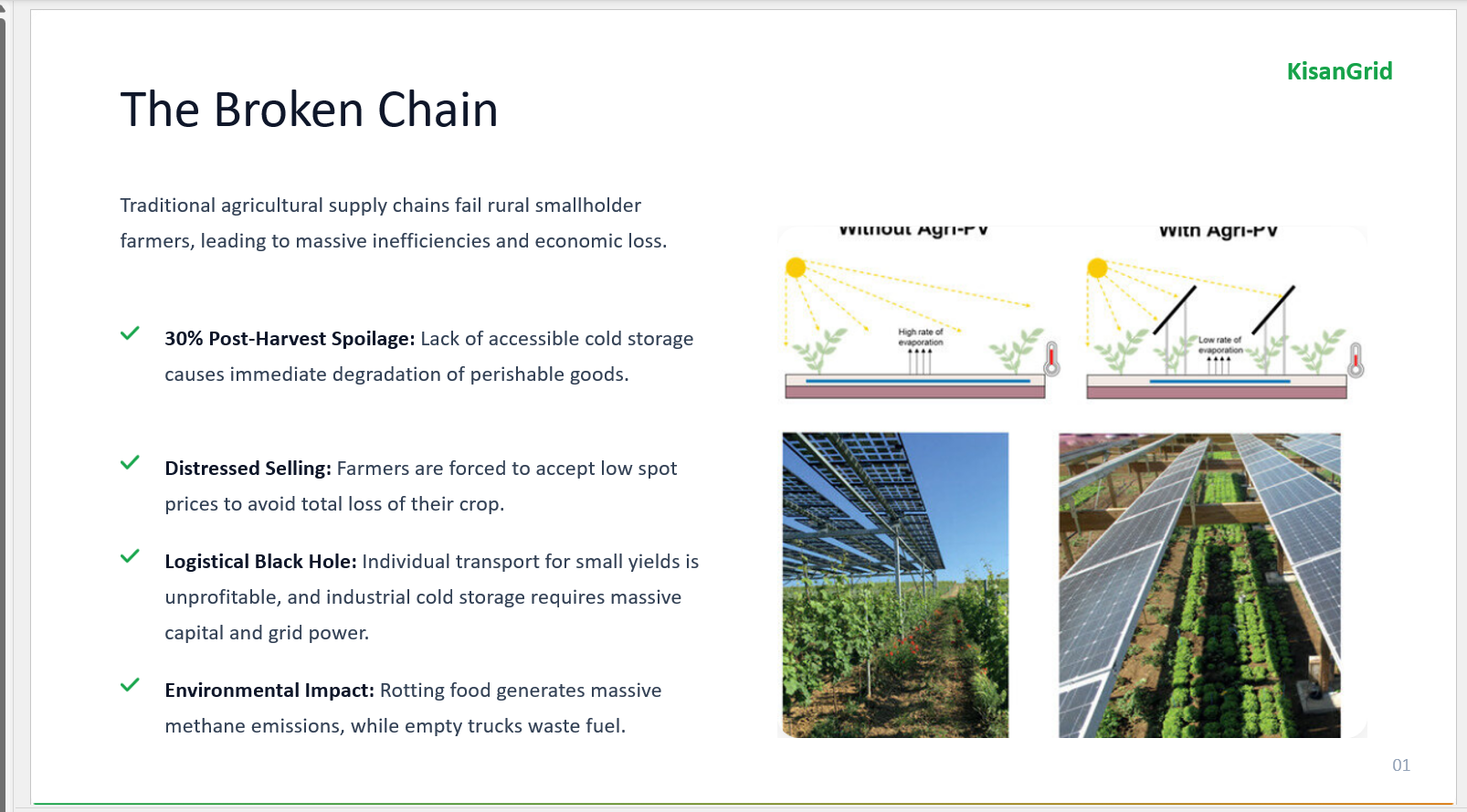
Inspiration : Every year, nearly 30% of harvested perishable produce in developing supply chains spoils before reaching the market. While researching agricultural supply chains, the core bottleneck became obvious: traditional industrial cold storages require massive capital and reliable grid power, making them inaccessible to rural smallholder farmers. These farmers are forced into distressed panic-selling, while urban consumers face inflated food prices. We were inspired to design a decentralized, eco-friendly bridge between the farm and the city.
What it does : KisanGrid is a decentralized, solar-powered micro-cold storage and shared logistics network.
Instead of forcing farmers to travel to distant warehouses, we designed modular, solar-powered micro-hubs placed directly within a 5 km radius of rural farming clusters. Farmers drop off their daily yield and log it via a simple interface. Once a micro-hub reaches optimal capacity, our backend system automatically schedules an aggregated pickup route for transport trucks. This ensures vehicles only deploy for profitable, full loads, drastically cutting logistics costs and bridging the gap between farm and retail.
How we built it : Since this is an innovation challenge, we focused on a comprehensive system design that merges hardware, software, and a sustainable business model:
- The Hardware Node: We designed the micro-hubs to utilize Arduino-based microcontrollers connected to environmental sensors to continuously monitor internal temperature and humidity.
- The Software Dashboard: We conceptualized a full-stack logistics dashboard (designed around a React frontend and a robust backend like MongoDB) to handle inventory states and trigger automated transport scheduling based on volume thresholds.
- The Business Model: A "Pay-per-Crate" system where farmers pay strictly for the space and time used, eliminating high barrier-to-entry costs.
Challenges we ran into : Designing a system for remote, off-grid locations presented several hurdles:
- Energy Reliability: Relying purely on solar energy means calculating battery storage capacities to keep cooling units running through the night and during monsoon seasons.
- Hardware Maintenance: Remote hardware deployments require fail-safes. We had to design the sensor nodes to be plug-and-play so they could be easily swapped without deep technical knowledge.
- User Adoption: Designing an onboarding process that is frictionless for farmers who may not use smartphones, leading us to incorporate simple USSD/SMS fallback logging.
Accomplishments that we're proud of : We are exceptionally proud of creating a multi-disciplinary solution. KisanGrid isn't just a software platform; it is a holistic ecosystem that blends eco-friendly infrastructure (solar grids), IoT hardware logic, and supply chain optimization into a single, viable business model that directly benefits the lowest earners in the agricultural chain.
What we learned : Throughout this challenge, we learned how deeply fragmented rural logistics actually are. We also learned how to apply systems-level thinking—realizing that building a great tech product means nothing if the physical transport layer and the energy grid cannot support it. Designing the bridge between digital inventory and physical trucking was a massive learning curve.
What's next for KisanGrid : Solar Micro-Cold Storage
Our immediate next step is to create a physical prototype of the IoT environmental monitoring system to validate power draw and sensor accuracy. Following that, we plan to design high-fidelity UI wireframes for the logistics dashboard and pitch the concept for seed funding to construct our first retrofitted solar shipping container.


Log in or sign up for Devpost to join the conversation.