-
-
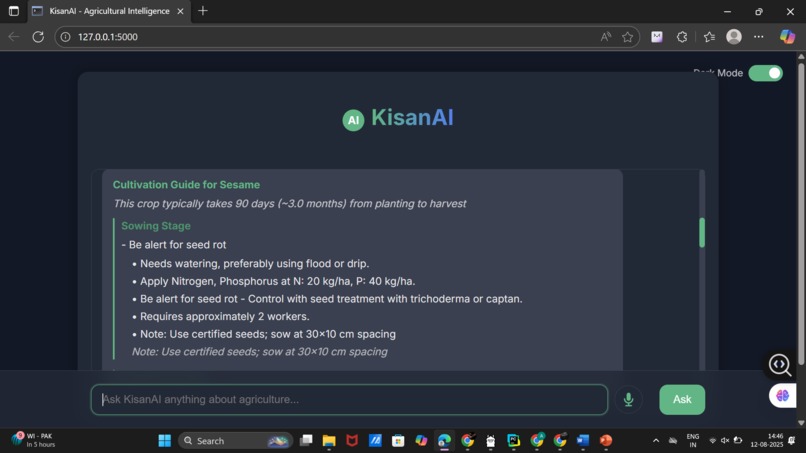
Home page
-
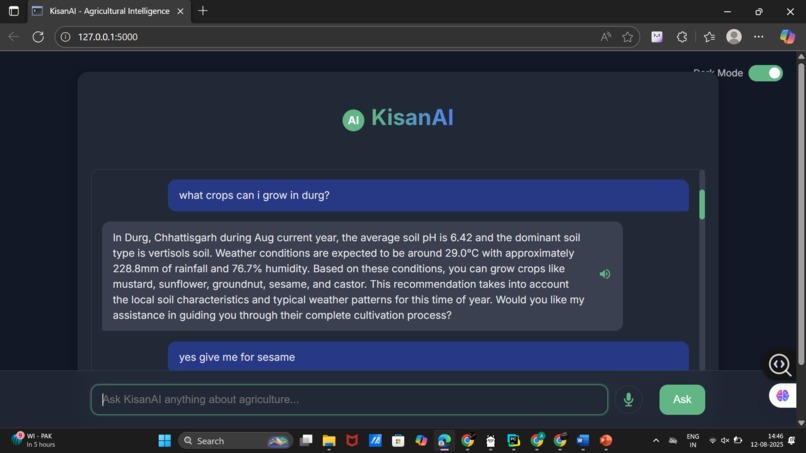
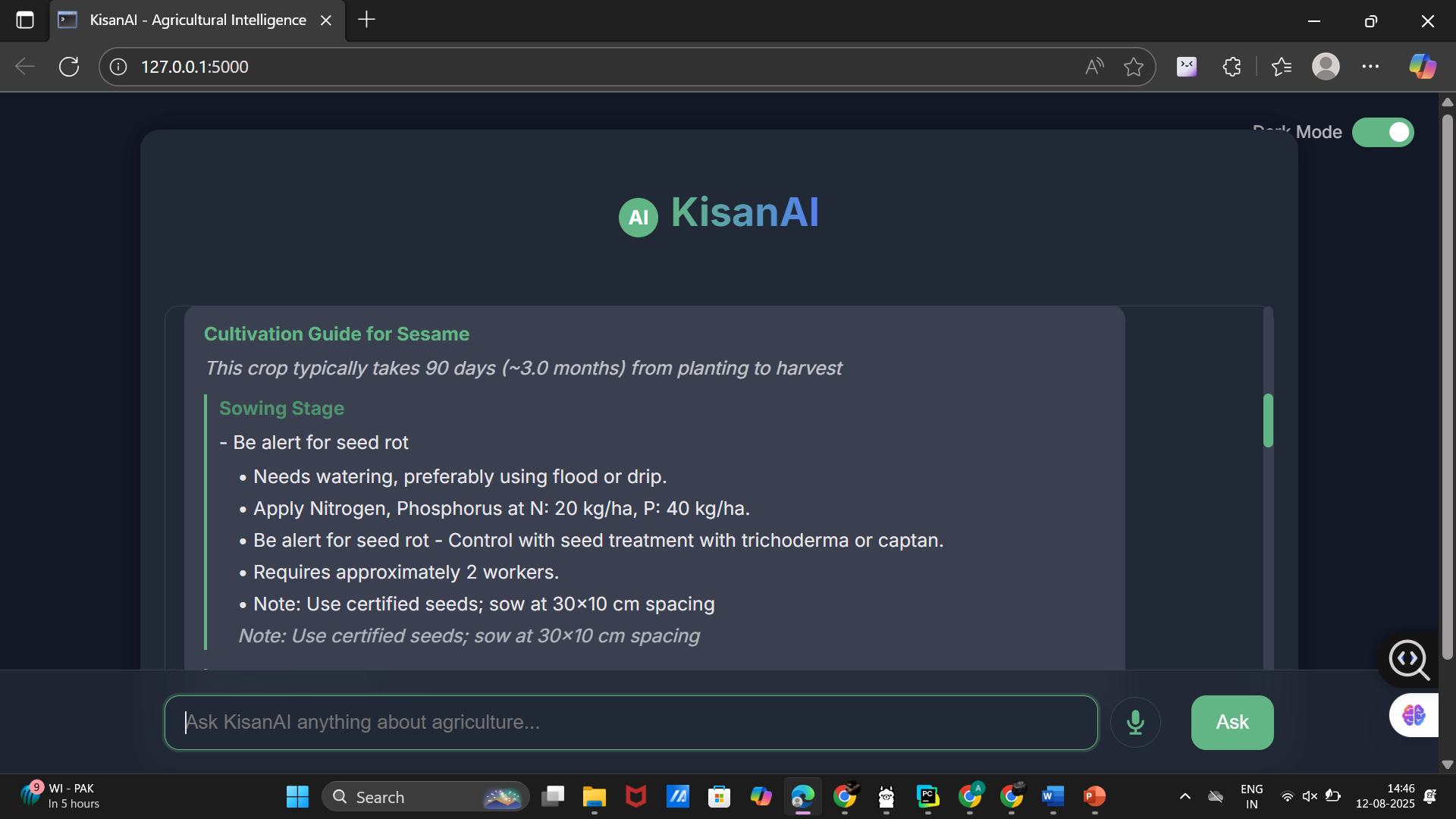
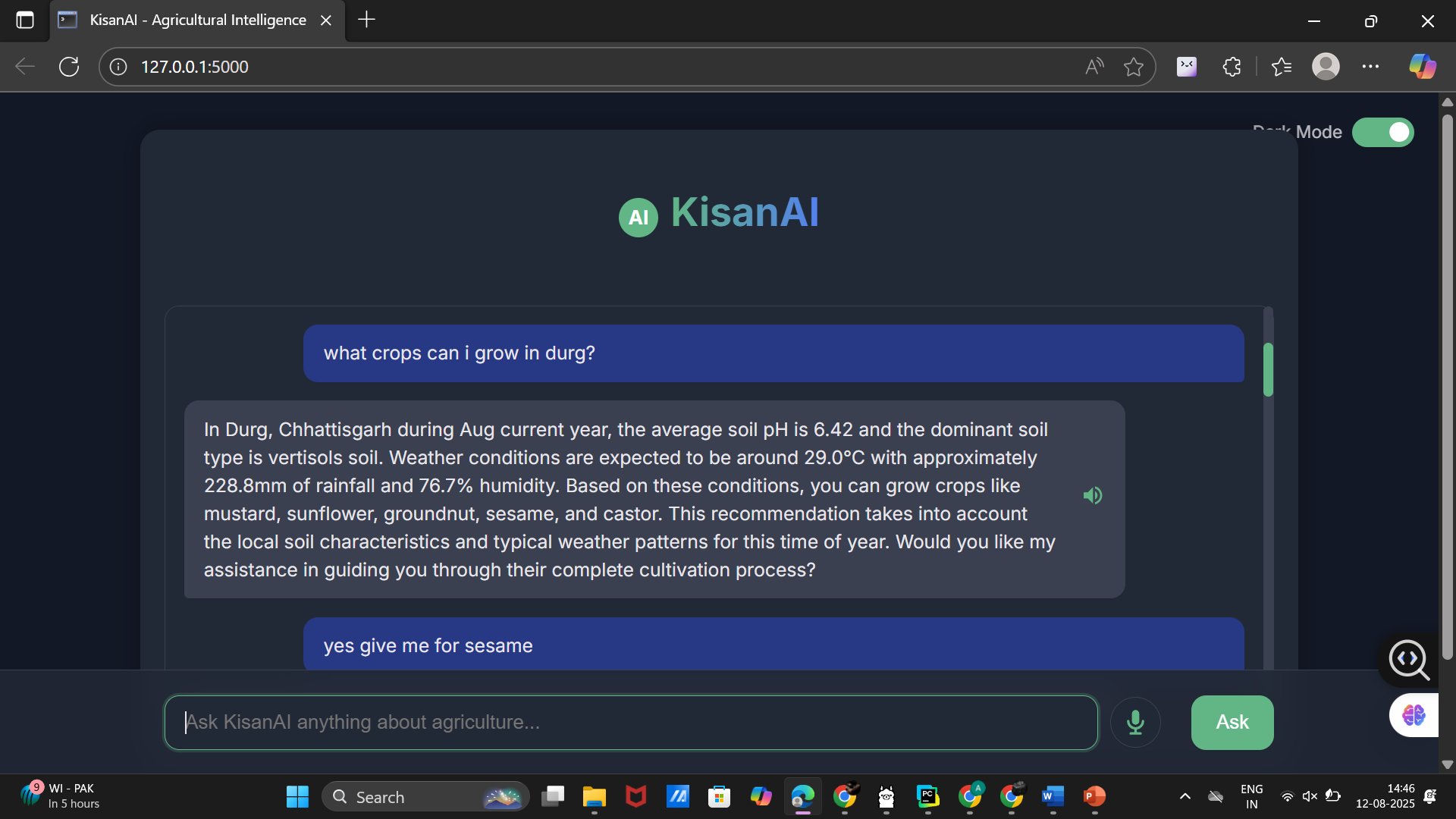
Image showing how easily crop suggestion can be drawn using queries
-
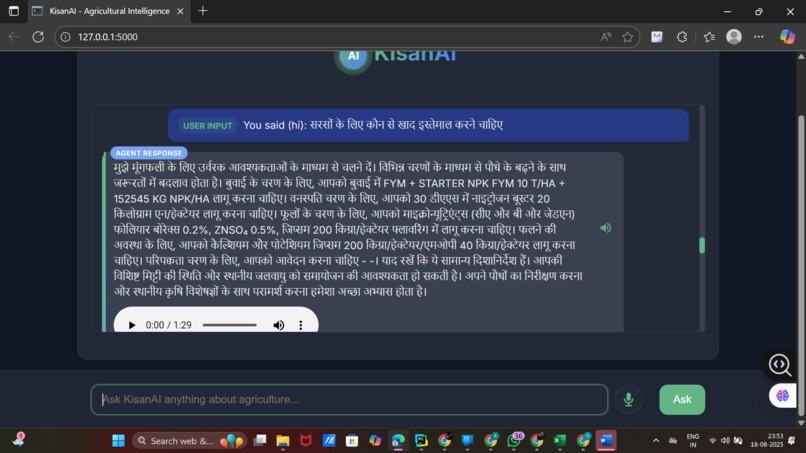
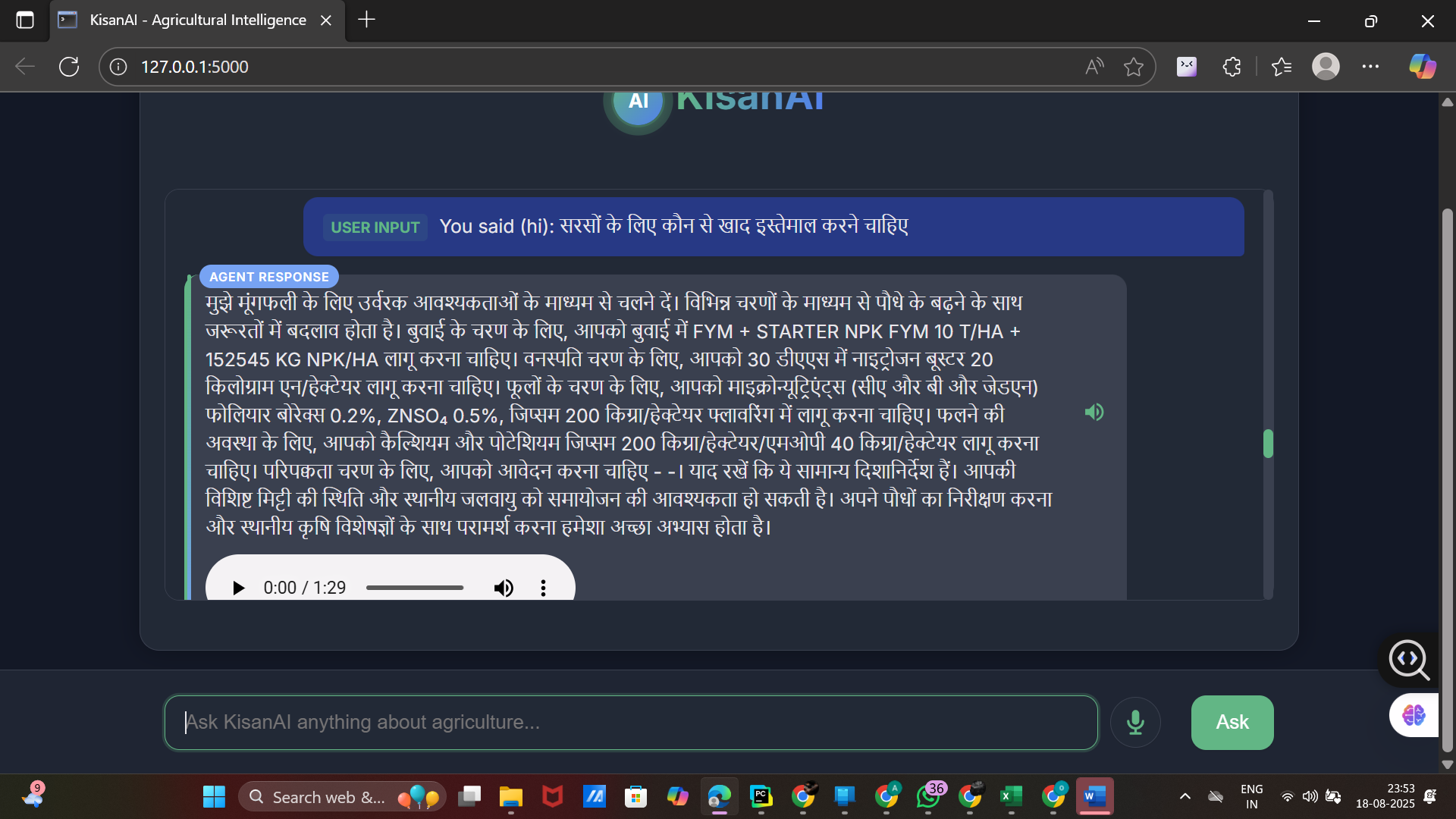
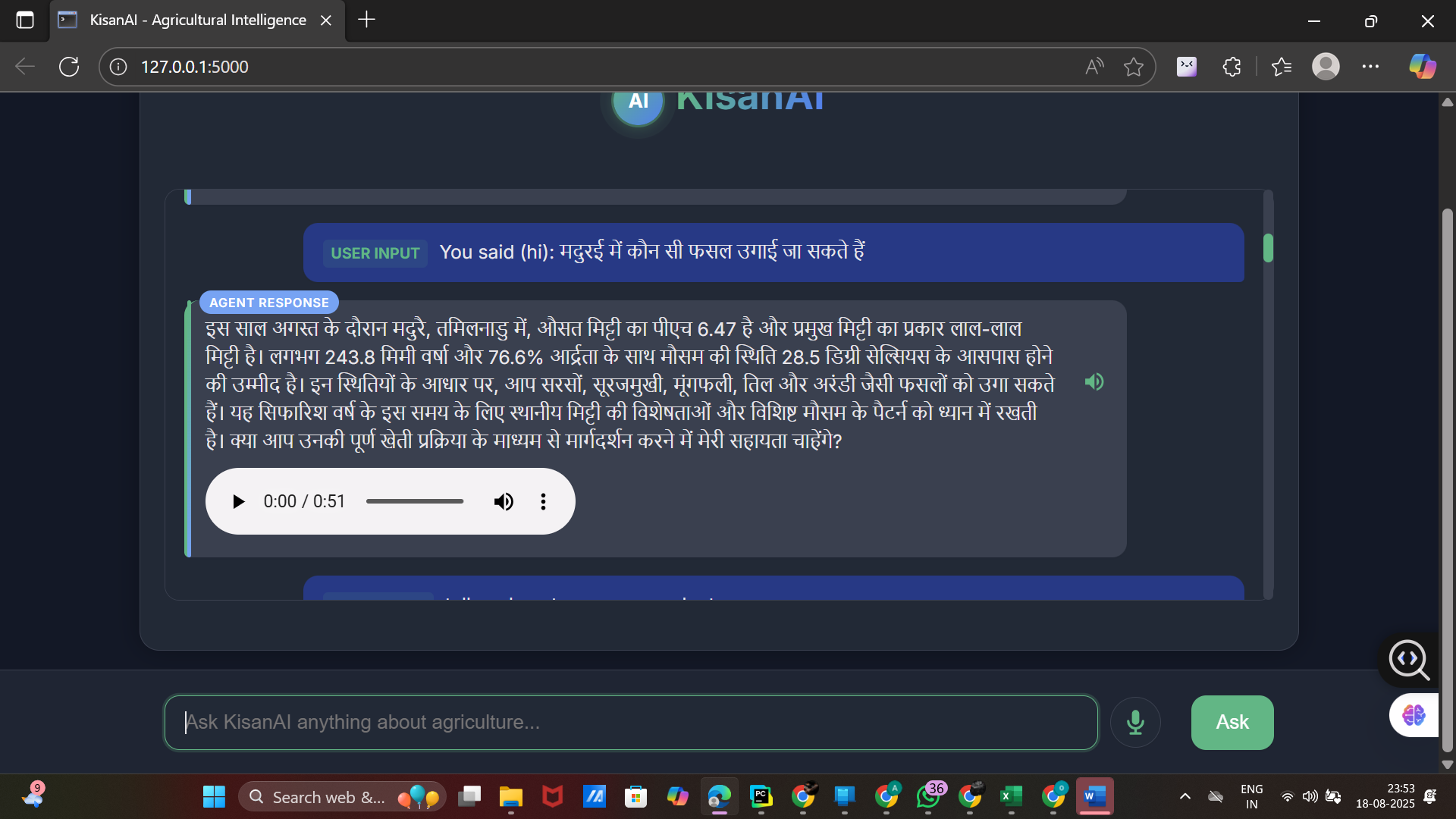
Image showing the multilingual capabilities of the agent for layman queries
-
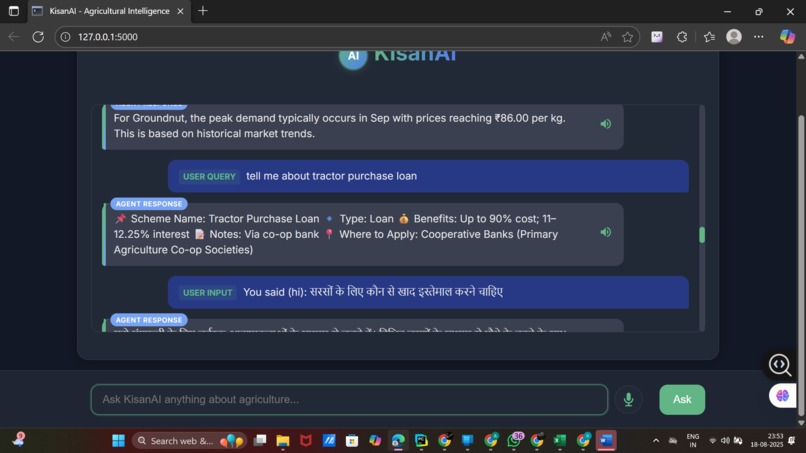
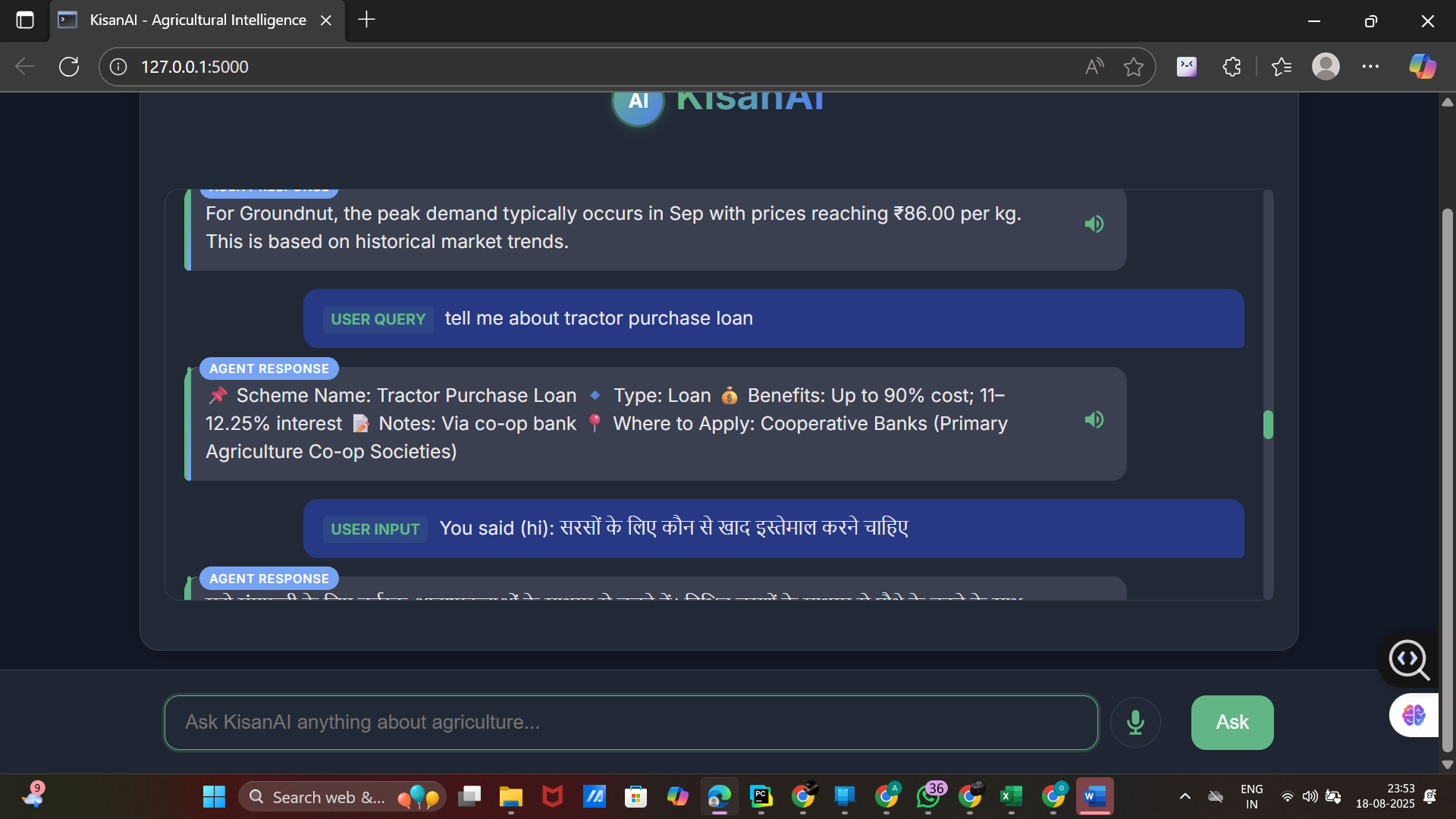
Image showing the loans and subsidies available for farmers in their state
-
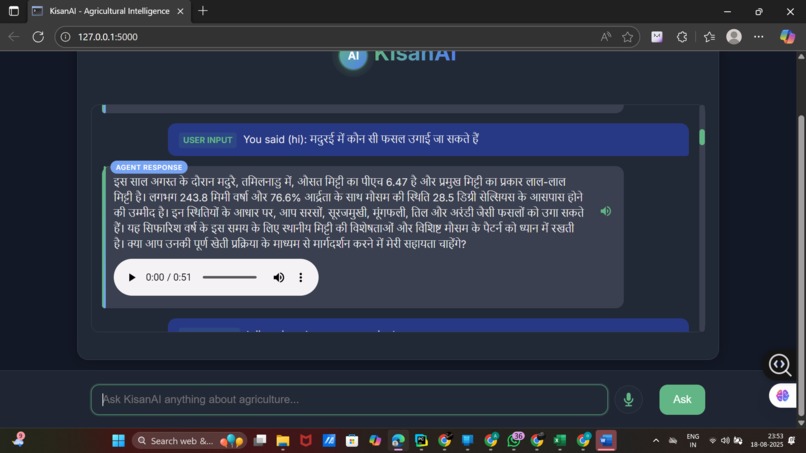
Image showing the voice input feature supporting differnt languages as input
-
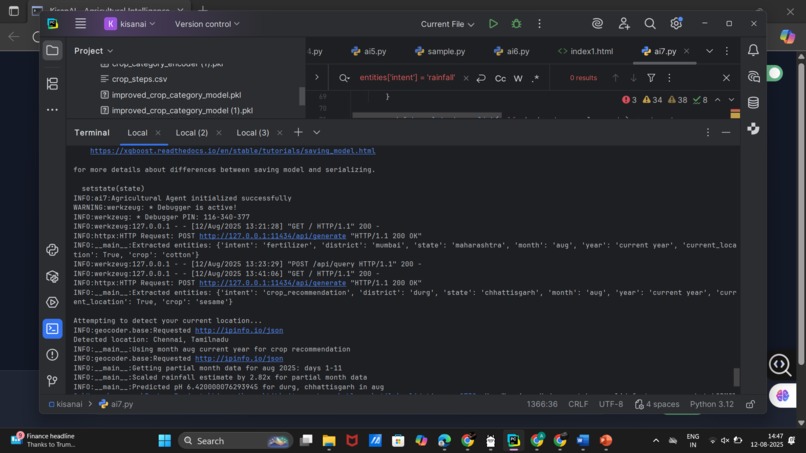
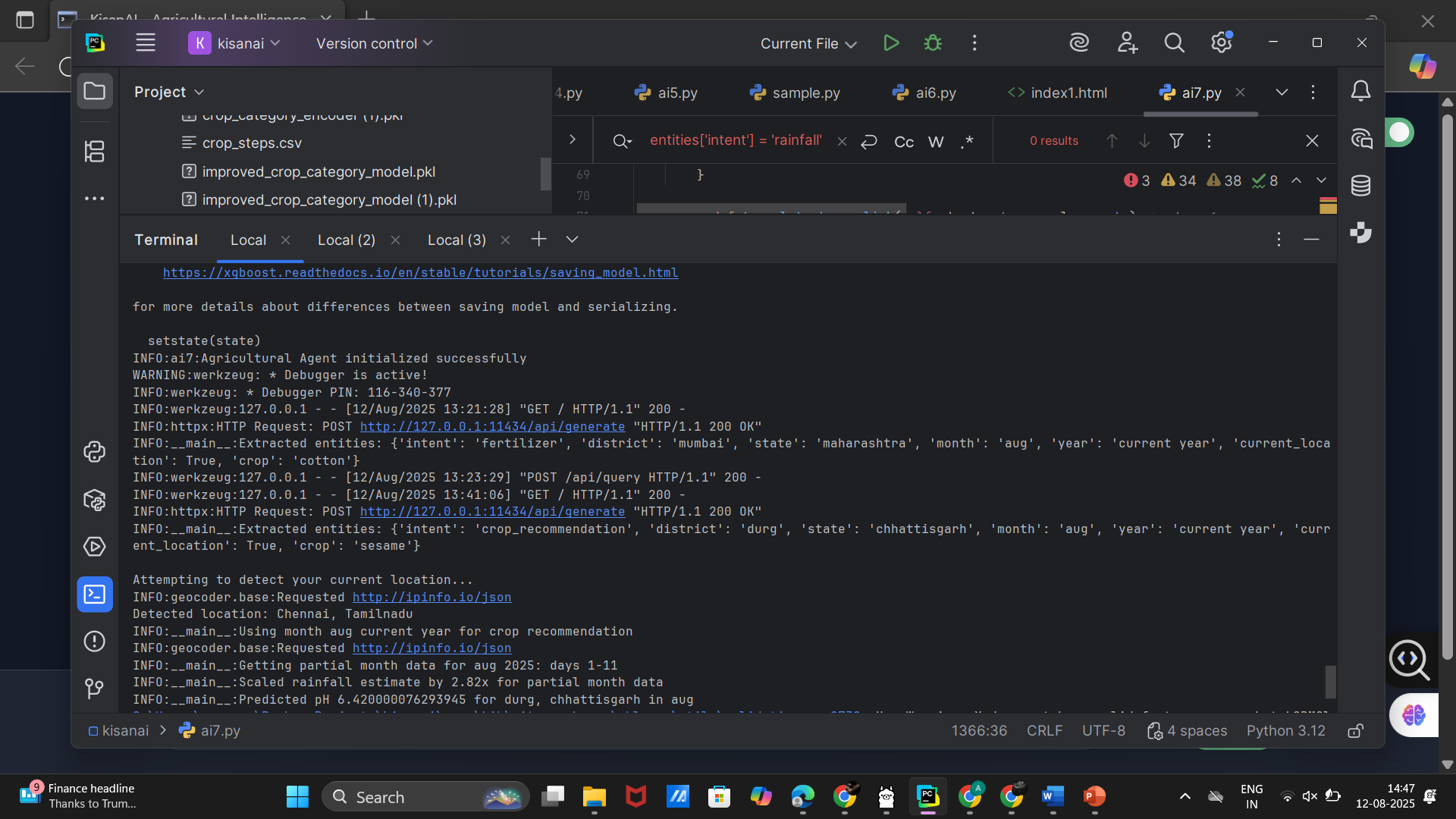
Image showing the backend logs
-
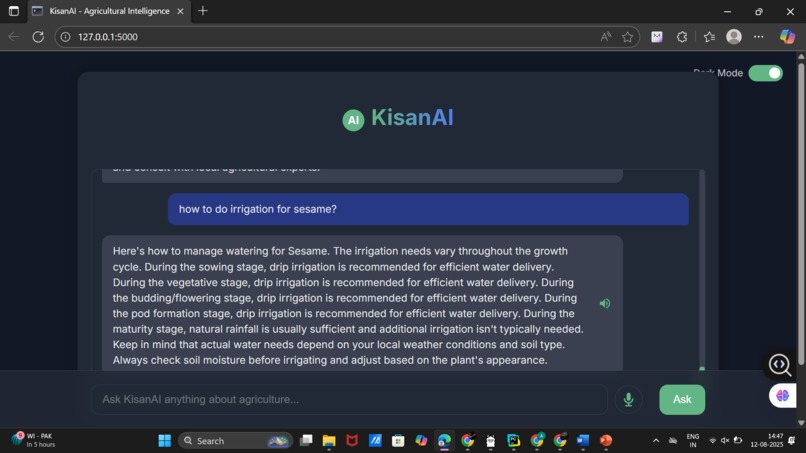
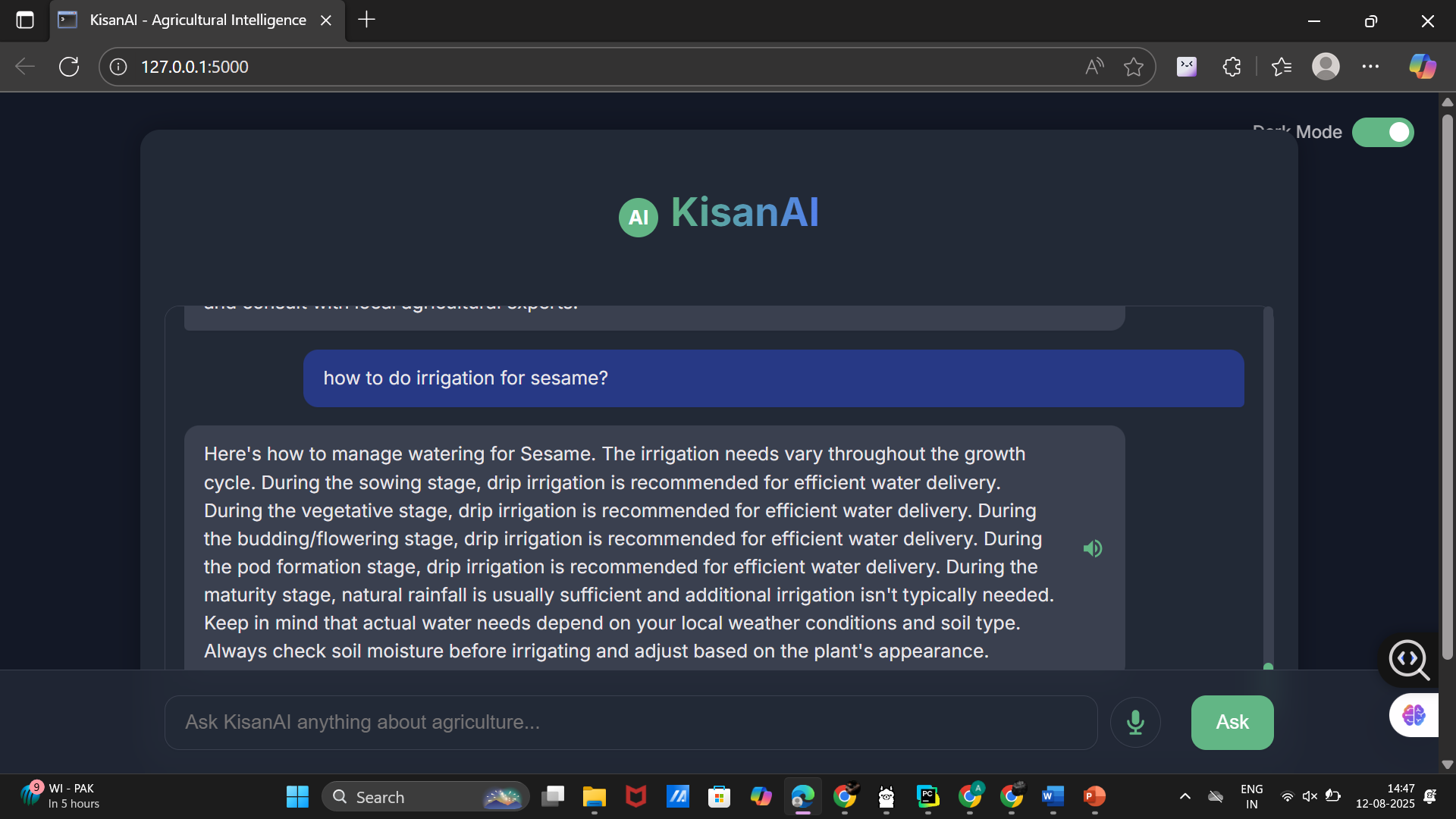
Image showing features like irrigation assist forfarmers
-
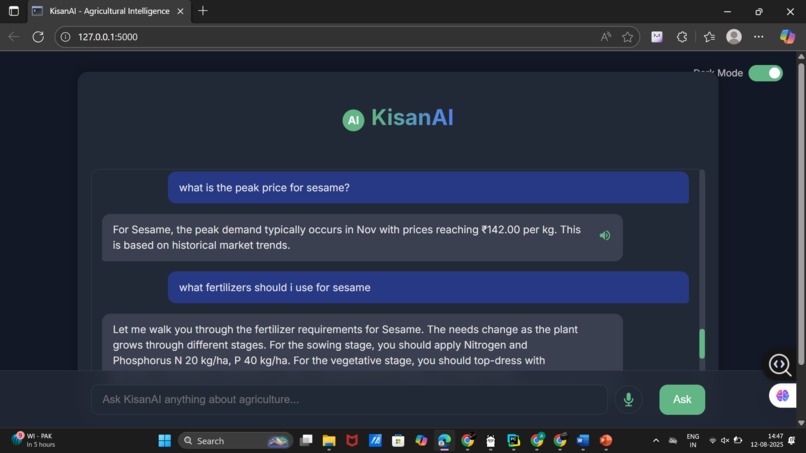
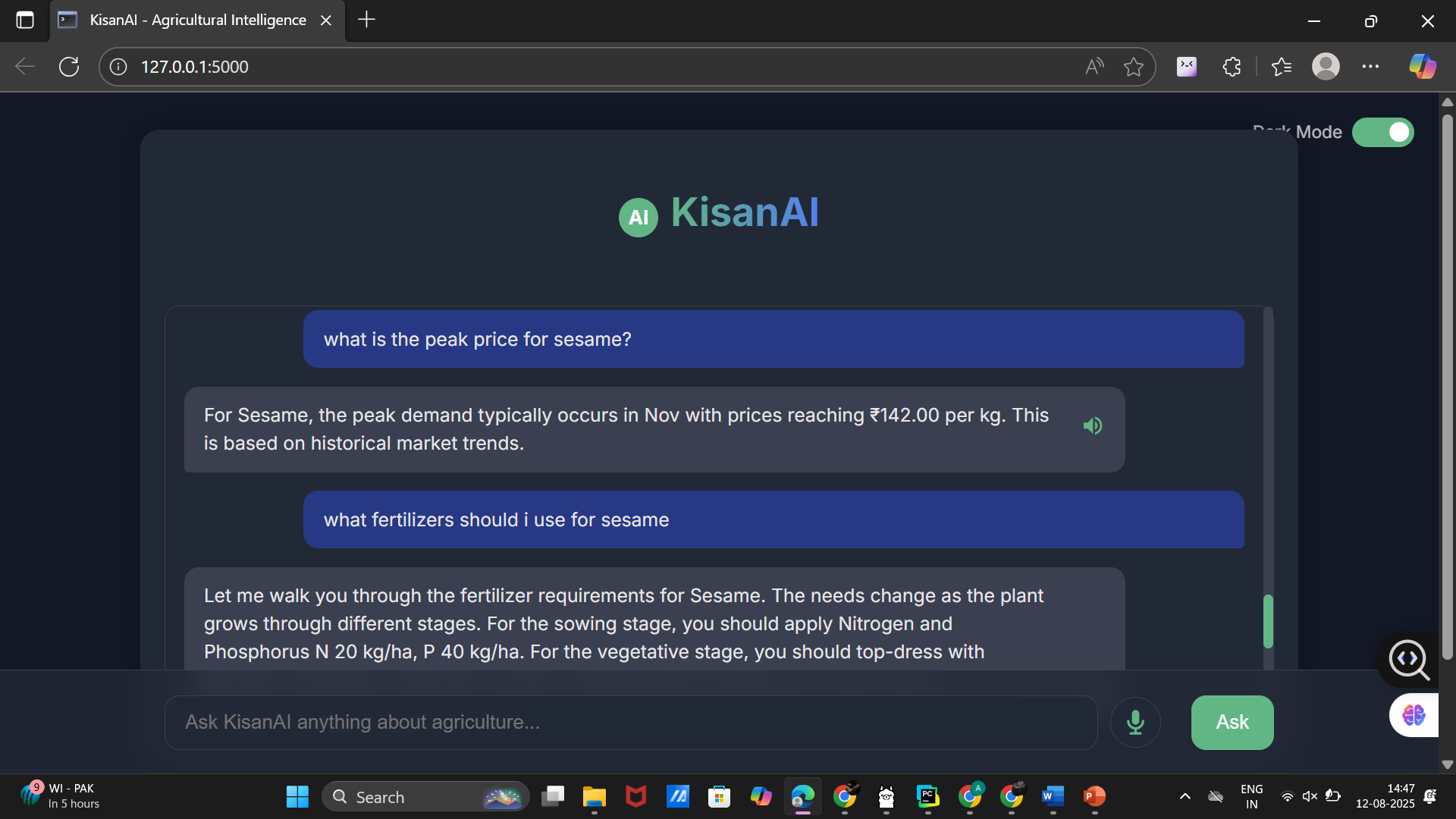
image showing the fertlizers assist and selling advice and peak price for crops
🌱 About the Project: KisanAI 💡 Inspiration
Agriculture is often called the backbone of India’s economy, yet farmers face climate uncertainty, fragmented information, and low digital access. We were inspired by the question:
“What if every farmer could have a personal AI advisor that speaks their language, understands their needs, and helps them make smarter decisions?”
That vision led us to build KisanAI — a multilingual, voice-first Agentic AI assistant that empowers farmers with reliable guidance on soil, crops, weather, finance, and markets.
🛠️ How We Built It
Frontend: A responsive chat + voice UI built in HTML/JS with dark/light mode and audio playback.
Backend: Flask server (ai8.py) orchestrating ML models, LLM reasoning (Llama2 via Ollama), and multilingual translation.
Machine Learning:
Soil pH prediction models.
Crop classification and irrigation/fertilizer recommendation models.
Datasets: Cleaned and consolidated sources from ICRISAT, IMD, Agmarknet, and Government subsidy portals.
Knowledge Retrieval: Hybrid reasoning pipeline combining ML + rules + datasets, with LLMs used only for entity extraction to reduce hallucinations.
Deployment: Hosted on Google Cloud VM with demo and GitHub repo available.
📚 What We Learned
How to normalize messy public datasets (e.g., handling inconsistent units, aliases like “sarson = mustard”).
The importance of grounding LLMs with factual datasets for reliability in critical domains like agriculture.
Designing voice-first and multilingual systems that work for users with low literacy.
Balancing explainability with automation — farmers trust step-by-step instructions more than “black-box” answers.
🚧 Challenges We Faced
Data Quality: Many agricultural datasets had gaps, inconsistencies, or outdated values. We solved this with imputation, alias-mapping, and consolidation into master datasets.
Voice Recognition in Rural Contexts: Handling noisy environments and mixed-language queries (e.g., Hinglish) was tricky.
Infrastructure Limits: Cloud-hosted demo is slower due to limited GPU resources.
Scalability: Current version works for demos, but scaling to millions of farmers will require APIs, offline models, and IoT integration.
🚀 The Journey Ahead
We see KisanAI as more than a hackathon project — it can evolve into a national-scale advisory platform. Next steps include:
Offline mobile app with preloaded models.
Integration with Govt APIs (Agmarknet, IMD, PM-Kisan).
Image-based crop disease diagnosis.
IoT sensor integration for real-time soil/weather feeds.
A multi-agent ecosystem where specialized agents handle soil, markets, and finance, working together to serve farmers holistically.
✨ In short: KisanAI is where Agentic AI meets agriculture — empowering farmers, reducing risk, and shaping a more resilient future for food security.
Built With
- flask
- ollama
- open-meteo-forecast
- python
- scikit-learn
- xgboost

Log in or sign up for Devpost to join the conversation.