Inspiration
In 1995, Microsoft Bob drew the desktop as a house: rooms to walk into, objects to click, and a cartoon guide who spoke in balloons. It was withdrawn within about a year. The idea was not wrong. The house simply had nothing in it worth walking to, and the guide talked down to people and got in the way.
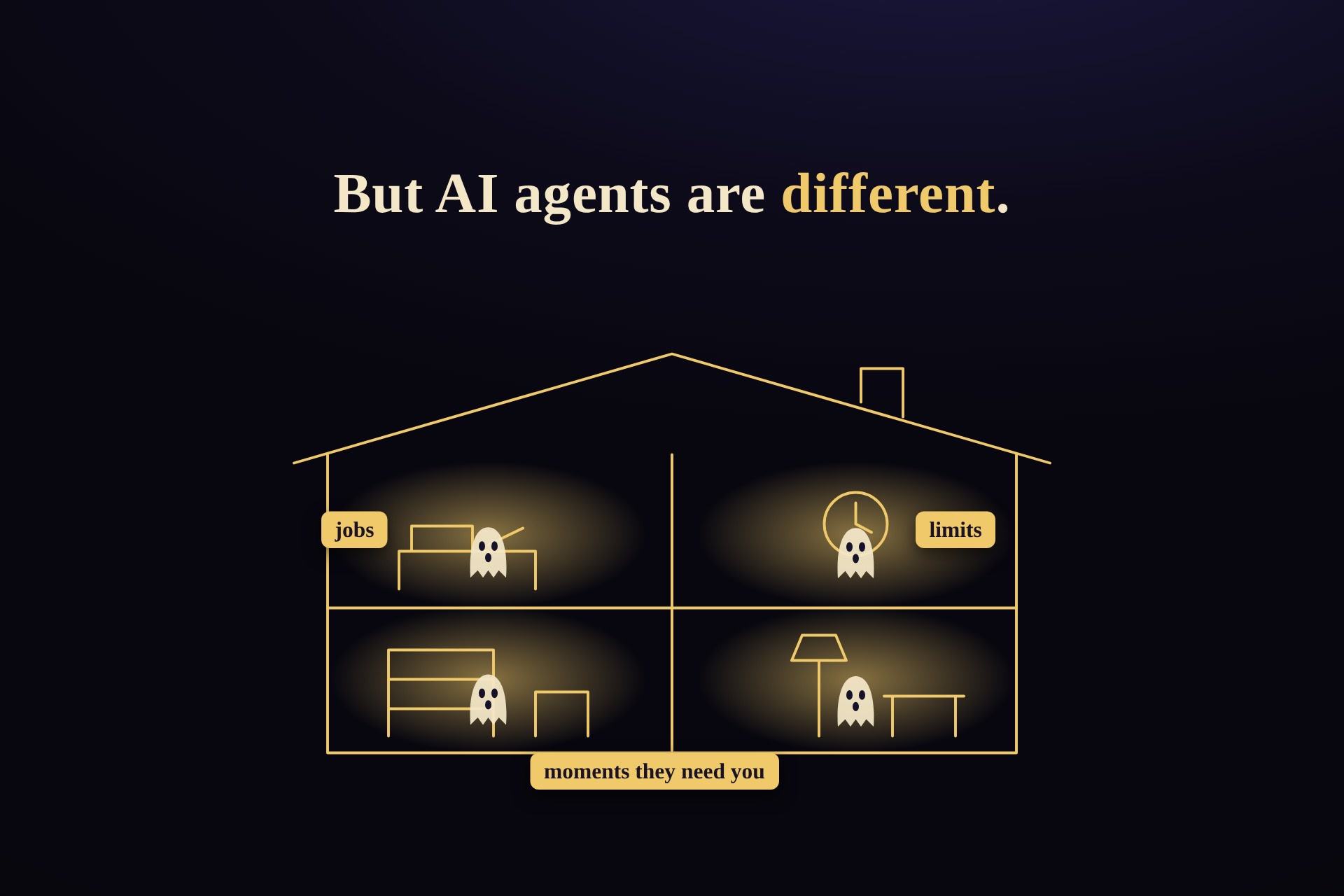
AI agents change that. When several agents work on one project, a chat log does not show who is working, who is waiting for you, or what each one is allowed to touch. Agents have jobs, limits and moments when they need a person, and a house with rooms, walls, doors and occupants shows exactly that. So we brought the house back from the dead and treated each of Bob's failures as a rule.
What it does
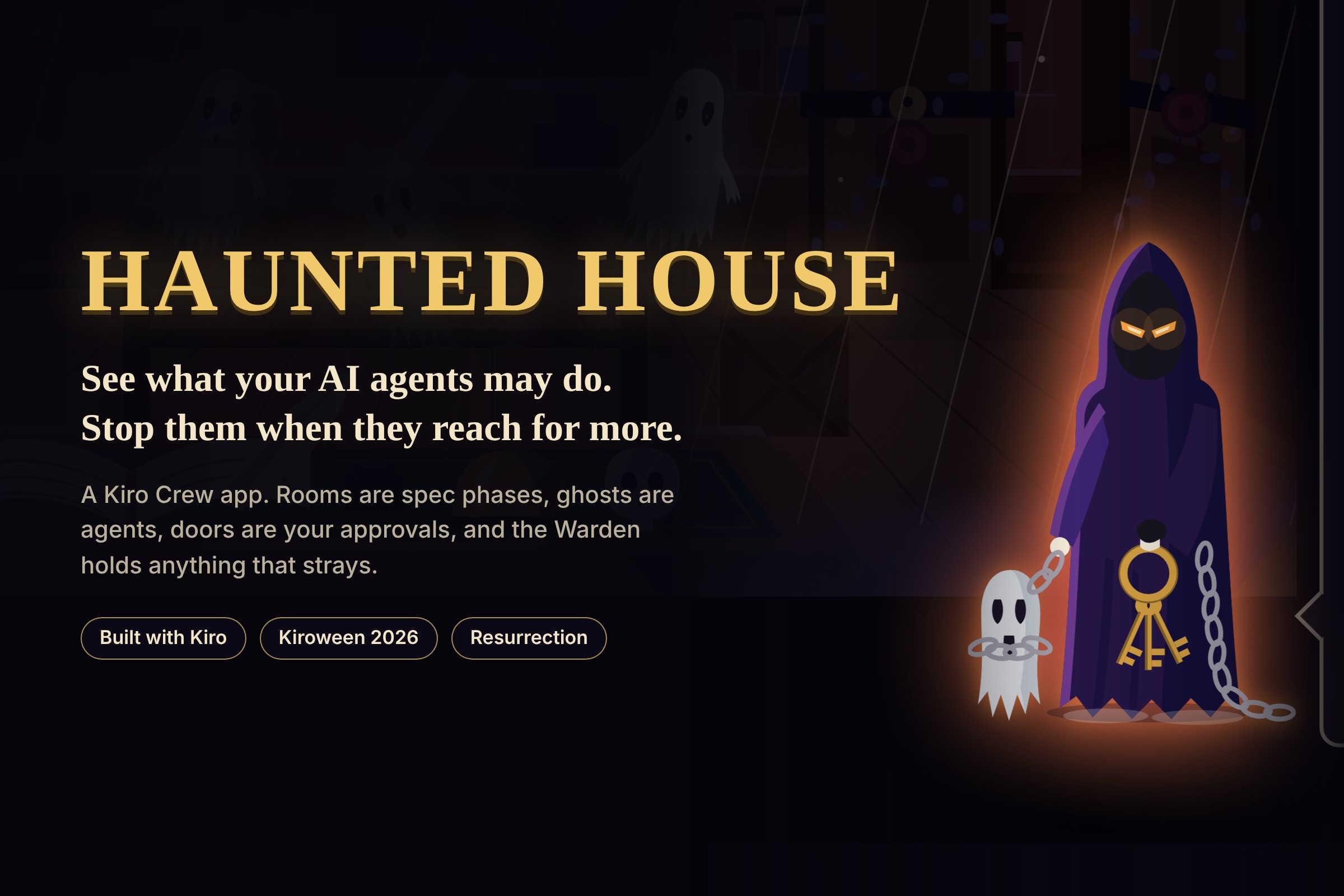
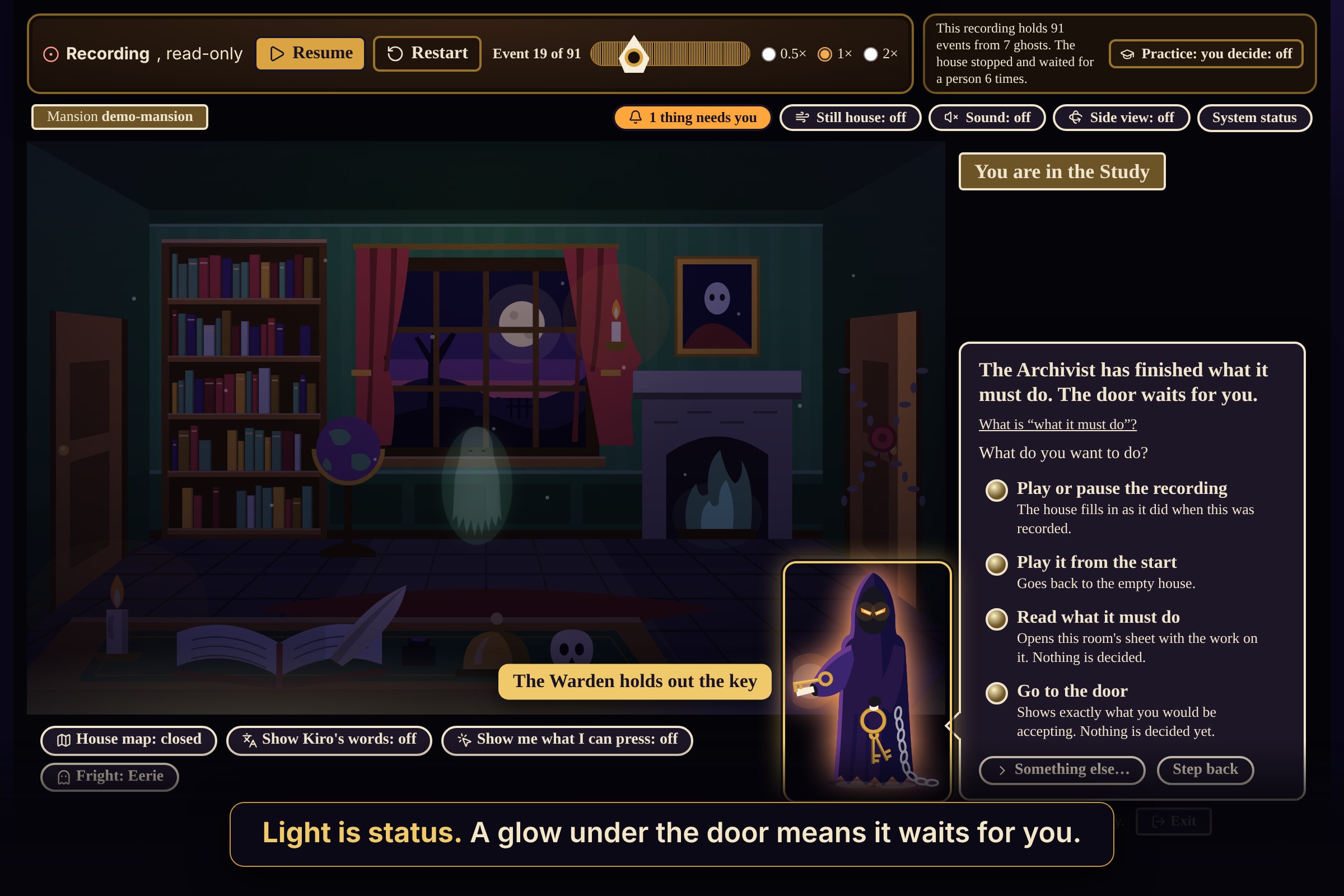
Haunted House is a Kiro Crew app that turns one software project into a house you walk through.
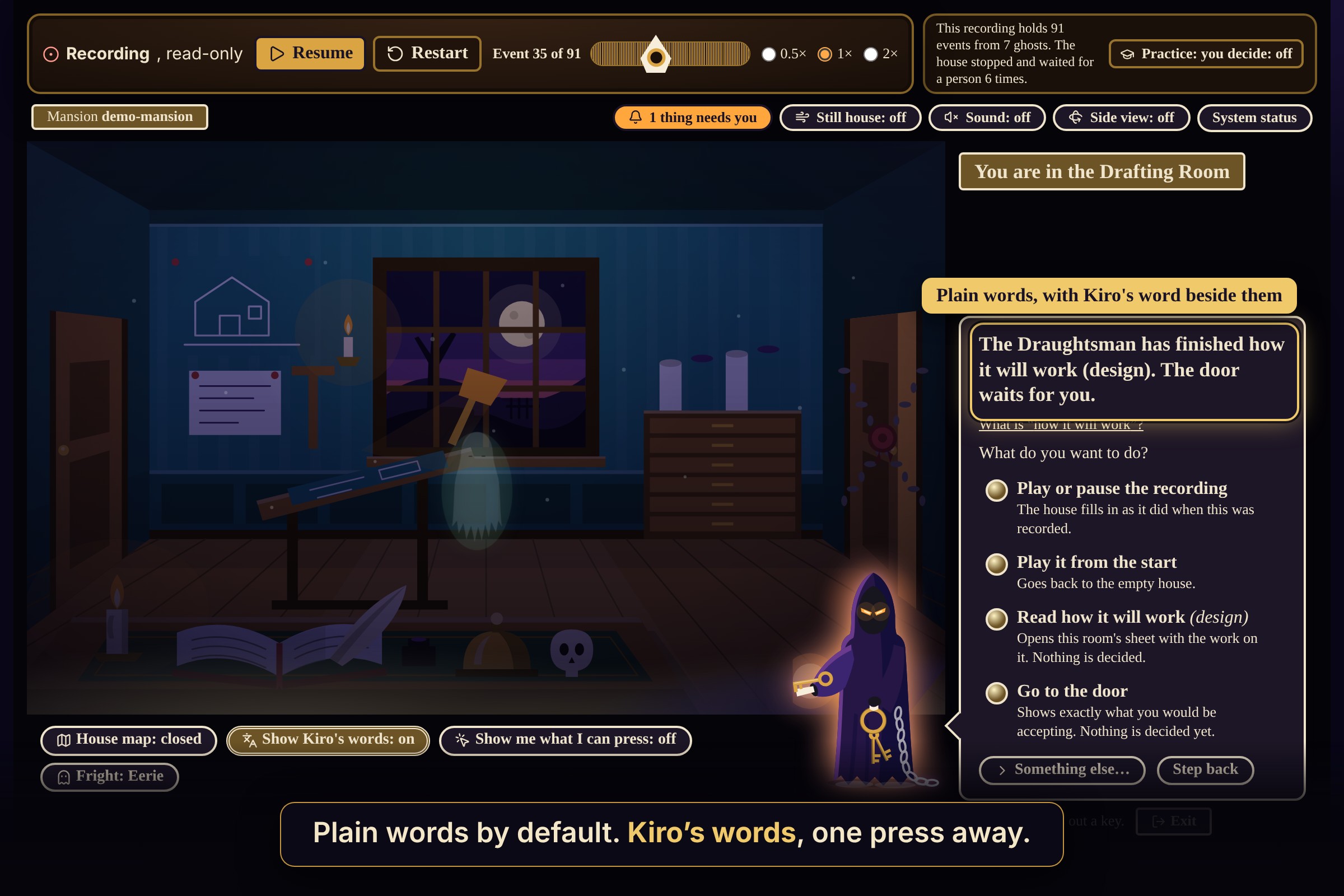
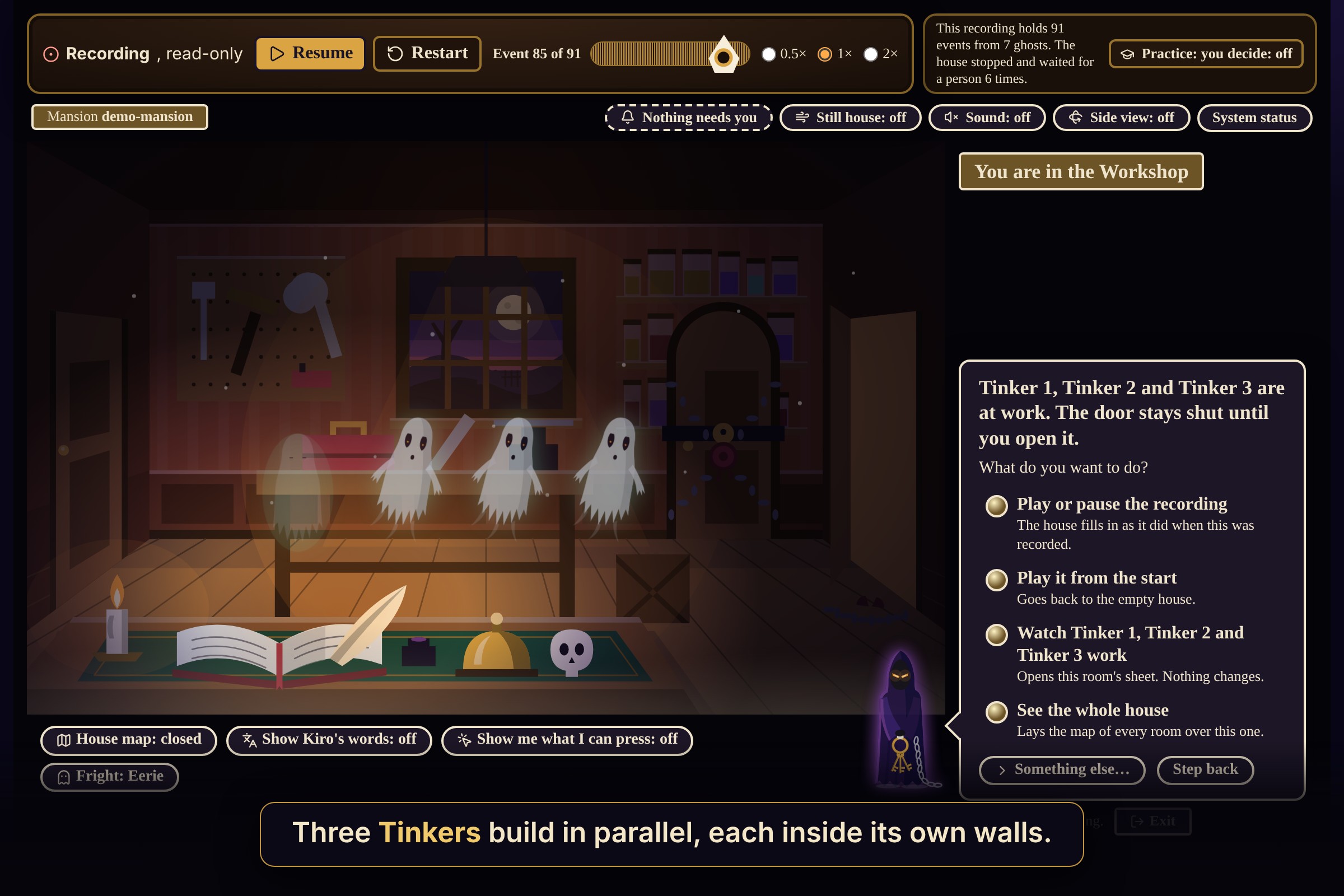
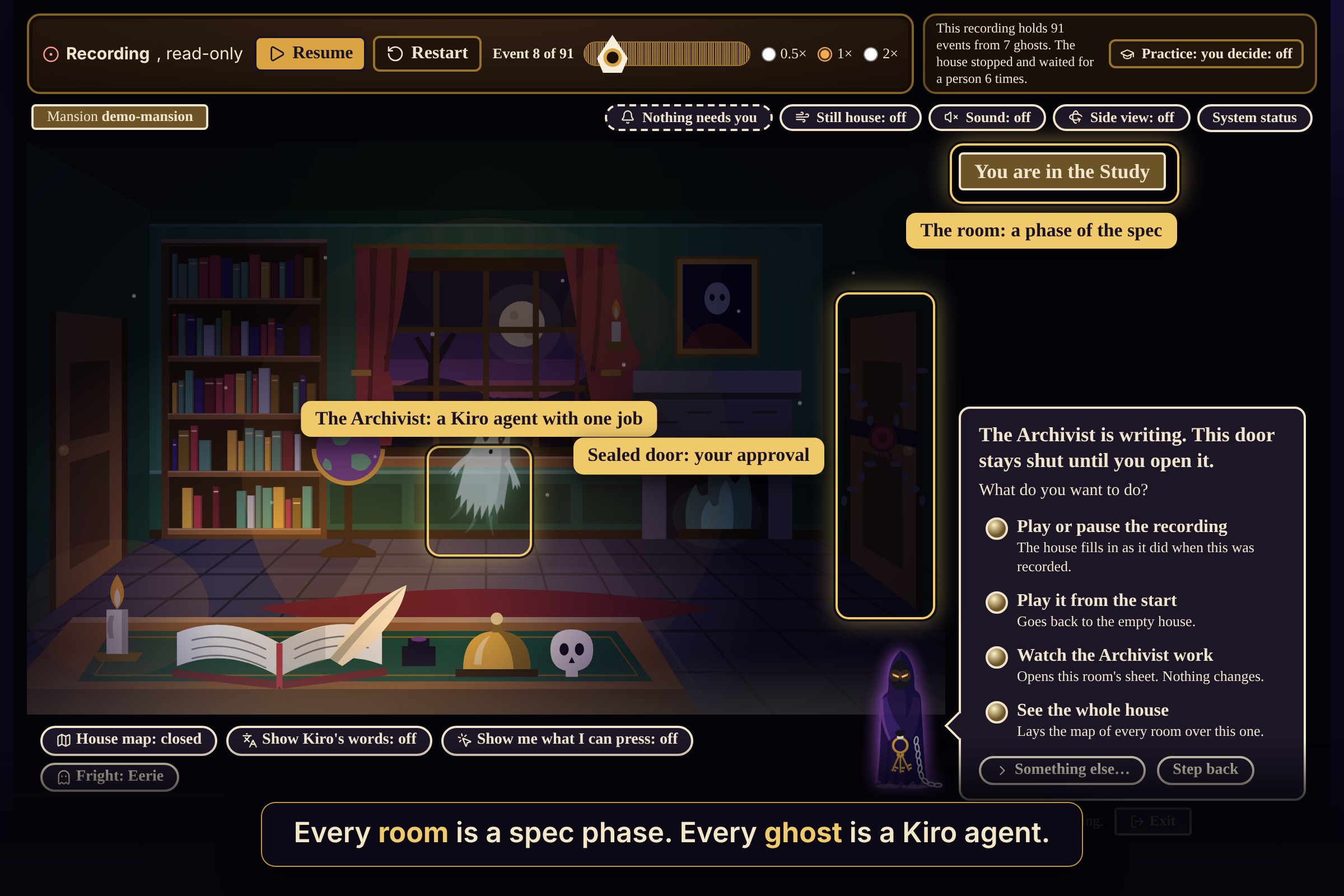
- Rooms are spec phases. The Study writes requirements, the Drafting Room writes the design, and the Workshop plans the tasks and builds.
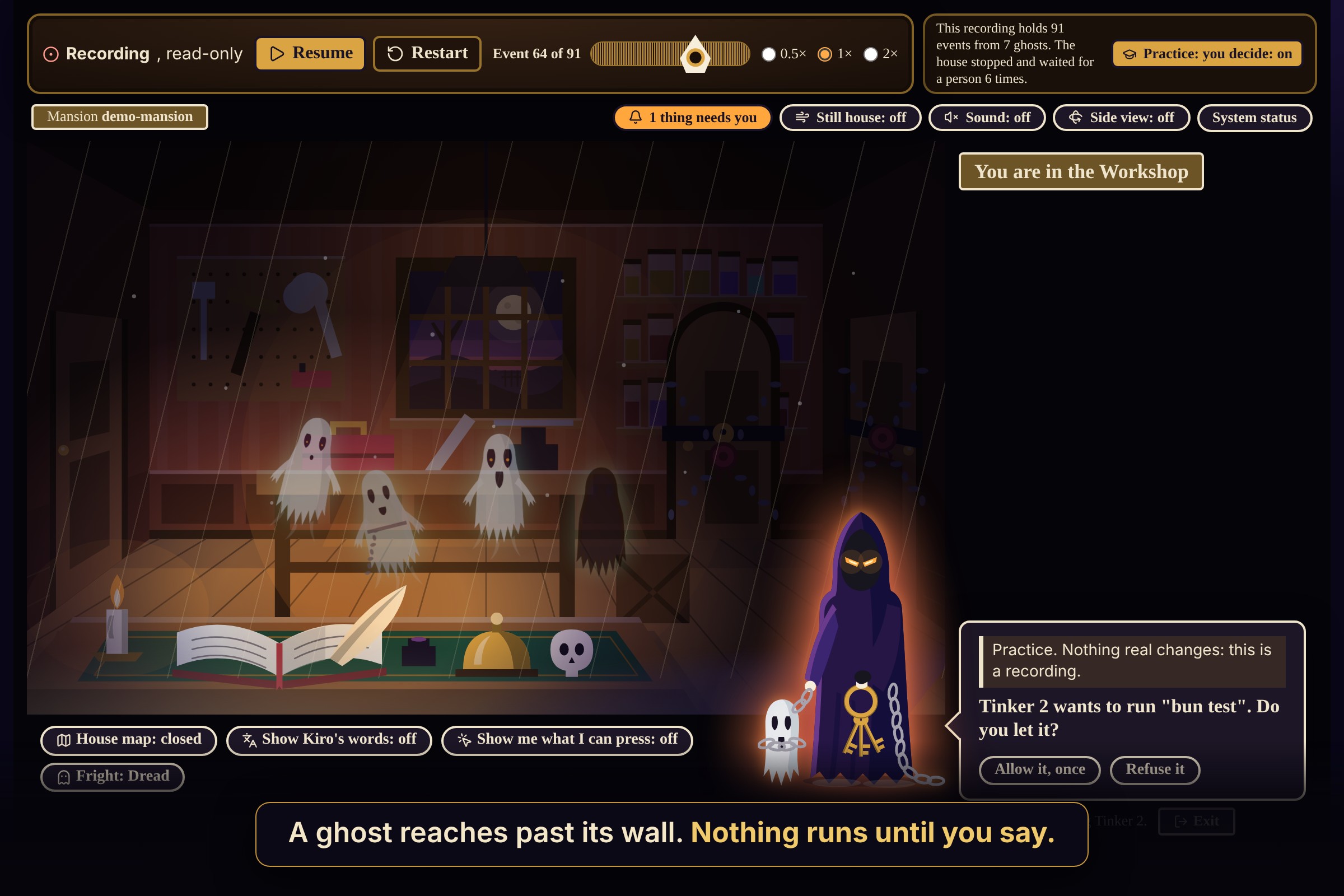
- Ghosts are Kiro agents, each with one job and its own allowed paths.
- Walls are path limits. A ghost reads and writes only inside its room.
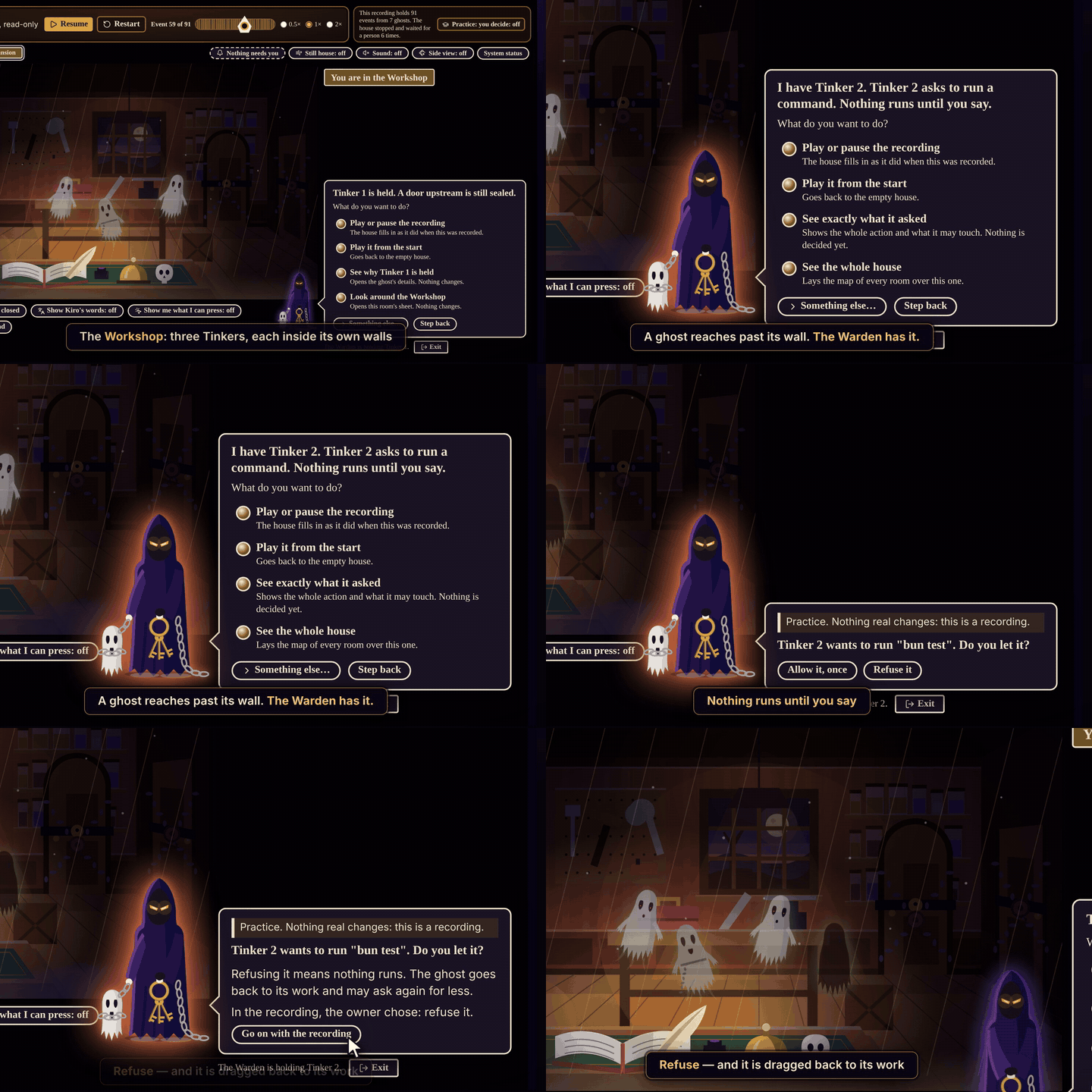
- Doors are your approvals. Nothing advances until you open one.
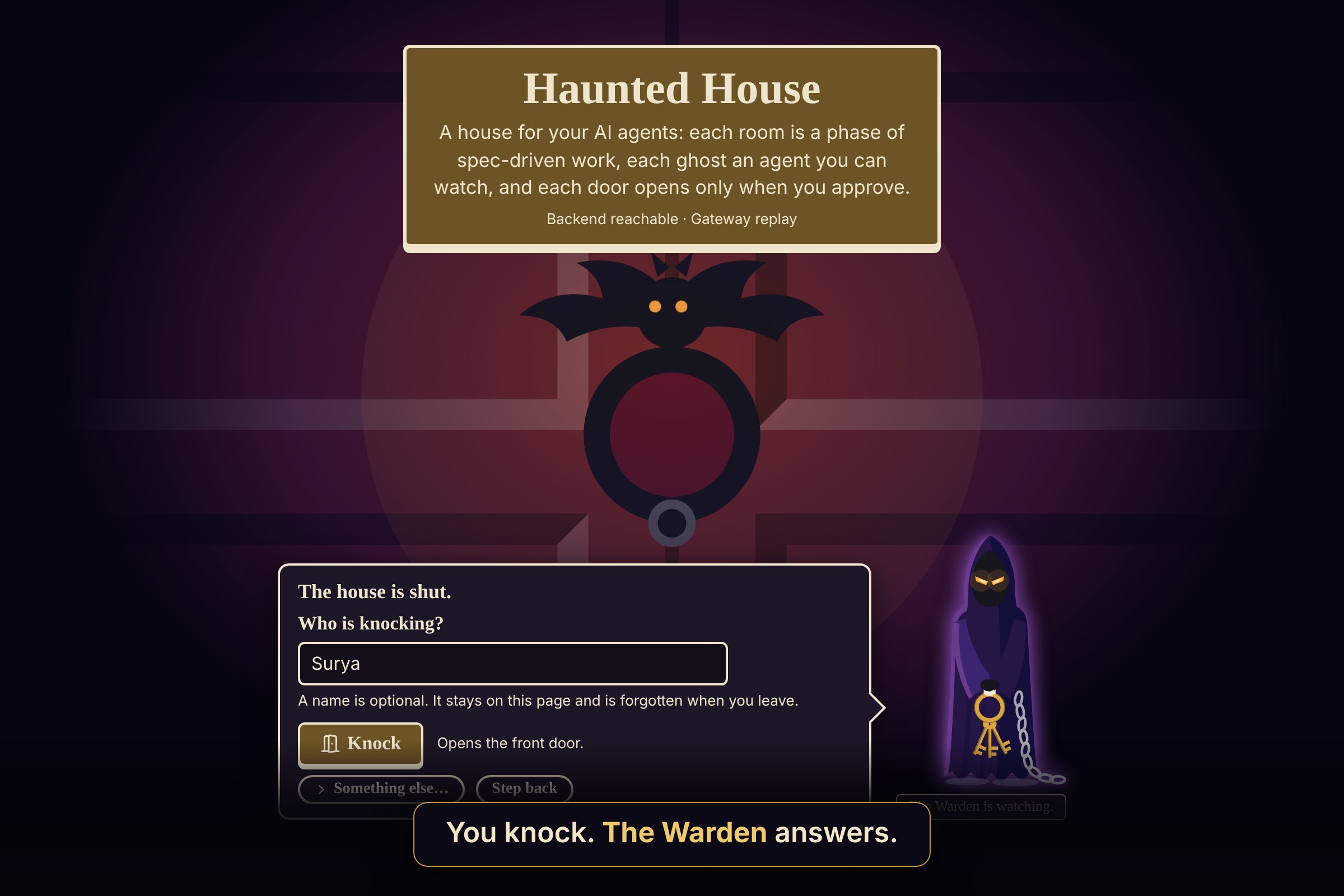
- The Warden is the guide and the guardrail. When a ghost asks for something risky, he holds it on a chain, and nothing runs until you decide.
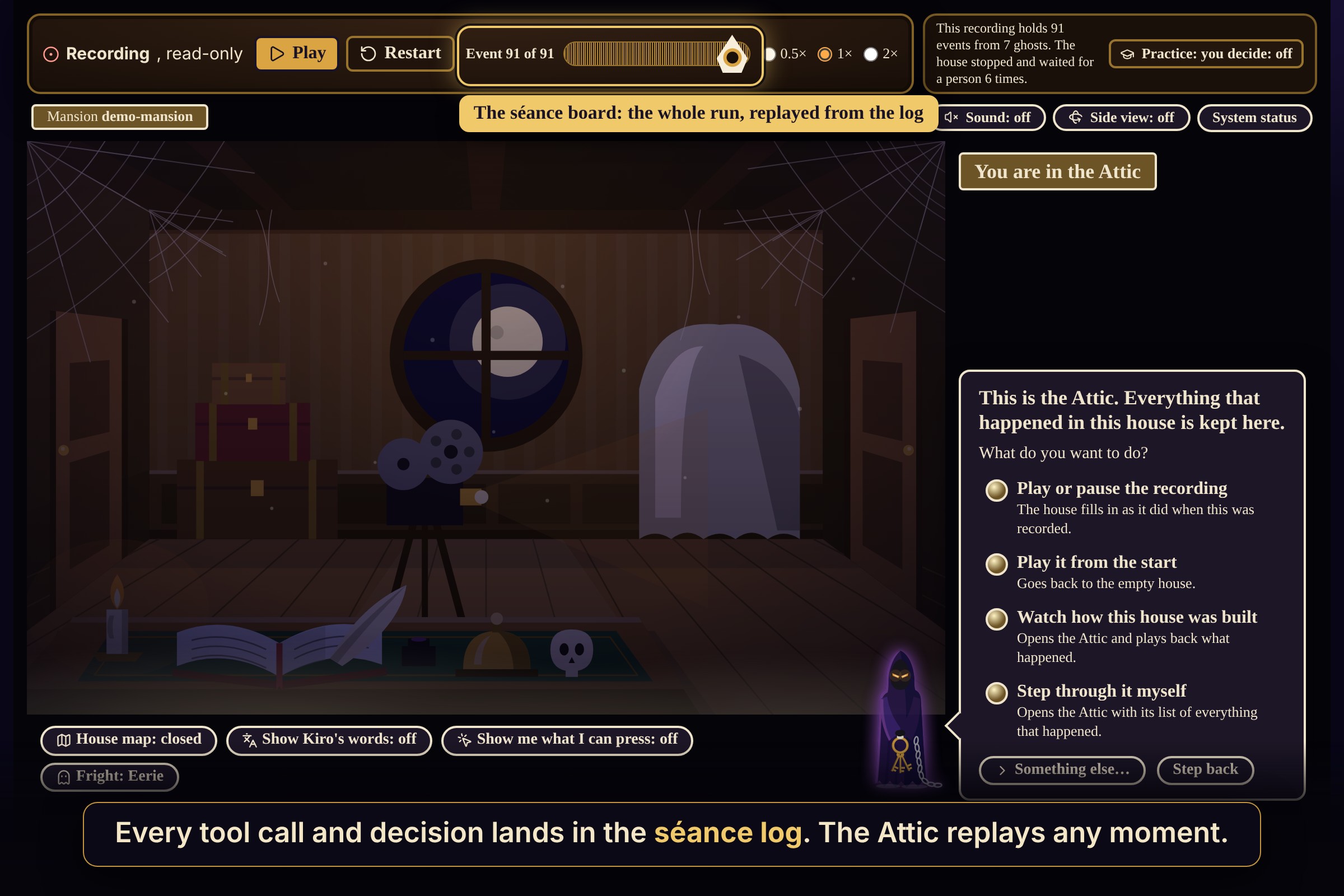
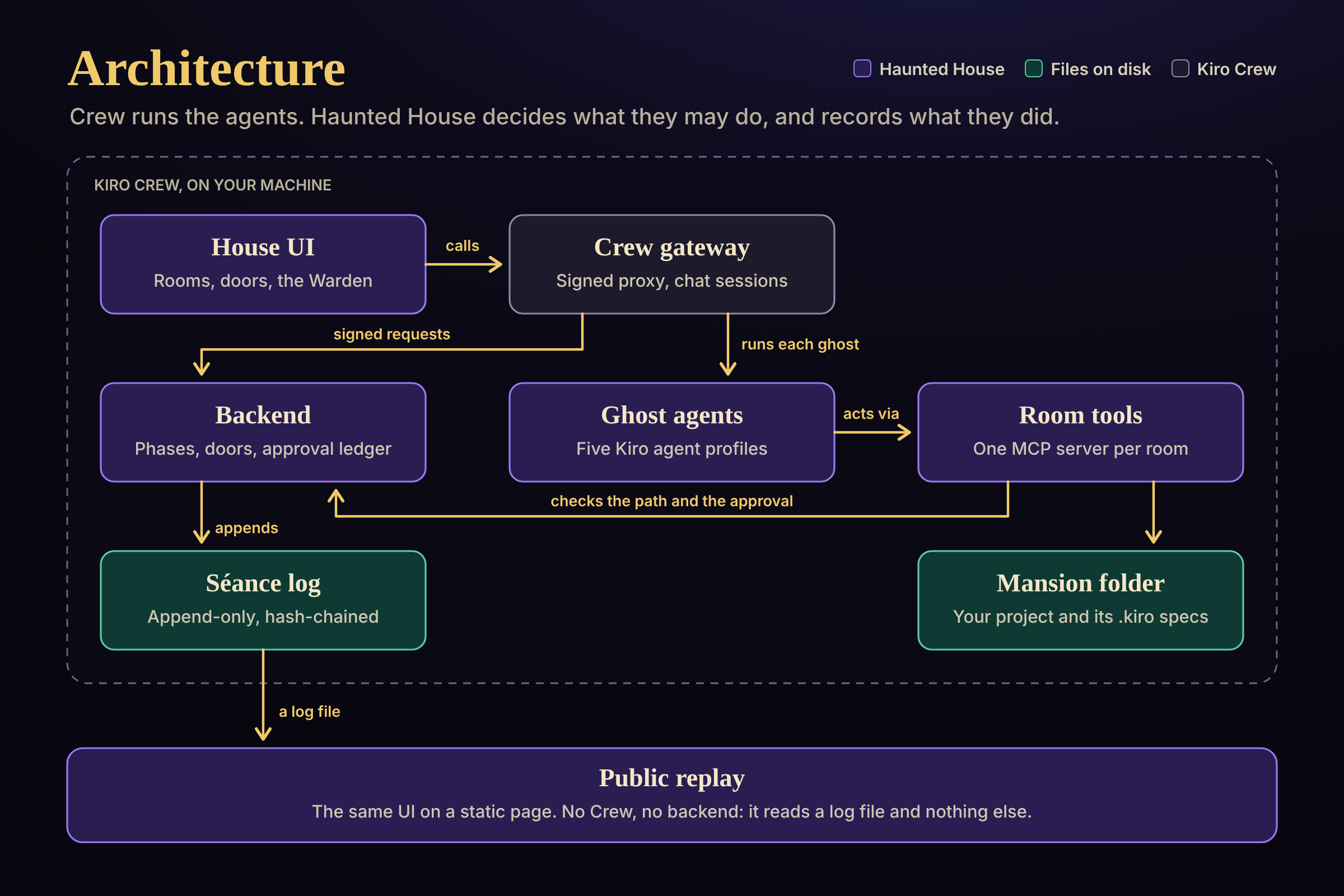
- The séance log records every tool call and decision. The Attic replays a whole run from that log alone.
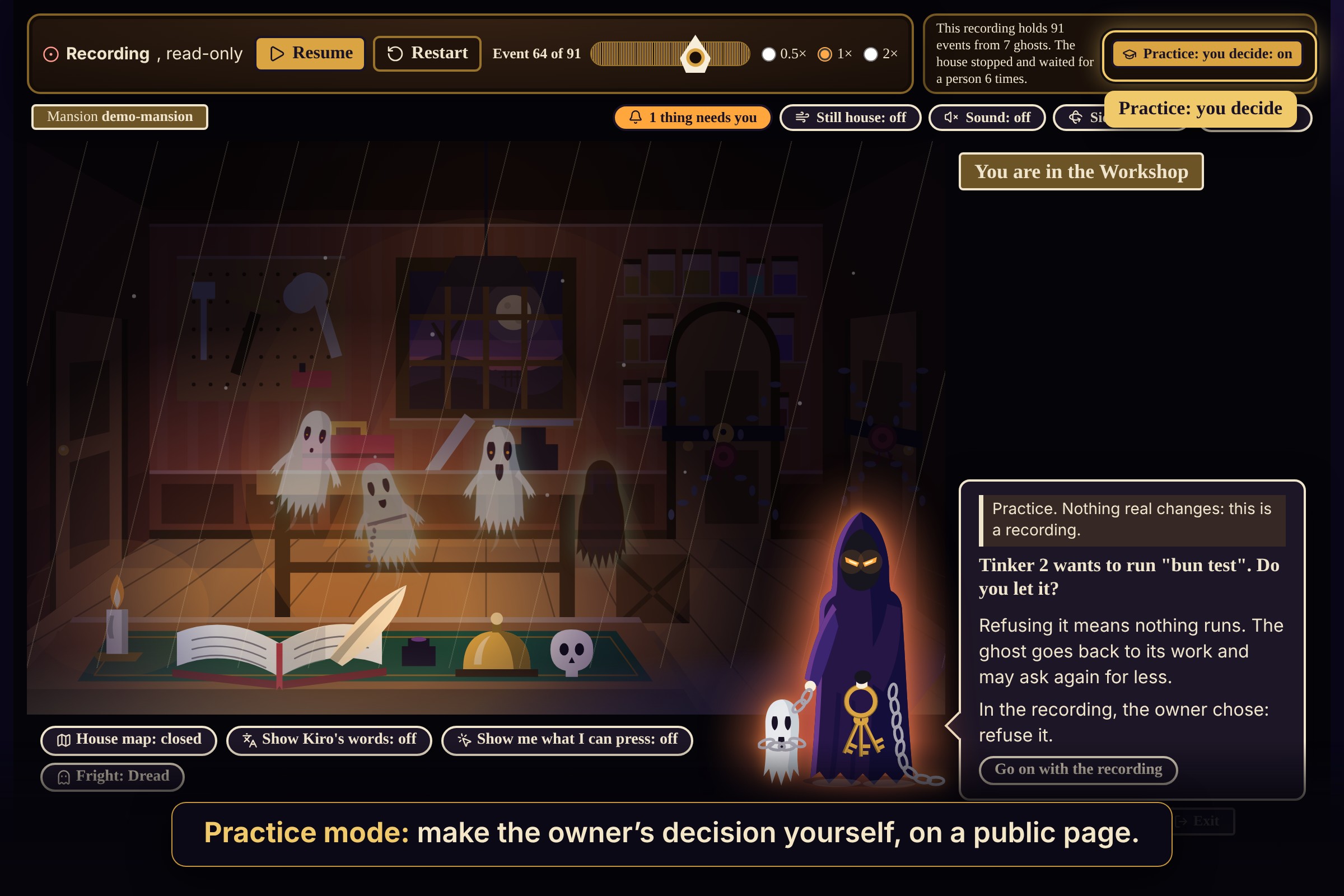
There is also a public replay that needs no install. Turn on Practice and you make the owner's decisions yourself, or drop in the séance log from your own run.
How we built it
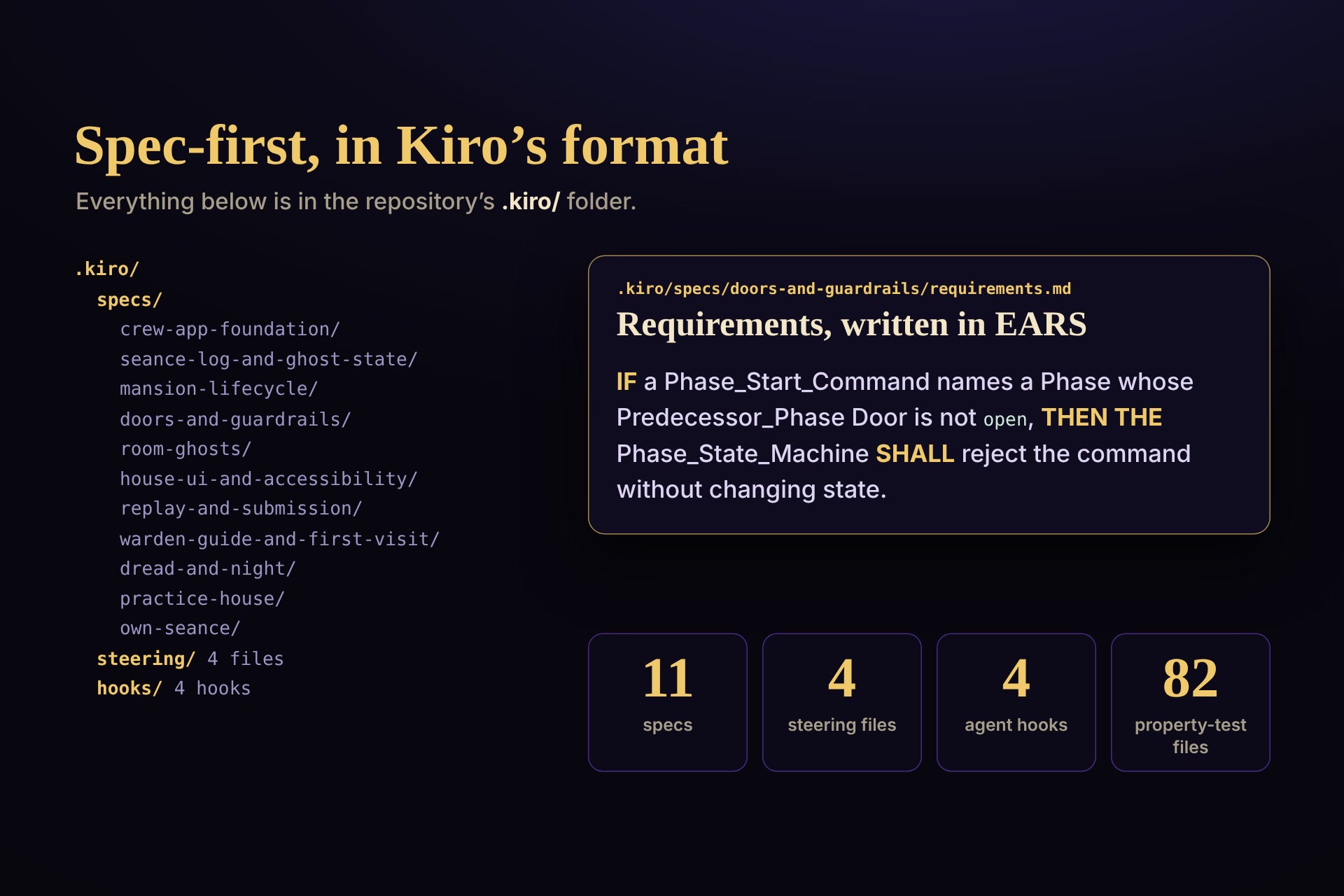
We built it spec-first in Kiro. The .kiro/ folder is the build record:

- 11 specs, each with requirements in EARS form, a design with numbered correctness properties, and a task plan with a dependency graph.
- Property-based tests for those properties: Hypothesis for the Python backend and fast-check for the TypeScript UI, 82 property-test files in all.
- 4 steering files for the product rules, the repo layout, verified facts about Crew, and the theme and accessibility limits.
- 4 hooks that run the core tests on save, run every test when a spec task completes, block a write that contains a credential, and fail if
.kiro/would be git-ignored. - Spikes: every unverified assumption about Crew became a small probe, and its result was written back into steering.
The app is a React and TypeScript page with a Python backend, five custom ghost agents, five room skills and its own MCP server for guarded room tools. Three late features (the dread look, practice mode and replaying your own log) were specified in the same Kiro format and built with Claude Code. The coverage table in the repo says which tool built what. The demo video was made with GSAP around live footage of the replay.
Challenges we ran into
- Crew did not always match its documentation. The proxy header had a different name and the client library was not published. We stopped guessing and wrote probes.
- Kiro's native spec command is not available through Crew chat, so the house writes Kiro-format spec files itself.
- Spawned subagents wait on an approval the app cannot see. We run each ghost as an app-owned chat session, so the house can show the prompt and answer it after you approve.
- Approved shell commands had to be confined. They run in a no-fork macOS sandbox, with a scan
Built With
- crew
- javascript
- kiro
- python
- typescript
