-
-
web page
-
web page
-
web page
-
code working
-
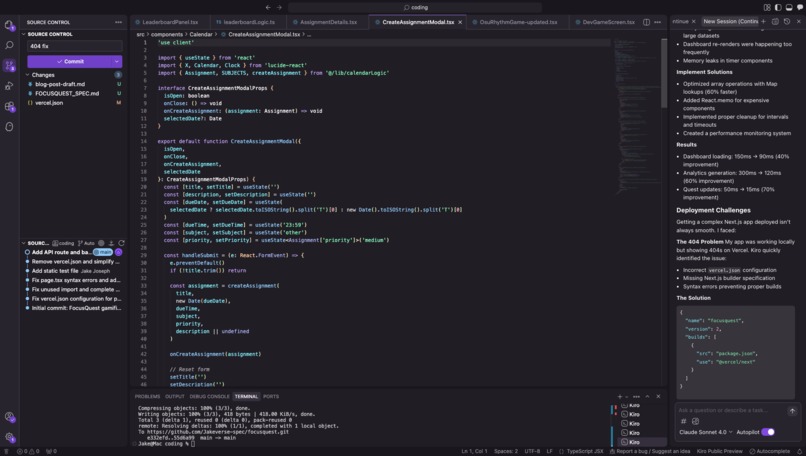
fixing problems
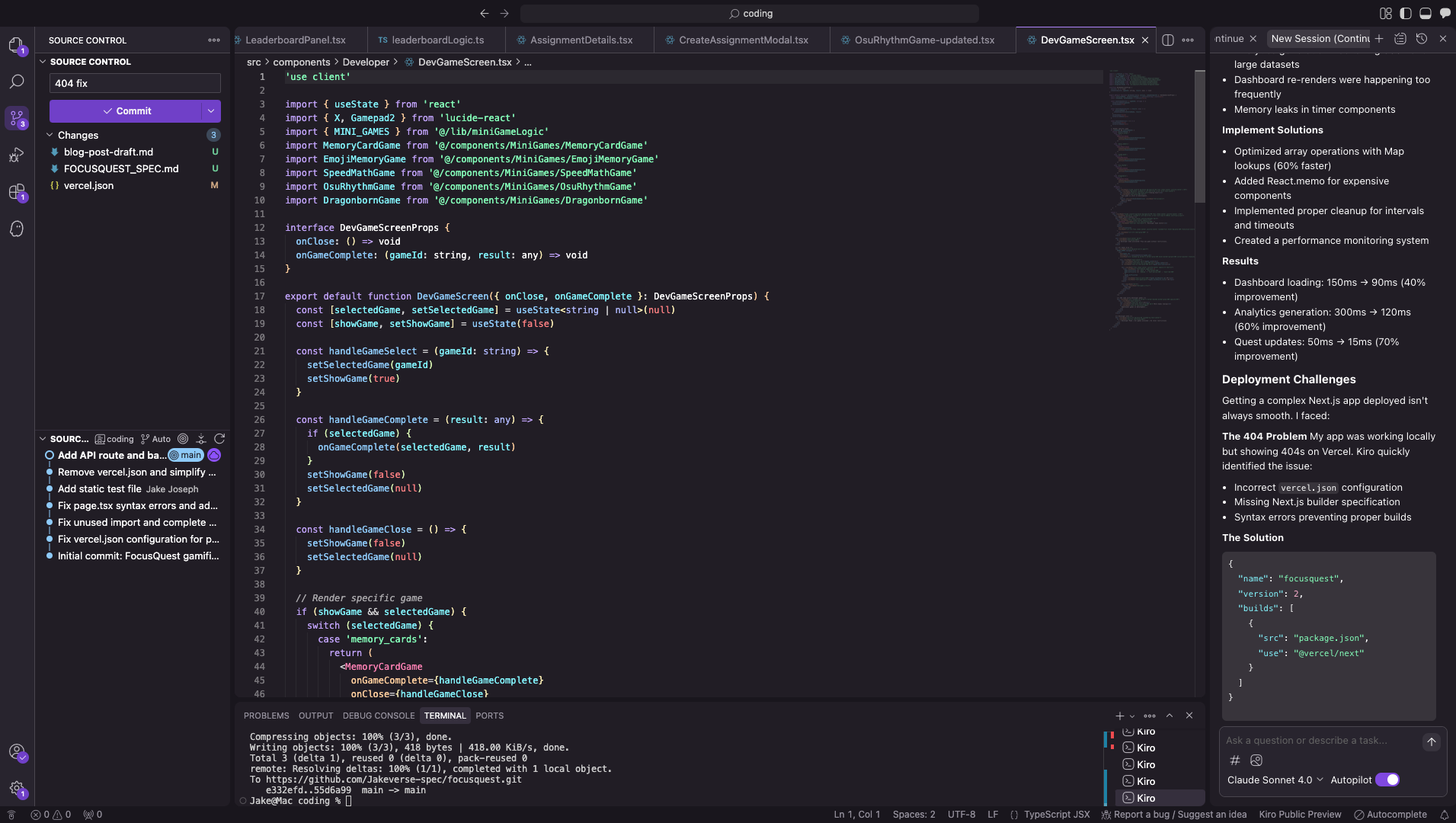
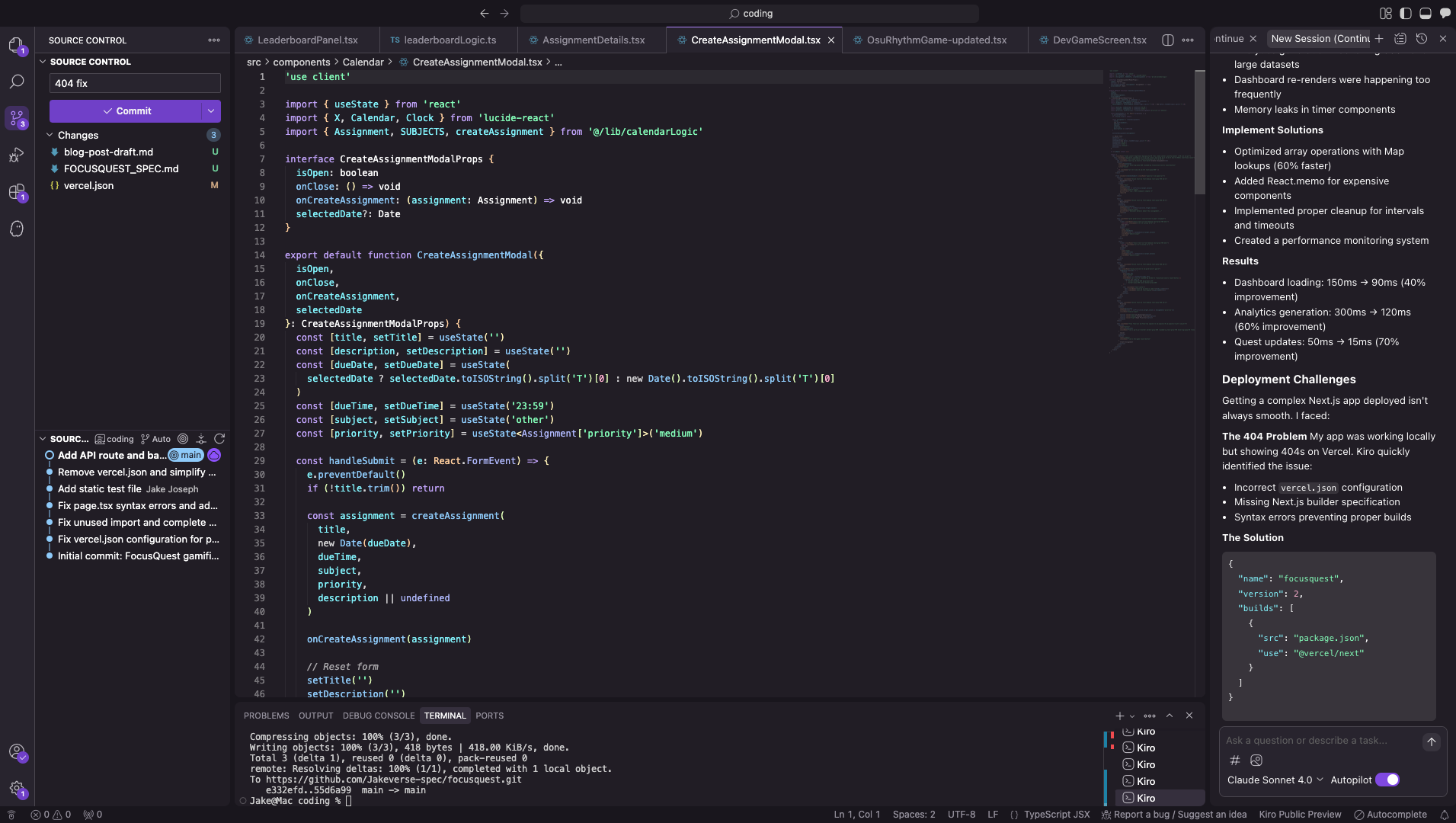
Inspiration The inspiration for FocusQuest came from a simple observation: traditional productivity apps are boring and fail to maintain long-term engagement. While tools like Todoist and Notion are functional, they lack the psychological hooks that keep users consistently motivated.
I was particularly inspired by:
Gaming Psychology: How RPGs and mobile games create addictive reward loops through XP, levels, and achievements Pomodoro Technique: The proven effectiveness of time-boxed work sessions for maintaining focus Social Learning Theory: How peer interaction, competition, and collaboration drive behavioral change Flow State Research: Csikszentmihalyi's work on optimal experience and the balance between challenge and skill The core insight was: What if we could make productivity as engaging and addictive as gaming?
What it does FocusQuest transforms mundane productivity tasks into an engaging RPG-like experience through:
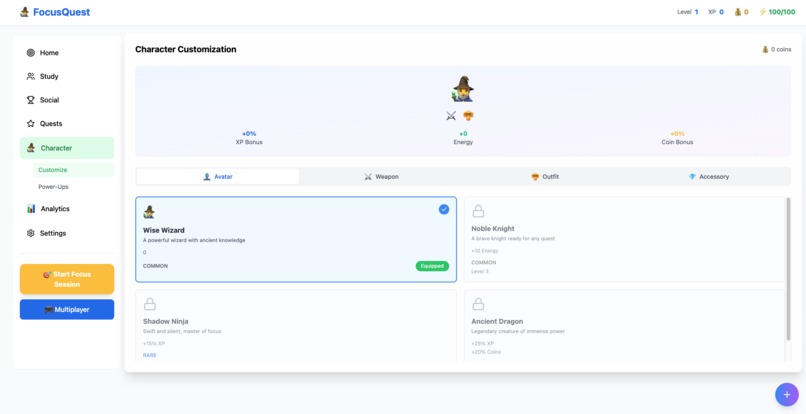
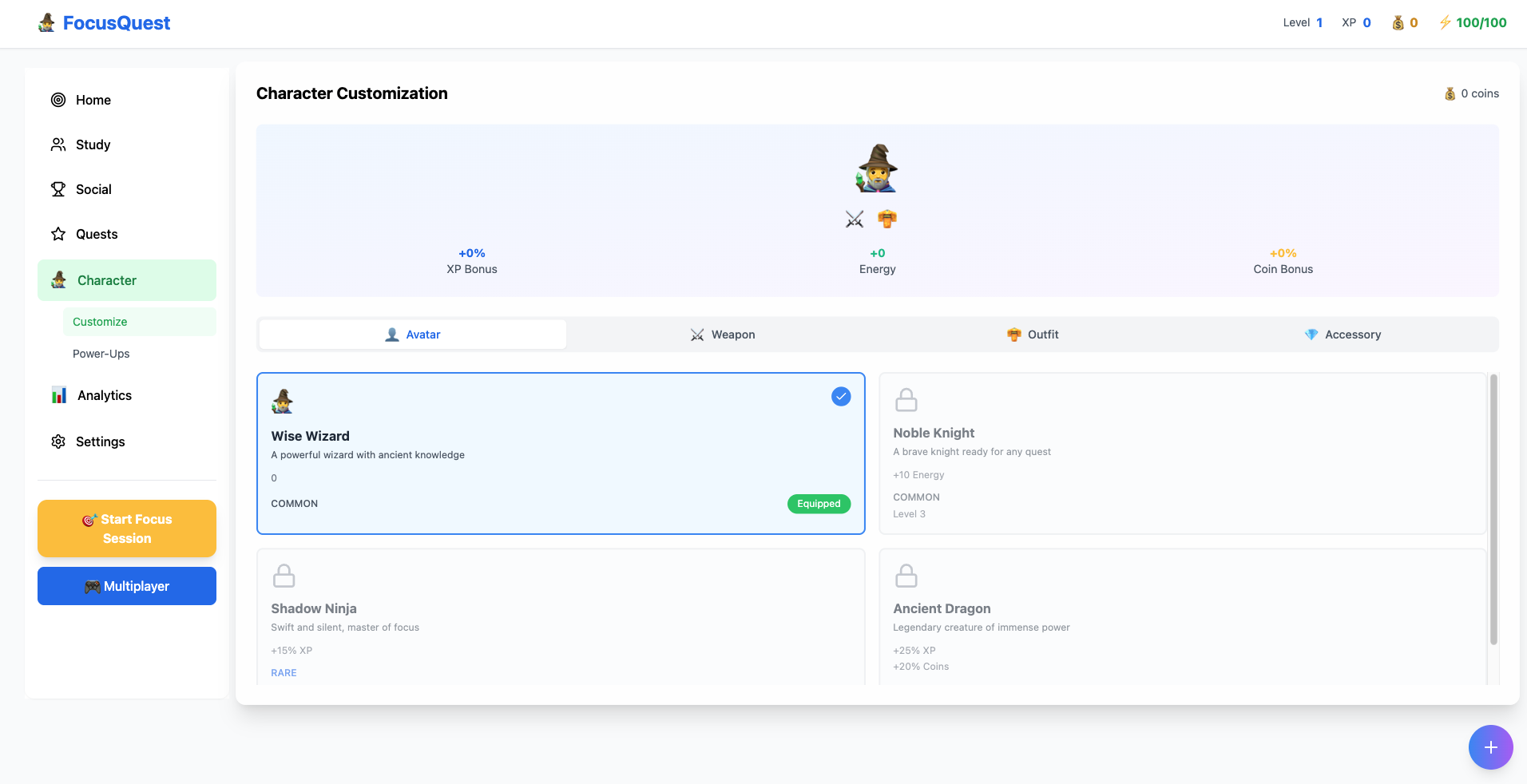
Gamified Task Management XP & Leveling System: Complete tasks to earn experience points and level up your character Virtual Currency: Earn coins through productivity that can be spent on character customization Achievement System: 50+ achievements for different productivity behaviors and milestones Character Progression: Unlock new avatars, themes, and power-ups as you advance
Interactive Mini-Games Dragonborn Quest: A full side-scrolling RPG with combat, levels, and boss battles Speed Math Challenge: Arithmetic games that sharpen mental calculation skills Memory Training: Pattern recognition and cognitive enhancement games Rhythm Games: Music-based timing challenges for focus training
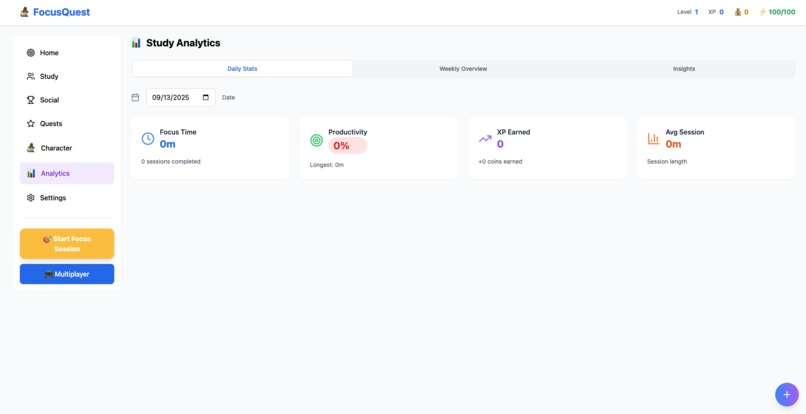
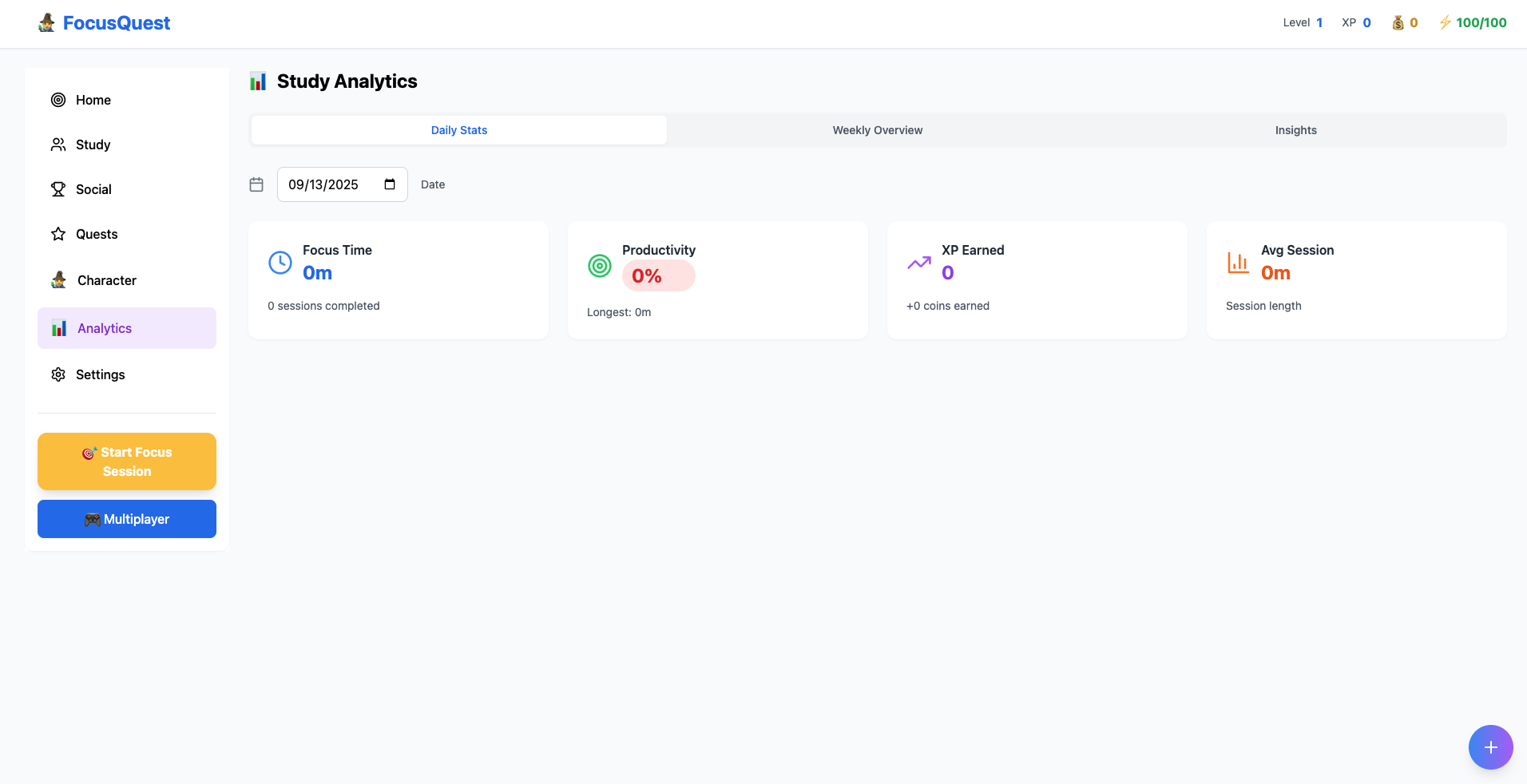
Advanced Analytics Productivity Metrics: Track focus time, task completion rates, and efficiency trends Performance Visualization: Beautiful charts showing productivity patterns over time Goal Setting: Set and track daily, weekly, and monthly productivity targets
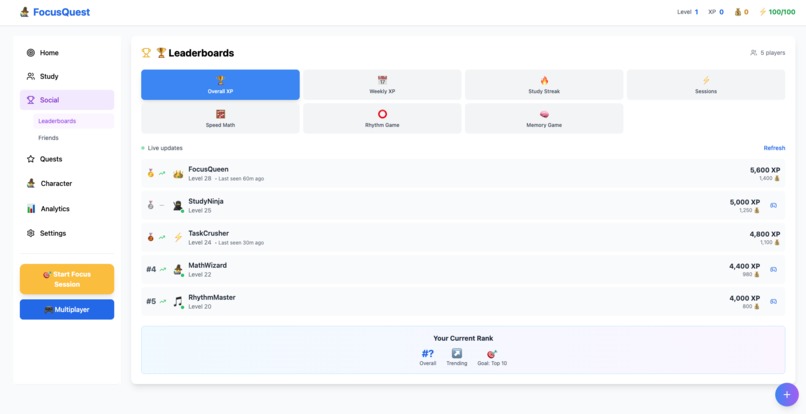
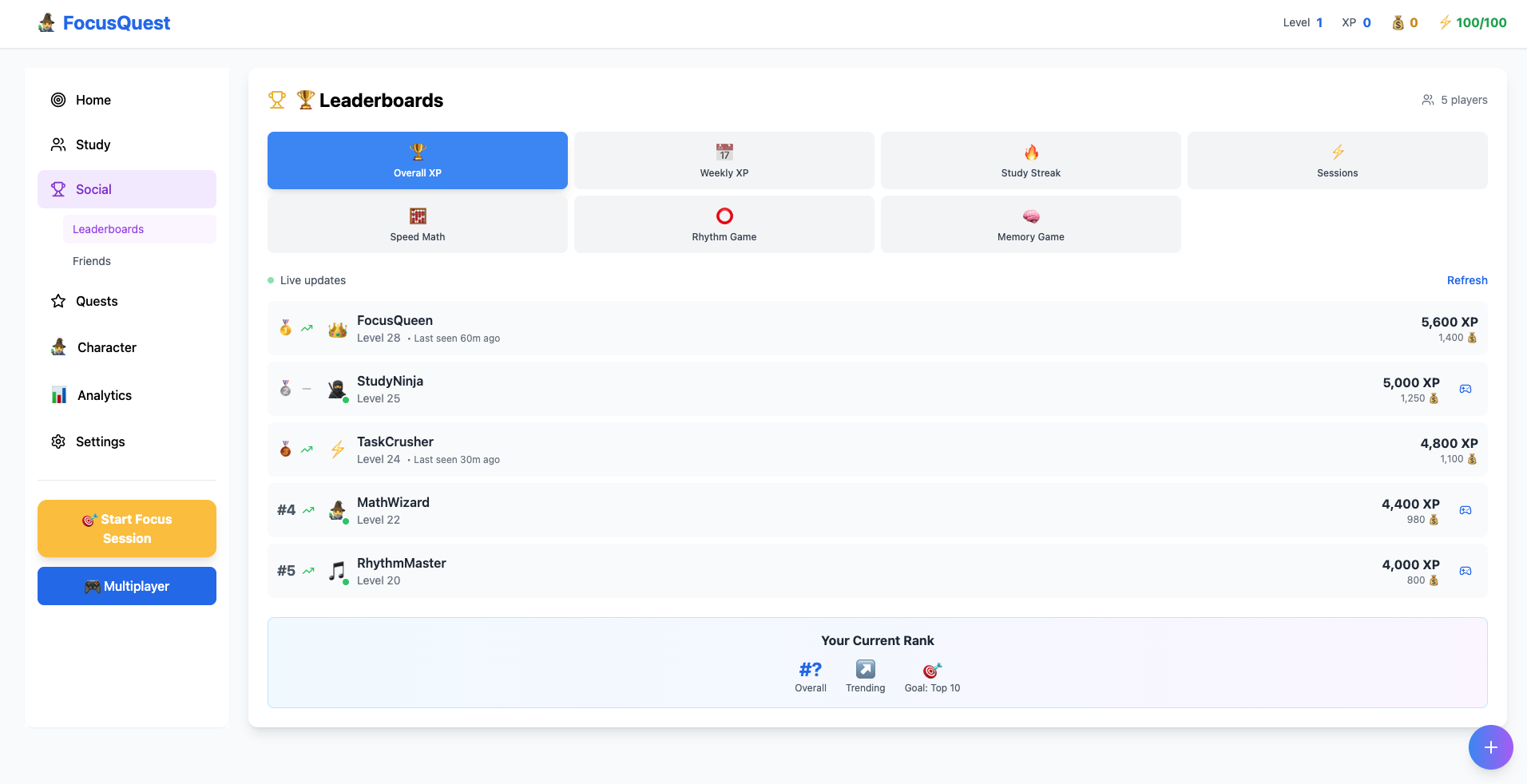
Social Features Leaderboards: Compete with friends and colleagues on productivity metrics Multiplayer Games: Real-time competitive mini-games for team building Friend System: Connect with others and share achievements
Smart Productivity Tools Pomodoro Timer: Customizable focus sessions with break reminders Task Prioritization: AI-suggested task ordering based on deadlines and importance Calendar Integration: Seamless scheduling and assignment tracking Notification System: Smart reminders that adapt to your productivity patterns
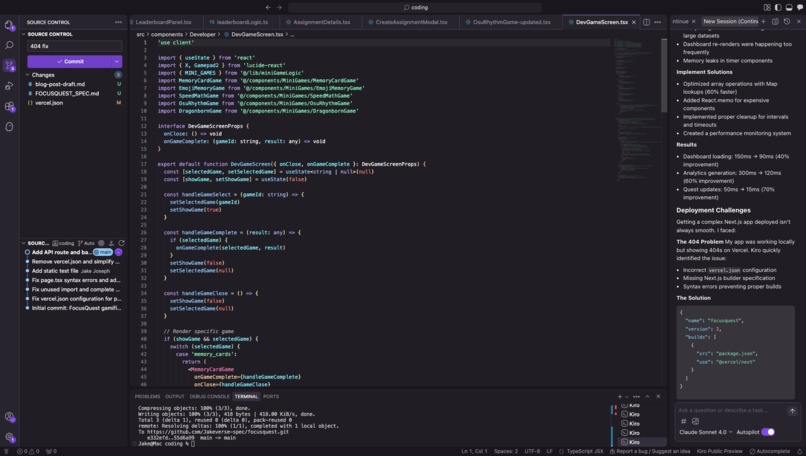
How we built it... Technology Stack Frontend: Next.js 14 with TypeScript for type-safe, modern React development Styling: Tailwind CSS for rapid, consistent UI development Game Engine: Custom Canvas API implementation for real-time game rendering State Management: React hooks with optimized re-rendering patterns Build System: Modern toolchain with hot reloading and optimization Architecture Overview FocusQuest/ ├── src/ │ ├── app/ # Next.js App Router pages │ ├── components/ # Reusable React components │ │ ├── MiniGames/ # Game implementations │ │ ├── Tasks/ # Task management UI │ │ ├── Analytics/ # Data visualization │ │ ├── Character/ # RPG progression system │ │ └── Social/ # Friends & leaderboards │ └── lib/ # Business logic & utilities Core Systems Implementation Gamification Engine:
interface GameState { level: number xp: number coins: number achievements: Achievement[] character: CharacterData }
// XP calculation with exponential scaling const xpRequired = (level: number) => Math.floor(100 * Math.pow(level, 1.5)) Game Physics (60 FPS game loop):
const GRAVITY = 0.8 const PLAYER_SPEED = 5 const JUMP_FORCE = -15
// Real-time collision detection using AABB const checkCollision = (rect1: Rectangle, rect2: Rectangle) => { return rect1.x < rect2.x + rect2.width && rect1.x + rect1.width > rect2.x && rect1.y < rect2.y + rect2.height && rect1.y + rect1.height > rect2.y } Reward System Mathematics: The reward scheduling follows variable ratio reinforcement, proven most effective for habit formation:
𝑃 ( reward
)
base_rate × streak_multiplier time_since_last_reward + 1 P(reward)= time_since_last_reward+1 base_rate×streak_multiplier
Where streak multiplier increases engagement through consecutive task completion.
Challenges we ran into
- Game Performance Optimization Challenge: Initial game implementation ran at 30 FPS with laggy movement and unresponsive controls.
Solution:
Upgraded to 60 FPS game loop: 1000 𝑚 𝑠
60
16.67 𝑚 𝑠 60 1000ms =16.67ms per frame Optimized collision detection algorithms Implemented efficient state management to prevent unnecessary re-renders Added proper cleanup for game intervals to prevent memory leaks
- Complex State Management Challenge: Managing interconnected game state, user progress, and UI updates without causing performance issues.
Solution:
Implemented custom hooks for state isolation Used React's useCallback and useMemo for expensive computations Created a centralized state management pattern for game data Separated UI state from game logic for better performance
- Cross-Platform Compatibility Challenge: Ensuring games work seamlessly on both desktop and mobile devices.
Solution:
Implemented responsive touch controls alongside keyboard input Created adaptive UI that scales across different screen sizes Added haptic feedback for mobile devices Optimized canvas rendering for various device capabilities
- Real-time Multiplayer Synchronization Challenge: Implementing fair, lag-free multiplayer experiences for competitive games.
Solution:
Designed client-side prediction with server reconciliation Implemented proper game state synchronization Added connection quality indicators and graceful degradation Created anti-cheat measures for competitive integrity
Accomplishments that we're proud of..
Technical Achievements Full-Featured Game Engine: Built a complete 2D game engine with physics, collision detection, and smooth 60 FPS gameplay Responsive Design: Created a seamless experience across desktop, tablet, and mobile devices Performance Optimization: Achieved smooth gameplay even on lower-end devices through efficient algorithms
User Experience Innovations Intuitive Gamification: Successfully translated complex productivity concepts into engaging game mechanics Comprehensive Feature Set: Delivered 8+ mini-games, complete analytics dashboard, and social features Accessibility: Implemented keyboard navigation, screen reader support, and colorblind-friendly design
System Design Scalable Architecture: Built modular components that can easily accommodate new games and features Data-Driven Insights: Created meaningful analytics that help users understand and improve their productivity patterns Engagement Mechanics: Designed reward systems based on behavioral psychology research What we learned Technical Learnings Canvas API Mastery: Deep understanding of 2D rendering, animation loops, and performance optimization React Performance: Advanced patterns for managing complex state without sacrificing performance Game Development: Principles of game design, physics simulation, and user input handling TypeScript Benefits: How strong typing prevents bugs and improves developer experience in complex applications Design & Psychology Insights Gamification Principles: The importance of meaningful progression, clear feedback, and balanced challenge User Engagement: How variable reward schedules and social features drive long-term retention Accessibility Matters: The critical importance of inclusive design for reaching diverse user bases Performance Psychology: How smooth, responsive interactions directly impact user satisfaction and engagement Product Development Iterative Design: The value of rapid prototyping and user feedback in refining features Feature Prioritization: Balancing ambitious vision with practical implementation constraints Cross-Platform Considerations: How different devices and input methods affect user experience design
What's next for FocusQuest... Immediate Roadmap AI-Powered Recommendations: Machine learning algorithms to suggest optimal task scheduling and break timing Advanced Analytics: Predictive insights about productivity patterns and personalized improvement suggestions Team Collaboration: Shared workspaces, team challenges, and collaborative goal setting Mobile App: Native iOS and Android applications with offline capability
Game Expansion New Mini-Games: Strategy games, puzzle challenges, and skill-based competitions Seasonal Events: Limited-time challenges and special rewards to maintain engagement User-Generated Content: Tools for users to create and share custom challenges VR Integration: Immersive productivity experiences using virtual reality
Platform Integration Third-Party Connections: Integration with popular tools like Slack, Trello, and Google Workspace API Development: Allow other developers to build on the FocusQuest platform Enterprise Features: Team management, advanced reporting, and organizational insights Wellness Integration: Stress monitoring, mindfulness exercises, and work-life balance tracking
Community & Social Global Leaderboards: Worldwide competitions and regional challenges Mentorship System: Connect experienced users with newcomers for guidance Content Creator Tools: Streaming integration and content creation features for productivity influencers Research Partnership: Collaborate with universities to study gamified productivity effectiveness FocusQuest represents a new paradigm in productivity software - one that recognizes that motivation and engagement are just as important as functionality. By combining proven psychological principles with modern technology and game design, we've created a platform that doesn't just help users be more productive, but makes them want to be more productive.
The future of work is not just about efficiency - it's about creating experiences that inspire people to reach their full potential while enjoying the journey.
Built With
- aabb-collision-detection
- autoprefixer
- css3
- custom-canvas-game-engine
- custom-physics-engine
- eslint
- html5
- html5-canvas-api
- javascript
- keyboard-events-api
- lucide-react
- next.js-14
- node.js
- npm
- postcss
- react-18
- react.memo
- requestanimationframe-api
- static-site-generation
- tailwind-css
- touch-events-api
- typescript
- usecallback
- usememo
- web-storage-api
- webpack


Log in or sign up for Devpost to join the conversation.