-
-
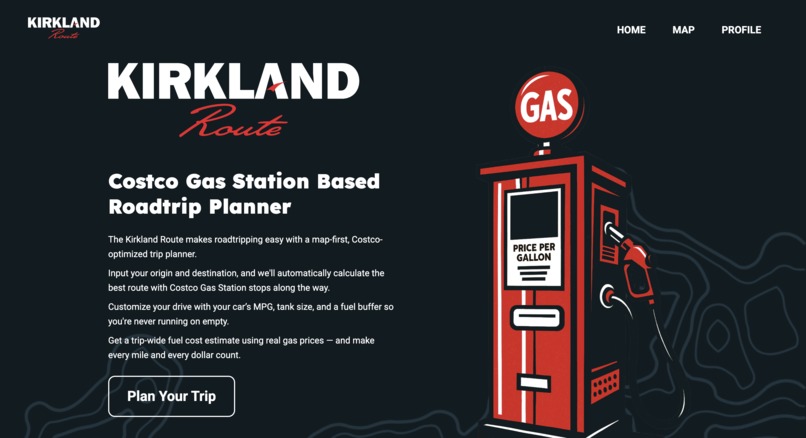
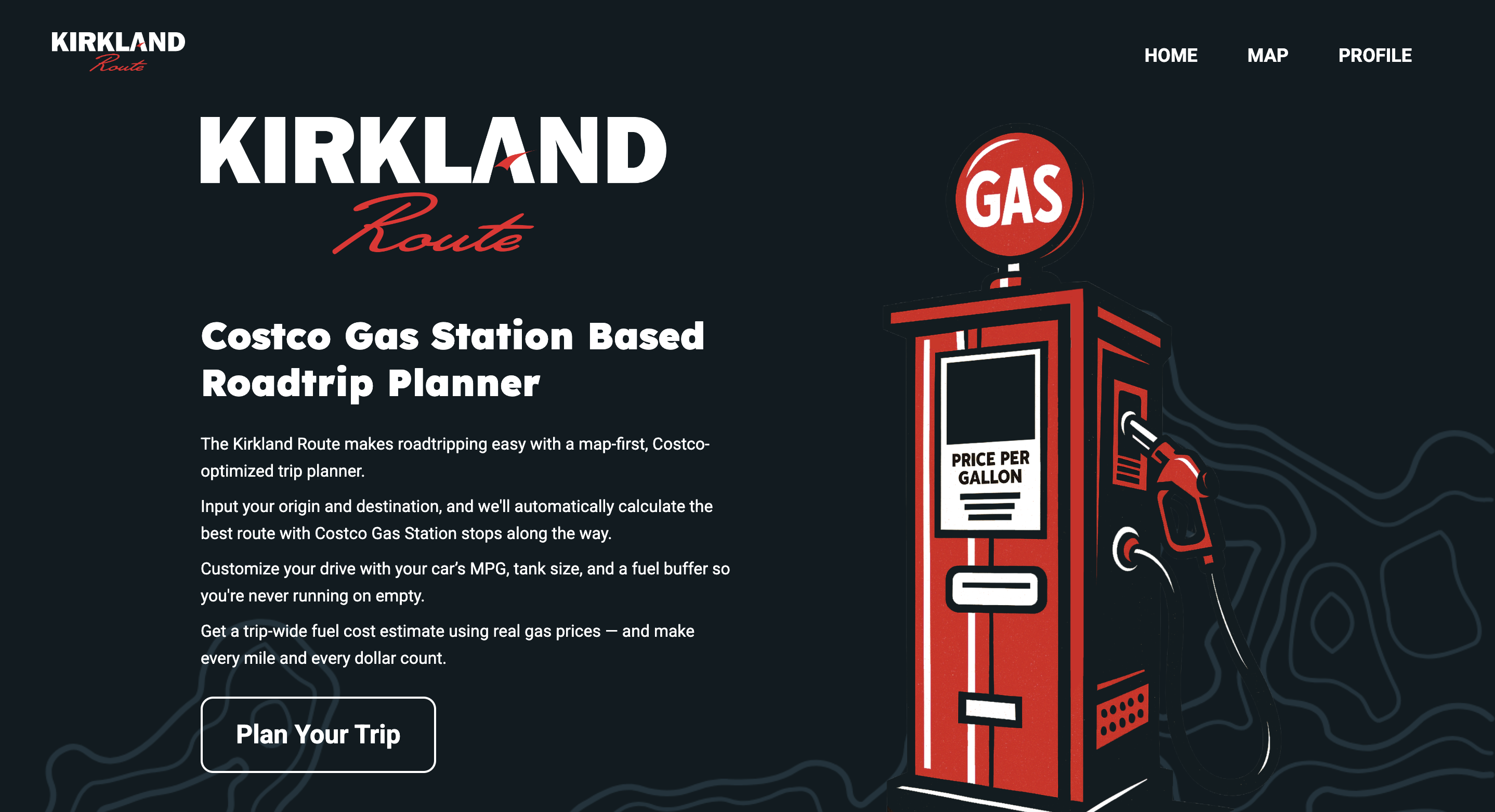
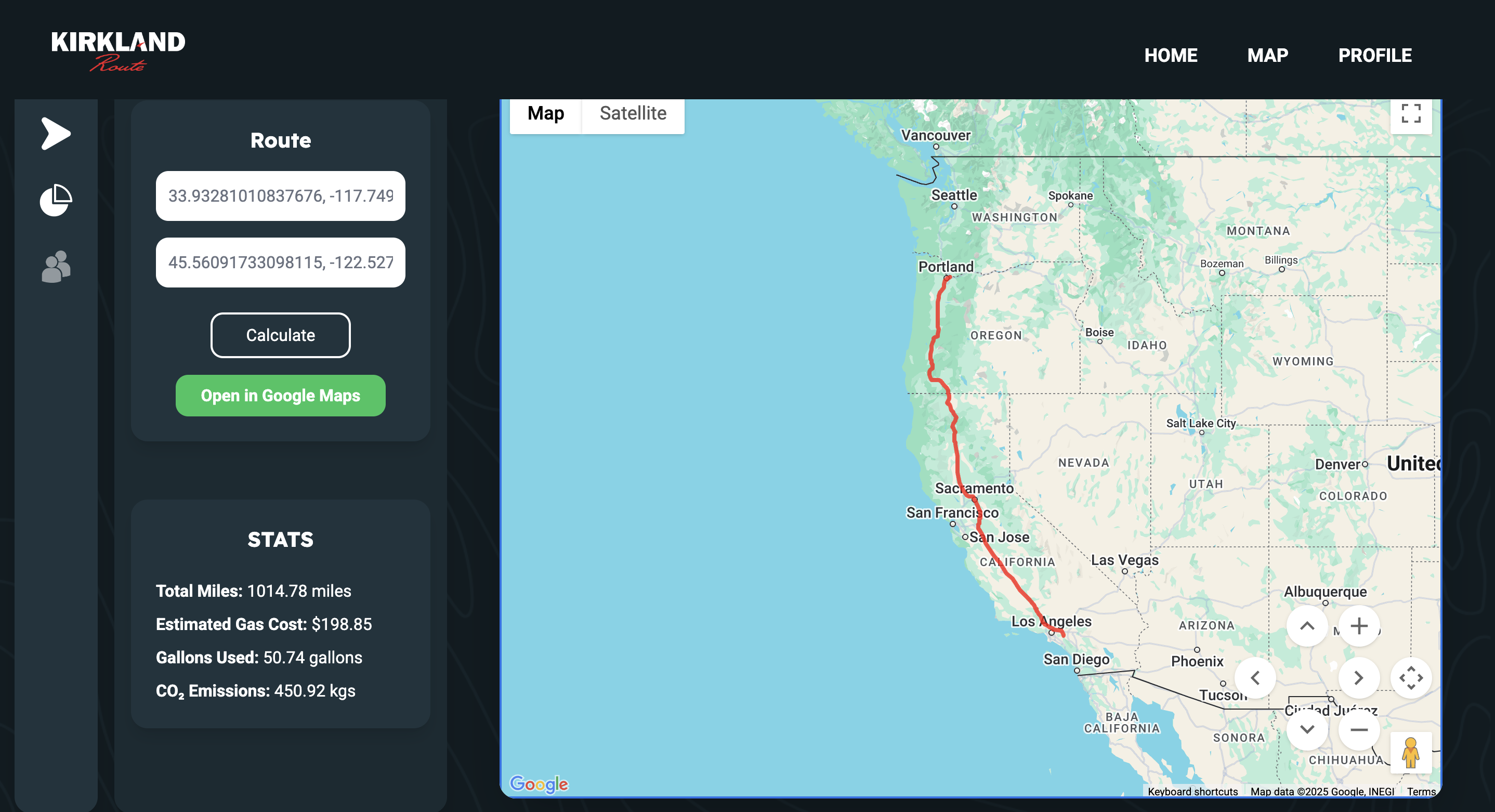
Landing page
-
-
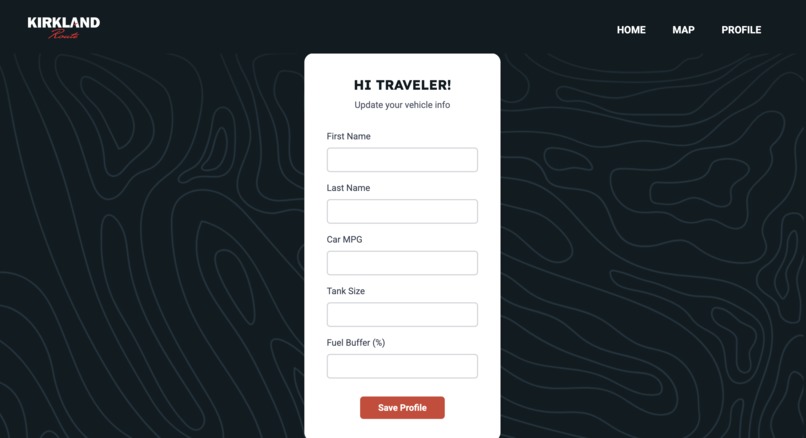
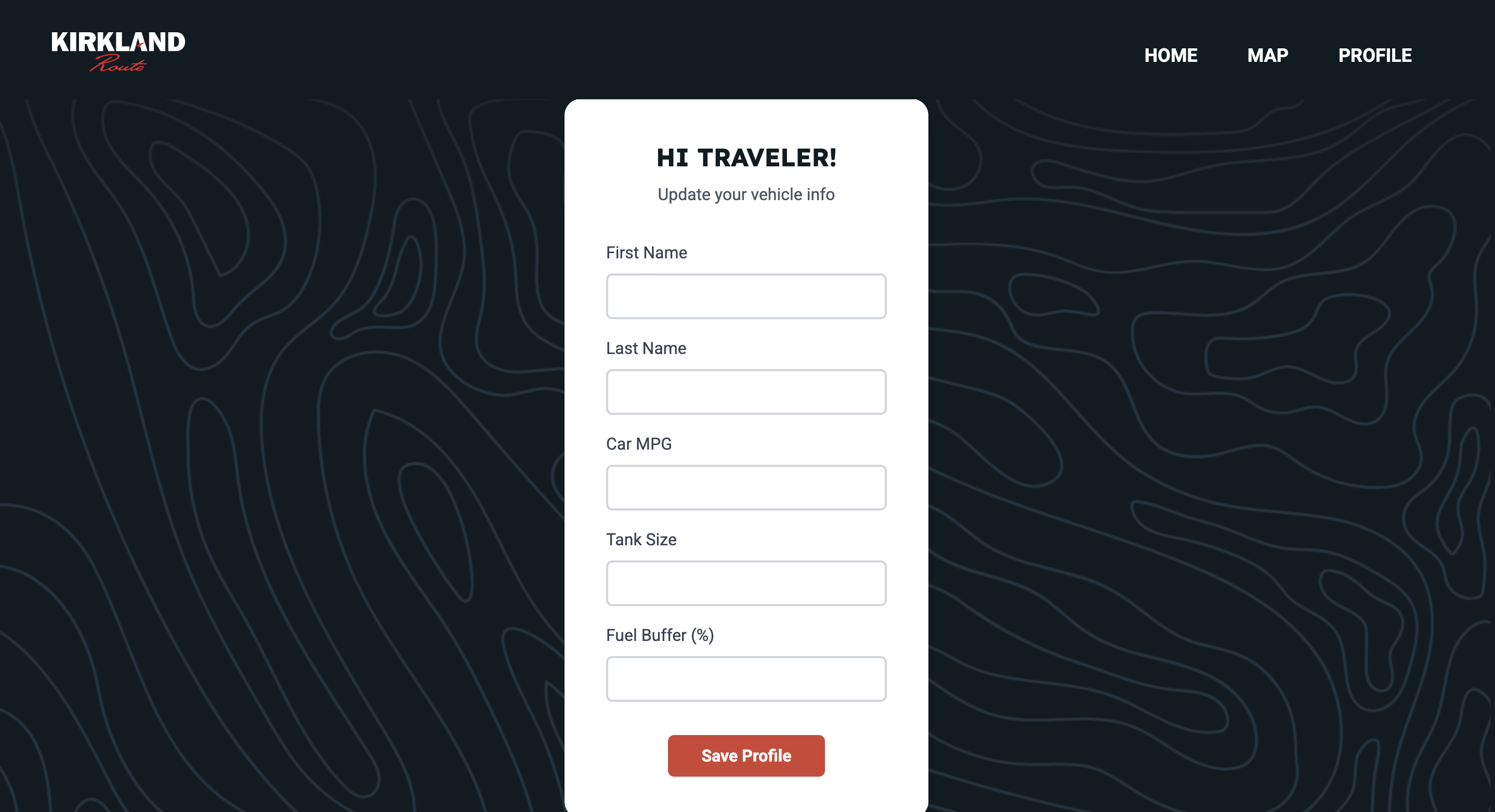
User profile page
Inspiration
Earlier this year, we (Brandon and Sydney) participated in another hackathon together, making the long drive from South Orange County to San Francisco. Along the way, we had to stop to refuel a couple times and while searching for affordable gas options, we joked in the car that it would be funny if someone made a project that planned road trips only around Costco gas stations. Fast forward to HackTech 2025, and here we are: turning that joke into a real, sustainability-focused project. With gas prices on the rise and an increasing push for eco-friendly travel, we saw an opportunity to create something that could genuinely help drivers save money and reduce their carbon footprint.
What it does
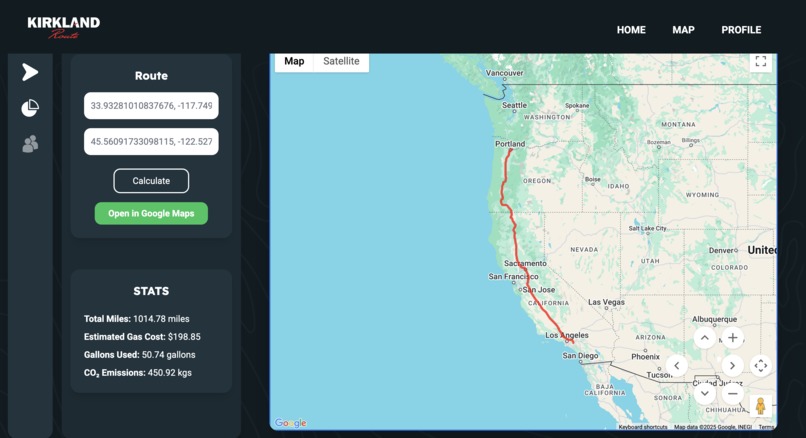
The Kirkland Route calculates the most efficient road trip route between two points, automatically inserting Costco gas station stops based on the user's car data, including miles per gallon (MPG), tank size, and desired fuel buffer. Users receive a direct Google Maps link for turn-by-turn navigation with the selected Costco stops along the way. The platform helps users fuel smarter, drive greener, and travel more affordably.
How we built it
Frontend: React.js with Tailwind CSS to create a clean, map-first interface. Backend: Flask (Python) server handling trip calculations, Google Maps API calls, and MongoDB data management. Database: A custom Costco gas station database populated from real-world data scraping. APIs: Integrated the Google Maps Directions API for dynamic route generation, alongside custom geospatial algorithms (haversine distance) for optimal stop placement. Deployment: Frontend deployed with Vercel. Backend deployed with Railway. Domain hosting and routing set up with GoDaddy.
Tech Stack: React.js, Tailwind CSS, Flask (Python), MongoDB, Vercel, Railway, Google Maps API, GoDaddy
Challenges we ran into
One of the biggest challenges we faced was navigating unexpected behaviors from the Google Maps API, including ZERO_RESULTS errors and incomplete route data, which made trip calculations unpredictable at times. Designing a scalable algorithm to determine when to stop for fuel, without overcomplicating the user’s route, also required careful balancing between precision and simplicity. On the frontend side, we encountered version compatibility issues with Tailwind CSS and PostCSS, which initially slowed down our styling workflow and required troubleshooting and reconfiguration. Additionally, we had to carefully manage our project scope; while we initially envisioned real-time location tracking and full user profiles, we ultimately had to prioritize core functionality to stay on track with the hackathon timeline.
Accomplishments that we're proud of
We are proud that we were able to turn a casual road trip joke into a fully functional hackathon project. We successfully built a minimum viable product that dynamically calculates optimized fuel stops based on user car data, integrates live Google Maps routes, and is accessible through a deployed frontend and backend. Beyond the technical achievements, we are especially proud of how intuitive and accessible we made the platform for users, making sustainable travel choices simple and practical.
What we learned
This project taught us how to work with real-world geospatial challenges, integrating distance calculations and route optimizations into a seamless user experience. We gained valuable experience troubleshooting APIs under pressure and navigating versioning issues between frontend frameworks and build tools. Perhaps most importantly, we learned the importance of keeping a clear focus on the MVP, balancing ambitious goals with achievable deliverables under tight deadlines.
What's next for Kirkland Route
We have several exciting ideas for expanding The Kirkland Route beyond the current build of the project. In the future, we plan to add full user account functionality, allowing users to save trips, track their refueling history, and personalize route preferences. We also want to incorporate deeper sustainability analytics, calculating users' CO₂ emission savings and suggesting carpooling options. Dynamic gas pricing integration and live traffic-aware routing are on the roadmap as well. Finally, we aim to optimize the mobile experience even further to make trip planning and navigation effortless on the go.

Log in or sign up for Devpost to join the conversation.