-
-

Kiqma Logo
-
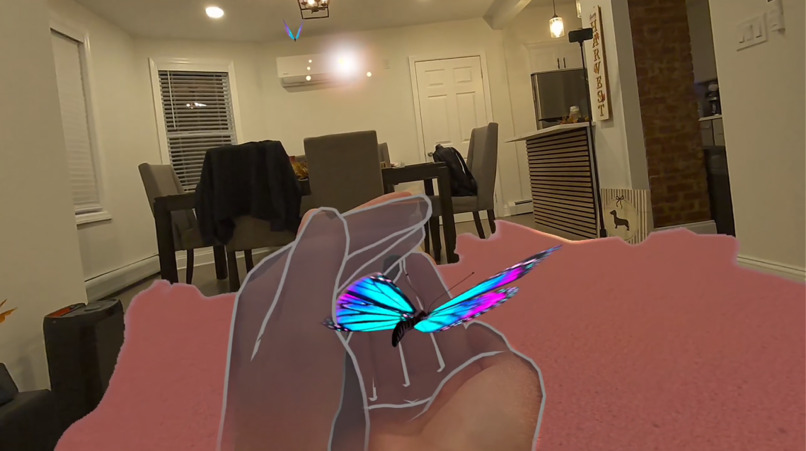
The Thread
-
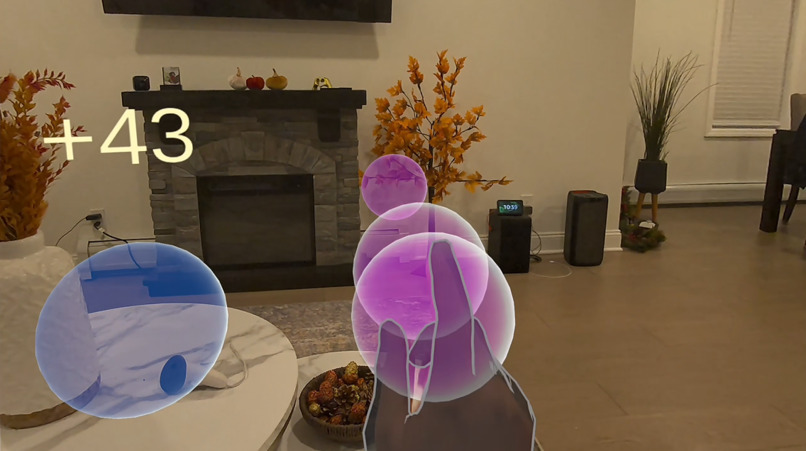
Rhythm Motion
-
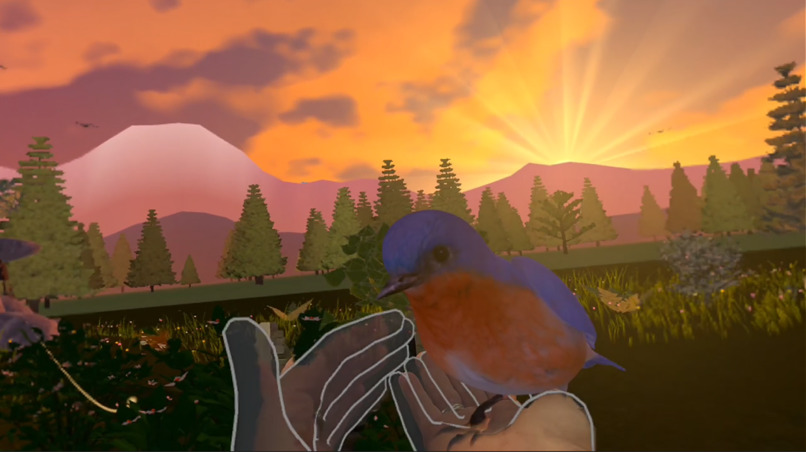
The Thread 2
-
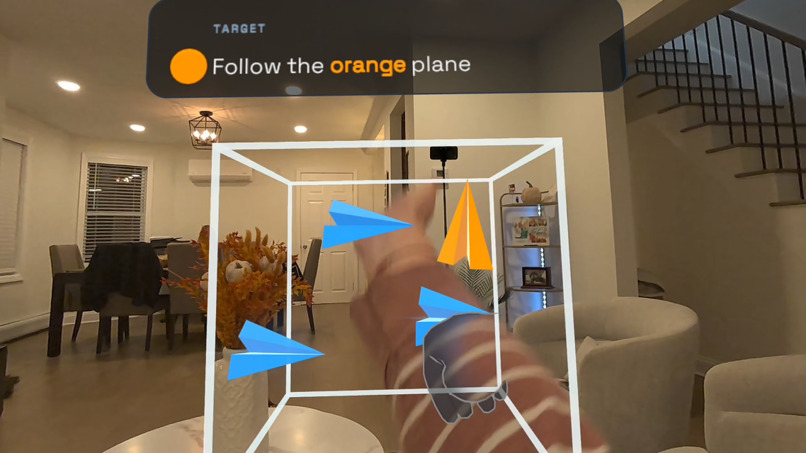
Flow Focus
-
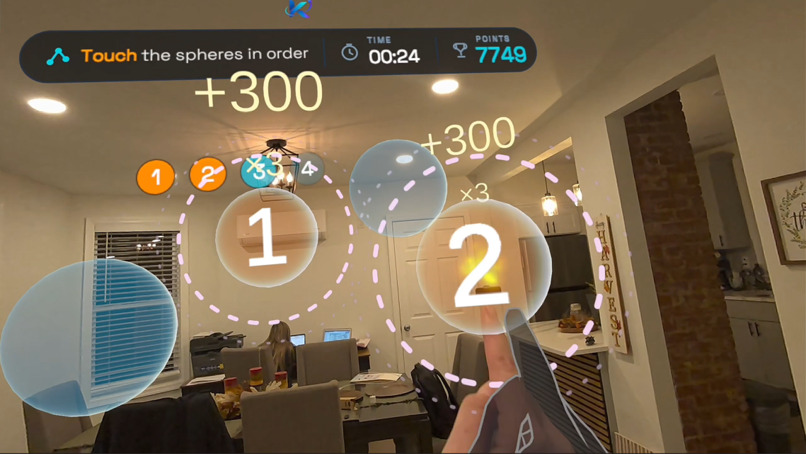
Sequence Reach
-
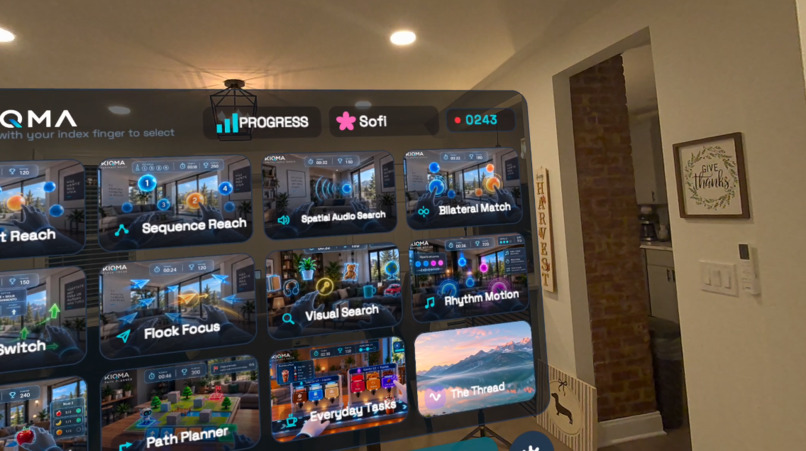
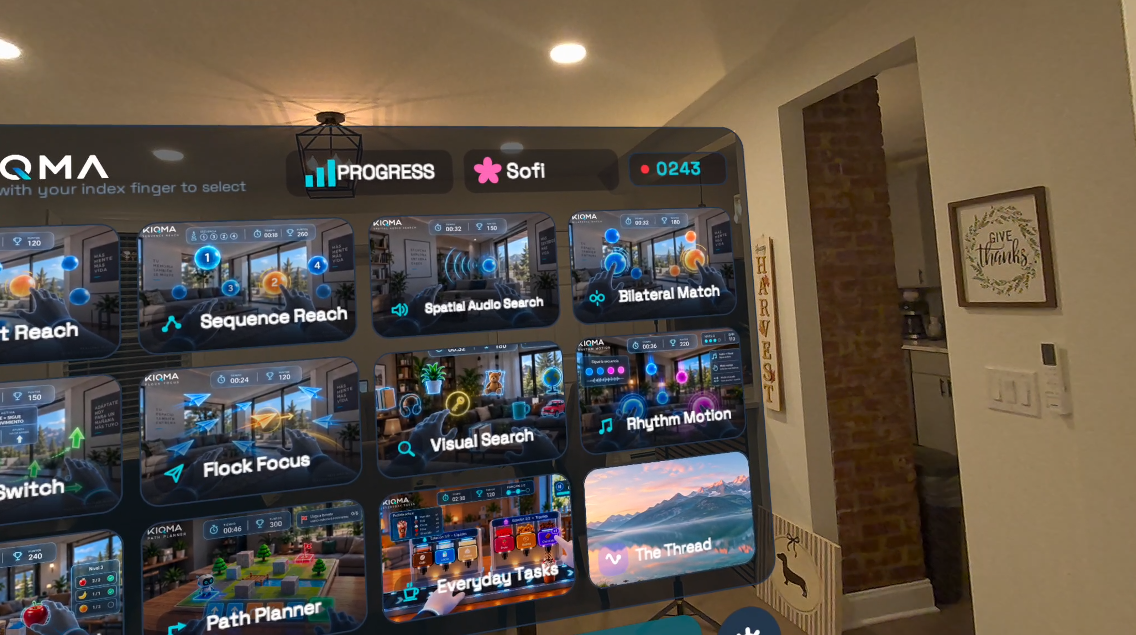
Main Menu
Inspiration
My journey into neurorehabilitation began when my mother was diagnosed with multiple myeloma. Watching her care made me realize how important cognitive stimulation, movement, and meaningful activities can be for people's quality of life.
Years earlier, my father had been diagnosed with multiple sclerosis. After living with the condition for many years, he continues to move, think, and maintain much of his agility. Seeing his journey changed how I think about abilities we often take for granted: moving confidently, reacting to our surroundings, remembering information, and staying mentally engaged.
I've also always loved video games. As an XR developer, I've spent years exploring how immersive technologies and gamification can transform learning and interaction.
These two worlds came together when I joined a digital neurorehabilitation project, where I experienced firsthand the potential of immersive technology in structured cognitive and motor activities.
That experience inspired me to take a different approach.
What if we could use the same immersive technologies not only in clinical environments, but also to help everyday people stay mentally and physically engaged through enjoyable daily activities?
That's how Kiqma was born.
Kiqma is not a medical treatment. It's an accessible, engaging space where people can challenge their minds, practice coordination, explore their senses, and take moments to disconnect from everyday stress.
I wanted to create something that people would look forward to using, rather than something that felt like another obligation.
What it does
Kiqma is an immersive cognitive, sensory, and motor training platform for Meta Quest, combining mixed reality, natural hand interactions, personalized challenges, and restorative experiences.
Instead of transporting users into a completely unfamiliar virtual world, Kiqma makes their own environment part of the experience.
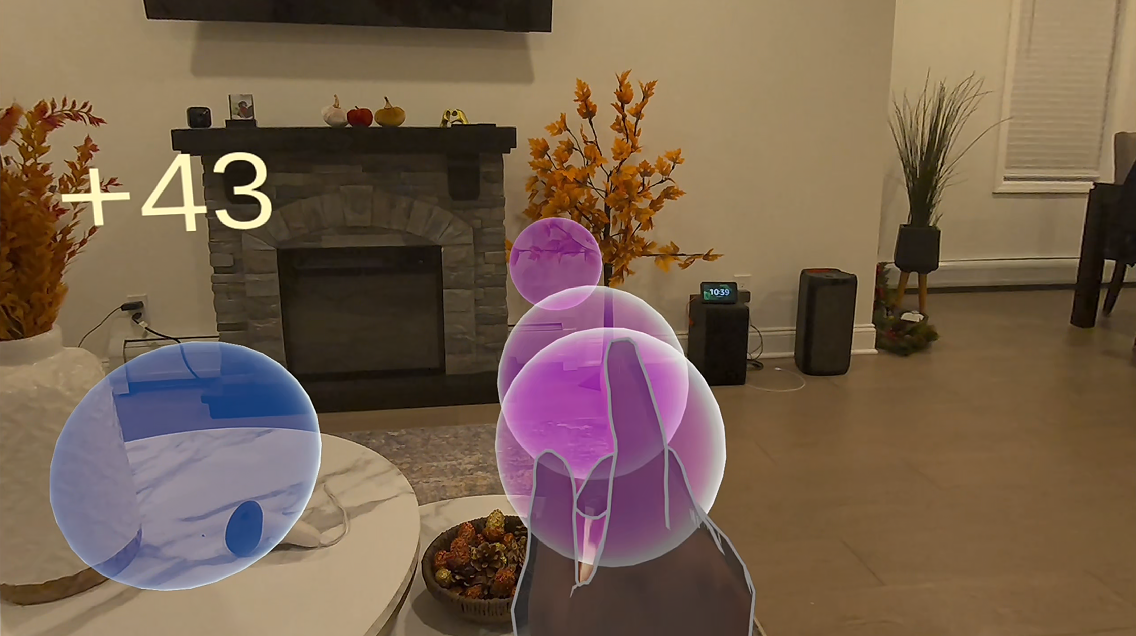
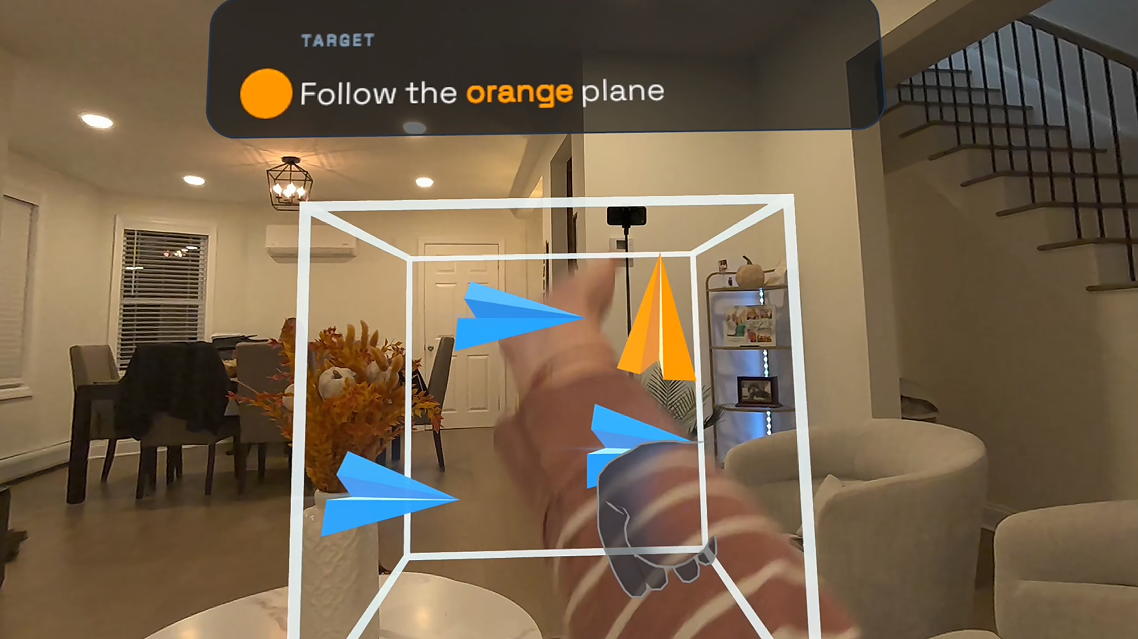
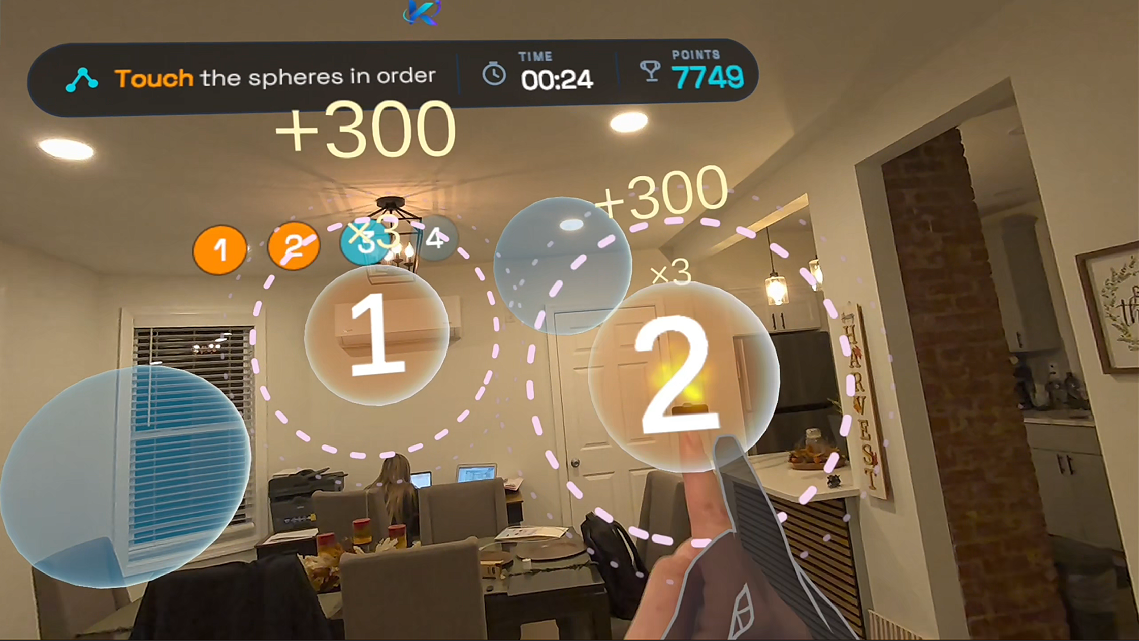
Using passthrough and hand tracking, interactive objects appear around users and on real surfaces. They can reach for targets, respond to spatial sounds, remember sequences, coordinate both hands, solve everyday challenges, and interact naturally without controllers.
12 Interactive Training Experiences
Kiqma currently includes 12 different experiences designed to engage abilities such as:
- Attention and concentration
- Reaction time and processing speed
- Working memory and sequencing
- Hand-eye coordination
- Bilateral coordination
- Spatial awareness and auditory localization
- Cognitive flexibility and decision-making
- Planning and problem-solving
Each experience offers different mechanics, from reaching moving targets and following changing rules to responding to rhythms, identifying visual patterns, navigating spatial challenges, and completing simulated everyday tasks.
The goal isn't simply to achieve the highest score. It's to create meaningful opportunities to practice different abilities and observe personal improvement over time.
The Thread: A Moment to Disconnect
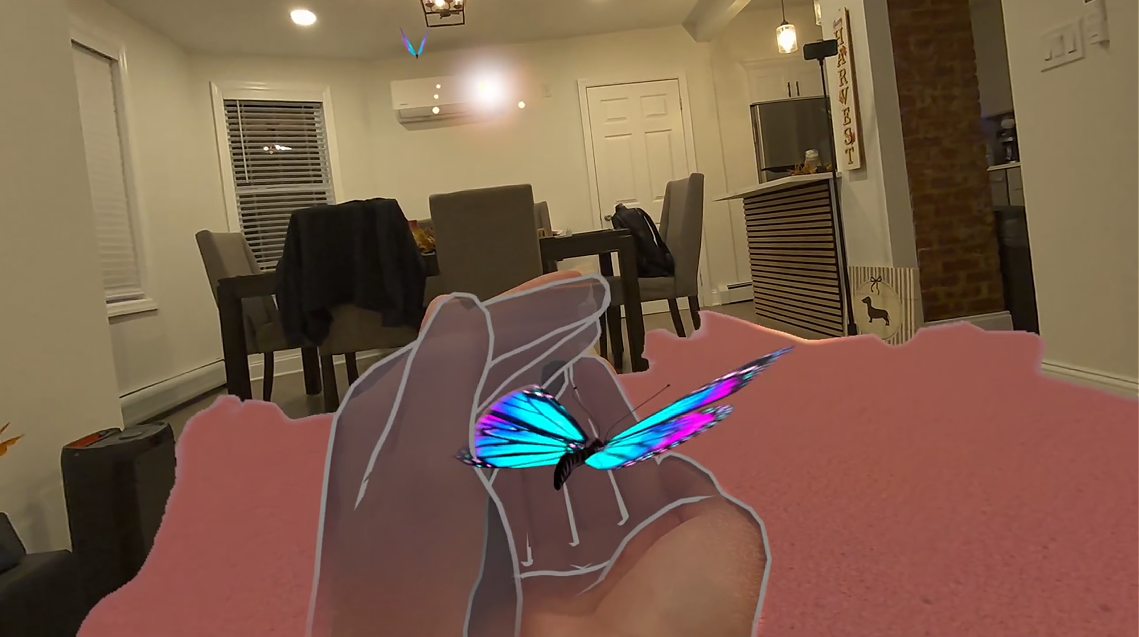
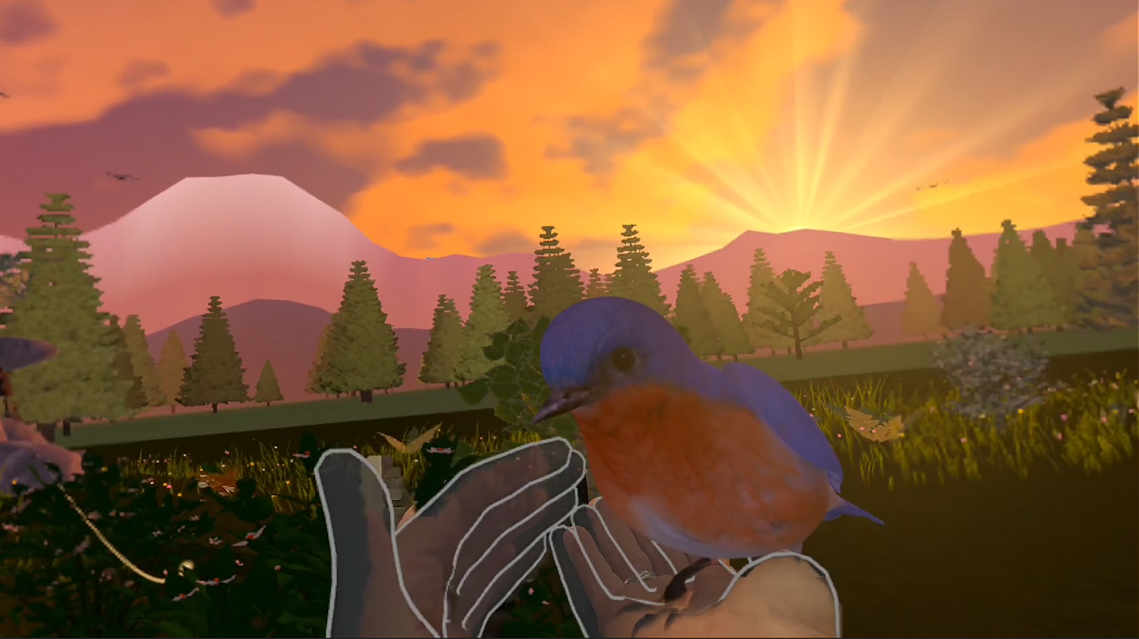
One of Kiqma's most distinctive experiences is The Thread, an immersive journey designed to encourage relaxation, mindfulness, and a sense of disconnection from daily distractions.
Unlike traditional training exercises, The Thread focuses on slowing down.
It begins in the user's real environment through mixed reality. Gentle interactions, natural elements, and subtle visual events gradually guide the user toward an immersive virtual landscape.
The familiar room can progressively give way to peaceful environments featuring waterfalls, mountains, forests, atmospheric lighting, and small animated wildlife.
The experience uses spatial audio, ambient soundscapes, calming music, and subtle interactions to create a sense of presence without demanding constant physical effort.
The Thread represents an important part of Kiqma's philosophy: taking care of our cognitive well-being also means making time to slow down.
Daily Kiqma
Kiqma includes a daily training system that creates a short, approximately 10-minute routine using different experiences.
The system considers recent activity to encourage variety, while daily streaks and weekly goals help users build consistency.
Rather than encouraging endless gameplay, Kiqma promotes short, intentional sessions that can become part of an everyday routine.
Meaningful Personal Progress
Kiqma tracks performance across different skills without reducing the user's abilities to a single arbitrary brain score.
Instead of comparing people against each other, the system establishes individual baselines and evaluates changes in performance over time.
Metrics include accuracy, reaction time, coordination, memory performance, and other measurements specific to each experience.
The objective is personal progress, not competition with others.
Kiqma Companion
Kiqma also includes Kiqma Companion, a web-based application that allows another person to assist with a VR session remotely. (https://www.plugar.co/KIQMA-Companion-web/)
Using a phone or computer, a family member, caregiver, or trainer can connect to the headset, configure supported exercises, start or pause activities, and follow the session.
This makes Kiqma more approachable for people who are unfamiliar with VR interfaces or who prefer assistance while training.
Designed for Accessibility
Kiqma supports seated and standing profiles, preferred-hand settings, and English and Spanish voice guidance.
Its interaction design prioritizes natural hand movements, clear instructions, accessible controls, and minimal artificial locomotion.
The goal is to make immersive training approachable for people with different levels of experience with technology.
How we built it
Kiqma was developed using Unity 6 and the Meta XR All-in-One SDK, taking advantage of Meta Quest's mixed reality capabilities.
The main technologies include:
- Meta Interaction SDK and Hand Tracking: Natural, controller-free interactions with virtual objects.
- Passthrough: Integrating interactive training elements into the user's real surroundings.
- Scene Understanding and Spatial Surfaces: Supporting experiences that interact with the physical environment.
- Spatial Audio: Creating directional sound challenges and immersive auditory environments.
- Unity Universal Render Pipeline (URP): Building optimized visuals for standalone Meta Quest hardware.
- Photon Realtime: Connecting Kiqma with its web-based Companion application.
- HTML and JavaScript: Developing the Companion interface for phones and computers.
A Shared Experience Architecture
Rather than developing 12 completely independent applications, I created a shared framework that handles exercise configuration, session management, difficulty settings, remote commands, and performance tracking.
This architecture allows new experiences to be integrated while maintaining consistent behavior across the platform.
Personal Progress and Adaptive Difficulty
Kiqma records contextual performance metrics for each exercise, including difficulty, accuracy, timing, and task-specific conditions.
Its local-first progress system stores session information on the device and establishes individual performance baselines.
Because different exercises measure different things, Kiqma doesn't simply combine raw scores. Instead, it evaluates changes relative to each user's previous performance under comparable conditions.
This helps make progress feedback more meaningful and reduces the influence of isolated, unusually good or bad sessions.
Building an Immersive Wellness Experience
Developing The Thread required a different design philosophy from the cognitive training experiences.
Instead of emphasizing speed, precision, or task completion, I focused on immersion, atmosphere, gradual environmental transitions, and low-effort interactions.
The challenge was to create a relaxing experience that still feels interactive and takes advantage of mixed reality rather than functioning as a passive 360-degree video.
Development Workflow
I'm developing Kiqma independently during nights and weekends.
To accelerate development, I've used Claude Code integrated with the Unity Editor to support implementation, debugging, and architectural improvements, while directing the experience design, interaction systems, and overall product vision.
This workflow has allowed me to build and iterate on a relatively complex XR platform within a limited development timeframe.
Challenges we ran into
Measuring Improvement Without Misleading Users
One of the biggest challenges was determining what meaningful improvement actually looks like.
A higher score doesn't necessarily mean better performance, especially when difficulty increases during a session.
I developed a system that evaluates performance relative to each user's baseline and considers the difficulty and configuration of the exercise.
The goal was to avoid presenting arbitrary numbers as evidence of cognitive improvement.
Comparing Different Experiences Fairly
Reaction time, memory accuracy, coordination, and planning cannot all be measured in the same way.
To address this, Kiqma evaluates performance within each experience before combining normalized changes into broader skill indicators.
This allows different activities to contribute to a shared progress system without treating fundamentally different measurements as equivalent.
Finding the Right Session Duration
I wanted Kiqma to fit naturally into everyday life.
Short sessions are easier to maintain, but they still need enough interactions to produce useful performance data.
I built an editor-based simulation tool that runs virtual player sessions with different response speeds and skill levels.
These simulations helped me tune exercise duration, difficulty progression, and the minimum number of attempts required for meaningful comparisons.
They also helped identify timing and measurement issues that would have been difficult to catch through manual testing alone.
Making Mixed Reality Accessible
Not everyone is familiar with VR, especially people who have never used hand tracking or spatial interfaces.
I had to rethink traditional game interactions by prioritizing seated use, direct-touch controls, clear visual feedback, voice instructions, and minimal locomotion.
Kiqma Companion was also created to make the experience easier to manage with assistance.
Balancing Stimulation and Relaxation
Most training experiences are designed to challenge users through movement, attention, and decision-making.
The Thread required almost the opposite approach.
I had to design interactions that feel meaningful without creating pressure, excessive movement, or constant demands on the user's attention.
Finding that balance became one of the most interesting design challenges in the project.
Optimizing for Standalone Hardware
Kiqma combines hand tracking, mixed reality, interactive 3D elements, spatial audio, and performance tracking.
Maintaining responsive interactions and visual clarity on standalone hardware required careful attention to scene complexity, assets, rendering, and interaction design.
Accomplishments that we're proud of
- 12 different interactive training experiences, developed around a shared architecture for cognitive, sensory, and motor challenges.
- The Thread, expanding Kiqma beyond performance-based exercises into immersive relaxation and restorative experiences.
- A personalized progress system that focuses on individual baselines rather than arbitrary scores or comparisons between users.
- Daily Kiqma, combining short routines, activity variety, streaks, and weekly goals to encourage consistent engagement.
- Kiqma Companion, enabling another person to assist with sessions through a web interface.
- Controller-free mixed reality interactions, using hand tracking, passthrough, spatial surfaces, and spatial audio.
- An accessibility-focused design, with seated and standing profiles, voice guidance, and approachable interactions.
- A local-first architecture, allowing core training and progress tracking without requiring an account or continuous internet access.
- Building an integrated XR platform as a solo developer, combining technical development, interaction design, 3D content, audio, performance analysis, and user experience.
What makes me especially proud is that Kiqma has grown beyond its initial concept of a few cognitive exercises into a connected platform with a clear long-term vision.
What we learned
Developing Kiqma reinforced something I learned through my earlier experience in neurorehabilitation: technology becomes more valuable when it adapts to people, rather than expecting people to adapt to technology.
I learned that designing for accessibility doesn't mean simplifying an experience until it becomes uninteresting. It means removing unnecessary barriers while preserving meaningful challenges.
I also learned that progress should be communicated responsibly. A person doesn't need an exaggerated brain score to feel motivated. Sometimes, seeing that a task has become a little easier, faster, or more accurate is enough.
And through The Thread, I discovered another important principle:
Not every meaningful immersive experience needs to challenge the user. Sometimes, the most valuable interaction is one that helps them slow down.
Above all, Kiqma has shown me how mixed reality can create a more natural relationship between digital experiences and everyday life.
What's next for Kiqma
My vision is to continue developing Kiqma into an accessible platform for daily cognitive, sensory, and motor engagement, with personalized experiences that evolve alongside each user.
Kiqma Adaptive Intelligence
I'm exploring a hybrid adaptive intelligence system that combines performance analytics, rule-based adaptation, and AI-assisted recommendations.
The goal is to personalize difficulty, exercise selection, and training plans according to each user's performance and engagement patterns.
Expanding The Thread
I want to continue developing immersive environments, natural interactions, and restorative experiences that help users transition between active training and relaxation.
Kiqma Moments
A future extension of Kiqma Companion designed to bring short audio-based cognitive challenges into everyday life, potentially integrating with Meta AI glasses.
Users would be able to choose between on-demand exercises and optional spontaneous challenges.
Connected Progress
Optional cloud synchronization and mobile access to personal progress, allowing users to follow their activity across devices while maintaining control over their data.
Kiqma Pro
A future professional version designed for physical therapists, occupational therapists, and trainers.
Kiqma Pro would provide tools to configure exercises, monitor in-game performance, and support structured training programs in professional environments.
The Bigger Vision
I believe immersive technology can become part of everyday well-being, not only entertainment or specialized clinical applications.
My goal is to make Kiqma a place people return to because it feels engaging, rewarding, and meaningful—not because they feel obligated to train.
Kiqma is a wellness and interactive training application. It does not diagnose, treat, or prevent medical conditions. Performance metrics reflect activity within the application and are not clinical assessments.


