-
-
Thumbnail
-
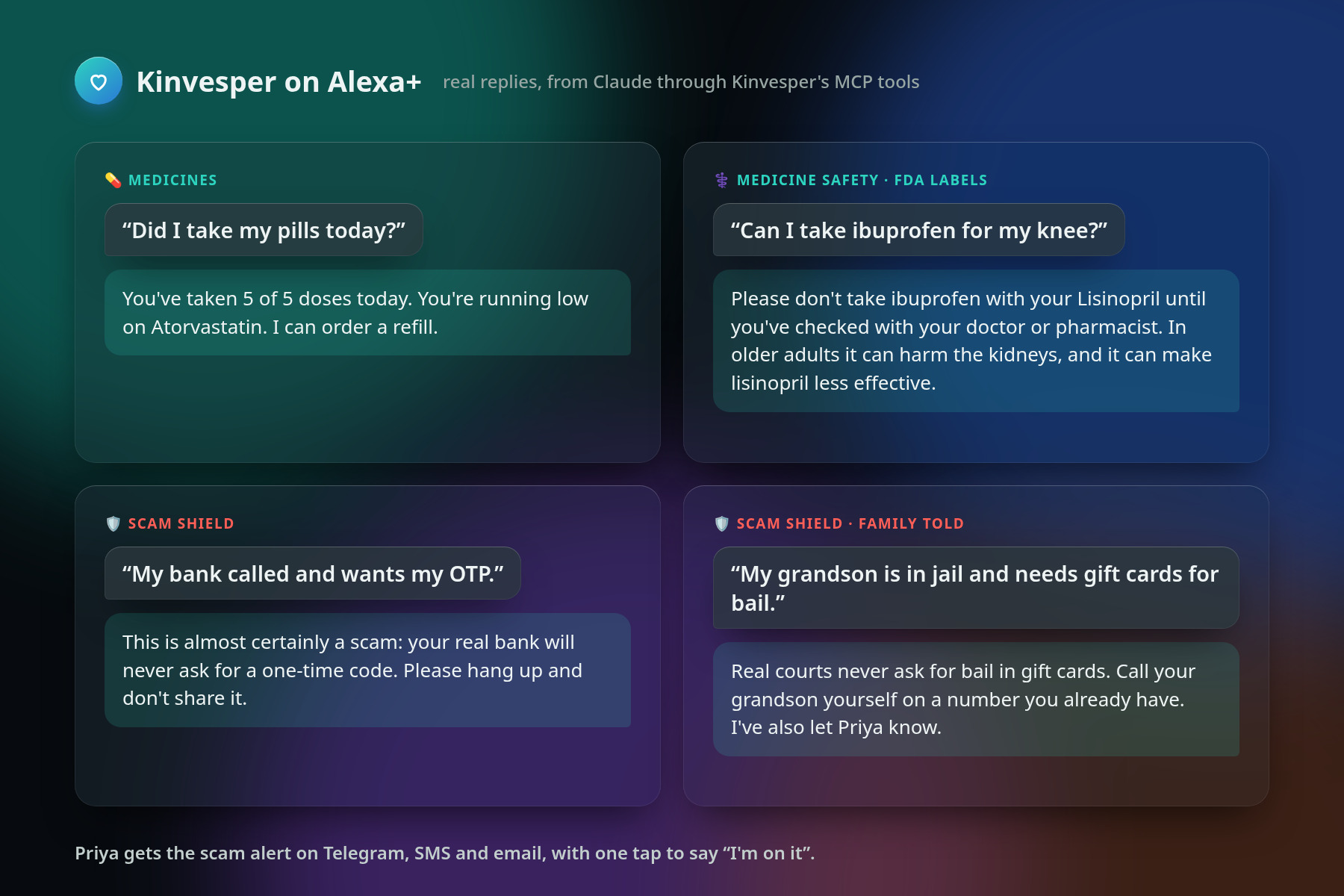
Real Conversation
-
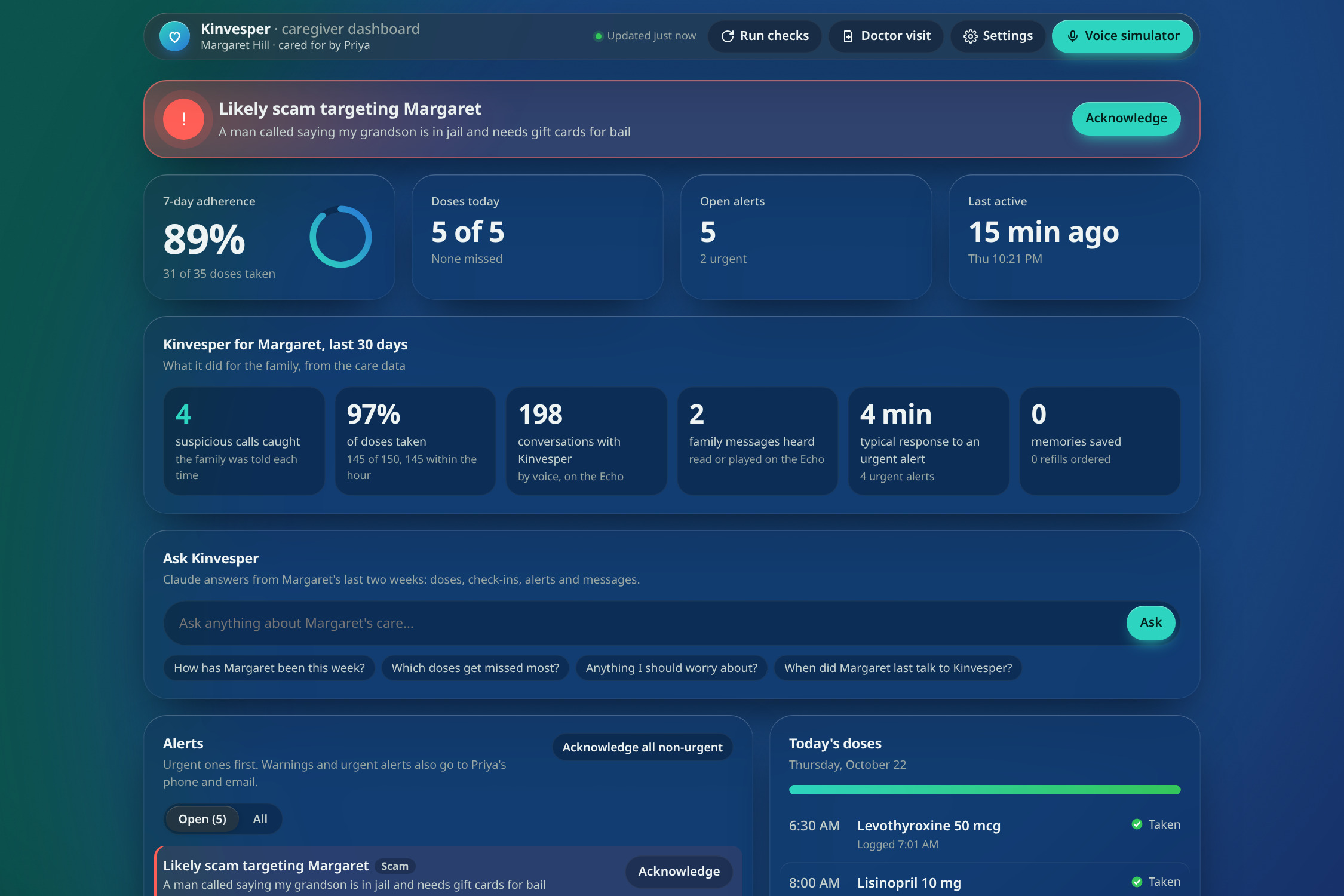
Caregiver Dashboard
-
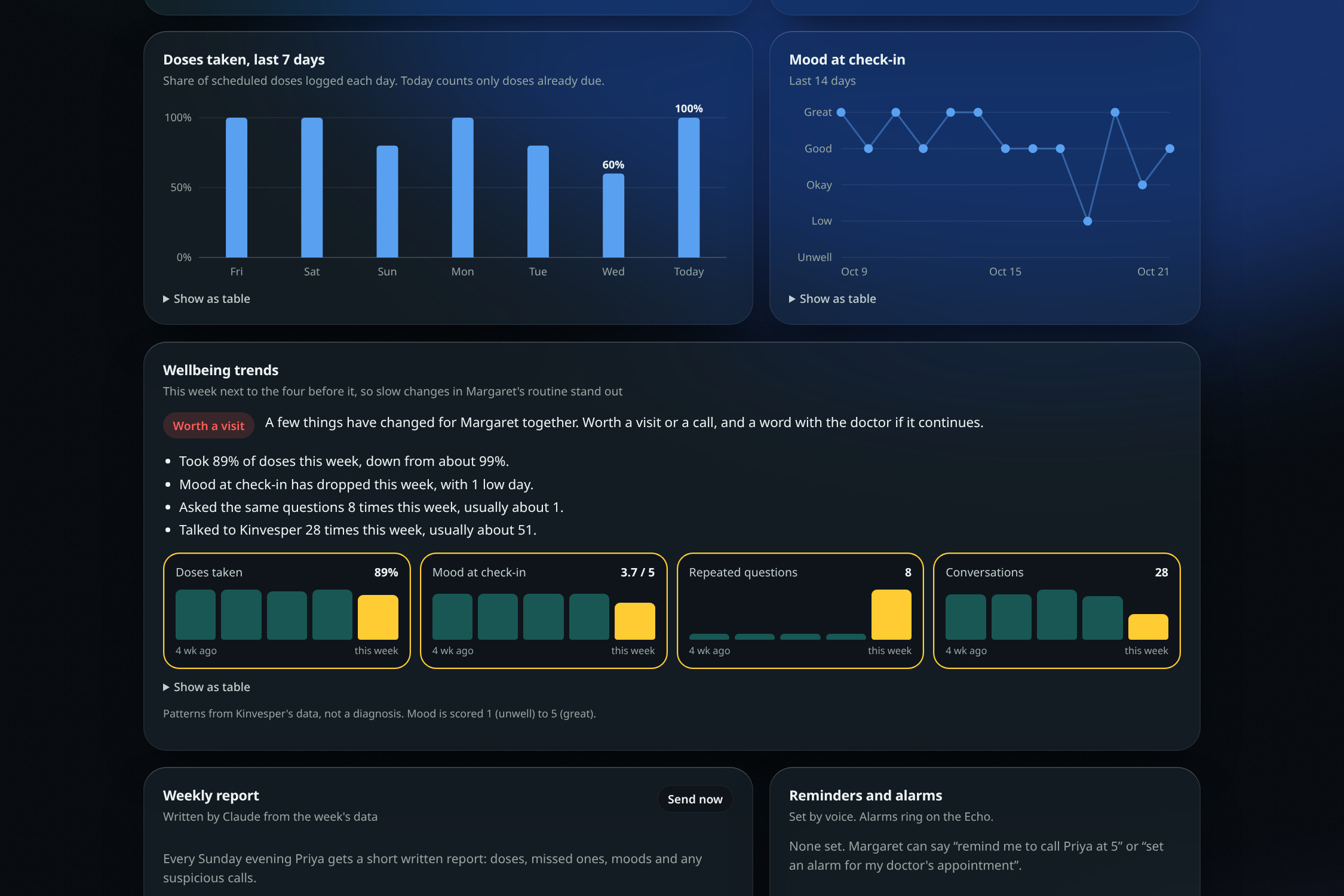
Wellbeing Trends
-
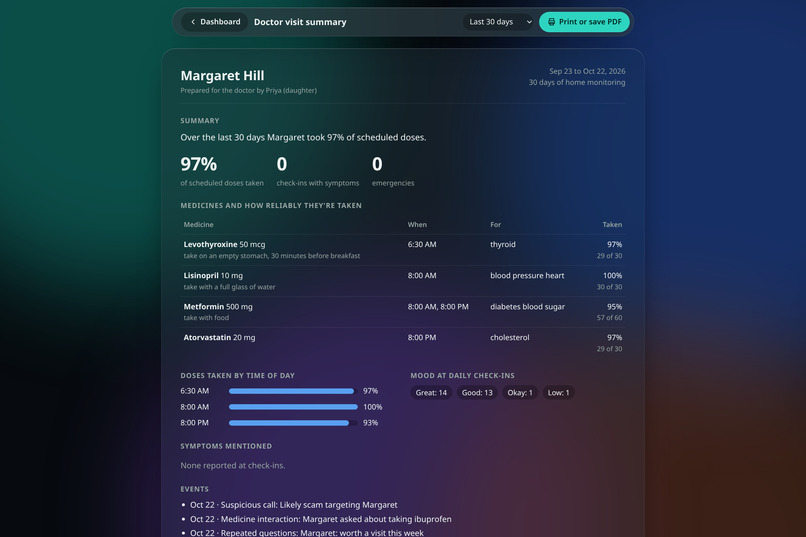
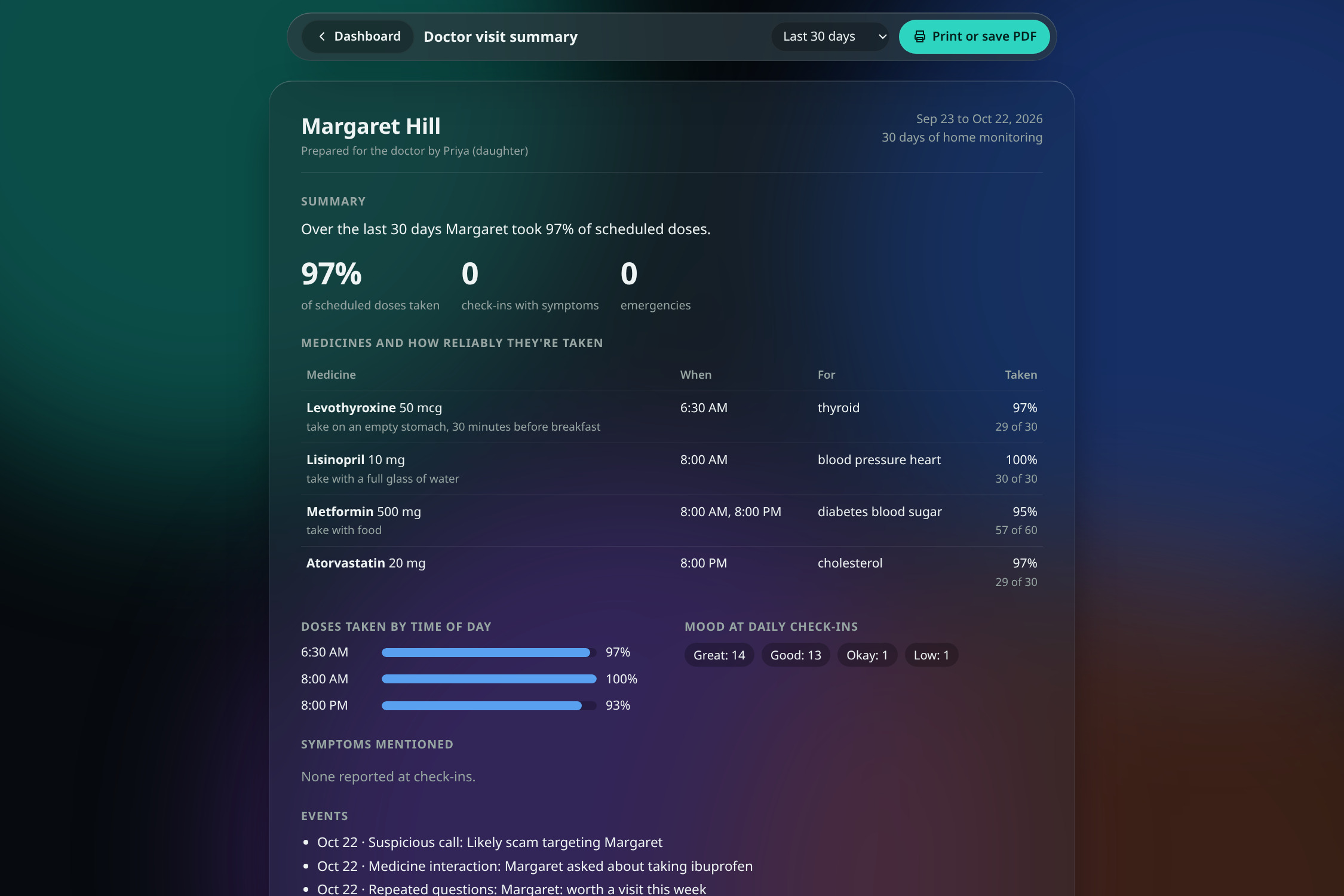
Doctor Visit Summary
-
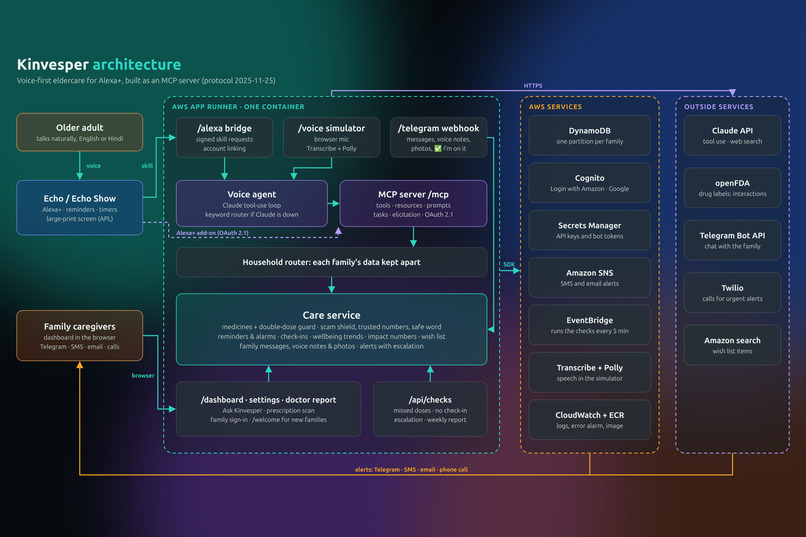
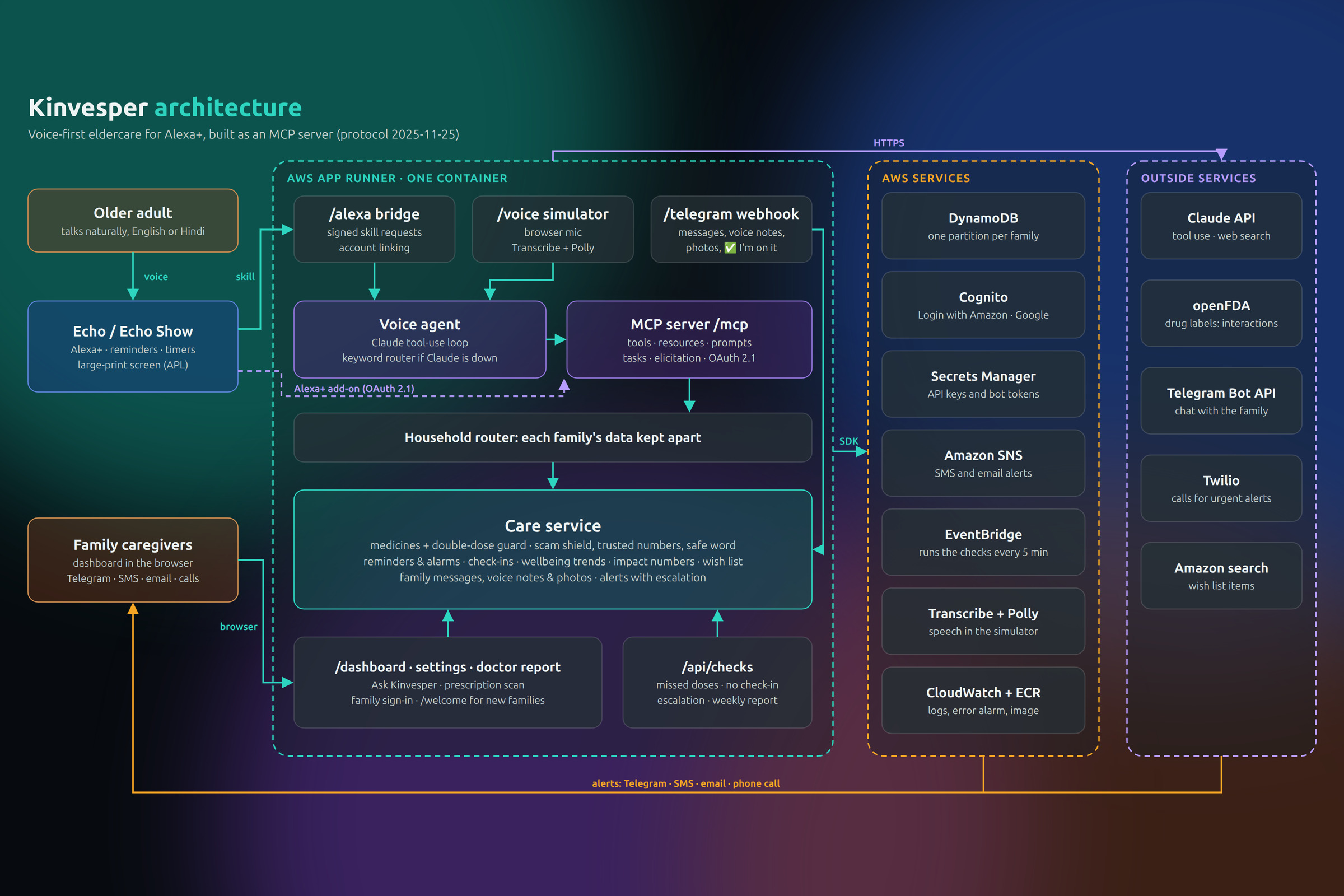
Architecture
Inspiration
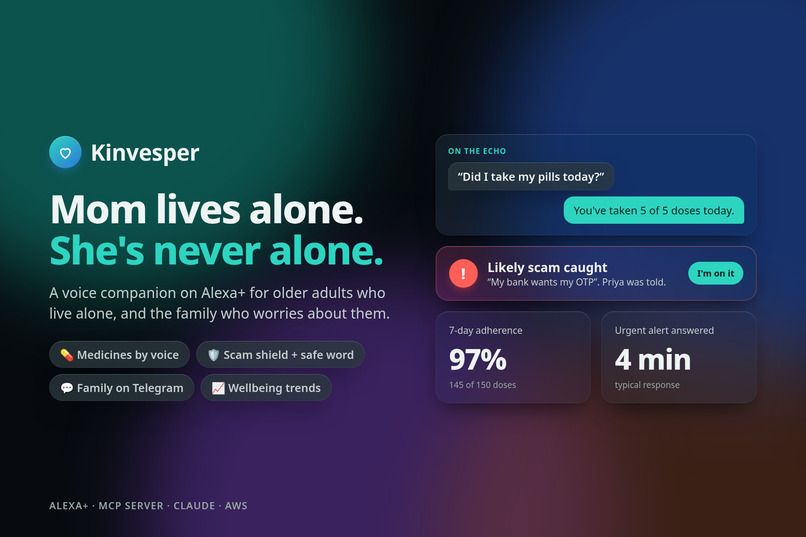
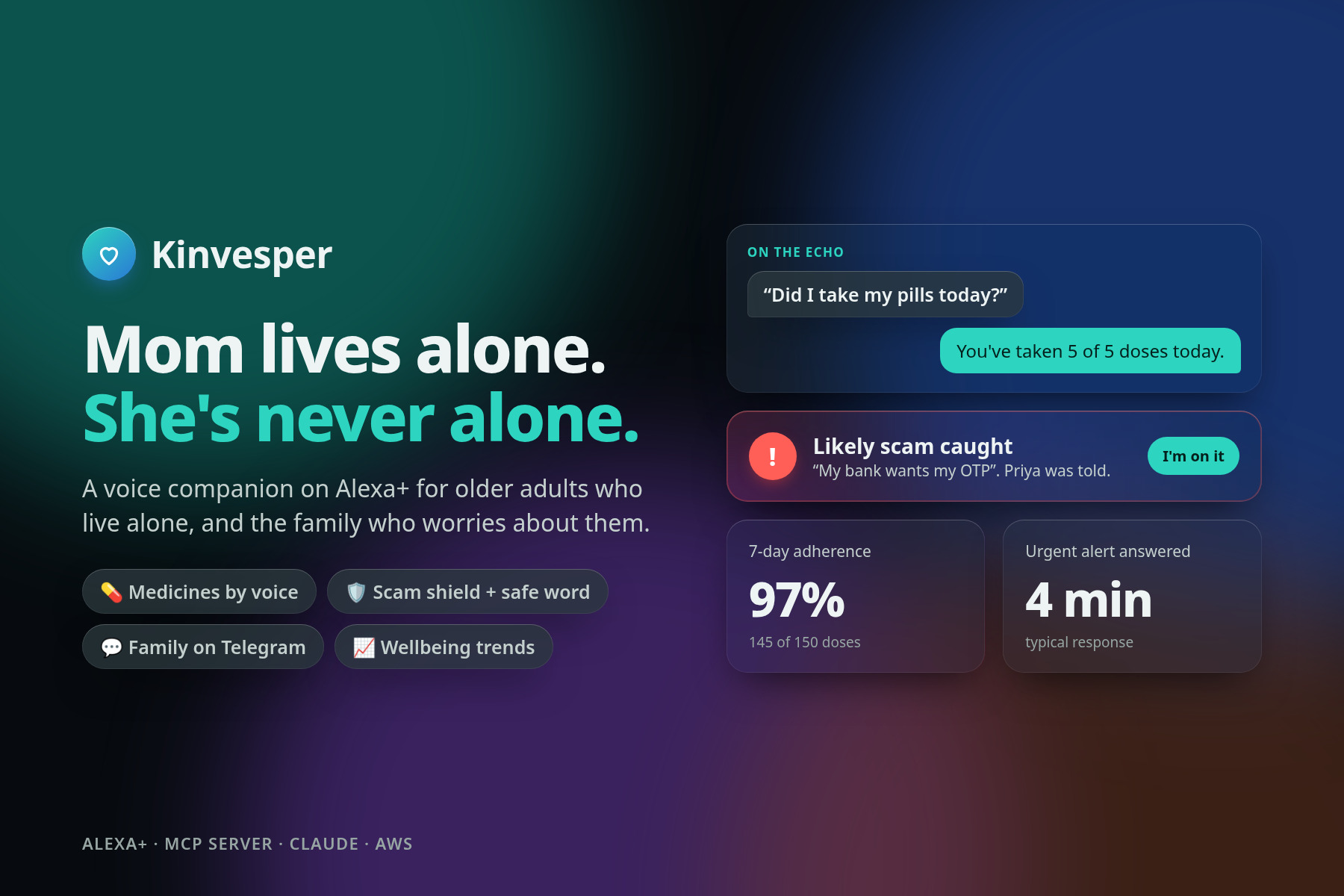
Millions of older adults live alone, and their children often live in another city or country. The worries are always the same three: Did Mom take her pills? Is someone trying to scam her? Is she okay today? Apps don't help much, because many elders won't open one. But they will talk. Kinvesper puts care where they already are: a conversation with Alexa.
What it does
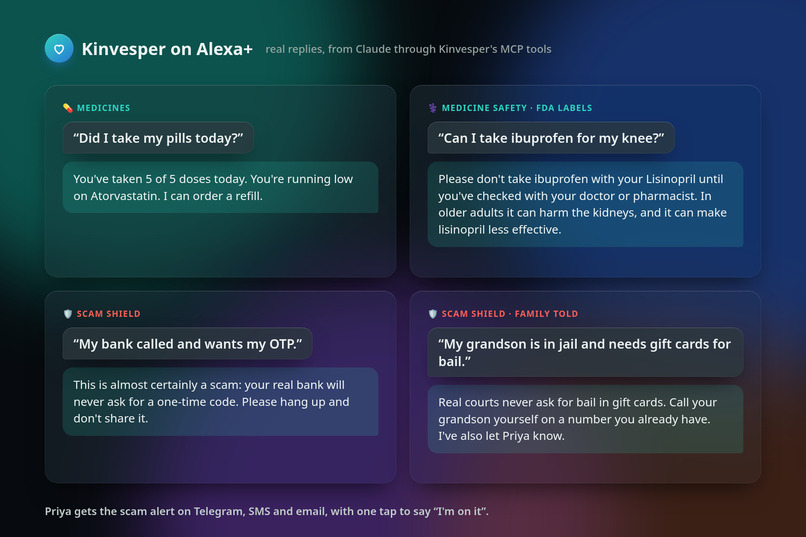
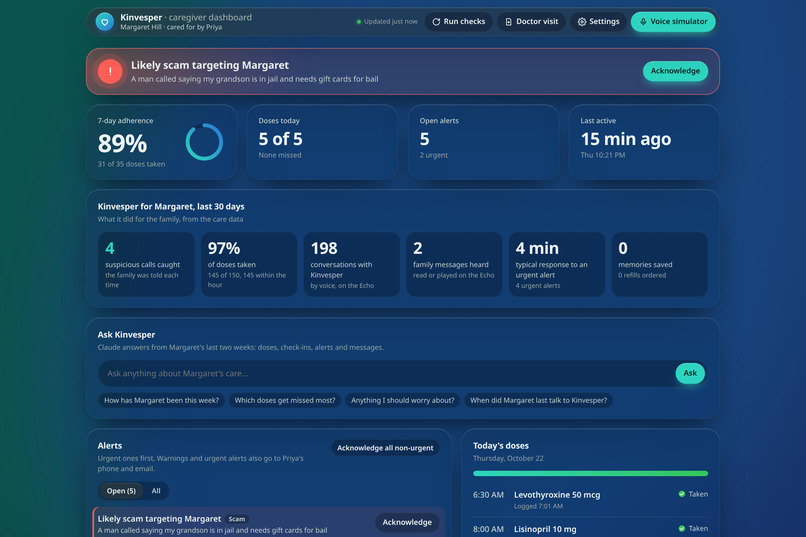
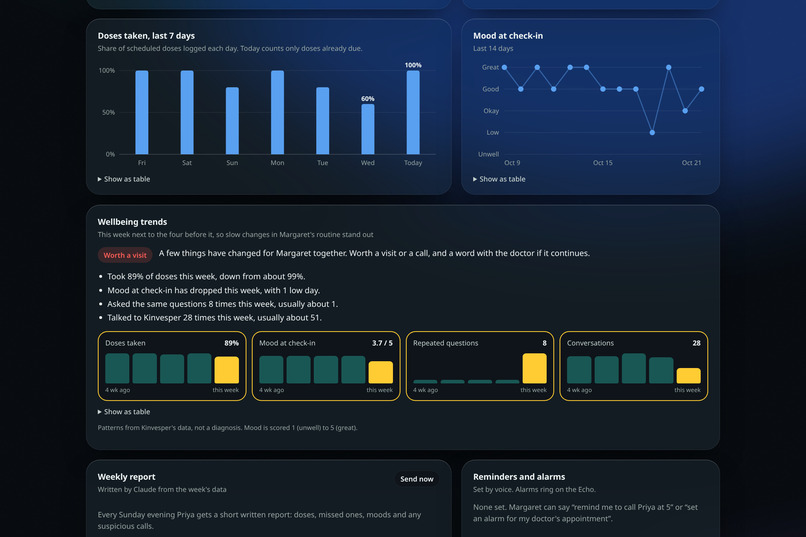
Kinvesper is a voice companion for Alexa+ and a peace-of-mind dashboard for the family. 1) Medicines by voice: "Did I take my pills?" is answered from the real schedule, never guessed. A double-dose guard stops a second dose. Alexa announces every dose time, and missed doses alert the family. 2) Medicine safety: "Can I take ibuprofen?" is checked against the FDA drug labels (openFDA) and their own medicines. A photo of a prescription fills in the medicine list, and a person checks it before it's saved. 3) Scam shield: red-flag checks, the family's trusted numbers ("the bank's real number is…"), and a family safe word. Voice cloning can fake a grandson, but not a secret. Kinvesper checks the word without ever saying it. 4) Family in the loop: alerts on Telegram, SMS and email, a phone call for anything urgent, a backup contact when nobody answers, and a daily "I'm okay" check-in. Family can ask a question from Telegram, and her spoken answer comes back. Voice notes play on the Echo in their own voice, and photos fill the Echo Show. 5) Early warning: wellbeing trends compare this week with the four before it (doses, mood, repeated questions, how much she talks) and say "worth a visit" when several change together. 6) For the family and the doctor: "Ask Kinvesper" answers questions about the week from the real data, and a printable doctor-visit summary is ready for appointments. 7) Proof it helps: the dashboard counts scam calls caught, doses taken, family messages heard, and how fast urgent alerts were answered. 8) Many families: anyone can sign up with Login with Amazon (or Google), describe who they care for, and invite siblings. Each family's data is kept apart. 9) English and Hindi, reminders and alarms, companionship chats, a wish list, and Echo Show screens in large print.
How we built it
1) An MCP server (protocol 2025-11-25) in Python, so Alexa+ uses Kinvesper as a tool. It has 20 tools with output schemas, resources and prompts, tasks (pharmacy refills run in the background with progress), elicitation (it asks before messaging family, but never for scams or emergencies, because scammers push secrecy), and OAuth 2.1 with Amazon Cognito. 2) Claude runs the voice agent's tool-use loop, writes the weekly report, reads prescriptions and FDA labels, and answers "Ask Kinvesper". A keyword router keeps the core care actions working if Claude is unreachable. 3) A custom Alexa skill bridge with APL screens, the Reminders and Timers APIs, account linking, and Alexa Shopping actions for the Amazon Wish List. 4) AWS: a) App Runner runs the whole thing in one container. b) DynamoDB stores each family in its own partition. c) Cognito handles sign-in with Login with Amazon and Google. d) SNS sends texts and email. e) EventBridge runs the proactive checks every 5 minutes. f) Secrets Manager holds the keys. g) Transcribe and Polly handle speech in the voice simulator. h) CloudWatch has the logs and an error alarm. i) Everything is deployed with the AWS CDK. 5) Telegram Bot API will reach the family.
Challenges we ran into
1) The Alexa+ add-on is allowlist-only, so we built a classic skill bridge that reaches any Echo today, plus a browser voice simulator for judges, both talking to the same MCP server. 2) Never let the AI make up medical facts. Care answers are built from the tool's real data, interaction checks cite the FDA labels and never call a mix "safe", and Kinvesper never claims help is on the way. 3) A safe word the AI can't leak. It's stored apart from everything else, never reaches the model, the MCP resources or the Echo, and a tool answers only yes or no. 4) Serverless timing: App Runner idles the CPU between requests, so the proactive checks moved to EventBridge. Whisper took 8 s per request there, so speech moved to Amazon Transcribe (about 1 s). 5) Alexa fetches audio and images without our headers, so family voice notes and photos are served through short-lived, HMAC-signed links, and Telegram voice notes are converted to the MP3 format Alexa plays. 6) One server, many families: we added multi-tenancy late in the build. A request router puts each request in the right family's partition, for dashboard sessions, OAuth tokens, Telegram chats and signed links alike.
Accomplishments that we're proud of
1) It works end to end on real services: speak to an Echo, and seconds later the family's phone buzzes on Telegram with " I'm on it". 2) The safe word: a simple, human defence against voice-cloning scams. 3) Uses most of the MCP 2025-11-25 spec: tasks, elicitation, icons, structured output and OAuth 2.1. 4) Responsible by design: no diagnoses, no dose changes; it asks before acting, and it fails honestly.
What we learned
1) Voice-first design for elders means short answers, one question at a time, and never making them repeat themselves. 2) MCP is a clean way to give an assistant real, safe abilities: the tools hold the truth, and the model holds the conversation. 3) The family is half of the user. The dashboard, Telegram and alerts matter as much as the Echo.
What's next for Kinvesper
1) Launch the Alexa+ add-on as soon as the allowlist opens. 2) Fall detection and inactivity from Echo presence signals. 3) Pharmacy and clinic integrations for real refills and appointment booking. 4) More languages and a care-circle view for paid caregivers. 5) Alerts on WhatsApp through the WhatsApp Business API, where most families already are.
Built With
- alexa
- alexa-skill-set
- amazon-cloudwatch
- amazon-cognito
- amazon-dynamodb
- amazon-eventbridge
- amazon-polly
- amazon-web-services
- aws-app-runner
- aws-cdk
- aws-secrets-manager
- claude
- mcp
- python
- telegram


Log in or sign up for Devpost to join the conversation.