-
-
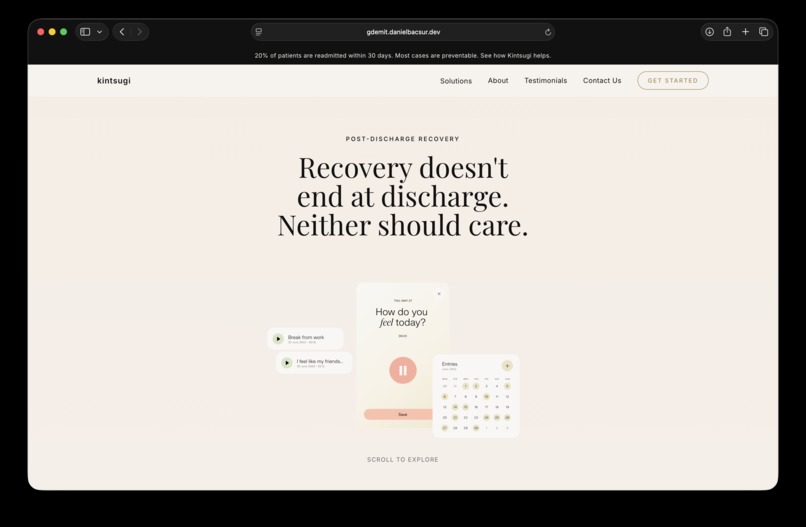
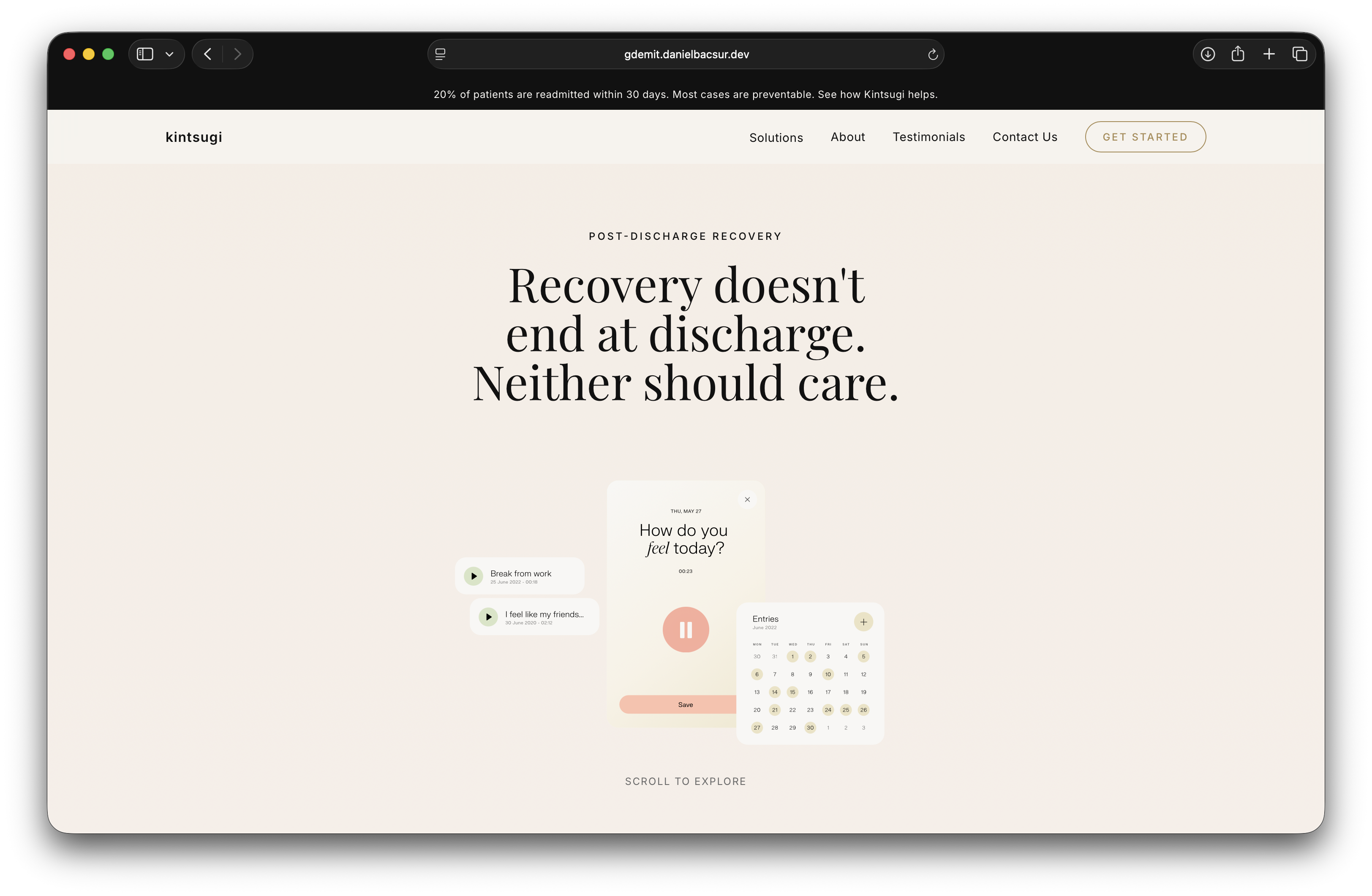
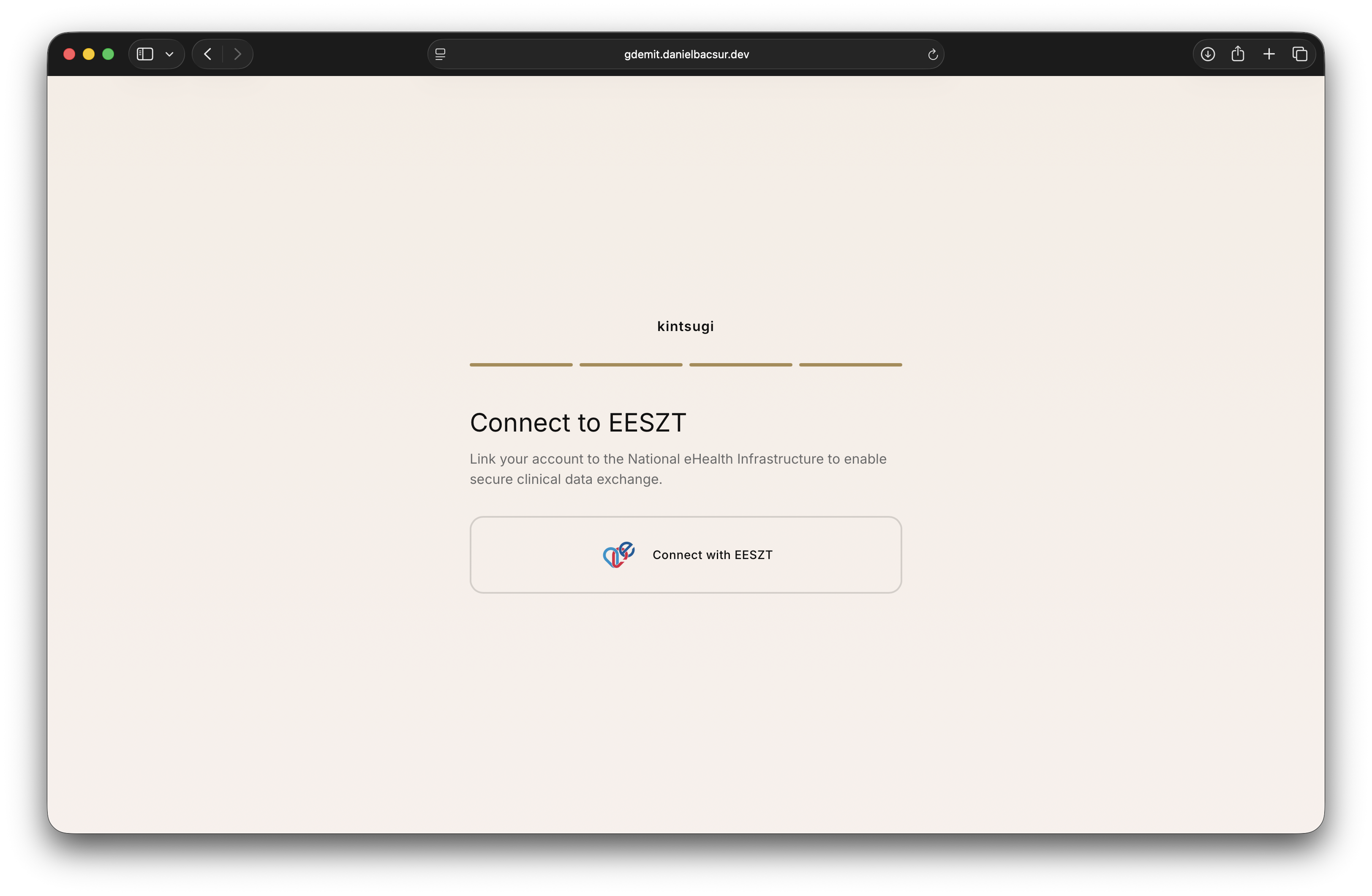
kintsugi's landing page
-
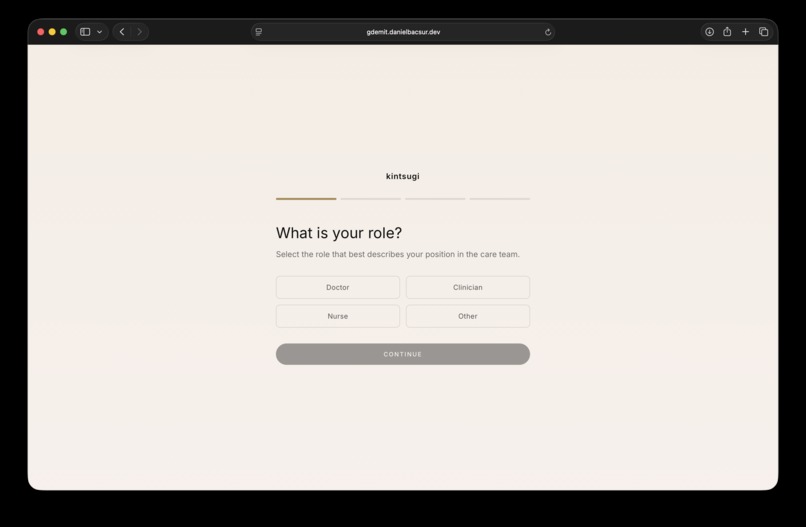
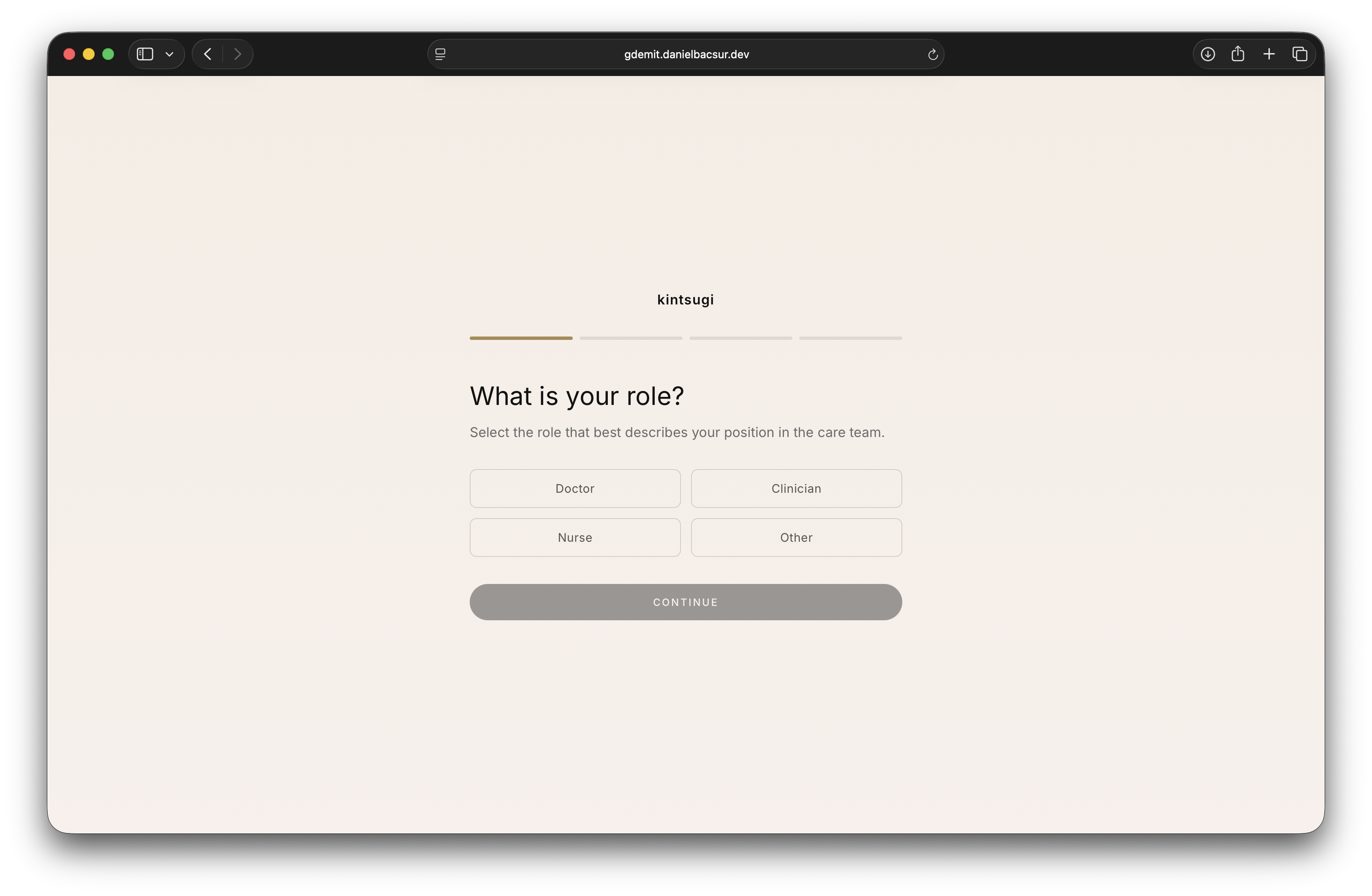
first section of the onboarding
-
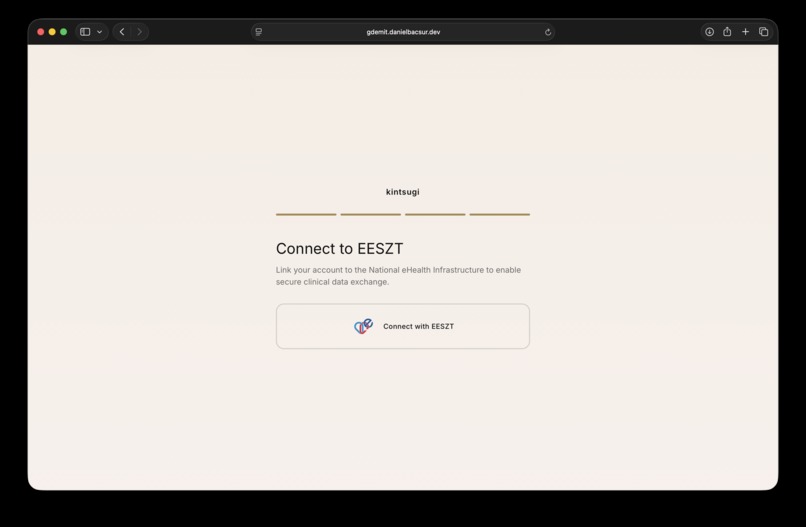
oauth-like eeszt integration
-
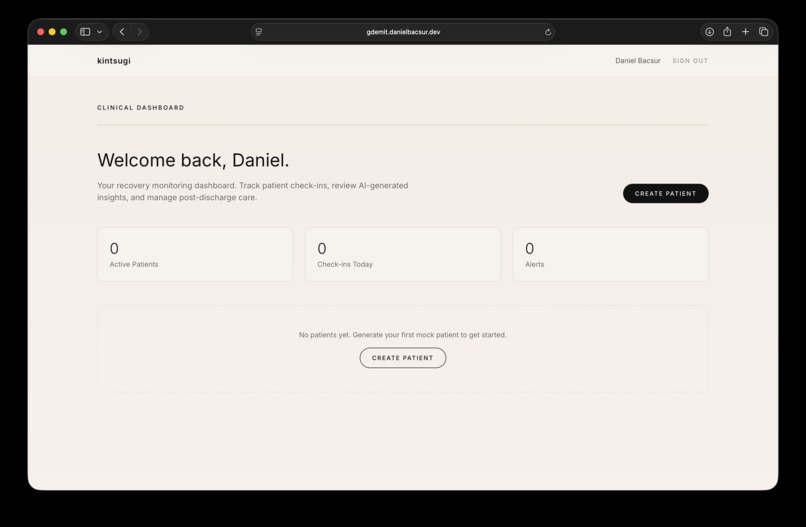
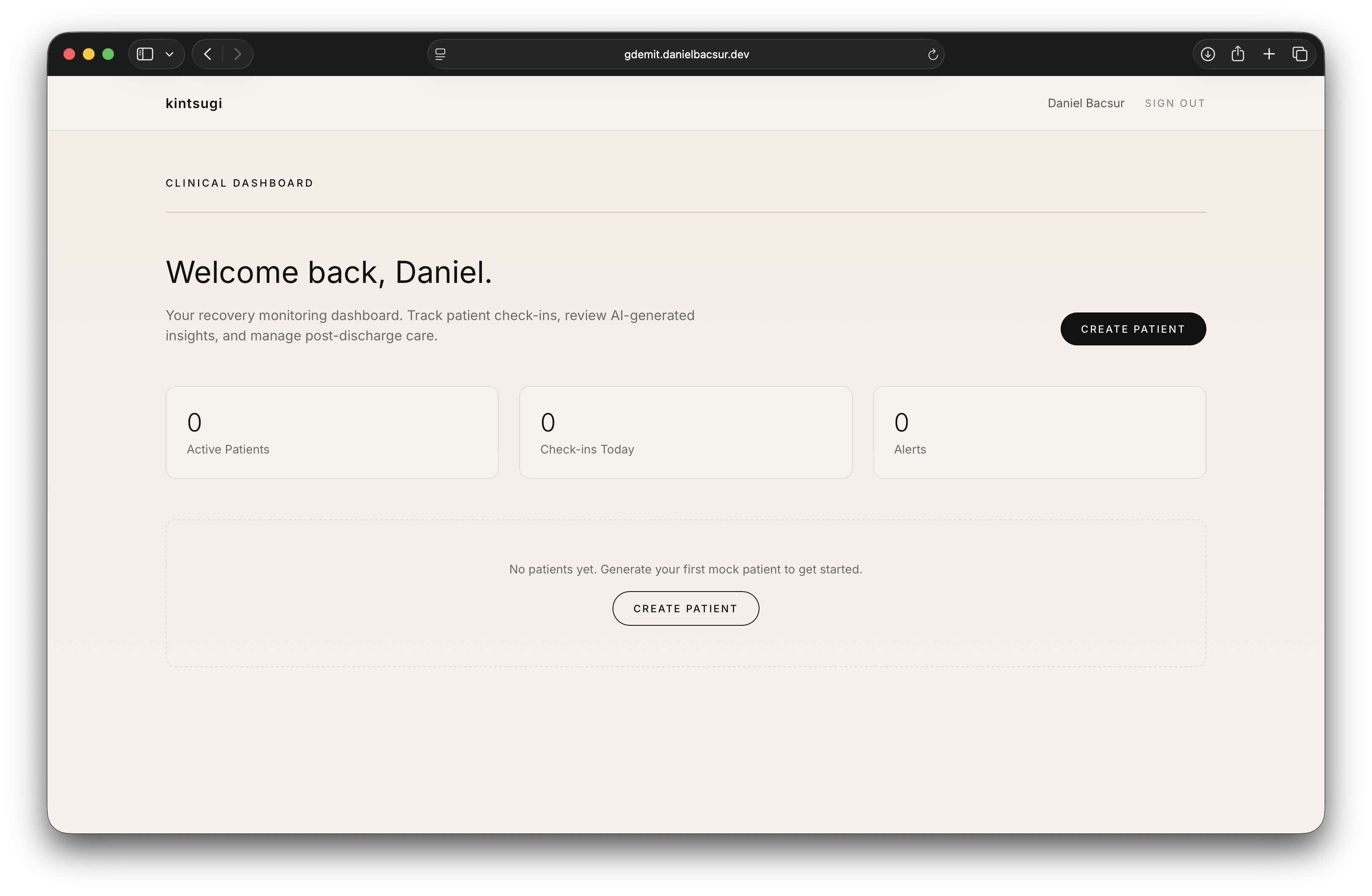
first look at the dashboard
-
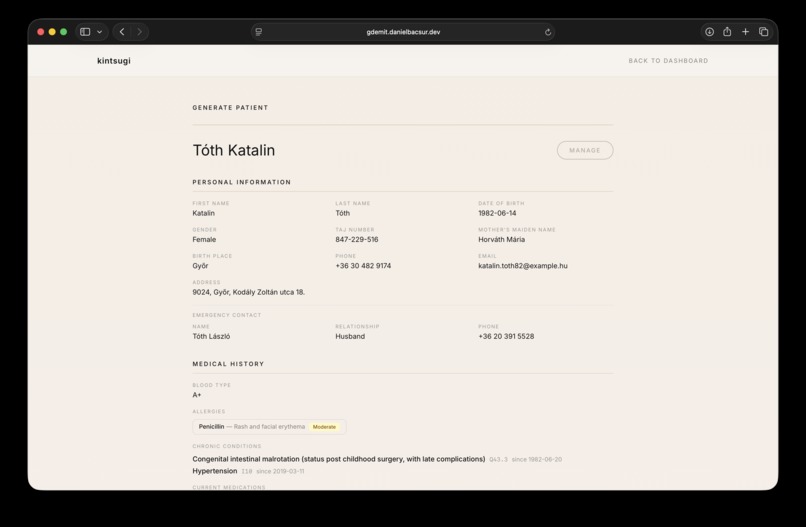
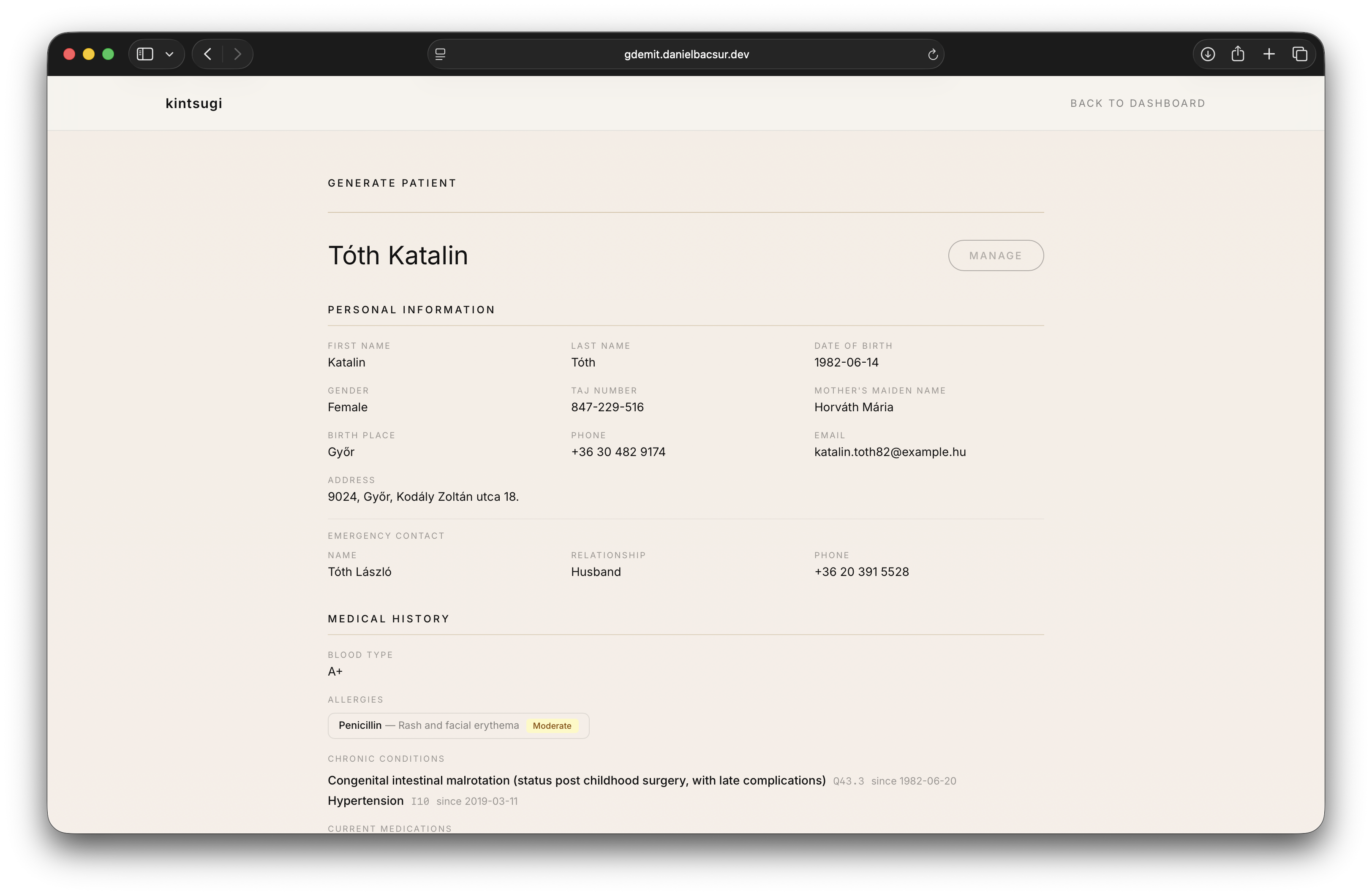
we're able to create mocked patients
-
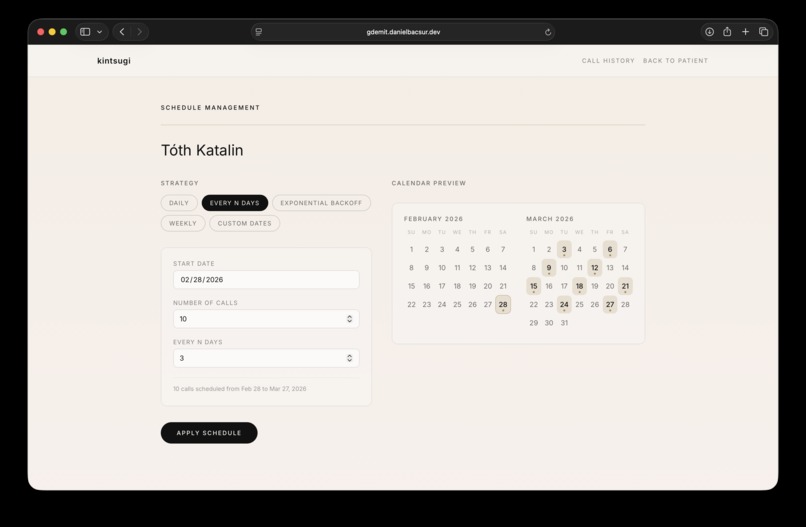
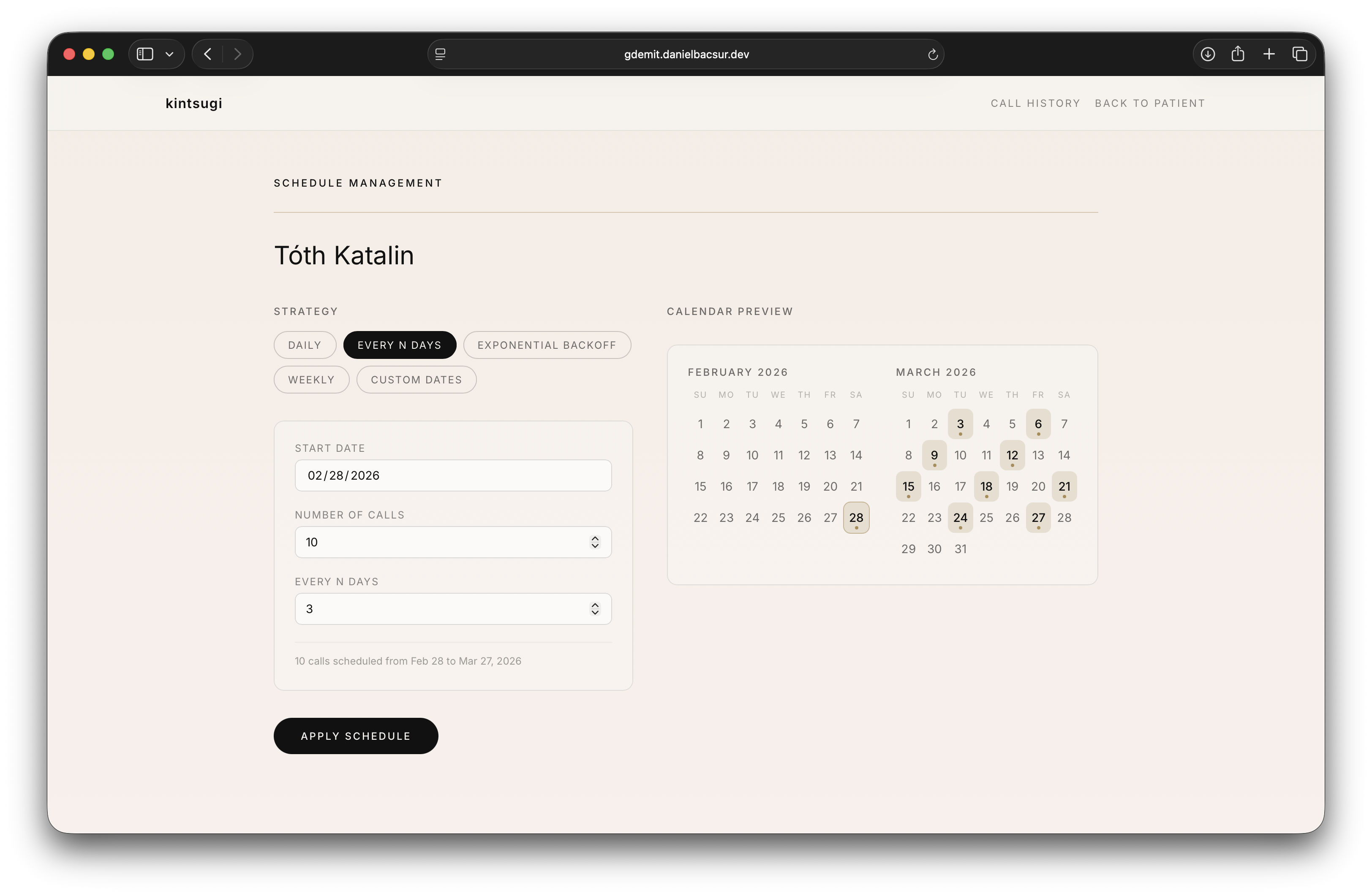
scheduling automated ai voice calls
We're doing a Live Demo! 🚨
Inspiration
1 in 5 patients suffers a serious complication within 3 weeks of leaving the hospital — not during their stay, after. Research shows that just three follow-up calls in 28 days reduced readmission rates from 11.9% to 8.3%. The fix is simple. The problem is nobody has the capacity to make those calls at scale. That's the gap we built Kintsugi to fill.
What it does
Kintsugi monitors patients after discharge through scheduled voice calls — no app, no form, just a phone call. Azure Communication Services handles outbound calling via a custom WebSocket/SIP server. Azure Speech-to-Text transcribes the conversation in real time, Azure AI Speech API performs sentiment and prosodic analysis, and GPT-4o Realtime generates structured SOAP clinical notes. Before each call, agentic workflows analyze the patient's records and prepare the call plan — flagging what to probe for based on procedure, medications, and prior responses. The clinician receives a dashboard with recovery trends, a green/yellow/red risk indicator, and agent-generated recommendations. We never make decisions. We surface signals and keep control firmly with the doctor.
How we built it
Azure Communication Services + custom WebSocket/SIP server — outbound voice calls Azure Speech-to-Text + Speech API sentiment analysis — real-time transcription and prosodic analysis GPT-4o Realtime — conversational agent, SOAP generation, trend summaries Agentic pre-call workflows + MCP server — patient record analysis, call planning, and structured tool use for doctor recommendations Next.js + React + Tailwind — clinician dashboard and patient interfaces Docker + Azure Key Vault — containerized deployment with secrets management
Challenges we ran into
CI/CD pipelines and Dockerization consumed most of our debugging time — coordinating the real-time WebSocket/SIP layer with Azure Communication Services introduced race conditions that were hard to resolve under time pressure. SOAP note quality also required significant prompt iteration before output was consistently useful.
What we built
A working prototype with a full frontend-backend split, containerized and deployed on Azure — live and demoed end-to-end in under 90 seconds.
What's next
Building Kintsugi taught us that healthcare AI lives or dies on compliance. Our immediate next steps would be to achieve SOC 2 certification and full data anonymization. Beyond that: EESZT integration — Hungary's national health record system and expansion into chronic disease management: heart failure, COPD, post-surgical oncology. Multilingual support for Central European deployment is already partially there — you just saw it.
Built With
- agent
- ai
- ai-sdk
- azure
- call
- ci-cd
- communication-services
- gpt
- mcp
- nextjs
- openai
- phone
- react
- realtime
- sip
- tailwind
- twilio
- typescript
- websocket


Log in or sign up for Devpost to join the conversation.