Inspiration
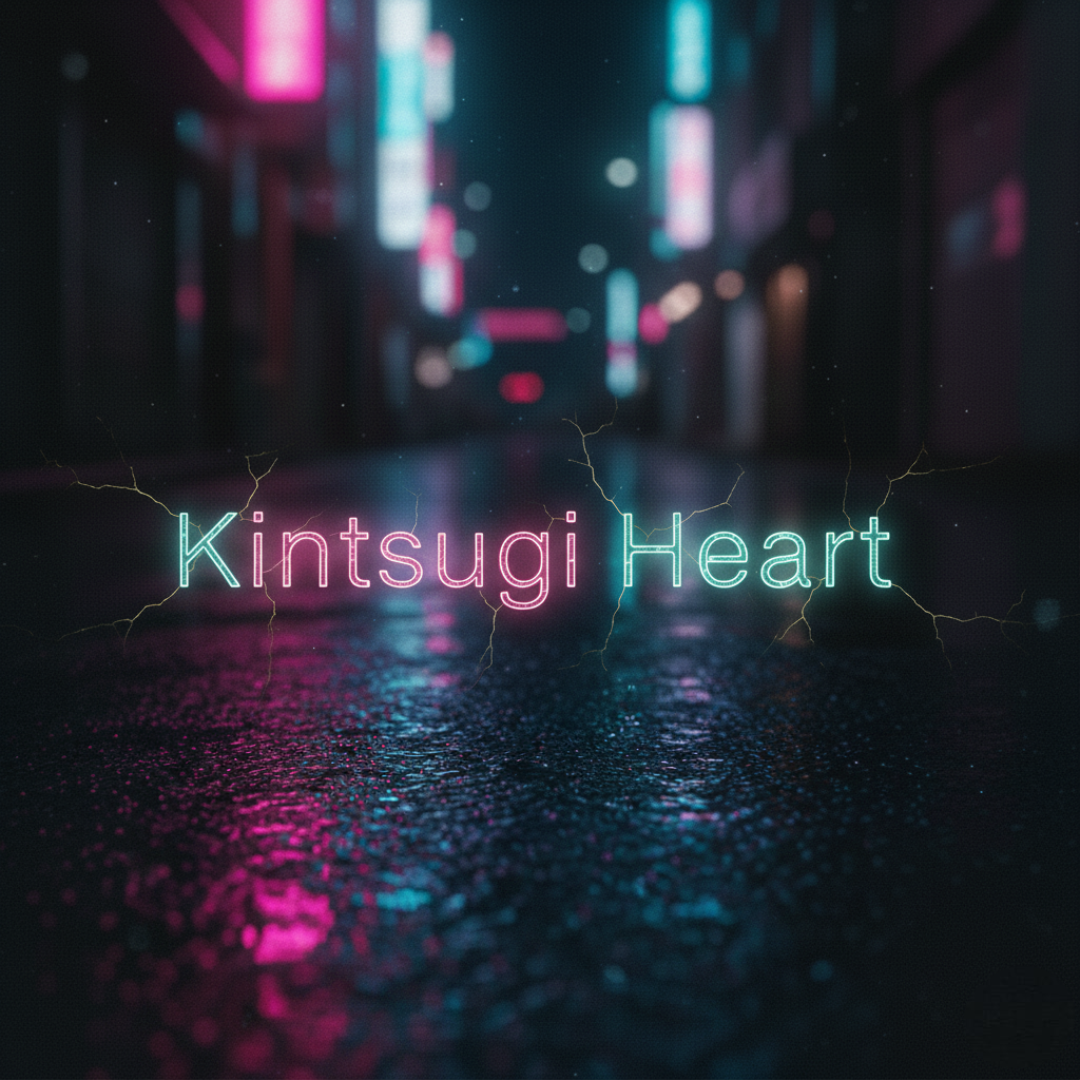
It began with a feeling the beautiful, profound loneliness of a massive city at night. I wanted to capture the aesthetic of moody, neon-drenched anime like Call of the Night, but tell a story grounded in a very human struggle: the fight against apathy. The philosophy of Kintsugi, of mending what's broken and finding beauty in the scars, became the soul of the project. This wasn't just about a character; it felt like a metaphor for the creative process itself. The technical inspiration came from a desire to break down the walls of traditional animation. I wanted to prove that a single, passionate creator, armed with a vision and a meticulously crafted AI workflow, could bring a cinematic story to life.
What it does
Kintsugi Heart is a cinematic heartbeat born from a ghost in the machine. It's a complete, 14-minute anime episode that tells the story of Kuon, a driver whose soul is as empty as the nocturnal expressways he haunts, and Ibuki, an artist whose passion is as vibrant as the murals she illegally paints. At its core, this project presents a fully realized, open-source blueprint for a new form of digital filmmaking. It demonstrates, step-by-step, how a complex narrative with unique characters, dynamic action, and emotional depth can be produced by a single person through an end-to-end generative AI workflow.
How we built it
This was a painstaking, one-person effort driven by rigorous scripting at every level. The journey began not with a sketchpad, but with a script and a meticulously detailed shot list, breaking down every 2-5 second beat of the episode.
The entire production was orchestrated within a custom ComfyUI node graph.
Visuals: Every frame was born from a text-to-image model, guided by directorial prompts that specified not just the content, but the lens, lighting, and mood.
Animation: Each static frame was then brought to life using the Wan 2.2 image-to-video node, using simple motion prompts (slow pan, rain streaks falling) to create cinematic movement.
Voices: The character voices were achieved through a sophisticated TTS-to-RVC pipeline. A neutral TTS voice provided the "canvas," and then specific RVC models were used to "paint" the unique vocal characteristics of Kuon and Ibuki, with pitch and timing adjusted for every single line to convey emotion.
This wasn't a 'press button, get anime' process. Each asset was the result of dozens of iterations and a demanding curation process, ensuring every chosen frame and audio clip served the human-authored story.
Challenges we ran into
The "ghost in the machine" was a constant battle. Maintaining Kuon's visual identity across thousands of frames, without a dedicated character LoRA, was a monumental challenge in prompt engineering and curation. The uncanny valley of AI voice was another major hurdle; making Kuon's apathy sound like a human emotional state rather than a technical limitation required weeks of fine-tuning pitch and model settings.
The biggest crisis was The Pacing Nightmare. The first 8-minute cut felt rushed, a soulless highlight reel. The real challenge wasn't a technical one, but an artistic one: learning to slow down, to trust the silence, and to generate the quiet, atmospheric "in-between" scenes that ultimately gave the story its soul and runtime.
Accomplishments that we're proud of
More than anything, I am proud of creating a story with a heartbeat. I didn't just generate a video; I directed a machine. I found the ghost in it and, through meticulous scripting and relentless curation, taught it how to tell a human story about finding beauty in the cracks.
This project is my Kintsugi pot built from thousands of tiny, generated fragments, pieced together with human intention until the flaws and the seams themselves became the most beautiful part of the work. I am proud to have built a complete, replicable workflow that proves this new form of filmmaking is not only possible but capable of producing genuine art.
What we learned
AI is not a creator; it's a collaborator, and it's an incredibly demanding one. I learned that it doesn't respond to vague ideas; it responds to rigorous, poetic, and technically precise scripting, both for the narrative and for the prompts themselves.
The most critical skill in this new era of filmmaking is curation. It's the quintessentially human act of choosing, of finding the one perfect frame out of a hundred flawed options, that imbues the final work with intent and soul. This project taught me that the future of storytelling isn't about replacing the artist but about arming them with an infinitely powerful new paintbrush.
What's next for Kintsugi Heart
The story of Kuon and Ibuki has only just begun. The immediate next step is to use this refined pipeline to produce the entire 12-episode first season. Kintsugi Heart isn't just our story; it's a proof-of-concept for thousands of other stories waiting to be told.


Log in or sign up for Devpost to join the conversation.