Inspiration
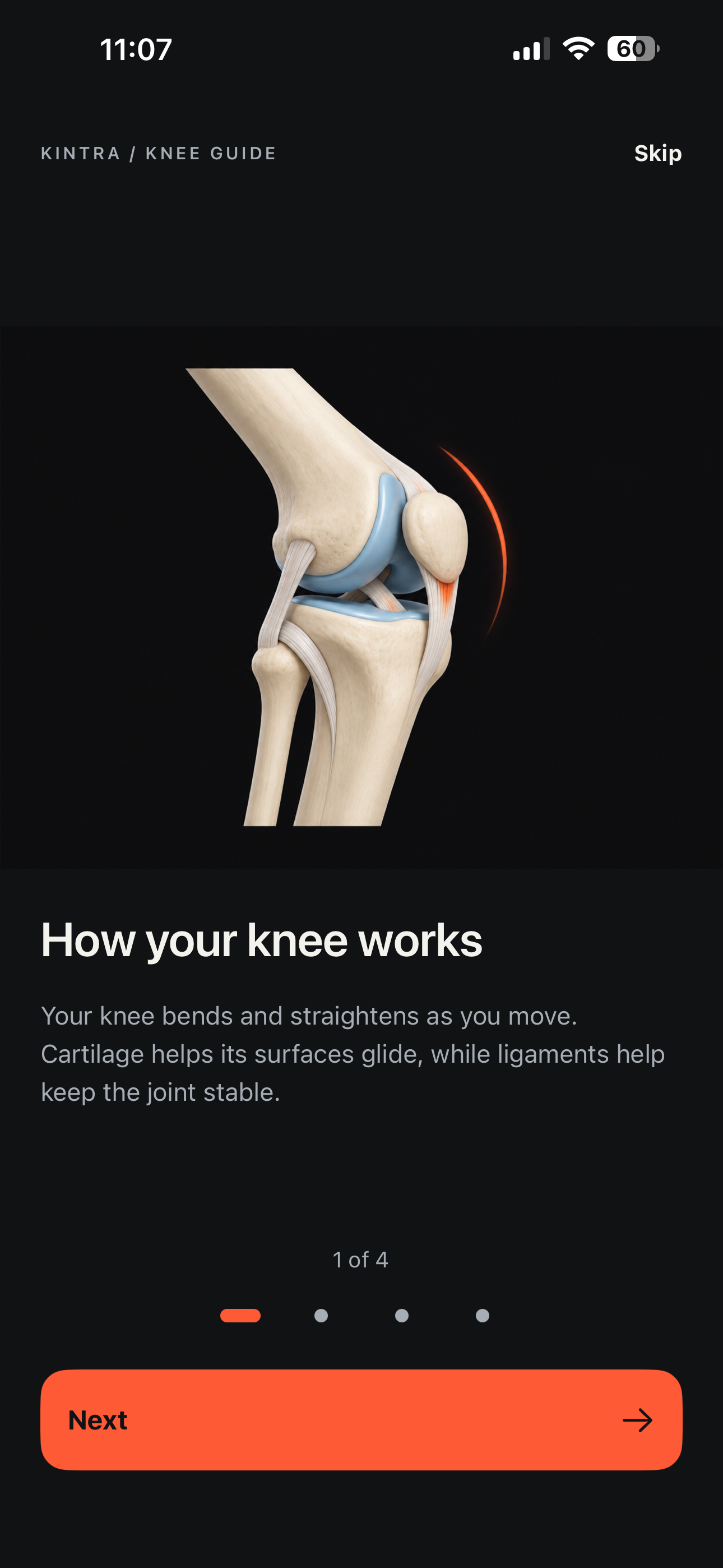
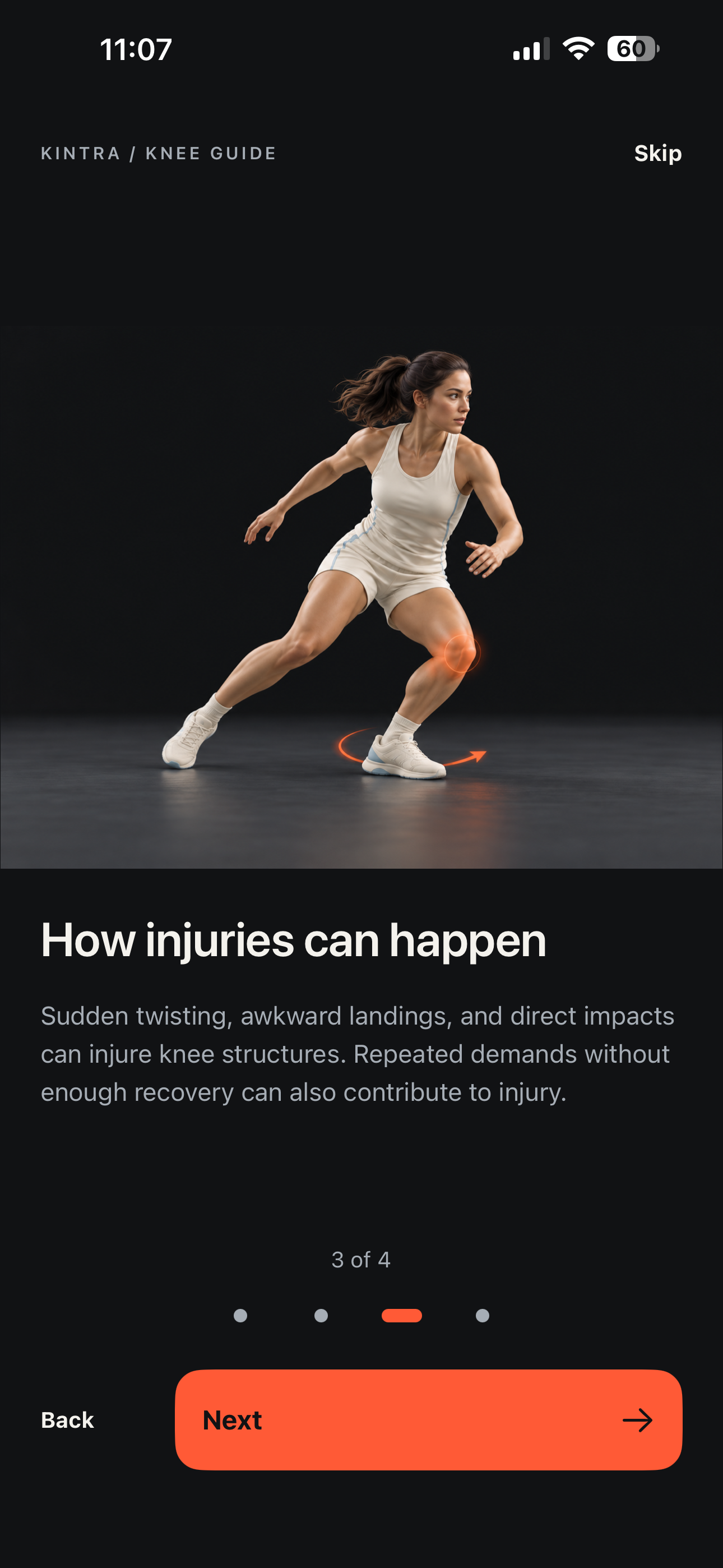
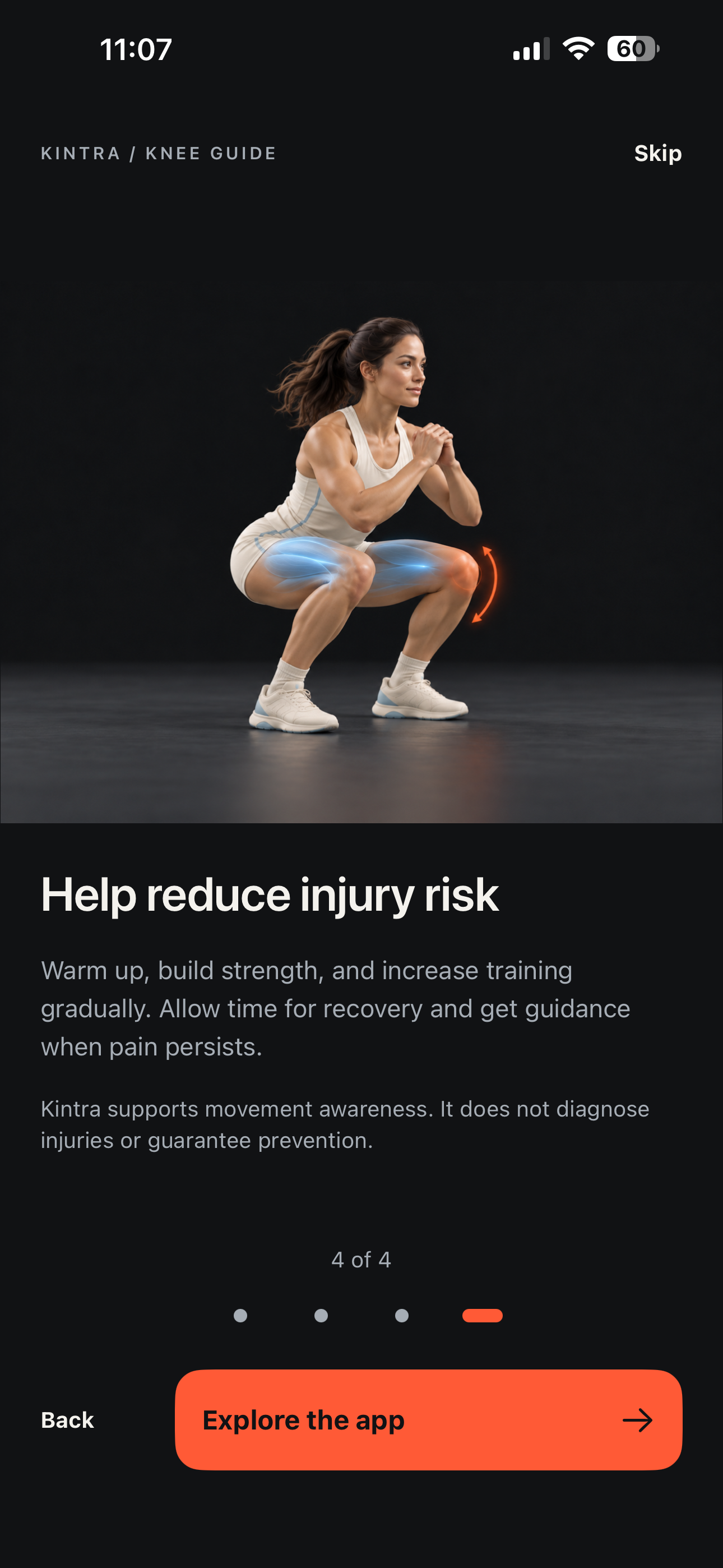
Knee injuries are common in sports, but athletes often do not have an easy way to understand how their movement changes during training. We wanted to build something that could show how the knee is actually moving during activities such as running, jumping, landing, and cutting.
What it does
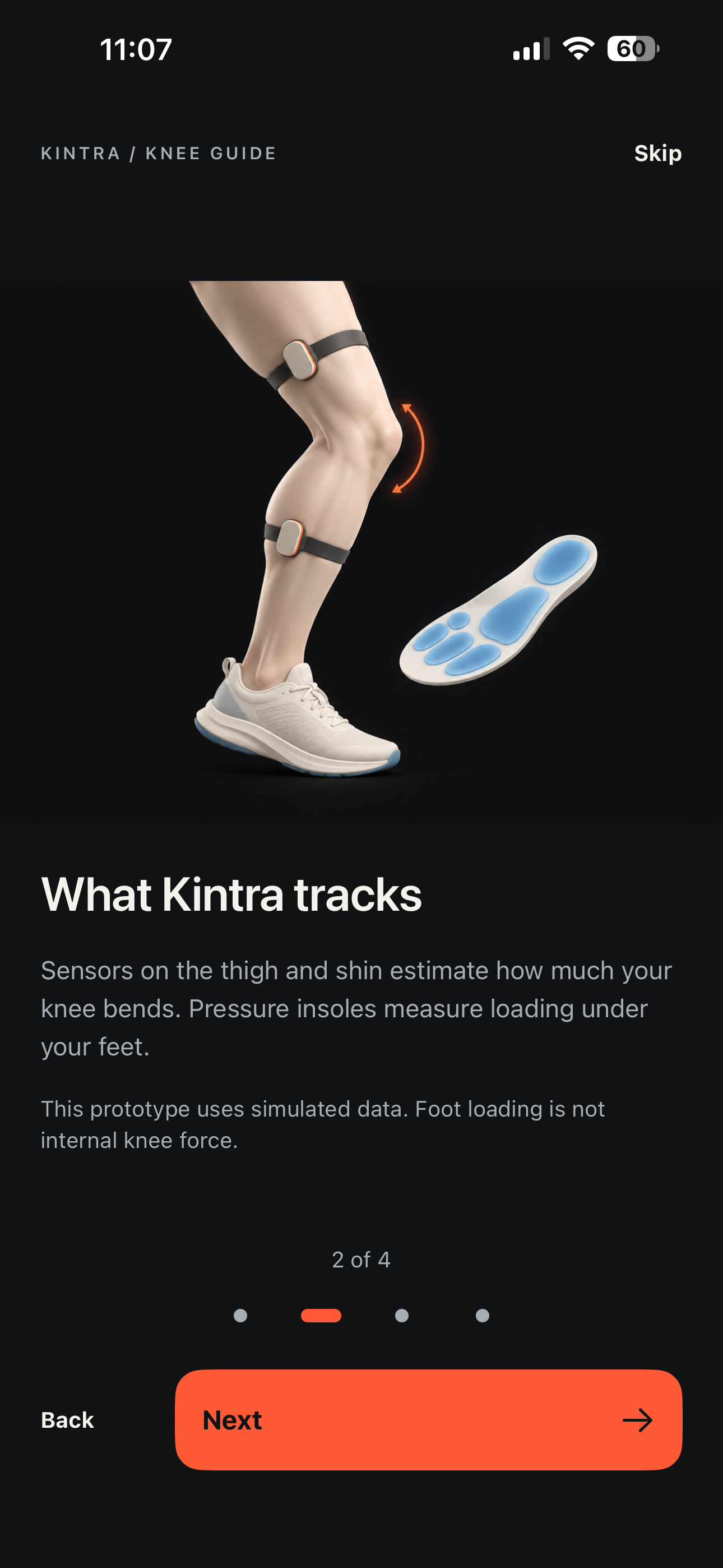
Kintra uses two sensor modules placed above and below the knee. Each module measures movement from a different part of the leg. By comparing the two modules, the system can estimate how the knee is moving rather than only measuring the motion of one body segment. The system can visualize:
- Knee bending and extension
- Thigh and shin orientation
- Movement symmetry between the legs
- Landing and deceleration events
- Changes in technique during fatigue
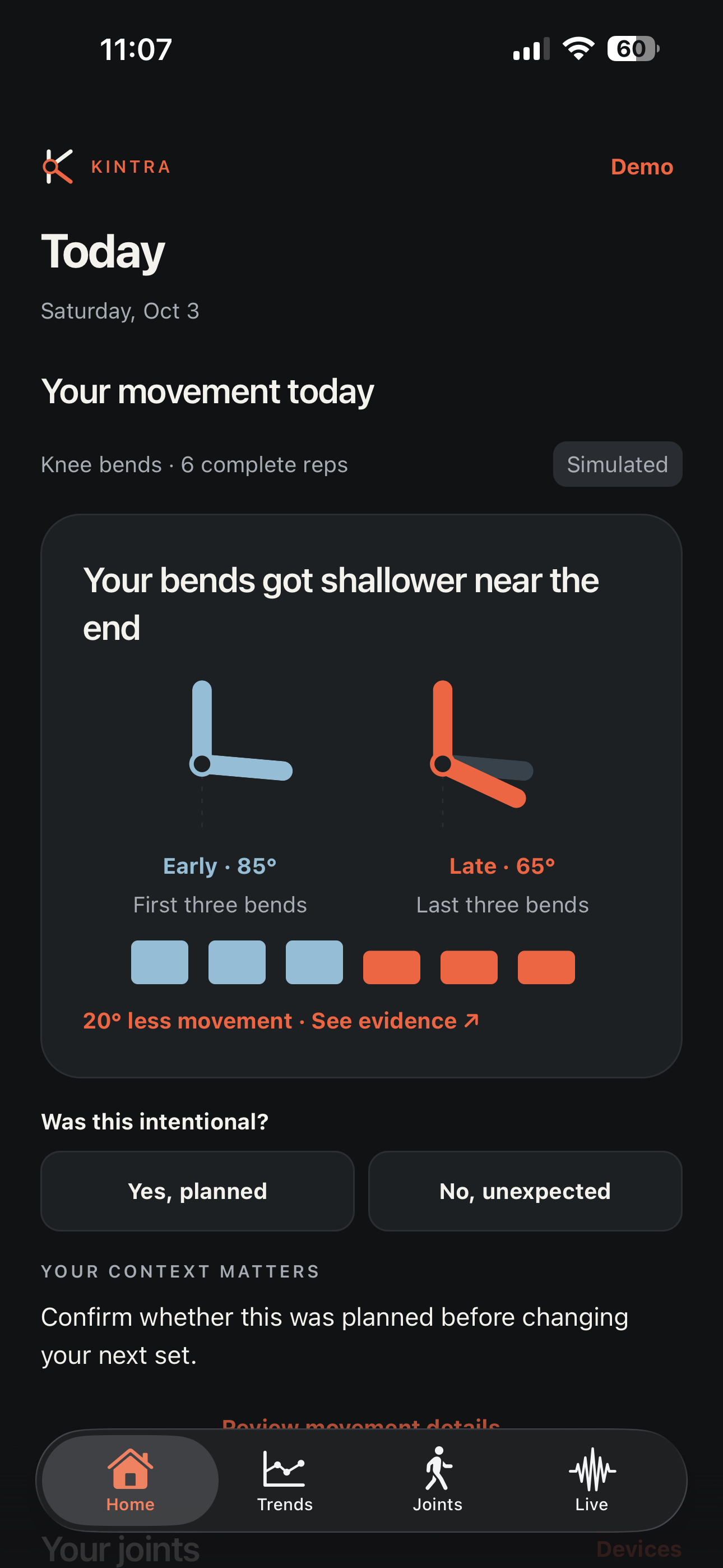
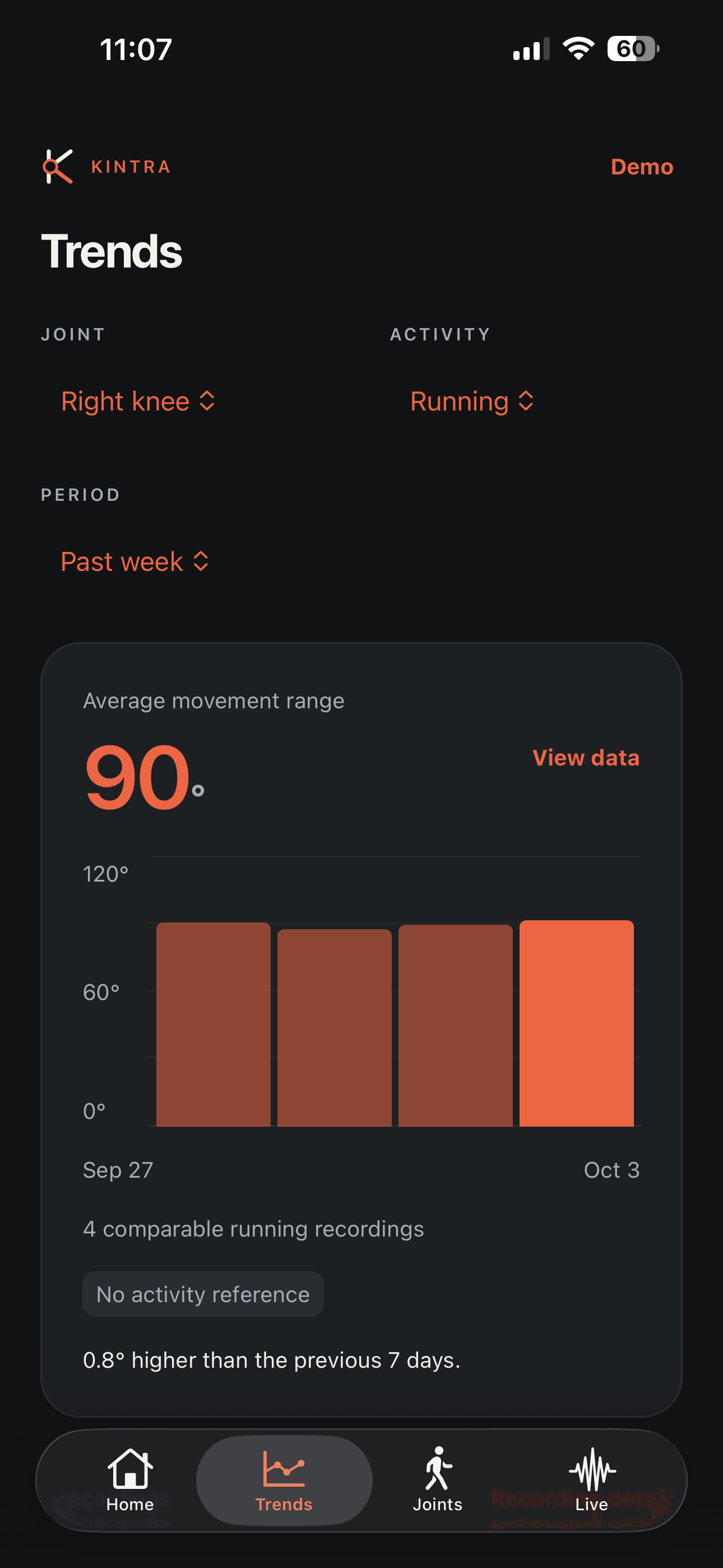
- Differences in timing and impact between the two legs The data is sent to an app, where users can view the reconstructed movement and review the recorded results. Kintra is intended to help athletes understand movement patterns; it is not designed to diagnose injuries. ## How we built it We built a physical prototype with two wearable sensor modules connected to a mobile application. Each module uses an IMU to measure acceleration and rotation. We also explored a high-g accelerometer for capturing larger impact events that a normal motion sensor could miss.
The two modules are positioned on the thigh and shin. Their measurements are synchronized and combined to estimate the relative movement of the two segments, which gives us a representation of knee motion.
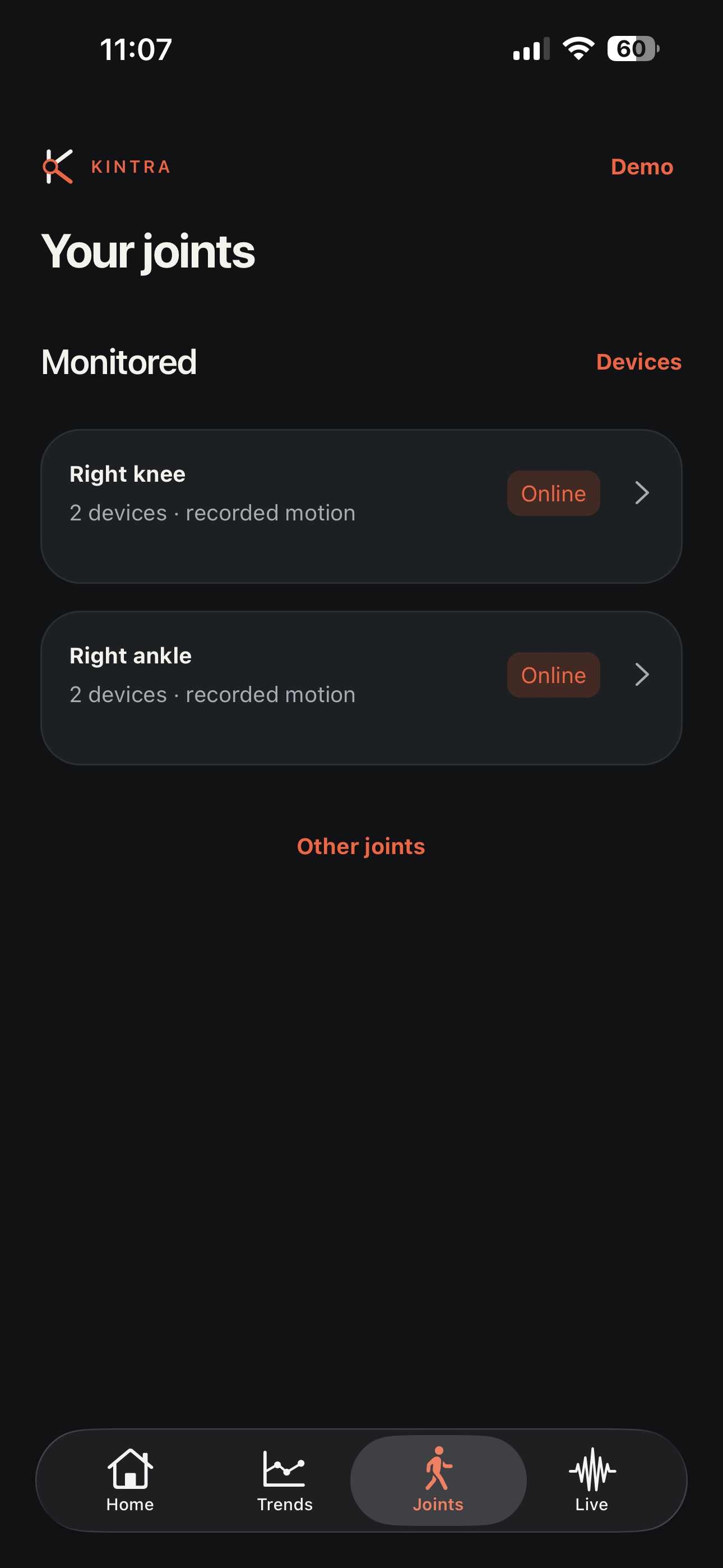
Alongside the electronics, we created a mobile app for viewing and recording movement data, a CAD model showing the ring and electronics enclosure, and a physical working prototype showcasing a virtual representation of knee movement based on real sensor data.
Challenges we ran into
One of our biggest challenges was turning measurements from two separate IMUs into a useful representation of knee motion. Each sensor reports movement in its own coordinate system, and small differences in placement, orientation, timing, and noise can produce noticeable errors. We also struggled with component selection. There are many different IMUs, accelerometers, high-g sensors, microcontrollers, batteries, and wireless components available.
Accomplishments that we're proud of
We are proud that we created an app that receives and displays data from the device, a CAD model that represents how the wearable could fit around the leg, and a physical prototype capable of collecting real movement data. We are also proud to have successfully connected the hardware measurements to a virtual knee-motion model. Seeing the virtual movement respond to real movements from the prototype helped confirm that the overall concept was feasible.
What we learned
We learned that research is necessary before designing. It is easy to choose a component or create a layout based on what looks good on paper, but datasheets, electrical limits, mechanical requirements, mounting guidelines, and real testing can change the design significantly. We also learned that before committing to the physical design, we should discuss the sensors, microcontroller, battery, communication method, and enclosure requirements first. This helped us avoid designing around parts that were too large or difficult to integrate.
What's next for Kintra
Our next major step is adding pressure-sensing insoles to the system. These sensors could measure how force is distributed across the foot and estimate where that force is being applied. By combining foot-pressure data with thigh and shin motion, Kintra could study relationships between landing force, acceleration and knee angle. This would add information that motion sensors alone cannot provide. The goal would be to combine force magnitude, force position, and knee-motion data into a more complete picture of how an athlete moves.

Log in or sign up for Devpost to join the conversation.