-
-
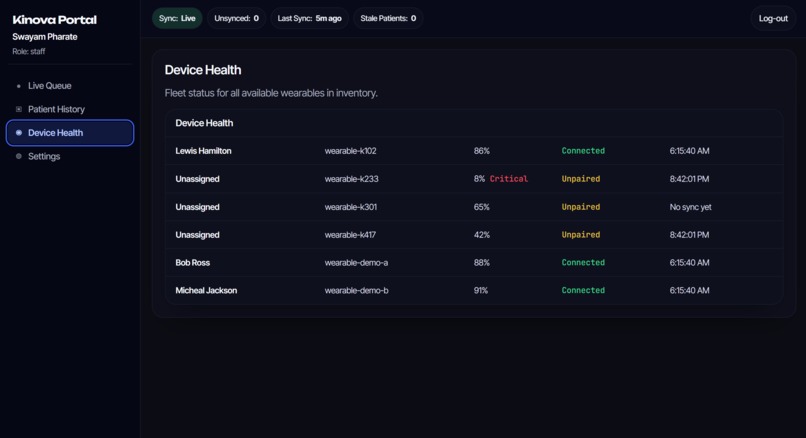
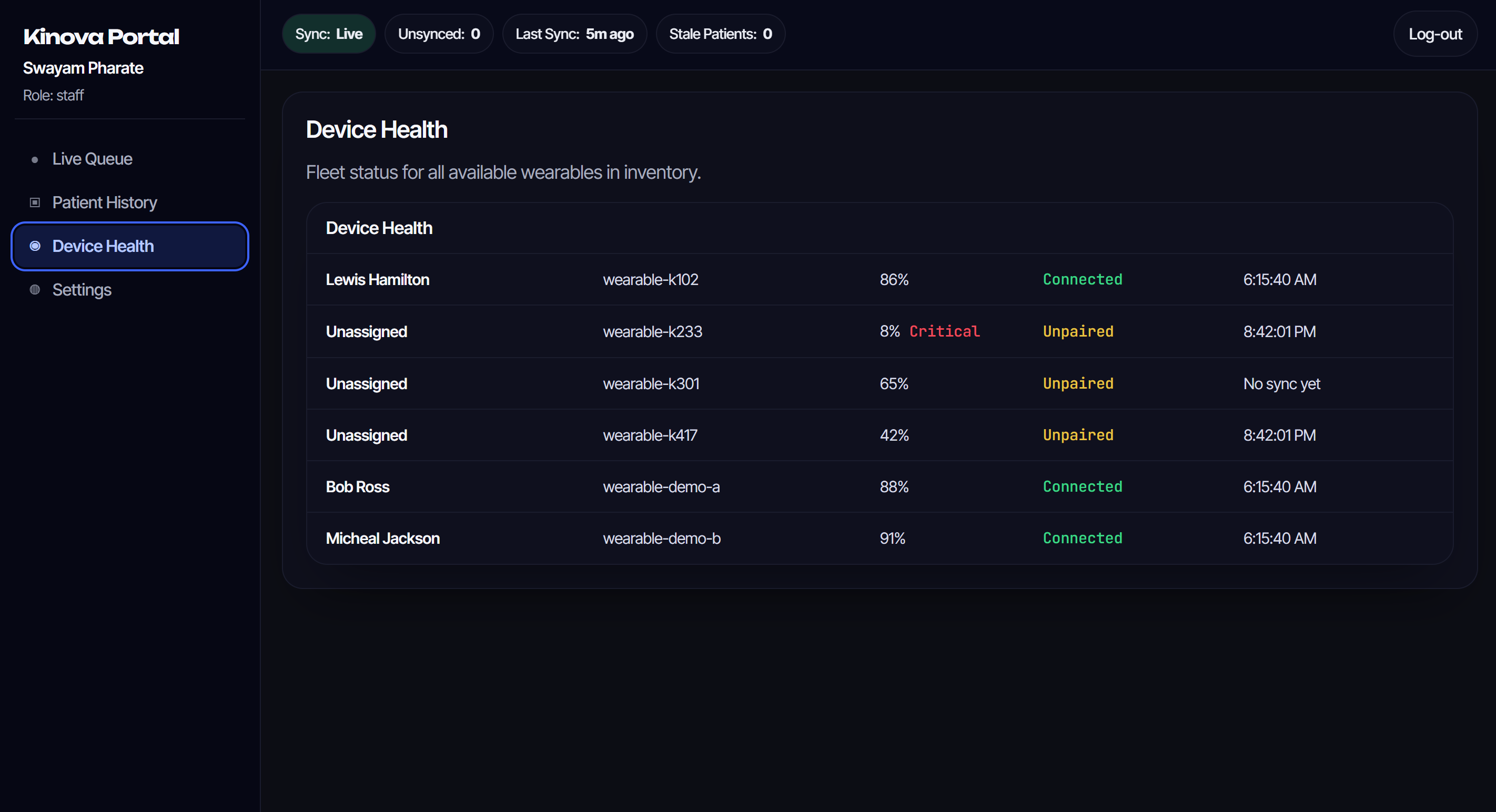
Device Health View
-
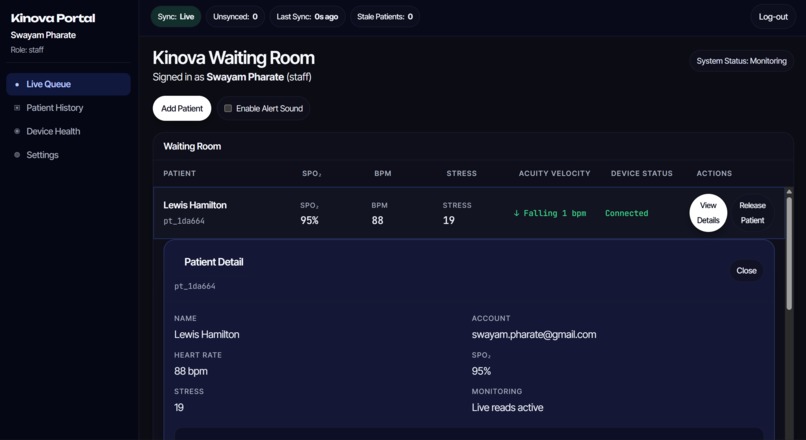
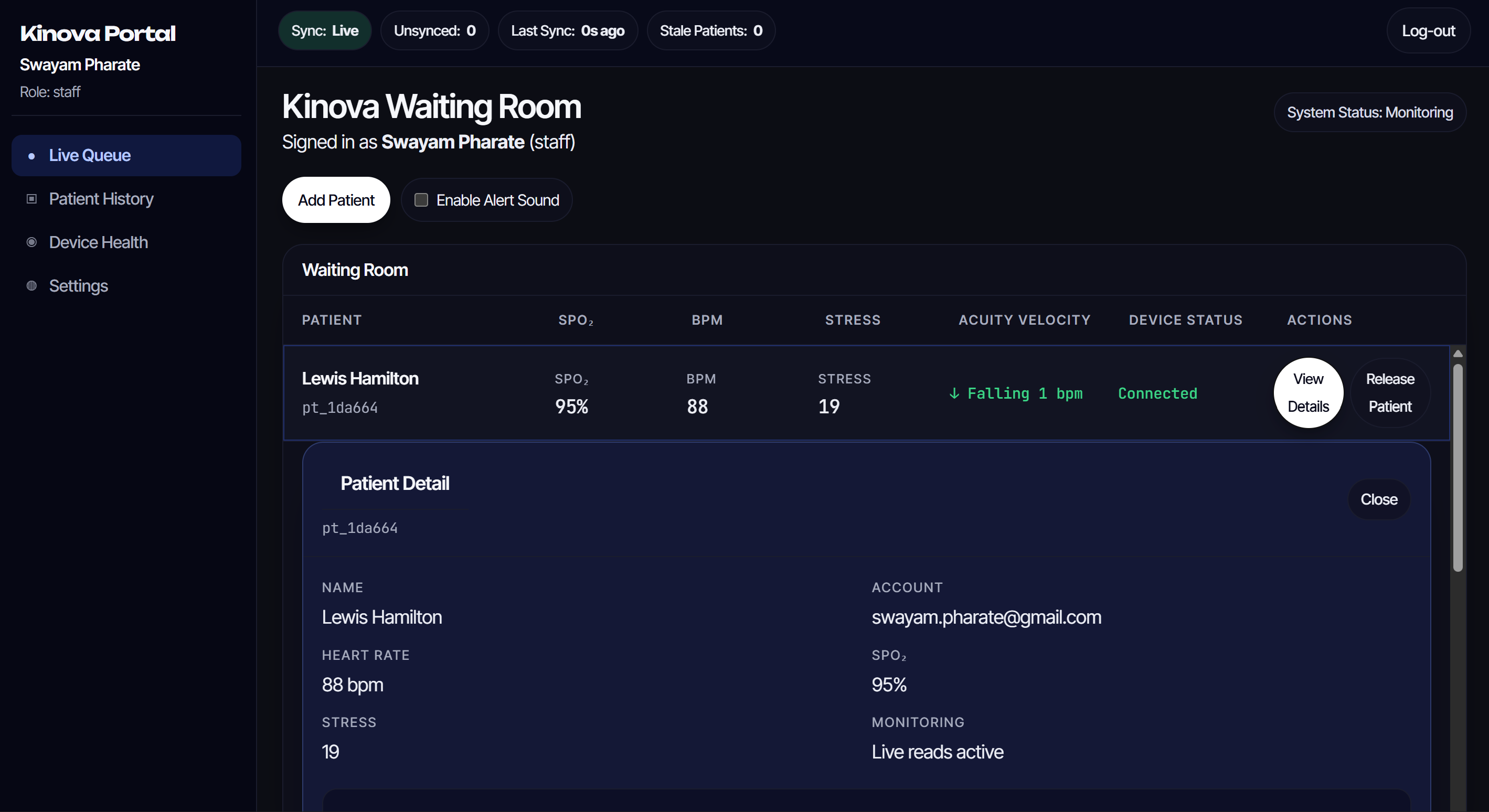
Dashboard View
-
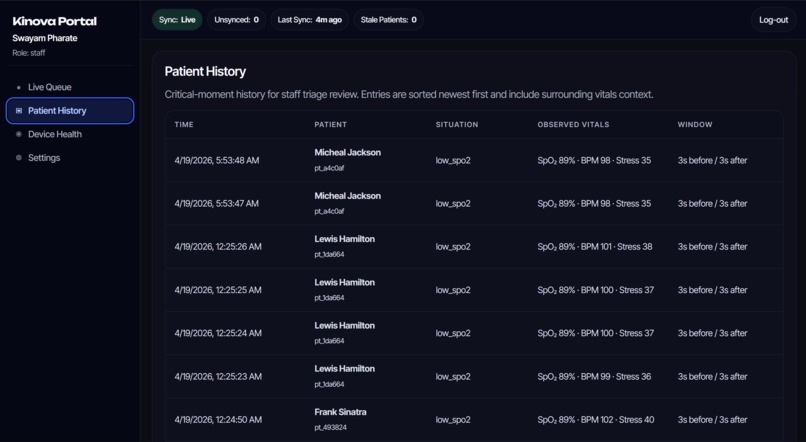
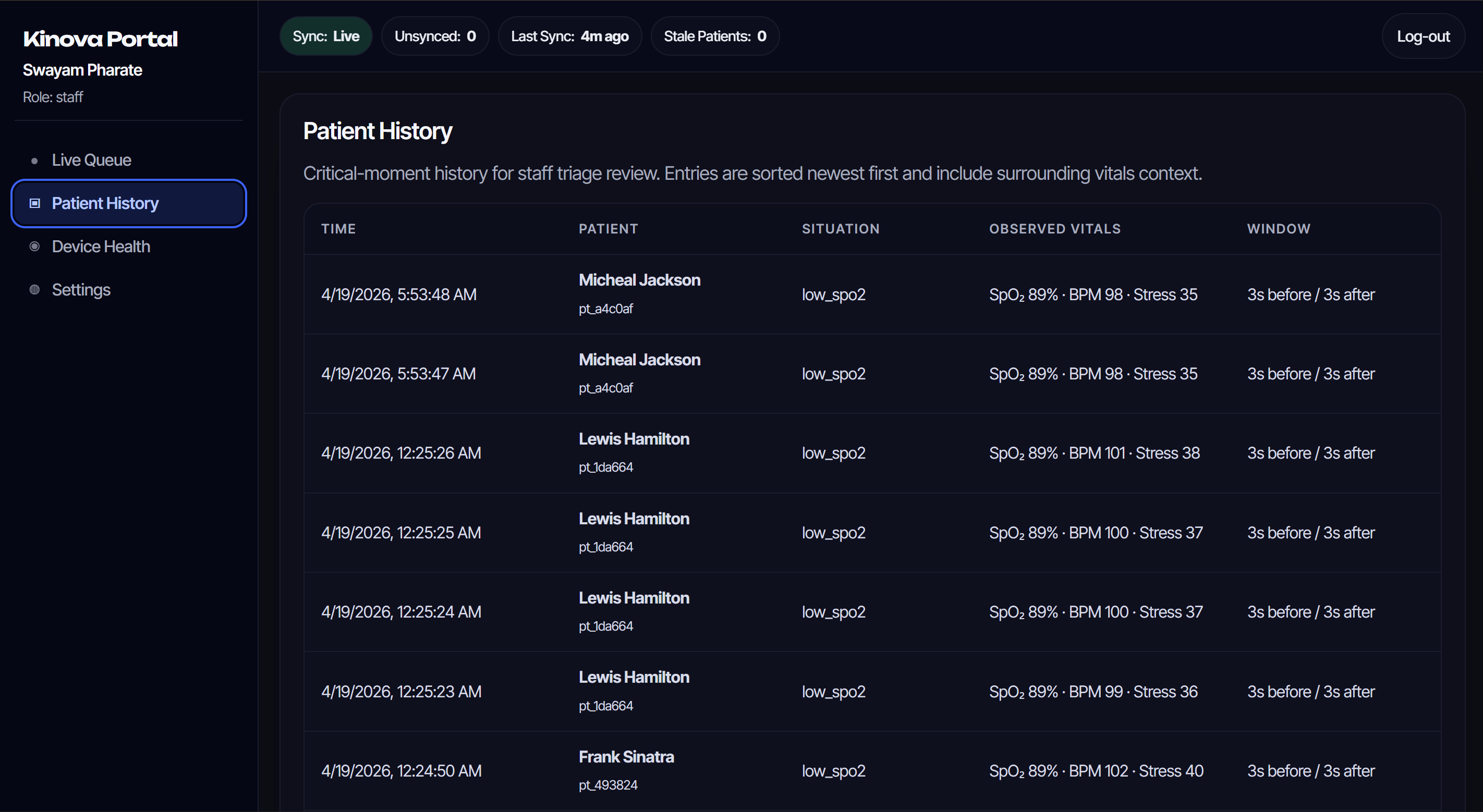
Critical Moment View
-
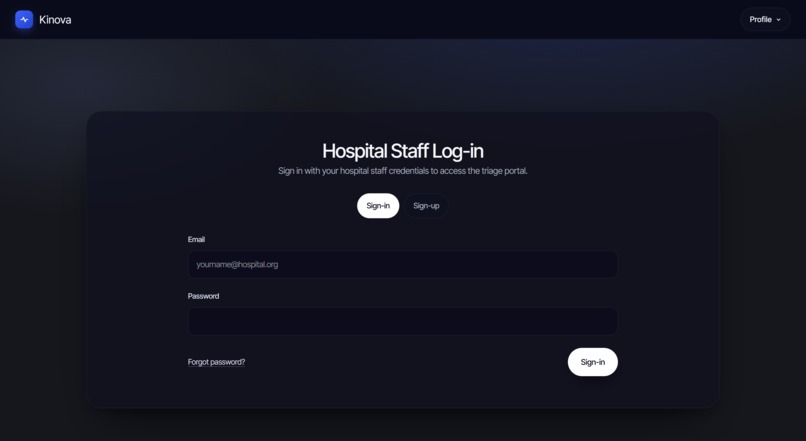
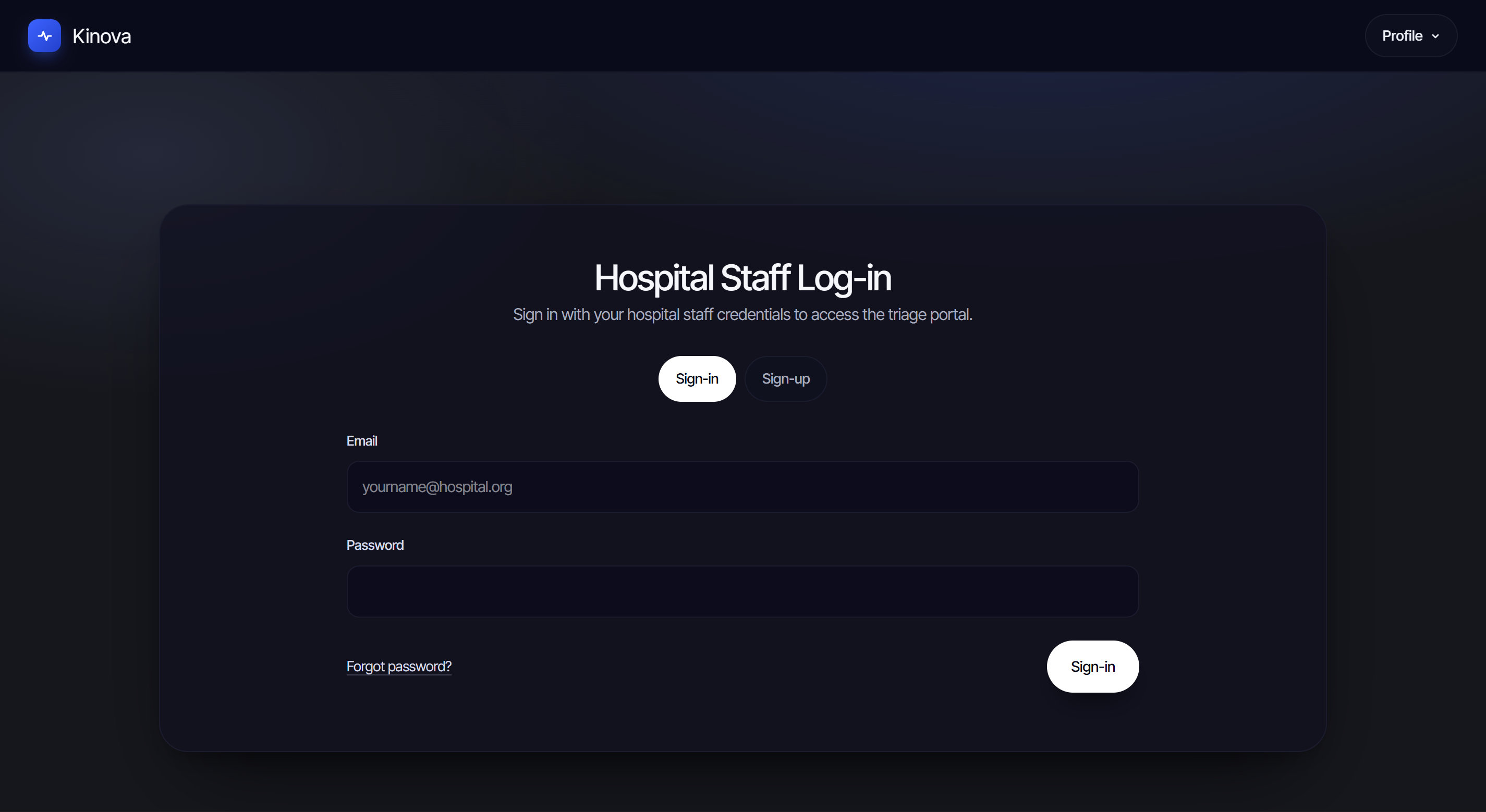
Log-in Page
-
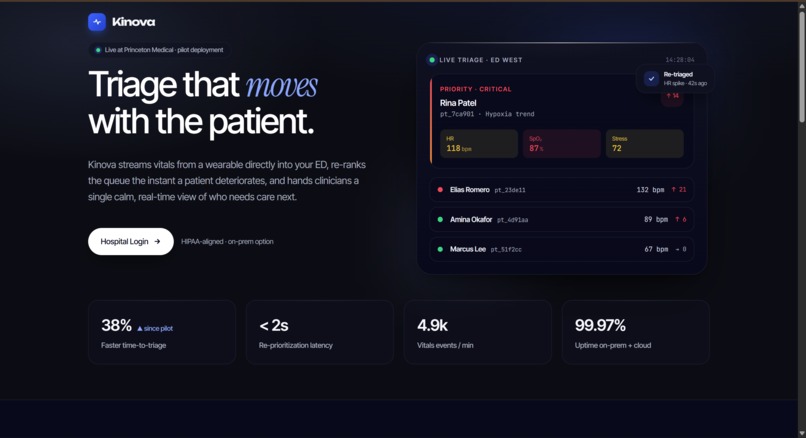
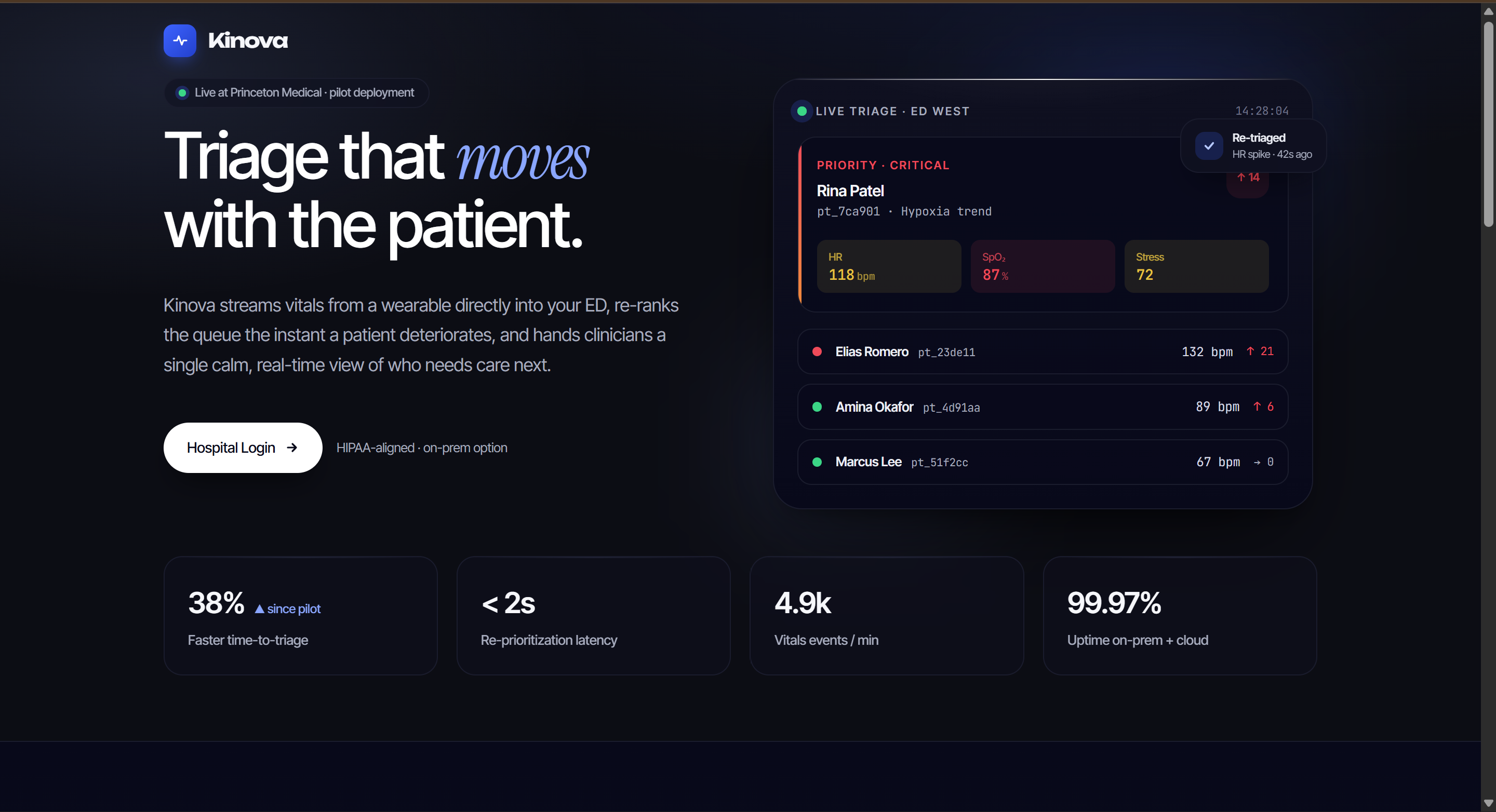
Landing Page
Inspiration
A couple days before HackPrinceton, I was on a call with my uncle in India. He works in the healthcare space, and was talking about how overwhelmed he was after a busy day at the ER. After asking him some follow up questions on how his hospital is able to manage such a high influx of patients, I realized that this was a perfect problem space to pursue for my hackathon project.
What it does
Essentially, at a large scale the project is aimed to make organizational decisions for medical staff in ER's and hospitals so that they know who to service next, and will have vital information about the patient. They are also given direction in terms of who to service next. A main goal of this project was also to create an inexpensive alternative to tech in ambulences that allow hospitals and medical locations to know more about a patient before they arrive at the hospital, because of the fact that hospitals in developing countries would not be able to fund it.
How we built it
The way that I built this project was mainly through using agentic models such as Github Copilot in order to develop the software. A lot of the thinking that was done was done in terms of systems design, and math calculations behind creating the program that does analysis on who to service next. A lot of what was built was also creatively, on a notebook.
A large part of the project was also hardware. I wanted to build a wearable device that was focused on capturing basic vital information of a patient (Blood Oxygen Levels, and BPM). I was able to get the bluetooth model functional, but because of a lack of wires, and the need to solder the MAX30102 sensor made it so that I was not able to create that part of the project.
Challenges we ran into
The biggest challenge, as mentioned above was definitely the hardware. I am not very well versed in circuitry, which means I needed to learn wiring from scratch. Getting the BLE module to connect to the laptop was also extremely difficult because it forced me to understand the underlying architecture of how packets are sent between two devices, and how to decode those topics.
Accomplishments that we're proud of
Although the ciruitry was not able to be completed because of a lack of materials, I was super happy that I was able to finally get the BLE module to work. I had to research a lot about how to devleop the infrasturcture for connecting the bluetooth module, for which needed a lot of trial and error. I also had to work a lot on the wiring, becuase the final issue in that bluetooth connectivity was the fact that I misplaced the resistor.
What we learned
I learned a lot about what it was like to think and develop products as features, rather than code. It's an interesting experience to have after learning to create low-level code in school. Another thing I learned was how to integrate IoT into my projects, as this was the first time that I would be doing that and creating hardware for a software service.
What's next for Kinovo - The Portal
I have created stages for what I want Kinovo to look like. I talked to a lot of mentors in terms of if this idea can be something that I can take into the real world. After having many conversations, I know that this is something that I want to scale to emergency response teams, and have the software be compatible with existing wearable tech (Garmin, Apple, Samsung).

Log in or sign up for Devpost to join the conversation.