Kino — The Creative Companion in Your Pocket
What Inspired Me
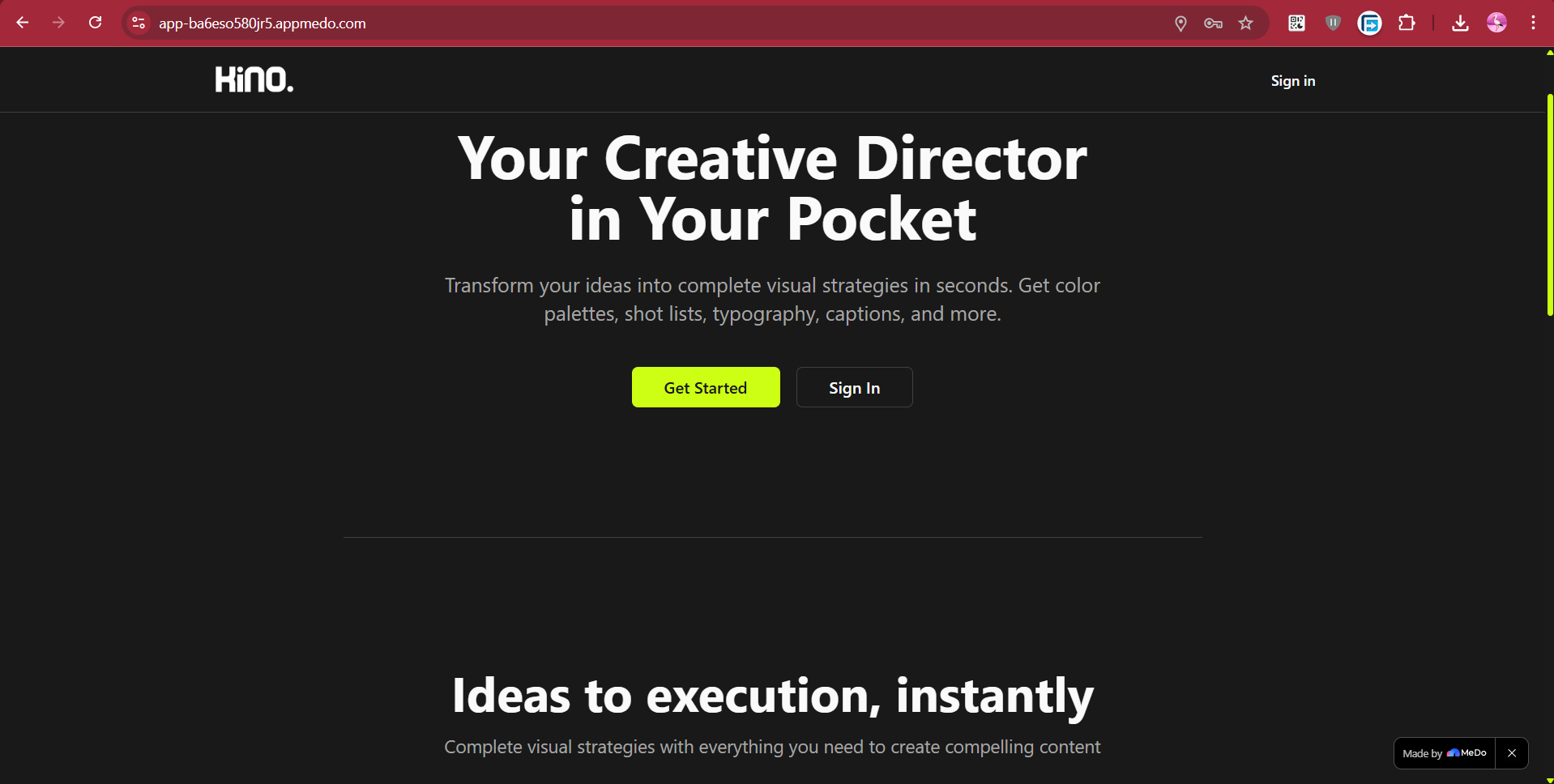
Many people want to become content creators, but they often get stuck at the very beginning. They have the passion, but they don't know how to translate a raw idea into a professional plan. I wanted to build a web app that acts like a true friend and companion to these creators—someone who listens to their thoughts and helps them take action. This friction between having an initial creative spark and building a real production plan is the gap I wanted to bridge. I built Kino to guide creators forward so that no good idea gets left behind.
How I Built It with MeDo
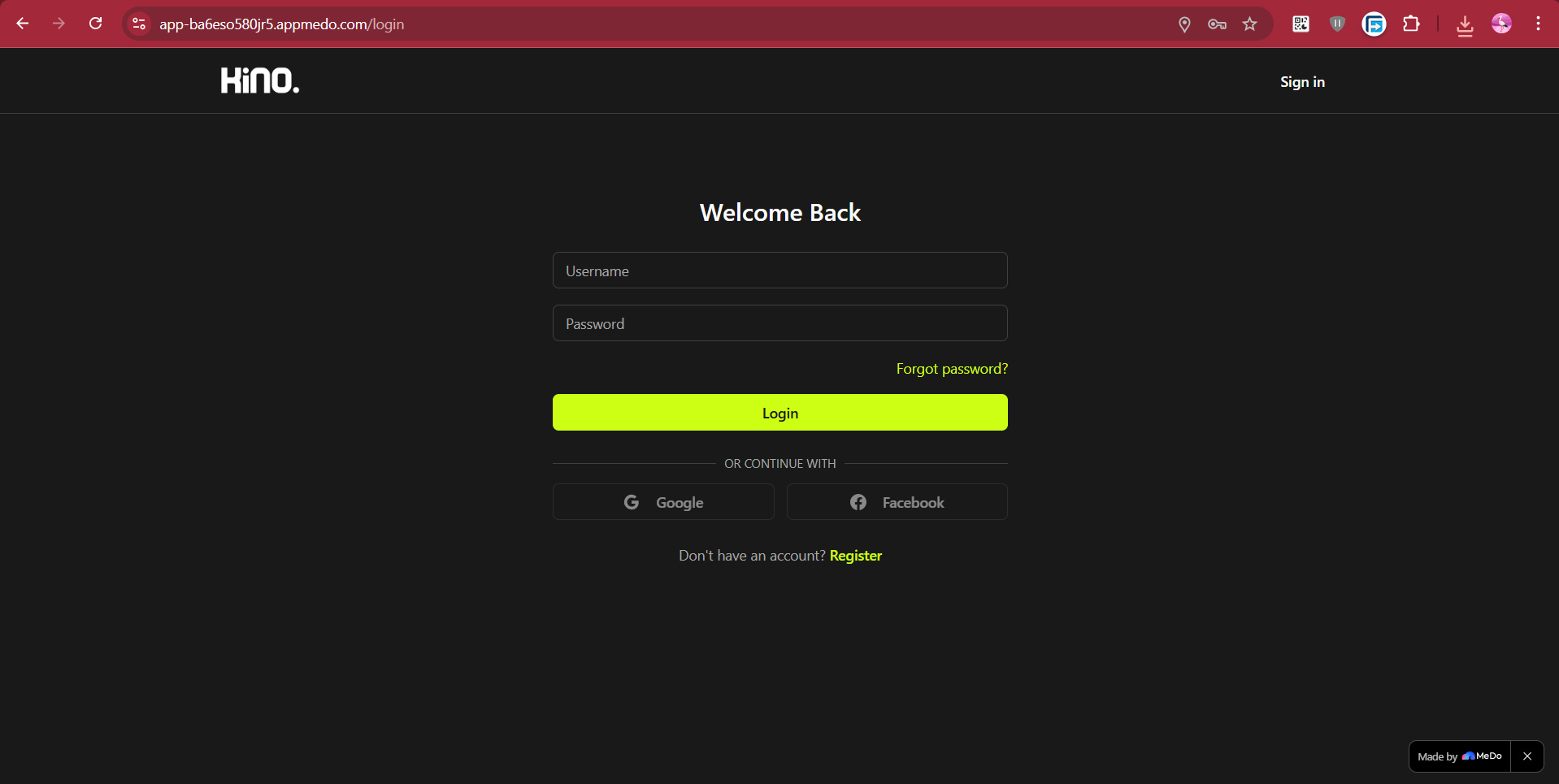
Kino was built completely using the MeDo platform. Instead of wrestling with complex database setups and writing standard boilerplate code from scratch, I was able to talk to MeDo in natural language to construct the full-stack architecture.
The application workflow functions exactly as I envisioned:
- The Companion Chat: Users can casually chat with Kino about their day or an activity they are doing.
- Moment Capture: The AI processes the conversation and tells the user exactly which cinematic moments they should capture based on their day.
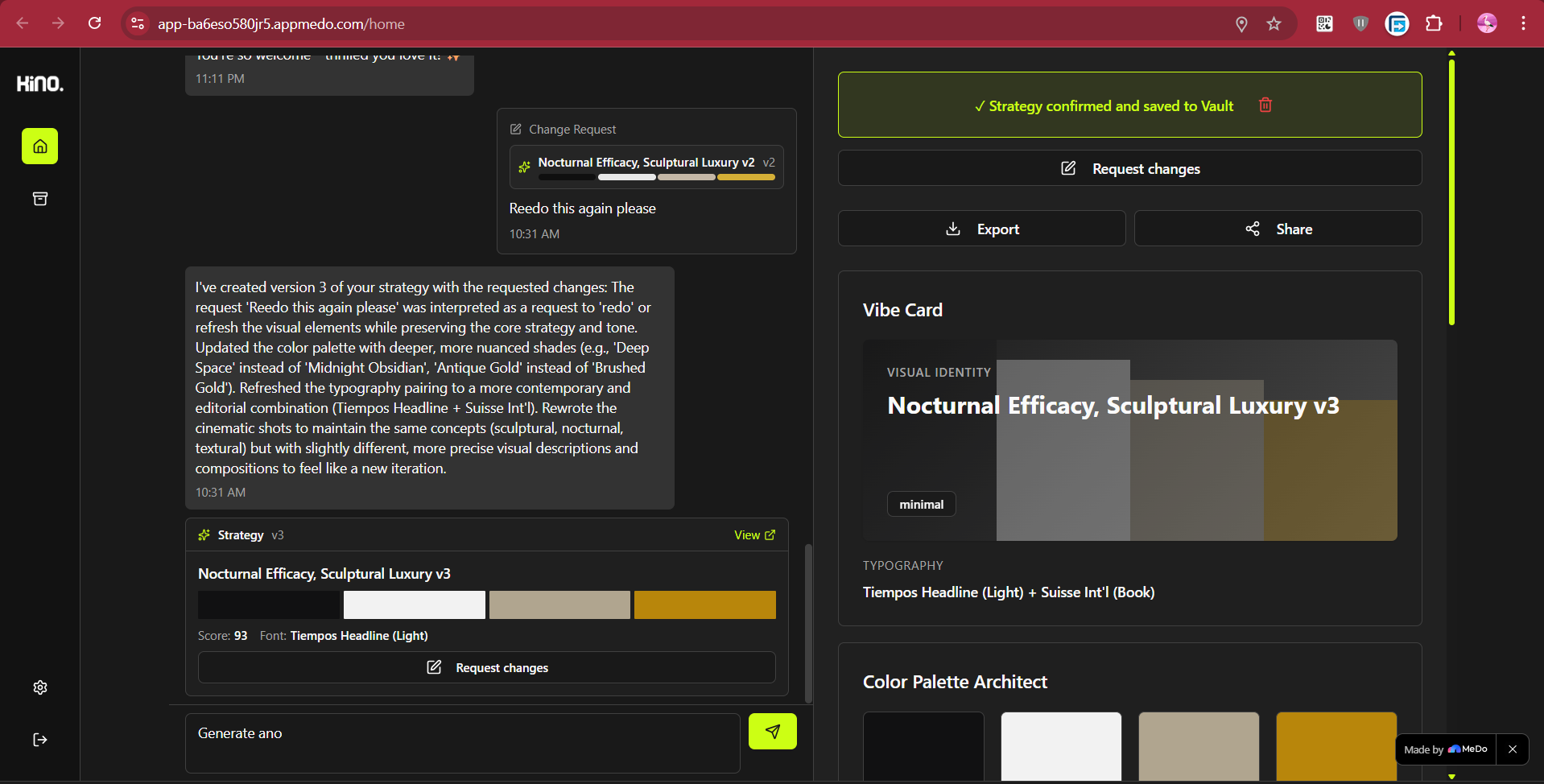
- Strategy Generation: It instantly develops a comprehensive video strategy, providing curated color palettes, professional font pairings, specific camera shots, and ready-to-use captions.
- Iterative Rebuilding: If a user wants to adjust something, they can simply request changes or ask for the strategy to be rebuilt entirely.
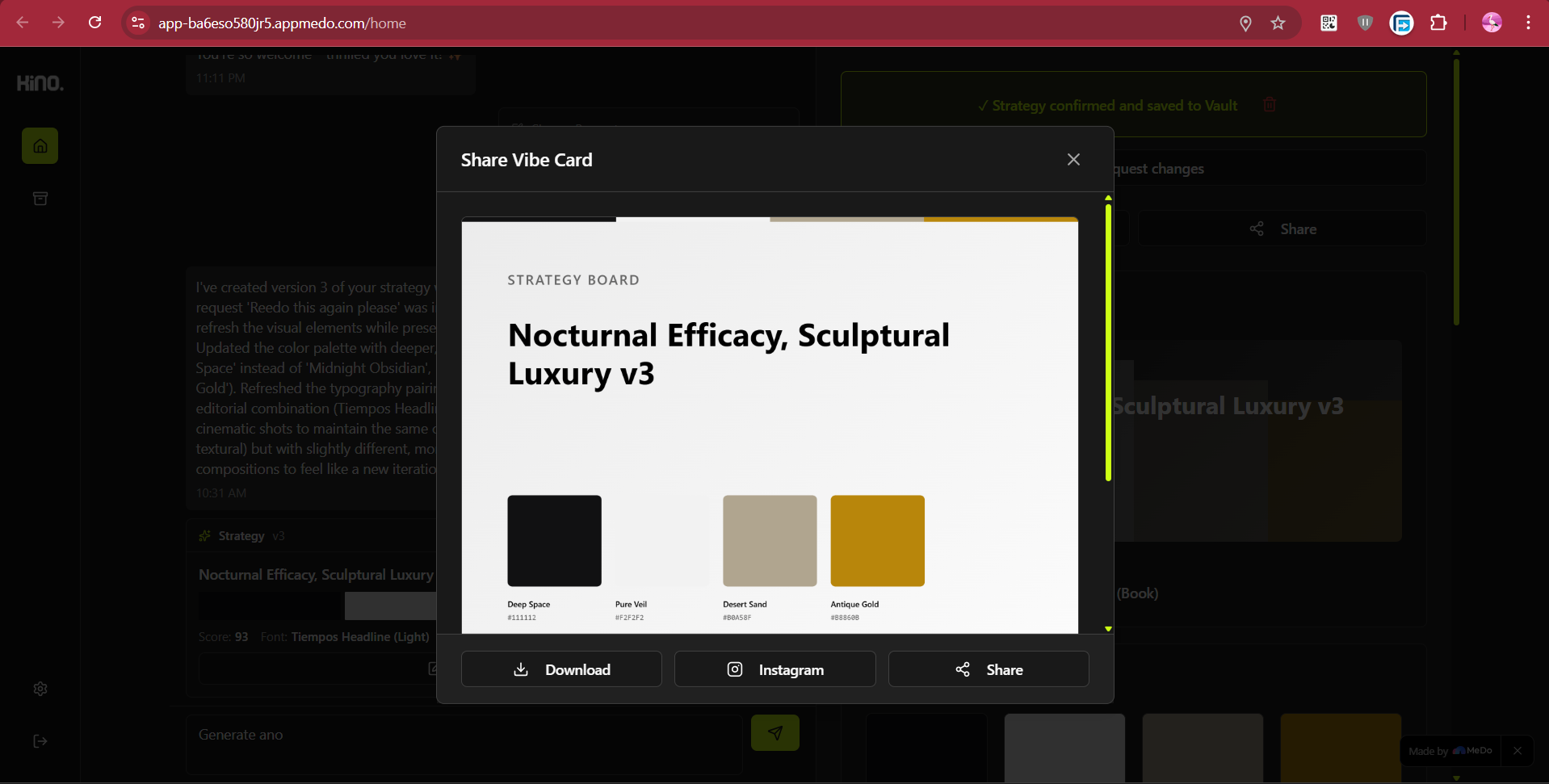
- Sharing the Vibe: I built a sharing mechanism that allows users to export the full strategy or share the visual "vibe" directly with others.
The Mathematical Edge: The Actuarial Score
To ensure the creative strategies generated by Kino aren't just random suggestions, the app utilizes an AI-driven Actuarial Score to predict potential content engagement. The calculation models visual consistency, color harmony, and script pacing.
The engagement probability score $\mathcal{S}$ is mapped using the following formula:
$$\mathcal{S} = \prod_{i=1}^{n} (\alpha_i \cdot \omega_i) + \beta$$
Where:
- $\alpha_i$ represents the individual creative metrics (e.g., color palette balance, typographic contrast, shot variety).
- $\omega_i$ represents the dynamic weights assigned based on the user's chosen target audience and content vibe.
- $\beta$ is the environmental baseline modifier determined by the situational context the user inputs during the chat.
What I Learned
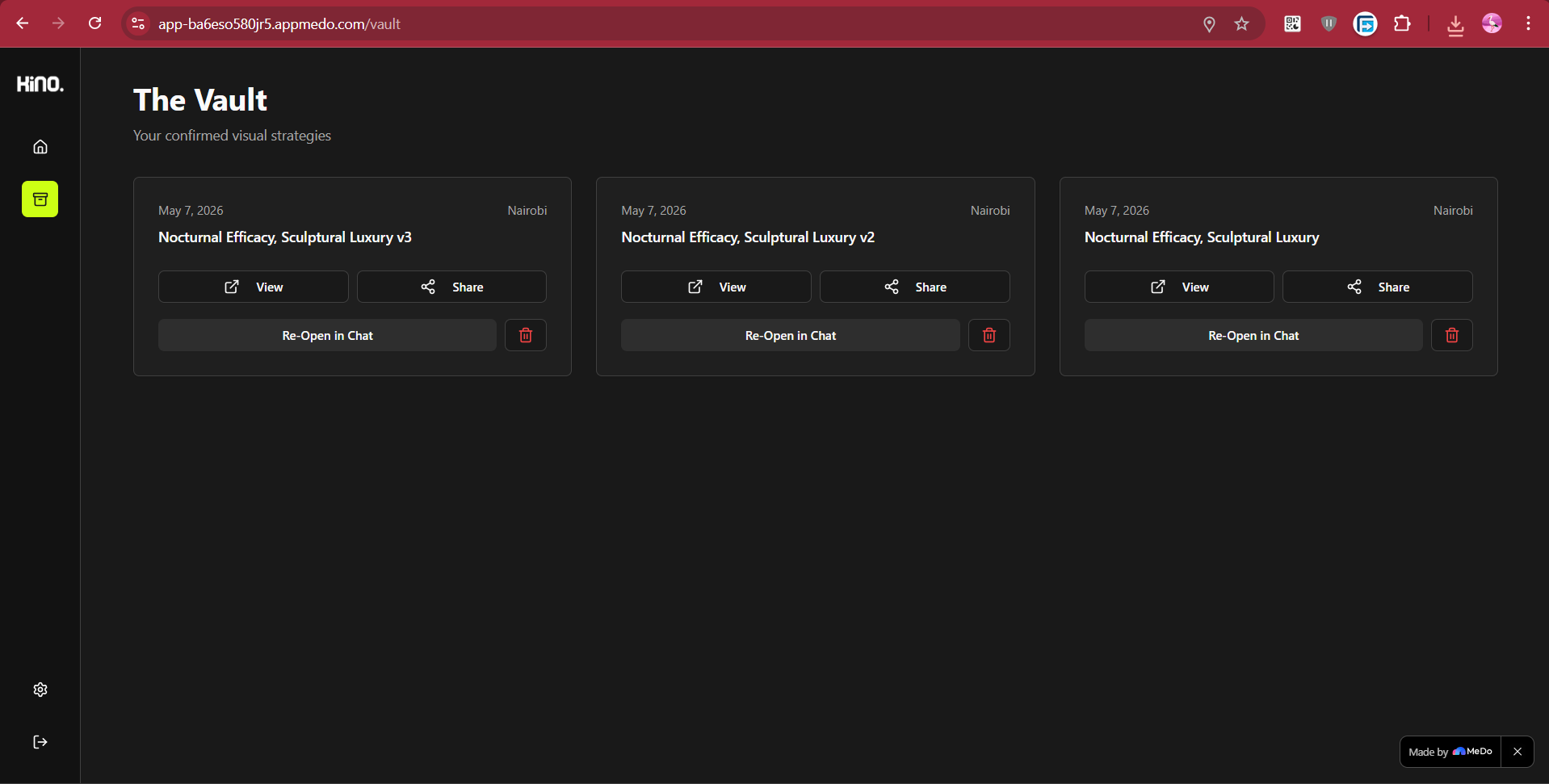
Building Kino taught me that the traditional engineering grind is changing. Using MeDo shifted my role from a standard developer to a creative director of code. I learned how to structure multi-turn conversations with AI to build full-stack logic, like handling version history in the user's Vault. When the heavy lifting of backend deployment is automated, you can spend your energy refining the user experience, ensuring that the app feels genuinely helpful, friendly, and intuitive.
Challenges Faced
The main challenge was translating a completely unstructured, casual user chat—like someone talking about their morning coffee run—into a highly structured, professional production layout. Getting the AI to reliably output hex-coded color palettes and clear camera directions from simple stories required precise prompt engineering inside MeDo.
Additionally, making sure the real-time rebuild updates synchronized flawlessly across the strategy board without breaking previous version histories was a technical hurdle. MeDo helped me overcome this by managing state preservation cleanly, allowing users to seamlessly toggle between old and new creative directions.
On the operational side, the rapid pace of heavy generation and constant feature iteration meant that I hit an unexpected roadblock with my building credits. Fortunately, by utilizing MeDo's invite system to share the platform, I unlocked the bonus credit feature. This quickly resolved the issue and kept the development momentum moving forward without missing a beat.
Built With
- medo-platform
- supabase


Log in or sign up for Devpost to join the conversation.