-
-
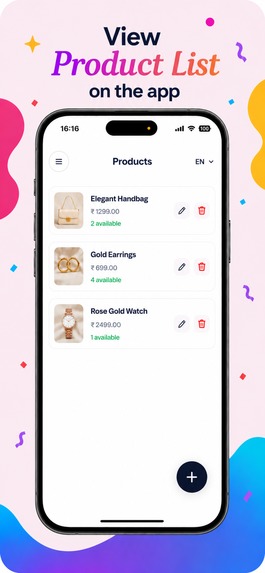
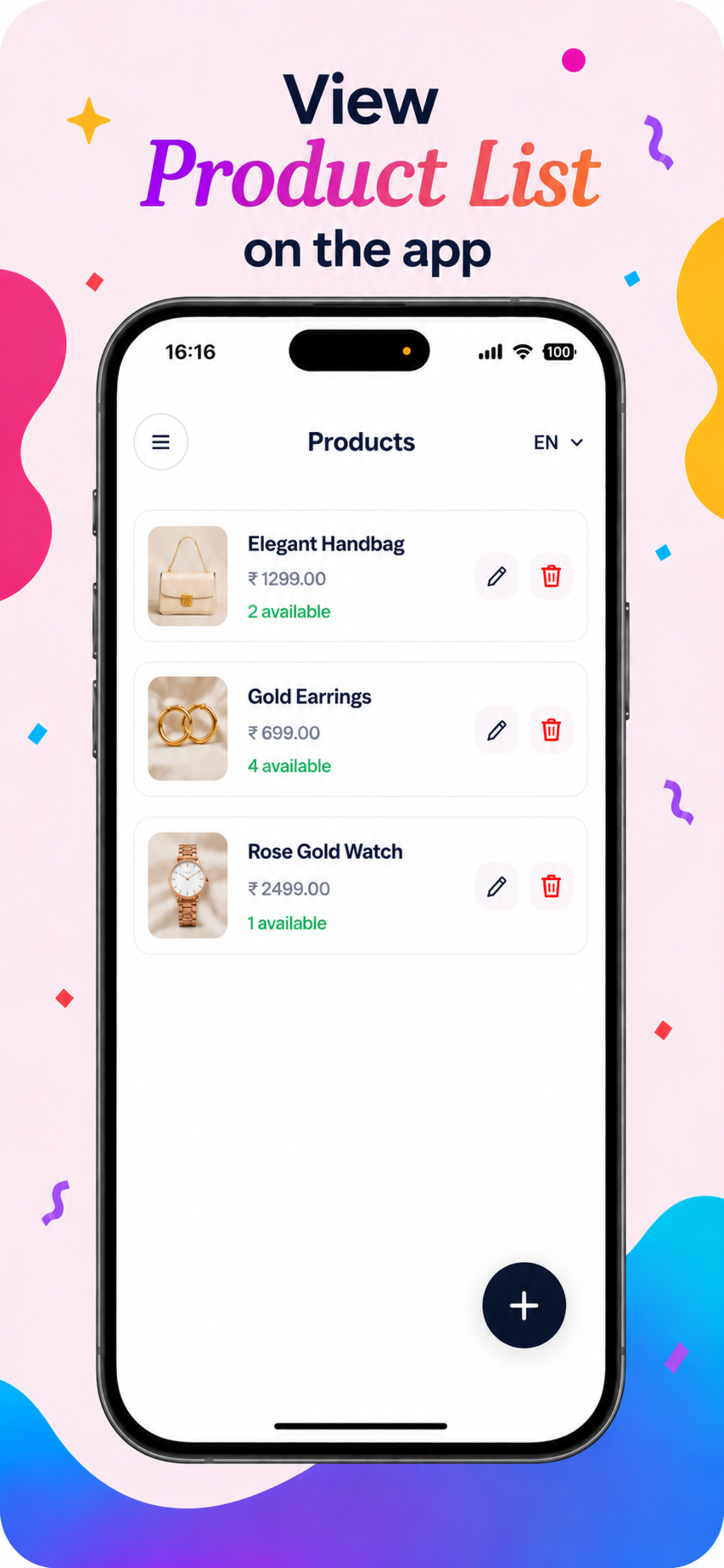
Kinmel App Products Page
-
Kinmel App Logo
-
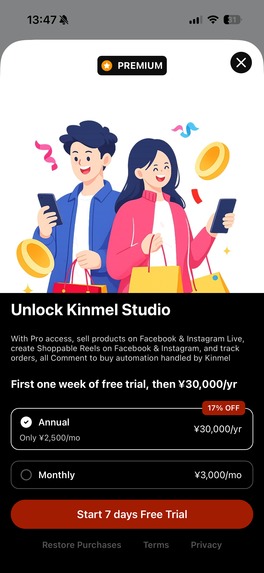
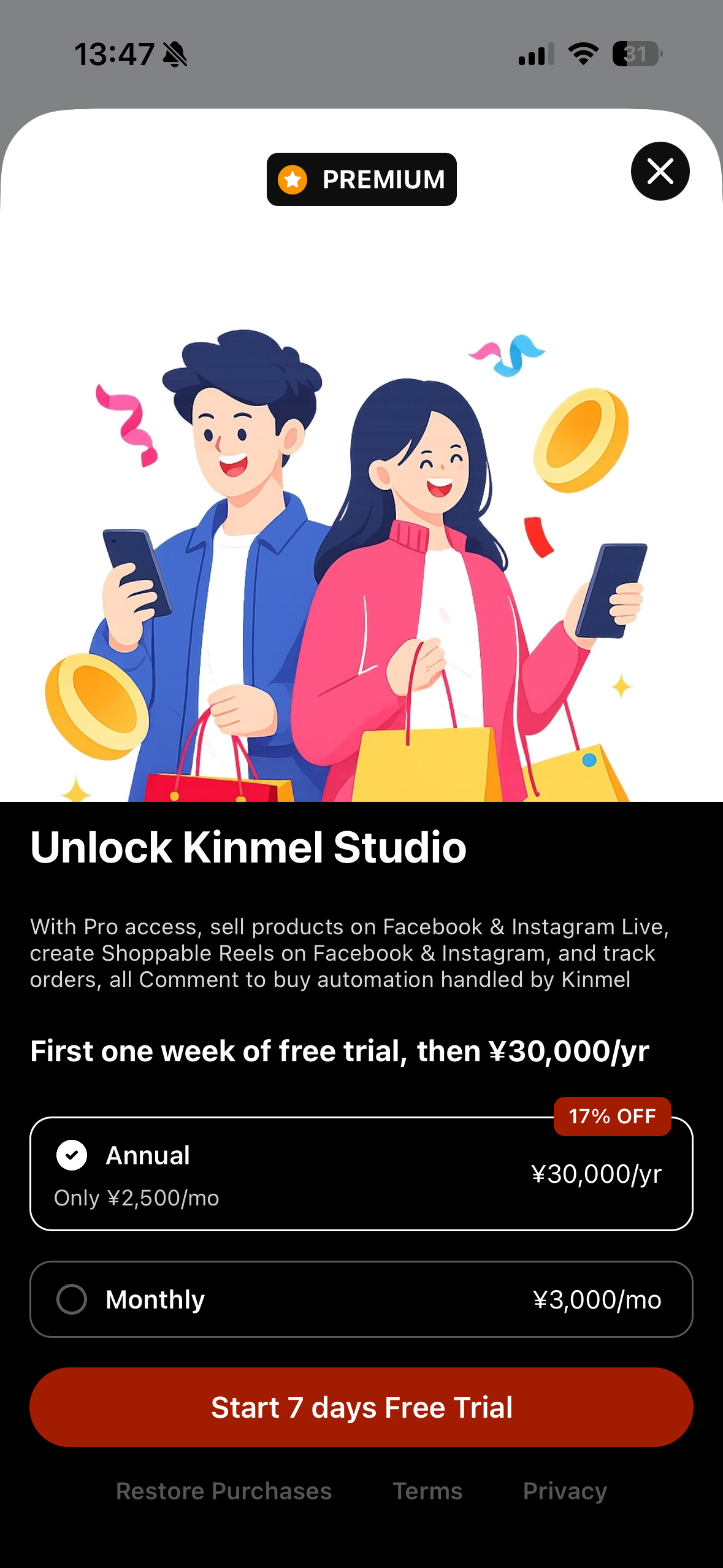
Kinmel App Paywall
-
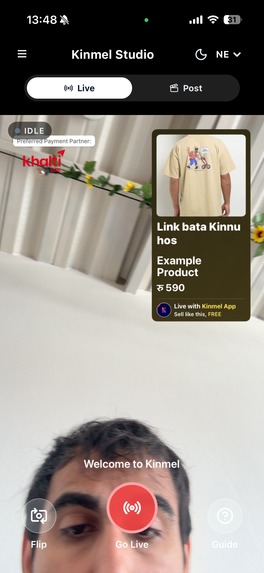
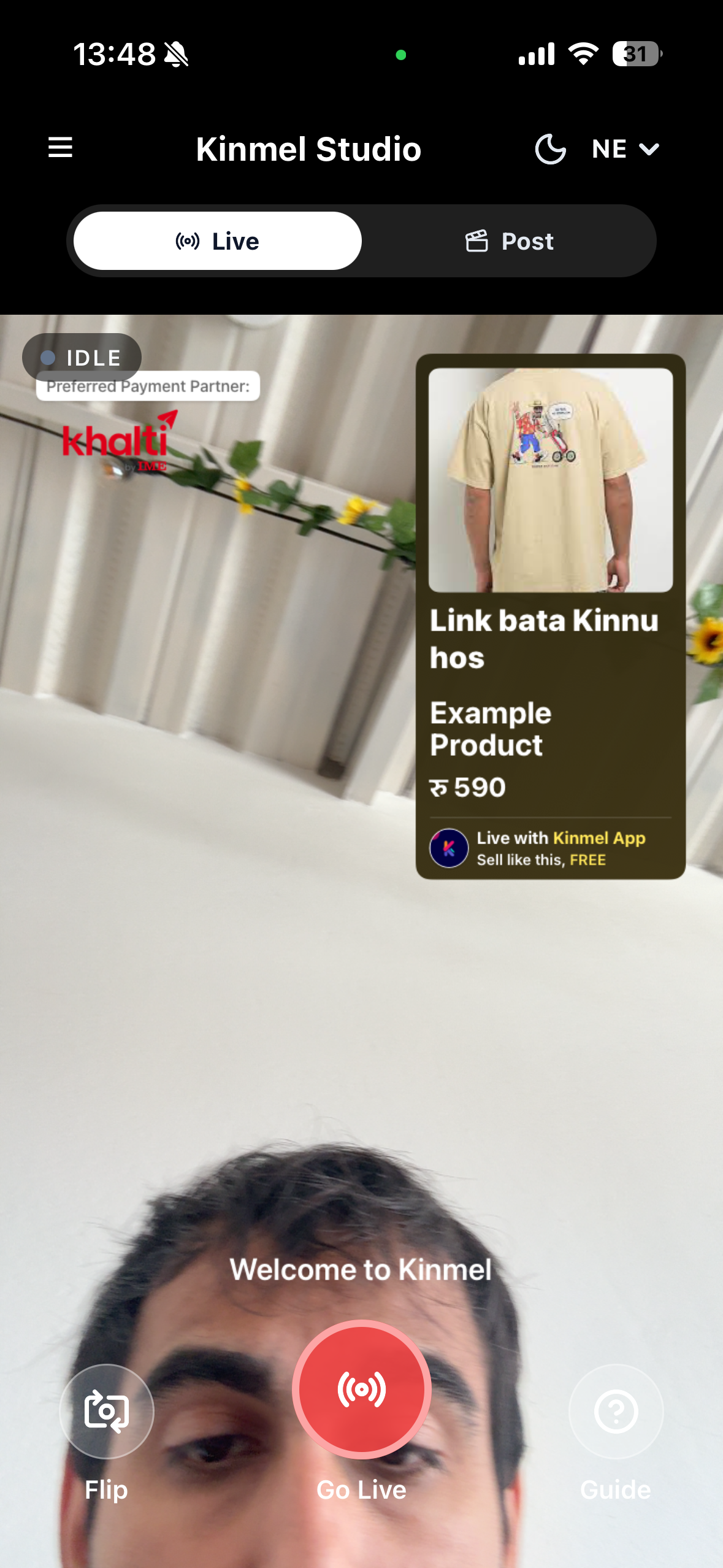
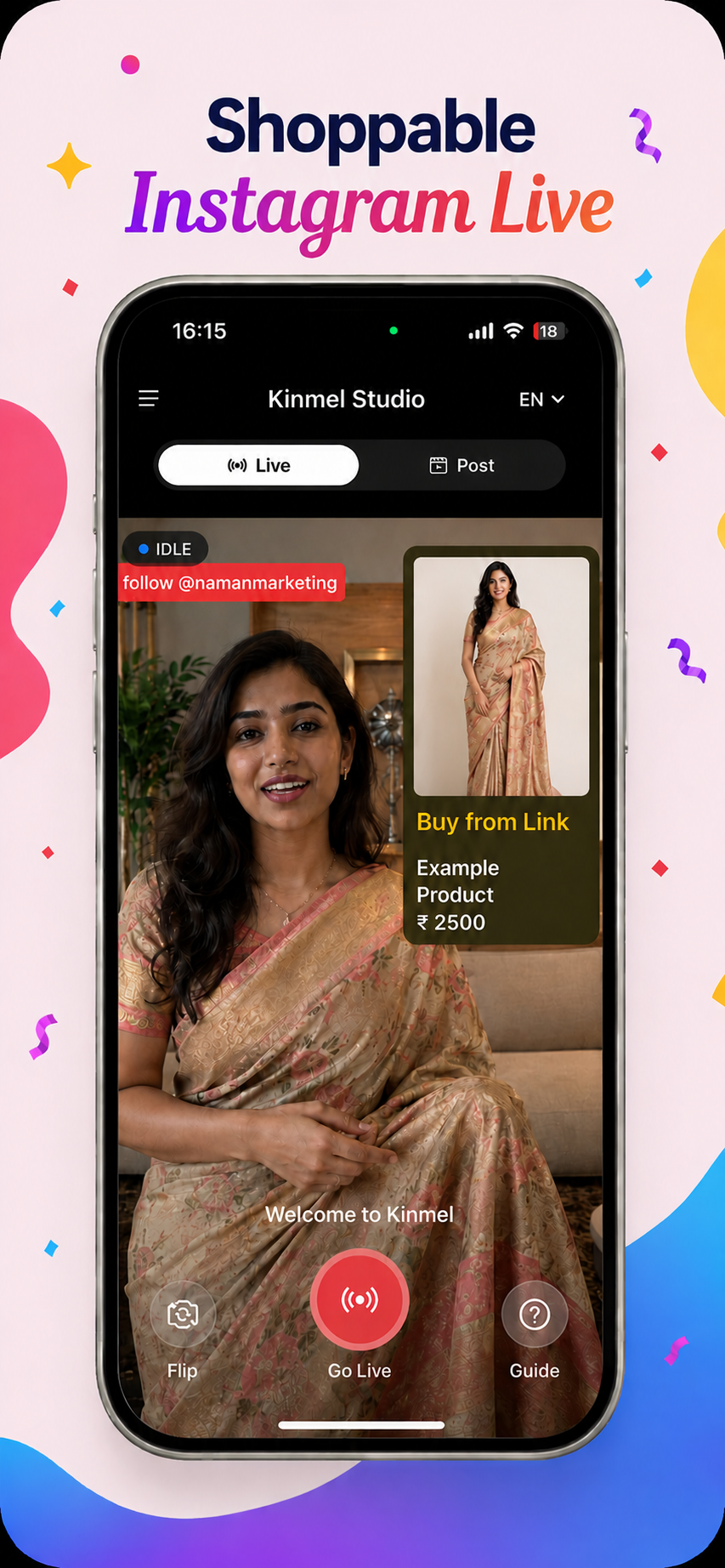
Kinmel app Live Studio UI
-
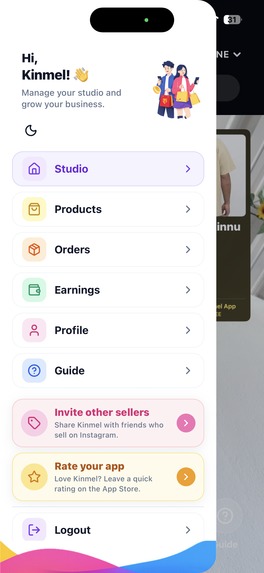
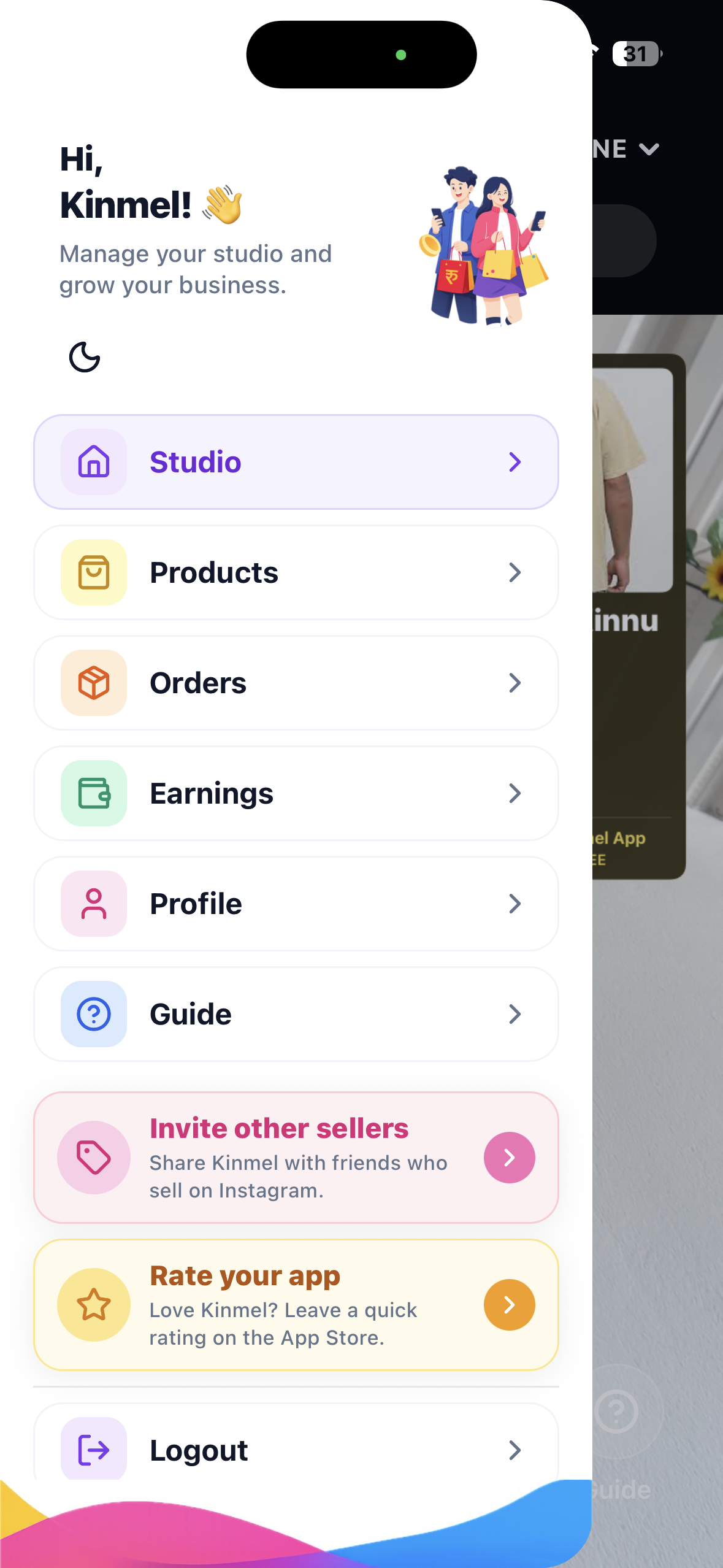
Kinmel App NavBar
-
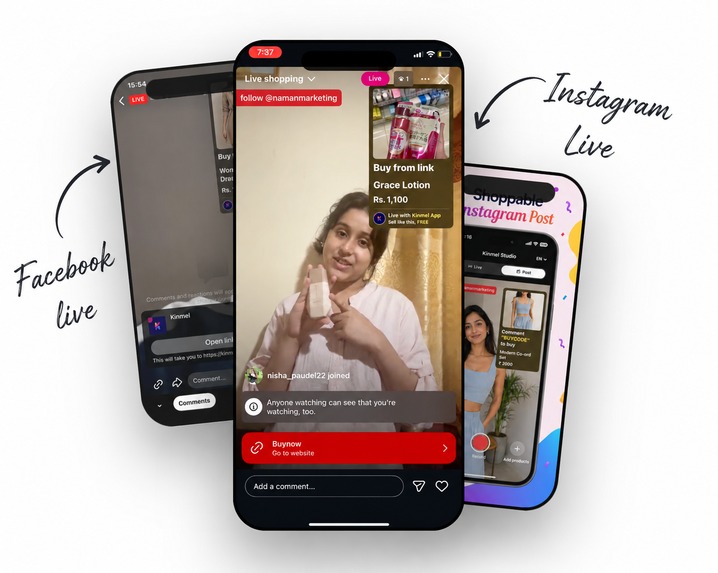
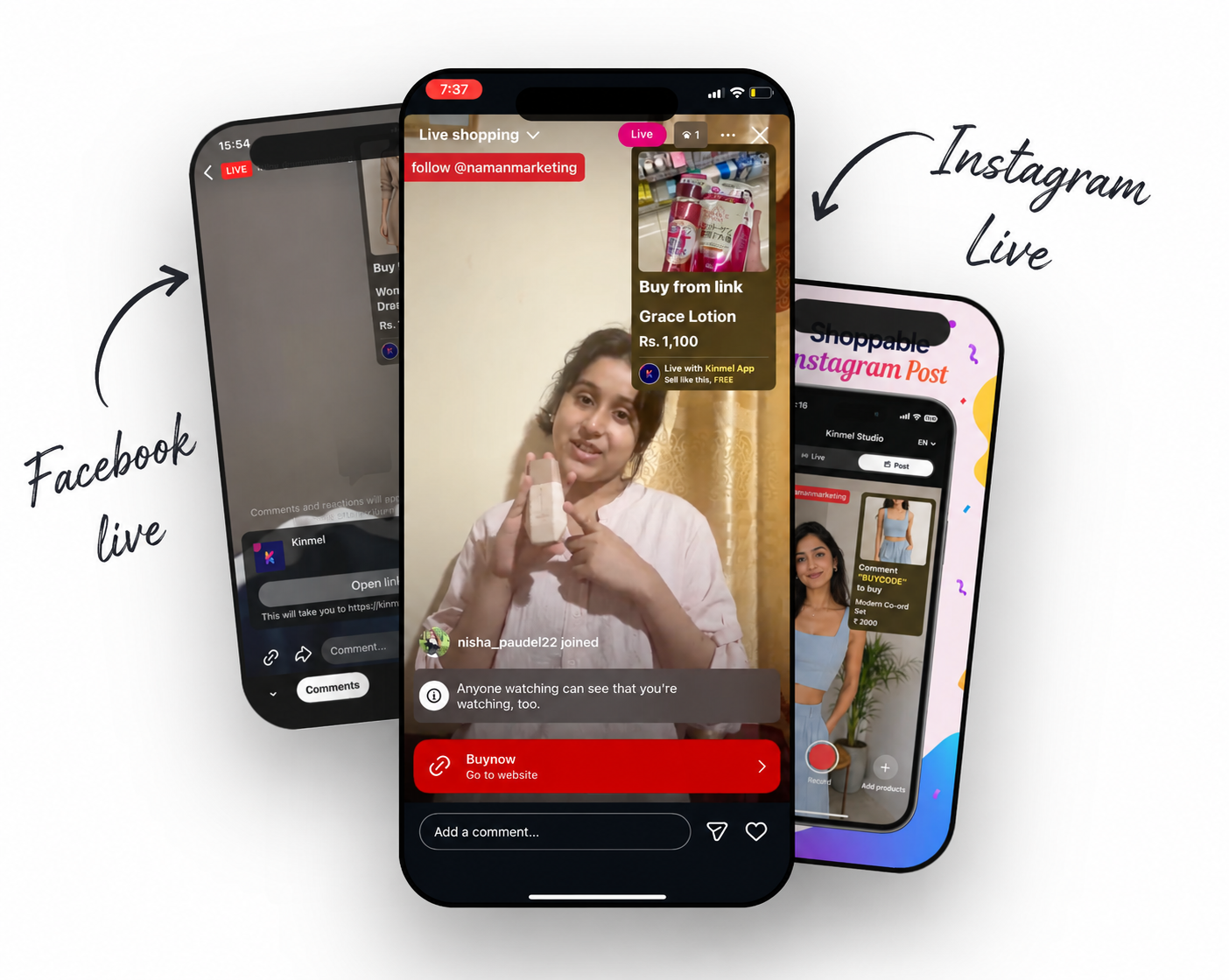
Preview of FB and Instagram Live
-
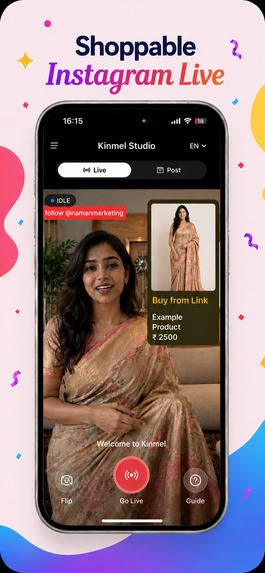
Kinmel App Studio UI
Inspiration
Live commerce is incredibly engaging, but for smaller sellers, there is a huge gap between doing everything manually and paying for expensive live-commerce platforms.
A seller can go live on Instagram or Facebook and receive dozens or hundreds of comments, but turning those comments into actual product sales can quickly become chaotic. Sellers have to manually identify buyers, answer product questions, send DMs, and track orders while simultaneously hosting the live stream.
Existing solutions can automate much of this, but platforms such as CommentSold and Upmesh can be expensive or complex for smaller sellers.
We wanted to build a simpler alternative: make Instagram and Facebook Live streams shoppable without requiring sellers to build an entirely new storefront.
What it does
Kinmel turns an Instagram or Facebook Live stream into a real-time shopping experience.
A seller can create a product catalog and associate products with their live stream. When viewers comment about a product or indicate that they want to buy, Kinmel processes those interactions and connects them to the relevant product.
Instead of the seller manually managing hundreds of comments and DMs, Kinmel helps automate the flow:
Watch Live → Comment → Identify Product → Receive Product Information → Buy
Kinmel also provides a buyer-side experience where shoppers can discover sellers who are currently live and enter their live shopping sessions.
Our goal is to make live commerce feel as natural as commenting on a livestream, while giving sellers the infrastructure they need to actually manage the resulting sales.
How we built it
Kinmel is built as a real-time social commerce system around Instagram and Facebook.
The backend uses Python and Supabase, with Meta's APIs and webhooks connecting social activity to Kinmel. When a relevant comment or live event arrives, Kinmel processes it, identifies the relevant product or customer intent, and triggers the appropriate commerce workflow.
The core flow is:
Instagram/Facebook Live → Meta Webhook → Kinmel Backend → Product Matching → Customer Response/DM → Order
The mobile application was initially built using React Native so we could move quickly across platforms. However, live video introduced a problem we didn't expect to be able to solve entirely at the React Native layer.
Encoding the video and transforming it into a streamable RTMP format required lower-level access to native video capabilities. We therefore worked directly with Swift on iOS and Kotlin on Android and connected those native components back into the React Native application.
This allowed us to combine the speed of cross-platform development with the native-level video processing required for live streaming.
Challenges we ran into
The biggest technical challenge was live video itself.
We initially built Kinmel primarily with React Native, but we discovered that encoding video and converting it into a streamable RTMP format required native-level video processing that wasn't practical to handle entirely through React Native.
That pushed us into native development with Swift and Kotlin, while still maintaining React Native as the main application layer. Bridging these native video capabilities back into the cross-platform application became an important part of the engineering work.
We also had to deal with the complexity of real-time social commerce. Live streams can generate large bursts of comments, and each interaction can potentially trigger product matching, customer communication, and an order.
That meant designing around webhooks, asynchronous processing, duplicate events, API limitations, authentication, rate limits, and reliability.
Accomplishments that we're proud of
We are proud that we built a working foundation for live commerce directly around Instagram and Facebook rather than creating another standalone marketplace.
The most important part for us is the real-time interaction loop:
Live video → viewer comment → product → conversation → purchase
We also built the foundation for a buyer-side live discovery experience. Instead of requiring buyers to already know which seller to follow, Kinmel can become a place where they discover sellers who are currently live and ready to sell.
Technically, we are especially proud that we didn't stop when React Native couldn't provide everything we needed. We went down to the native layer, worked with Swift and Kotlin, and integrated native video capabilities back into the application.
What we learned
We learned that live commerce is fundamentally different from traditional e-commerce.
In normal e-commerce, a customer intentionally navigates to a product page. In live commerce, the product, conversation, entertainment, and purchase intent are all happening simultaneously.
We also learned that building on top of social platforms requires thinking beyond the application itself. APIs, webhooks, rate limits, permissions, video protocols, and platform-specific capabilities all become part of the product.
Most importantly, we learned that the technology behind a simple viewer experience can be surprisingly complex. A viewer might see a simple live stream and comment, but behind that interaction are video pipelines, real-time events, product matching, messaging, and commerce infrastructure.
What's next for Kinmel
Our next major step is to connect Kinmel with Shopify.
We want Shopify sellers to be able to connect their existing store and sell those products through live streams on Facebook and Instagram, without having to recreate their entire catalog inside another commerce platform.
The vision is:
Shopify Store → Kinmel → Facebook/Instagram Live → Customer → Shopify Order
This would allow Kinmel to act as the live-commerce layer on top of an existing Shopify business.
We also plan to expand beyond Meta by integrating TikTok's posting and DM APIs, allowing sellers to manage live and social commerce workflows across TikTok alongside Instagram and Facebook.
Ultimately, we want Kinmel to become the cross-platform live-commerce layer that connects a seller's existing store to where their audience is already watching.
Shopify + Meta + TikTok → One live-commerce workflow.
Built With
- fastapi
- kotlin
- react-native
- supabase
- swift

Log in or sign up for Devpost to join the conversation.