-
-
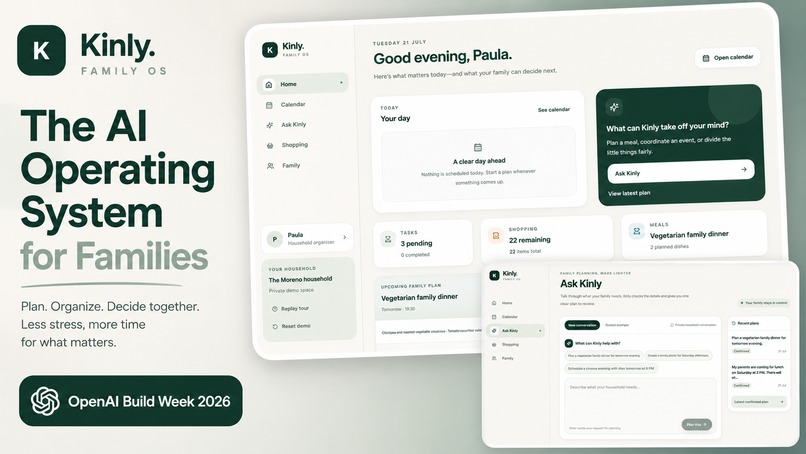
Preview Kinly
-
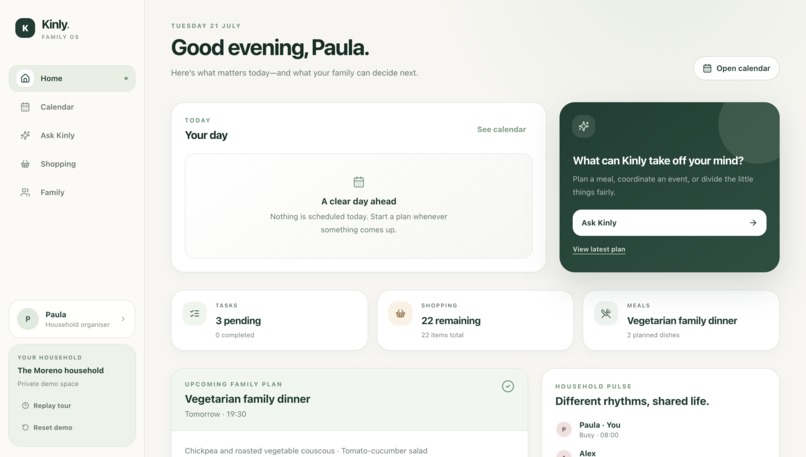
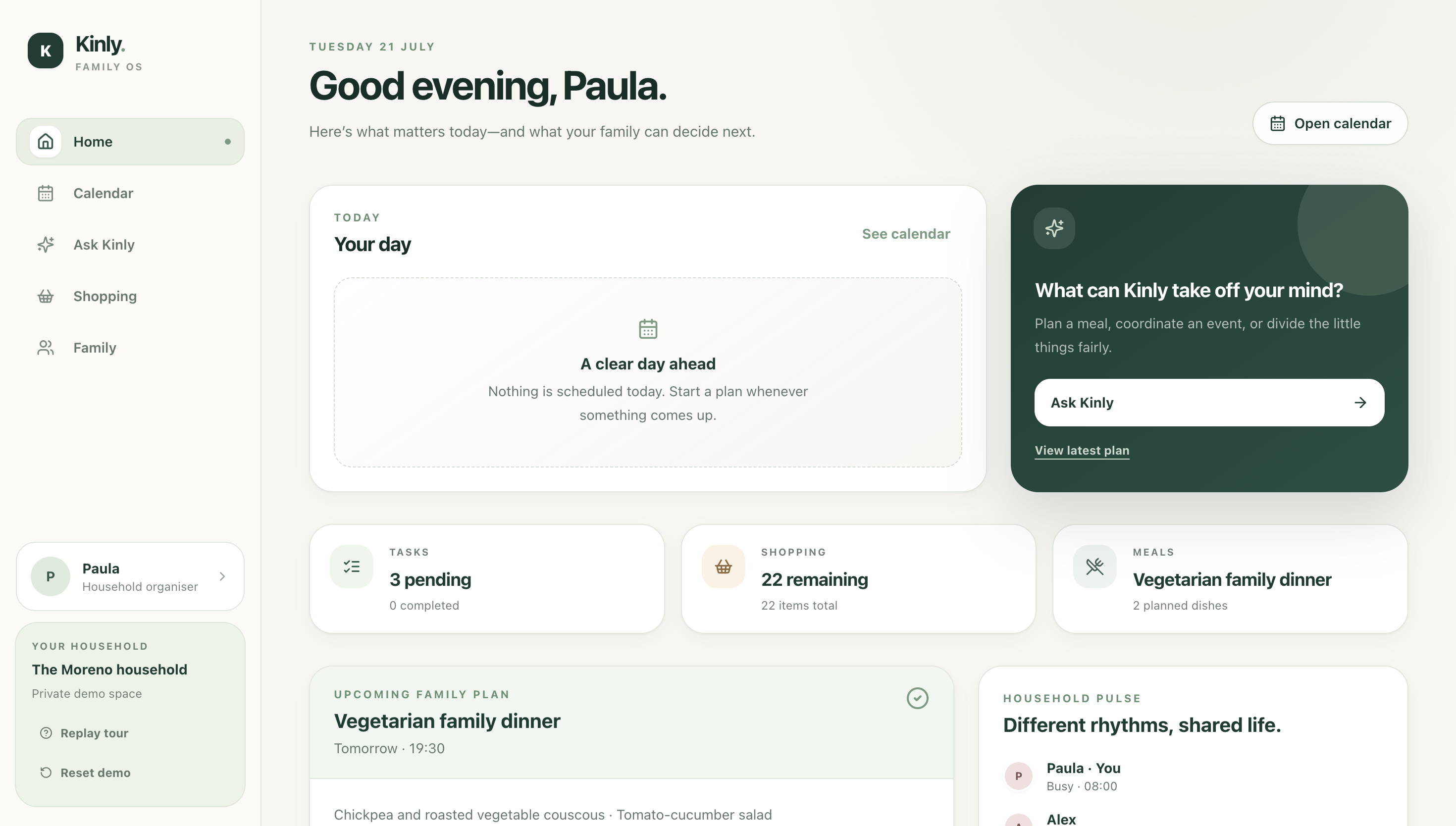
Kinly Home
-
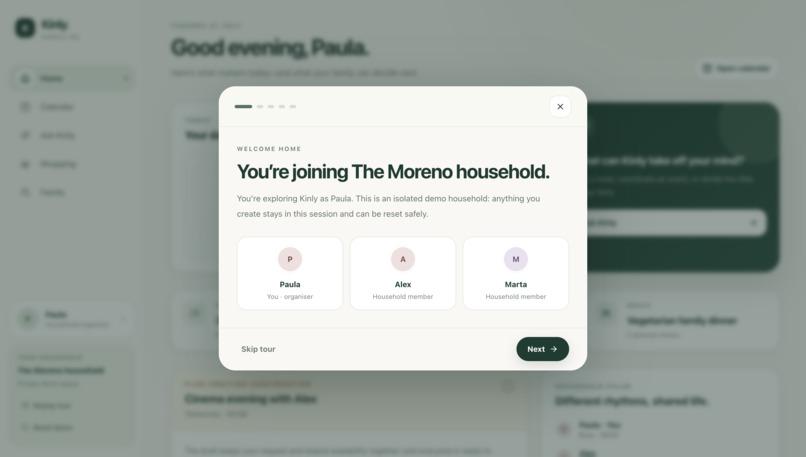
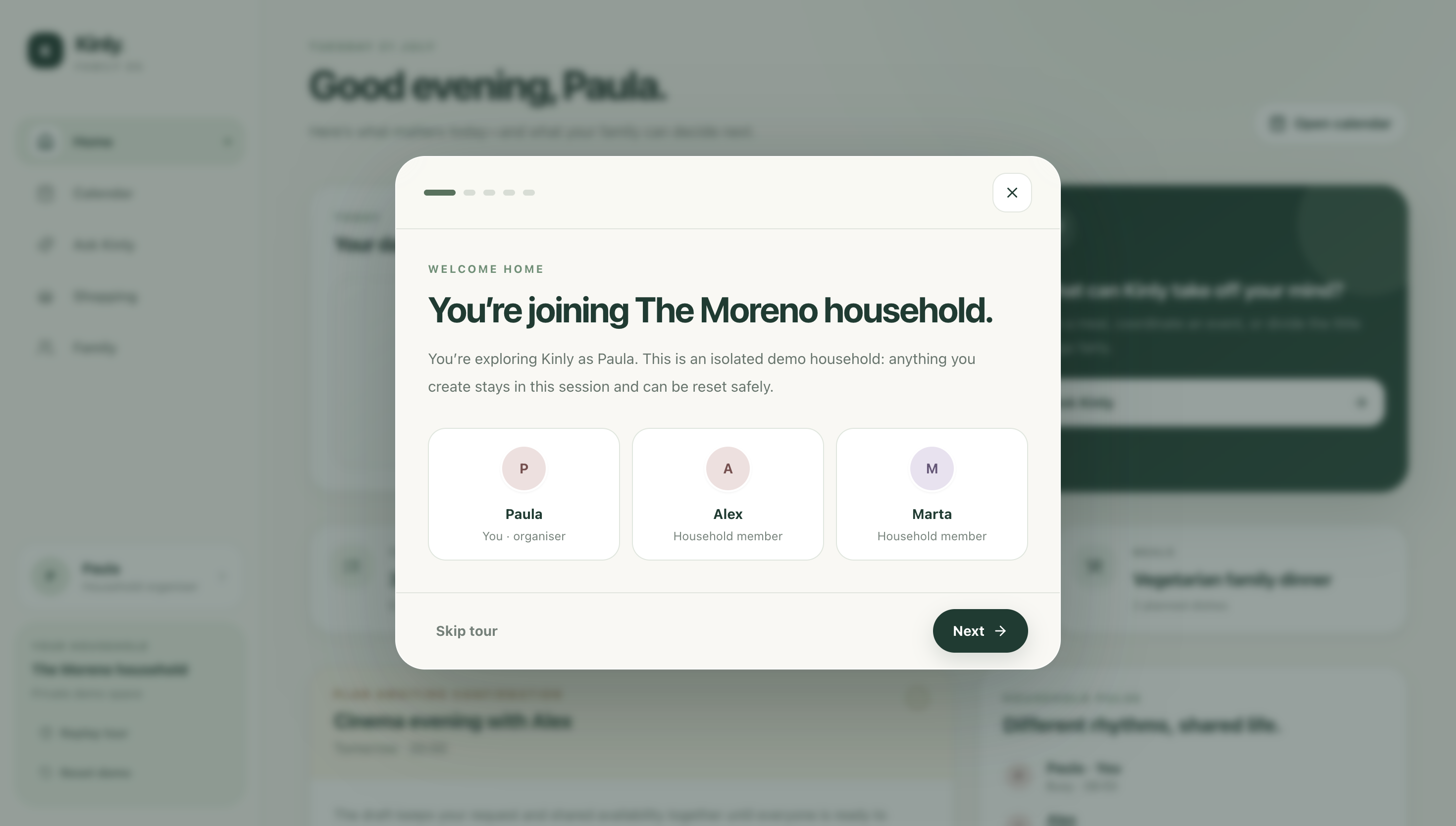
Demo Tour / Onboarding
-
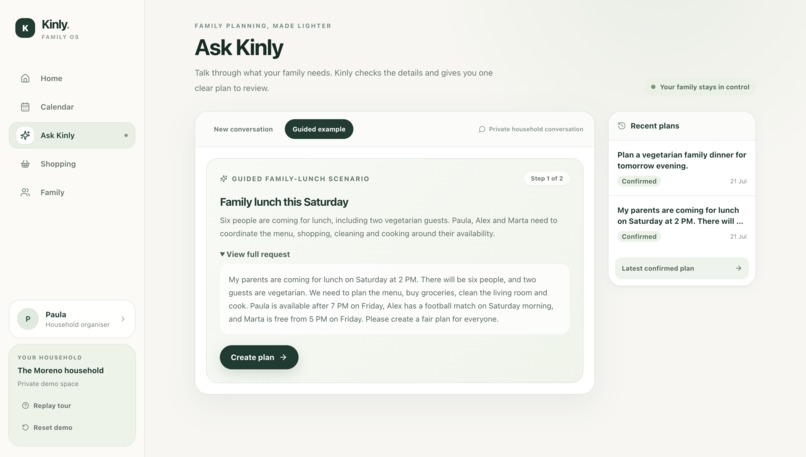
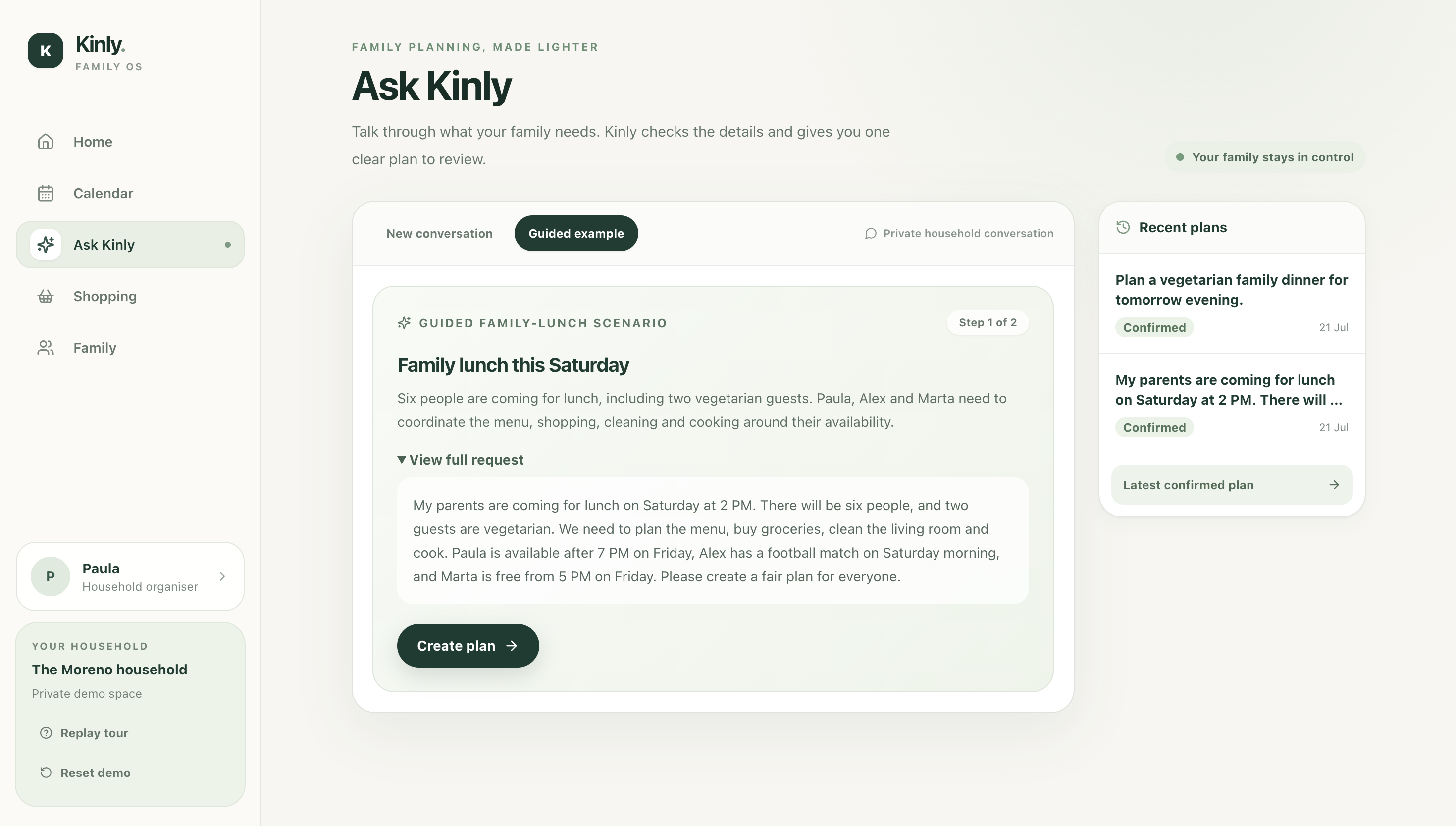
Asking Kinly with demo request
-
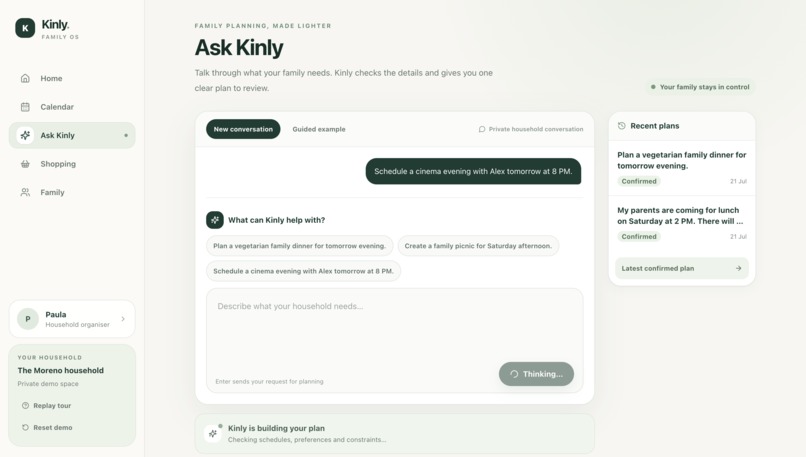
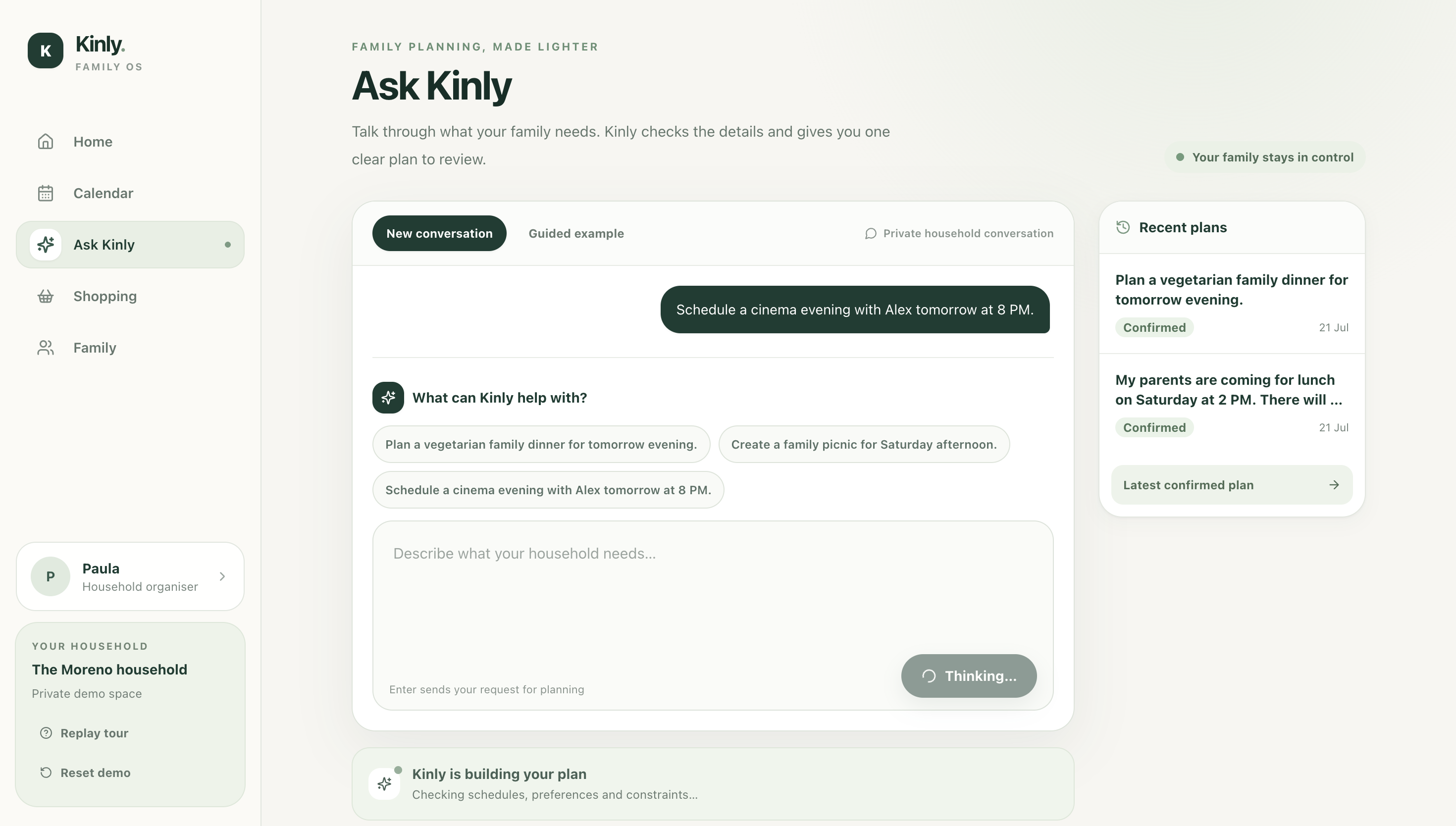
Asking Kinly Free-form request
-
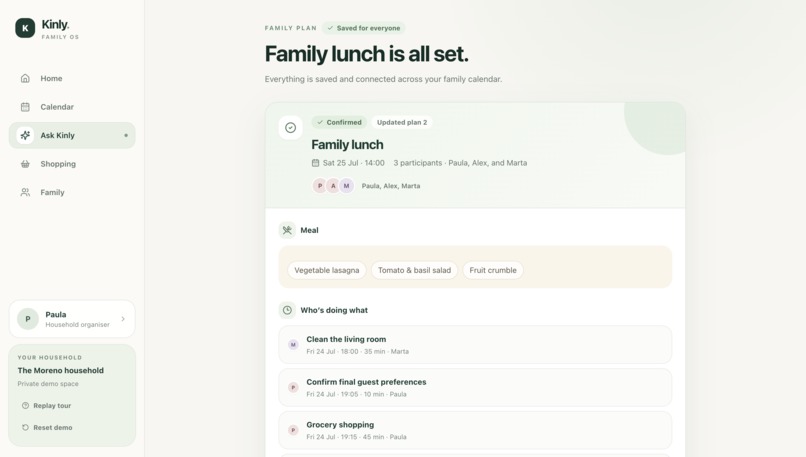
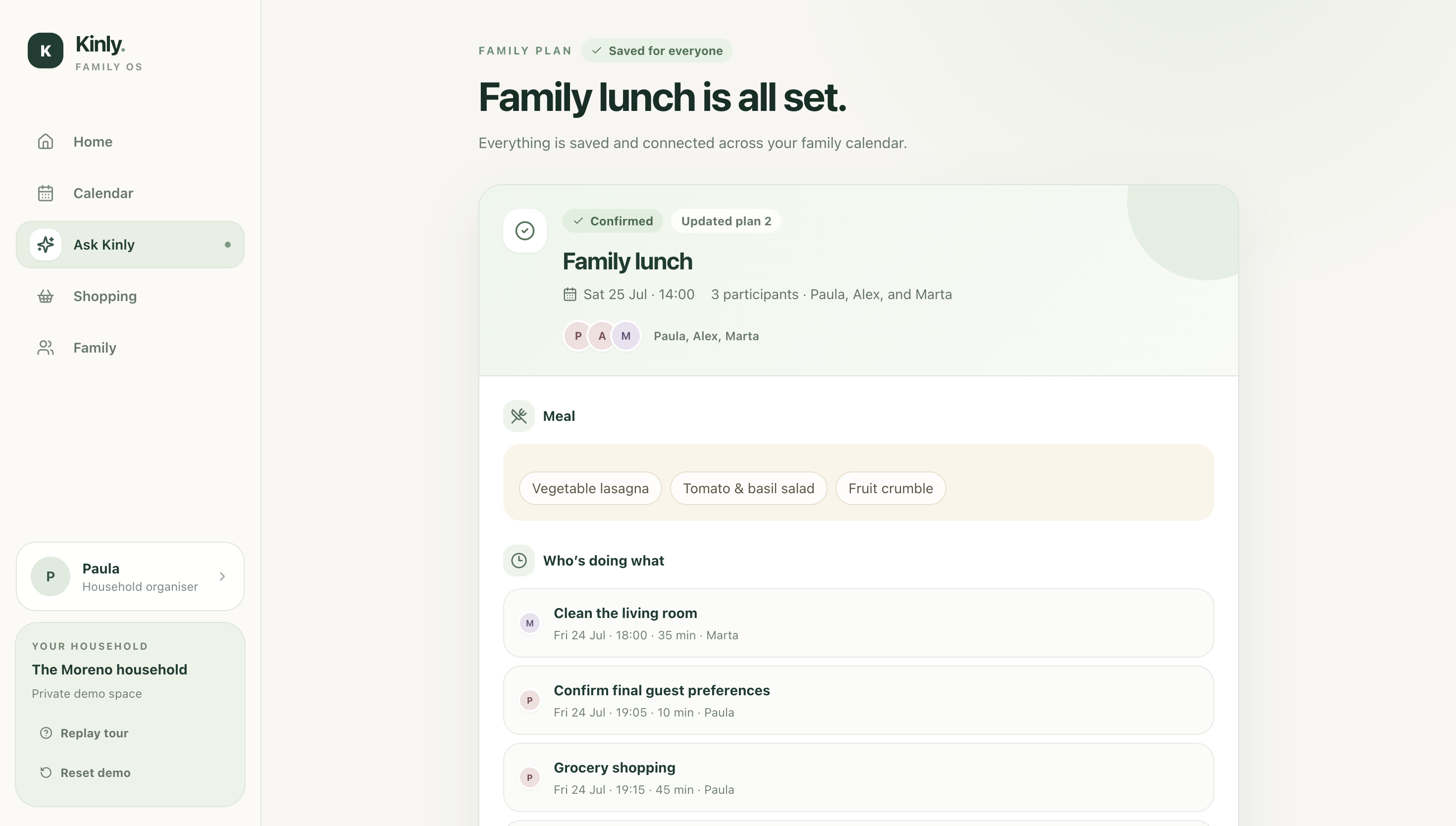
Plan details screen
-
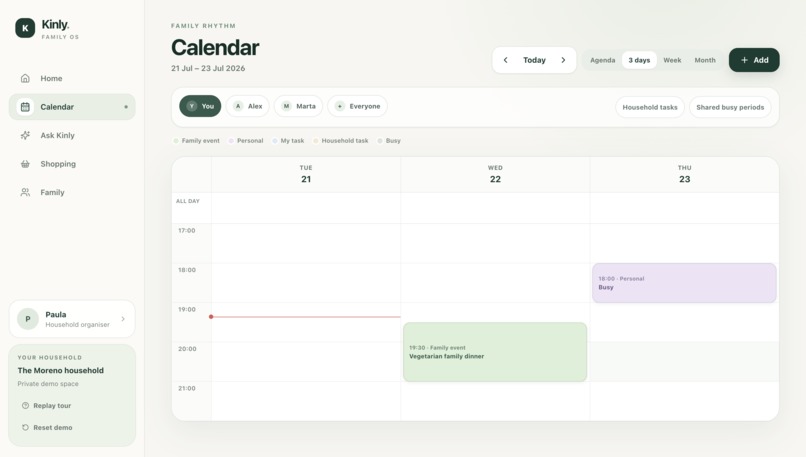
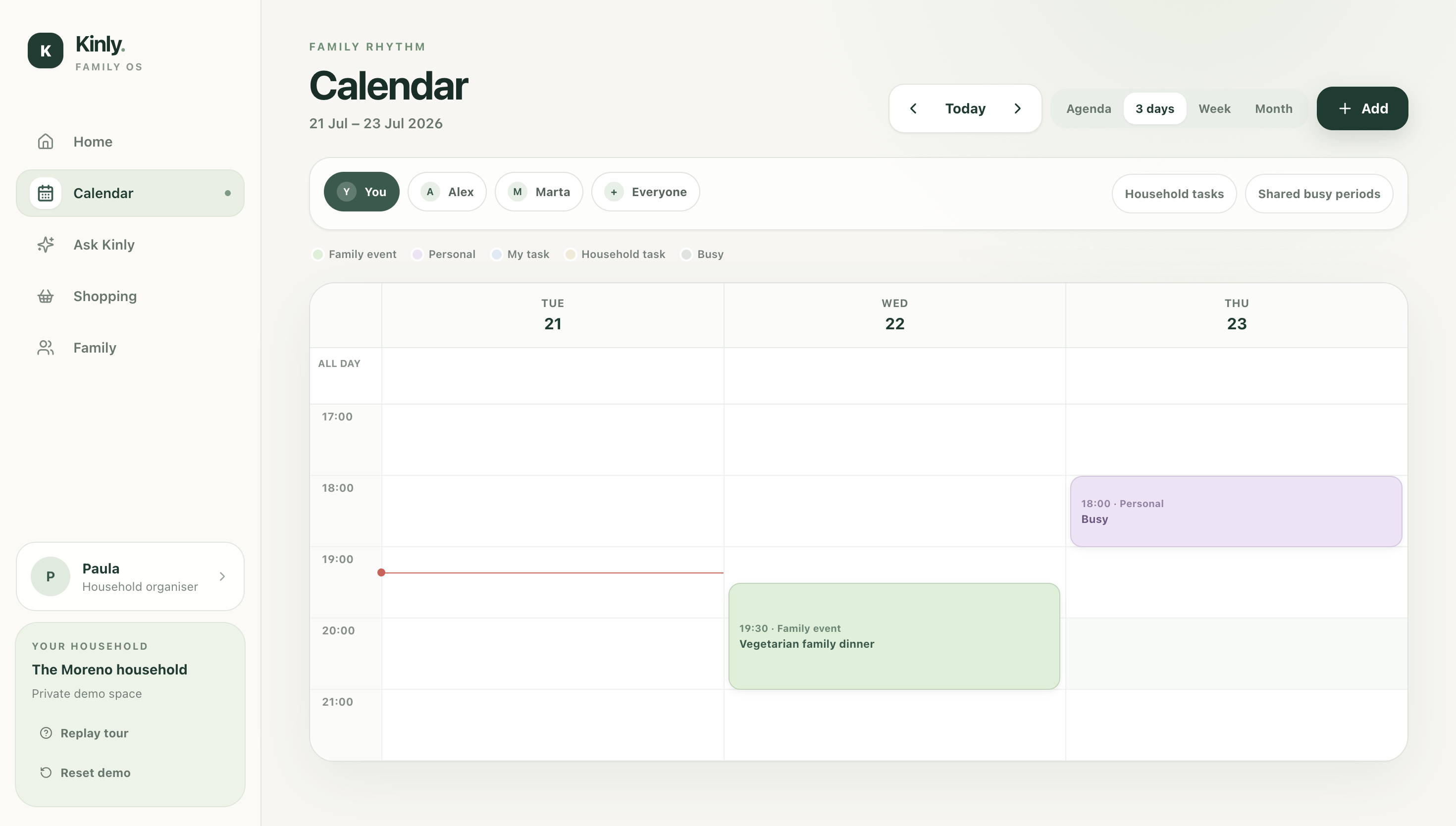
Calendar screen with two events, one is familar event and the other one is a private event
-
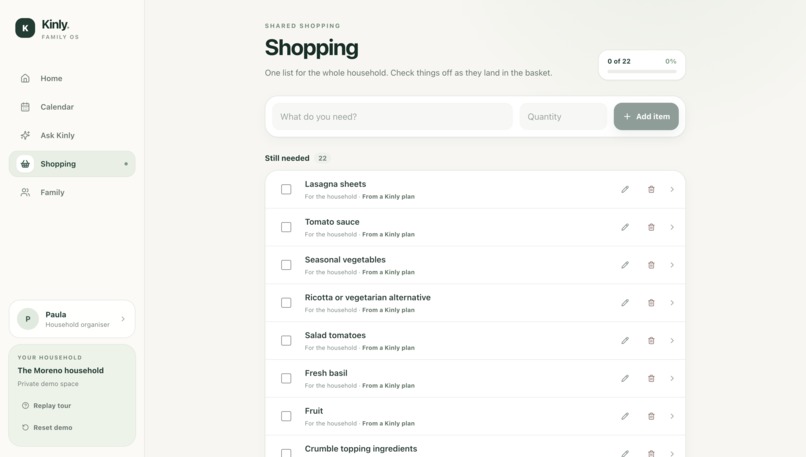
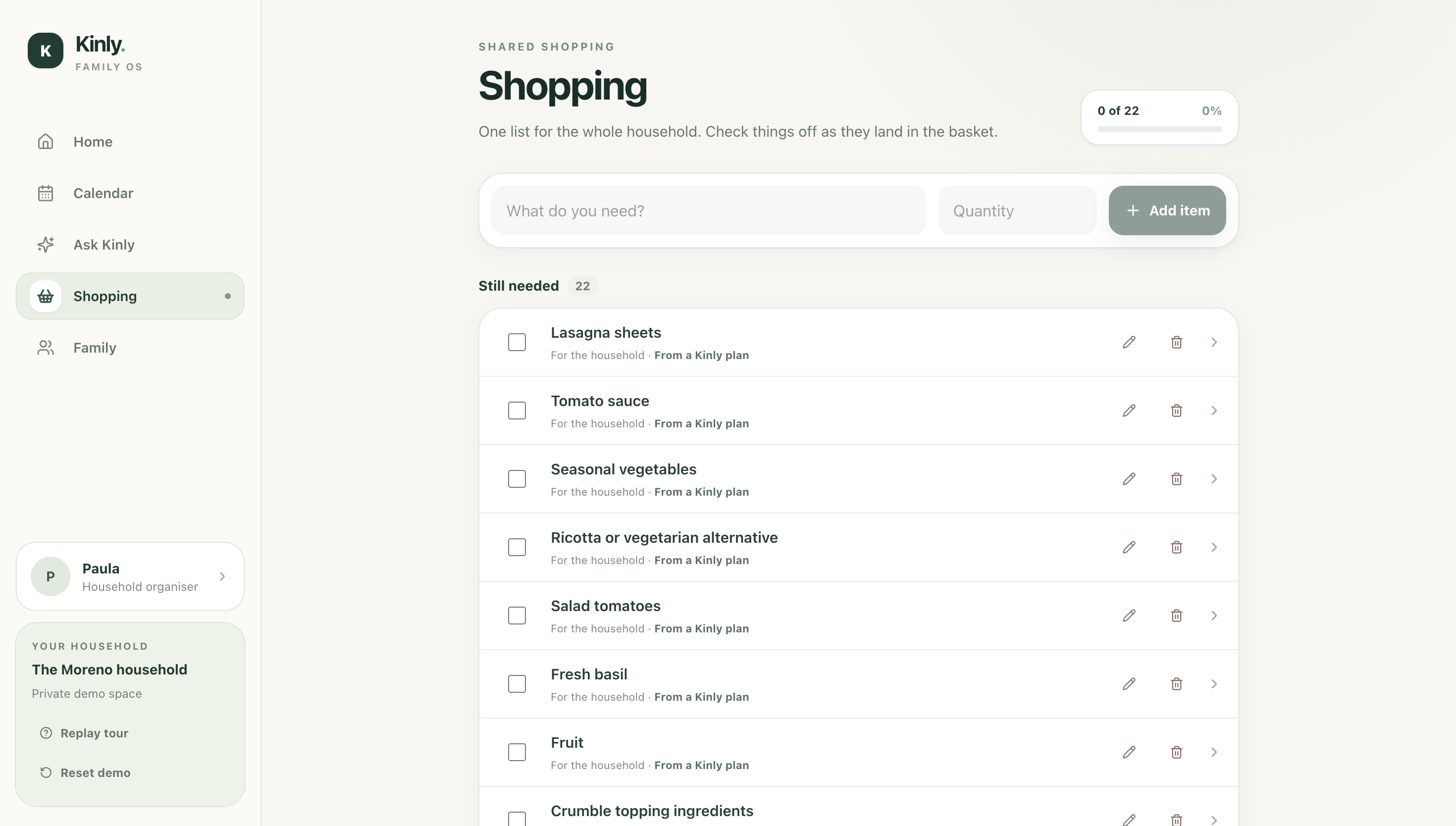
Shopping screen
-
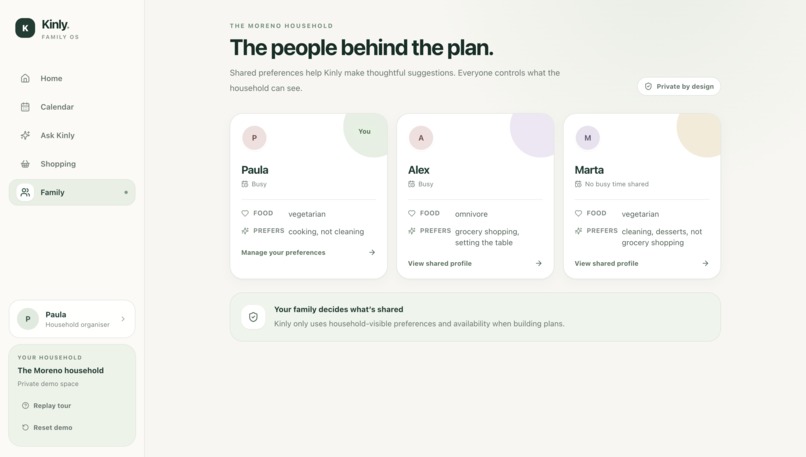
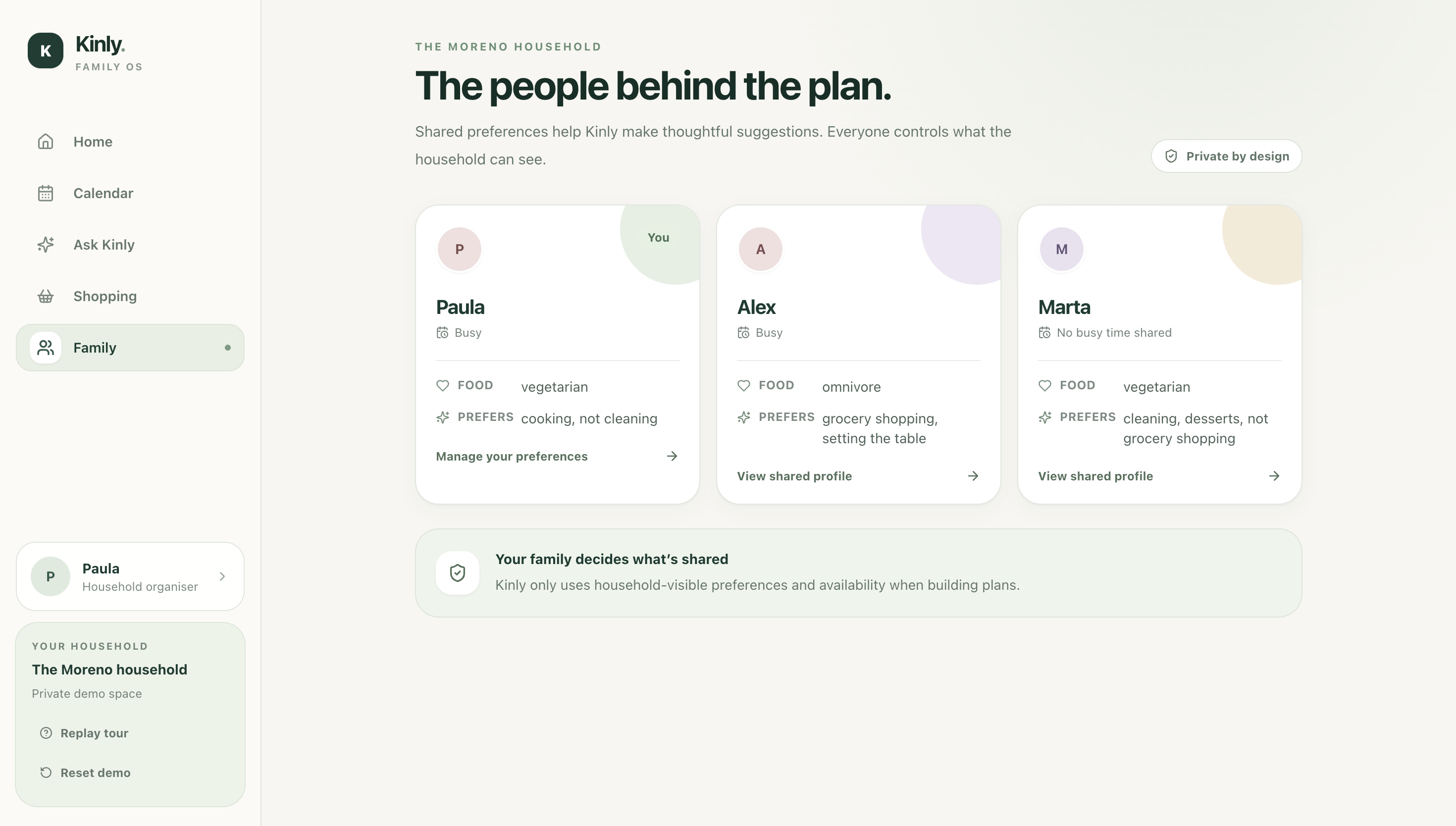
Family members screen
-
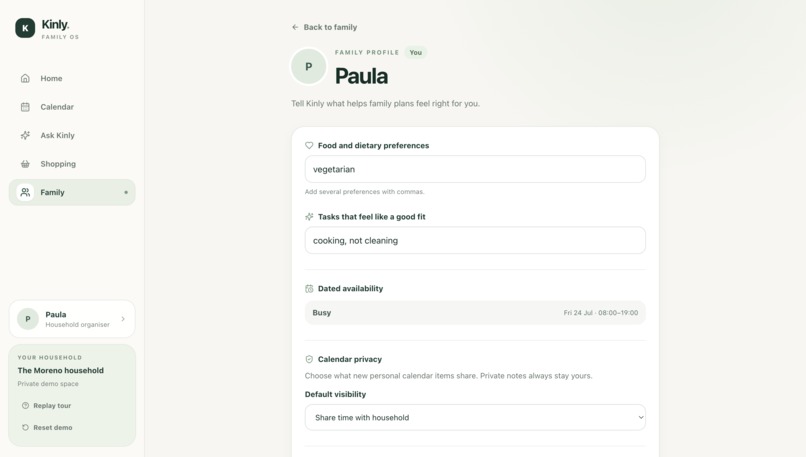
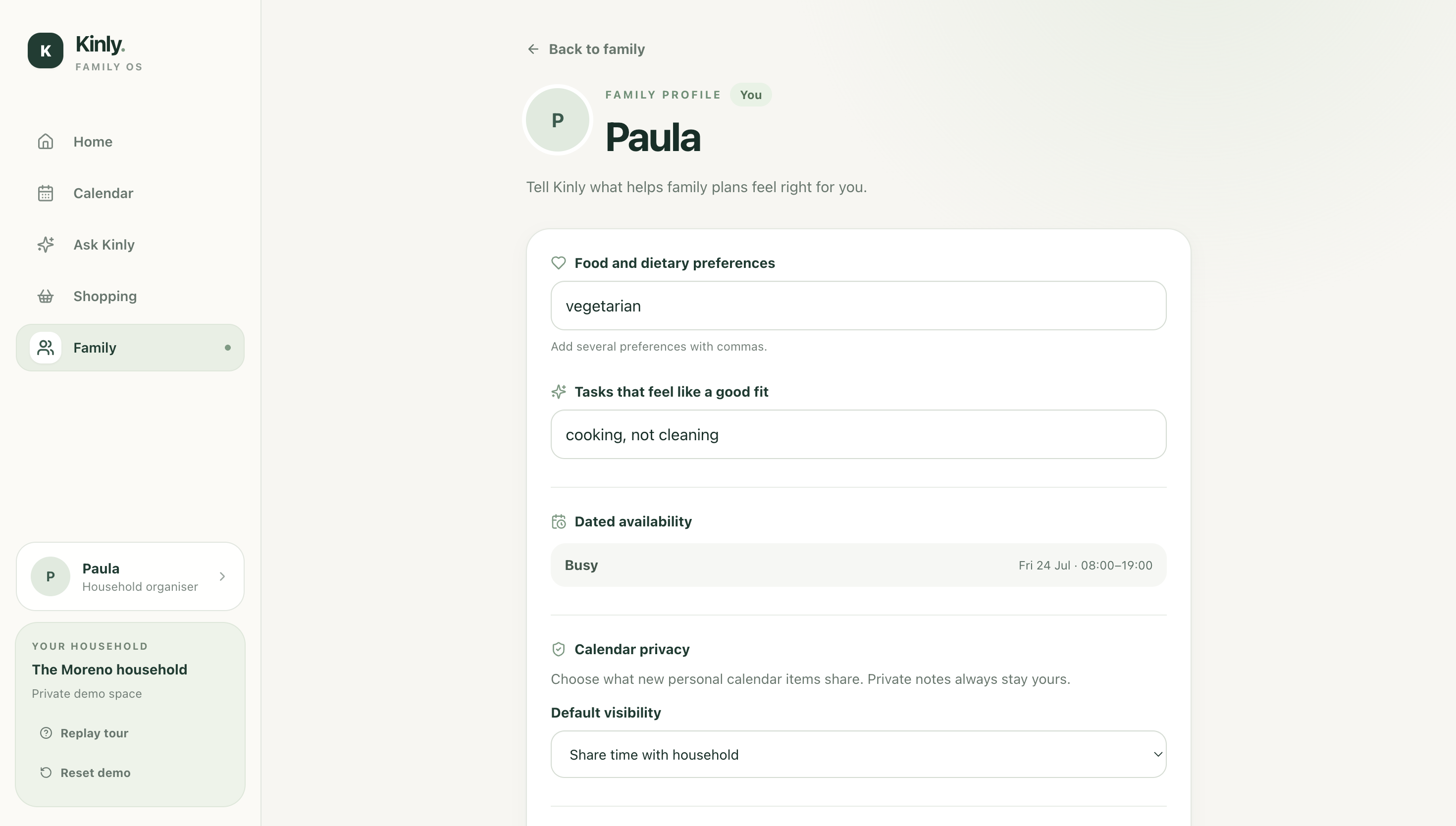
Editing my profile
-
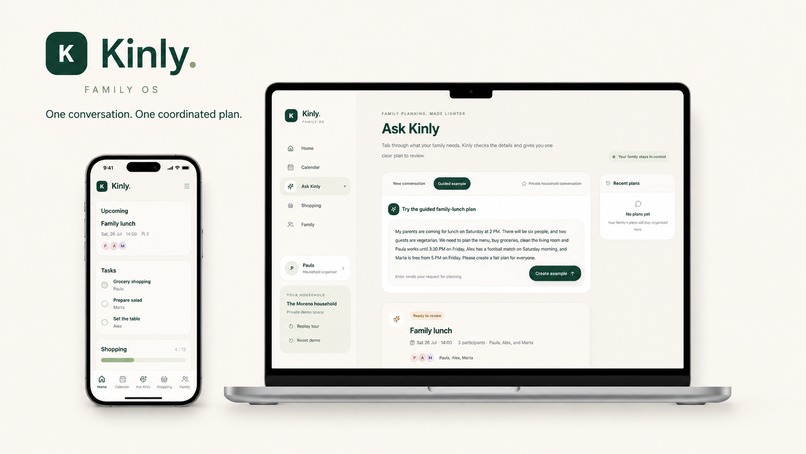
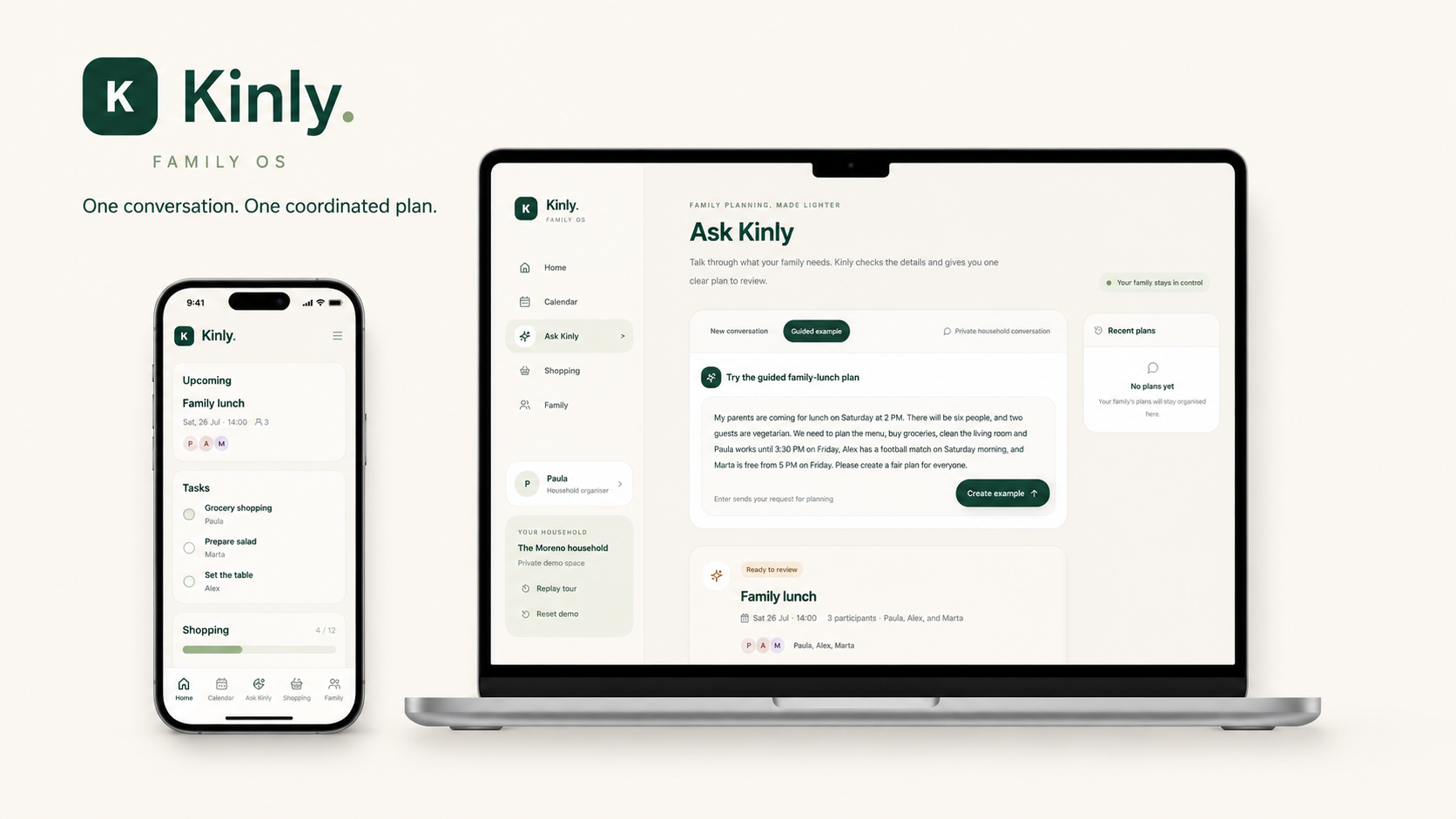
Kinly support multi devices / responsive
Inspiration
Family life is often coordinated across disconnected tools: calendars, messaging apps, shopping lists, meal planners, reminders, and notes. The information exists, but the mental load of turning it into a clear plan usually falls on one person.
Kinly started from a simple question: what if a family could simply describe what it needs, and an AI assistant could turn that conversation into a coordinated plan while respecting everyone’s time, preferences, and privacy?
What it does
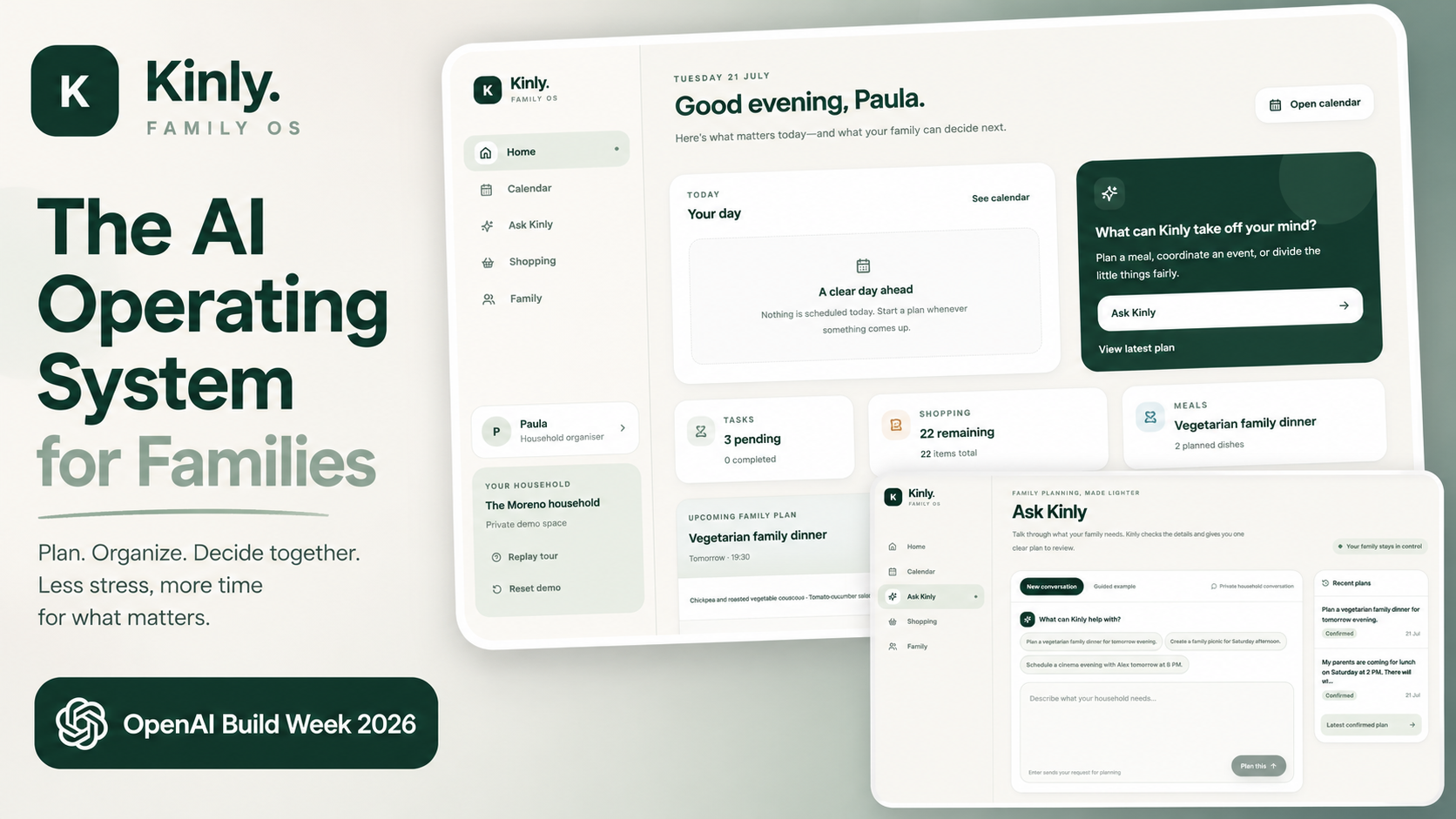
Kinly is an AI-powered family operating system that brings everyday household coordination into one shared space.
Through Ask Kinly, families can plan meals, organize events, divide responsibilities, coordinate schedules, and create shared shopping lists using natural language.
Kinly does not simply generate a text response. It interprets the request, considers household members and availability, asks follow-up questions when important information is missing, and creates a structured plan for the user to review before confirming it.
The current MVP includes:
- AI-assisted family planning through natural conversation
- Shared family calendars and availability
- Household task coordination
- Collaborative shopping lists
- Meal planning and recipes
- Family member profiles and household context
- Privacy-aware personal and shared events
- Review and confirmation flows before plans are added
How I built it
I built Kinly as a full-stack web application using Next.js, TypeScript, React, Supabase, PostgreSQL, Vercel, and the OpenAI API.
The main AI workflow transforms an unstructured family request into a structured proposal. Kinly identifies participants, timing, tasks, meals, and shopping needs, asks for clarification when information is incomplete, and returns a plan that can be reviewed before confirmation.
I used Codex with GPT-5.6 throughout the Build Week as a development partner. It accelerated my workflow by helping me to:
- Translate product ideas into implementation plans
- Build and refine full-stack features
- Design structured AI planning flows
- Debug database, state, and interface behavior
- Improve participant resolution and clarification logic
- Develop calendar, shopping, task, and meal-planning experiences
- Review documentation and submission readiness
I still reviewed the important product decisions manually, especially those related to privacy, confirmation flows, household roles, and how shared and personal information should be represented.
Challenges I ran into
One of the main challenges was converting ambiguous natural-language requests into reliable family plans.
For example, a phrase such as “we are all going” needs to resolve the correct household members, while expressions such as “tomorrow evening” need to be interpreted consistently. Kinly also needs to distinguish between personal information, shared plans, and availability that should only be displayed as busy.
Another challenge was connecting several areas of family life—calendar, meals, tasks, and shopping—without making Kinly feel like a collection of separate tools.
I also had to balance automation with control. Rather than immediately applying every AI-generated result, Kinly presents a proposal for review and confirmation.
Accomplishments that I'm proud of
I am proud that Kinly became a working and coherent MVP during the Build Week rather than remaining only a concept.
The application can turn a natural family request into a structured plan, handle clarification, connect the resulting plan with calendars, tasks, meals, and shopping, and keep the user in control before anything is confirmed.
I am also proud of the calm, privacy-aware interface and the consistency of the experience across the different household workflows.
What I learned
I learned that AI coordination becomes much more useful when it goes beyond generating text.
A helpful family assistant needs context, structured outputs, clarification flows, and a clear review step. It also needs to understand that different household members may have different schedules, responsibilities, and privacy preferences.
I also learned how effective Codex can be when used iteratively: define a focused task, review the implementation, test the result, and refine the product decision instead of treating generated code as final.
What's next for Kinly
My vision for Kinly goes far beyond planning calendars and family tasks.
One of the next major modules will be Pet Care, allowing families to manage everything related to their pets in one place: feeding schedules, medications, veterinary appointments, vaccinations, insurance, expenses, reminders, activity tracking, and shared responsibilities between household members.
Another major direction is Personal Health Intelligence.
I want Kinly to securely connect with health platforms and wearable devices such as Apple Health, Apple Watch, Ultrahuman Ring, and other supported ecosystems. Rather than simply displaying health metrics, Kinly will help users understand what those numbers actually mean.
By combining sleep, activity, recovery, heart rate, nutrition, and daily habits with household context, Kinly could generate personalized insights, explain trends in plain language, recommend practical actions, and help users build healthier long-term routines.
Ultimately, my goal is for Kinly to become the operating system for everyday family life—bringing together planning, health, wellbeing, pets, household management, and AI-powered coordination in one trusted place.
Built With
- ai
- api
- codex
- css
- gpt-5.6
- next.js
- openai
- postgresql
- react
- supabase
- tailwind
- typescript
- vercel


Log in or sign up for Devpost to join the conversation.