-
-
ElevenLabs Startup Grant recipent
-
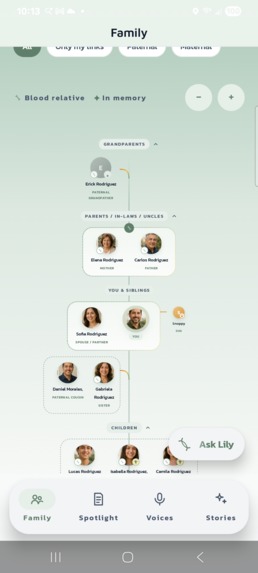
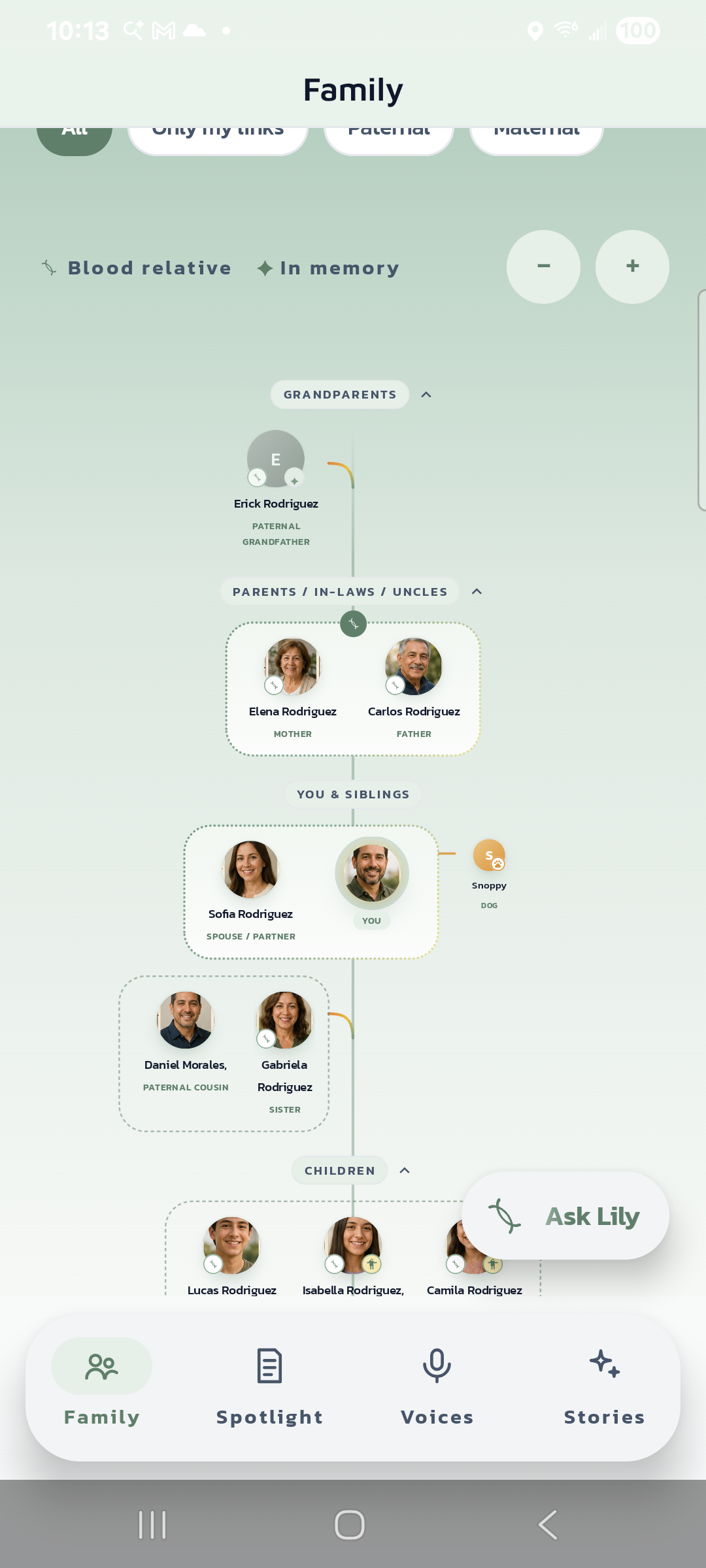
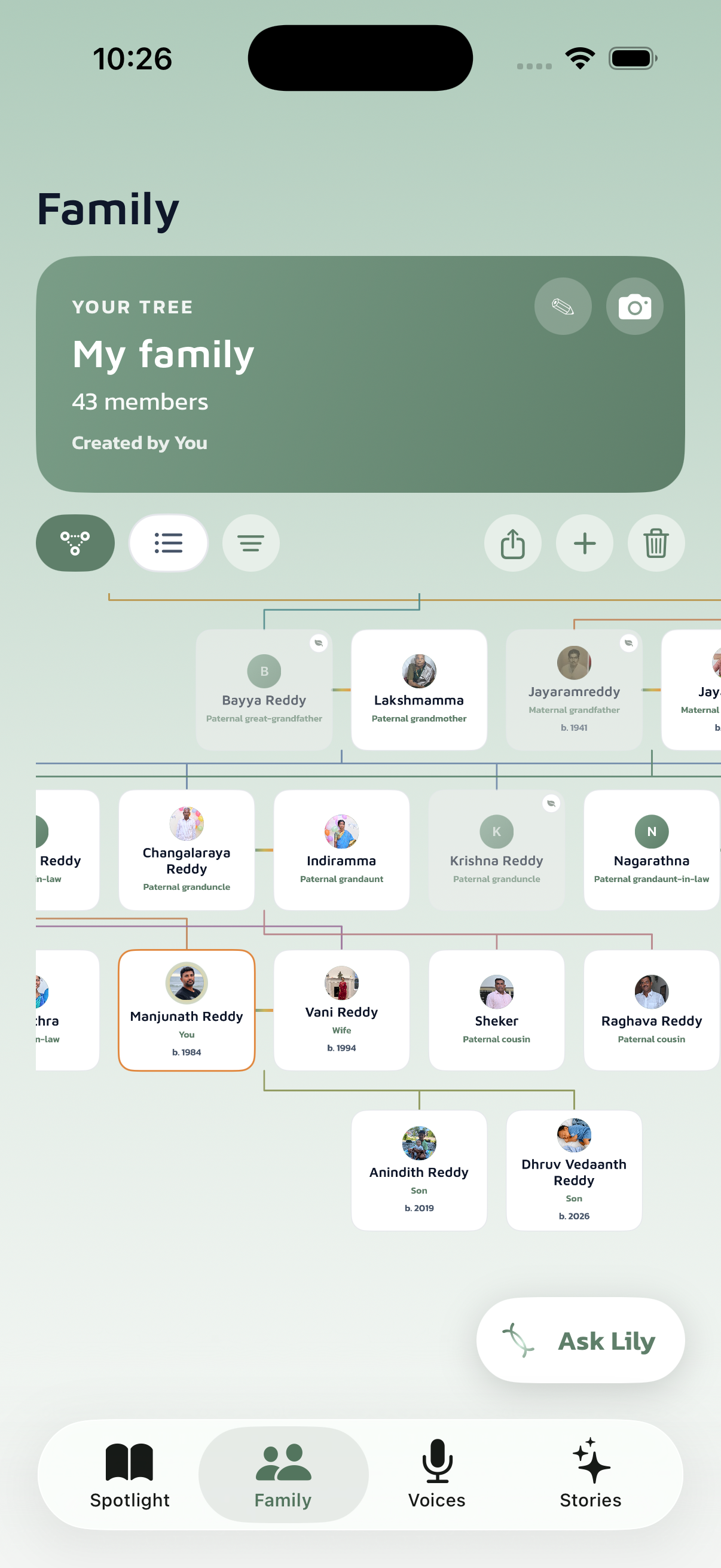
Family Tree Spine view.
-
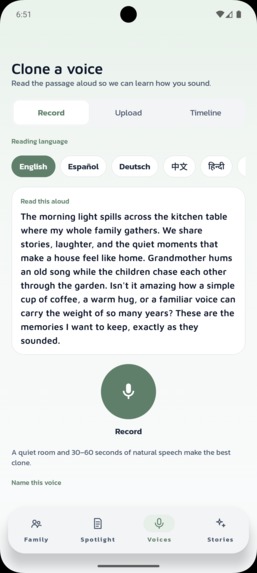
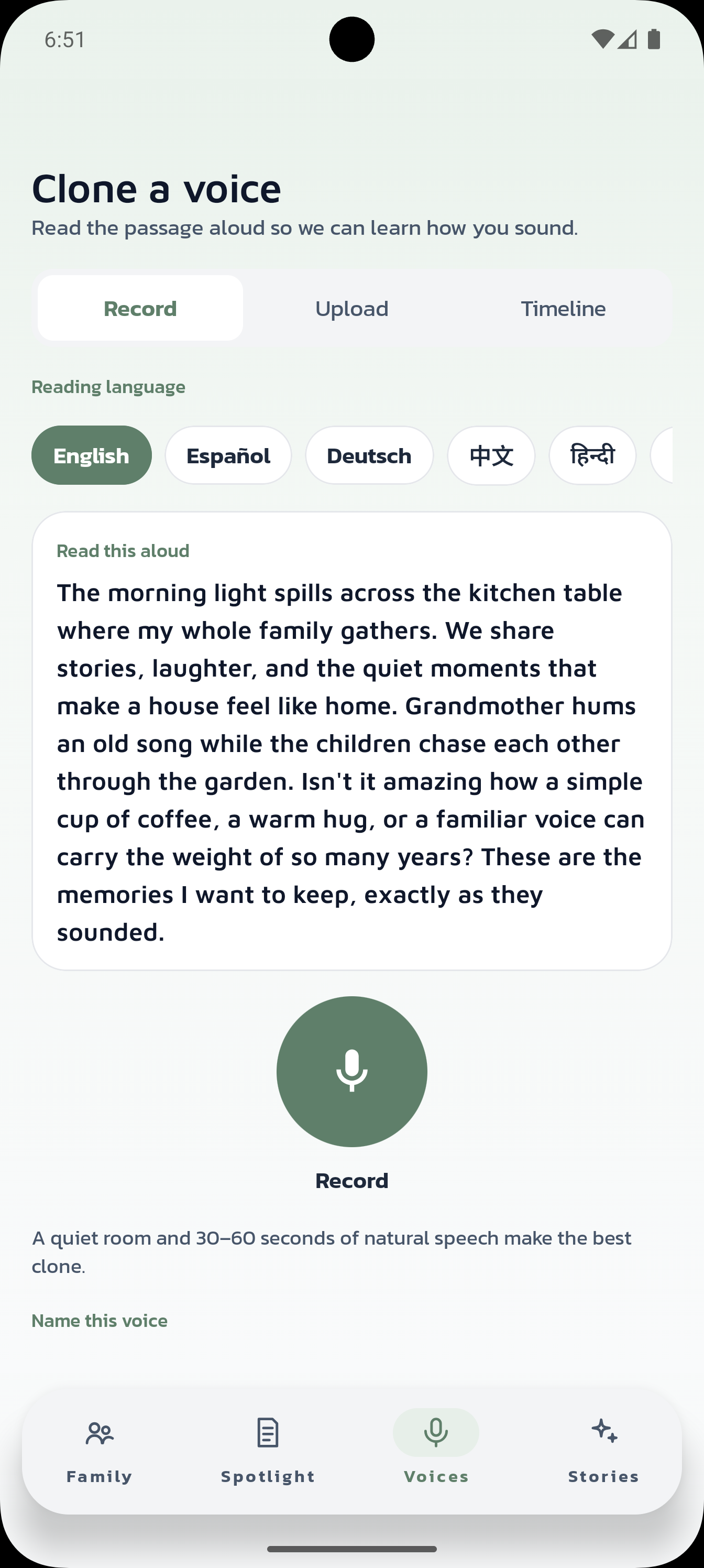
Voice Clone
-
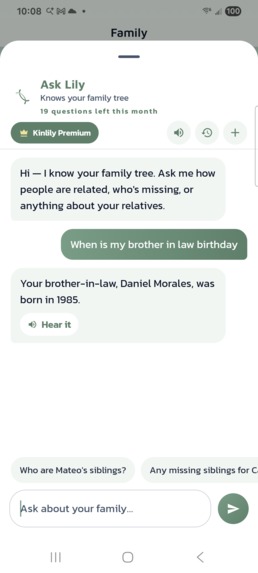
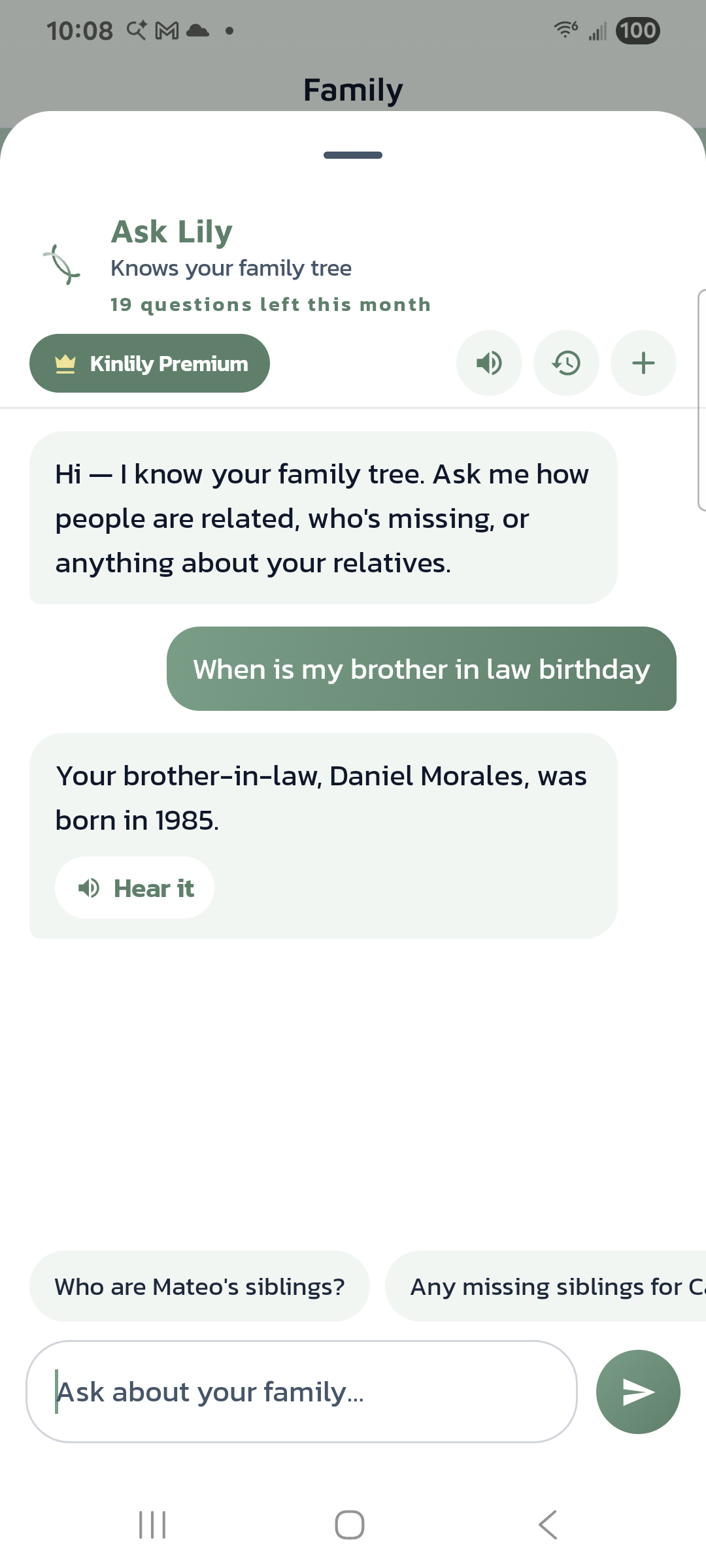
Ask-Lily AI powered agent for Family Tree help and Q&A. Integrated with Siri and Hey Google.
-
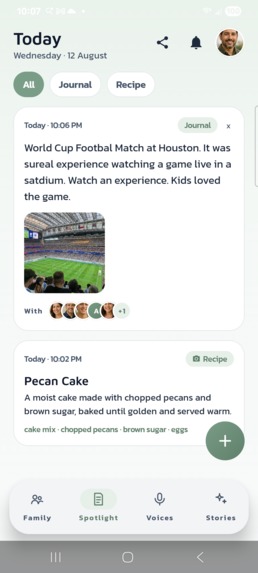
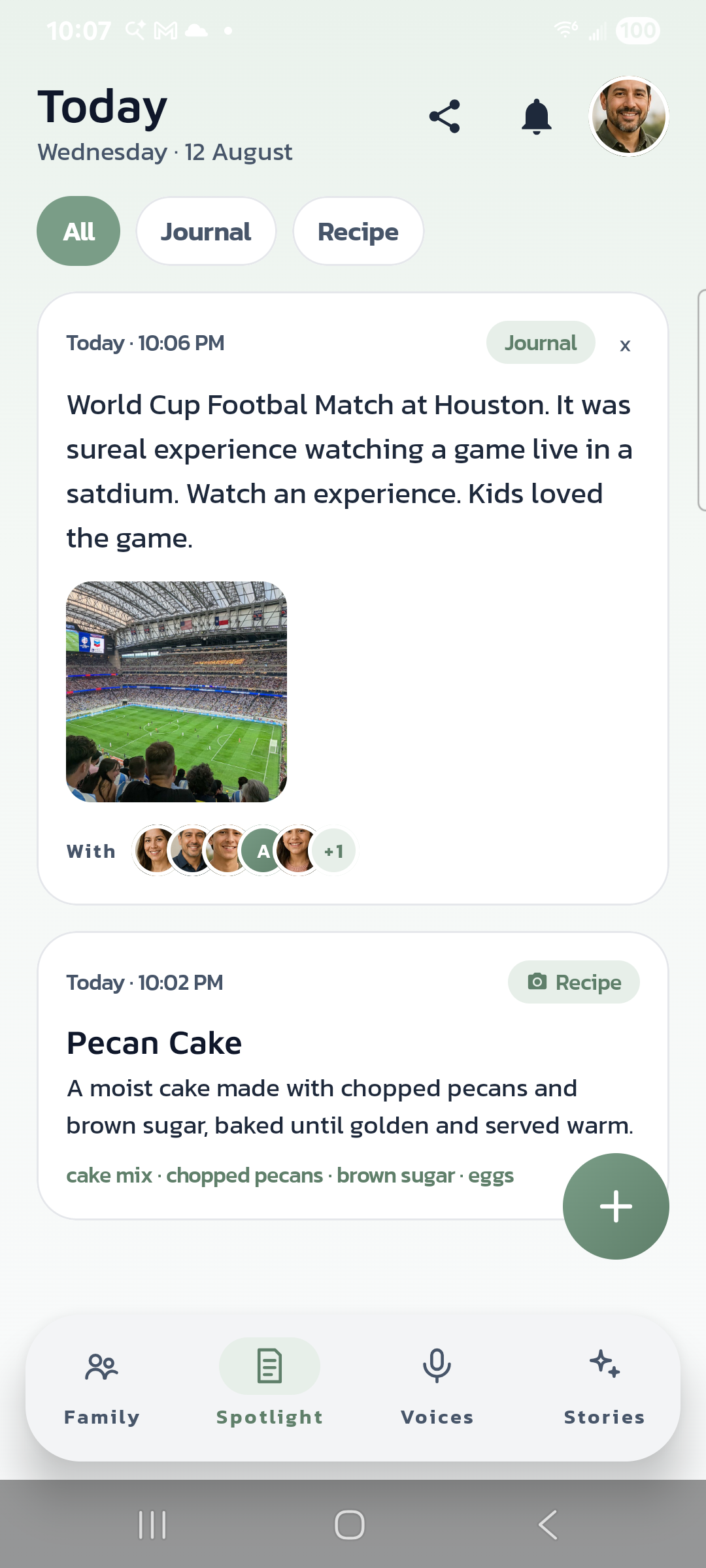
Shared meories with Family, just family no noise.
-
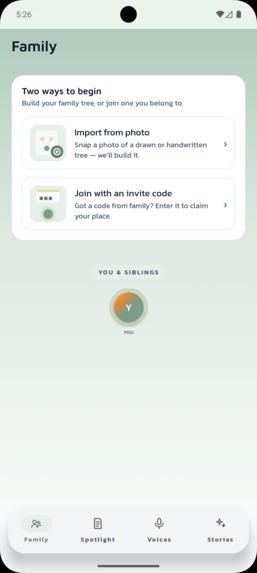
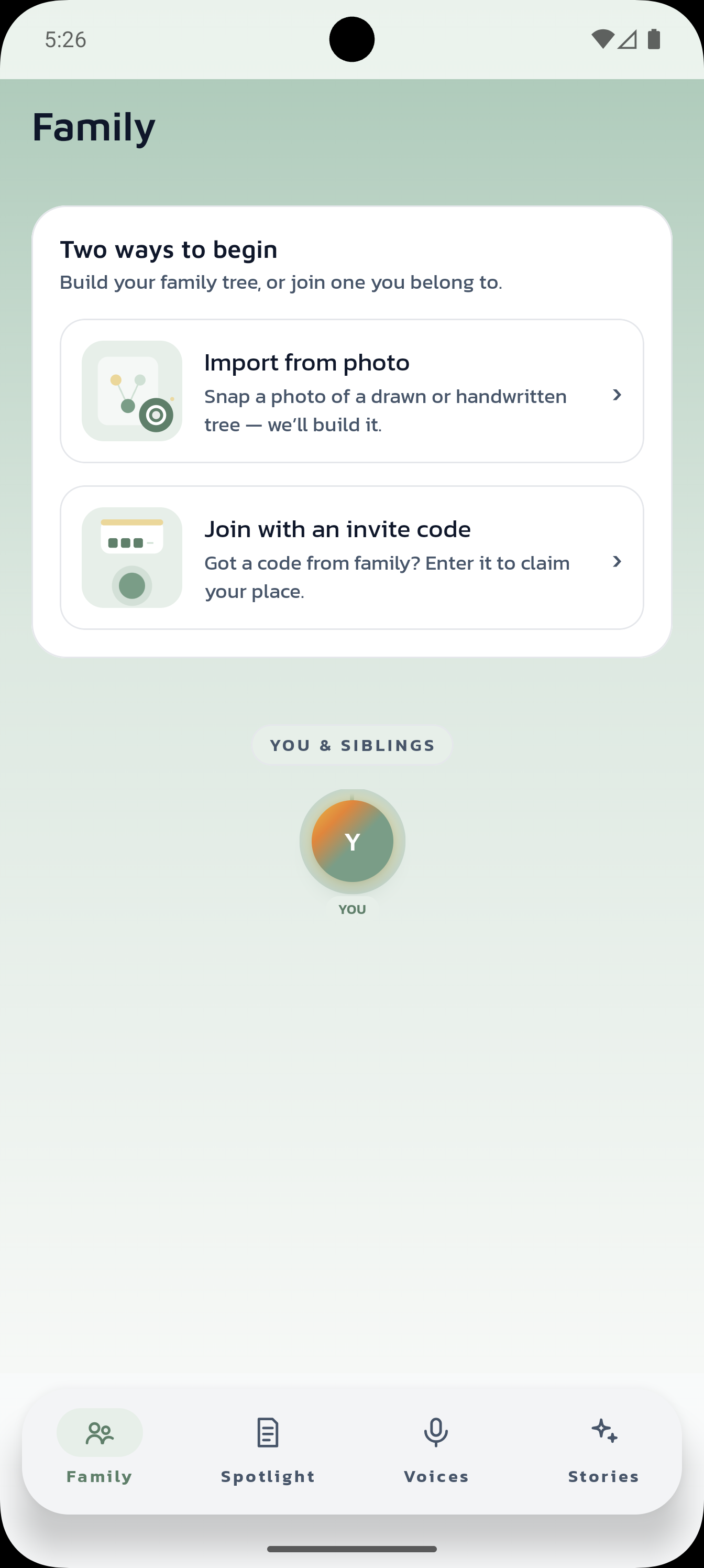
Import a family tree from existing system or handwritten tree.
-
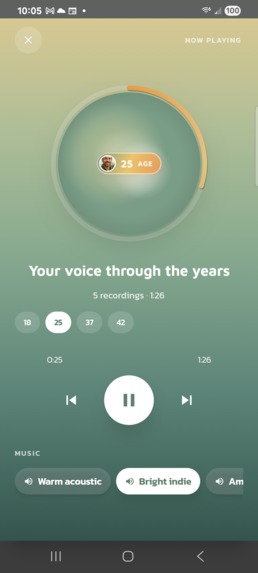
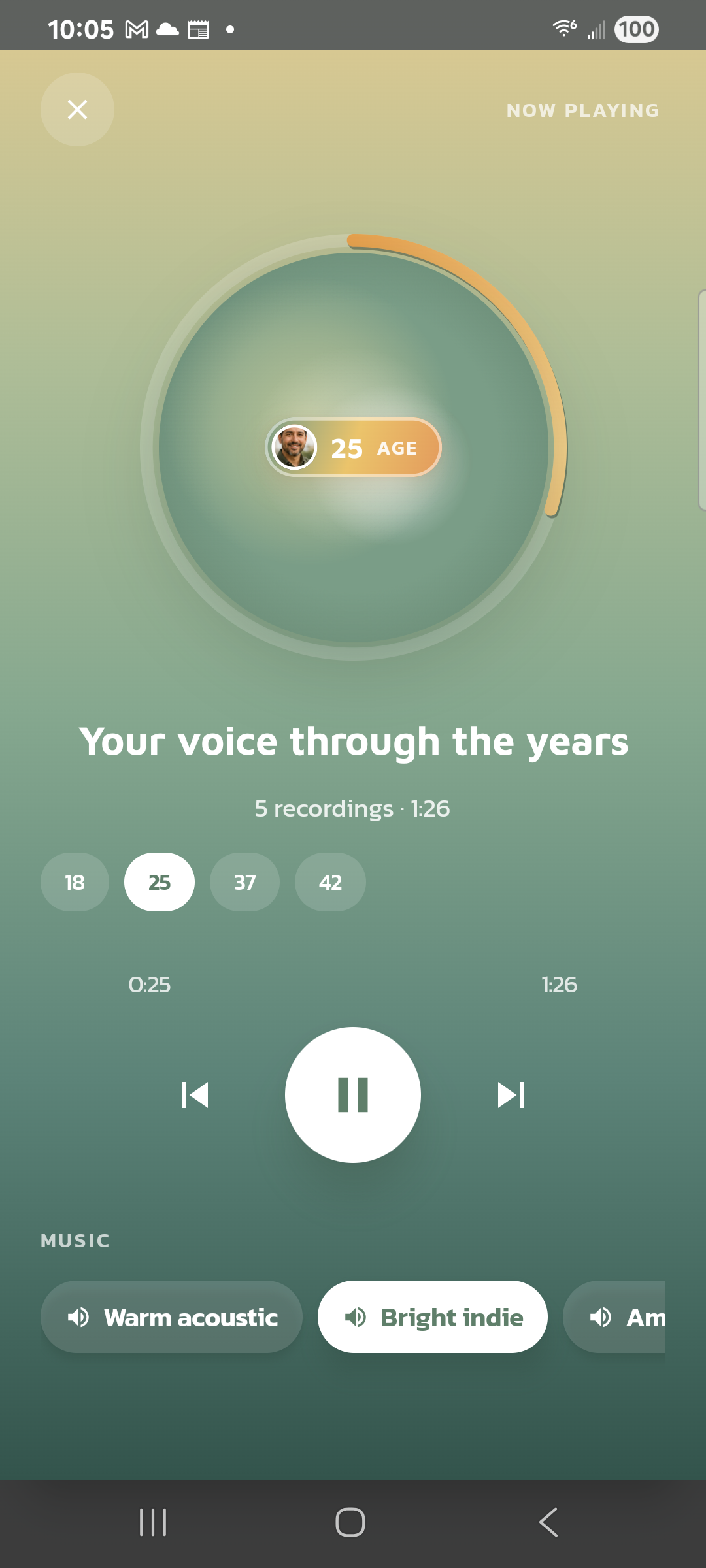
Voice Timelines of your recordings, as you age through.
-

-
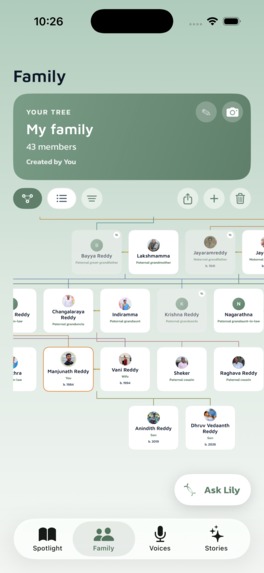
Graph based family tree view.

Inspiration Voices disappear. We keep our grandparents' photos, but almost never the sound of them telling a story — the laugh, the accent, the way they said your name. Once they're gone, that's gone too. We wanted to build the thing families will wish they'd had in 20 years: a place where your voice, your memories, and how you relate to everyone who came before you are preserved — and can even speak again. Kinlily started from one question: what if your great-grandchild could hear a bedtime story in your actual voice?
What it does Kinlily is a voice-first family archive.
Journal by voice or text — capture moments as you live them. Clone your voice (behind a clear consent gate) and turn your memories into AI-narrated stories told in your own voice. Build a living family tree across generations, with viewer-relative relationships (your "uncle" is someone else's "brother"), photos, life notes, and even pets. Ask Lily — a conversational AI that answers questions about your family and can render a mini sub-tree right inside the chat. Your voice through the years — a montage of how you've sounded at every age, woven into one narrated timeline. Family recipes, stories, and memories — shared to the whole tree with attribution and voice. Everything is private by design, encrypted, and cross-generational — one payer can bring a whole family in.
How we built it Kotlin Multiplatform with native UI per platform — Jetpack Compose on Android, SwiftUI on iOS — sharing one set of business logic, MVI state machines, and data gateways in common Kotlin. Only the views are per-platform. A single encrypted FastAPI backend on Google Cloud Run is the only thing the app talks to (Firebase Auth is the sole exception). Firestore for data, Firebase Storage for media (signed on read), server-side encryption at rest. AI: OpenAI GPT-4.1 for story generation, the Ask-Lily agent, recipe extraction, and kinship labeling; ElevenLabs for voice cloning, TTS narration, and generated music beds; on-device Apple Speech / Vision and ML Kit for transcription and recipe OCR. Audio pipeline: ffmpeg + pydub for stitching multi-voice "radio-play" narration and the life-in-voice montage (per-turn timings drive karaoke-style highlighting). Payments via Stripe hosted checkout; i18n across 10 in-app locales and 15 store locales; FCM, Crashlytics, and Analytics from day one. Challenges we ran into Viewer-relative family trees. A relationship is only true from one point of view. We ended up walking the actual edge graph (blood-preferring BFS) as the source of truth rather than trusting stored labels, so every member sees the tree correctly from their seat. Cross-user identity and sharing. Letting a relative claim their node, then surfacing everything created about them — without leaking private data — took a careful reverse-query + governance model. Voice montages that don't fall apart with 100+ clips, multiple recordings per year, or a lone 15-minute file — solved by grouping per year and excerpting each clip. iOS Firebase Phone Auth under SwiftUI — a genuinely nasty APNs/swizzling crash we root-caused down to initialization timing. Keeping two native UIs pixel-faithful to one design system. Accomplishments that we're proud of A real, shipping KMP app with fully native UI on both platforms — not a lowest-common-denominator cross-platform shell. Voice cloning that actually feels magical: hearing a story in your own voice, or a multi-voice "radio play" where each family member speaks their own lines. Ask Lily answering real kinship questions and drawing a sub-tree inline. An end-to-end, encrypted, multi-generational archive with recipes, life notes, and voice timelines — and a sister product (Vediify) that already reached 315 users in 3 months proving the team can ship and grow. What we learned Determinism beats the model for facts. For relationships, the graph is the truth; the LLM should describe, never decide. Retention in a legacy app is emotional and time-triggered — "on this day," annual voice prompts, and the invite-a-relative loop matter more than surface area. Privacy and consent aren't features, they're the product when you're handling someone's voice and family. Native-per-platform is more work up front but pays off in feel — and a shared Kotlin core keeps it sane. What's next for Kinlily iOS push notifications and the annual "record your voice this year" nudges. Photo montages synced to the life-in-voice timeline. Deeper cross-user voice sharing — narrate stories in a relative's shared voice. Family group plans and the growth loop toward 200K users / 50K subscribers. Richer genealogy: connector lines, couple pairing, and importing a tree from a photo.
Use : KINTEST100 for Andorid Stripe checkout or checkout from web. Free Demo is not available in apple yet,

Log in or sign up for Devpost to join the conversation.