-
-
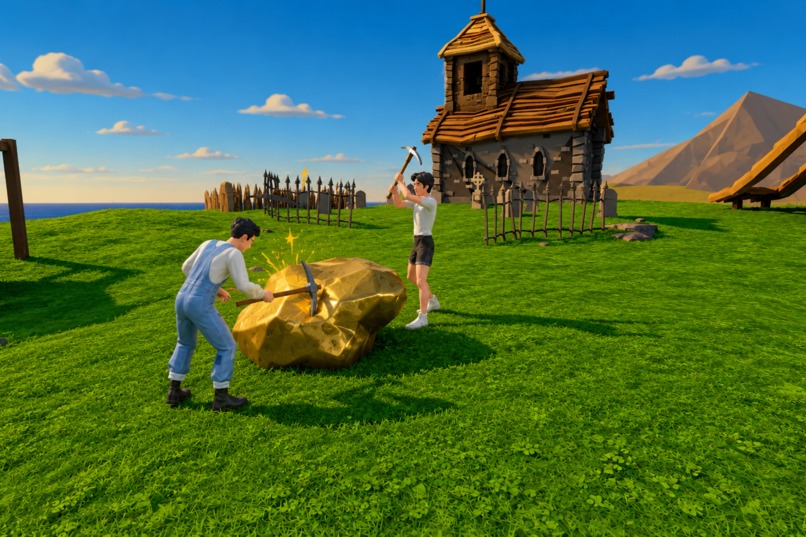
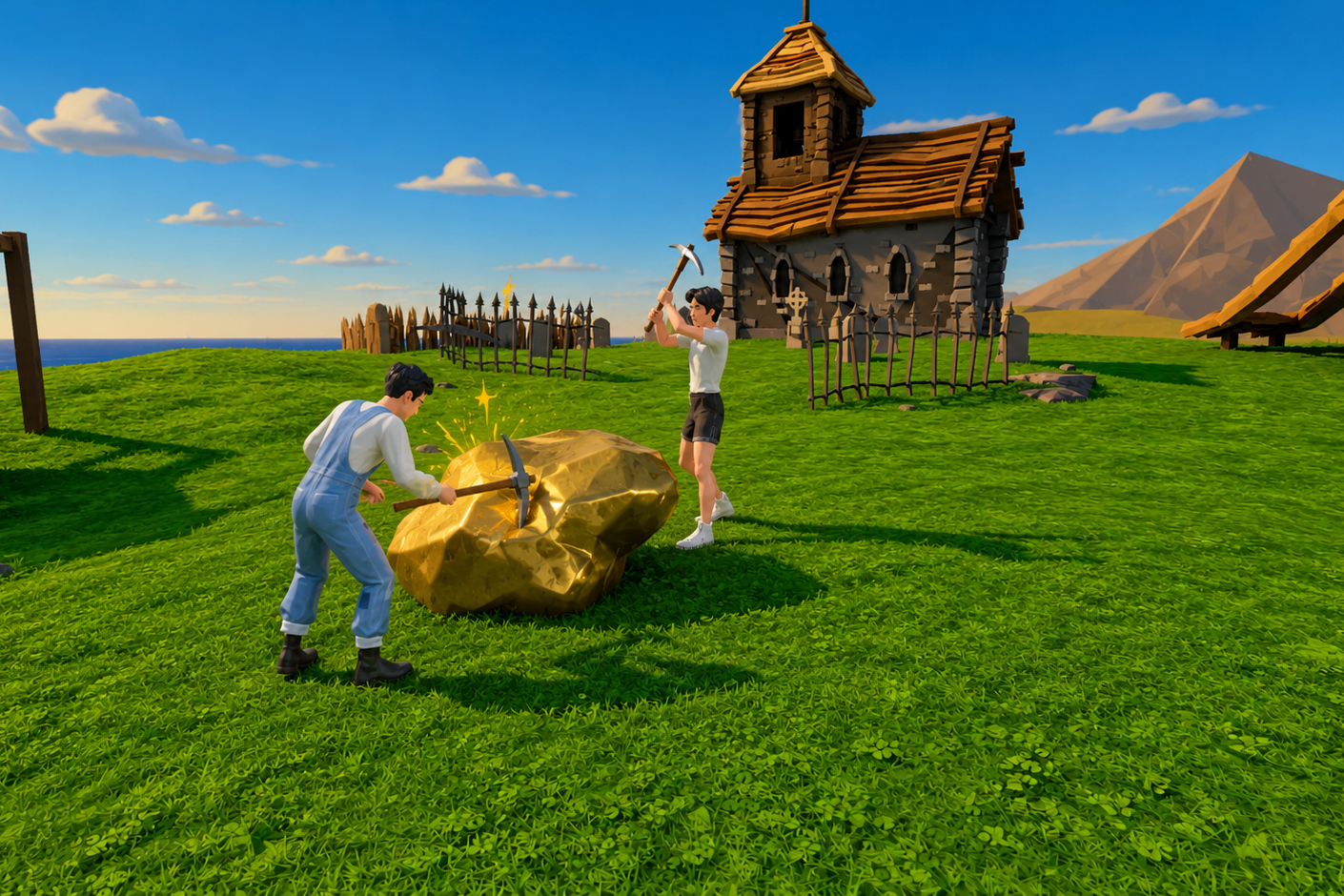
Mining gold
-
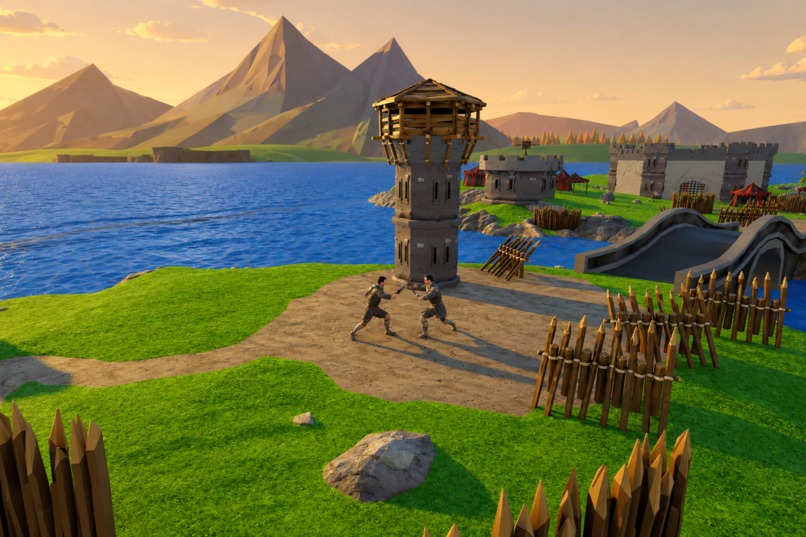
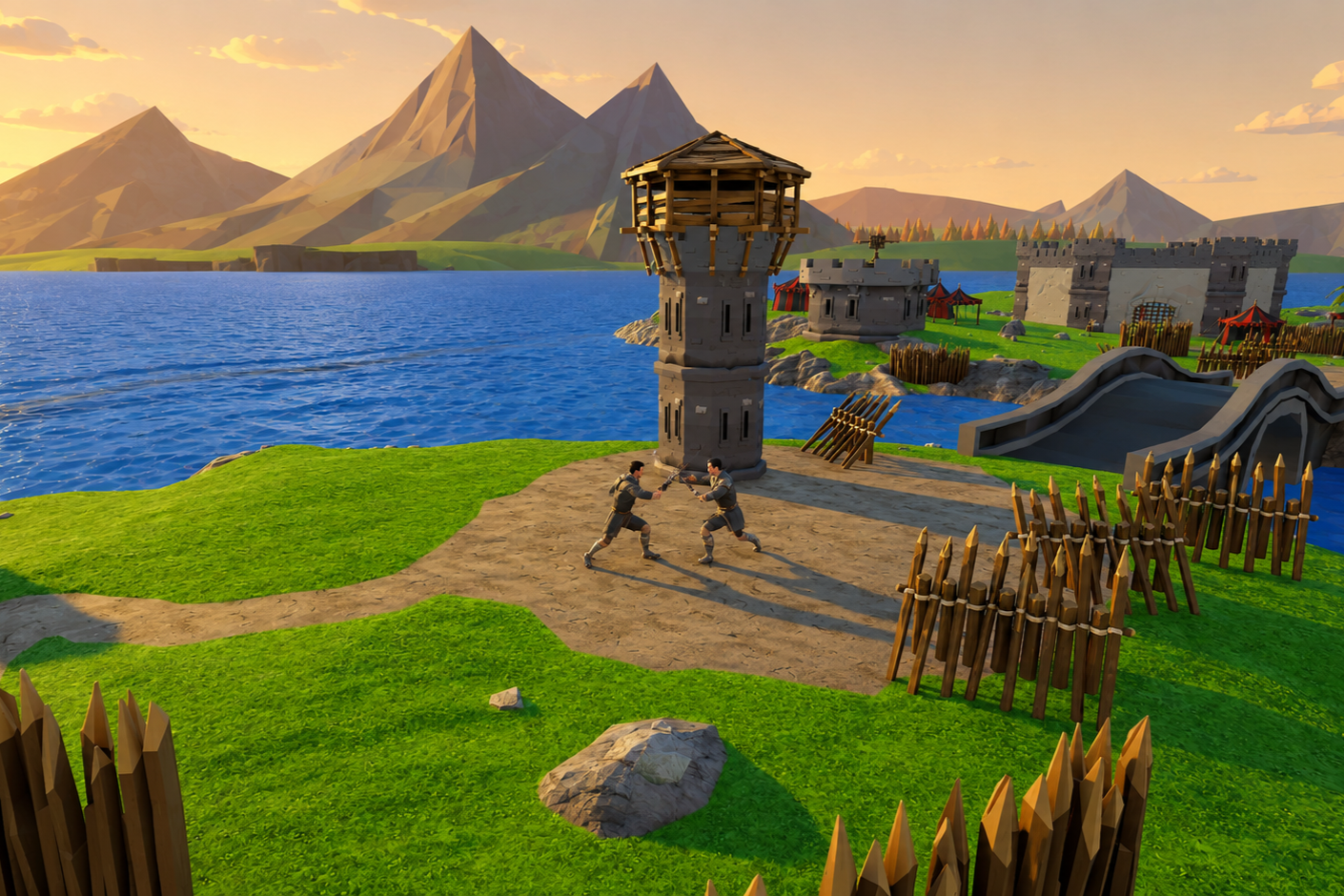
Minions from two teams fighting
-
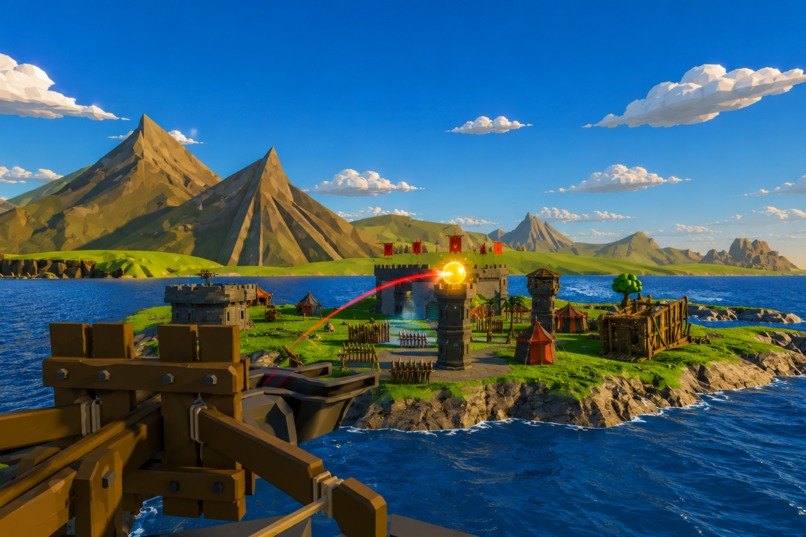
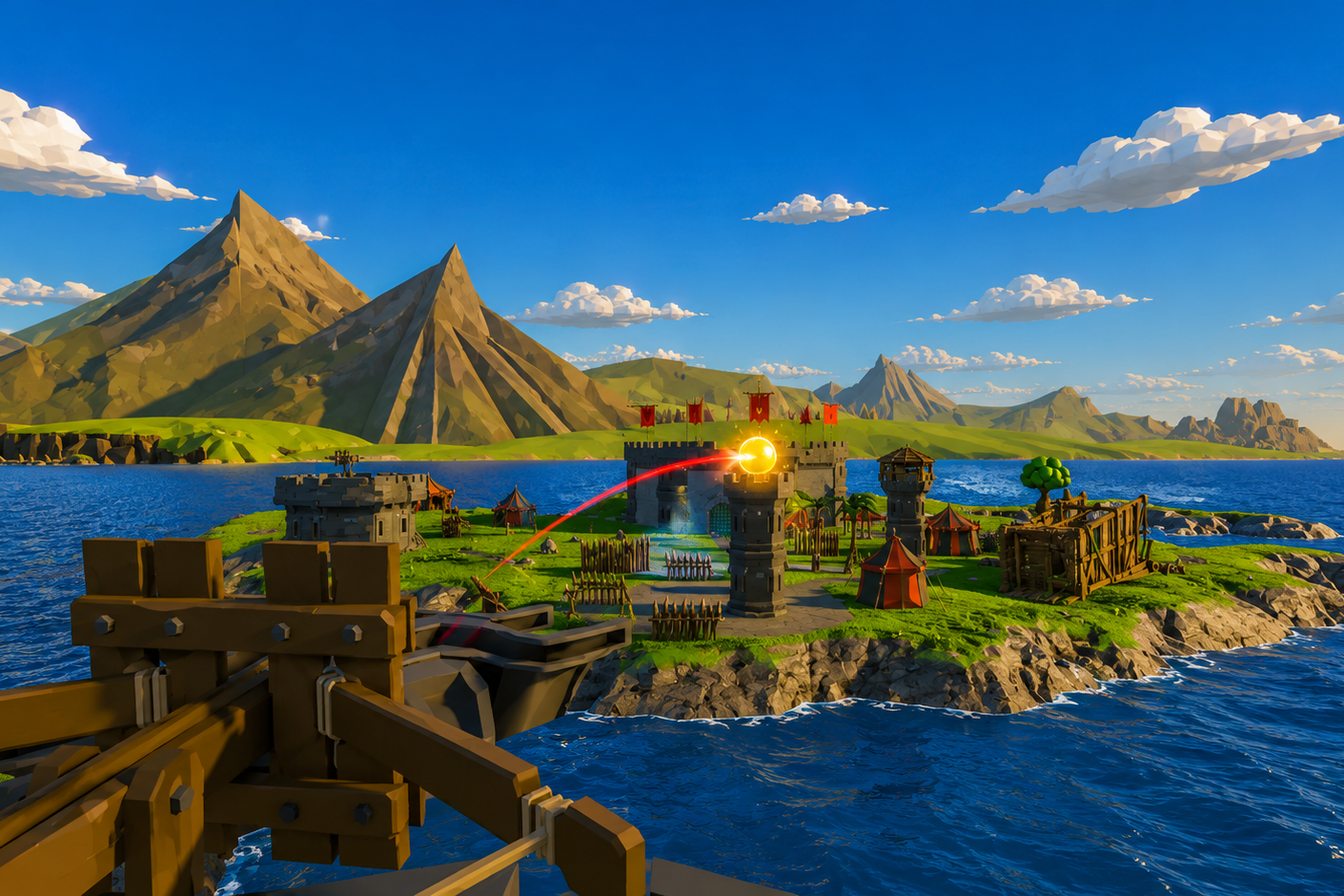
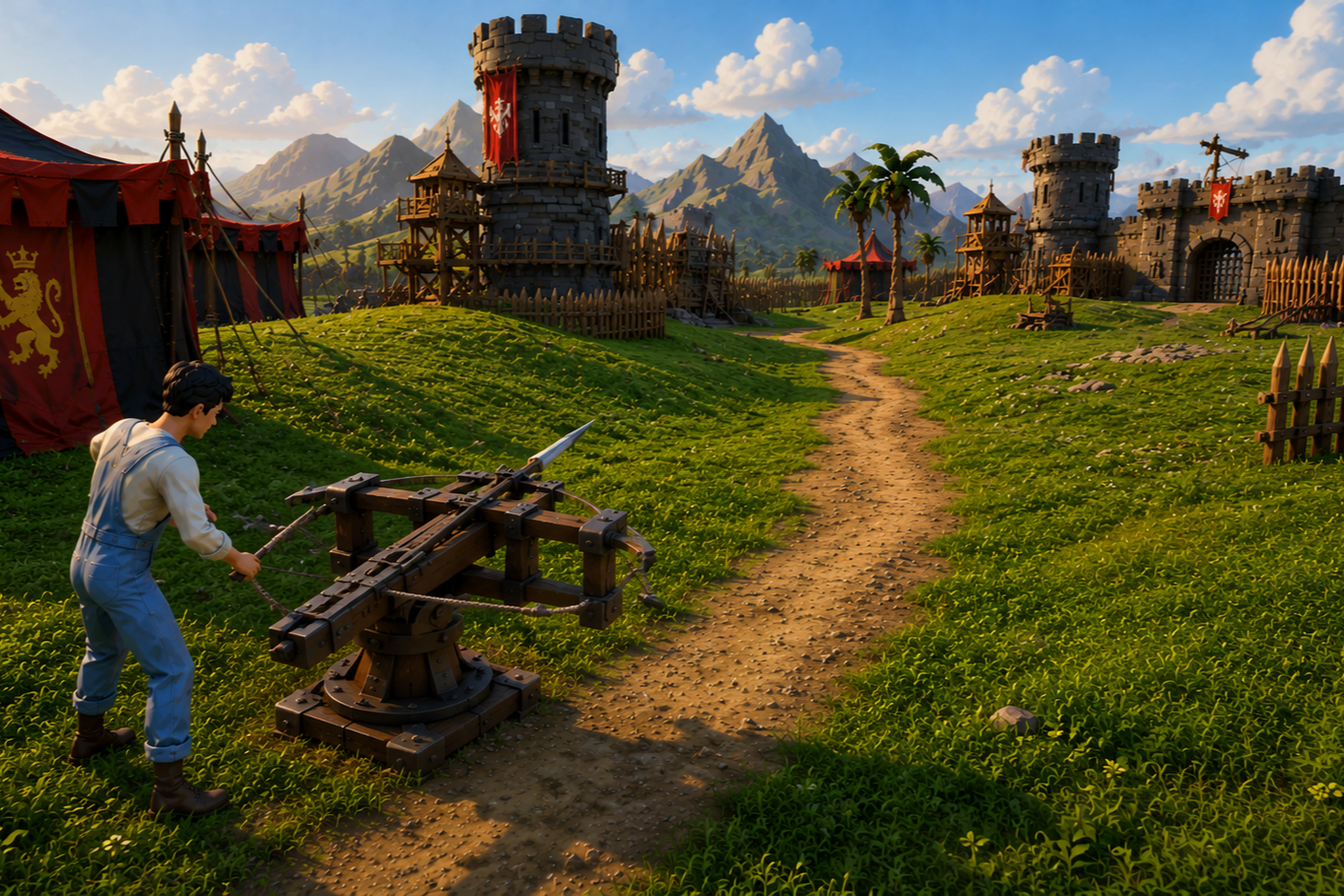
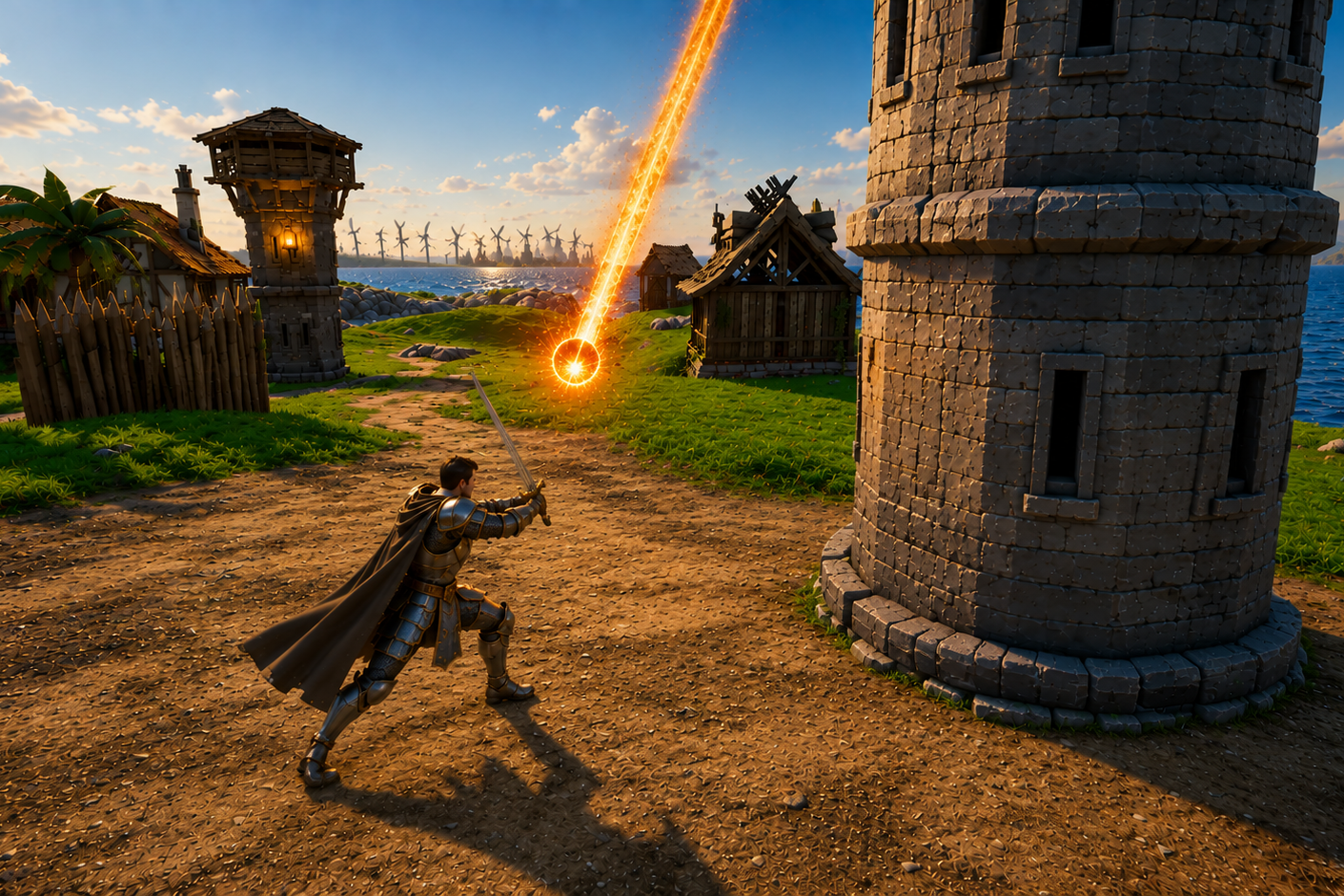
Shooting the tower's weak point with a ballista
-
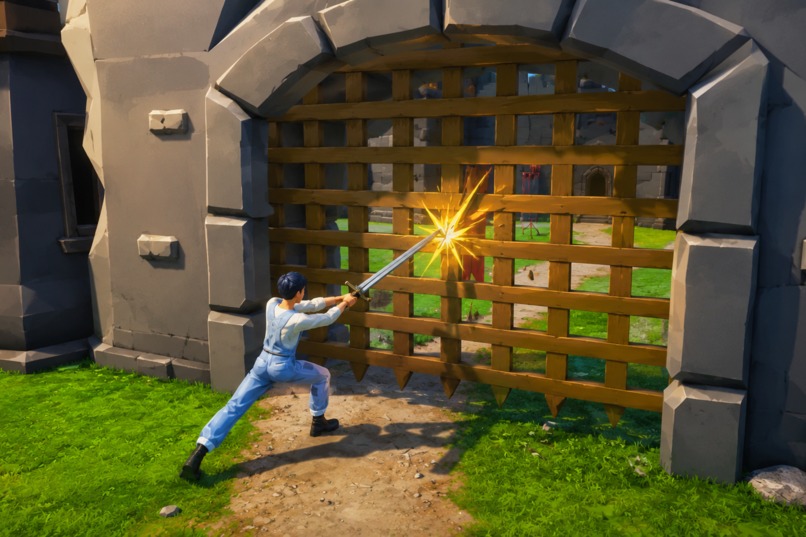
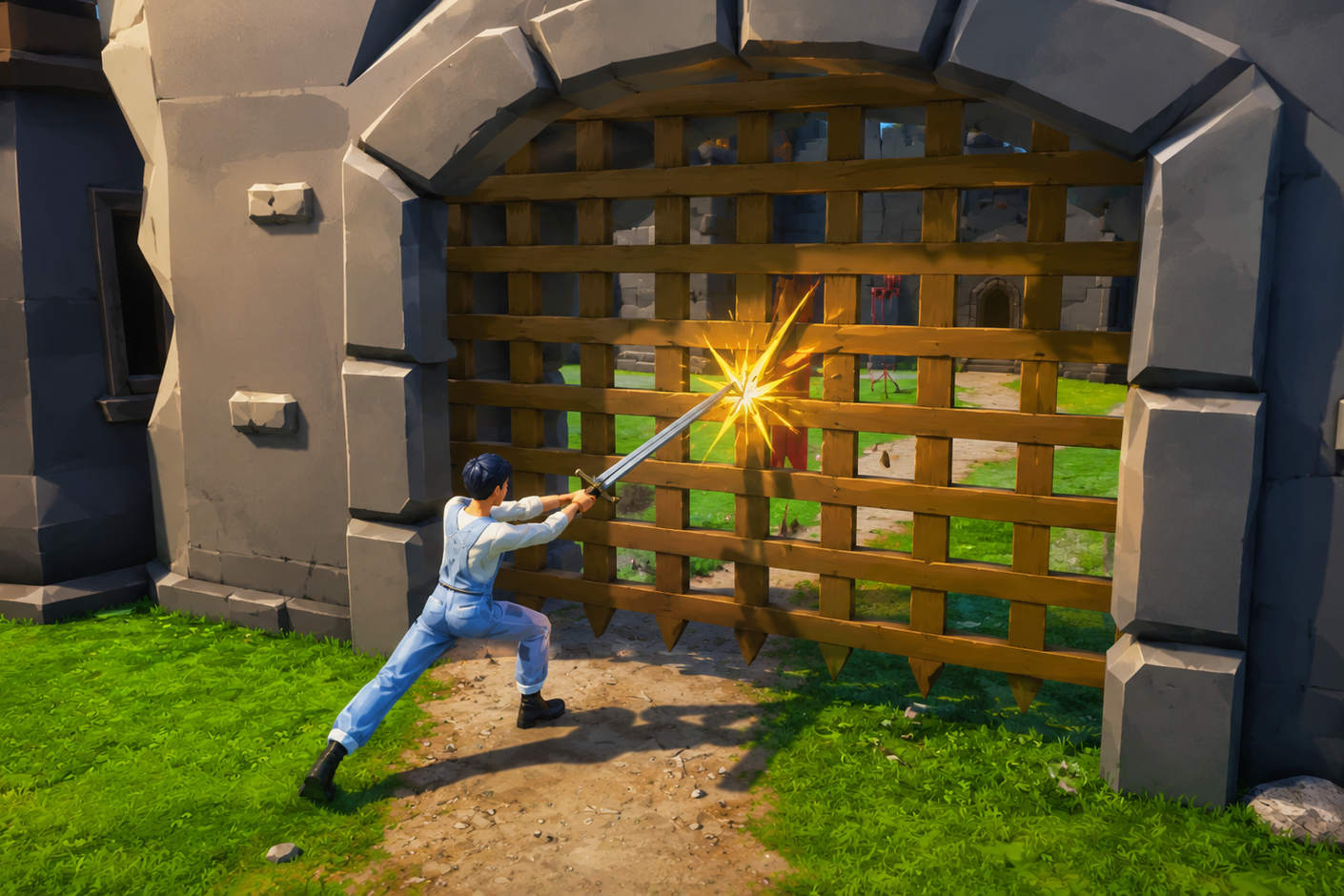
Destroying the enemy castle gate
-
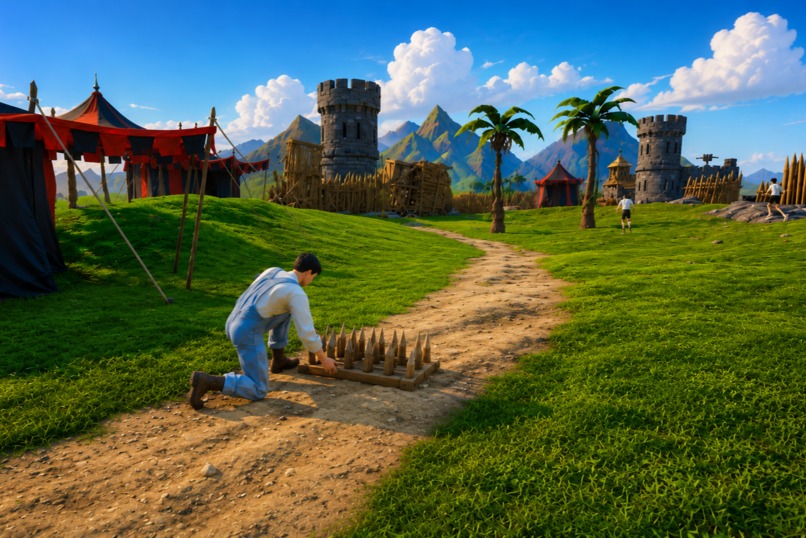
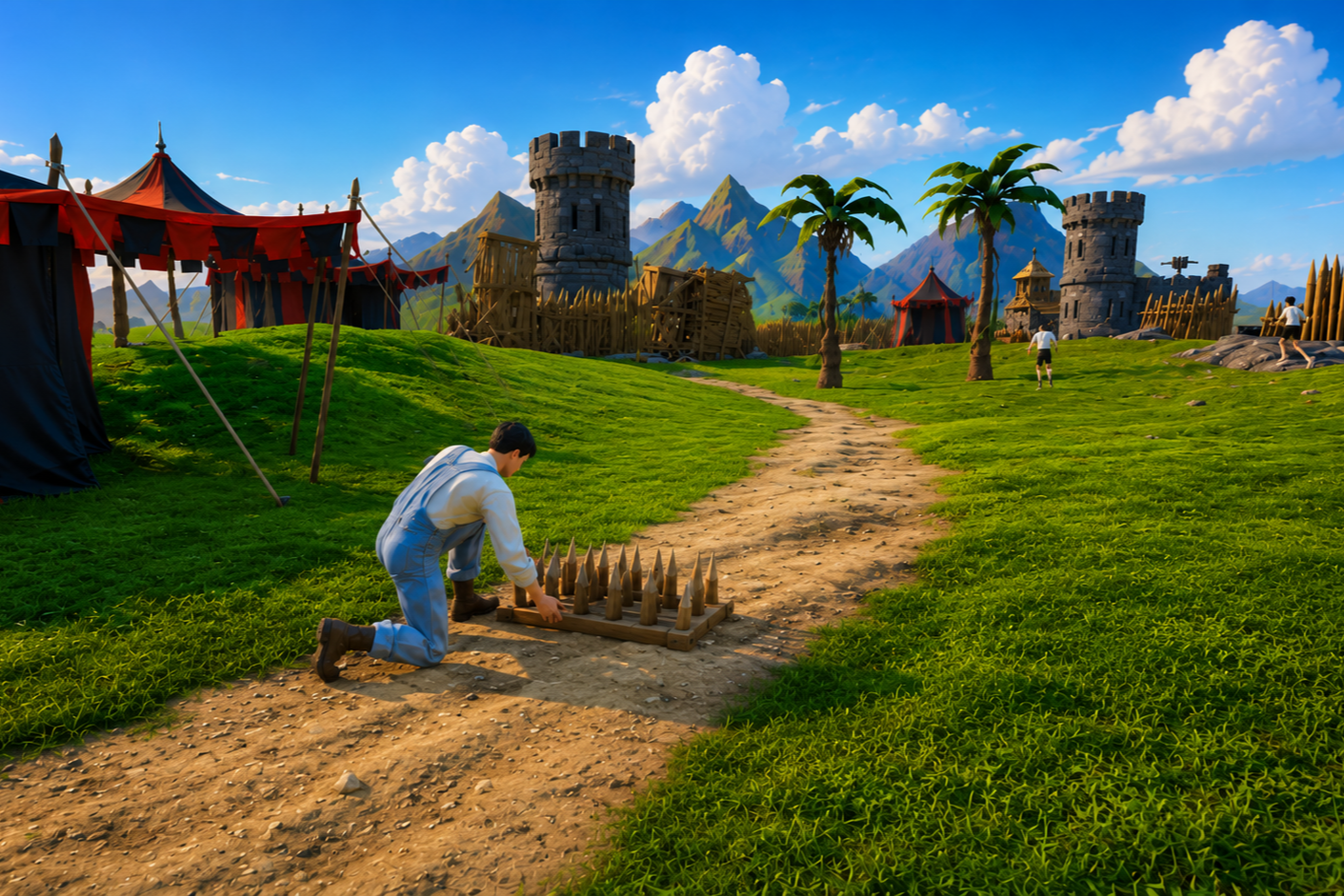
Placing spikes on the minions' path
-
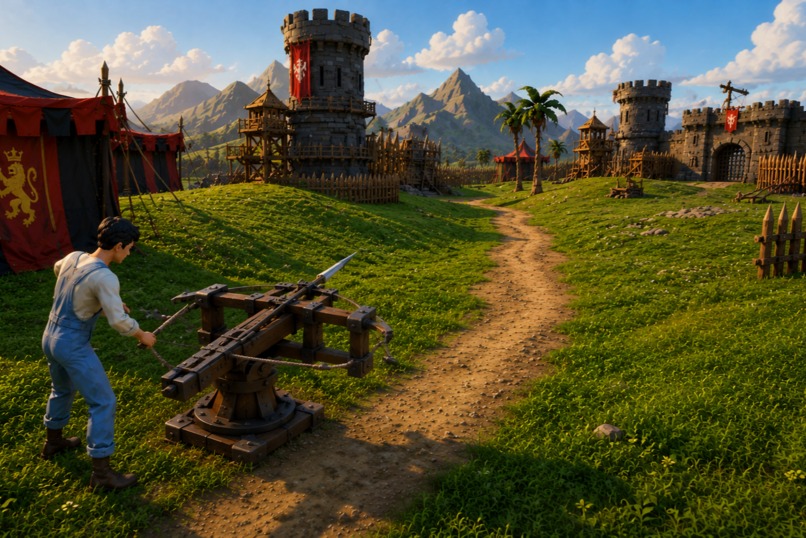
Building a turret
-
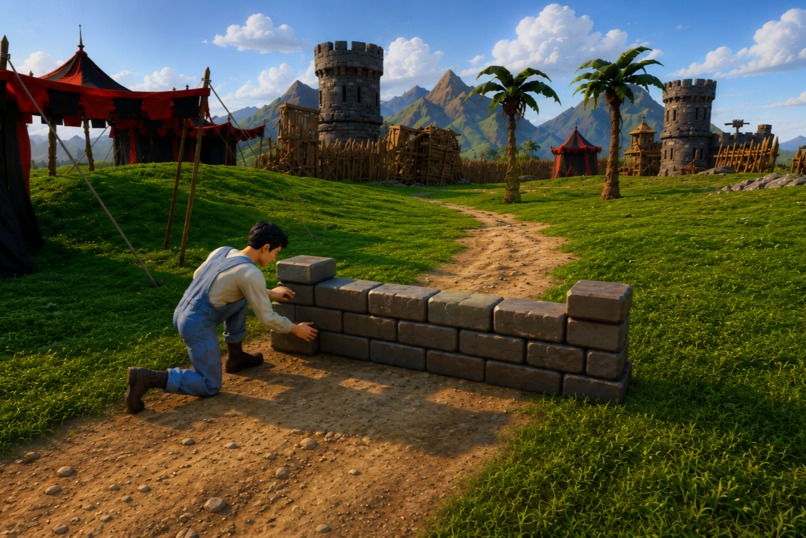
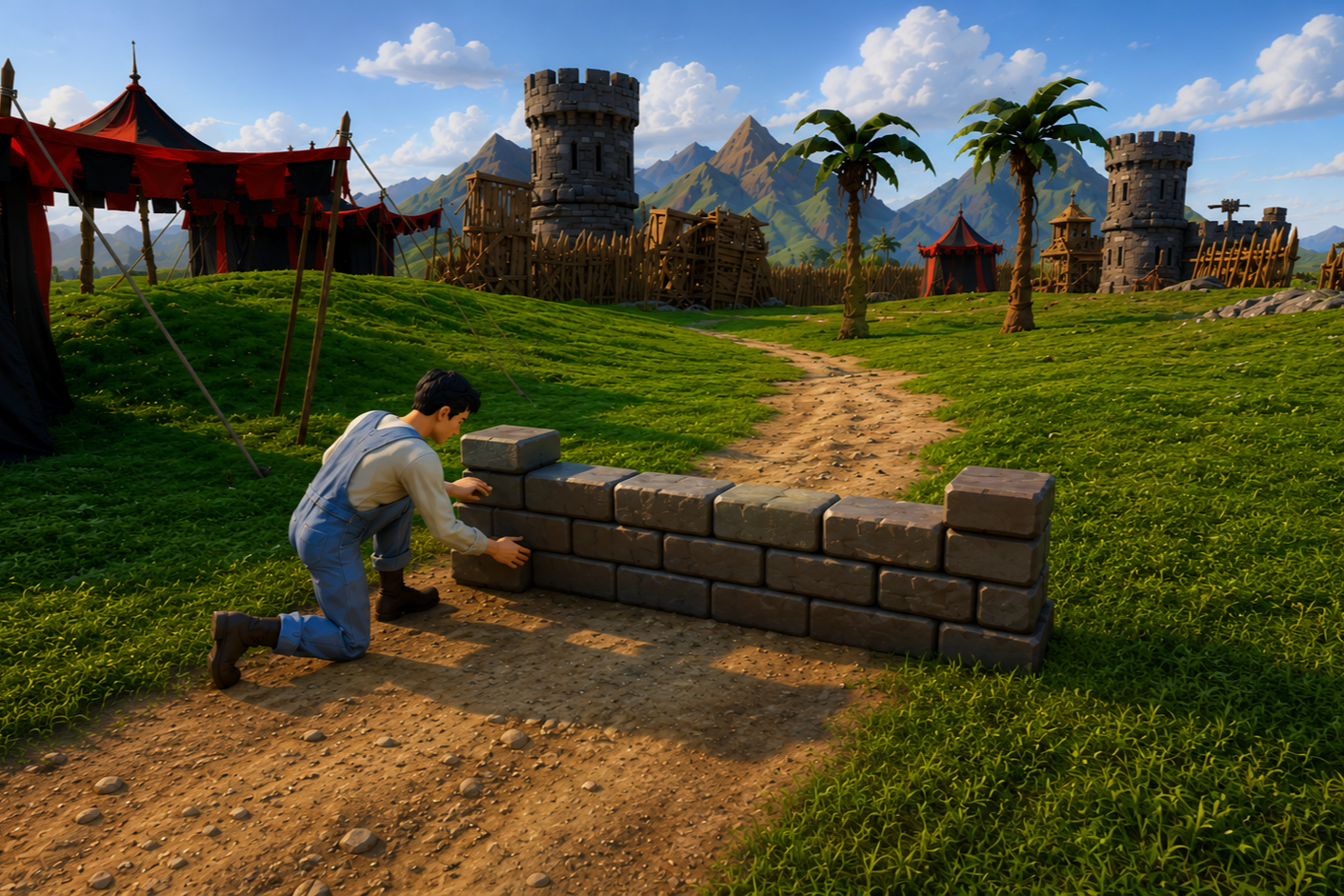
Placing a barricade on the path
-
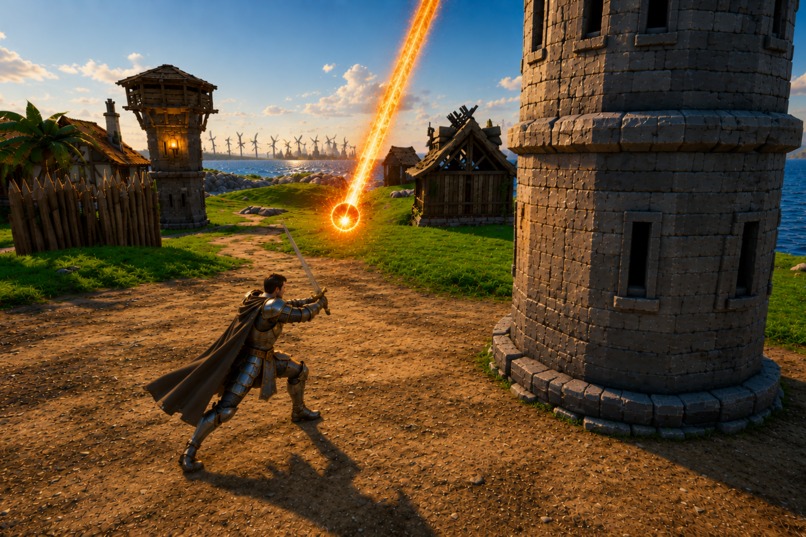
Minion vs tower combat
-
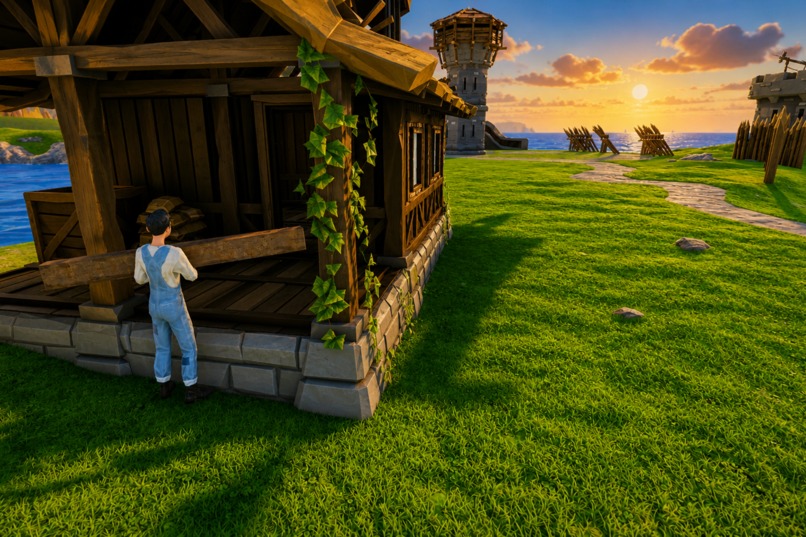
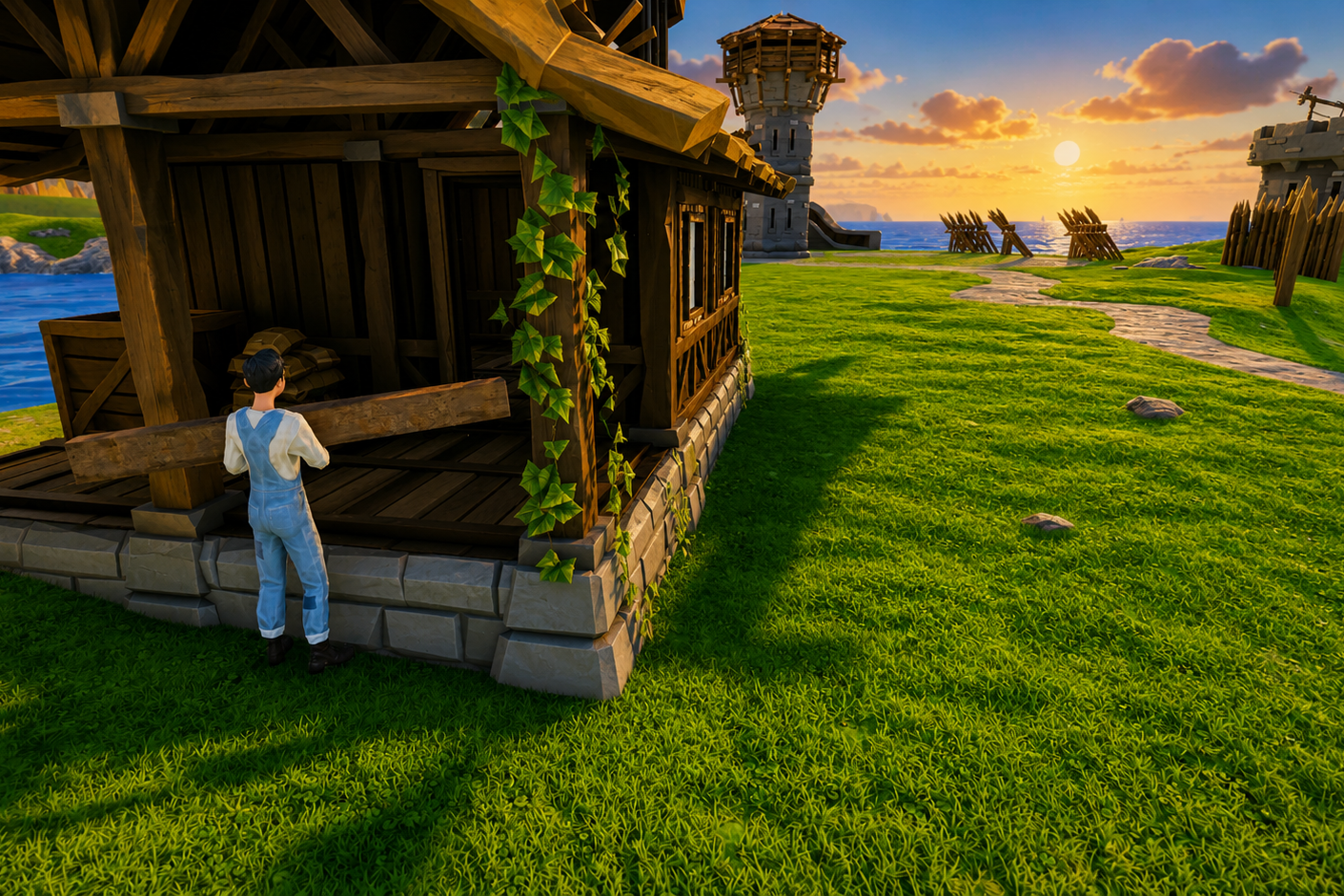
Delivering wood to the warehouse
Inspiration
As a team, we wanted to create a multiplayer strategy game that combines the long-term planning of tower defense games with the excitement of direct player involvement. The project was heavily inspired by games such as Clash Royale, Kingdom Rush, and Bloons TD, all of which excel at creating satisfying strategic gameplay loops, meaningful progression, and rewarding defensive decision-making. At the same time, we were fascinated by the player-driven resource gathering and world interaction found in games like Rust. While Kingdom Siege is not a survival game, we were inspired by the idea that players should physically interact with the game world and contribute to their team’s economy through their own actions rather than relying entirely on passive systems.
Our goal was to combine these influences into a unique experience. From Clash Royale, we drew inspiration from lane pressure, unit deployment, and the constant balance between offense and defense. Kingdom Rush and Bloons TD inspired our focus on tower defense fundamentals, enemy specialization, progression systems, and battlefield control. Rust influenced our approach to resource gathering, player agency, and the feeling that every resource used by the kingdom was earned through actions performed in the world.
The central fantasy behind Kingdom Siege is that of a living medieval conflict where every player contributes to both the defense of their own kingdom and the destruction of the enemy’s. We wanted players to feel like active participants in a war effort rather than commanders observing the battlefield from a distance.
One of the concepts that excited us most was transforming towers into meaningful siege objectives rather than simple health bars. Instead of allowing players to destroy towers through raw damage alone, we introduced a system where players and allied minions must first attack a tower in melee combat to expose its weak point. Once exposed, the weak point can only be destroyed using a player-operated ballista. This mechanic connects resource gathering, battlefield control, and siege progression into a single objective while reinforcing cooperation between players and AI units.
Design Challenges
One of the biggest challenges throughout development was maintaining the game’s identity as a tower defense experience while still allowing players to actively participate in combat.
Early versions of the concept focused heavily on attacking enemy positions, which made the game feel closer to a multiplayer battle game than a strategy-focused tower defense title. While the direct combat was fun, it risked overshadowing the defensive systems that formed the foundation of the project. To address this, we gradually increased the importance of defense and battlefield control. Defensive structures became a core part of progression, and we introduced mechanics that encouraged players to think about positioning, lane control, resource allocation, and long-term planning. The addition of spike traps, walls, deployable towers, and global defense upgrades helped establish defense as an equally important pillar alongside offense.
Another challenge involved supporting different player counts. Kingdom Siege supports up to three players per team, but we wanted matches to remain enjoyable even when teams were not full. Empty player slots had the potential to create severe disadvantages, particularly because gathering resources and managing defenses are both critical responsibilities.
Our solution was to introduce AI-controlled support systems that compensate for missing teammates. Resource-gathering NPCs automatically collect and deliver resources, while AI kingdom defenders can purchase units, upgrade defenses, operate ballistas, and participate in sieges. Designing these systems required careful balancing to ensure they remained useful without replacing the value of human players. Resource management also went through several iterations. We wanted resources to create meaningful decisions rather than simply acting as currencies. Over time, we refined the economy into three distinct resources that support different aspects of gameplay. This created constant trade-offs between economic growth, defensive investment, military expansion, and long-term progression.
Development Process
The project evolved significantly through iteration and refinement. Many of our earliest ideas appeared exciting on paper but did not necessarily strengthen the core experience we wanted to create. One of the most important design decisions involved removing the original capture-the-flag objective. While the mechanic introduced an additional path to victory, it also divided player attention and weakened the overall focus of the game. Players were often forced to choose between defending, gathering resources, attacking towers, escorting units, or pursuing flags, which created unnecessary complexity.
After evaluating the design, we decided to simplify the experience around a single objective: destroying the enemy castle. This change strengthened the overall game considerably. Every major system suddenly became aligned toward the same goal, creating a more focused and understandable experience.
As development continued, we repeatedly evaluated mechanics based on whether they strengthened the relationship between resource gathering, defensive construction, unit deployment, and siege warfare. Features that reinforced these pillars were expanded and refined, while mechanics that distracted from them were simplified or removed.
This iterative process helped us identify what truly made Kingdom Siege unique. The game was strongest when players were actively switching between gathering resources, managing defenses, supporting waves, and participating in sieges. Rather than separating these activities into isolated systems, we focused on making them support one another.
What We Learned
The most valuable lesson we learned was the importance of focus. Throughout development, we generated many ideas that could have expanded the scope of the project, but not every feature contributed equally to the experience we wanted to create. Learning when to remove mechanics proved just as important as creating new ones.
We also gained a deeper appreciation for the importance of interconnected systems. The strongest moments in Kingdom Siege occur when different mechanics naturally reinforce one another. Resources gathered by players eventually become defensive structures, ballista ammunition, military units, and upgrades. Successful defenses create opportunities for stronger offensives, while successful offensives generate new opportunities for progression. The more connected these systems became, the more satisfying the overall gameplay loop felt.
Another important lesson involved balancing strategic depth with accessibility. We wanted players to have meaningful choices without overwhelming them with unnecessary complexity. This led to several simplifications, including global defense upgrades and a clear castle destruction victory condition. These changes preserved strategic depth while making the game’s objectives easier to understand. Finally, this project reinforced the importance of iteration. Some of the strongest mechanics in Kingdom Siege only emerged after multiple rounds of redesign and refinement. Rather than continuously adding new features, we found that improving the interaction between existing systems produced far better results. As a result, Kingdom Siege evolved into a more focused, coherent, and achievable project that delivers a distinctive blend of tower defense strategy, resource management, and direct player participation.
Built With
- horizon
- meta
- typescript


Log in or sign up for Devpost to join the conversation.