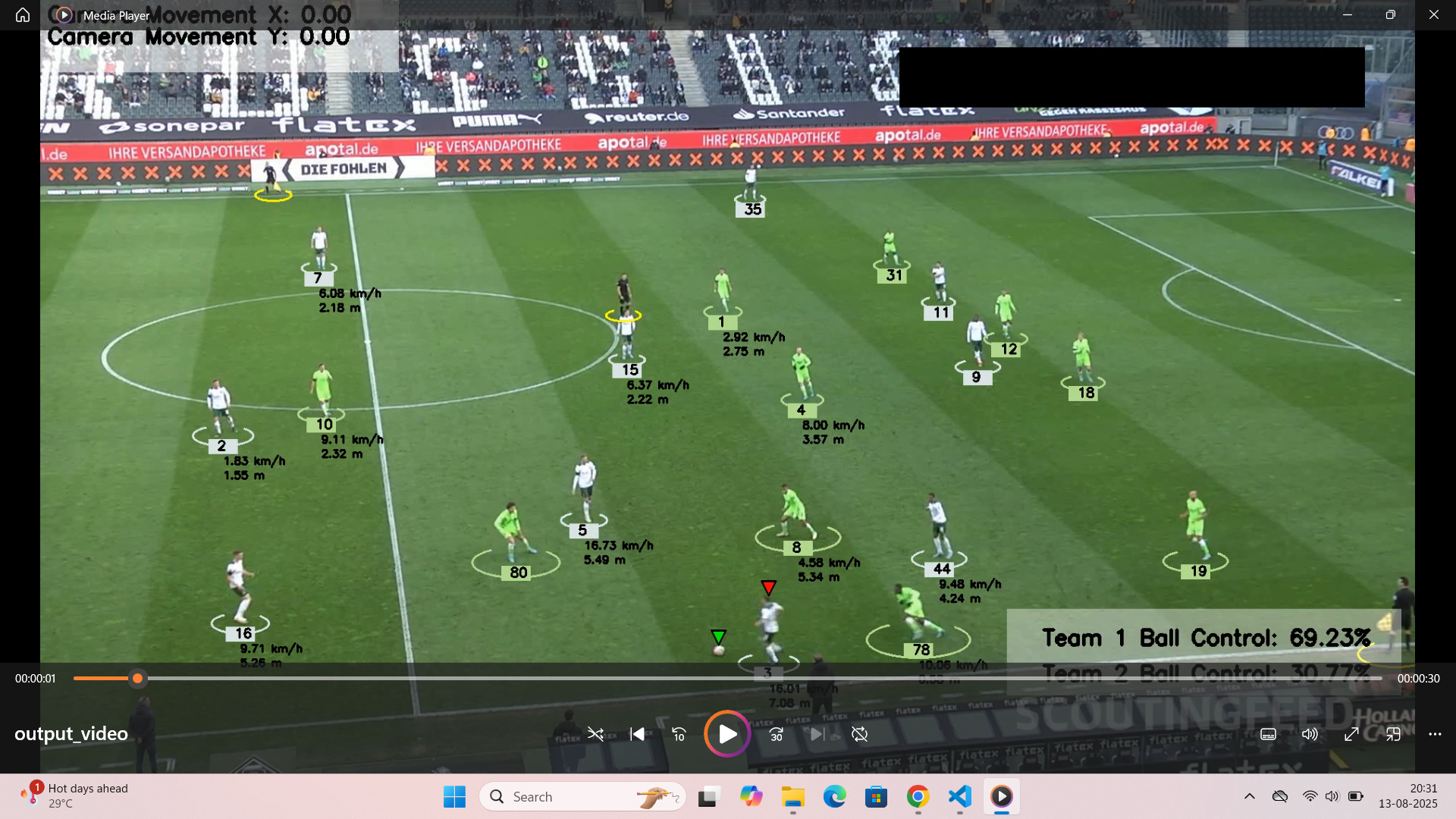
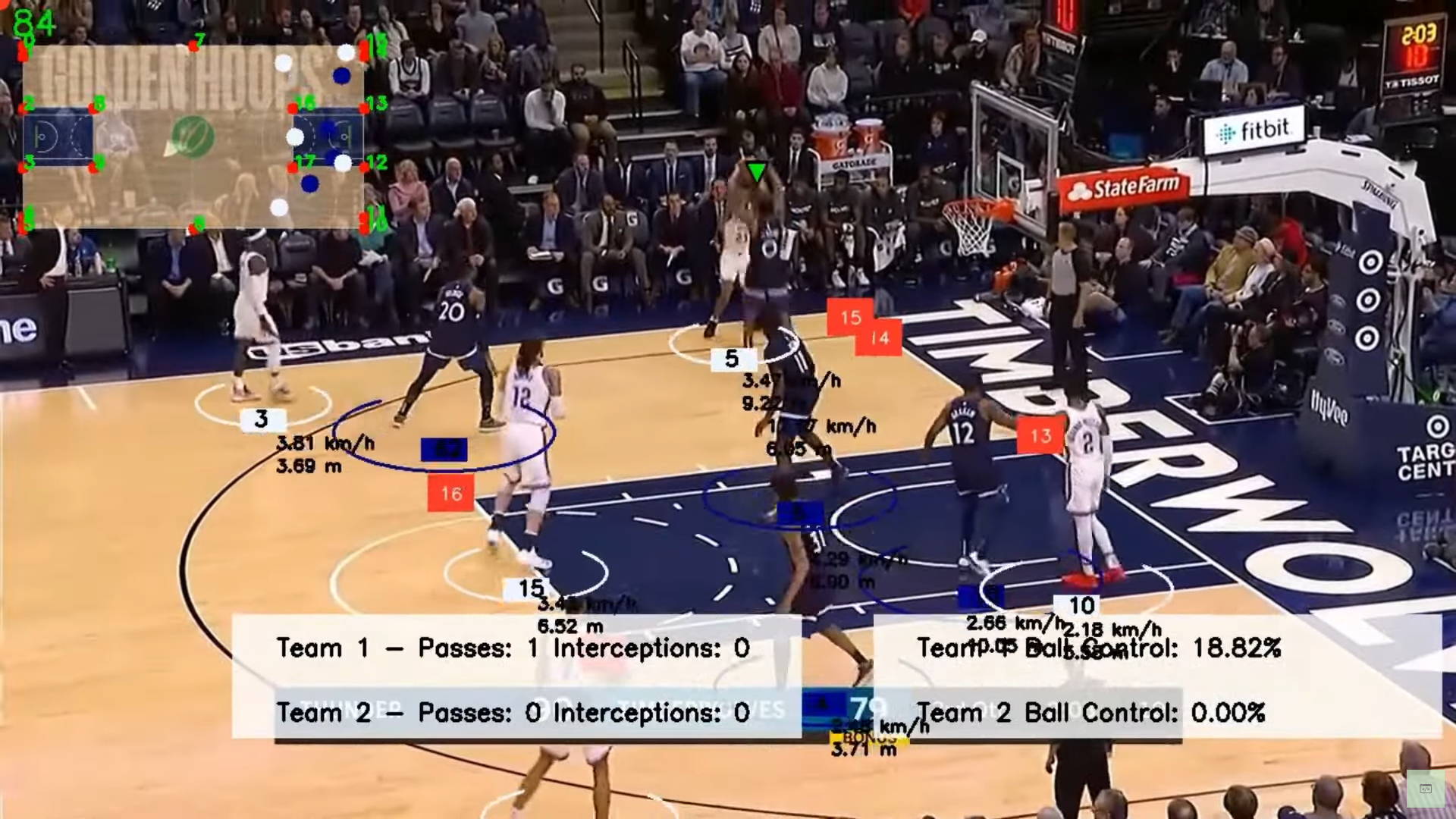
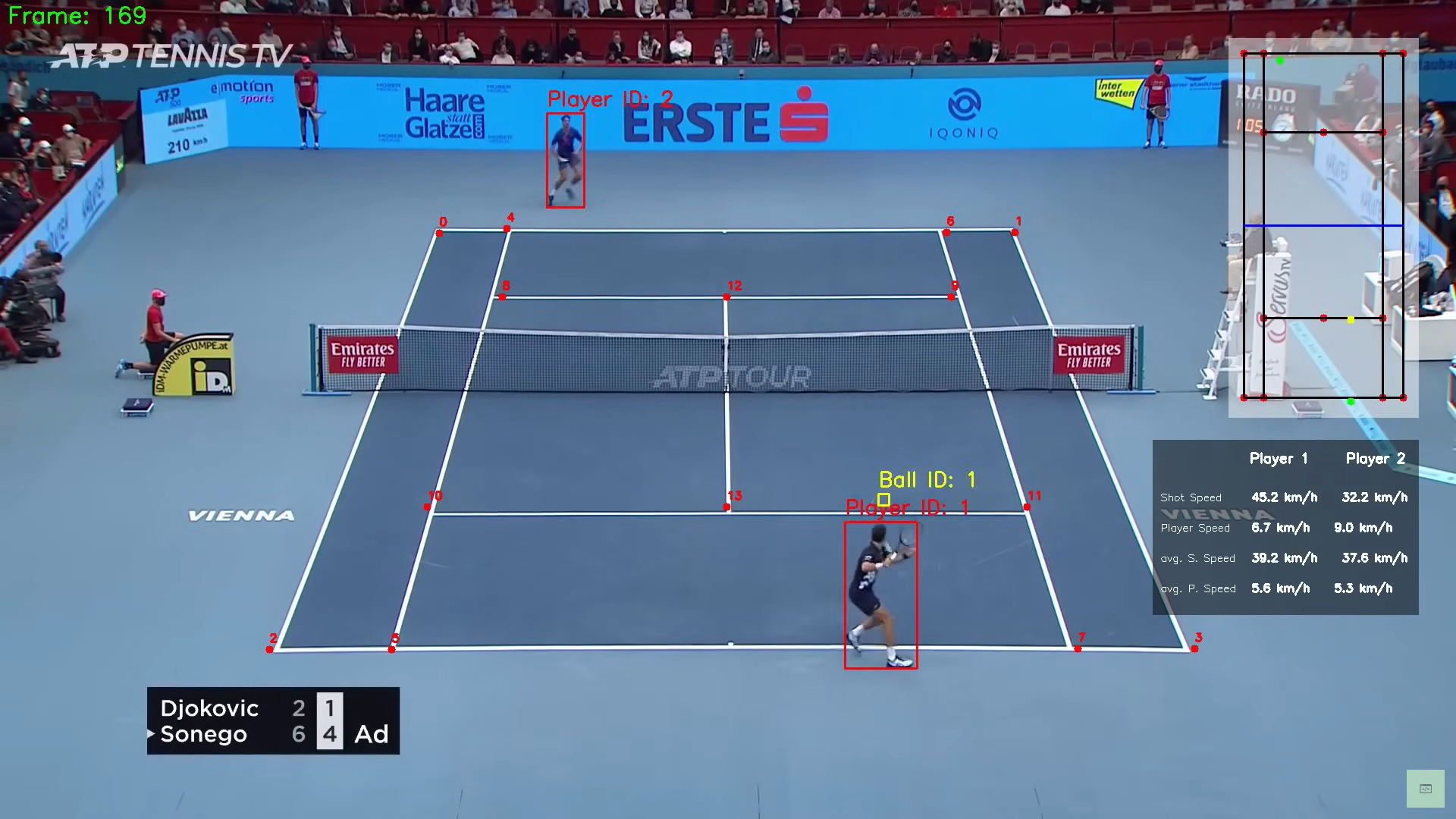
Our InspirationOur inspiration for KinetiCore AI came from a single, glaring inequity in the world of sports: the "analytics gap." We saw that professional leagues have access to multi-million dollar tracking systems and data science teams, giving them an incredible competitive edge. Meanwhile, school teams, local clubs, university athletes, and aspiring talents at the grassroots level are left with nothing but stopwatches and subjective guesswork.This isn't just an economic gap; it's a social one. How many talented athletes are overlooked simply because their performance can't be objectively measured? How many teams fail to reach their potential due to a lack of data-driven feedback?We were inspired to solve this problem. We envisioned a single, powerful, and accessible platform that could democratize sports science, making elite-level analytics available to anyone with a smartphone camera.How We Built ItKinetiCore AI is a cloud-based, multi-stage pipeline that transforms raw video into a rich analytical report. Our development process was modular, with each component built to handle a specific task.Object Detection: We began by fine-tuning a YOLOv8 model on specialized datasets for football, basketball, and tennis. This allows our system to accurately detect players and, most critically, the small, fast-moving ball with high precision.Multi-Object Tracking: Detections are fed into ByteTrack, a robust tracking algorithm. This assigns a persistent ID to each player, allowing us to follow their movements throughout the game, even when they are temporarily occluded by other players.Spatial Mapping (The Core Engine): This is where we turn pixels into real-world metrics. We implemented a Perspective Transformation (Homography) to map the 2D pixel coordinates ($p = (u, v)$) from the distorted camera view onto a 2D top-down tactical map with real-world meter coordinates ($P = (X, Y)$). This transformation is powered by a transformation matrix $H$, which is calculated from key points on the field.The Adaptive AI Core: This is our key innovation. We realized that a "one-size-fits-all" model wouldn't work. Therefore, our pipeline intelligently deploys one of three specialized models based on the selected sport:⚽ Football Model: This model uses Lucas-Kanade Optical Flow to calculate the camera's motion and subtracts it from player movements. It also uses K-Means Clustering to automatically segment players into teams based on their jersey colors.🏀 Basketball Model: This model uses a more powerful Zero-Shot Classifier (CLIP), which can identify teams even with complex jersey designs. It also includes a logic engine to detect events like passes and interceptions based on ball possession changes.🎾 Tennis Model: This is a hyper-specialized model focused on tracking the ball's high-velocity trajectory to calculate shot speed.Metric Calculation: Finally, the system uses the real-world coordinate data to calculate key metrics like player speed ($v = \frac{\Delta d}{\Delta t}$), total distance covered, possession percentages, and tactical heatmaps.Challenges We FacedCamera Motion: Our biggest challenge in football was the constantly moving camera. A player's on-screen movement was a combination of their actual motion and the camera's pan. We overcame this by implementing the Lucas-Kanade Optical Flow algorithm to isolate and subtract the camera's motion vector, giving us the player's true velocity.High-Velocity Object Detection: In tennis and football, the ball often appeared as a faint motion blur, which our initial models missed. We solved this by aggressively fine-tuning our YOLO model on a custom dataset filled with thousands of examples of fast-moving, blurred balls.Robust Team Assignment: Simple color clustering failed in basketball, where jerseys have complex, multi-color designs. We solved this by replacing K-Means with a Zero-Shot CLIP model, which understands the semantic concept of a jersey rather than just the average pixel color.What We LearnedThis project was a profound lesson in systems engineering and the practical application of AI.No "One Model to Rule Them All": We learned that the "best" model is the one that's right for the job. We learned to be pragmatic engineers, using a lightweight K-Means for a simple problem and a heavy-duty Transformer (CLIP) model for a complex one.The Power of Modular Design: Building the system in isolated, modular components (Detection, Tracking, Mapping) was our best decision. It allowed us to debug, test, and upgrade individual parts without breaking the entire pipeline.Accuracy is Just the Beginning: We learned that a successful AI project is not just about model accuracy. It's about the entire end-to-end pipeline—from robust data processing and geometric correction to finally presenting the insights in a way that a non-technical coach or player can instantly understand and act upon. We didn't just build an AI model; we built a complete, practical solution.
KinetiCore AI
KinetiCore AI democratizes sports analytics. Upload a football, basketball, or tennis video, and our AI delivers pro stats like player speed, distance, and tactical maps. Accessible insights teams.

Updates

Leave feedback in the comments!
Log in or sign up for Devpost to join the conversation.