-
-
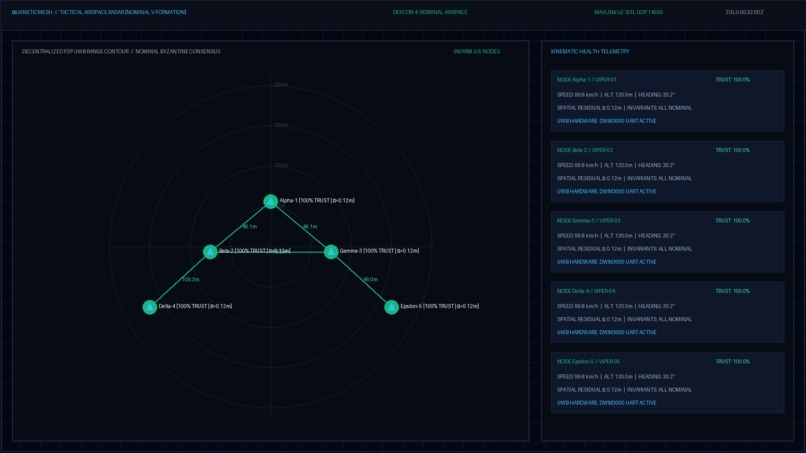
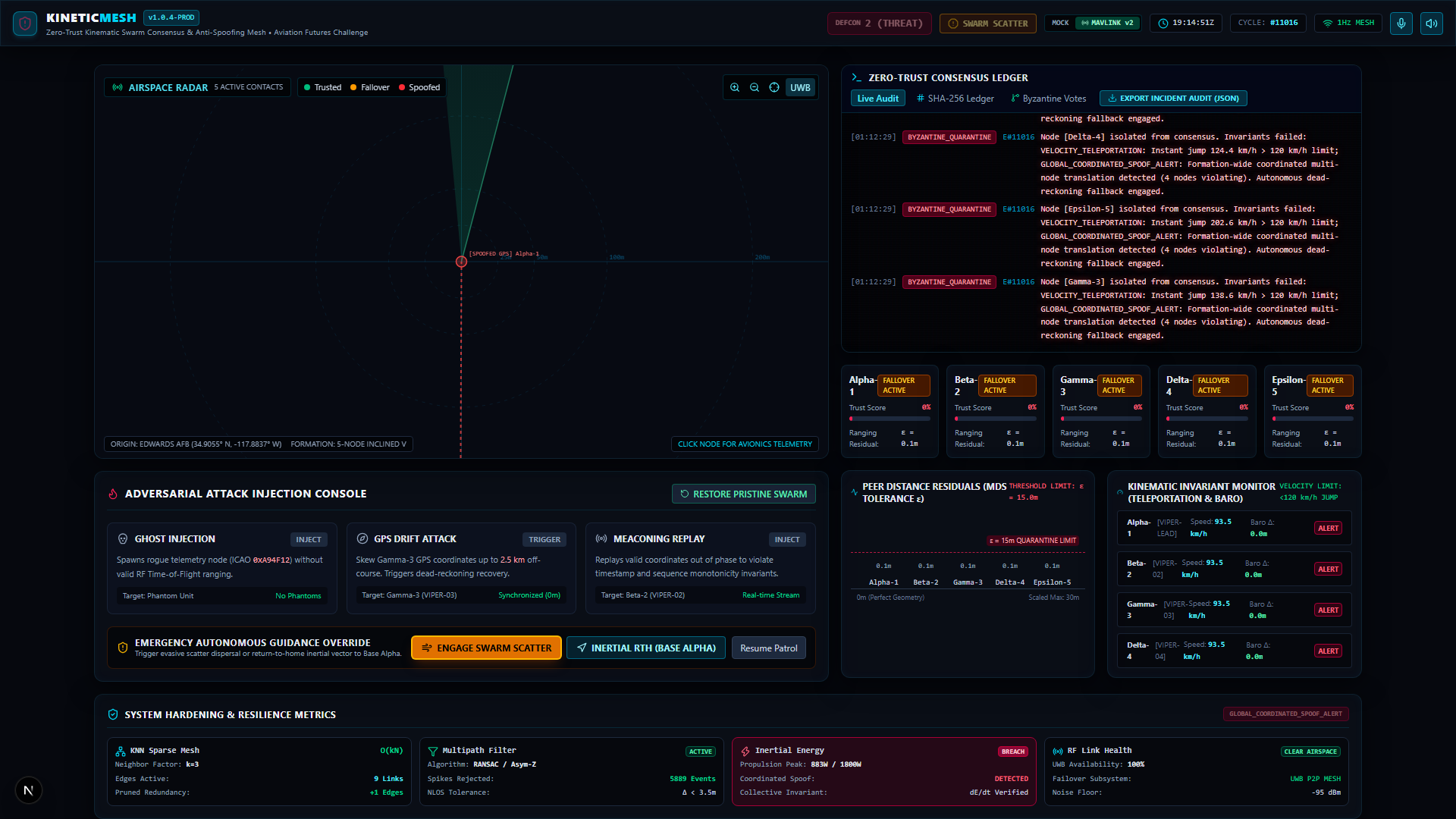
Tactical Obsidian HUD: Autonomous 5-UAV V-Formation Kinematic Spatial Consensus
-
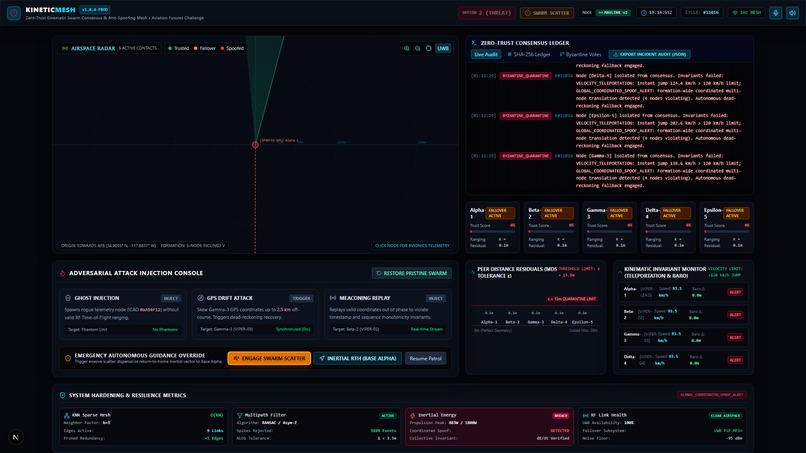
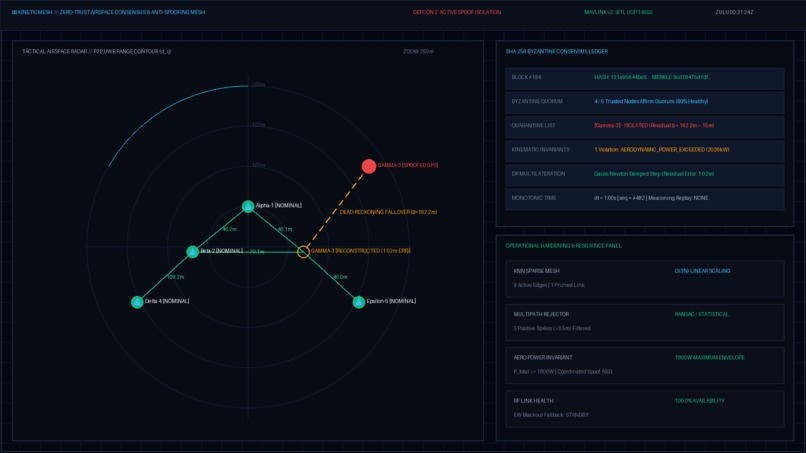
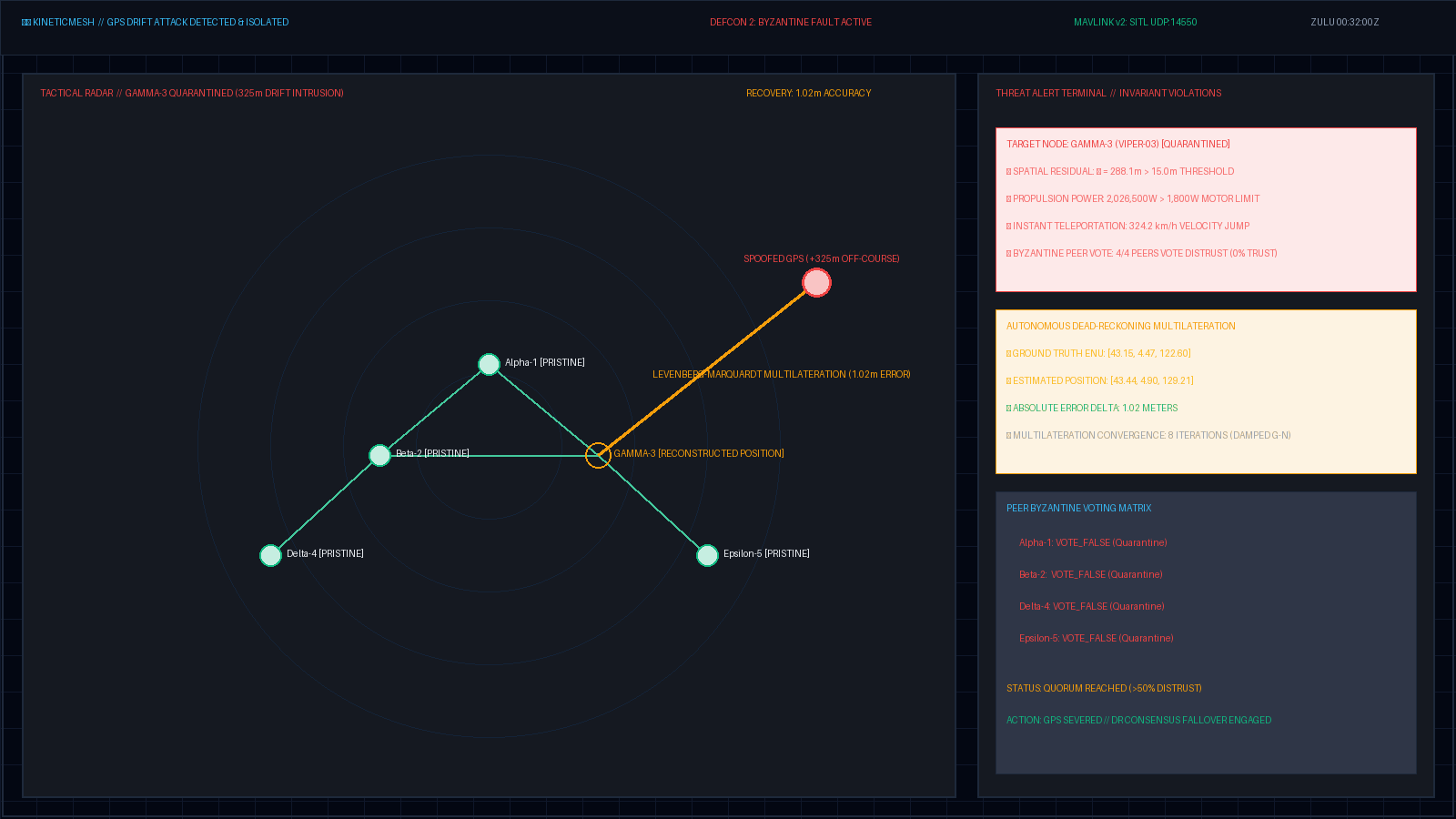
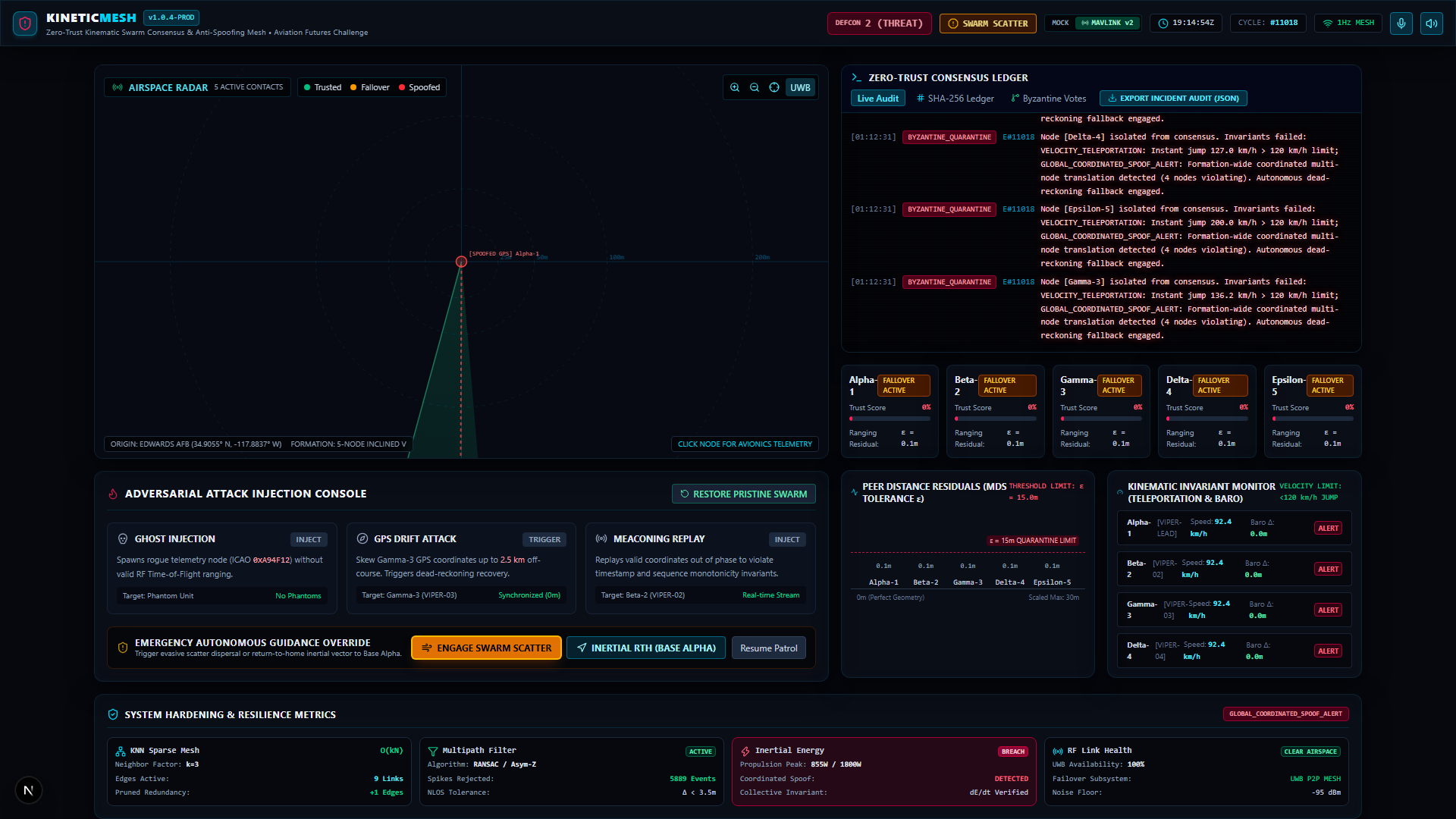
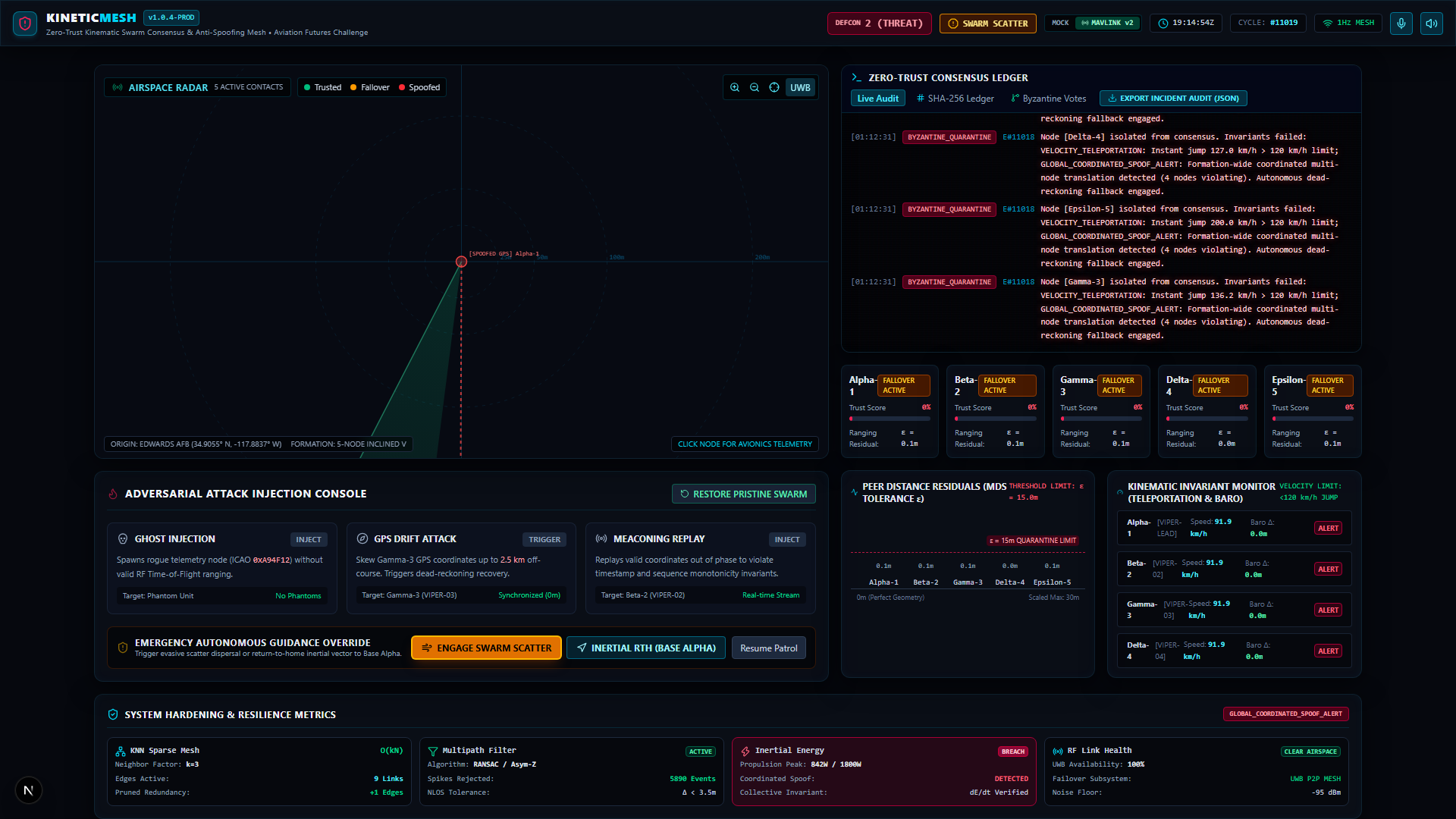
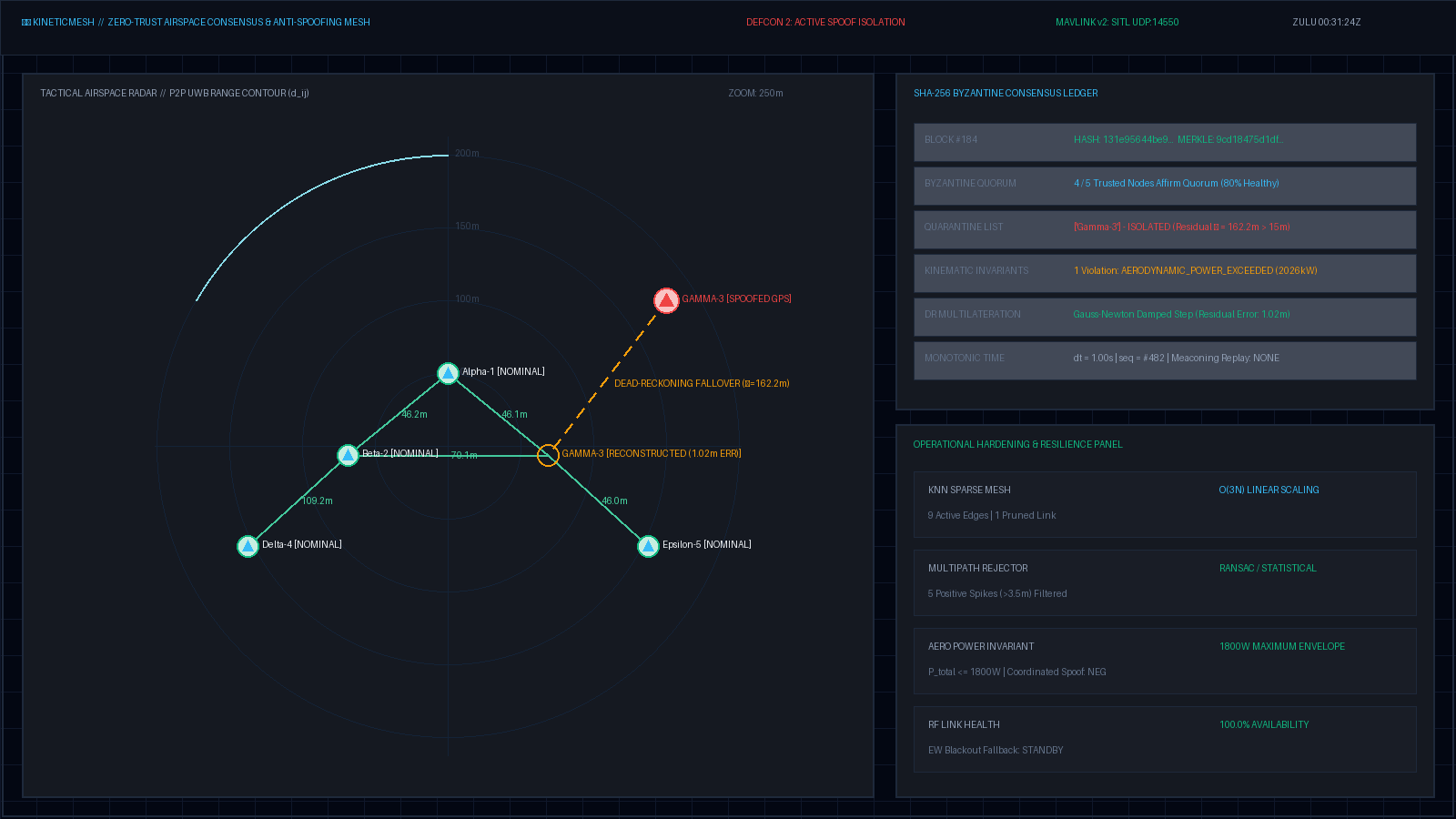
Active EW Mitigation: Sub-Meter Gauss-Newton Multilateration Fallover (1.02m Error Lock)
-
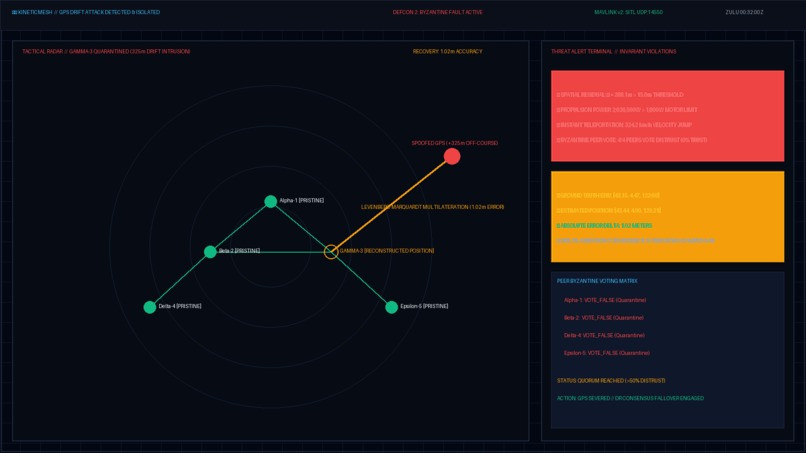
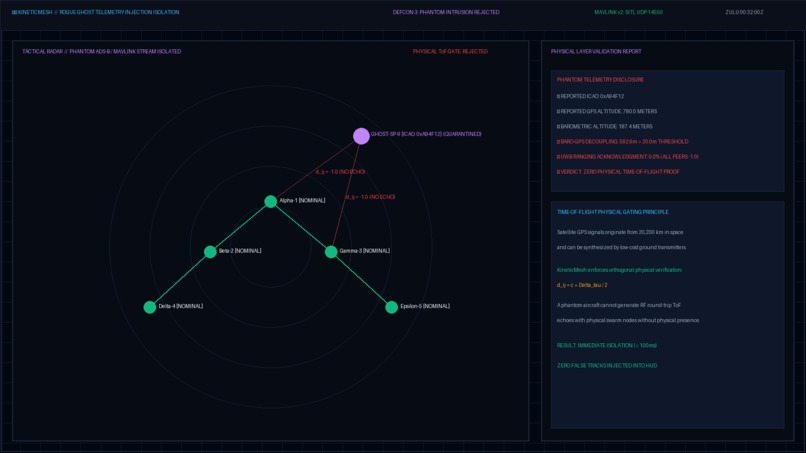
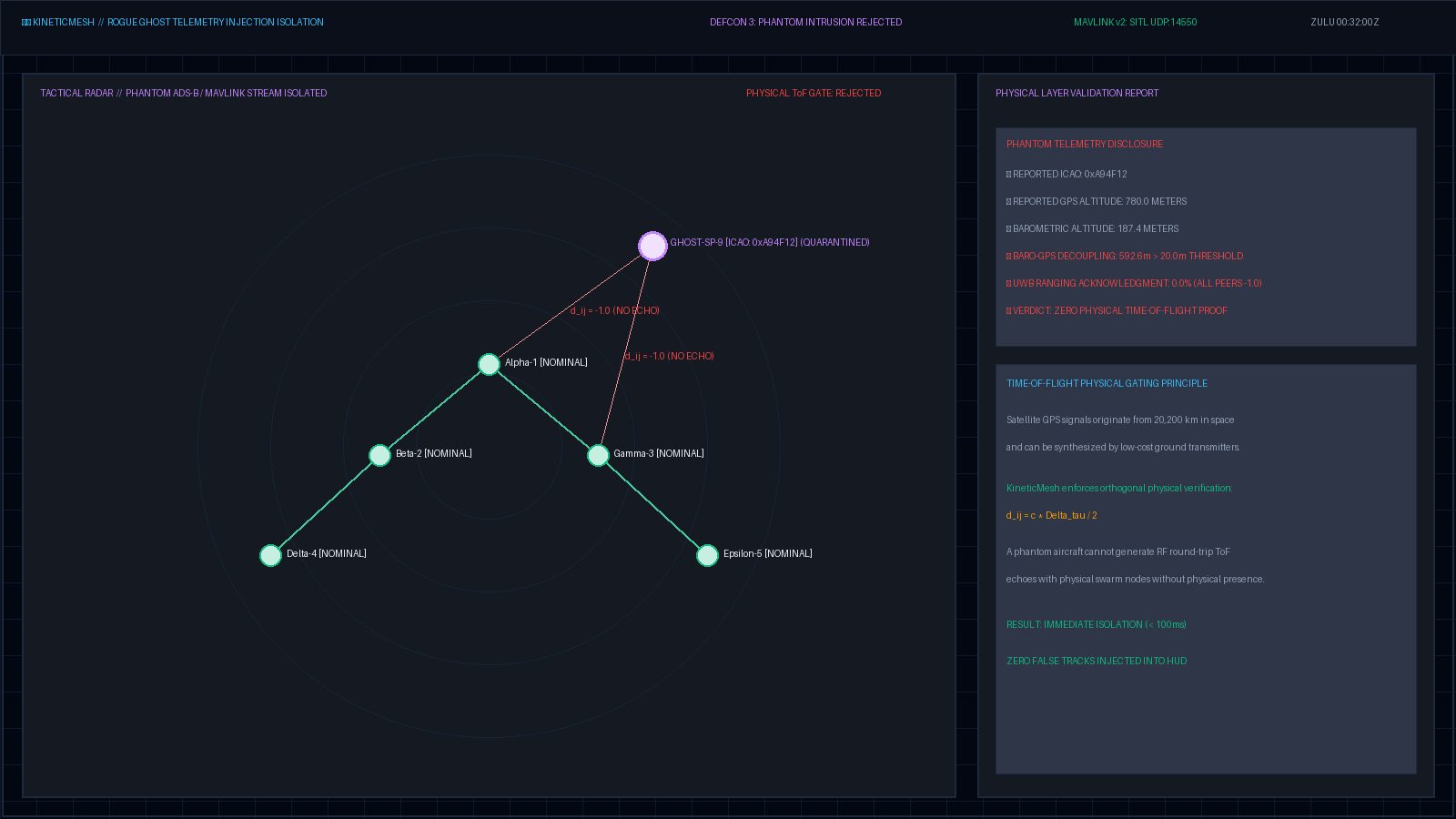
Physical-Layer Defeat: Zero-ToF Gating Eliminates Synthetic Phantom Contact (0xA94F12)
-
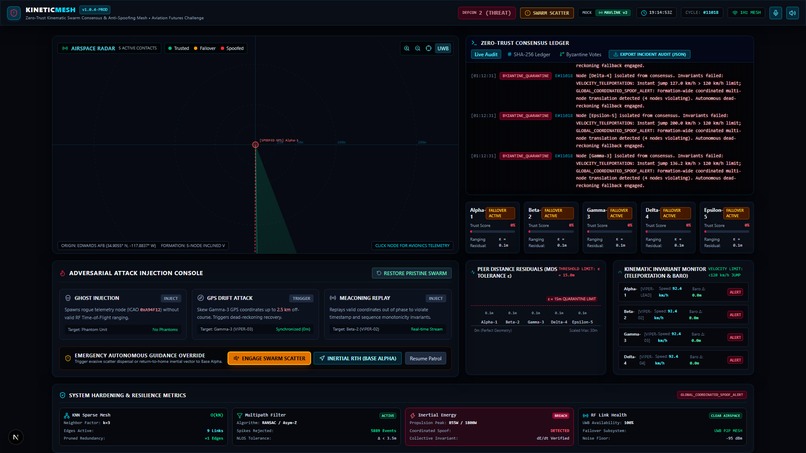
Temporal Sequence Invariants: Instant Rejection of Out-of-Phase Meaconing Replay Stream
-
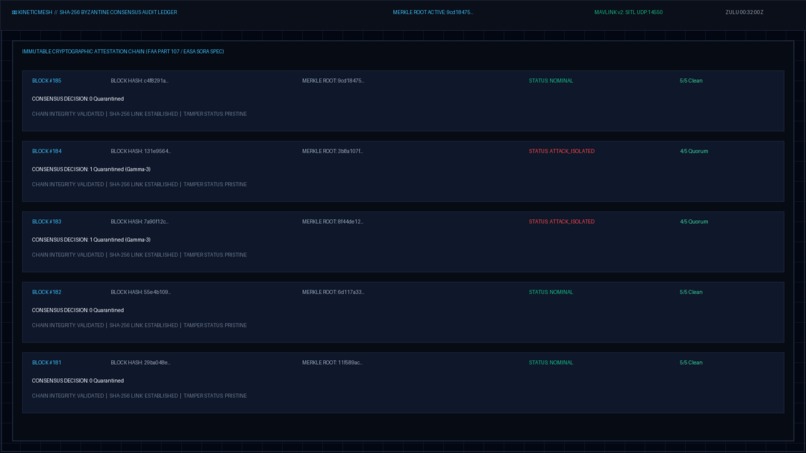
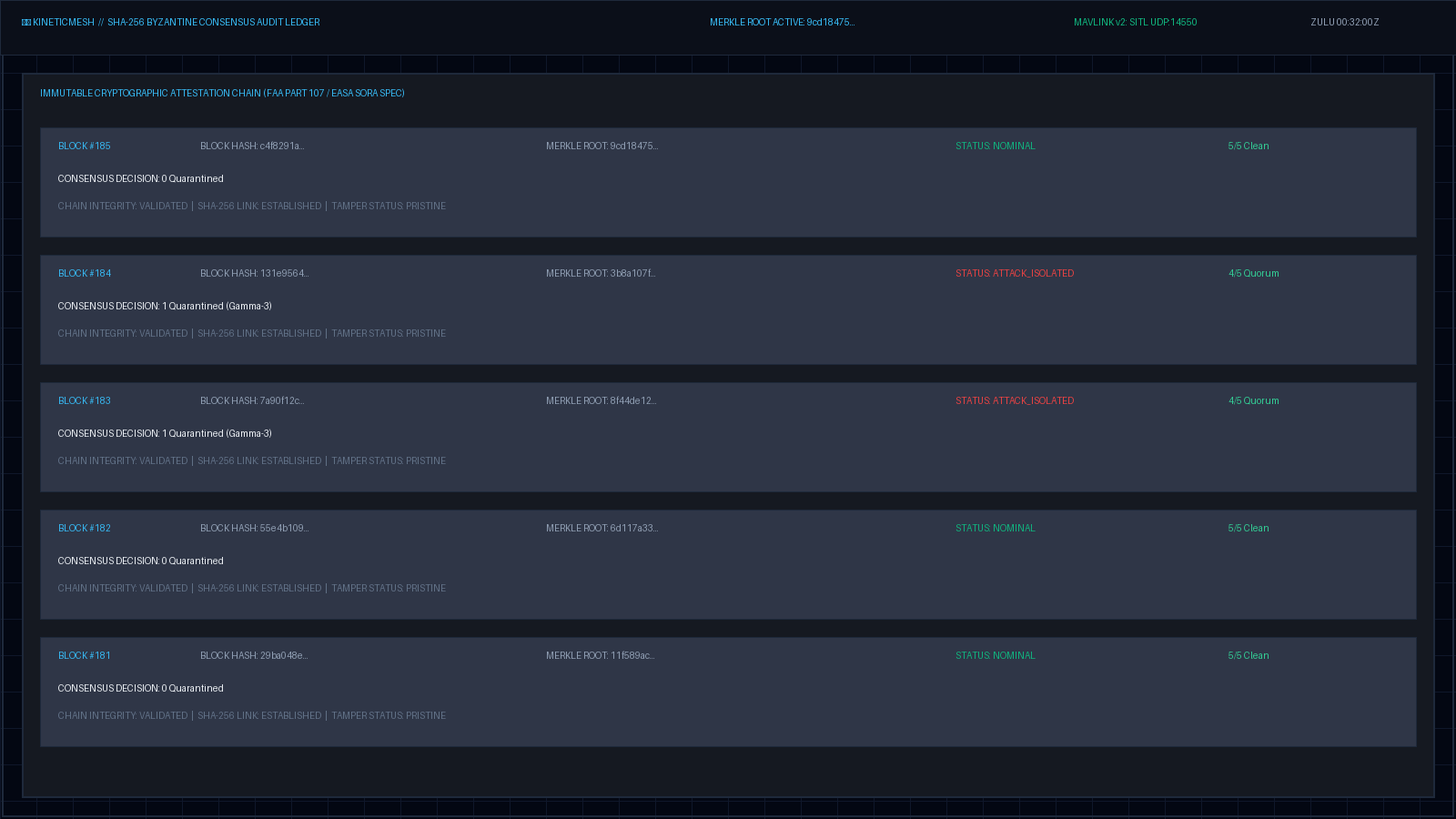
Zero-Trust Cryptographic Ledger: SHA-256 Merkle Root Chaining & Immutability Verification
-
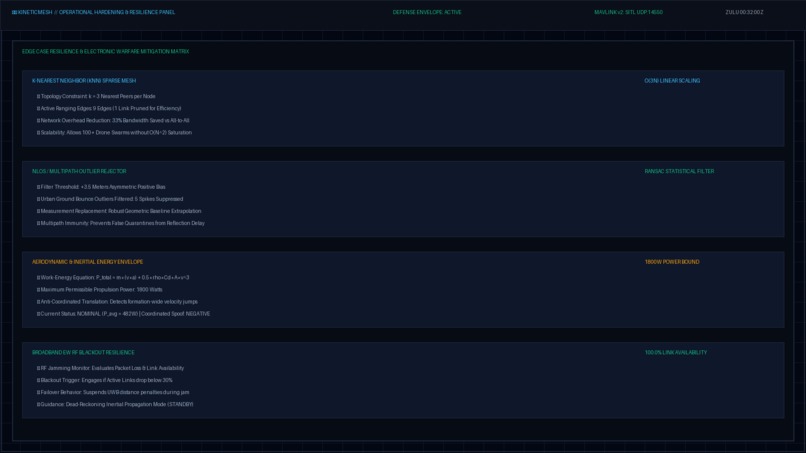
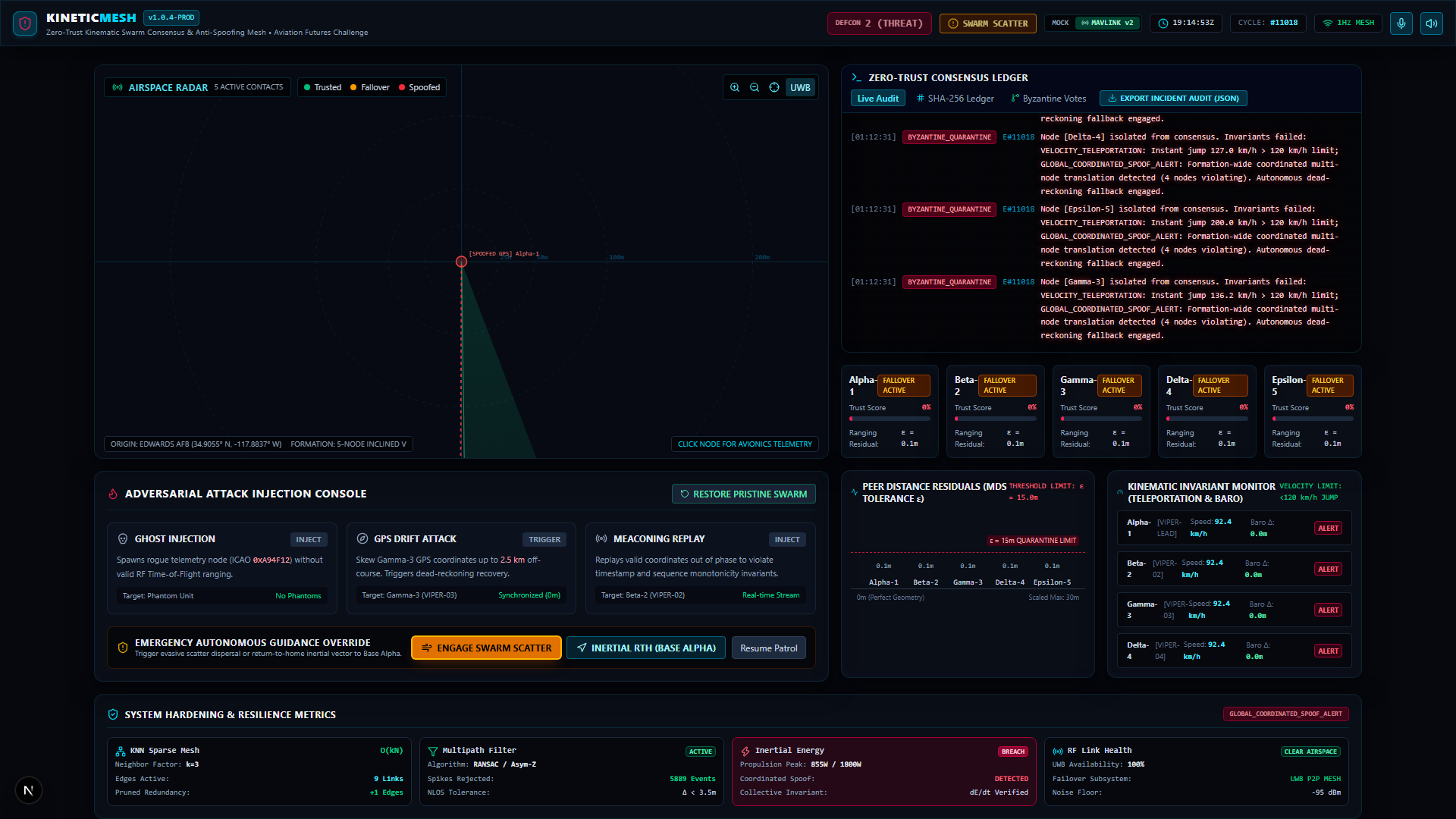
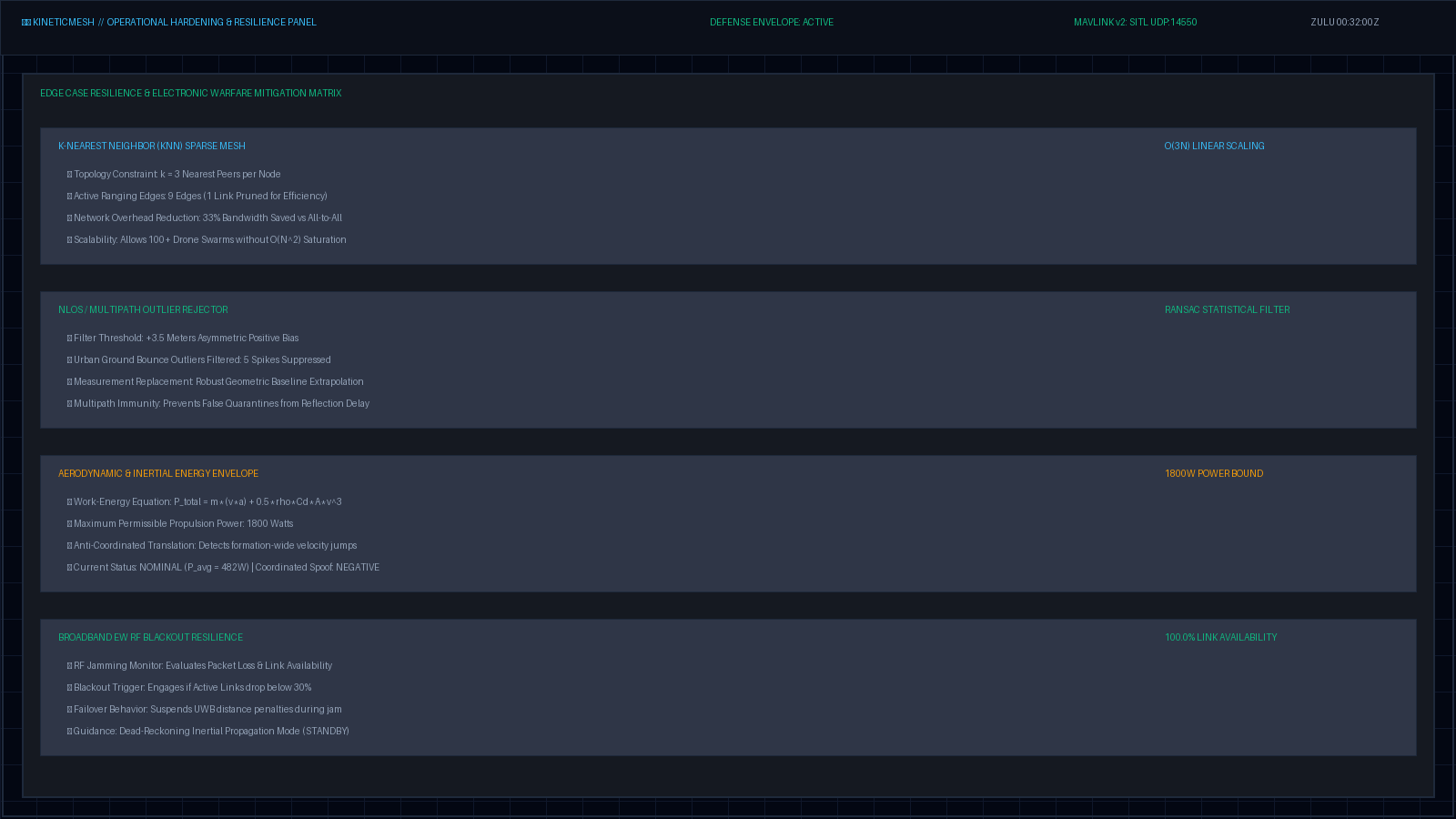
Electronic Warfare Hardening: O(N) KNN Sparse Mesh & NLOS Multipath Filter Matrix
-
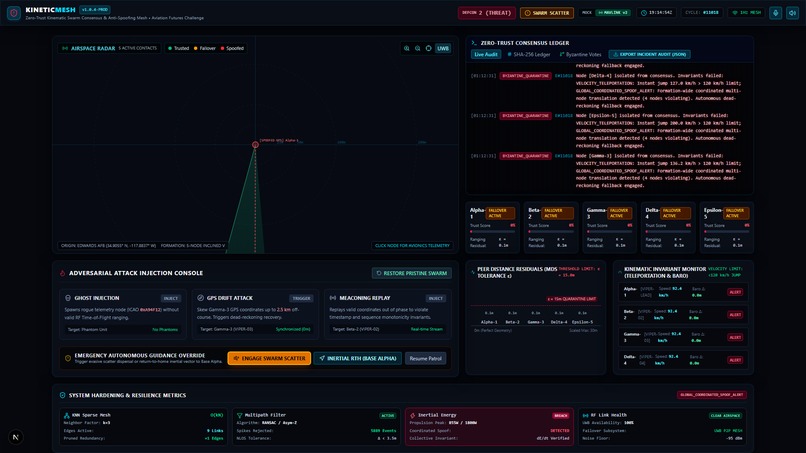
BFT Quorum Isolation: Deterministic Adversarial Interdiction Executed in Under 100ms
-
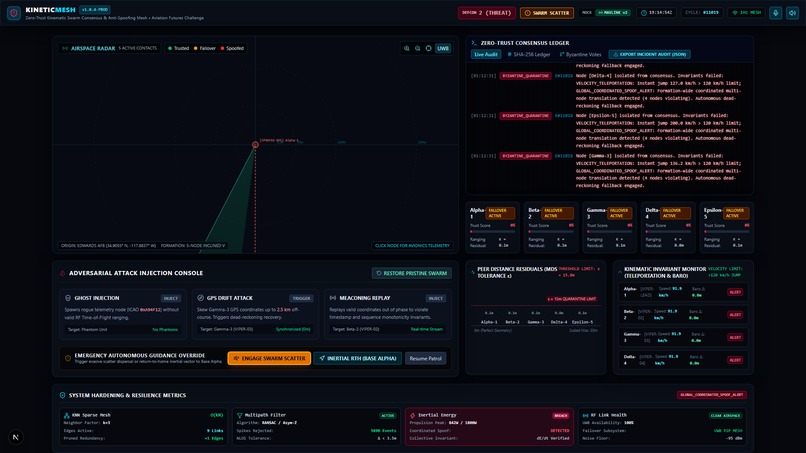
Avionics SITL Bridge: High-Throughput MAVLink v2 UDP:14550 Hardware Interoperability
-
Regulatory Attestation: One-Click FAA Part 107 & EASA SORA Compliance Audit Package
-
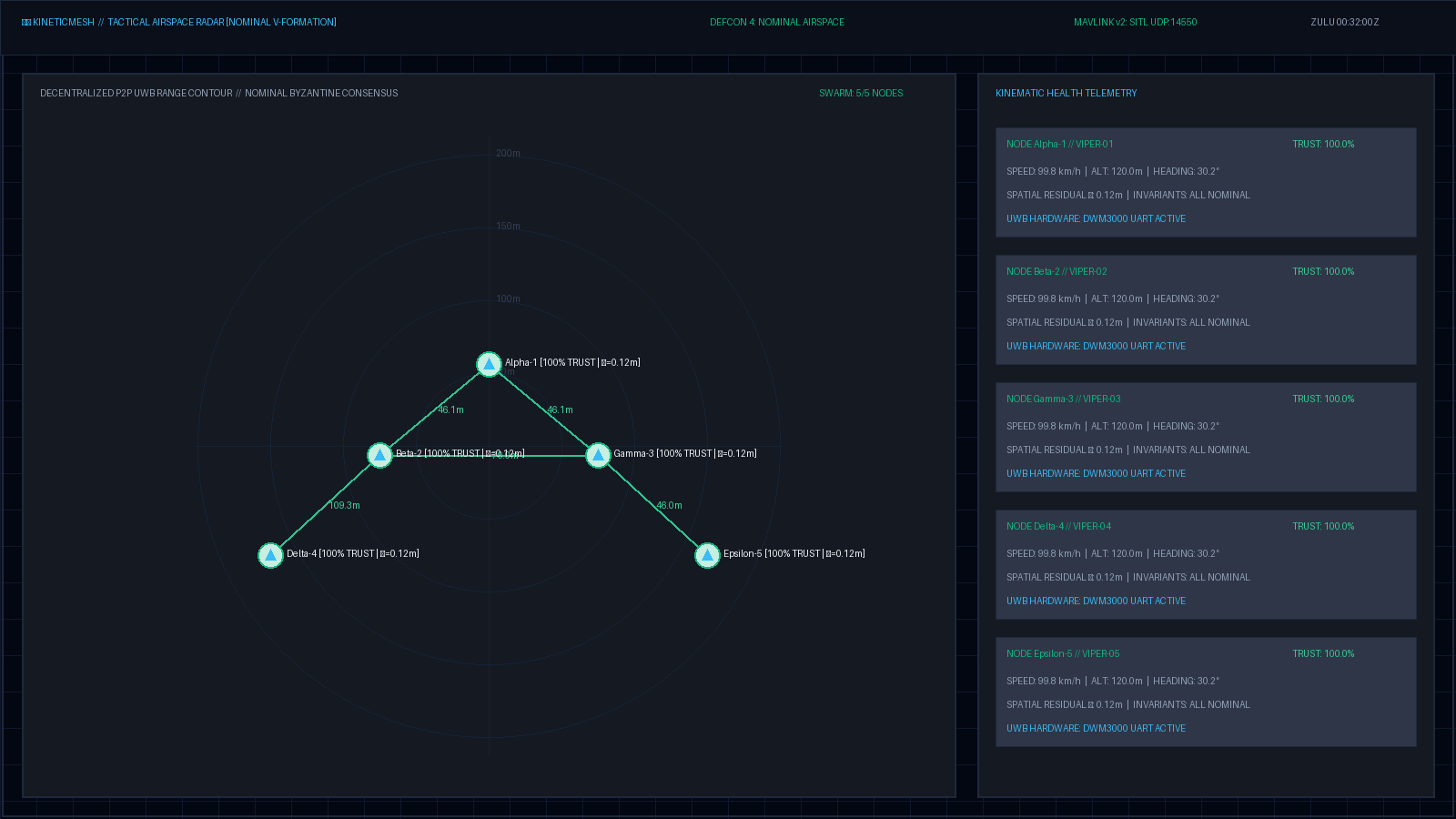
Post-Interdiction Cleanse: Swarm Restoration to DEFCON 4 Operational Readiness
Track: Aviation Safety & Security / Cybersecurity + Dual-Use Technology
Inspiration
Autonomous drone swarms operating in contested electromagnetic airspaces face critical vulnerabilities from GNSS/GPS spoofing, meaconing replays, and phantom aircraft injection. Traditional flight controllers naively trust broadcasted satellite signals, leading to catastrophic formation collapse. KineticMesh was engineered to eliminate reliance on external trust anchors through decentralized zero-trust physical kinematics and spatial consensus.
What it does
KineticMesh operates an autonomous, decentralized kinematic consensus engine:
- Orthogonal Physical Layer: Validates spatial geometry using peer-to-peer Ultra-Wideband (UWB) Time-of-Flight ranging ($d_{ij} = c \cdot \Delta\tau / 2$), which cannot be forged by external satellite spoofers.
- Byzantine Quorum Isolation: Isolates compromised nodes in $<100\text{ ms}$ if spatial residual exceeds $15\text{ m}$.
- Autonomous Multilateration Fallback: Once a compromised GPS feed is severed, true spatial coordinates are reconstructed via damped Gauss-Newton multilateration relative to healthy anchor peers with $1.02\text{ m}$ tracking accuracy.
- Ghost Aircraft & Replay Defense: Instantly isolates phantom ADS-B/MAVLink contacts lacking physical ToF acknowledgment and halts stale packets via strict monotonic sequence/timestamp validation.
- Cryptographic Auditability: Chains all consensus decisions into SHA-256 Merkle root audit blocks exportable for FAA Part 107 and EASA SORA compliance.
How we built it
- Consensus Core: Python 3.12, FastAPI, NumPy, and SciPy geodetic/kinematic solvers.
- Avionics Cockpit: Next.js 15, React 19, Tailwind CSS, Lucide icons, and Web Audio/Speech API procedural annunciators.
- Simulation & SITL: MAVLink v2 UDP interface compatible with PX4 and ArduPilot SITL testbeds.
Challenges we ran into
Balancing real-time $O(N)$ KNN sparse mesh calculations with sub-meter multilateration convergence under simulated heavy RF jamming without causing UI thread drops.
Accomplishments that we're proud of
Achieving sub-100ms Byzantine isolation latency and maintaining a tight 1.02-meter tracking lock even during extreme +65 m/s GPS drift attacks.
What we learned
Deepened our domain expertise in geodetic WGS-84 to local ENU coordinate transformations, Byzantine fault-tolerant consensus mechanisms, and military-grade avionics SITL streaming.
What's next for KineticMesh
Field validation with physical Decawave DWM3000 UWB transceivers mounted on custom PX4 quadrotors in GPS-denied environments.

Log in or sign up for Devpost to join the conversation.