

Inspiration
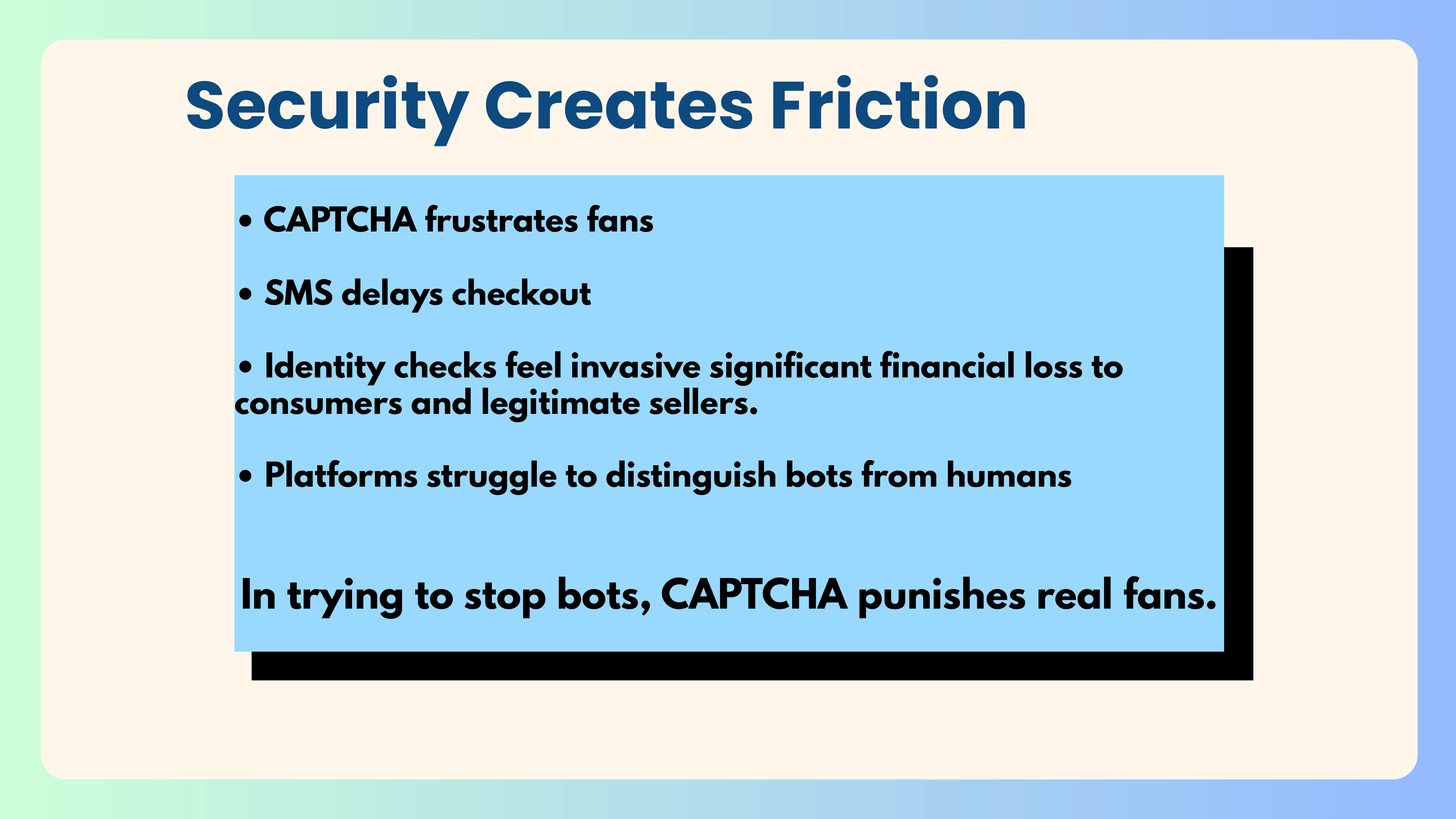
We’ve all tried to buy tickets during a big drop and felt like we were competing against bots. CAPTCHAs either feel annoying or don’t actually stop automation. We wanted to try something different — verify that someone is physically present instead of making them solve a puzzle.
What It Does
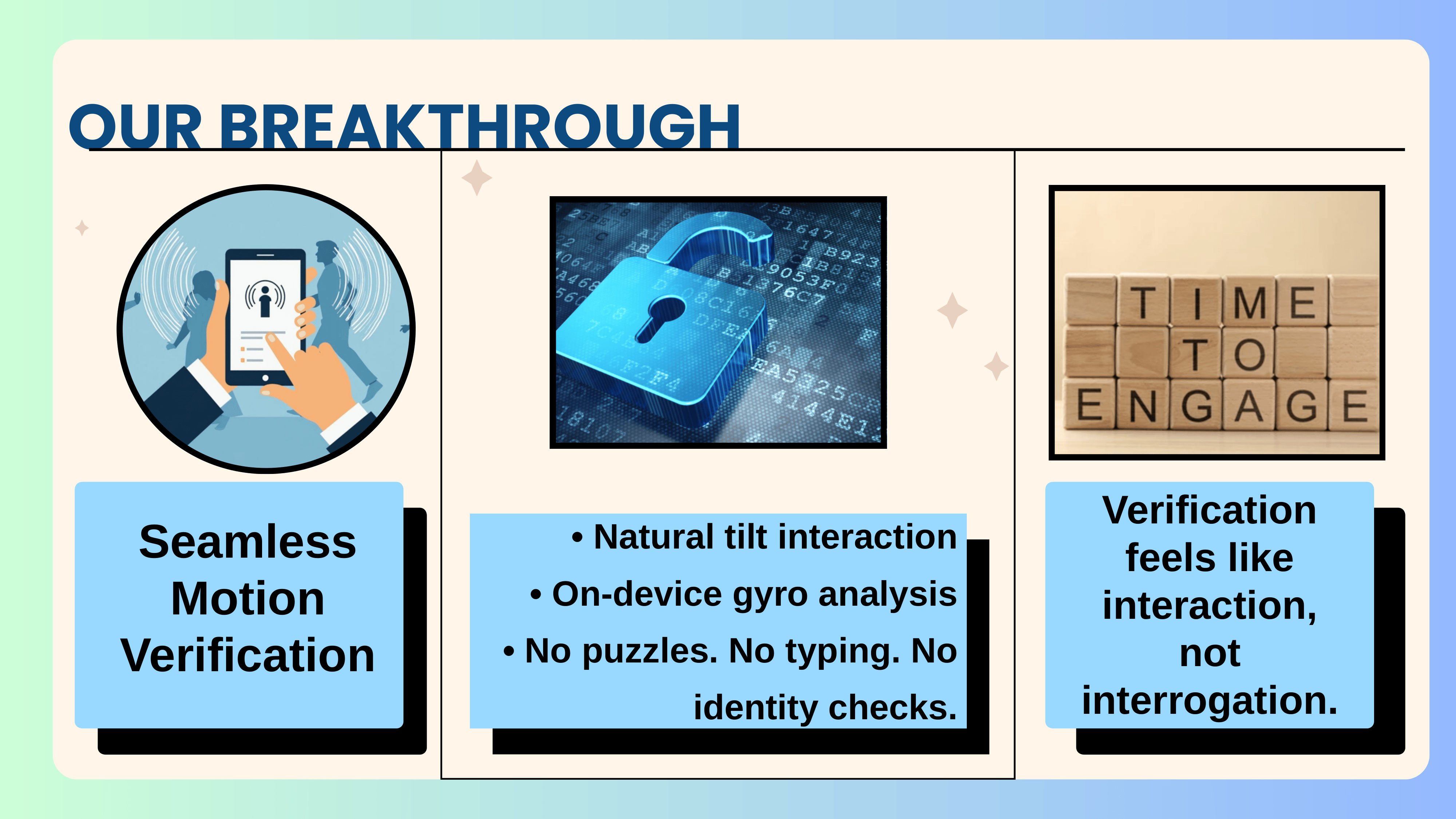
KineticAuth uses your phone’s motion sensors to verify you’re human.
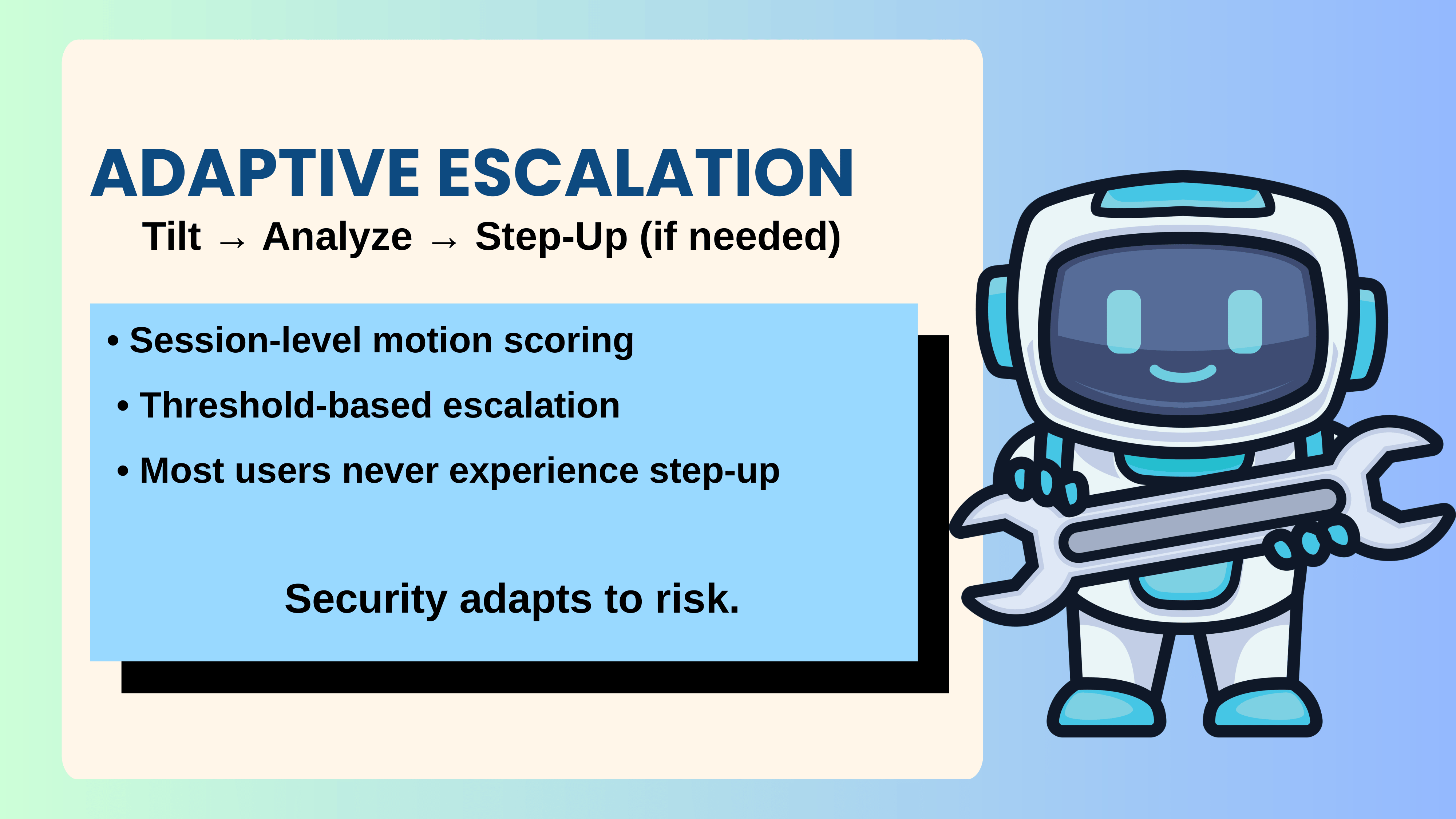
Users complete a simple tilt interaction. If the motion looks natural, they move on immediately. If something seems off, the system triggers a short shake-to-beat step-up challenge.
Most users never see the step-up. It only activates when risk increases.
How We Built It
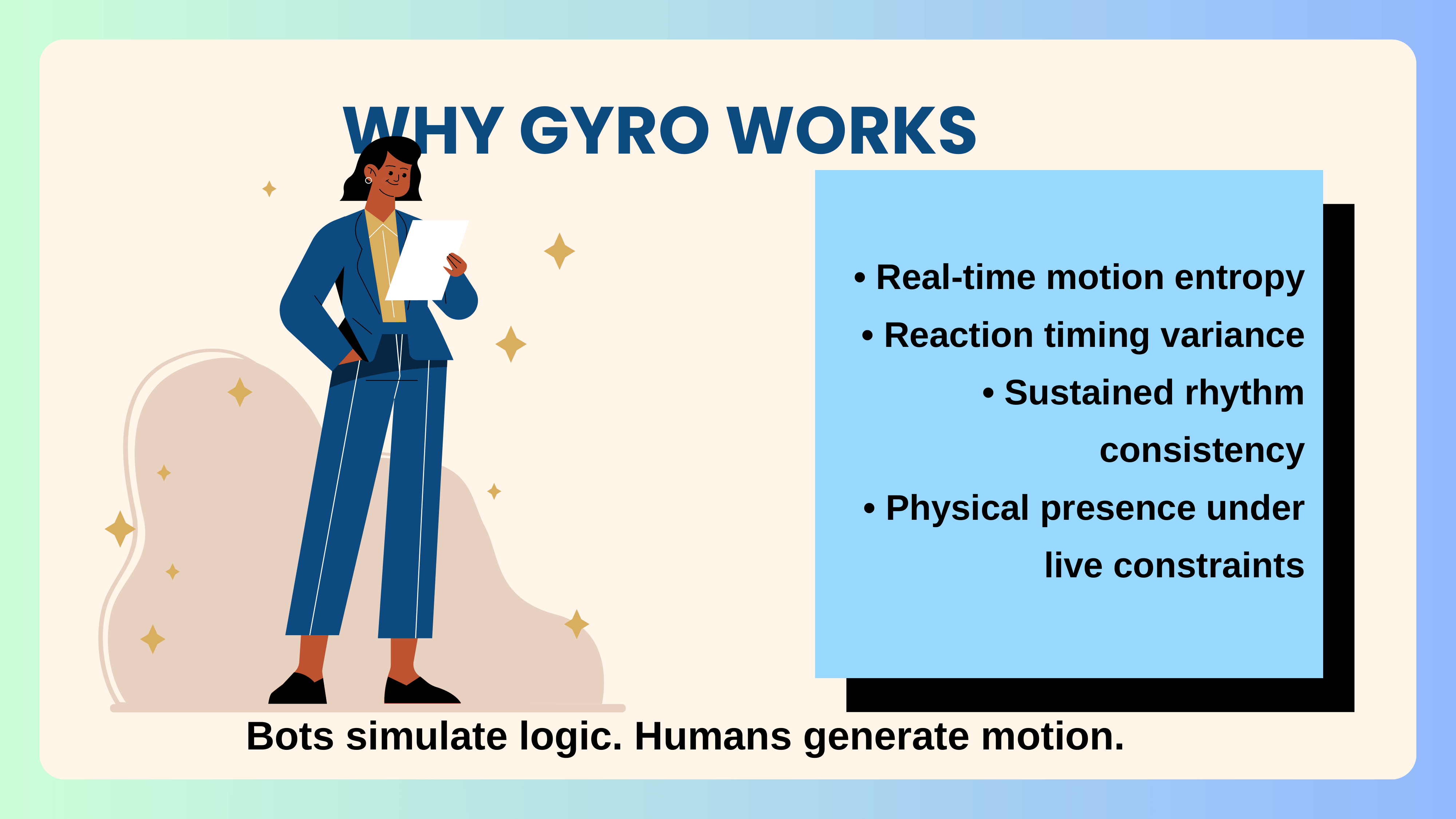
We used the device gyroscope and accelerometer to track motion during the tilt phase.
We measure things like direction changes, stability, and timing, then apply simple threshold logic to determine whether to pass or escalate.
All motion processing happens locally on the device. We don’t collect identity data or store motion history.
Challenges
The hardest part was balancing security with simplicity. We didn’t want this to feel like a test — just a natural interaction.
We also had to tune our thresholds so step-up only triggers when it actually makes sense.
What We Learned
Security doesn’t always need to be complicated. Sometimes verifying presence is enough.
We learned that adaptive, low-friction verification can protect fairness without making real users jump through hoops.
Built With
- 14
- api
- audio
- copiliot
- css
- cursor
- digitalocean
- gyroscope
- html5
- motion
- netlify
- next.js
- react
- tailwind
- typescript
- web


Log in or sign up for Devpost to join the conversation.