-
-
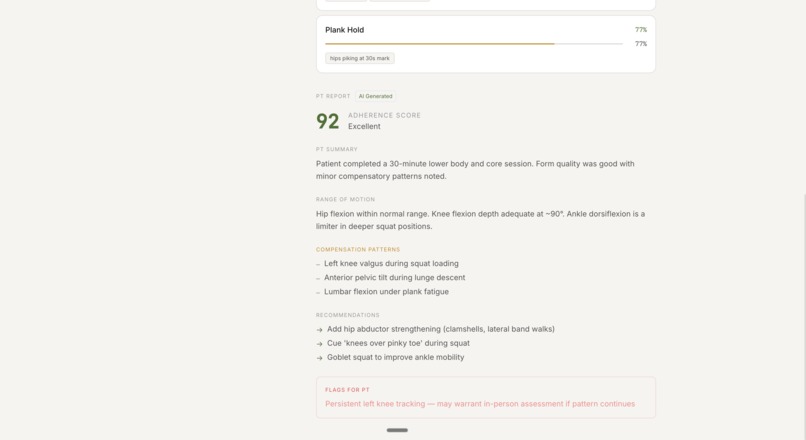
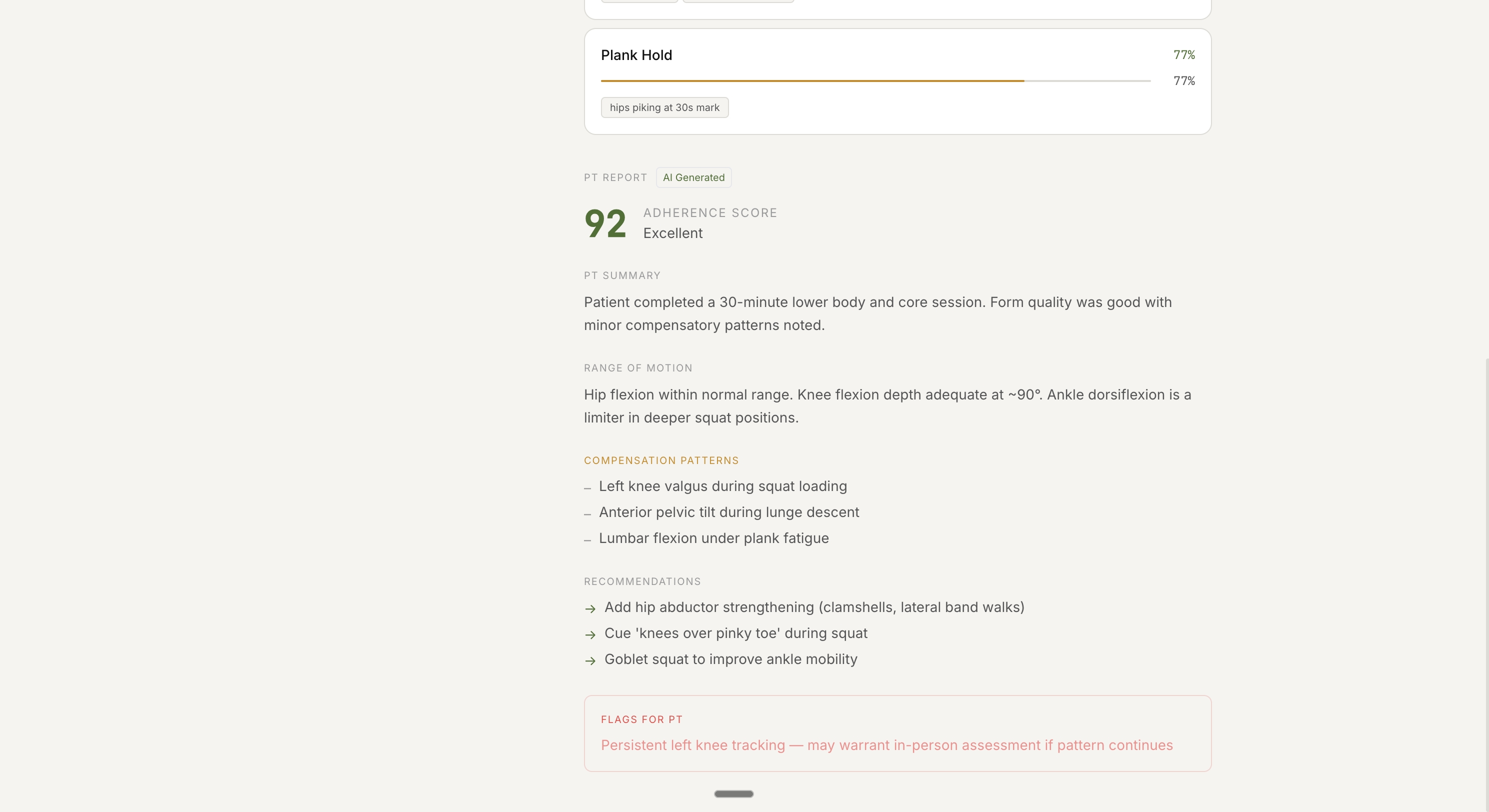
post-session summary
-
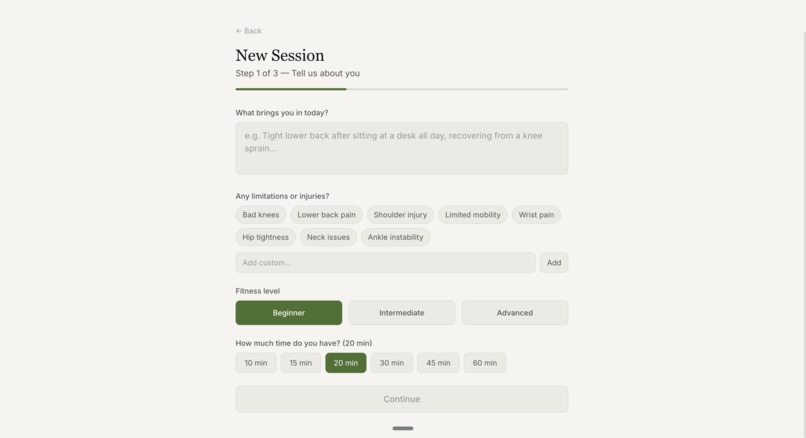
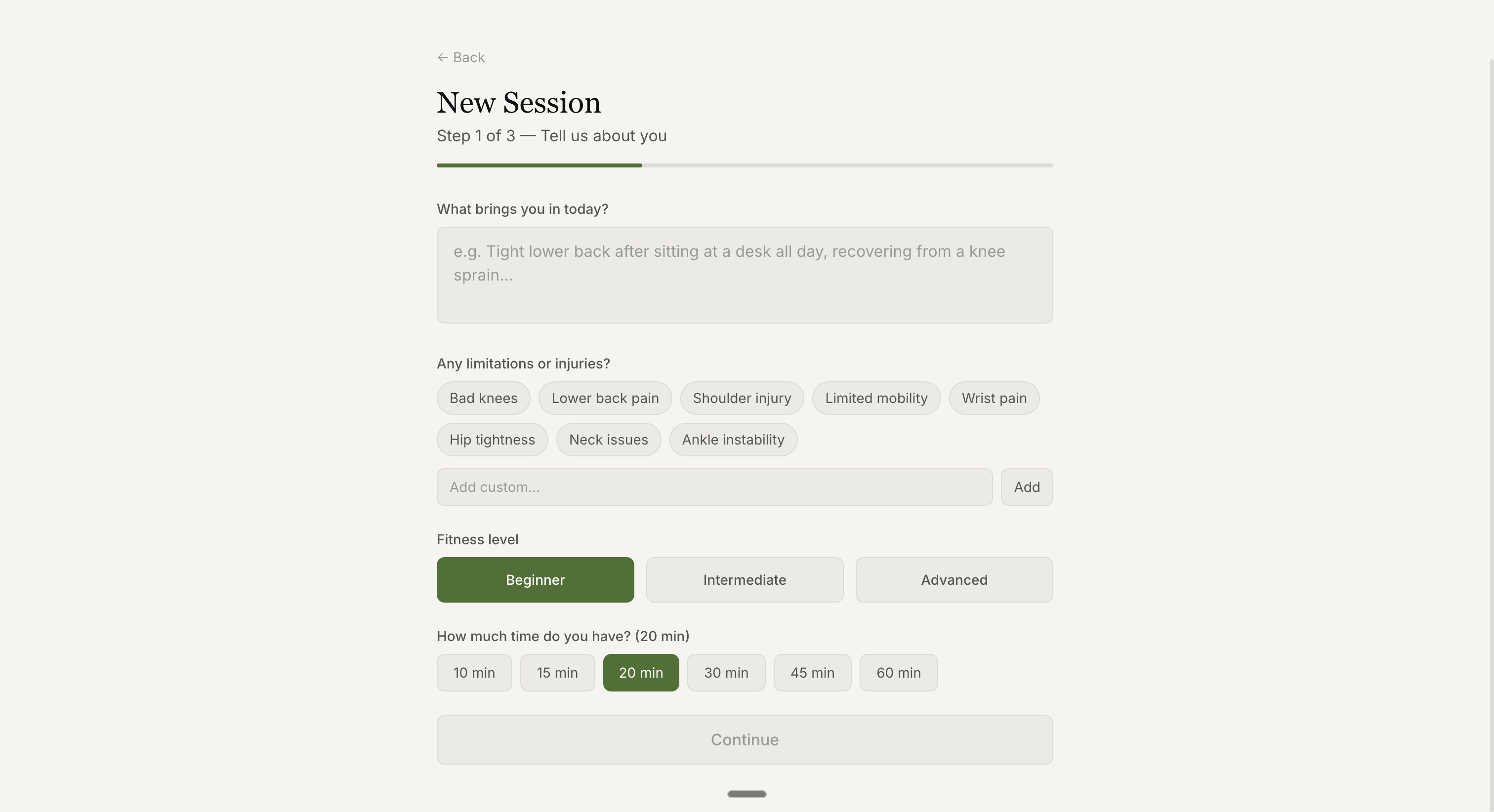
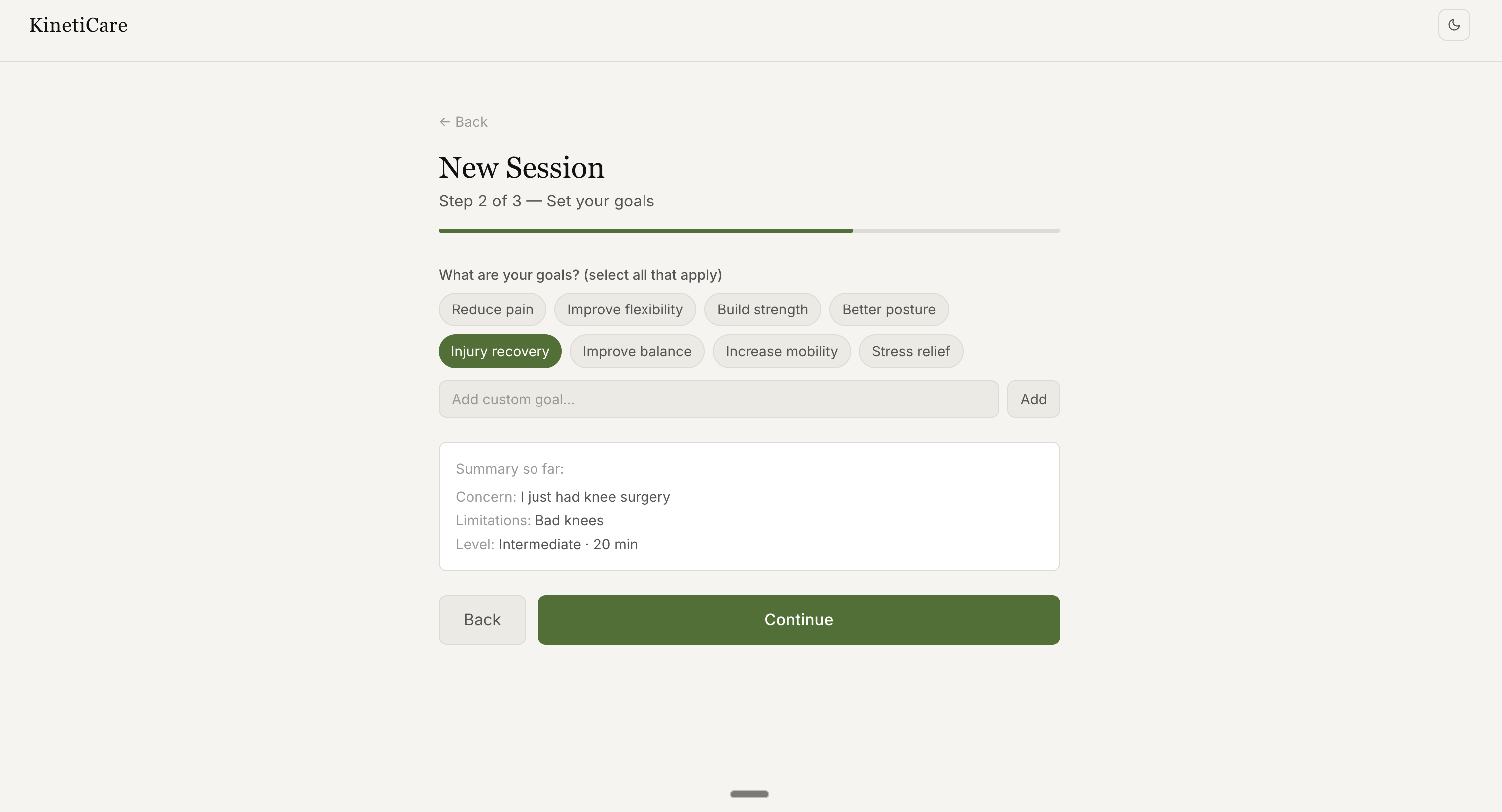
intake survey - pt. 1
-
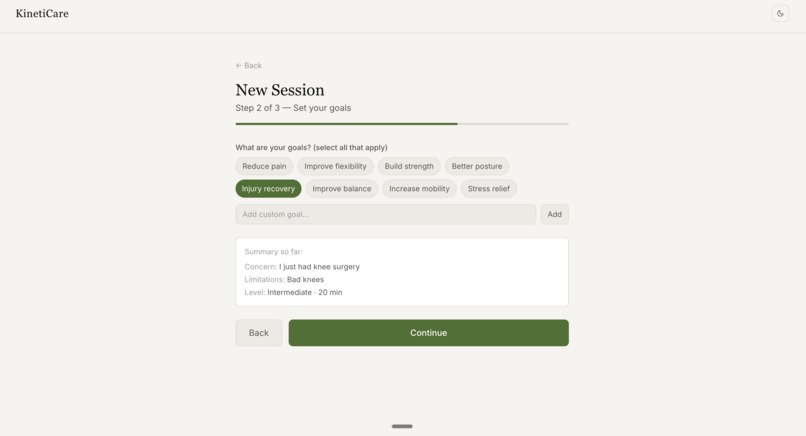
intake survey - pt. 2
-
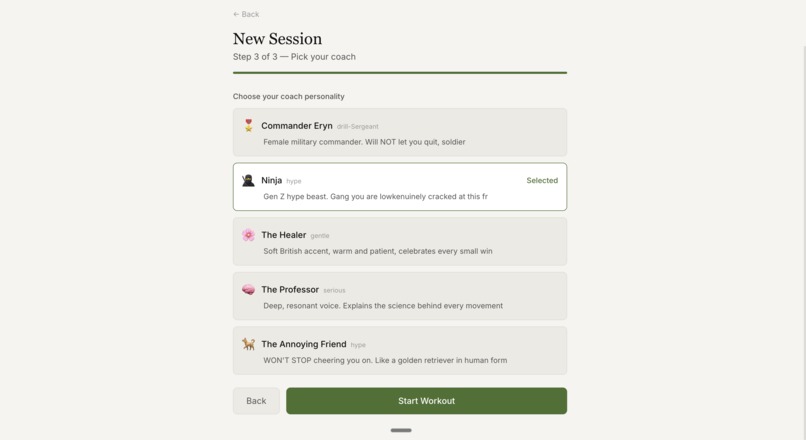
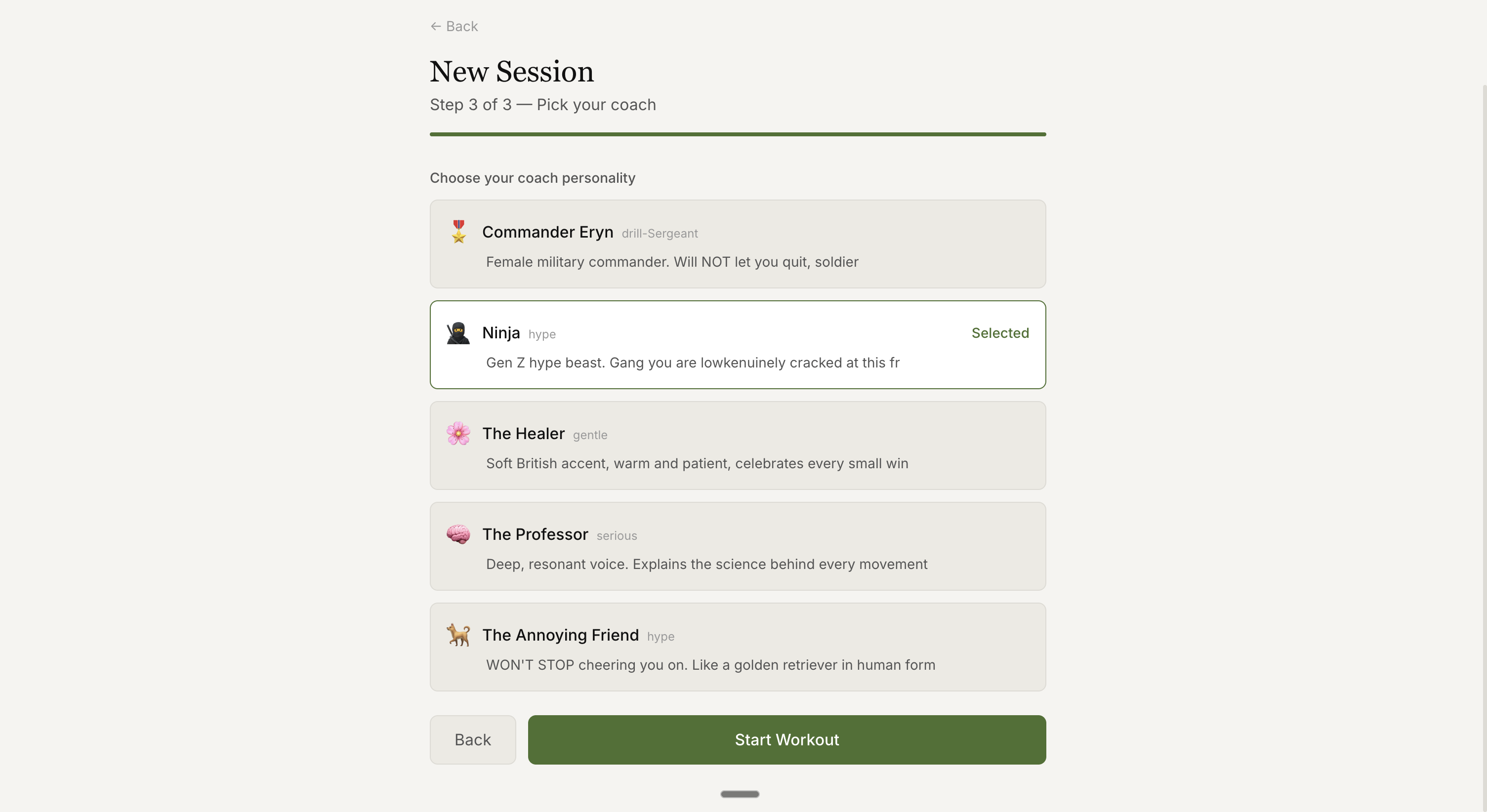
intake survey - pt. 3
-
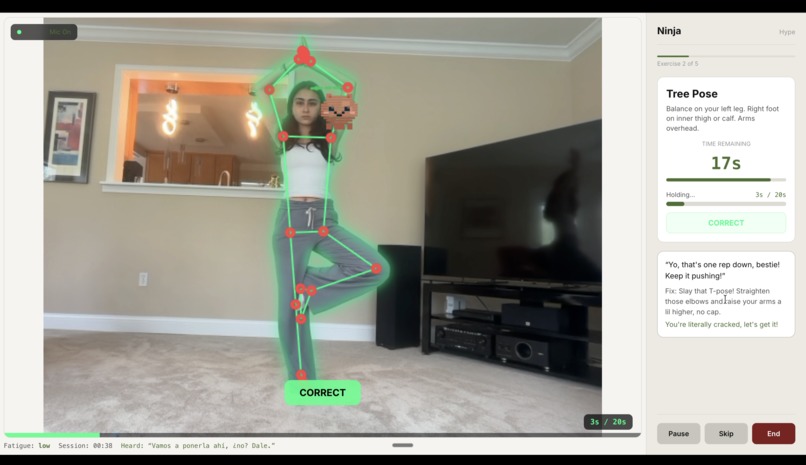
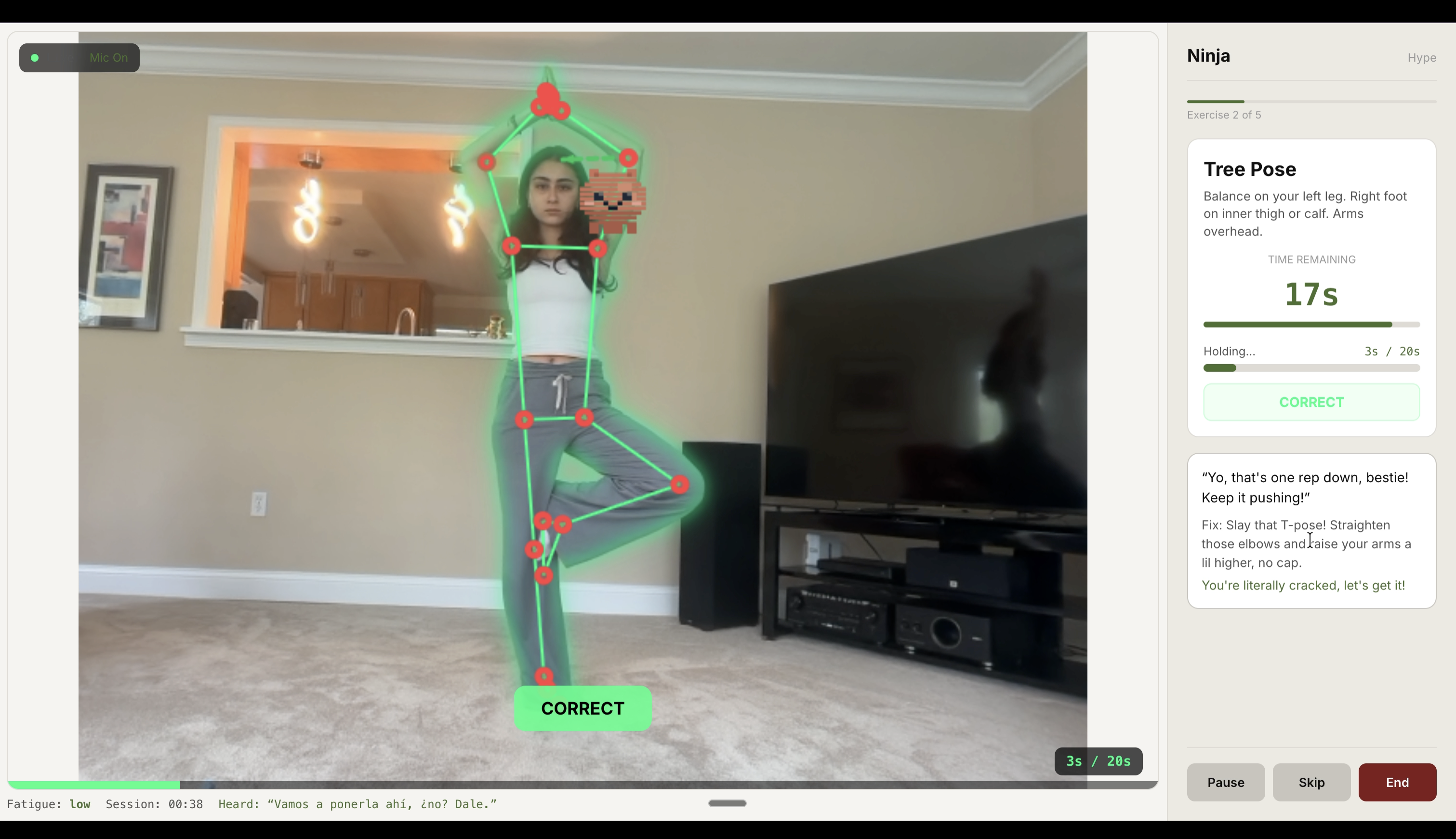
tree pose - correct
-
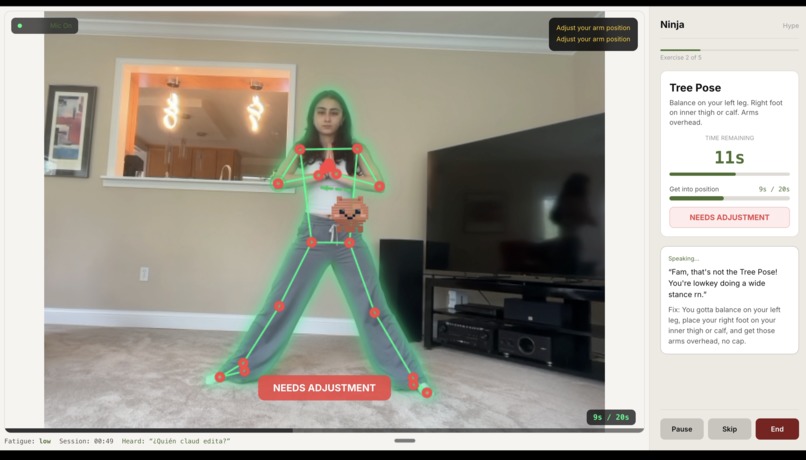
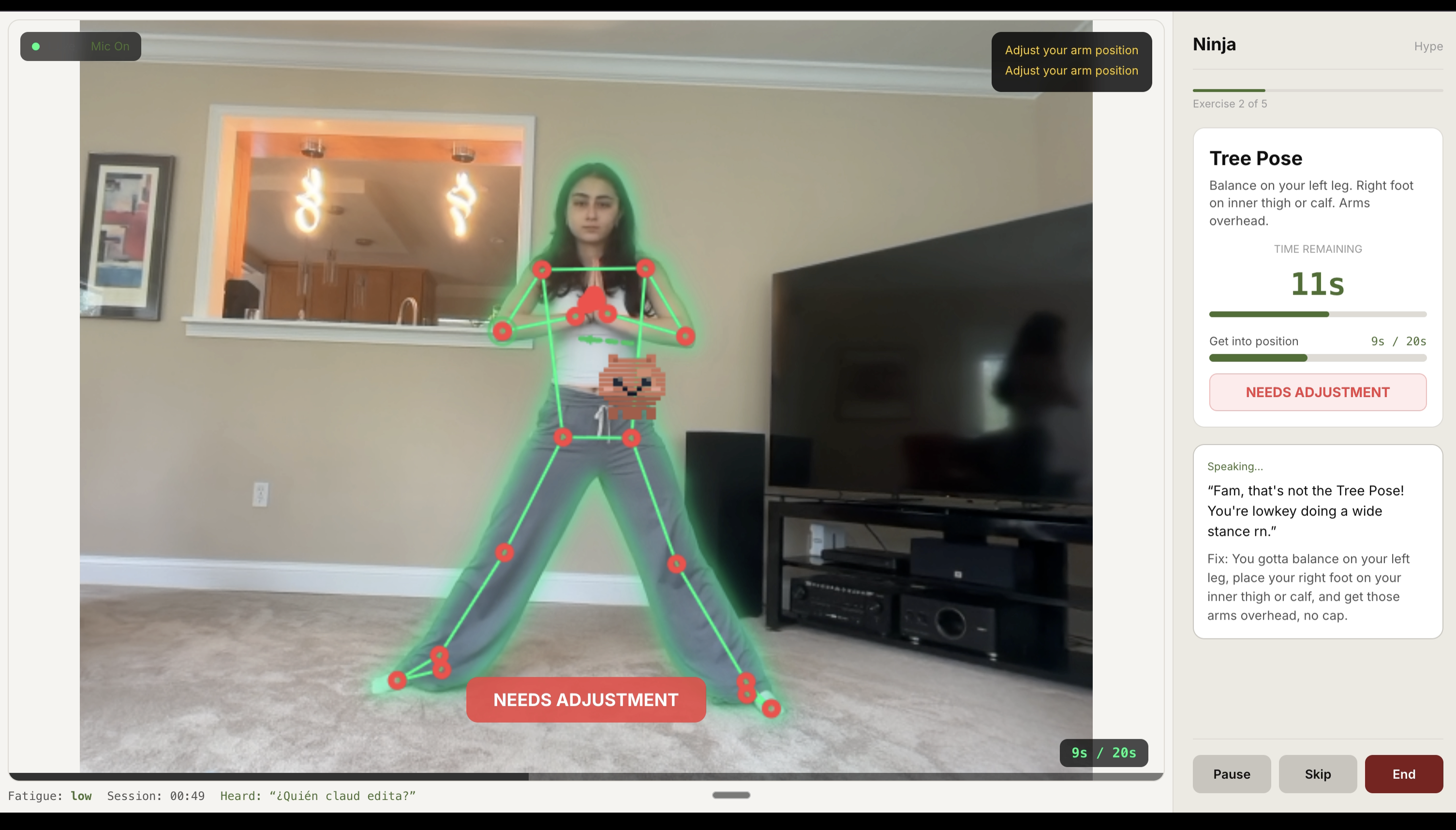
tree pose - incorrect
Inspiration
A single PT session costs $100–$400, waitlists stretch weeks, and 70% of patients drop off home exercise programs because no one's watching. We asked: what if your webcam could be your physical therapist — one that actually sees you, scores your form in real time, and adapts to your body?
What it does
KinetiCare is an agentic AI physical therapy coach that runs entirely in the browser. You describe your injury and goals. A planning agent builds a personalized exercise protocol. Then you work out — your webcam tracks 33 body landmarks at 30fps, scores form against your own calibrated baseline (not generic targets), and a coaching agent delivers real-time spoken feedback based on joint angles, fatigue, facial expression, and live screenshots. Everything is hands-free via voice. After your session, a report agent generates a PT-grade clinical note with compensation patterns, ROM data, and escalation flags.
How we built it
- Frontend: Next.js 14, React 18, TypeScript, Tailwind — fully client-side for privacy
- Pose detection: MediaPipe Pose Landmarker — 33 landmarks on-device at 30fps with body segmentation
- Calibration: Three reference poses capture your actual joint angles so scoring is relative to your biomechanics
- Coaching agent: Gemini 2.5 Flash processes joint data, fatigue estimates, facial expression, and a webcam frame every 8s to generate targeted corrections
- Voice: ElevenLabs TTS with five coach personas (drill sergeant, Gen Z hype beast, British physio, scientist, golden retriever) + speech recognition
- Planning + Report agents: Intake → sequenced exercise protocol; post-session → structured PT note with escalation flags
Challenges we ran into
Pose scoring that works. Generic angle thresholds ignore body proportions. We solved this with per-user calibration — three reference poses, all scoring relative to your baseline. Hardest problem, biggest payoff.
Real-time orchestration. MediaPipe, Gemini calls, TTS, voice recognition, and React state all running simultaneously. Timing the coach so it doesn't talk over itself or flicker the UI required careful async queue management.
Making the AI not annoying. Early versions corrected every frame. We tuned to 8-second intervals, added voice-busy detection, and gave each persona distinct prompting so feedback feels human.
Accomplishments that we're proud of
- Per-user calibration that scores against your body, not generic targets
- Five coach personas that genuinely sound and behave differently
- PT escalation flags — the AI knows when to tell you to see a real therapist
- Zero data leaves the browser — pose detection is fully on-device
- Full end-to-end flow (intake → plan → calibration → coaching → report) in under 5 minutes
What we learned
The gap between "pose detection demo" and "useful coaching tool" is almost entirely about calibration and timing — not the AI models. Making the system feel responsive, personal, and trustworthy was more UX problem than engineering problem. Gemini's multimodal capabilities (joint data + screenshots simultaneously) unlock coaching quality impossible with pose data alone.
What's next for KinetiCare
- Progress tracking — longitudinal ROM trends across sessions
- Form-gated rep counting — reps only count when form is correct
- PT portal — real therapists review flagged sessions and adjust protocols remotely
- Mobile support — stack is browser-based, so it's a responsive UI problem
- Insurance-compatible reporting — align PT notes with CPT billing codes
Built With
- nextjs

Log in or sign up for Devpost to join the conversation.