-
-
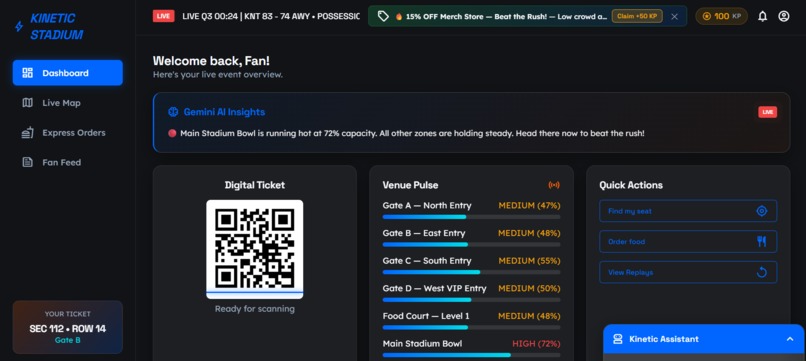
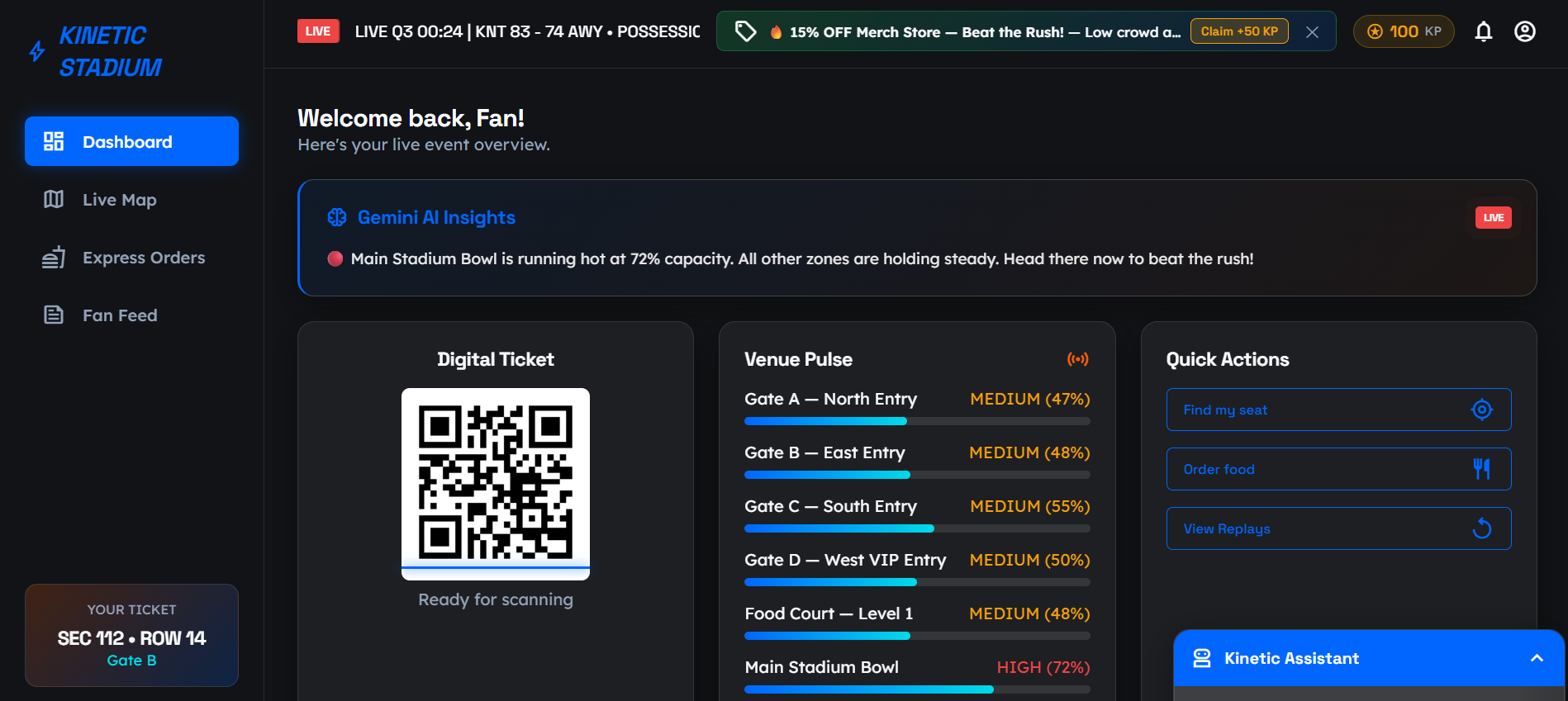
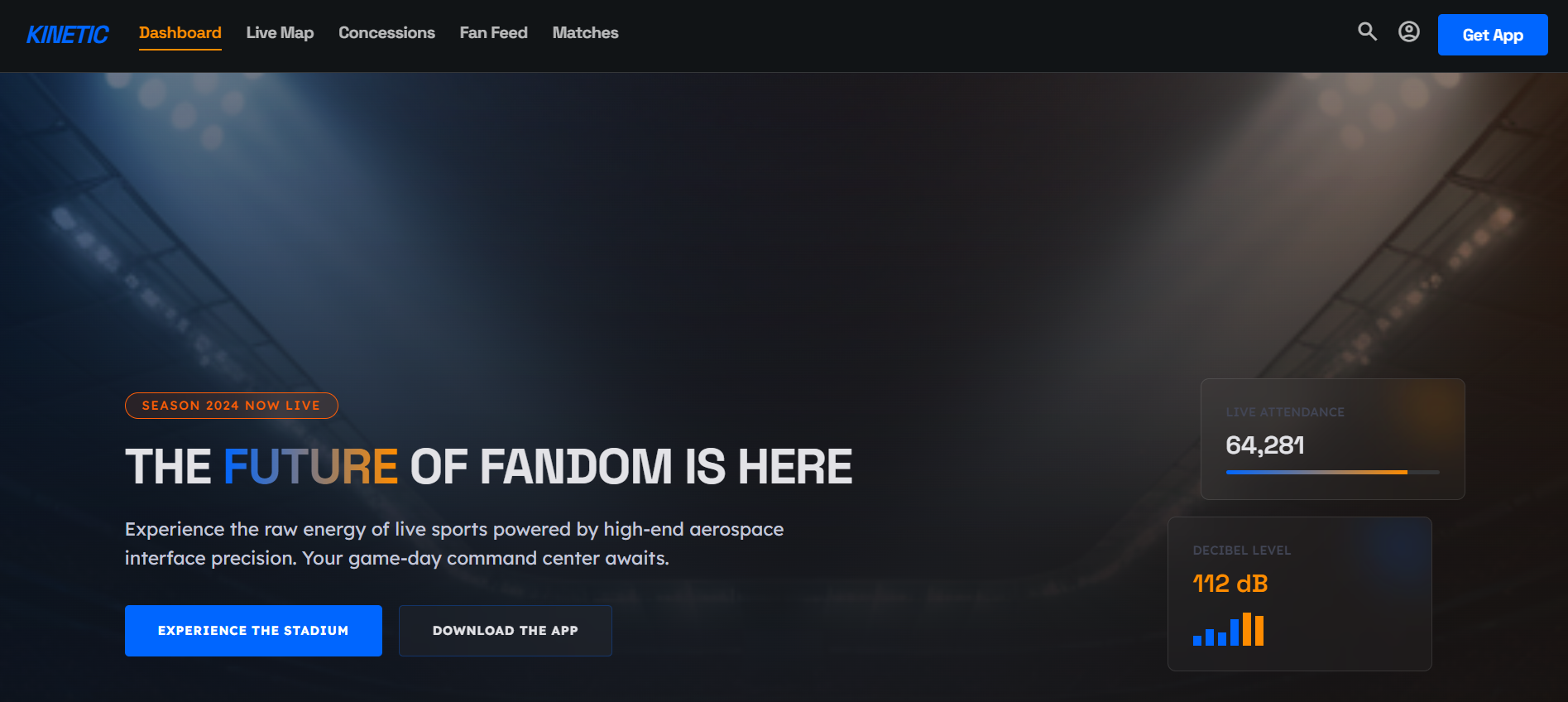
dashboard
-
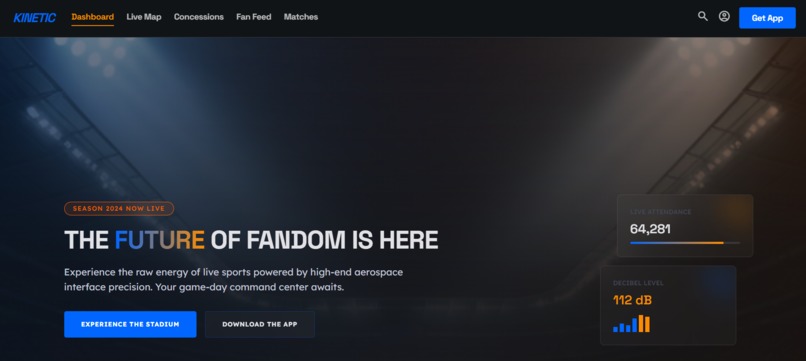
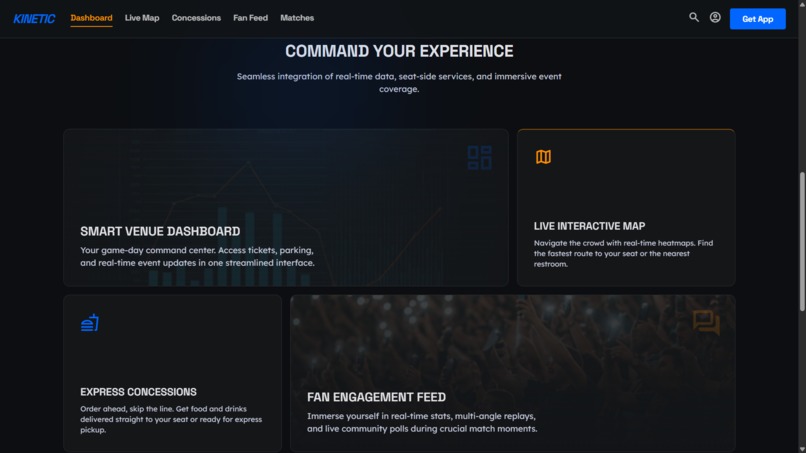
landing page
-
-
-
-
-
Inspiration
Anyone who has attended a major sporting event knows the frustration: missing the game-winning goal because you were stuck in a 30-minute concession line, or feeling unsafe during the chaotic, shoulder-to-shoulder surge of 50,000 people trying to exit the stadium at once.
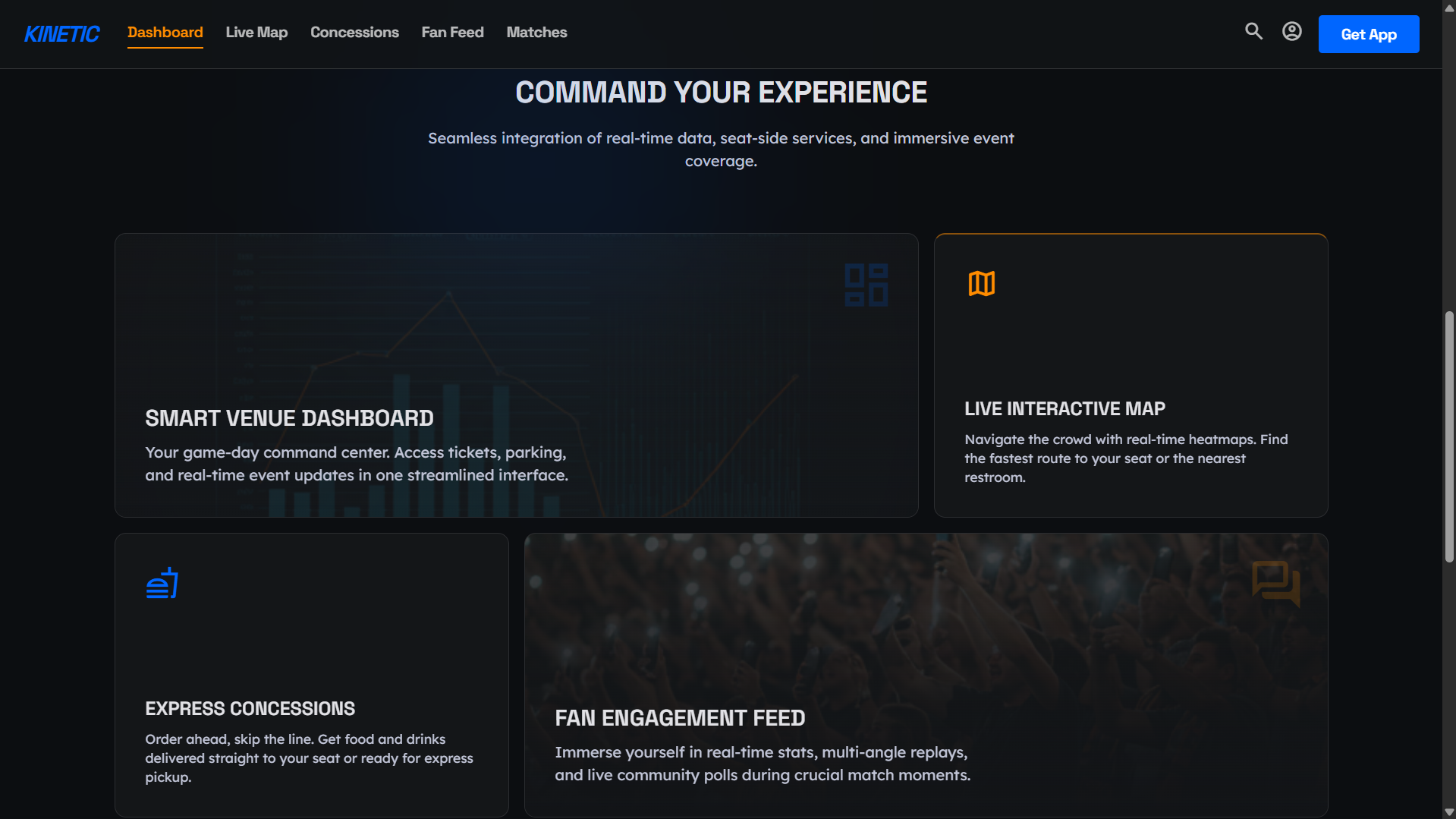
We realized that modern stadiums are massive data hubs, yet fans are kept entirely in the dark. We built Kinetic Stadium to transform passive spectators into connected, informed participants, shifting crowd management from reactive to proactive using real-time telemetry and Gemini AI.
What it does
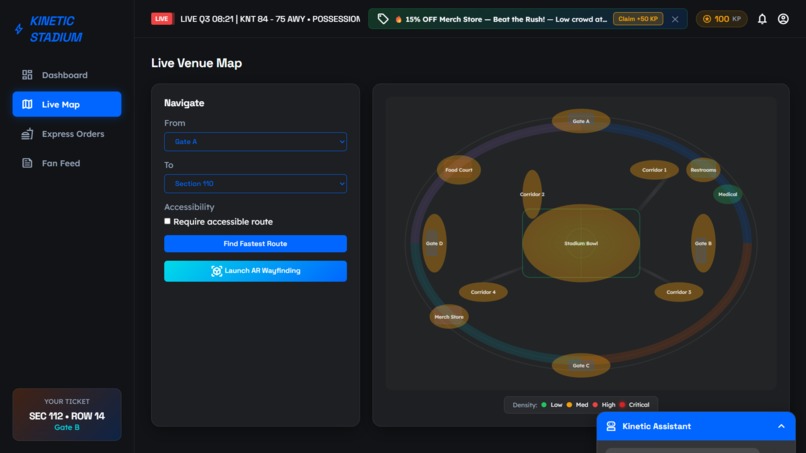
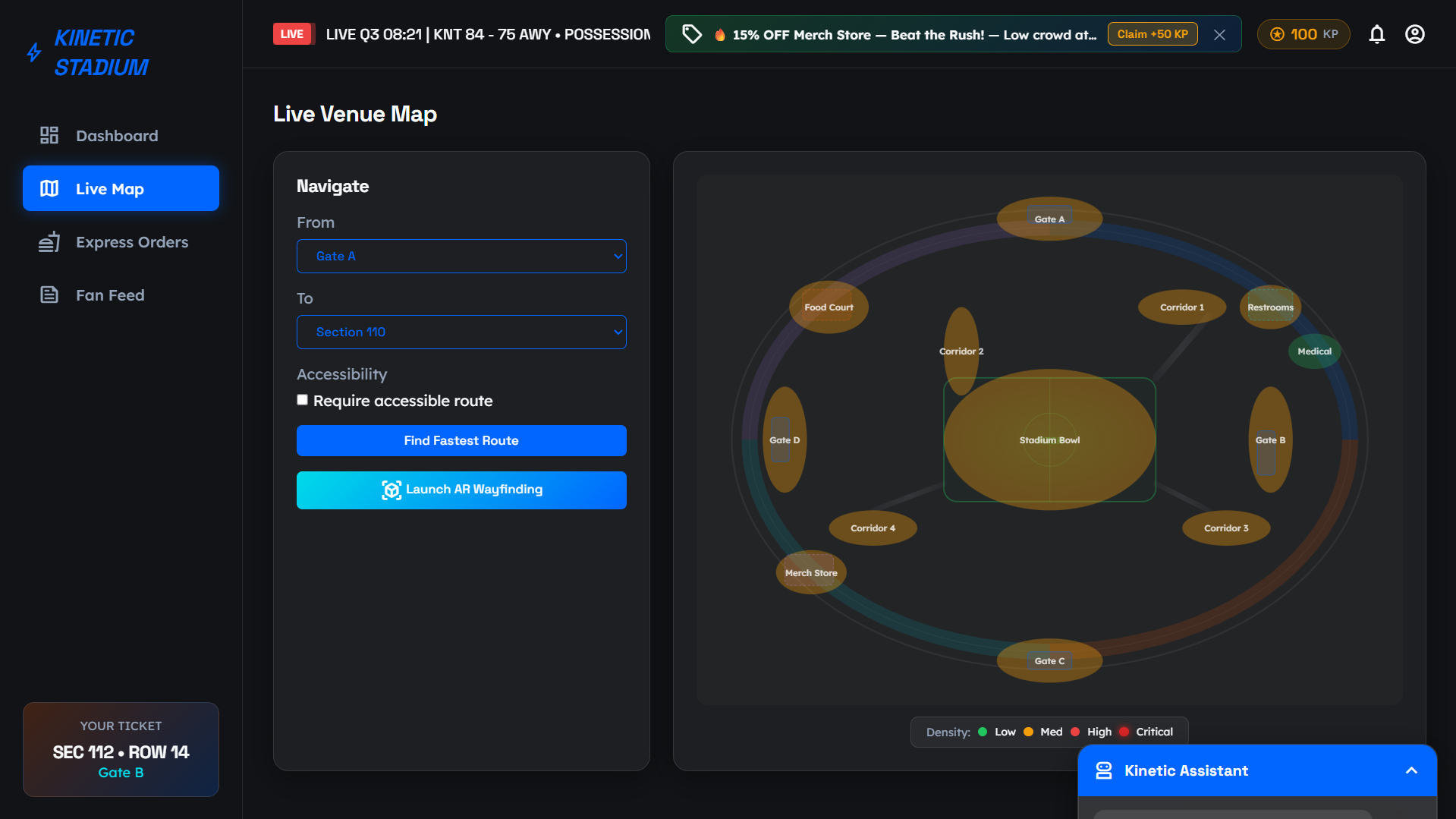
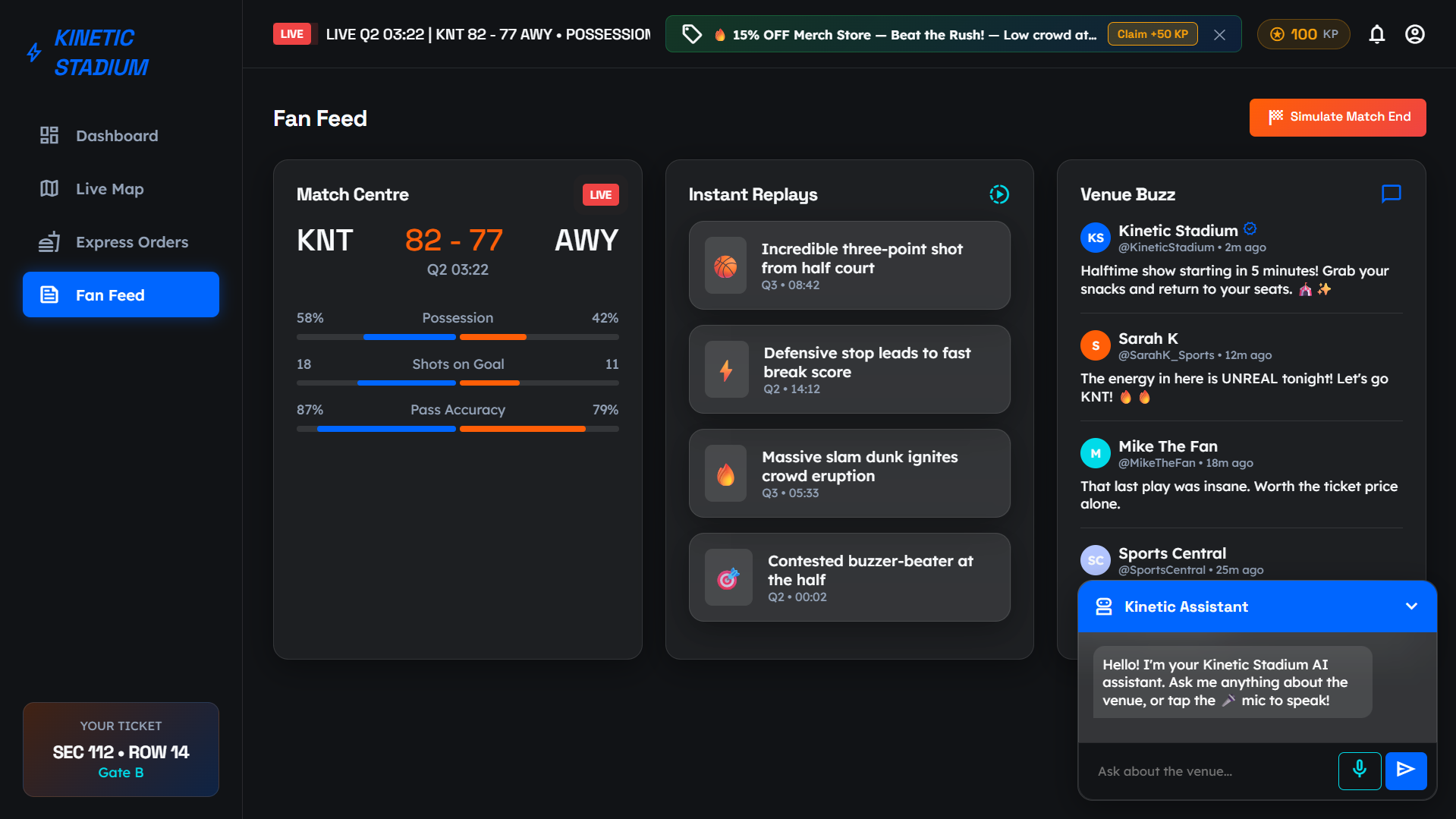
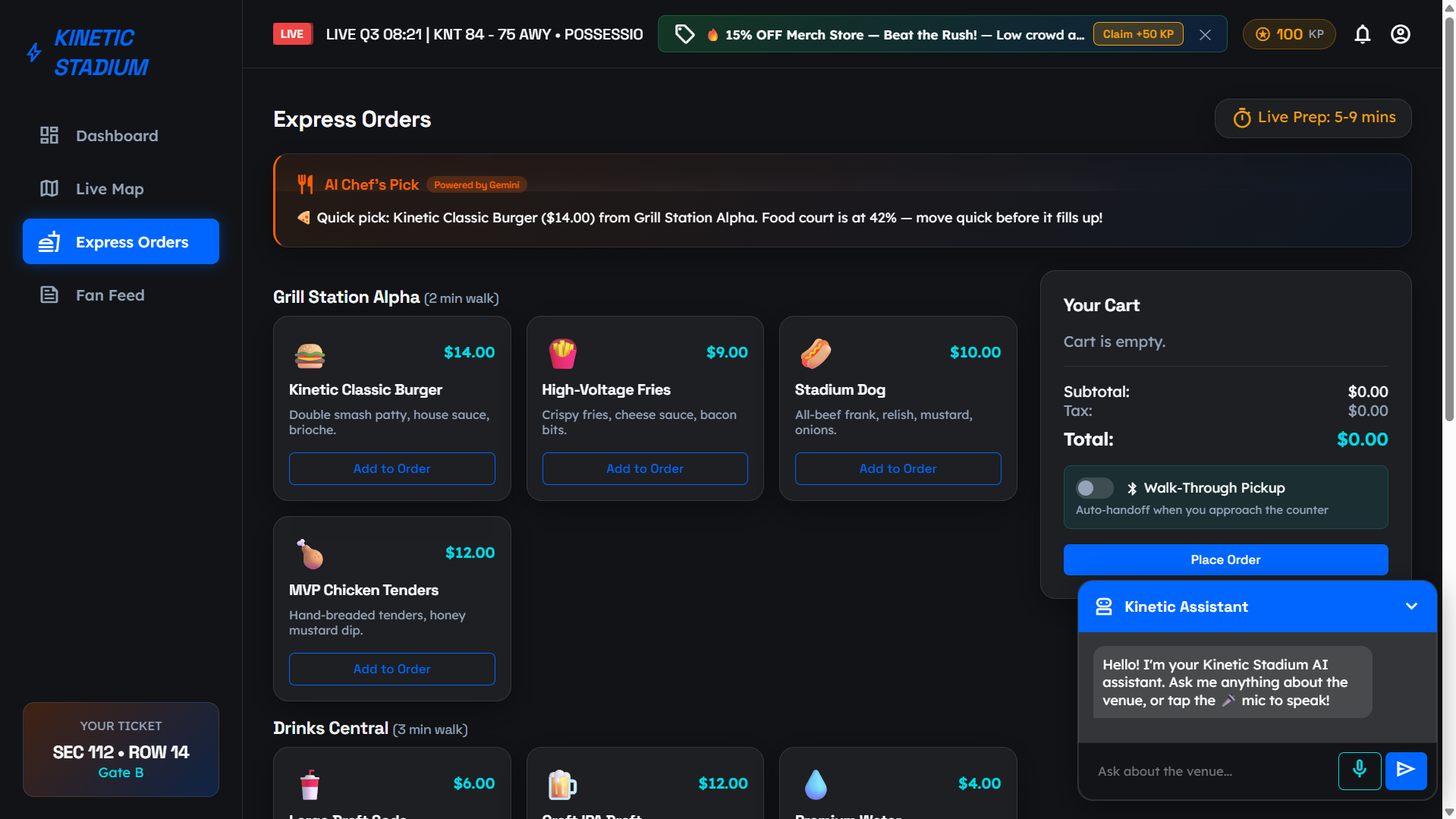
Kinetic Stadium is an end-to-end smart venue platform. It uses a simulated IoT telemetry engine to track crowd density across 13 distinct stadium zones in real-time. We've integrated Google's Gemini 2.0 Flash across five different touch-points:
- AI Crowd Narrator: Translates raw numerical density data into a natural-language "stadium pulse" broadcast.
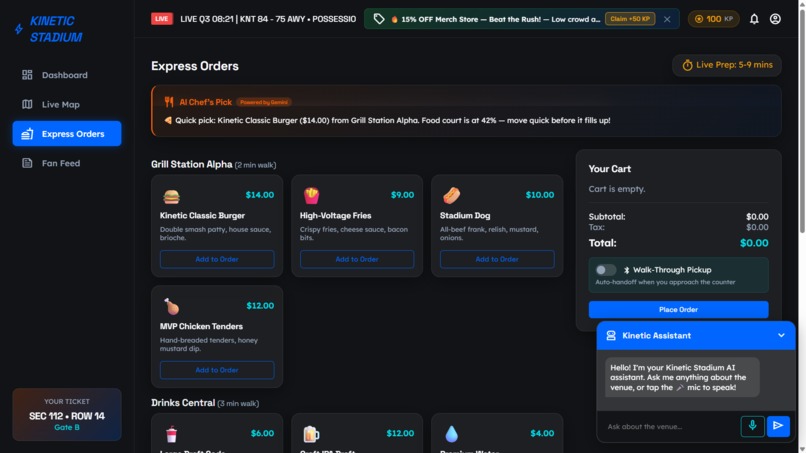
- AI Chef's Pick: Context-aware food recommendations that calculate your walking distance + current line depth.
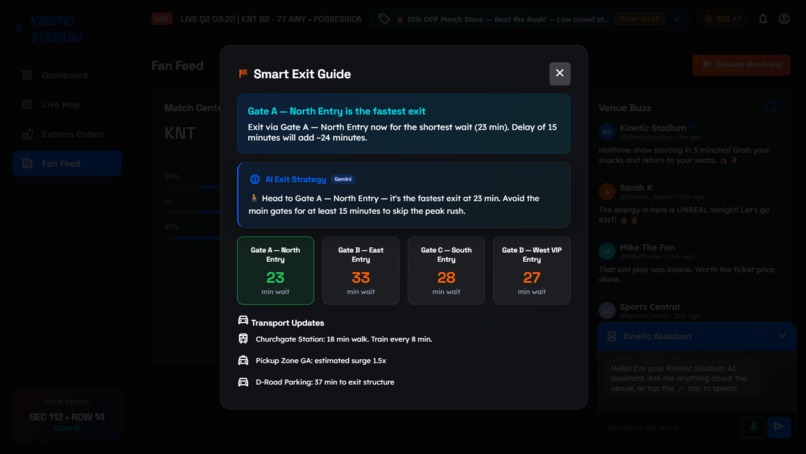
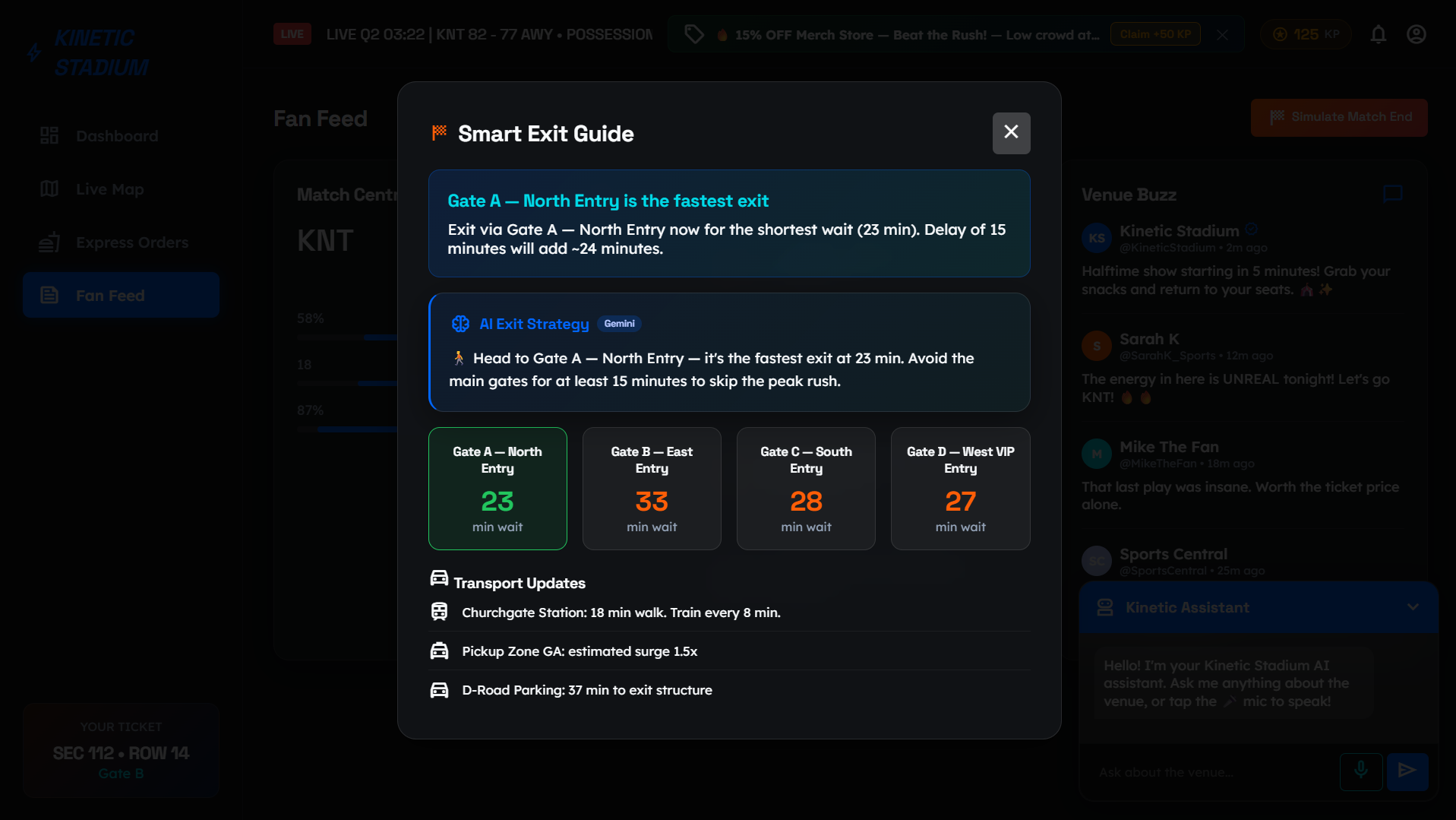
- Smart Egress Advisor: Analyzes post-match gate congestion and generates a personalized, time-saving exit strategy.
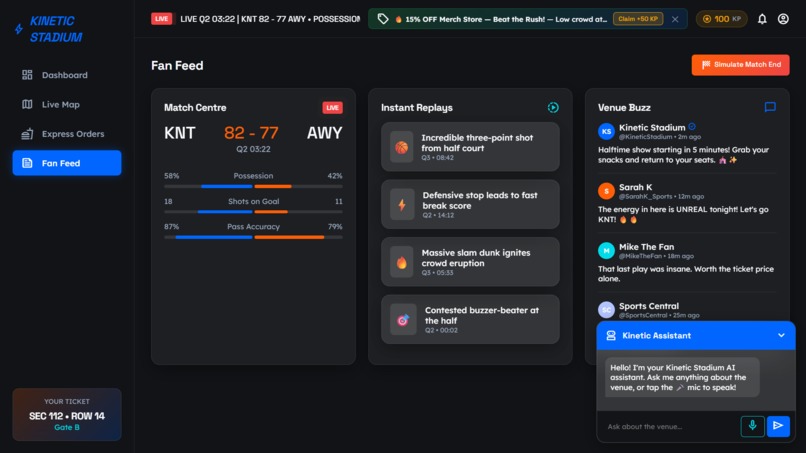
- Kinetic Assistant Chatbot: A fully grounded venue AI that answers policy, navigation, and facility questions.
- Staff Operations Advisor: Triages anomalies and generates deployment advice for stadium security.
How we built it
We built the backend using Python and FastAPI, creating a high-performance REST API. At the core is our bespoke "Crowd Engine," which simulates real-time telemetry and computes wait times. Our "Decision Engine" uses Dijkstra's algorithm over a weighted venue graph to compute the safest physical routes.
Let \(G = (V, E)\) be the venue graph where edges represent physical paths and weights \(w(e)\) represent real-time congestion penalties. The optimal safe route is found by minimizing the total path cost:
$$ \text{Cost}(P) = \sum_{e \in P} w(e) $$
To bridge the gap between cold data and human experience, we integrated the Google Gemini API. We implemented a strict design philosophy: deterministic algorithms make the decisions; Gemini AI explains them.
The frontend is a bespoke Single Page Application (SPA) utilizing vanilla HTML/JS/CSS with a modern glassmorphism aesthetic. Finally, we containerized the application with Docker and deployed the live production build to Google Cloud Run.
Challenges we ran into
Our biggest challenge was preventing AI hallucinations in safety-critical situations. You cannot have an AI hallucinate a non-existent stadium exit during a fire alarm. We solved this by creating a hybrid architecture: we use deterministic graph-math to calculate the actual safe route, and then we inject that calculated route into Gemini's context window. Gemini is heavily prompted to only format and explain the deterministic data, never to invent its own routes.
Additionally, handling high-frequency API polling from the frontend to the Gemini API risked severe rate-limiting and latency. We engineered a robust caching layer and graceful deterministic fallbacks, ensuring the app remains 100% functional even if the AI takes too long to respond.
What we learned
We learned that the most powerful AI applications don't replace deterministic software—they augment it. By using Gemini as a "translation layer" between complex telemetry data and human fan experience, we created a system that is both incredibly smart and completely safe. We also mastered the end-to-end deployment pipeline on Google Cloud Platform, successfully bridging the gap between local development and a zero-downtime Cloud Run production environment.
Built With
- cloudrun
- css3
- docker
- fastapi
- geminiapi
- html5
- javascript
- pydantic
- python
- uvicorn


Log in or sign up for Devpost to join the conversation.