-
-
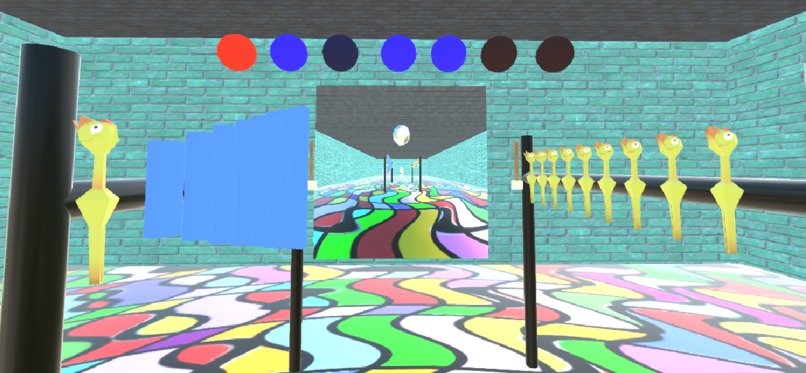
Orbs are sync'd along with the music
-
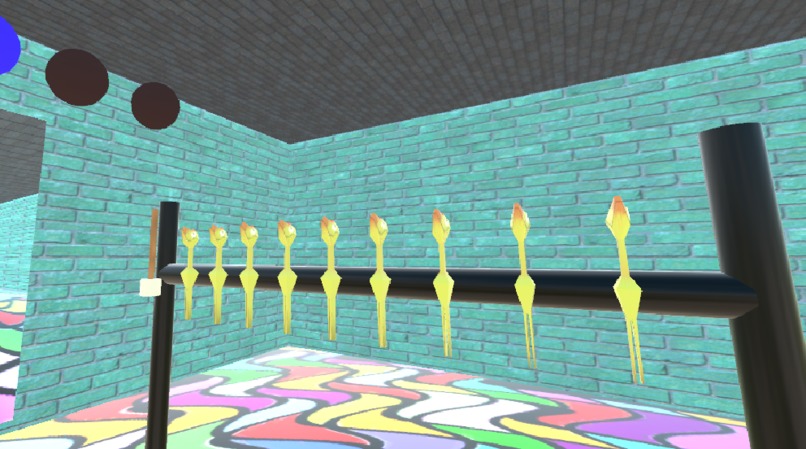
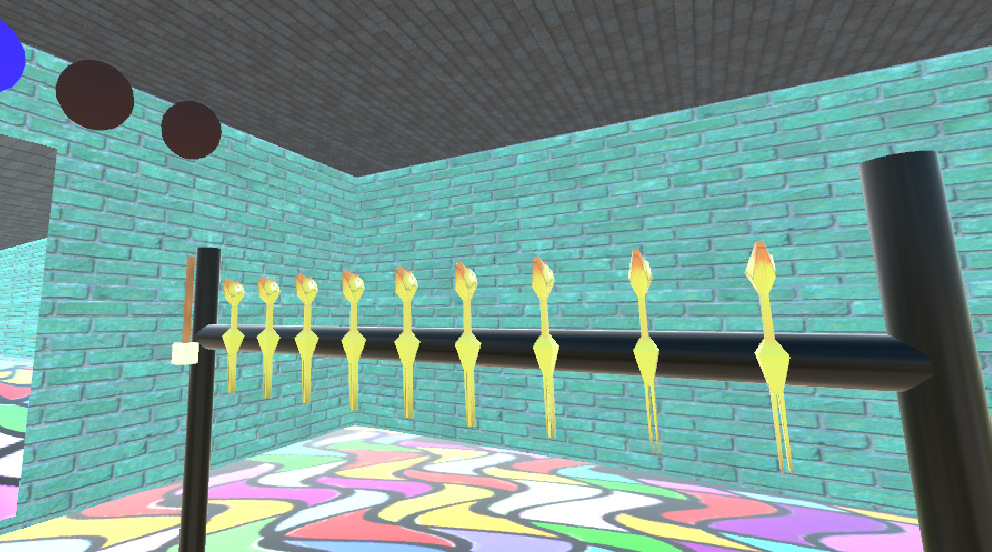
rubber chicken xylophone anyone
-
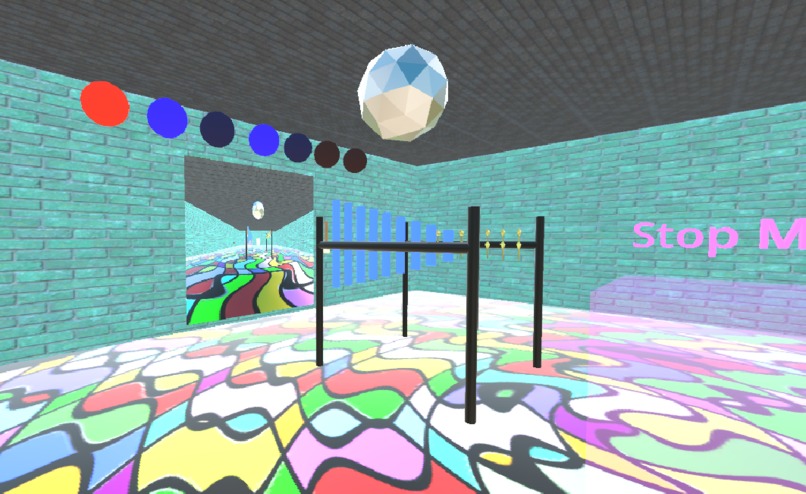
dance area with a mirror so you can see your moves

Inspiration
The germ of this game is the memory of a cheap 80's synthesizer, probably a Casio, that allowed the user to sequence a pattern of notes and then trigger them with a simple interface of two keypads. Technical details aside, the spirit of the thing was to bring music making to a wider audience by simplifying the interface, leaving plenty of room for personal expression.
At its musical heart it uses and is inspired by Tracker software dating all the way back to the Amiga. A tracker is a kind of sequencer. See, https://en.wikipedia.org/wiki/Music_tracker. Also a fascination with instrument making such as Harry Partch did https://en.wikipedia.org/wiki/Harry_Partch.
There are plenty of games which require the user to dance to the music, we wanted to create a game which allowed the user to be the sequencer.
What it does
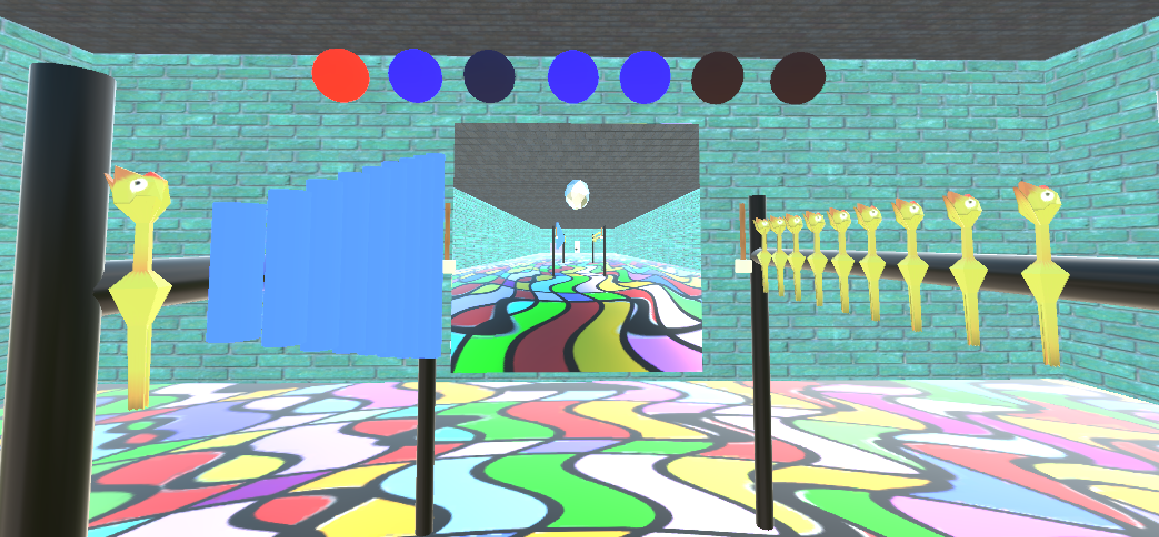
The user can play along with a backing track either by hitting notes on a VR xylophone or by making dance moves.
Libopenmpt is used to play isolated tracks from either movements or from items/instruments in the scene.
How we built it
We used Godot as the Engine and built a gdextension to the openmpt library with XR tools for our player rig.
The audio you hear is from this file: https://modarchive.org/index.php?request=view_by_moduleid&query=179581
For the music side we worked backwards from the capabilities of tracker files, and the OpenMPT library that allows software and game developers to manipulate them. We're only scratching the surface of what's possible.
Challenges we ran into
We built this in a very short time in a couple spurts over the span of a couple weeks. There was a learning curve with OpenMPT and with understanding the capabilities and limitations of the tracker files. With the limited time we were not able to compose our own songs and so had to use songs from the public domain which were not created with our application in mind.
Accomplishments that we’re proud of
Getting anything done at all. Taking basic primitives like playing notes and controlling channel volumes and making a compelling game out of it.
We're excited that the music model is standard and modular. A wide variety of moods can be accomplished only by switching out songs.
It was a feat even getting OpenMPT working in a quest game.
What we learned
It is incredibly difficult to get user movements to not just make sounds, but to make sounds which sound good and musical. There is still a lot of things to learn, but we got something as a POC which sounds nice.
Everything had to be discovered and learned fresh as we went.
What’s next for X
More expressive control over the music through dance gestures. More variety in the musical tracks and moods. More visualizations. A game mode where the user solves puzzles and progresses through levels.


Log in or sign up for Devpost to join the conversation.