-
-
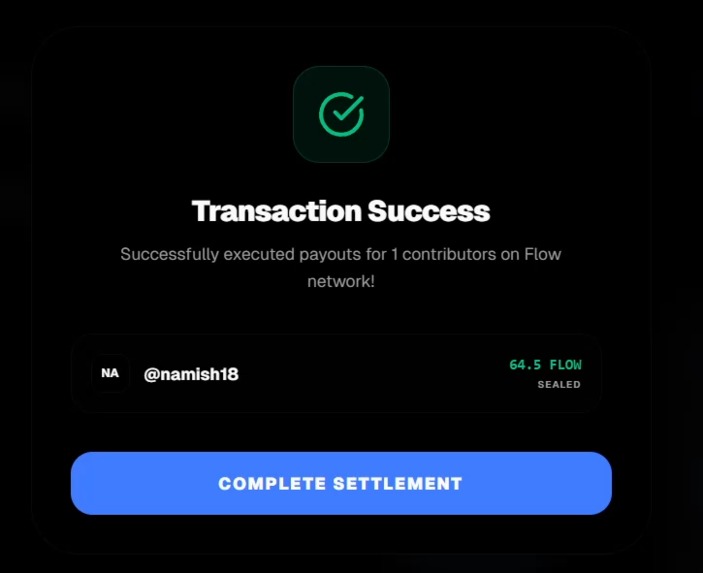
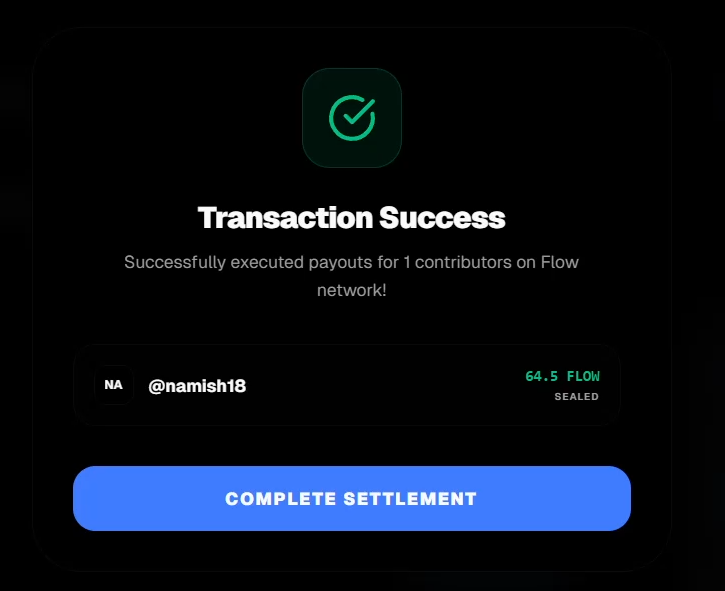
Transaction
-
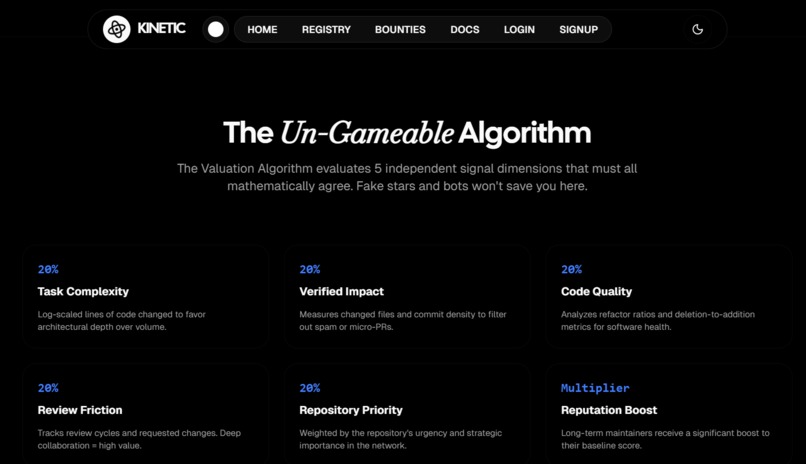
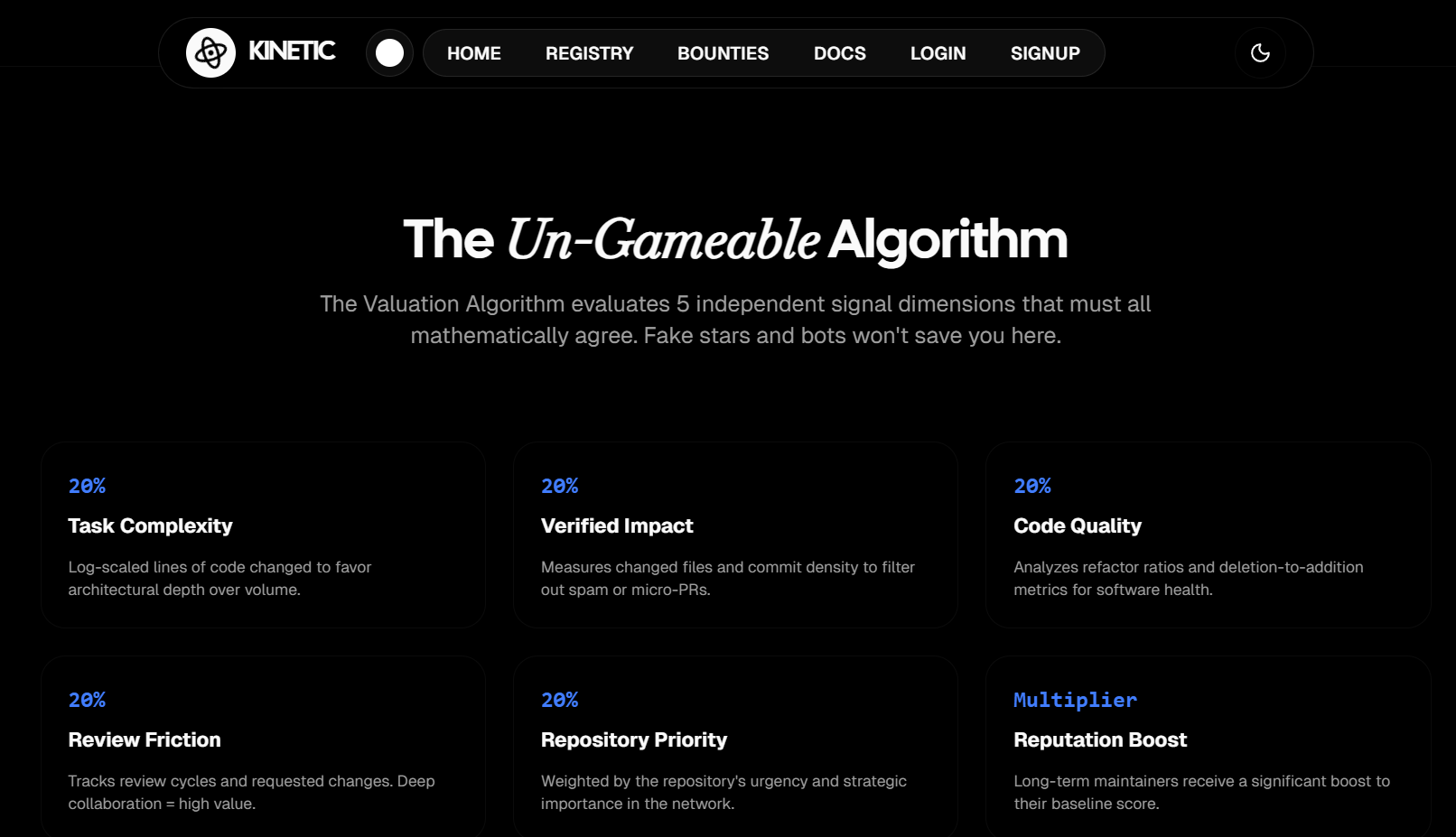
The algorithm
-
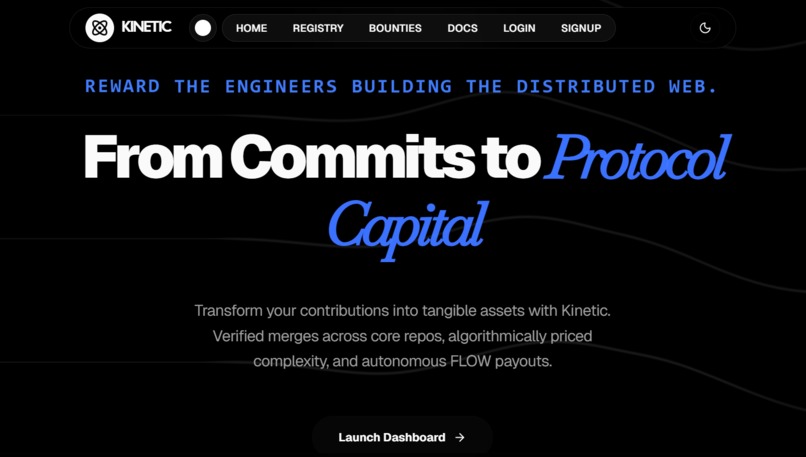
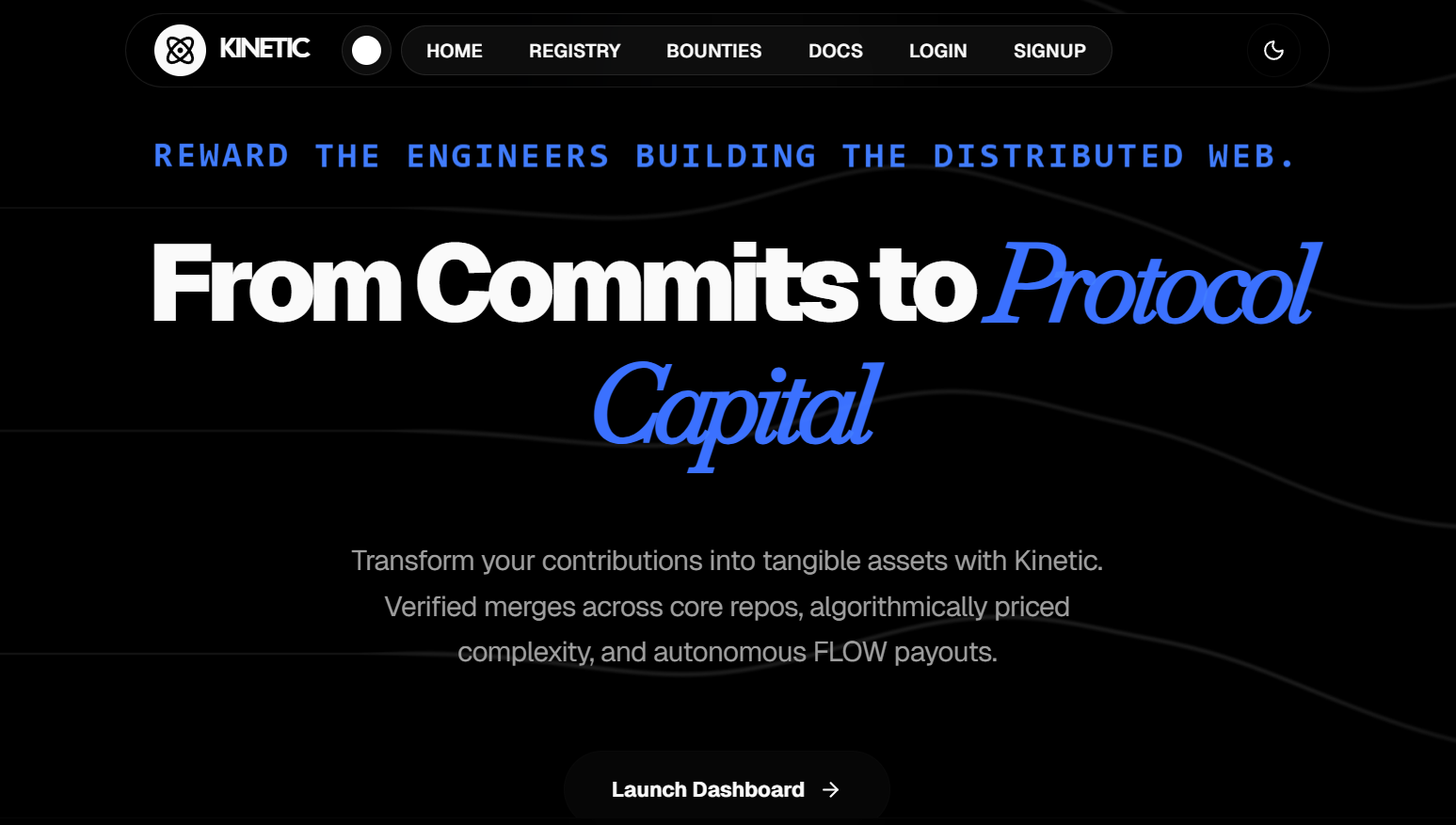
Landing Page
-
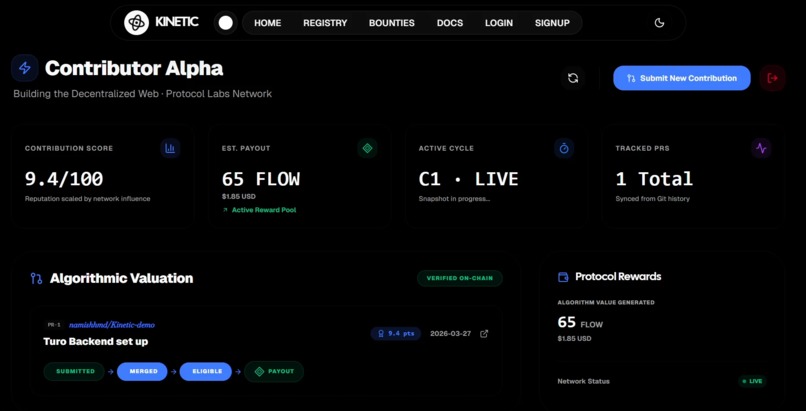
Contributor Dashboard
-
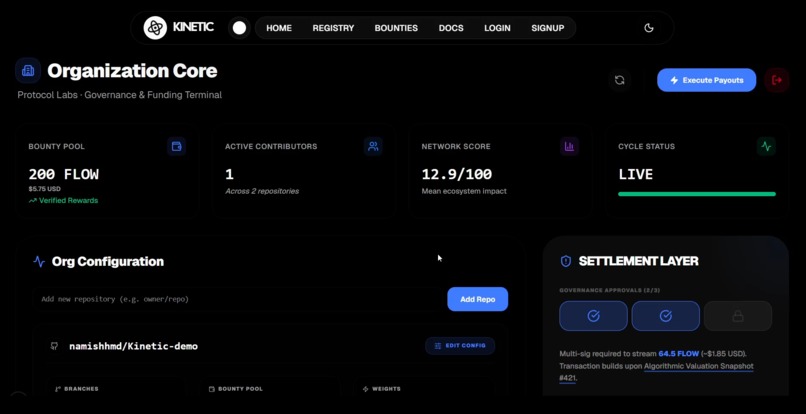
Organization Dashboard
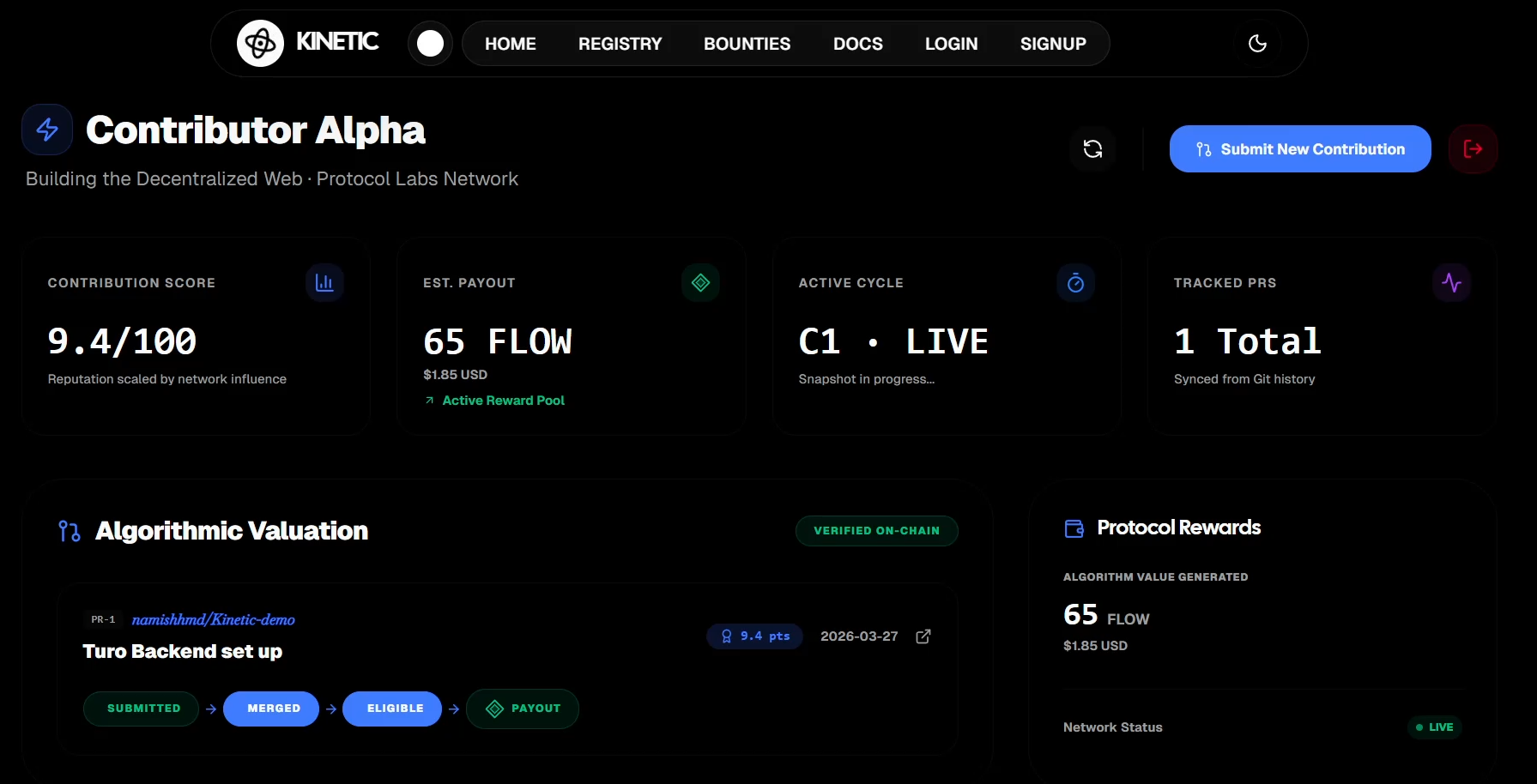
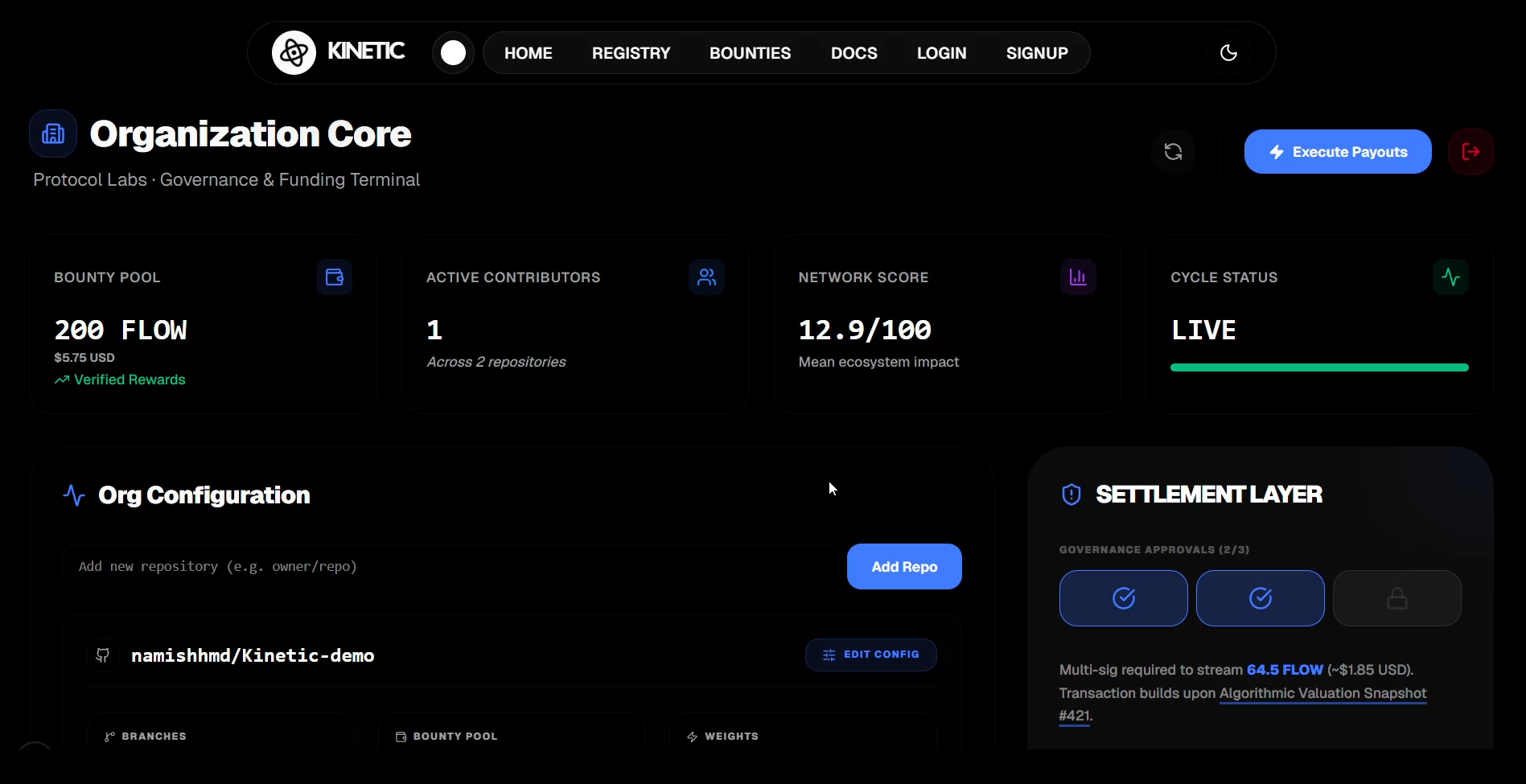
Kinetic



Kinetic is a meritocratic funding platform purpose-built for Open Source contributors. It replaces vanity "green square" metrics with a mathematically rigorous scoring engine that measures the true engineering complexity and ecosystem impact of open-source work.
The Problem
Traditional bounty systems are "first-come, first-served" or based on simplistic commit counts. This leads to micro-PR farming, code bloat, and reputation dominance, where new, high-quality contributors struggle to compete against established "elites."
The Solution - KINETIC
Kinetic triangulates six independent signal layers using its MSTS engine to determine a contributor's final value. It incentivizes high-leverage engineering, cross-repo collaboration, and production-grade reliability.
Table of Contents
Architecture Overview
Kinetic is organized as a monorepo consisting of three principal layers, achieving a seamless transition from code contribution to on-chain payout.
sequenceDiagram
    participant GH as GitHub (Webhooks)
    participant KB as Kinetic Backend
    participant DB as MongoDB
    participant BC as Flow Blockchain (Cadence)

    GH->>KB: PR Merged / Review Submitted
    KB->>GH: Query GitHub Actions (Proof-of-Build)
    KB->>KB: Calculate MSTS (Multi-Signal Score)
    KB->>DB: Persist Contribution Data
    KB->>BC: Propose Payout (Transaction)
    BC-->>BC: Multi-Sig Approval Cycle
    BC->>BC: Execute Payout (FLOW Disbursement)
| Layer | Technology | Purpose |
|---|---|---|
| Frontend | Next.js 16, React 19, Tailwind CSS 4, GSAP | High-fidelity dashboard for organizations and contributors. |
| Backend | Node.js, Express, MongoDB, Passport (OAuth) | Scoring engine, DID management, and webhook orchestration. |
| Blockchain | Flow Testnet, Cadence, FCL | Secure, transparent treasury management and multi-sig distributions. |
How to Run the Project
Prerequisites
Ensure the following tools are installed on your system before proceeding:
- Node.js v20 or later
- npm v9 or later
- MongoDB (local instance or a hosted service such as MongoDB Atlas)
- Git
- Flow CLI (required only for smart contract development and deployment)
You will also need the following external accounts and credentials:
- A GitHub OAuth Application (Client ID and Client Secret)
- A MongoDB connection string
- A Flow Testnet account (for blockchain interactions)
Backend Setup
- Clone the repository and navigate to the backend directory:
   git clone <repository-url>
   cd kinetic/backend
- Install dependencies:
npm install
- Create a
.envfile in thebackend/directory with the following variables:
   PORT=5000
   MONGODB_URI=<your-mongodb-connection-string>
   GITHUB_CLIENT_ID=<your-github-oauth-client-id>
   GITHUB_CLIENT_SECRET=<your-github-oauth-client-secret>
   SESSION_SECRET=<a-secure-random-string>
   JWT_SECRET=<a-secure-random-string>
   FRONTEND_URL=http://localhost:3000
   FLOW_ADDRESS=<your-flow-testnet-account-address>
   FLOW_PRIVATE_KEY=<your-flow-testnet-private-key>
- Start the development server:
npm run dev
The API will be available at http://localhost:5000. A health check endpoint is accessible at http://localhost:5000/health.
Frontend Setup
- Navigate to the frontend directory:
cd kinetic/frontend
- Install dependencies:
npm install
- Create a
.envfile in thefrontend/directory with the following variables:
   NEXT_PUBLIC_FLOW_ADDRESS=<your-flow-testnet-contract-address>
   NEXT_PUBLIC_FLOW_NETWORK=testnet
- Start the development server:
npm run dev
The application will be available at http://localhost:3000.
Flow Blockchain Setup
The smart contract layer uses Cadence, the native language for the Flow blockchain. To deploy or modify contracts:
- Navigate to the Flow directory:
cd kinetic/backend/flow
- To deploy the
KineticPayoutcontract to the Flow Testnet:
flow project deploy --network=testnet
- To run Cadence scripts (read-only operations):
flow scripts execute cadence/scripts/get_balance.cdc --network=testnet
- To submit transactions (state-changing operations):
flow transactions send cadence/transactions/propose_payout.cdc --network=testnet
Refer to the Flow CLI Documentation for additional commands and configuration options.
Features
The Contribution Scoring Engine
Kinetic moves beyond "vanity metrics" (like commit counts or lines of code) by employing a multi-staged algorithmic pipeline. This engine ensures that payouts are mathematically proportional to the actual engineering value delivered.
1. The Verification Gate: Proof-of-Build
Before any analysis occurs, every contribution must pass the Proof-of-Build gate. Kinetic queries the GitHub Actions API to verify that the specific commit hash successfully passed all CI/CD integration tests.
[!IMPORTANT] Merged code without a corresponding successful build trace receives a final score of zero.
2. The Algorithmic Pipeline
graph TD
    A[Merged PR] --> B{Proof-of-Build}
    B -- Fail --> C[Score: 0]
    B -- Pass --> D[Anti-Gaming Filters]
    D -- Spam/Low Quality --> C
    D -- Valid --> E[Base Scoring Engine]
    E --> F[Reputation Multiplier]
    F --> G[Post-Adjustment Filters]
    G --> H[Final Payout Allocation]
3. Core Scoring Components
| Layer | Component | Description |
|---|---|---|
| Filter | Anti-Gaming | Hard cutoffs for quality (<0.3) and impact (<0.2) to prevent "micro-PR" farming. |
| Base | Impact & Complexity | Log-scaled complexity calculation log(lines + 1) / log(max + 1) prevents reward for "code bloat". |
| Base | Review Depth | Maintainer review scores and comment density; rewards "consensus-building" code. |
| Incentive | Reputation (1.5x) | A capped 1.5x multiplier based on historical consistency and "Code Survival Rate". |
| Stability | Diminishing Returns | Applies a penalty factor 1 / (1 + 0.1*(k-1)) for high-frequency PR spamming. |
4. The Math Behind the Meritocracy
The final score for any contribution $i$ is calculated as: $$FinalScore_i = \left( \sum w_n \cdot Metric_{ni} \right) \times \left( 1 + \lambda \cdot \log(Reputation_i + 1) \right) \times Penalty_{spam}$$
This dual-layered approach balances objective PR metrics with long-term ecosystem health.
Decentralized Identity
Contributors authenticate via GitHub OAuth. Upon first login, Kinetic mints a Decentralized Identifier (DID) using the key-did-provider-ed25519 standard from the Ceramic / Protocol Labs stack. DID documents are stored on an in-process Helia IPFS node. This cryptographic identity binds a contributor's commits, pull requests, and issues as verifiable credentials.
Autonomous FLOW Payouts
Payout distribution is handled entirely on-chain through the KineticPayout Cadence smart contract deployed on the Flow Testnet. The contract supports:
- Treasury Management -- Organizations deposit FLOW tokens into a managed treasury vault.
- Payout Proposals -- Authorized signers submit payout batches specifying recipient addresses and amounts.
- Multi-Signature Approvals -- Payouts require a configurable threshold of approvals from authorized signers before execution.
- Direct Execution -- Once the approval threshold is met, funds are disbursed directly to contributor wallets.
The frontend integrates with the Flow Client Library (FCL) for wallet authentication, balance queries, and transaction signing. Contributors can connect their Flow wallet, view pending payouts, and approve or execute distributions directly from the dashboard.
Project Structure
kinetic/
  backend/
    config/             # Database connection and Passport OAuth configuration
    flow/
      cadence/
        contracts/      # KineticPayout.cdc smart contract
        scripts/        # Read-only Cadence scripts
        transactions/   # State-changing Cadence transactions
        tests/          # Cadence integration tests
      flow.json         # Flow project configuration
    models/             # Mongoose data models
    routes/             # Express route handlers (auth, contribution, kinetic, repo, webhook)
    services/           # Core business logic (contribution scoring, DID, Flow, kinetic mechanisms)
    server.js           # Application entry point
  frontend/
    src/
      app/              # Next.js App Router pages (dashboard, bounties, docs, voting, onboarding)
      components/       # Reusable UI components (PillNav, LogoLoop, OrbitingEcosystem, etc.)
      lib/              # Shared utilities and Flow blockchain client (flow.ts)
  contribution_algo.md  # Detailed specification of the contribution scoring algorithm
  readme.md             # This file
API Reference
The backend exposes the following primary endpoints:
| Method | Endpoint | Description |
|---|---|---|
GET |
/api/auth/github |
Initiate GitHub OAuth authentication flow |
GET |
/api/auth/github/callback |
OAuth callback; creates DID on first login |
GET |
/api/auth/me |
Retrieve current user profile (JWT required) |
GET |
/api/auth/did/:username |
Resolve a DID by GitHub username (public) |
GET |
/api/auth/did-resolve/self |
Re-resolve the authenticated user's DID (JWT required) |
PUT |
/api/auth/wallet |
Link a Flow wallet address to the authenticated account (JWT required) |
GET |
/api/auth/logout |
Terminate the current session |
GET |
/health |
Health check endpoint |
Additional routes are available under /api/contribution, /api/kinetic, /api/org, and /api/webhook for contribution scoring, kinetic mechanism queries, organization repository management, and GitHub webhook processing, respectively.
License
This project is licensed under the ISC License. See the repository for details.

Log in or sign up for Devpost to join the conversation.