-
-
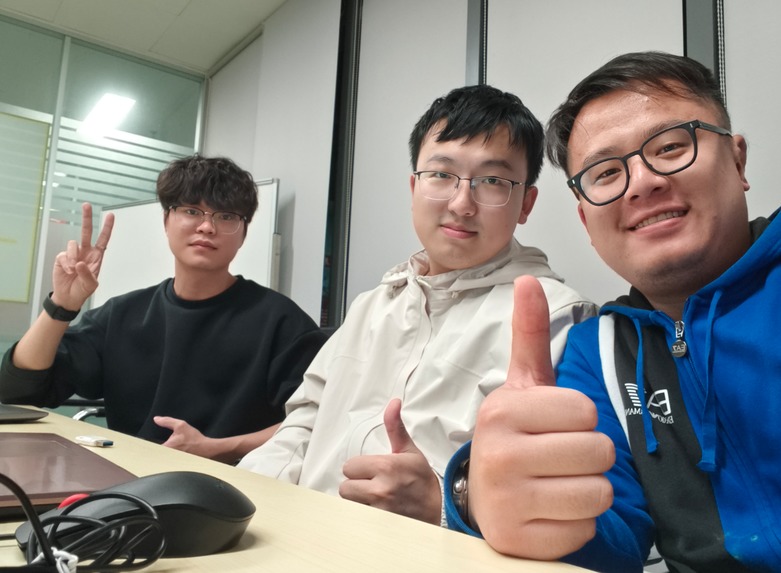
Team photo
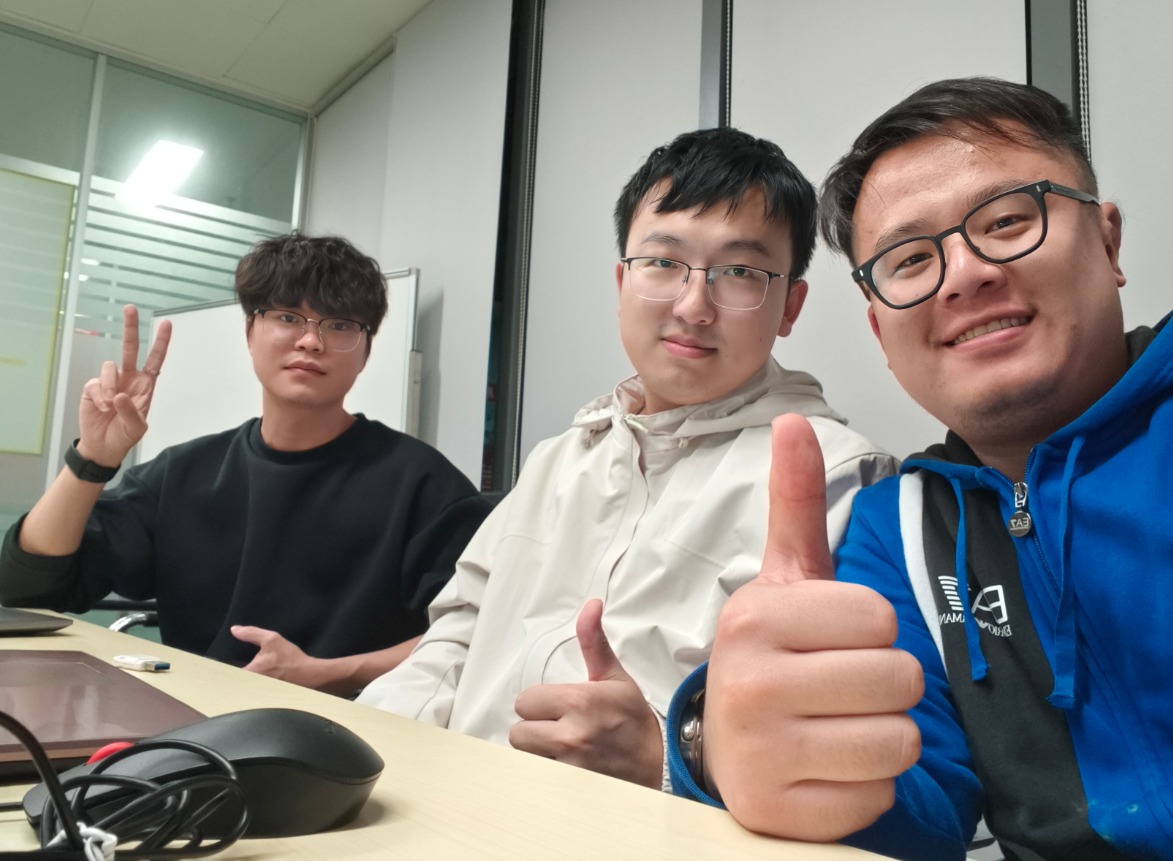
Why must budgeting sacrifice privacy? Why must data be uploaded to the cloud?
In this era of big data, we've observed two extreme pain points in budgeting software: either a poorly designed "purely manual form filling" experience, or a "cloud service" that offers a good experience but requires uploading private data.
As the Kinetic team, we've been pondering: can we leverage the latest AI technology to fully return data sovereignty to users without sacrificing convenience? Our inspiration comes from the combination of the Local-First software movement and Large Language Models (LLM). We aim to create an "AI financial officer living in your device," capable of understanding your natural language while maintaining the same level of confidentiality as a Swiss bank.
Feature Introduction
Kinetic Accounting Assistant is a pure front-end, zero-back-end, end-to-end encrypted intelligent accounting PWA application.
Privacy-First Local Architecture:
Uses AES-256 standard encryption; all data is stored only in the browser's IndexedDB.
There is no back-end database; the server only provides static resources, and developers cannot view user bills.
Natural Language Interaction (NLP):
Say goodbye to tedious category selection. Simply enter "I just took a taxi to the company and it cost 35 yuan," and AI automatically recognizes the amount, category (transportation), tag (commuting), and records it.
Intelligent Receipt Recognition:
Utilizes visual model capabilities, supporting taking photos/uploading receipts, automatically extracting merchant name, date, details, and total amount, achieving "photo-based accounting."
Multi-Dimensional Visualized Reports:
A dynamic dashboard built on Recharts displays real-time income and expense trends and category percentages, supporting seamless switching between dark and light modes.
Progressive Web Apps (PWAs):
Can be installed on desktops or mobile phones, supports complete offline use, launches in seconds, and provides an experience comparable to native apps.
Development Journey: A journey of transformation from an idea to full-stack deployment.
Phase 1: Architecture Restructuring and Selection
We abandoned the traditional Python/Node.js backend architecture and switched to a highly challenging React + Vite + IndexedDB pure frontend architecture, solely to fulfill our privacy promise of "zero backend."
Phase 2: Edge Integration of AI Capabilities
We overcame the challenge of securely calling AI APIs from the frontend. We designed a flexible API access layer, allowing users to directly connect to OpenAI/Claude or use our deployed proxy services.
Phase 3: Server and Network Challenges
We completed the local deployment of the service using an Acer laptop (Windows 11 + WSL2).
From configuring Docker containers to resolving DNS resolution for f.nwu.asia and Nginx reverse proxying, we bridged the "last mile" from home broadband to public network access.
Challenges Encountered:
The Data Synchronization Challenge of "Zero Backend":
How to ensure data integrity without a cloud database? We delved into browser persistent storage mechanisms and implemented a local backup and restore solution based on JSON files.
The Complexity of the Network Environment:
Deploying on a home server presented a series of network infrastructure challenges, including port blocking, SSL certificate application (HTTPS), and proxy configuration (port 7890).
The "Illusionary" Control of AI:
How to ensure LLM outputs stable JSON format for the program to read? After dozens of Prompt Engineering optimizations, we finally achieved a 99% accuracy rate in extracting structured data.
Proud Achievements
Exceptional Security Ratings: Achieved extremely high security ratings in Mozilla Observatory and various security audits, thanks to its stringent Content Security Policy (CSP) and purely local encryption mechanisms.
Elegant Engineering Implementation: The project is fully open-source (MIT license), with a clear code structure and well-defined types (TypeScript), proving that individual developers can write enterprise-quality code with AI assistance.
True "Serverless": Successfully demonstrates that in the AI era, powerful applications do not necessarily require expensive cloud servers; the user's browser is the most powerful operating environment.
Reflections
Technology as a Guarantee of Freedom: This development experience made me deeply realize that only by mastering the underlying technologies (from network protocols to encryption algorithms) can one truly protect their privacy and avoid being controlled by the ecosystem of large companies.
AI Changing the Boundaries of Development: As a developer with a project management background, AI enabled me to cross the threshold of full-stack development, working alone to independently complete UI design, front-end logic, and deployment.
Simplicity is Beauty: Removing complex back-ends not only makes applications faster but also simpler to maintain. Local-First is a crucial trend for the future of personal software.
Future Development Directions of Kinetic Accounting Assistant:
WebGPU Local Model (Edge AI):
Plans to introduce lightweight versions of DeepSeek or Llama, allowing models to run directly in the browser using WebGPU. This will enable AI-powered accounting even when completely offline, pushing privacy protection to the extreme.
Voice Interaction (Voice UI):
Utilizing the Web Speech API, develop a "voice accounting" mode. Users can complete complex financial records simply by speaking while driving or busy.
Intelligent Financial Advisor (RAG):
Beyond just recording, the Agent will provide personalized budget suggestions and money-saving strategies based on users' historical spending data (e.g., "Your coffee spending exceeded your budget by 20% this week, we suggest...").
Ecosystem Interconnection:
Develop a data export interface to support one-click generation of Excel/PDF reports, facilitating more in-depth financial audits or tax filings.

Log in or sign up for Devpost to join the conversation.