The Problem
Finding local help when you're stressed—like rent aid, food programs, or tutoring—is incredibly draining. The services exist, but the details are completely scattered across confusing government sites, social media, and flyers. Stressed people rarely know what they qualify for, so they suffer in silence while things get worse. We built Kinetic to bridge this gap, connecting vulnerable neighborhoods directly with the support groups trying to find them.
What it does
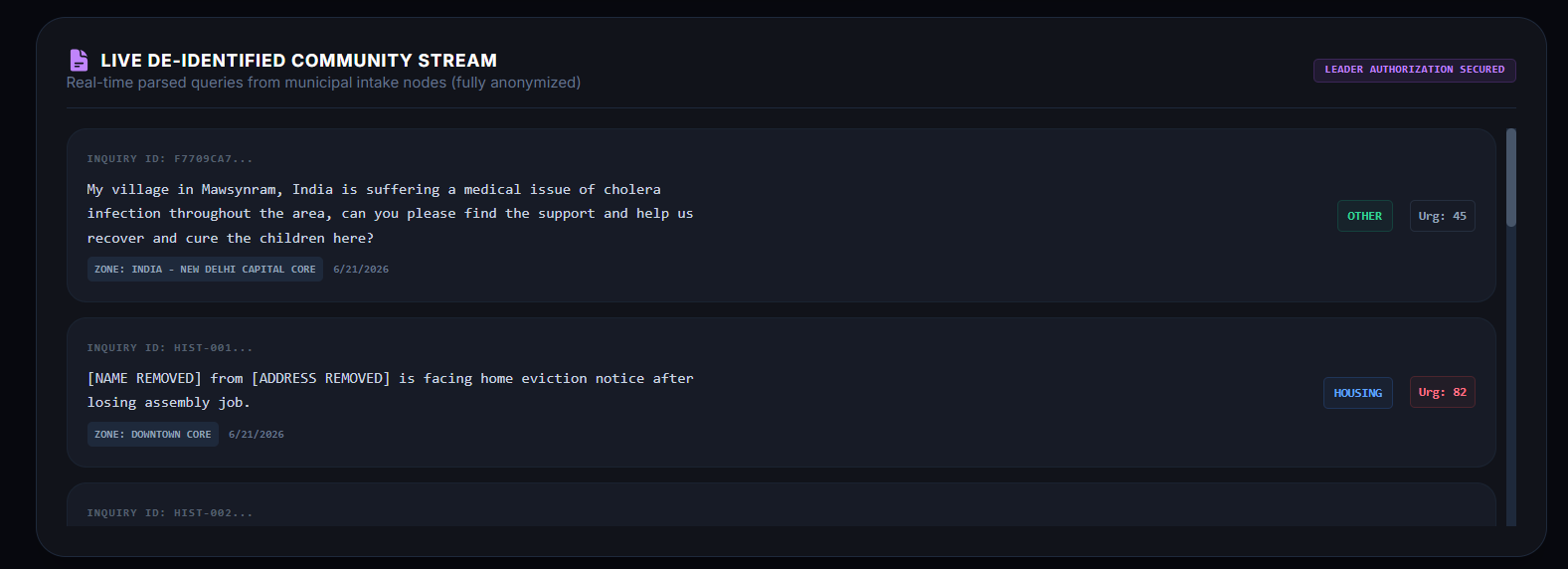
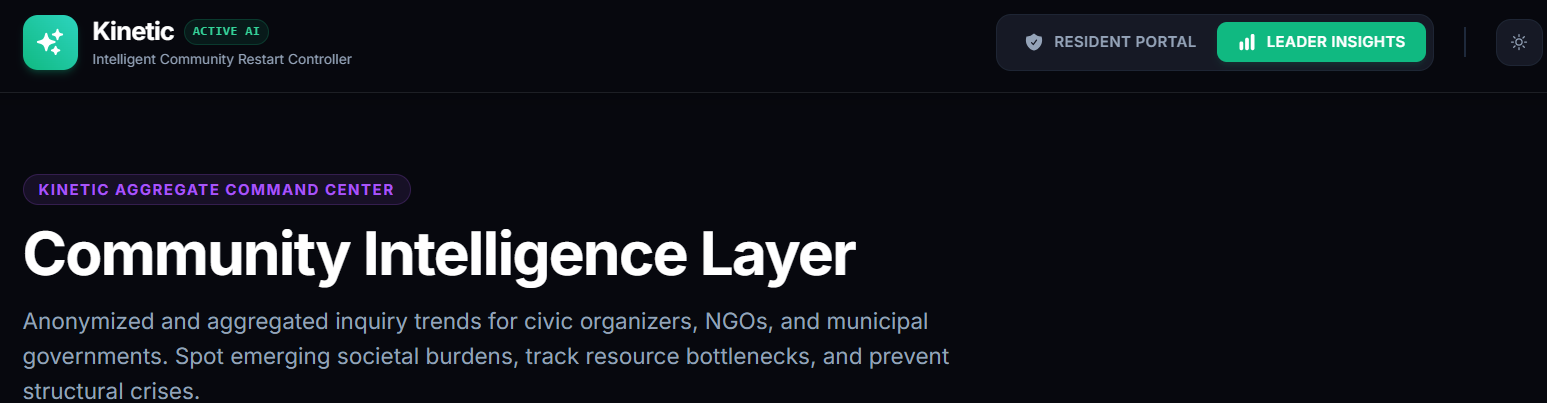
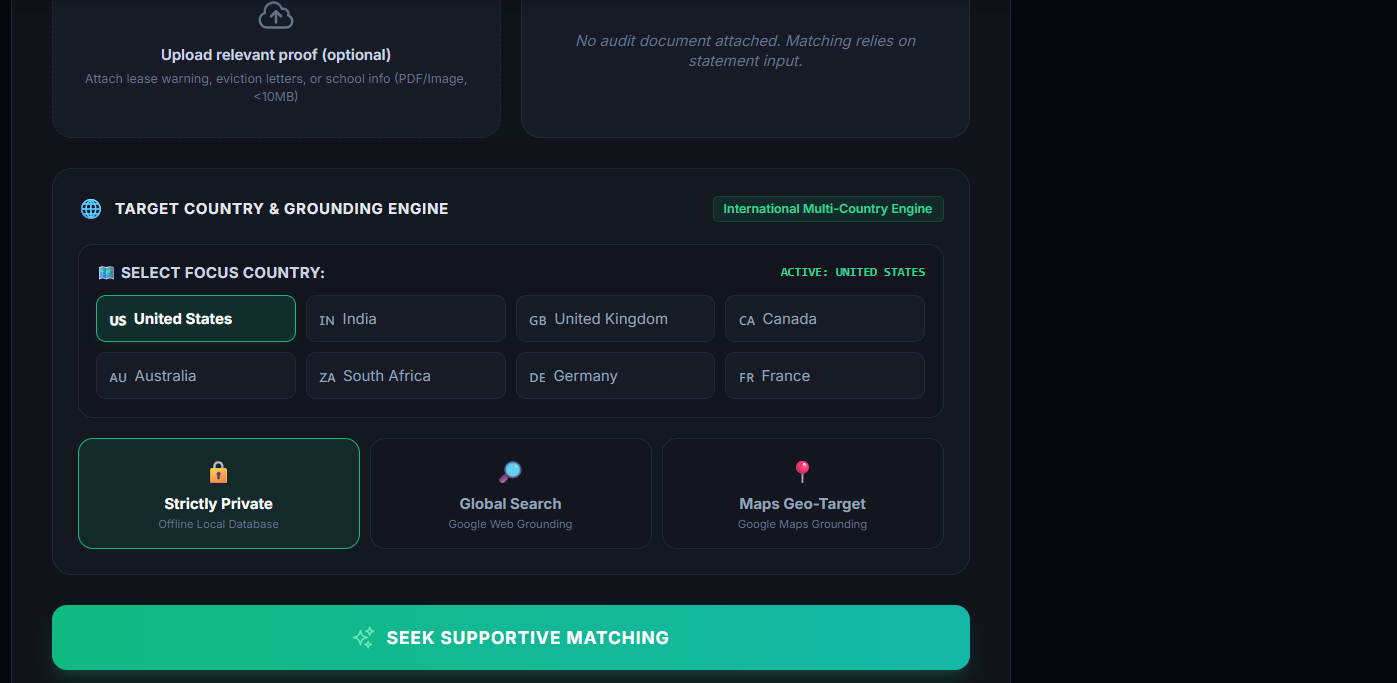
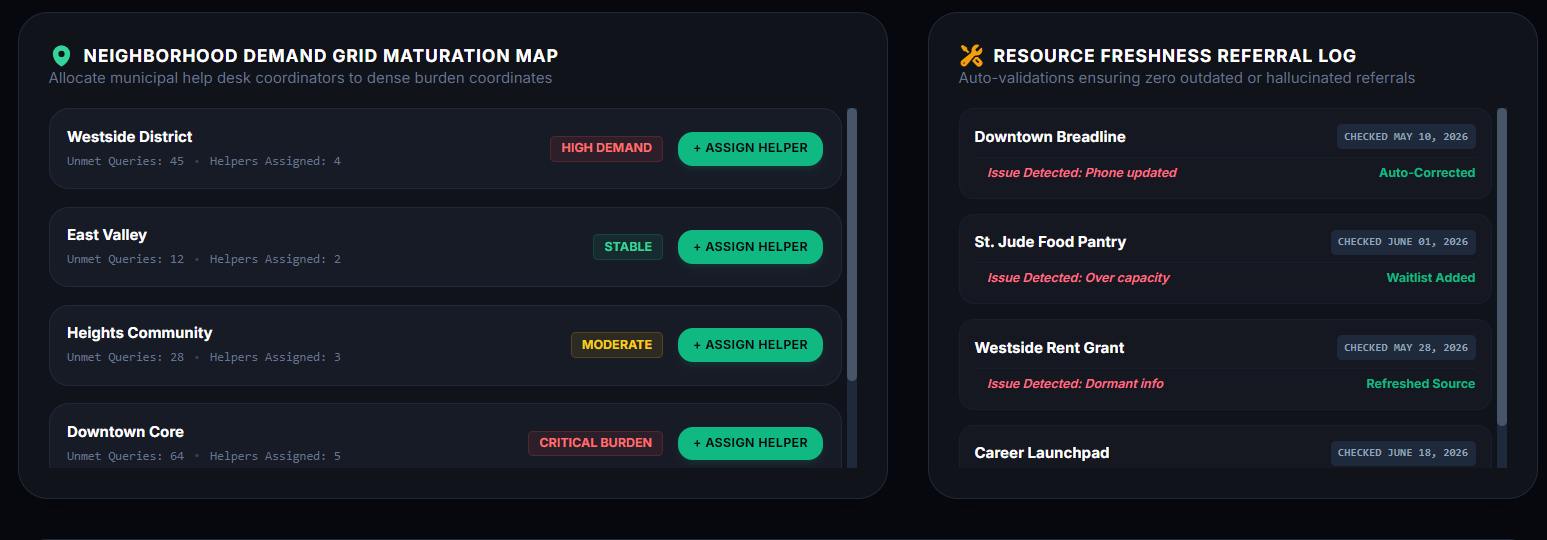
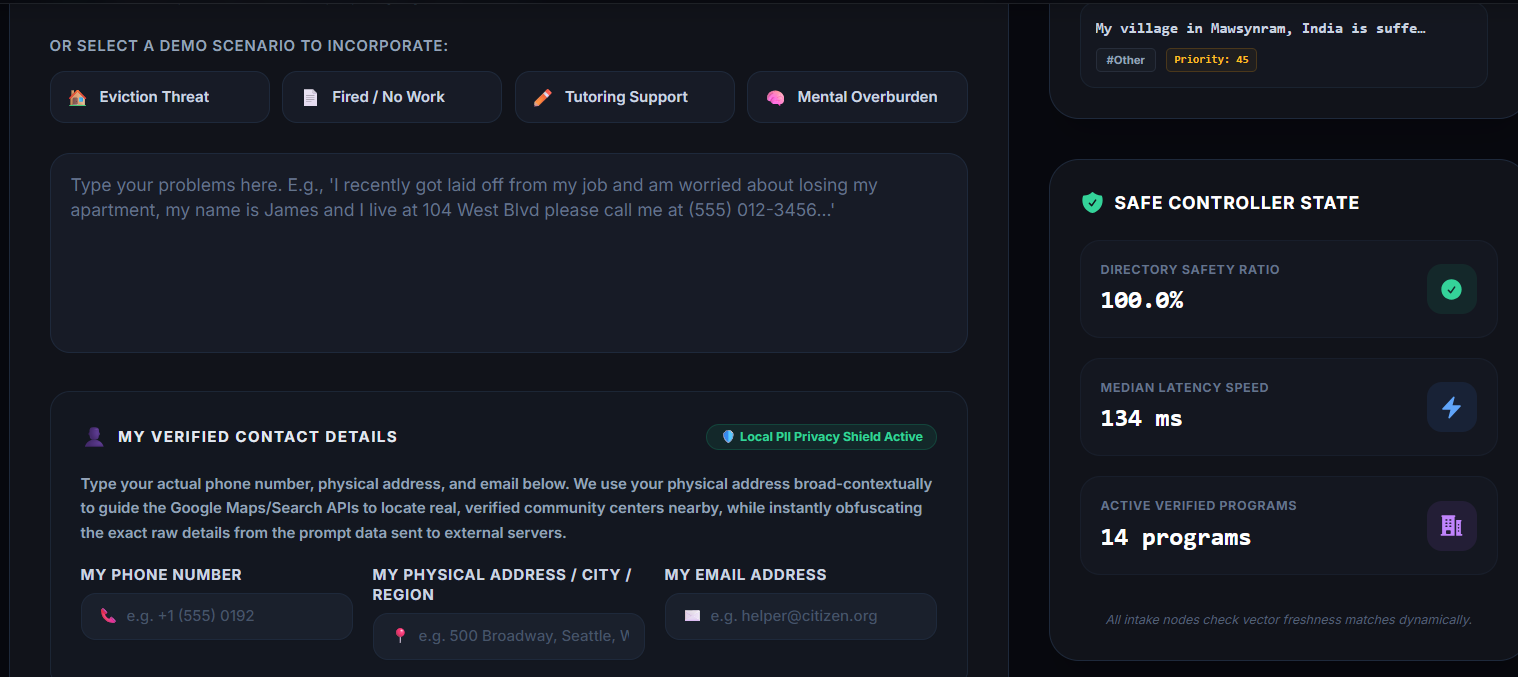
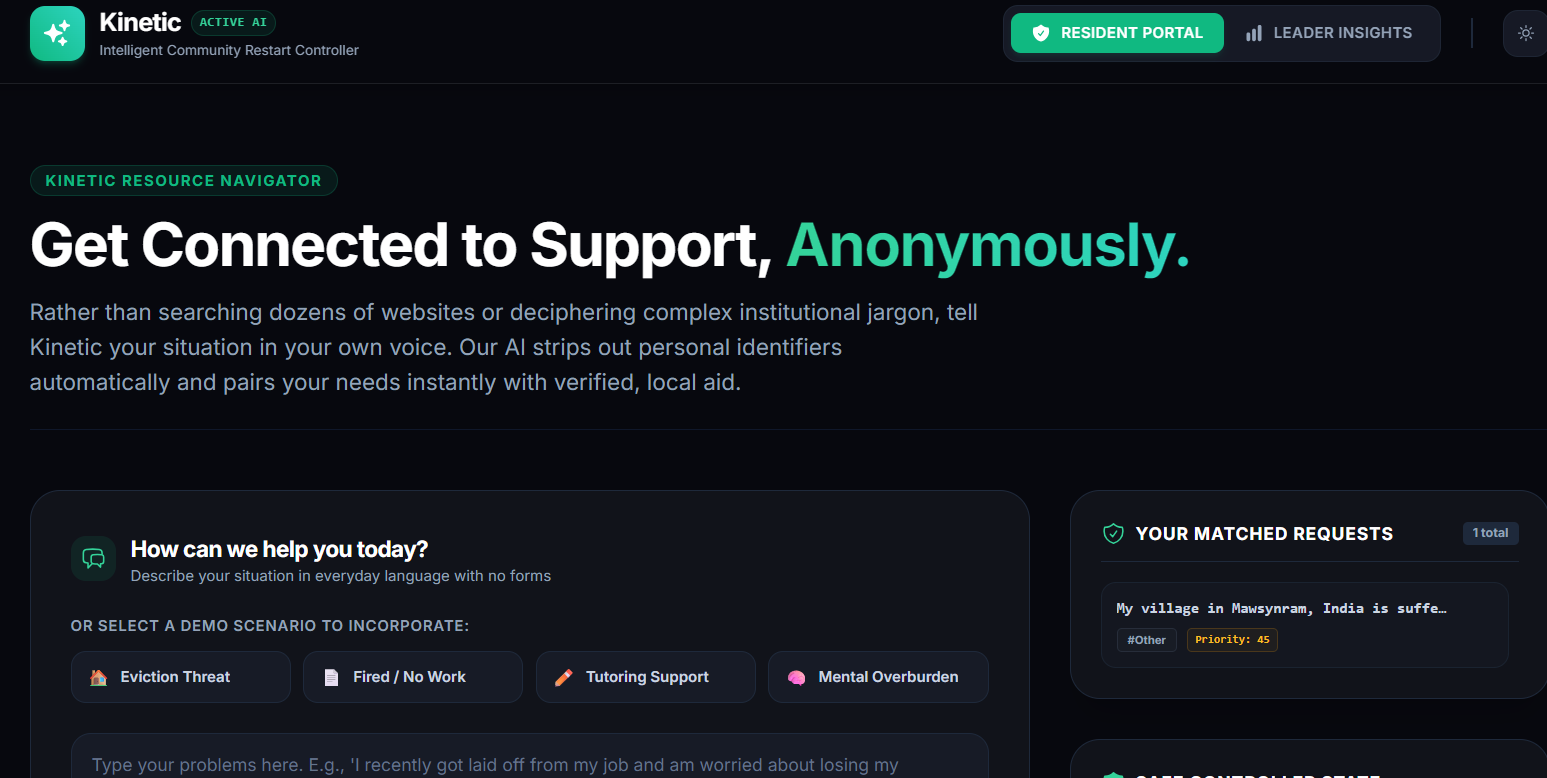
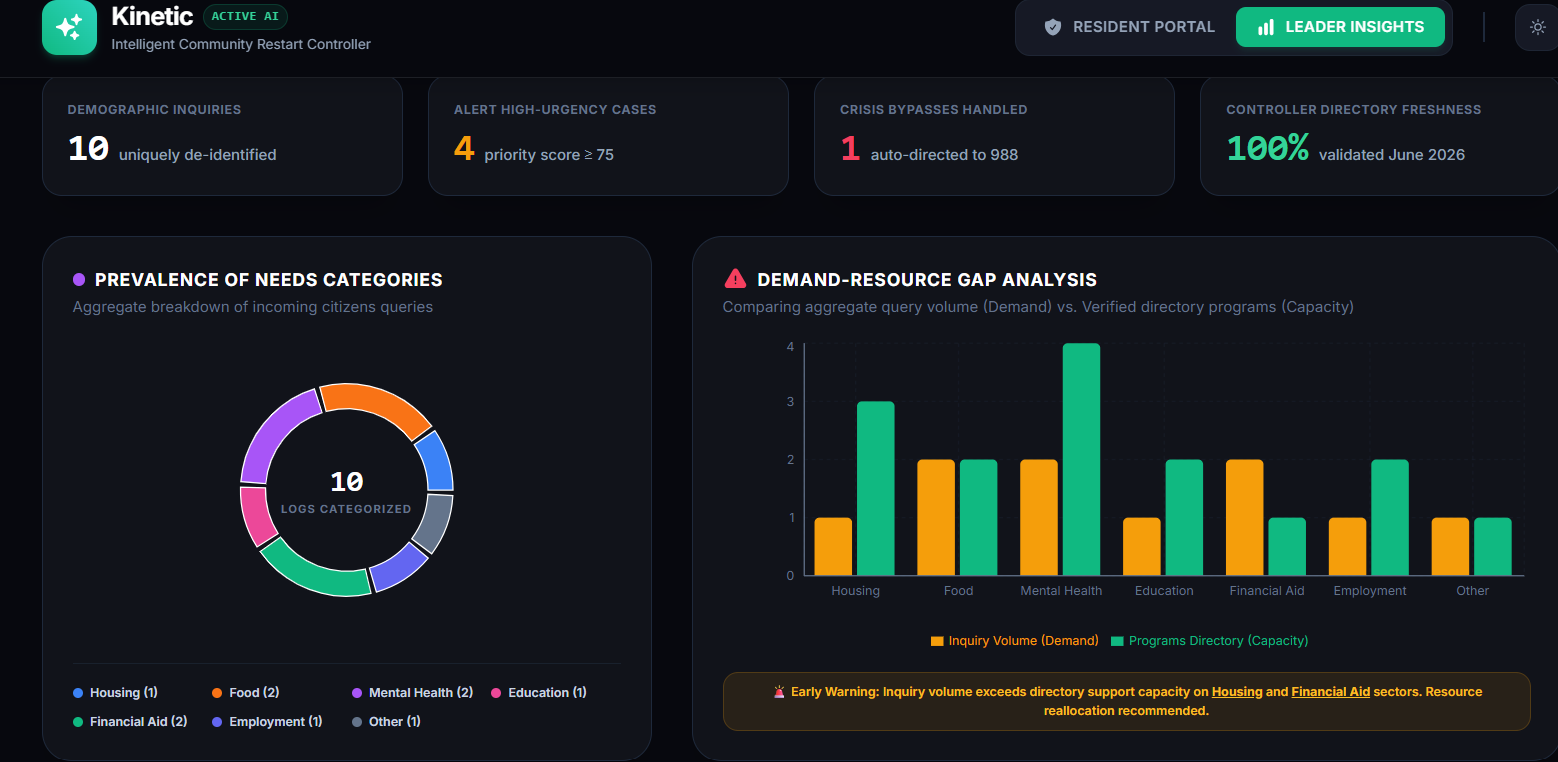
Kinetic is a privacy-first assistant that helps people navigate local aid. Instead of forcing users to decode complicated bureaucratic jargon, it lets them explain their situation in plain, everyday language. The AI identifies core needs—like housing or mental health—and matches them to verified local programs. It gives the user clear, actionable next steps instead of just random links. Finally, it strips personal details to create an aggregate dashboard for local leaders to spot emerging community crises early.
How we built it
We designed Kinetic as a retrieval-augmented generation (RAG) pipeline to stop the AI from hallucinating fake addresses or organizations:
Anonymization Layer: Instantly scrubs names, phone numbers, and personal identifiers before processing any text.
Vector Embeddings: Uses a compact multi-lingual model ($BGE\text{-}Small$) to match a user's true intent rather than relying on exact keywords.
Verified Index: Compares the query against a database of verified local services, filtering by location and eligibility.
Guarded Output: Uses a tight template to ensure the AI only shares information directly pulled from the trusted database.
Voice Integration: Converts speech to text and speaks replies back, keeping it accessible for the elderly or non-native speakers.
Challenges we ran into
The hardest part was training the AI to understand how people actually talk online. Someone won't say "emergency tenant protections"; they say "I'm scared to lose my apartment". Tuning our embedding models to match casual speech with bureaucratic jargon took a lot of work. We also had to optimize data pipelines to translate and speak responses in real time without lag , and carefully calibrate confidence scores so lower-confidence matches automatically route to a human team.
Accomplishments that we're proud of
We are incredibly proud of our "privacy by default" architecture. The index only stores anonymized vectors and public metadata, meaning raw personal data is never saved on a server. We also successfully built an Output Safety Classifier. If the system detects a severe mental health crisis or dangerous thinking, it immediately breaks the AI pipeline to surface emergency hotlines directly and flag a trained human responder.
What we learned
We realized that AI is a powerful tool to organize and surface information, but it shouldn't be the final decision-maker. For sensitive issues like financial aid or severe mental health struggles, you cannot use an AI-only resolution path; humans must always be in the loop. We also learned that the real obstacle to community aid isn't a lack of programs, but the sheer friction of finding and understanding the information when you are overwhelmed.
What's next for Kinetic
Our next step is moving past simulated data to get real community validation. We plan to bring students, parents, and local non-profits directly into the loop to test our prototype. We're also expanding our verified database by scraping municipal open data portals and school district directories. To make adoption seamless, we are keeping our APIs incredibly lightweight so libraries, schools, and cities can embed Kinetic without rebuilding their portals.

Log in or sign up for Devpost to join the conversation.