-
-
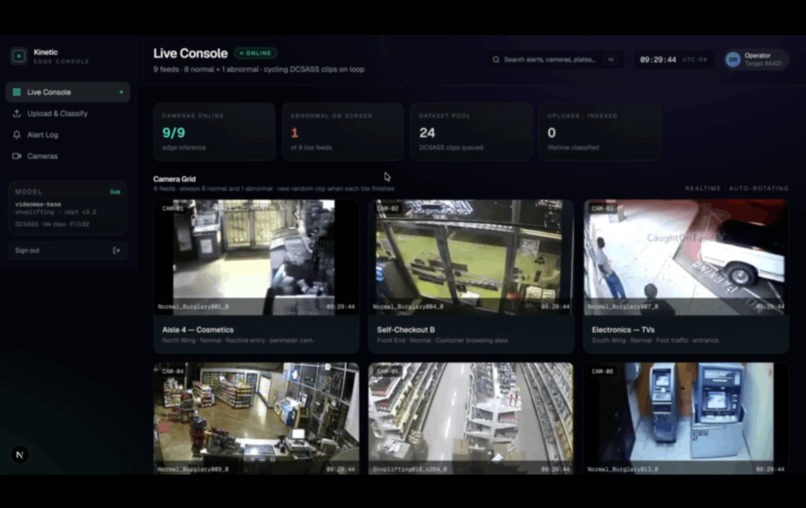
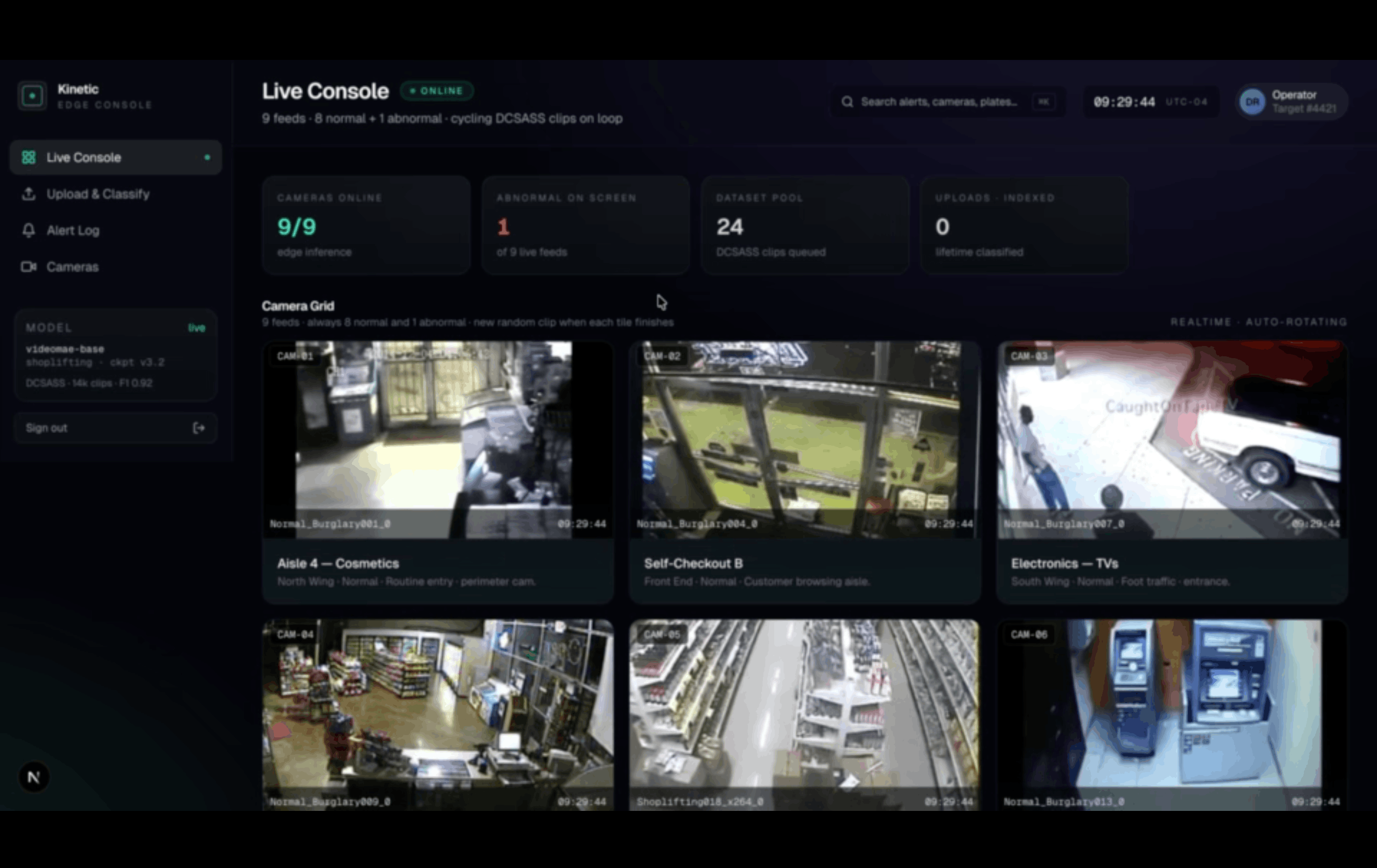
Live Console
-
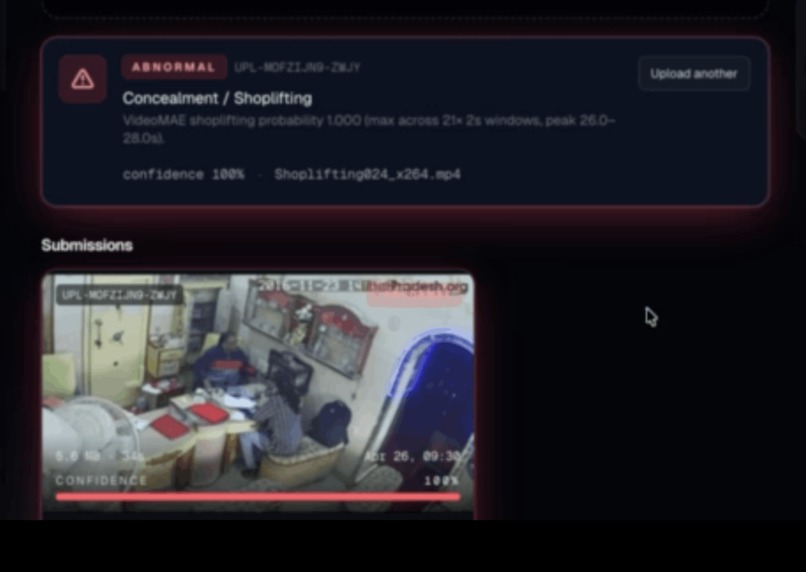
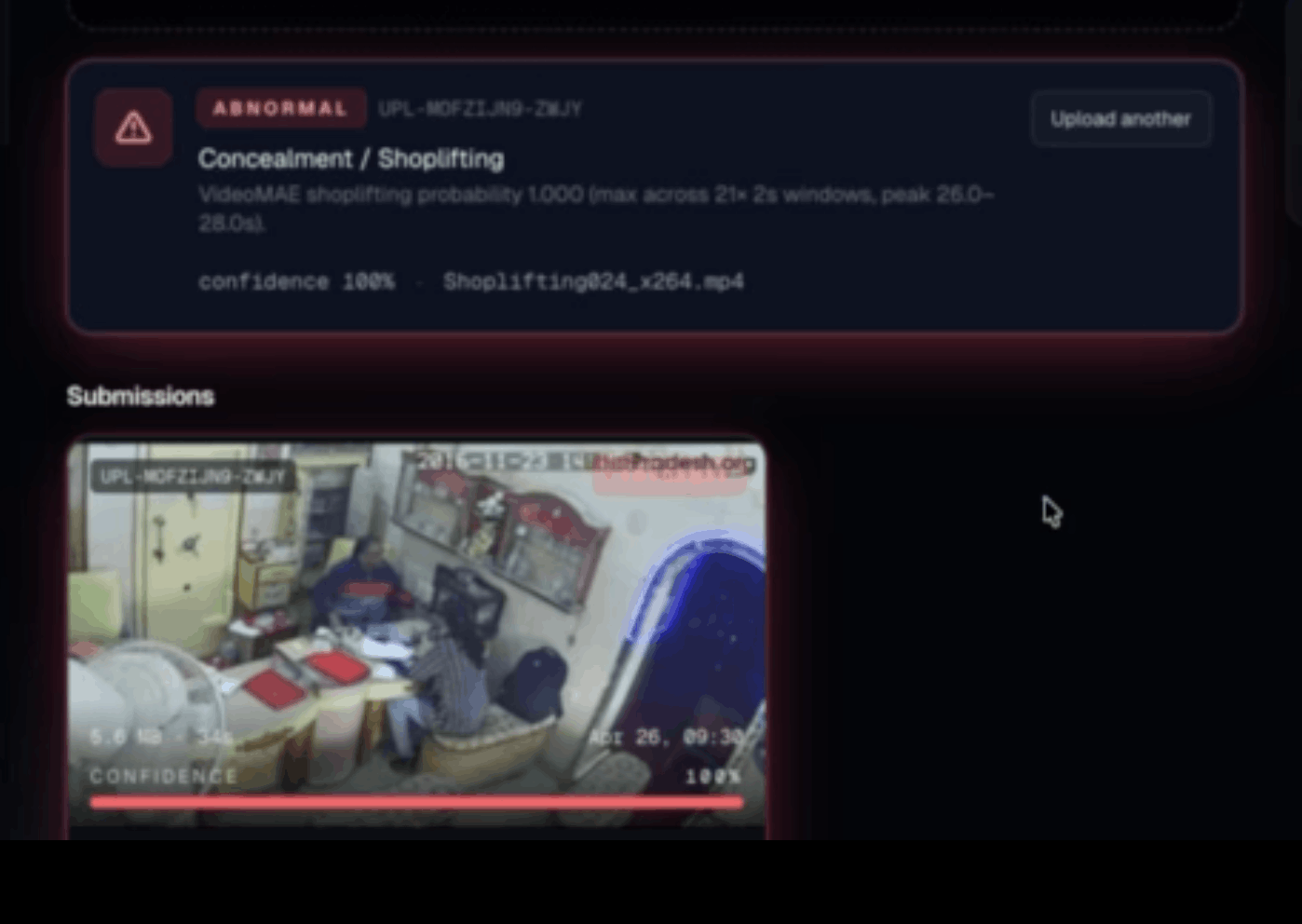
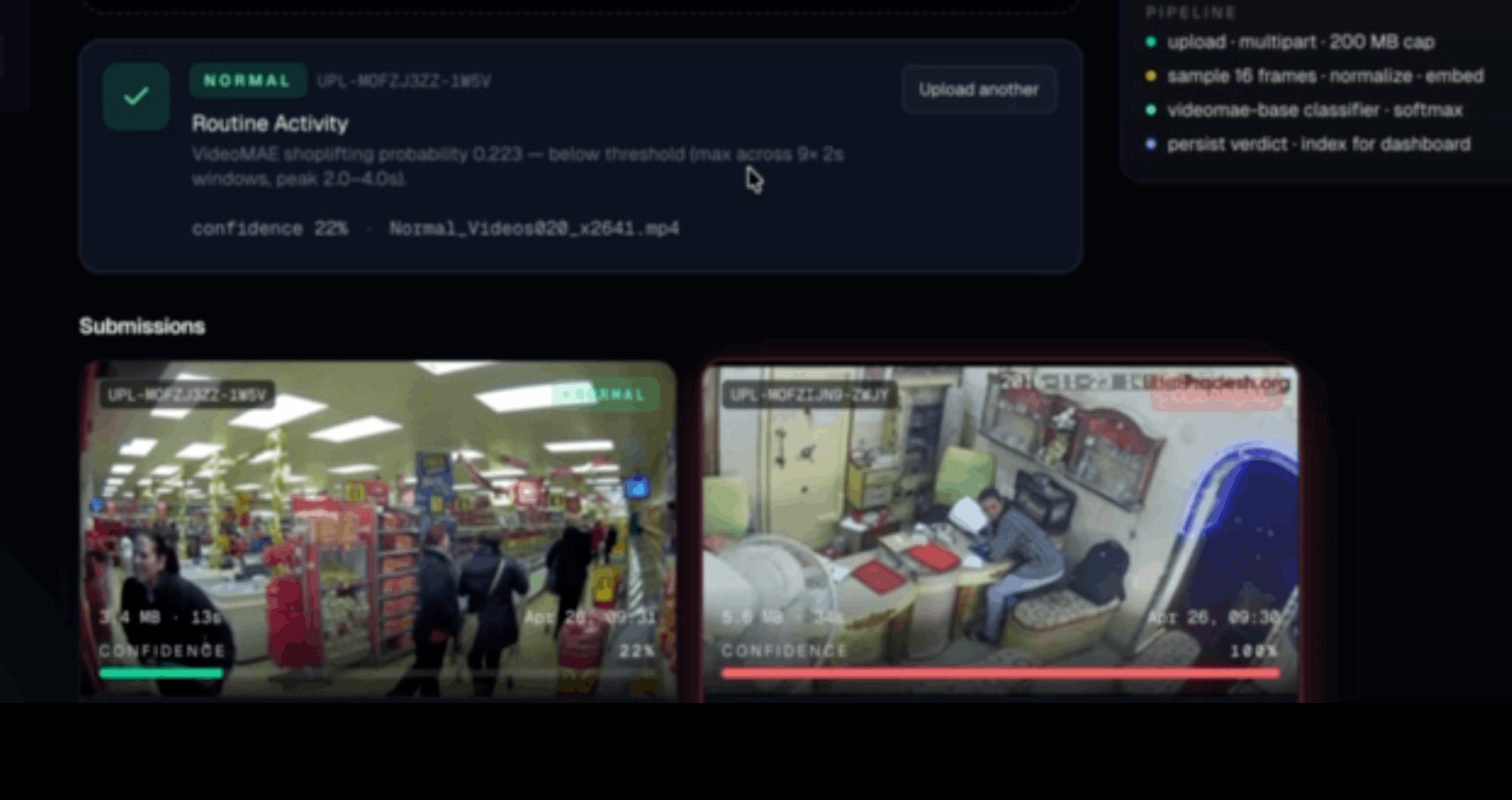
Upload Result
-
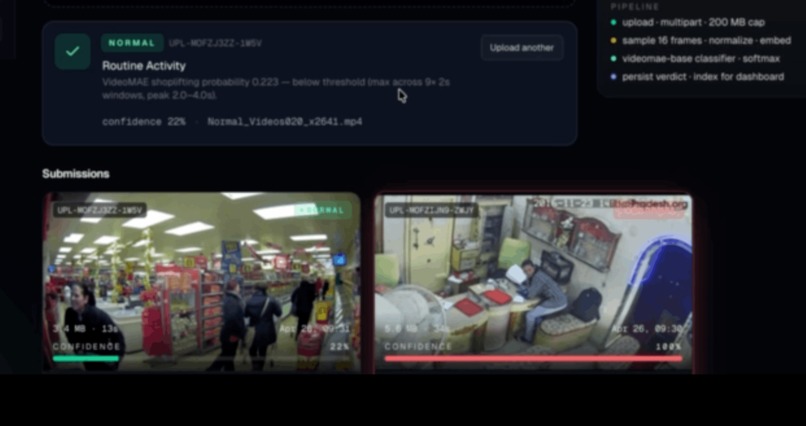
Routine Activity
-
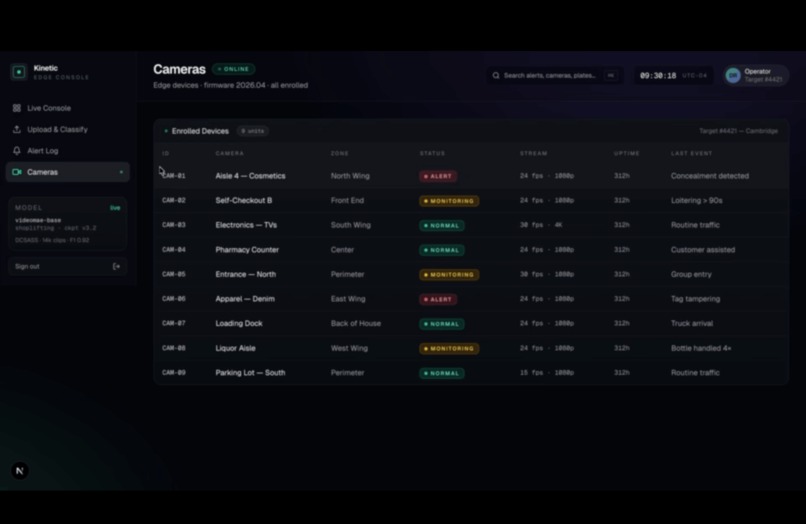
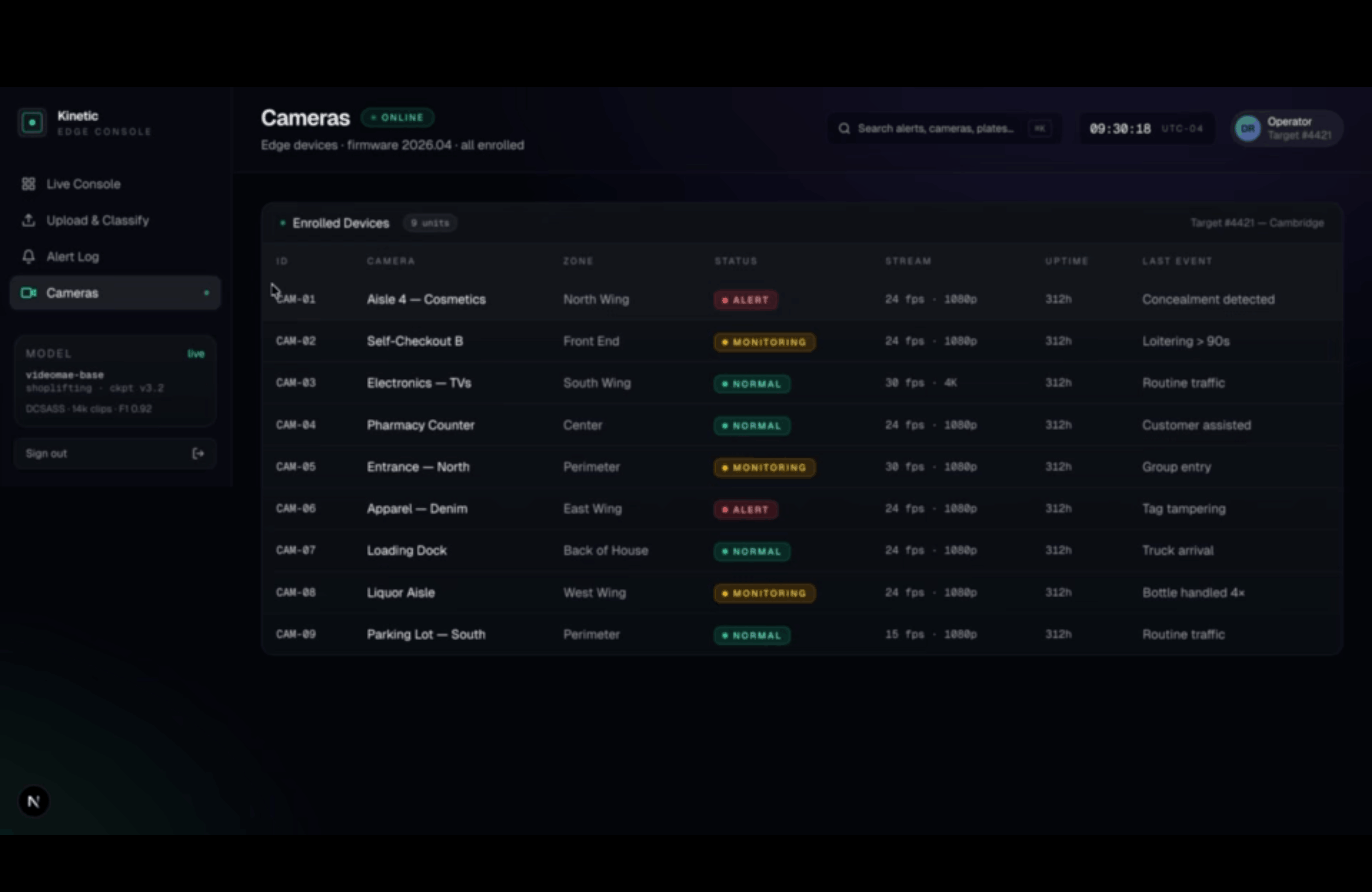
Available Cameras
-
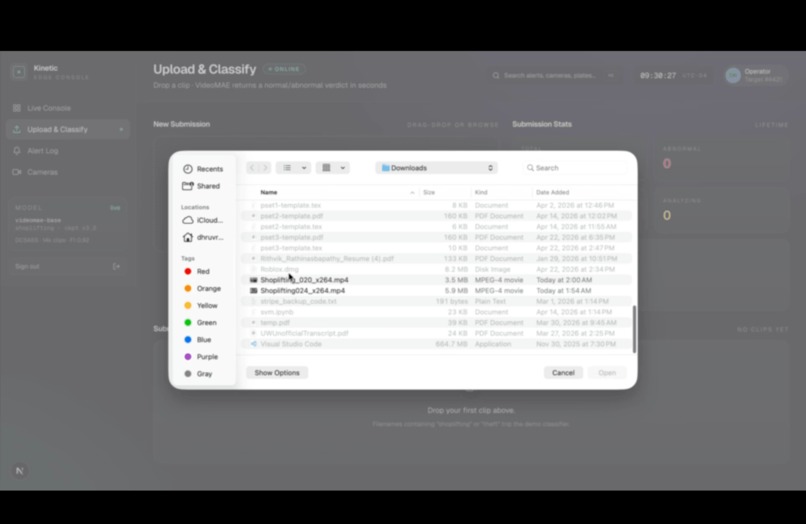
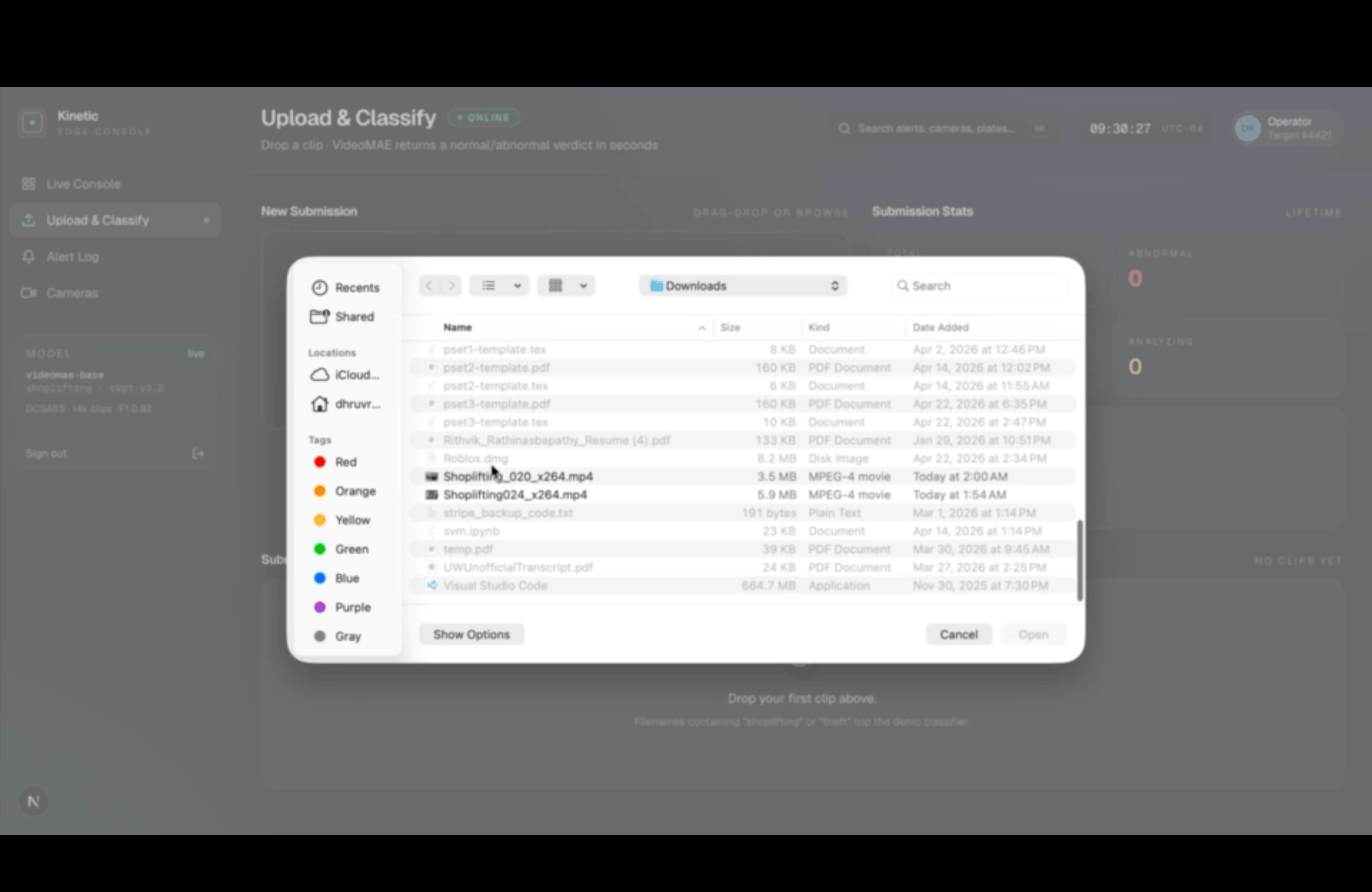
CCTV file upload
-
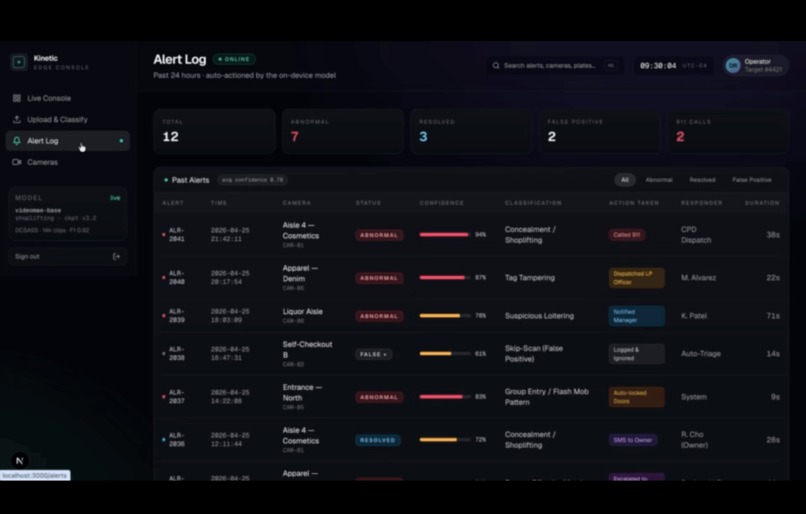
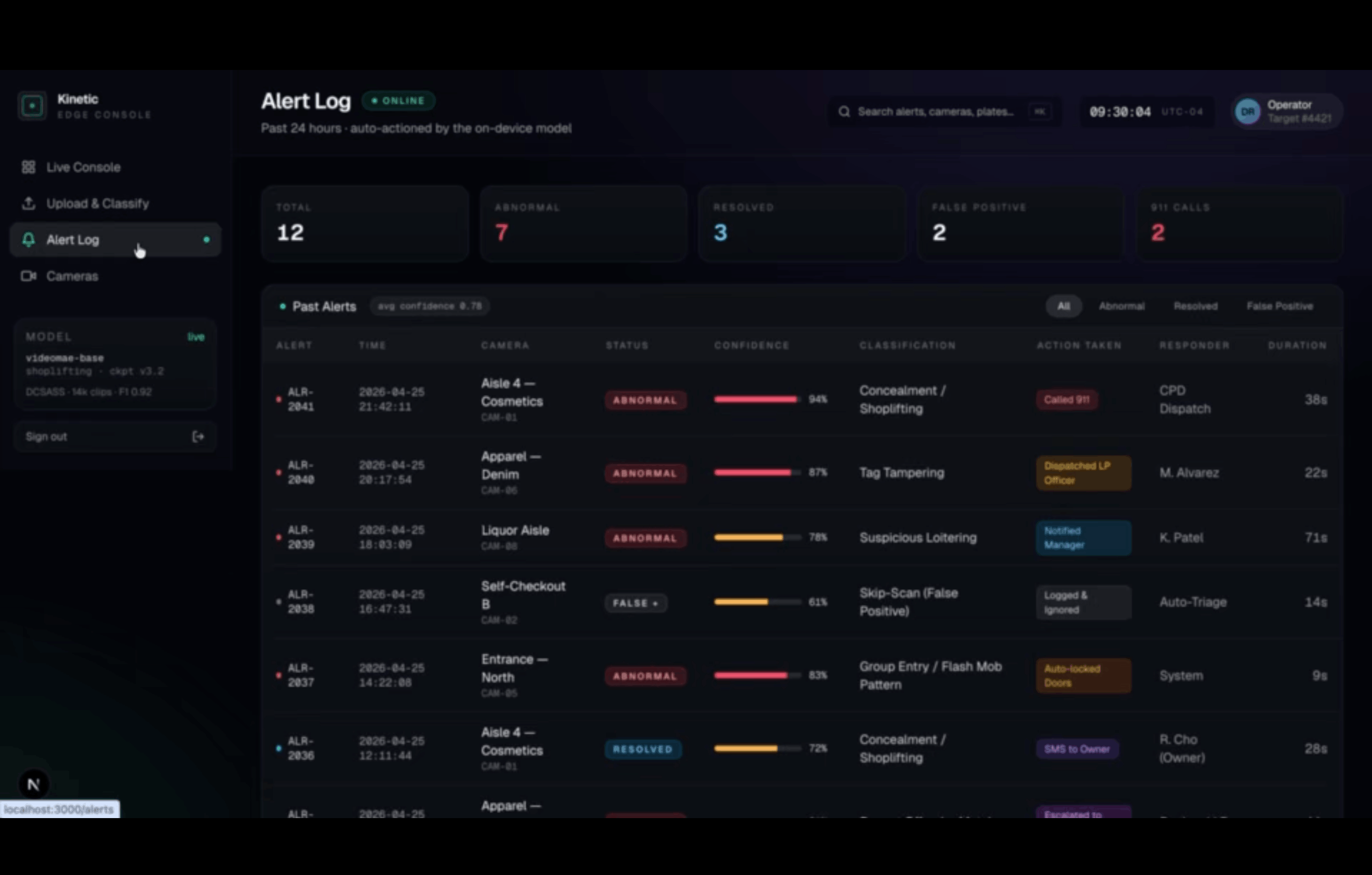
Alert Log
Inspiration
Retail thefts costs the industry $100B+ annually, yet most loss prevention still relies on manual monitoring. We wanted to build something that actually works at scale, an AI-powered system that catches shoplifting in real time so store staff can focus on customers, not screens.
What it does
Kinetic uses computer vision and a custom fine-tuned model to detect shoplifting behavior through live camera feeds. It identifies suspicious actions, like concealment, tag removal, unusual movement patterns, and flags them instantly for store staff to act accordingly.
How we built it
We fine-tuned our own model on labeled retail theft footage, then built an image detection pipeline to process live video frames. We integrated a realtime alerting layer on top so detections surface immediately to staff.
Challenges we ran into
Getting the model to distinguish genuine theft behavior from innocent actions (like someone putting items in a bag they own) was tough. False positives are a real ethical and UX problem. We also had to work with limited training data for edge cases.
Accomplishments that we're proud of
Training our own model from scratch rather than relying on off-the-shelf CV solutions. We hit a detection accuracy we're genuinely proud of given the timeline, and built a full end-to-end pipeline in a hackathon window.
What we learned
Data quality matters far more than model complexity. We also learned how critical it is to tune for precision over recall in sensitive contexts. A false accusation is far worse than a missed detection.
What's next for Kinetic
Multi camera support, deeper POS integration to correlate behavior with transaction anomalies, and working with retailers to expand our training dataset for better generalization across store layouts.
Built With
- cv
- nextjs
- python

Log in or sign up for Devpost to join the conversation.