-
-
cover
-
hand signs
-
results
📖 About the Project
🌟 Inspiration
Sign language is a powerful medium of communication for the hearing and speech-impaired community. However, many people are unfamiliar with it, creating barriers in daily interactions. Kinesis was inspired by the idea of breaking down these barriers using machine learning to recognize sign gestures in real time.
🛠️ How We Built It
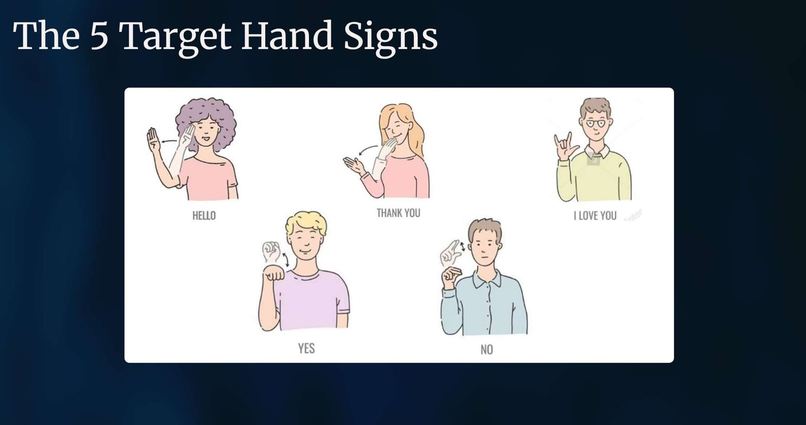
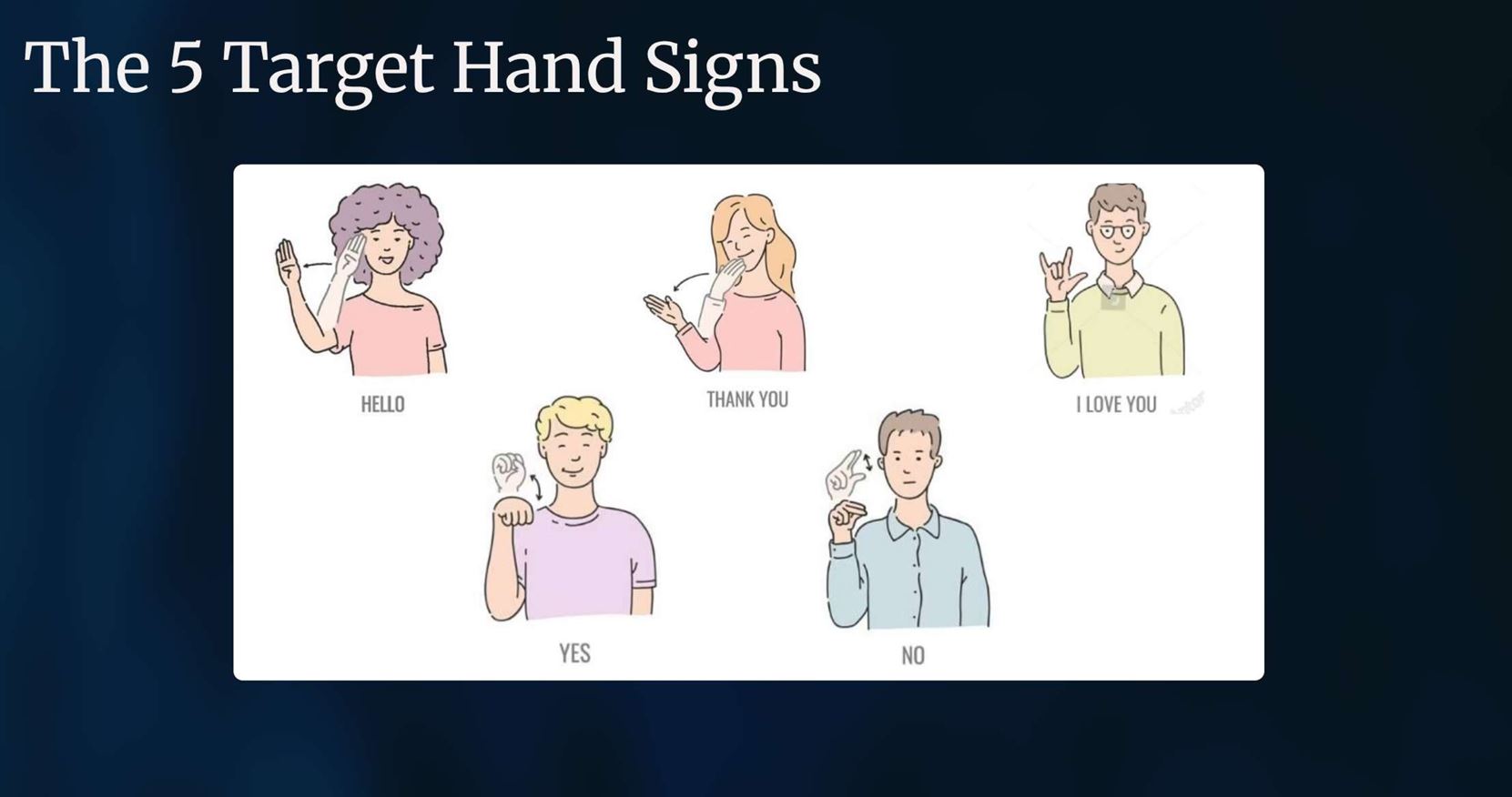
- Data Collection: Captured and organized datasets for 5 different hand signs.
- Preprocessing: Resized, normalized, and augmented images to improve robustness.
- Model Training: Implemented a Convolutional Neural Network (CNN) using TensorFlow/Keras for classification.
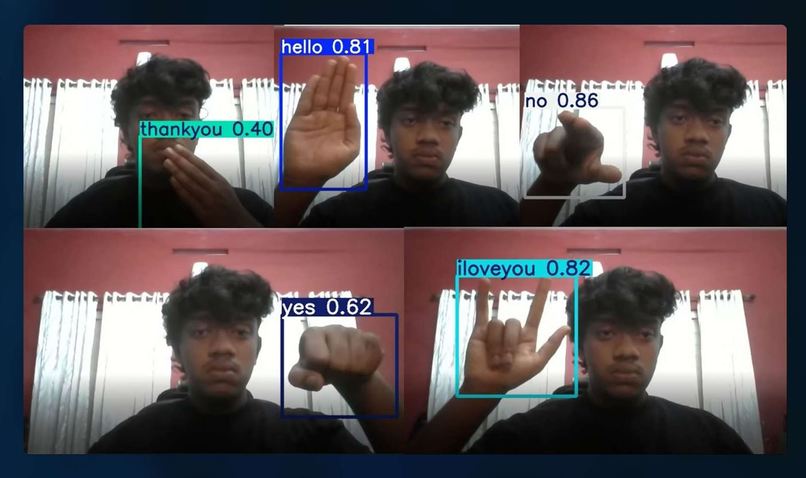
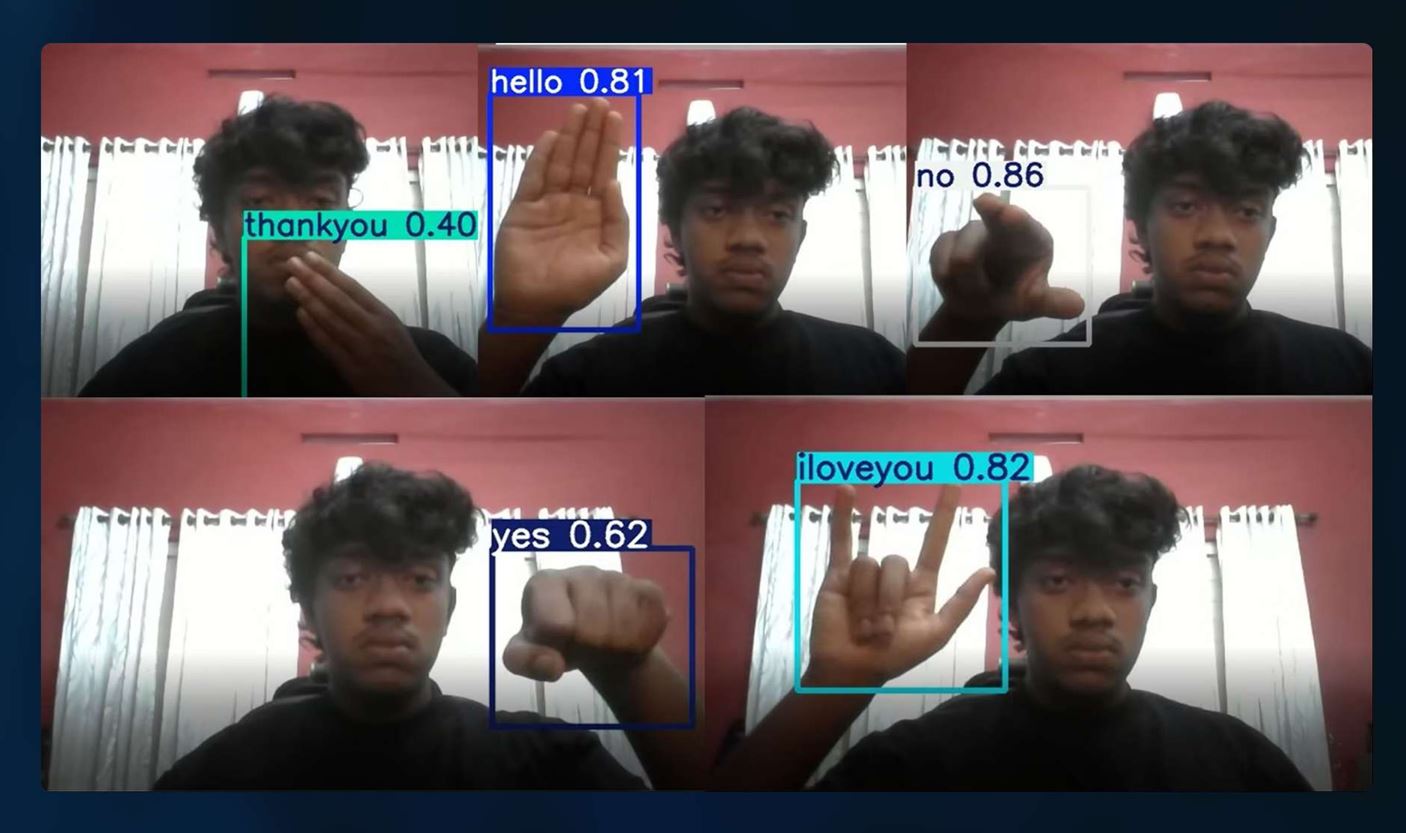
- Real-Time Detection: Integrated the trained model with OpenCV to capture video frames and predict signs on the fly.
Mathematically, the CNN learns a mapping function:
$$ f: X \rightarrow Y $$
where ( X ) represents the image input (hand sign) and ( Y ) the predicted class (specific sign).
💡 What We Learned
- How to build and train a CNN for image classification.
- Importance of dataset size and variation in achieving higher accuracy.
- Practical integration of machine learning models with computer vision tools like OpenCV.
🚧 Challenges
- Collecting enough diverse data to reduce overfitting.
- Dealing with lighting variations and background noise in real-time scenarios.
- Achieving consistent accuracy across different hand orientations and users.
✅ Accomplishments
- Successfully built a working real-time sign recognition system for 5 signs.
- Achieved reliable accuracy after fine-tuning hyperparameters.
- Set a foundation for scaling the project to a larger vocabulary of signs.
🚀 Future Scope
- Expand the dataset to cover the full ASL alphabet or common phrases.
- Add voice output for predicted signs to enable speech-assisted communication.
- Deploy as a web app or mobile app for broader accessibility.

Log in or sign up for Devpost to join the conversation.