-
-
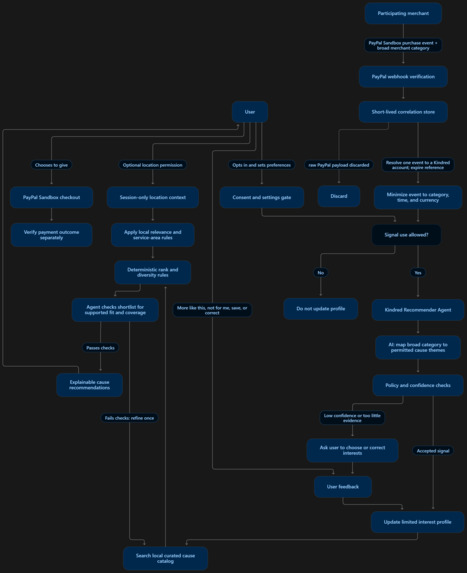
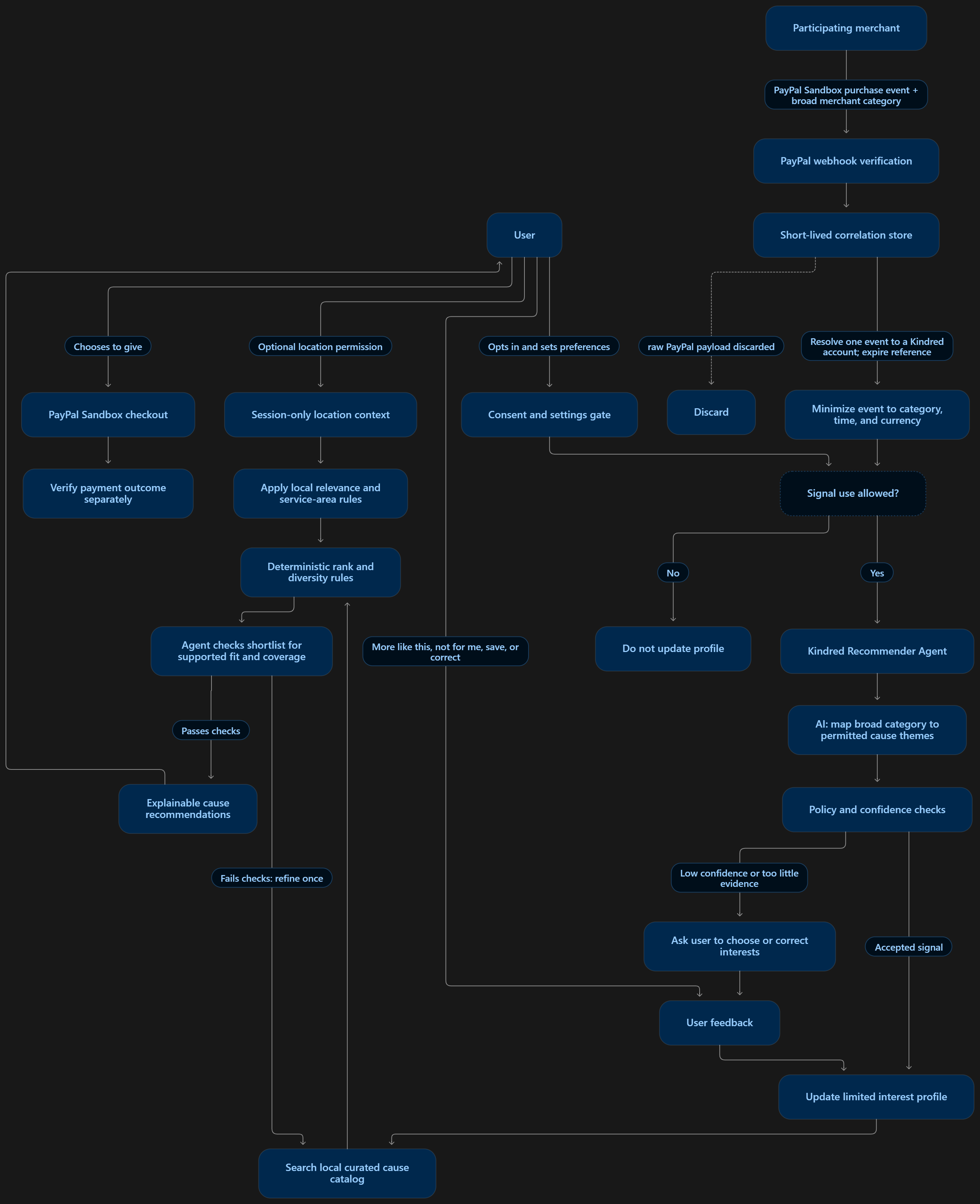
Kindred Architecture Diagram
-
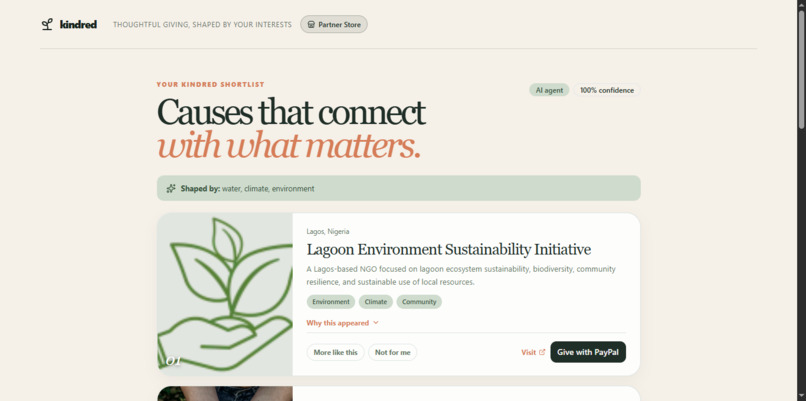
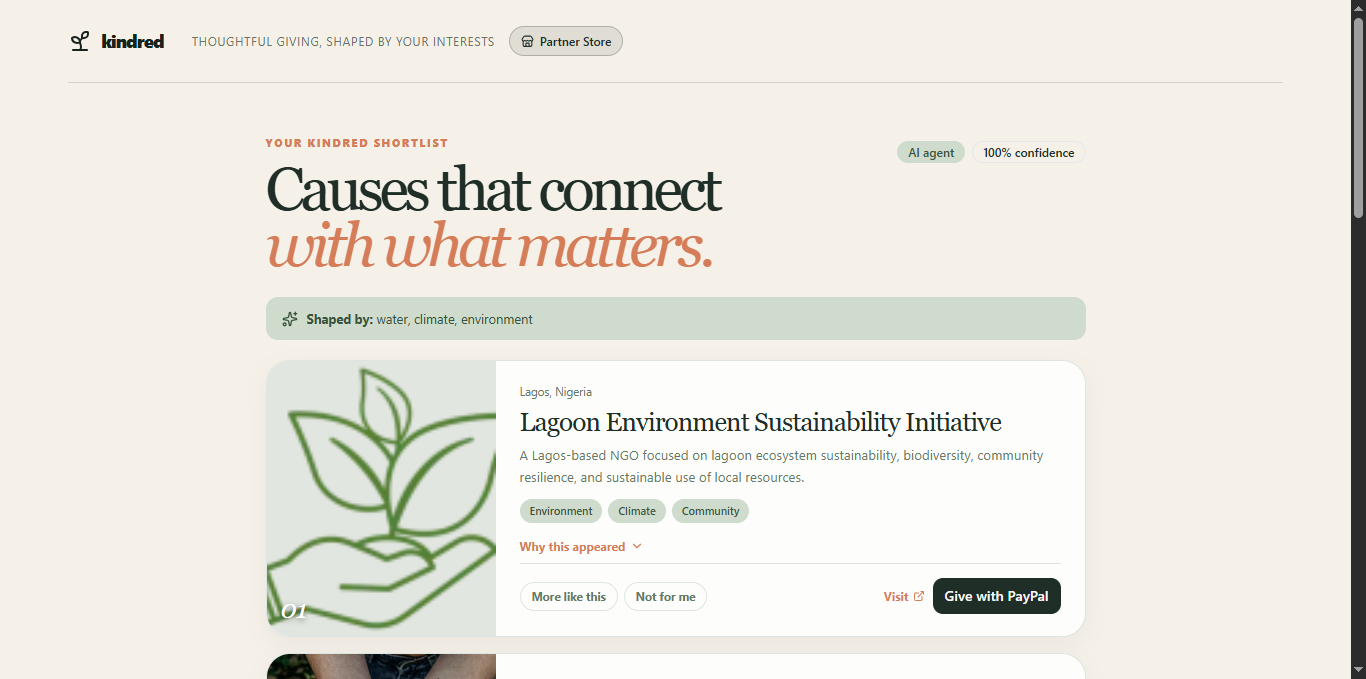
Kindred recommendation page
-
-
Inspiration
I was reading about charitable giving when I came across a CAF America survey of U.S. adults. 44% said they gave to a cause they had personally experienced, 42% to an organization they had supported before, and 28% on a friend’s recommendation.
I’m Nigerian, but I saw myself in that metric. I give to what I already know when around me in Lagos there are grassroots, underfunded organizations doing important work that I, and most people, never find, because finding them takes research nobody has time for.
What it does
Kindred starts from something people already do every day: shop.
Sarah buys a children’s book at a partner store and pays with PayPal. Seconds later, Kindred shows her a few underfunded organizations working on education and children, each with a short note: “Why this appeared: you bought a book from the books_learning category.” She picks one, chooses an amount, and gives through PayPal.
Behind that:
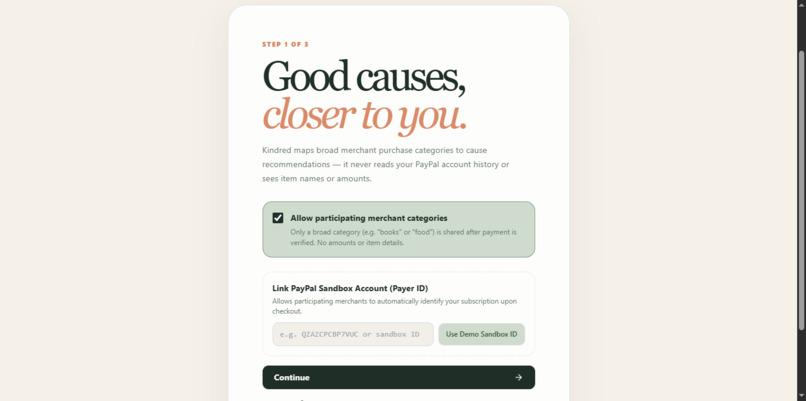
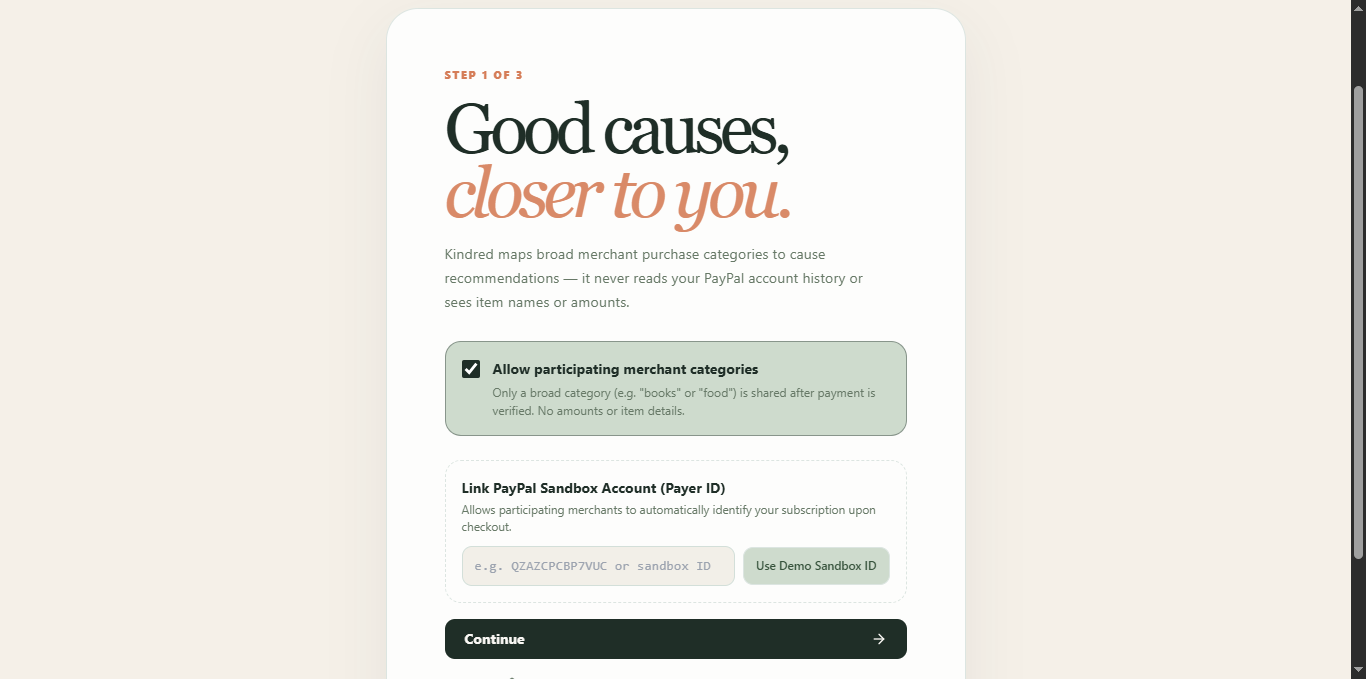
The store sends only a category. For example books_learning or sustainable_goods, plus the PayPal capture reference. No card numbers, bank details or item lists.
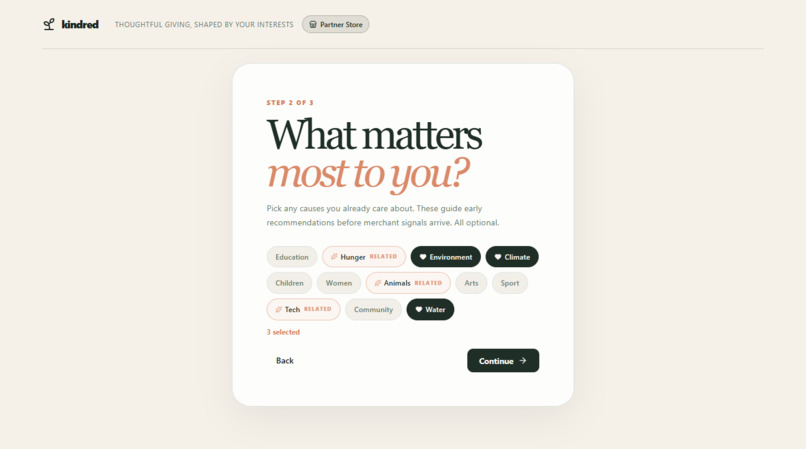
PayPal confirms the payment. Kindred checks the capture with PayPal before counting it. Gemini suggests causes: It maps categories to themes such as education, children and environment, and writes the plain-language explanation based on the various purchase categories that the merchant sent back. A visible formula ranks the organizations. Gemini suggests, but the ranking is deterministic, so large charities don’t win by default and local grassroots groups are boosted. The donor gives in PayPal checkout, and can see why each match appeared.
How we built it
Gemini is used to classify sanitized spending signals into broad cause themes and return structured output with confidence and supporting evidence.
The final NGO ranking is deterministic and explainable. The AI does not directly decide where the donor should give.
Kindred first creates an eligible pool of smaller NGOs using source metadata such as funding raised and donor count. It then ranks organizations within that pool using:
- Cause-theme alignment
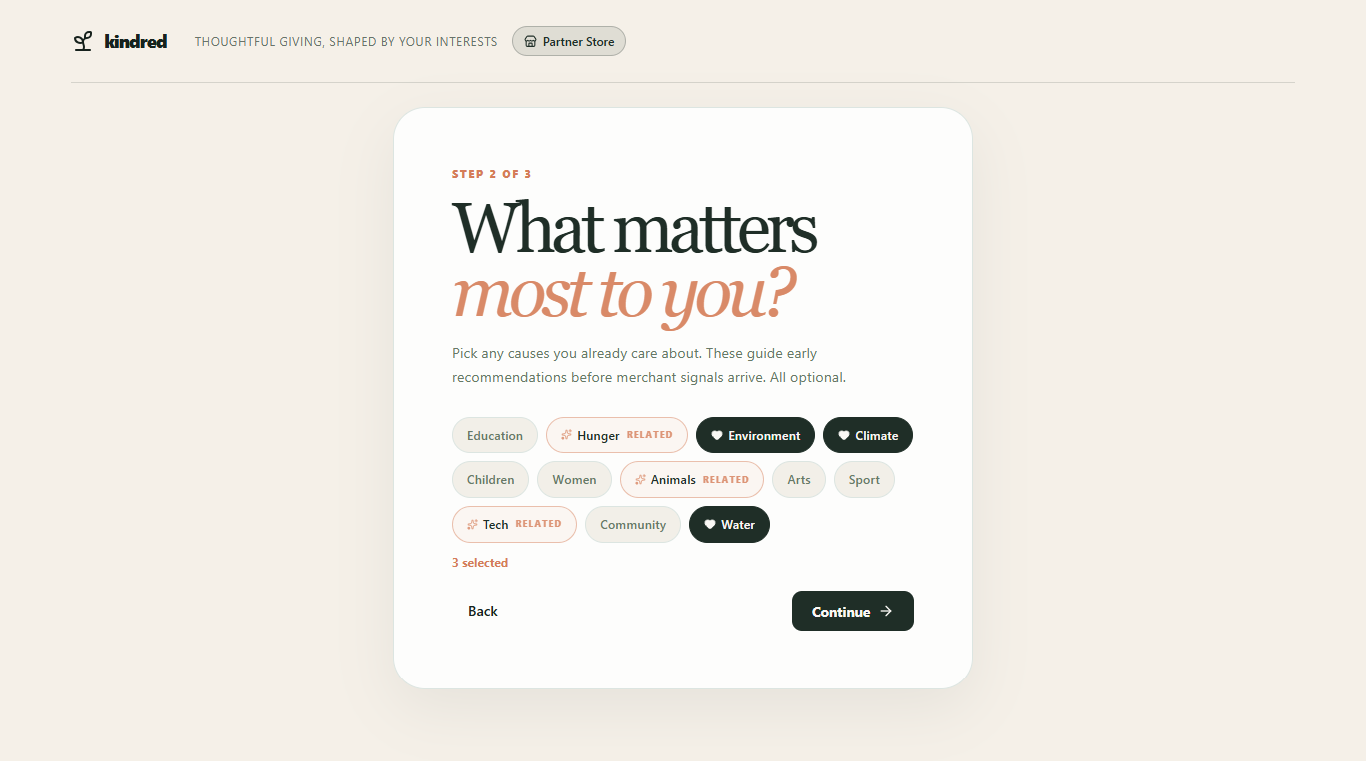
- Donor-confirmed preferences
- Previous donor feedback
- Optional explicit geographic preference
- Controlled exploration of less-exposed organizations
- Diversity across cause categories This prevents larger organizations from dominating simply because they have more funding, more exposure, or more polished descriptions.
The system never treats a purchase as proof that someone cares about a cause. It presents possible interests as suggestions and gives the donor the final say. Why PayPal matters PayPal is not simply an extra payment button in Kindred. It connects the entire action loop: Discover a possible cause → Review a smaller NGO → Choose a donation amount → Approve through PayPal → Receive a confirmed result The prototype uses PayPal Sandbox for testing. Orders are created and captured on the server, PayPal request IDs are used for idempotency, and webhook signatures are verified before donation state is updated.
The sandbox payment goes to the app-owned sandbox business account, which represents the selected organization for the demo. It does not represent a real-money transfer to an NGO. Privacy by design Kindred is designed around data minimization.
Raw transaction history is not sent to the AI. Instead, the backend:
- Checks the selected data source
- Removes identifiers and payment details
- Generalizes dates and amounts where possible
- Converts untrusted transaction descriptions into broad allowlisted categories
- Blocks sensitive inferences
- Sends only derived cause signals to Gemini
- Avoids storing raw transaction descriptions Kindred does not infer health, religion, political beliefs, sexuality, relationships, household structure, or financial hardship.
For the hackathon demo, all PayPal operations use PayPal Sandbox data. If sandbox transaction history is unavailable, Kindred falls back to clearly labeled simulated personas. Data and NGO sources NGO information is sourced from GlobalGiving when available, with fictional sample organizations used only as a labeled fallback.
Kindred shows the NGO’s source attribution, mission, location, funding information, image, and project link. Kindred does not claim to independently verify an organization or invent facts about it.
The “why this fits you” explanation is generated by Kindred from the approved cause signals. The organization’s facts remain source-provided and are labeled accordingly.
Challenges we ran into
The main challenge that was experienced when creating this project was being able to capture the necessary data to make kindred function as it should while not storing any sensitive data and adhearing to paypals data usage rules.
Accomplishments that we're proud of
A working loop in the PayPal Sandbox: a purchase at a partner store is captured and verified, the donor's profile changes, and the recommendations change with it. Every recommendation can be explained.
What we learned
Payment infrastructure can do more than collect money, it can also be used to track personal habits and be used for a charitable cause.
What's next for Kindred
Plugins for WooCommerce and Shopify so independent merchants can offer Kindred, round-up micro-donations through PayPal Subscriptions, and working with accreditation bodies to bring more underfunded organizations in.
Built With
- betterplace-api
- express.js
- google-gemini-api
- node.js
- paypal-js-sdk
- paypal-orders-api
- paypal-webhooks
- radixui
- react
- tailwindcss
- typescript
- vite
